Unknown's avatar

About Barbara Harper

https://barbarah.wordpress.com

Review: All My Secrets

All My Secrets by Lynn Austin

In Lynn Austin’s Gilded Age novel, All My Secrets, one of the wealthiest men in America has just died. The Stanhopes were contemporaries of New York’s elite families, like the Vanberbilts, Astors, and Van Burens.

Arthur Benton Stanhope III, known as A. B., was only forty-six when he passed. At the reading of his will, his mother, Junietta, wife Sylvia, and daughter Adelaide, or Addy, all found out that the original Arthur Stanhope had written his will in such a way that the Stanhope business and the bulk of the family money could only be passed down to the closest male heir. A small trust was left for Sylvia and Addy, but it was not as large as it might have been if the investments had the expected time to grow. But with a little economy, and perhaps the sale of the family yacht, they should manage fine.

Such economic measures, however, would send them toppling from the pinnacle of society they enjoyed. That was fine with Junietta. But Sylvia’s position and reputation as a hostess were her life. Sylvia decided the best thing they could do was find acceptable suitors to discreetly introduce Addy to in the hope that she might marry well before their financial state became too dire.

Addy didn’t like the idea of marrying a man for his money or feeling like a bargaining chip. Her mother assured her the choice was hers, and she wanted her to be happy. But Addy felt duty-bound to do everything in her power to keep the only home she had ever known in the family for her mother’s sake. Addy herself, didn’t want anything to change more than it had to.

Junietta thought their palatial home was a monstrosity. It had more rooms than they could ever possibly use. Addy had gotten lost in them as a child. The rooms they did inhabit were too large, their decorations overdone. The money expended on their balls and dinner parties could feed other families for weeks. Their contemporaries were gossipy rivals more than friends.

Junietta was more or less trapped in her marriage, but she wants Addy to know she has choices. Will Addy ever warm to the idea that the excessive wealth they are used to is wasteful, that there are better ways to live? Or would Addy write her grandmother off as eccentric? Junietta was going to have to reveal some of the secrets of her past that changed her own views. Would she have time to, before her erratic heart gave out?

I enjoyed this book a lot. I don’t see many novels set in this era, so it was fun to experience that time. Junietta’s secrets were revealed gradually in flashbacks, eventually prompting Sylvia to share secrets of her own. I enjoyed the characters and the natural way the faith element was woven in. The author makes sure to emphasize that being rich is not a sin in itself, and being poor is not inherently virtuous. But we’re all stewards of what we’ve been given.

But the book isn’t just about stewardship. It also involves loss, love, grief, life choices, forgiveness, and more.

In a fun coincidence, my oldest son visited the Marble House in RI with friends. It was built by William Vanderbilt for his wife, Alva, and started off the “summer cottage” fad among the elite (the “cottages” being 50+ rooms rather than what we think of as a cottage). The day after my son told us about his visit to this house, it came up in this book.

I enjoyed the audiobook, nicely read by Sarah Zimmerman. As usual, the audio version did not contain any of the author’s notes at the end, but I found some of that information in an interview with the author here.

I wished that the author had included an epilogue. The characters are left in such a way that we have a good idea what will happen to them, but I would have liked things to be a bit more wrapped up at the end. I just learned in the interview mentioned above that the author has written a novella with these characters that will come out at Christmas.

Review: Be Satisfied

Be Satisfied: Ecclesiastes

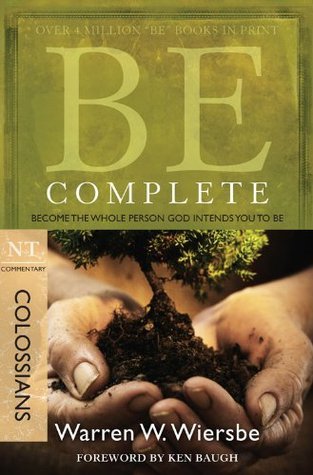
Be Satisfied (Ecclesiastes); Looking for the Answer to the Meaning of Life is Warren Wiersbe’s commentary on that book of the Bible.

Ecclesiastes is a little different from the rest of the Bible. It almost sounds pessimistic at first glance. I like to think of it as “Life in a fallen world from a human point of view.”

Solomon writes about the “vanity” (a word used 38 times in this short book, meaning “emptiness, futility, vapor, that which vanishes quickly and leaves nothing behind,” p. 15) “under the sun” (a phrase used 29-times along with “under heaven” ). It’s assumed that Solomon wrote this book later in life. He calls himself “the Preacher” here, which, Wiersbe said, comes from a word which is “the title given to an official speaker who calls an assembly” (p. 17). “The Greek word for ‘assembly’ is ekklesia, and this gives us the English title of the book, Ecclesiastes” (p. 17).

But the Preacher did more than call an assembly and give an oration. The word koheleth carries with it the idea of debating, not so much with the listeners as with himself. He would present a topic, discuss it from many viewpoints, and then come to a practical conclusion. Ecclesiastes may appear to be a random collection of miscellaneous ideas about a variety of topics, but Solomon assures us that what he wrote was orderly (12:9) (p. 17).

Some of the “vanities” Solomon observed:

You work hard all your life—and then you die.

Rich or poor, wise or foolish, everyone ends up in the grave.

The person you leave your accumulations and money to may not manage them well, but there’s nothing you can do about it.

Wealth and achievements don’t satisfy, at least for long.

There’s injustice even in the very places that are supposed to promote justice.

Power often rests with oppressors, leaving the oppressed no comfort or help.

Life seems like an endless cycle of the same old thing.

Sometimes good people suffer wrong and the wicked are rewarded.

We’ve all made some of the same observations, and that can make life seem pretty bleak.

Thankfully, though, those facts don’t tell the whole story.

Life is “not in vain” if it is lived according to the will of God, and that is what Solomon teaches in this neglected and often-misunderstood book (p. 17).

When you belong to the family of God through faith in the Son of God, life is not monotonous: It is a daily adventure that builds character and enables you to serve others to the glory of God. Instead of making decisions on the basis of the vain wisdom of this world, you will have God’s wisdom available to you (James 1: 5) (p. 22).

Face life honestly, but look at life from God’s perspective. Man’s philosophies will fail you. Use your God-given wisdom, but don’t expect to solve every problem or answer every question. The important thing is to obey God’s will and enjoy all that He gives you. Remember, death is coming—so, be prepared! (p. 24).

In Ecclesiastes 3: 11, Solomon explains why men and women are not satisfied with life: God has put “eternity in their heart” (NASB, NKJV) and nobody can find peace and satisfaction apart from Him. “Thou hast made us for Thyself,” prayed St. Augustine, “and our hearts are restless until they rest in Thee” (p. 31).

Life is something like a doctor’s prescription: taken alone, the ingredients might kill you; but properly blended, they bring healing. God is sovereignly in control and has a time and a purpose for everything (Rom. 8: 28). This is not fatalism, nor does it rob us of freedom or responsibility. It is the wise providence of a loving Father who does all things well and promises to make everything work for good (p. 54).

God balances our lives by giving us enough blessings to keep us happy and enough burdens to keep us humble (p. 105).

Solomon does mention some of the blessings of life as well: enjoying the rewards of your labor, companionship, food and drink, wisdom, and more.

He includes some general proverbs and warnings.

Solomon concludes his observations by saying, “The end of the matter; all has been heard. Fear God and keep his commandments, for this is the whole duty of man. For God will bring every deed into judgment, with every secret thing, whether good or evil” (12:13-14).

Solomon was not suggesting that we are passive actors in a cosmic drama, following an unchangeable script handed to us by an uncaring director. Throughout this book, Solomon has emphasized our freedom of discernment and decision. But only God knows what the future holds for us and what will happen tomorrow because of the decisions we make today (p. 124).

Though man’s wisdom couldn’t explain everything, Solomon concluded that it was better to follow God’s wisdom than to practice man’s folly (p. 147).

When Solomon looked at life “under the sun,” everything was fragmented and he could see no pattern. But when he looked at life from God’s point of view, everything came together into one whole. If man wants to have wholeness, he must begin with God (p. 157).

After the beautiful “For everything there is a season” passage, Solomon says this:

I have seen the business that God has given to the children of man to be busy with. He has made everything beautiful in its time. Also, he has put eternity into man’s heart, yet so that he cannot find out what God has done from the beginning to the end. I perceived that there is nothing better for them than to be joyful and to do good as long as they live; also that everyone should eat and drink and take pleasure in all his toil—this is God’s gift to man (3:11-13).

We won’t understand everything in this life. But we know everything is not as it appears. God sees the big picture. And this life is not the end. His ways are best.

I enjoyed this time with Ecclesiastes, and I feel I gleaned more from it than I have before.  The ESV Study Bible notes and Wiersbe’s thoughts were a big help.

(I often link up with some of these bloggers.)

God’s Love Compared to a Mother’s

God's love is like a mother's


God has given us many pictures to help us understand how we are related to Him and how He cares for us.

  • Father/children: “See what kind of love the Father has given to us, that we should be called children of God; and so we are” (1 John 3:1).
  • Bridegroom/bride: “And I saw the holy city, new Jerusalem, coming down out of heaven from God, prepared as a bride adorned for her husband” (Revelation 21:2).
  • Shepherd/sheep: “I am the good shepherd. The good shepherd lays down his life for the sheep” (John 10:11).
  • Savior/sinners: “And we have seen and testify that the Father has sent his Son to be the Savior of the world (1 John 4:14).
  • King/subjects: “He has delivered us from the domain of darkness and transferred us to the kingdom of his beloved Son” (Colossians 1:13).
  • Teacher/disciples: “You call me Teacher and Lord, and you are right, for so I am” (John 13:13).
  • Master/servants: “ For I have given you an example, that you also should do just as I have done to you. Truly, truly, I say to you, a servant is not greater than his master, nor is a messenger greater than the one who sent him” (John 13:15-16).
  • Relatives: “For whoever does the will of God, he is my brother and sister and mother” (Mark 3:35).
  • Friends: “ You are my friends if you do what I command you. No longer do I call you servants, for the servant does not know what his master is doing; but I have called you friends, for all that I have heard from my Father I have made known to you” (John 15:14-15).

Many passages could be shared for some of these categories: I tried to choose one representative verse for each.

Some of these apply specifically to Christ (Bridegroom), some to God the Father, some to both.

Some of these might seem to contradict each other. But none are meant to be exclusive of the others: each relationship has some facets of it that help us understand our relationship to God.

One we don’t often hear about is when God compares His love to a mother’s.

God is a spirit and thus is neither male nor female. The Bible speaks of Him with masculine pronouns. But we are made in His image, so it makes sense that He reflected aspects of His love in an earthly mother’s. Here are a few:

God comforts us like a mother comforts her child.

“For thus says the Lord: “Behold, I will extend peace to her like a river, and the glory of the nations like an overflowing stream; and you shall nurse, you shall be carried upon her hip, and bounced upon her knees. As one whom his mother comforts, so I will comfort you; you shall be comforted in Jerusalem” (Isaiah 66:12-13).

God cares for us like a parent.

“Listen to me, descendants of Jacob, all who are left of my people. I have cared for you from the time you were born. I am your God and will take care of you until you are old and your hair is gray. I made you and will care for you; I will give you help and rescue you” (Isaiah 46:3-4). Although mothers aren’t mentioned specifically here, they do care for their children.

God draws us with love.

“I taught Ephraim to walk, taking them by their arms; But they did not know that I healed them.I drew them with gentle cords, with bands of love, And I was to them as those who take the yoke from their neck. I stooped and fed them” (Hosea 11:3-4, NKJV).

God guides and bears us.

“Like an eagle that stirs up its nest, that flutters over its young, spreading out its wings, catching them, bearing them on its pinions, the Lord alone guided him” (Deuteronomy. 32:11-12).

God protects us.

Several times, Scripture uses the image of a hen gathering its chicks under its wings.

“Be merciful to me, O God, be merciful to me, or in you my soul takes refuge; in the shadow of your wings I will take refuge until the destroying storms pass by” (Psalm 57:1).

“The Lord repay you for what you have done, and a full reward be given you by the Lord, the God of Israel, under whose wings you have come to take refuge!” (Ruth 2:12).

“Keep me as the apple of your eye; hide me in the shadow of your wings” (Psalm 17:8).

“O Jerusalem, Jerusalem, the city that kills the prophets and stones those who are sent to it! How often would I have gathered your children together as a hen gathers her brood under her wings, and you were not willing!” (Matthew 23:37).

God yearns for us even in discipline.

“Is Ephraim my dear son? Is he my darling child? For as often as I speak against him, I do remember him still. Therefore my heart yearns for him; I will surely have mercy on him,
declares the Lord”
(Jeremiah 31:20).

God will never forget or forsake us.

“But God’s people say, ‘The Lord has forsaken me, the Lord has forgotten me.’ Can a mother forget the baby she is nursing and have no compassion on the child she has borne? Though she may forget, I will not forget you!” (Isaiah 49:14-15).

Commenting on the Isaiah 66 passage, Matthew Henry says, “As one whom his mother comforts, when he is sick or sore, or upon any account in sorrow, so will I comfort you; not only with the rational arguments which a prudent father uses, but with the tender affections and compassions of a loving mother, that bemoans her afflicted child when it has fallen and hurt itself, that she may quiet it and make it easy, or endeavours to pacify it after she has chidden it and fallen out with it.”

Perhaps you have not known the warmth and comfort of a mother’s love. Or perhaps your mother was not a good example of sacrificial love. David wrote, “For my father and my mother have forsaken me, but the LORD will take me in” Psalm 27:10. Jesus said, “I will not leave you as orphans; I will come to you” (John 14:18).

Even if we haven’t had good parental examples, we know what a good parent is supposed to look like. No earthly parent is perfect. But God gave us a picture of parents’ love to give us some glimmer of what His love is like.

His love is perfect but patient, holy yet compassionate, correcting but gentle, kind and understanding. Let His love draw you to Himself.

My mother’s gentle love, my mother’s gentle love
Has taught me of God’s tender care, and turned my eyes above.
I’ll bless her all my days for all her gentle ways.
Oh, how I thank my Lord above for my mother’s gentle love.

— Ron Hamilton

As one whom his mother comforts, so will I comfort you. Isaiah 66:13

(I often link up with some of these bloggers.)

Laudable Linkage

Laudable Linkage

Here’s another list of good reads found this week:

A Mother’s Day Message for the Childless Woman. “You probably won’t be publicly honored this Mother’s Day. You likely won’t get a card. But you are a spiritual mother and you are making an eternal difference. So here’s what I’d share with you if I was given the chance to write a Mother’s Day message to you, my Christian sisters without children of your own.”

For the Ones We Were Told to Abort. “On behalf of parents everywhere who did not receive the perfectly healthy baby they prayed for but did welcome into their arms a bundle of joy given by a generous God, here’s my letter to the doctor who told me to choose differently.”

A Response to Dr. John McArthur’s Statement on Mental Health, HT to Challies. “To be clear, this article is not an attack on the person or character of Dr. MacArthur, a Christian brother for whom I have much respect and who has been a bulwark of solid reformed theology for many decades. Nevertheless, there are several things within the statement that, as a professional working in Christian psychiatry I would like to address.”

Fear of Missing Out, HT to Challies. “FOMO gets a bad rap because it is often caused by envy—the feeling that others are enjoying things you are missing. My FOMO is less about envy and more about growth and opportunity. I fear becoming comfortable and complacent and missing out on what God has in store outside my comfort zone.”

Study the Bible in 5, 15, or 30 Minutes, HT to Knowable Word. “God isn’t prescriptive about this in his Word (Deut. 6:5–6; Phil. 2:16; John 15:4). He wants us to prioritize meeting with him through Scripture, however it looks. He wants us to hunger for him, the Bread of Life, not a formula. He wants us to pursue our perfect Savior Jesus, not a perfect quiet time, as if there were such a thing (John 5:39–40).” I love this, but I’d disagree with a bit at the end concerning church being our main spiritual meal in God’s Word. I agree that it’s vital, but I wouldn’t say it’s more important than regular time alone with the Lord.

Am I Out of Asks? HT to Challies. “‘Oh, but God,’ I muttered, ‘Please hear this one.’ I have experienced the Lord not answering my prayer in the way I hoped, so fear unexpectedly gripped my heart as I prayed, pleaded, doubted, and as I wondered whether I had used up my asks of God. But this is not the way our Father works.”

The Beauty of Intergenerational Friendship, HT to Challies. “We’re naturally drawn to people with whom we have much in common. Moms with young ones cluster together, sharing parenting tips. The silver-haired saints seek out the similarly crowned. And single women seek companionship among the unattached. Commonality eases connection. But when we step outside our comfort zone, we often find beauty, wisdom, and a connection that can be forged only by the work of the Holy Spirit.”

Lincoln quote about mother's prayers.

I remember my mother’s prayers, and they have always followed me.
They have clung to me all my life.
–Abraham Lincoln

Happy Mother’s Day tomorow to the Moms out there!
Never forget that your ministry as a mother is a vital one.

Friday’s Fave Five

Friday's Fave Five

I was just thinking of something I needed to add to this week’s Friday’s Fave Five, when I realized Friday was tomorrow (or today, by the time you read this)! So I’d better get started. I join with Susanne and friends at Living to Tell the Story each week to recount recent blessings.

1. A “Girl Talk” session. Our church had one of these for women last year, but I was unable to attend. This time, Mittu and I both went. The topic was “Unmet Needs,” with a session in the morning and afternoon and lunch in-between. One lady spoke most of the time, but a few other ladies had been asked to share their stories, plus there were a couple of group activities as well. One thing that stood out to me, that I would not have thought to include in a talk like this, was that God created us to be needy. He made us with certain needs, so we don’t need to feel ashamed that we have them or feel like we’re “bugging” Him by presenting our needs to Him. He wants us to come to Him and depend on Him.

The lunch was catered by McAlister’s Deli and was so good. They had salads as well as sandwiches. And they had some wonderful cookies that I don’t remember seeing in their restaurant before.

centerpiece
Ladies’ event centerpiece and theme*

2. Amazon gift cards. I had received these last Christmas, but I waited to add them to my account until I knew what I wanted to do with them. Amazon has a frustrating way of automatically paying for any purchases from gift cards unless we manually uncheck that box and check the one for our credit card or reward points. I’ve had gift cards disappear that way before we realized what was happening. When I added my gifts cards in and made my purchases, it felt like Christmas all over again.

3. A “Super Celebration.” Our church has Awanas for younger kids and something called Eagle Club for the older elementary kids, which Timothy has participated in this year. They had a big end-of-year celebration this week and invited family members. They received rewards and recited verses and songs they learned. Then they had carnival-like games set up in the gym.

4. Safety. We had severe thunderstorm warnings, flood warnings, and tornado watches this week. Thankfully all was well here, and the electricity didn’t even blink.

Also, on the way home from the “Super Celebration,” a semi truck started to pull into our highway lane—while we were still in it. After a lot of horn-honking, he got back into his own lane. It was scary for a minute there.

5. Ceiling fans. It’s been so humid lately, the ceiling fans have helped dry out the air. Plus they help me not turn the AC down so low that my husband gets frozen out. 🙂

That wraps up another week here. How was yours?

Review: The Lazy Genius Way

The Lazy Genius Way

Suppose you want to reorganize your pantry. You might research organizational systems, pull everything out, dust shelves and canned goods, check expiration dates, sweep, buy cute containers, make labels, and spend the better part of a day, if not days, placing items in just the right order. And then you get frustrated when that order is not maintained.

Or you might go the opposite extreme and decide nobody has the time and energy for that.

Kendra Adachi calls these the “genius” and “lazy” approaches. She proposes a happy medium: that we be geniuses about what matters and lazy about what doesn’t. She shares thirteen principles for implementing this in her book, The Lazy Genius Way: Embrace What Matters, Ditch What Doesn’t, and Get Stuff Done.

For those of us who tend to make any small need into a major project, Kendra says, “When you care about something, you try to do it well. When you care about everything, you do nothing well, which then compels you to try even harder. Welcome to being tired” (p. 11. Kindle version).

On the other hand, “Little did I know you can be just as exhausted from not trying as you can from trying too hard. Managing apathy and survival mode takes as much energy as managing rules and perfection” (p. 15).

One of her premises is that there is no one right method or tool that will appeal to and work for everyone. If we’re to be geniuses about what matters, that will differ from person to person.

She mentioned that she likes to make bread. She cares about it and puts a lot of effort into it. But it’s fine if others have no desire to make bread and buy the bargain brand.

She likes comfortable clothes in neutral colors and doesn’t like top spend a lot of time on clothing decisions. But she acknowledges that others like to pill out five different outfits before they decide what to wear, and that’s fine.

That’s why she comes back again and again to acknowledging what’s important to you, not Instagram or the neighbors or whoever.

Some quotes that stood out to me:

I want to stop judging women who have it all together, assuming they have something to hide. I want to stop applauding chaos as the only indicator of vulnerability (p. 16).

You might think a routine is nothing more than doing the same things in the same order every day, but that’s not the whole story. Routines are meant to lead you into something else (p. 74).

It’s easier to clean up a cup of spilled milk than it is to mend a second-grader’s hurt feelings (p. 89).

House rules are about connection, not protection. They keep the first domino from tipping and knocking over a lot more (p. 99).

The goal isn’t to maintain control but to be in a better headspace to engage with what matters—namely, your people (p. 99).

You can celebrate where you are without being distracted by where you’re not yet (p. 210).

You’re tired because you’re trying to overcome the world. but we can take heart because the God of the universe has already done that (p. 211).

Though this book is not advertised as a Christian book, and the author doesn’t base her principles on the Bible, a few sentences like that last one are sprinkled through the book.

One thing I loved about the book is the recap statements at the end of each chapter. I get frustrated wishing I could retain everything I read from nonfiction. Having the key points collected at intervals helps me pull things together at the end of each chapter plus provides a quick place to review.

Kendra writes in an easily understandable and relatable way. Don’t miss her footnotes—many of them are funny asides.

My only minor criticism is that the explanations and examples seemed perhaps a little overdone in places. But I suppose a wide variety of examples makes the book applicable to more people.

Kendra also has a Lazy Genius Podcast, but I have not listened to it yet.

This book was all the rage a few years ago. I kept seeing it mentioned everywhere. I was intrigued, but didn’t get around to it. I’m glad I finally did.

(I often link up with some of these bloggers.)

A Servant’s Heart

A Servant's Heart

A visiting speaker to our church several years ago told of noticing one particular flight attendant on his trip. She seemed kind-hearted and attentive to everyone’s needs.

As the preacher exited the plane, he commented to this flight attendant that he had appreciated her kindness and care of her passengers. He ended by saying, “You have a real servant’s heart.”

The flight attendant was all smiles until the last line. She bristled, offended at being called a servant.

In Christian circles, saying someone has a servant’s heart is a compliment.

But to the world, “servant” connotes elitism, class differences, and degradation.

When Jesus lived on Earth, He turned conventional thinking on its head in many ways.

One of those ways was in the area of greatness and service. He told His disciples, after two of them asked for positions at His side in His coming kingdom:

You know that the rulers of the Gentiles lord it over them, and their great ones exercise authority over them. It shall not be so among you. But whoever would be great among you must be your servant, and whoever would be first among you must be your slave [or bondservant], even as the Son of Man came not to be served but to serve, and to give his life as a ransom for many (Matthew 20:25-28).

Jesus Himself provided an example of serving others. Throughout His ministry, He healed, comforted, and encouraged people. He touched the untouchables. He took time for the marginalized.

But the night before His crucifixion, just before He was betrayed and arrested, He made a special point of demonstrating service to His disciples. He washed their feet. This was a task usually done by the lowest servants in that day of dusty, unpaved roads and sandaled feet. Afterward, Jesus asked them.

Do you understand what I have done to you? You call me Teacher and Lord, and you are right, for so I am. If I then, your Lord and Teacher, have washed your feet, you also ought to wash one another’s feet. For I have given you an example, that you also should do just as I have done to you. Truly, truly, I say to you, a servant is not greater than his master, nor is a messenger greater than the one who sent him. If you know these things, blessed are you if you do them (John 13:12-17).

Like many, I believe the example that Jesus wants us to follow is not just in physical foot-washing. That’s not a cultural thing in our era, though there might be times it’s necessary.

I think, rather, Jesus meant this symbolically. We’re to serve each other in whatever way is needed. This seems to be reinforced by what Paul wrote in Philippians 2:3-11:

Do nothing from selfish ambition or conceit, but in humility count others more significant than yourselves. Let each of you look not only to his own interests, but also to the interests of others. Have this mind among yourselves, which is yours in Christ Jesus, who, though he was in the form of God, did not count equality with God a thing to be grasped, but emptied himself, by taking the form of a servant, being born in the likeness of men. And being found in human form, he humbled himself by becoming obedient to the point of death, even death on a cross. Therefore God has highly exalted him and bestowed on him the name that is above every name, so that at the name of Jesus every knee should bow, in heaven and on earth and under the earth, and every tongue confess that Jesus Christ is Lord, to the glory of God the Father.

Jesus didn’t negate the concept of serving others when He said later that same night, “You are my friends if you do what I command you. No longer do I call you servants, for the servant does not know what his master is doing; but I have called you friends, for all that I have heard from my Father I have made known to you” (John 15:14-15). After all, friends serve each other. Just before these verses, He spoke of showing love by laying our lives down for each other, as He did. I think He’s speaking of not being servants here in the particular aspect of a servant’s not knowing what His Master is up to. Jesus opened His heart to His disciples and told them what He was doing, even though they didn’t understand.

Perhaps He also meant that serving one another was to be in the manner of a beloved friend, not a servile, perfunctory employee.

Having a servant’s heart doesn’t mean being a doormat, having no will or opinion or activities of our own. But it means being attentive and willing to serve others where needed.

I have to admit, this thinking doesn’t come naturally to me. In some circumstances, as when my husband or mom had surgery, I was in a mindset of helping them in whatever way they needed. And good manners direct us to hold open doors for others, help them when they drop things, and so on. But in everyday life, I’m often in my own little bubble. It’s not that I expect others to wait on me (except in a restaurant). I just don’t actively think about serving others.

But when I do, sometimes I am reluctant or resentful, usually because service clashes with other things I wanted to do. I appreciate what Oswald Chambers said in the September 11 reading from My Utmost for His Highest:

The things Jesus did were the most menial of everyday tasks, and this is an indication that it takes all of God’s power in me to accomplish even the most common tasks in His way. Can I use a towel as He did? Towels, dishes, sandals, and all the other ordinary things in our lives reveal what we are made of more quickly than anything else. It takes God Almighty Incarnate in us to do the most menial duty as it ought to be done.

A servant’s heart requires humility, unselfishness, attentiveness, and faith. I need to pray God will grow those traits in me and help me be willing to see ways I can serve others.

Through love serve one another. Galatians 5:13b

(I often link up with some of these bloggers.)

Laudable Linkage

Laudable Linkage

Here are some of the thought-provoking reads discovered this week:

Why Doesn’t God Make His Existence More Evident? HT to Challies. “God is not interested in merely proving His existence. But for those with eyes to see, and ears to hear, God has made Himself known. He has offered sufficient evidence for rational faith. The question is—Will we trust Him?

Soft Discipleship Through Friendship, HT to Challies. “It wasn’t through formal, set up discipleship, but what I call ‘soft discipleship’ by my college roommates that I lived with for 3 years: Charissa, Lucy, and Julianne. They didn’t even know that they were discipling me, but because we shared a home together, I was able to see how they lived and walked with the Lord, and understand what it looks like and feels like to have intimacy with God.” I love that term.

How to Talk to Your Kids About Taylor Swift’s New Album, HT to Challies. I’m not familiar with most of her music, but I have been hearing lots about her new album. “It feels like I’m making a moral decision when I listen to her music. How will it affect my girls to hear and see a beautiful young woman sing about a lifestyle that isn’t only objectionable but is in outright defiance to God? Even though my daughters have had a strong Christian upbringing and hold their own personal convictions, will they be able to discern the subtle influences and outright lies they’ll be exposed to when listening to Swift’s music?”

Hospitality Toward the Indwelling God. “This indwelling is not something we earn, nor is it something we lose. It is a gift of grace, added on to the gracious gift of salvation. Still, it’s worth asking, how can I show hospitality to the God living within me? What kind of heart is He pleased to dwell in?”

Preaching Goliath’s Sword, HT to Challies. I’ve heard sermons like the one described–full of “conjecture, guesswork, and speculation,” but not accurately representing the passage. This was written for preachers, but I think it’s applicable to teachers, Bible study students, bloggers—anyone who shares truth from God’s Word.

A Mother’s Love: God’s Love on Display. “Throughout the Bible, God (Who is not human, so neither male nor female) consistently reveals Himself as Father rather than Mother, King rather than Queen, Shepherd rather than Shepherdess, and Husband rather than Wife. However, there are a few occasions when He reveals the greatness of His love by comparing Himself to a mother.”

This Piece of Land, HT to Challies. This is lovely writing. “But isn’t that the way of it? We all crouch down at every starting line, clueless as to what lies ahead. The unknowns start with our first cry and extend to every beginning to come: The turn of the tassel, a job acceptance, the walk down the aisle, two pink lines, or an empty home. What will come of our own piece of land called life? Like Abraham, we hold only a promise.”

A Time We Never Knew, HT to Redeeming Productivity. “I think there is something distinctly different and deserving of our attention about online forums filled with Zoomers wishing that they lived before social media. Wishing it didn’t exist. These are children grieving their youth while they are still children. These are teens mourning childhoods they wasted on the internet, writing laments such as “I know I’m still young (14F), and I have so many years to make up for that, but I can’t help but hate myself for those years I wasted doing nothing all day but go on my stupid phone.” I think this site is a secular resource, but this piece was quite thought-provoking.

Make the Internet Modest Again, HT to Challies. This has nothing to do with hemlines or necklines. “Constantly exposing ourselves online desensitizes us, making it difficult to honor the sacredness of our lives. Modesty may run counter to prevailing wisdom, but I believe it works for the good of my soul.”

How to Love Every Version of Your Wide. This almost made me teary. “I could share so many stories about all of the versions of me that Chad has dealt with through the years. But if I could tell husbands one thing about how to not just deal with your wife in all of her many forms, but to love her well, the way Christ loves the church as you are commanded, I would say this. To truly love all the versions of your wife, you have to develop endless amounts of grace.”

And just for fun: one of my youngest son’s favorite games when he was little was Guess Who? Each player has a tray of cards with people on them. Each player chooses one, and the other player has to guess which one the other chose by asking about clues on the cards (Does he have black hair? A red shirt? and so on). Well, I saw an ad on Instagram the other day for a Jane Austen “Guess Who?” game. I don’t know if there’s anyone I know in real life who would enjoy playing it with me. But perhaps some of you might know fellow Jane fans. (This is not an affiliate link. I just saw it and thought it was a neat idea.)

A. W. Tozer quote about the Bible

The Bible is not an end in itself,
but a means to bring men to an intimate and satisfying knowledge of God,
that they may enter into Him,
that they may delight in His Presence,
may taste and know the inner sweetness
of the very God Himself in the core and center of their well-being.

A. W. Tozer, The Pursuit of God

Friday’s Fave Five

Friday's Fave Five

These Fridays keep coming around more and more frequently. It’s good to pause occasionally and recount the good parts of the week before they disappear from memory. I join Susanne and friends at Living to Tell the Story to do just that on Fridays.

1. Dresses hemmed. I don’t mind maxi dresses in the winter, but in warm weather, I need the air circulating around my legs. I finally got to hemming up a couple of long dresses and have worn both of them this week.

2. A new mirror. Some time ago, I received an almost-full-length mirror for my craft/sewing room. But company was coming before we could put it up, so I tucked it in the closet . . . where it has been ever since. I asked Jim if he could put it up for me since I was planning on hemming the above-mentioned dresses and needed to check the length in a mirror. He was kind enough to do so. I always feel bad when something I’ve asked him to do turns out to be more complicated than I thought it would be. In this case, I wanted the mirror on the back of the room’s door–which was a hollow inside door with no studs. But he got it up there.

3. Puttering in the craft room. I came in while Jim was working on the mirror to answer a question about how high I wanted it. I stuck around in case he needed me to hand him something or get something for him. Plus, I couldn’t get out of the room without interrupting what he was doing. 🙂 So when he didn’t need me, I worked on decluttering my work table. It was an enjoyable time, and my table looks so much more spacious now.

I’ve had an idea for a long time of doing everything I need to do with the blog and computer on weekdays so I could use Saturday for family or church events, or, if nothing was happening on those fronts, I could get to some of the crafty things I want to do. I have photo albums I need to redo, photos in shoe boxes I need to do something with, craft projects I’d love to work on. I have a watercolor kit I’d love to dabble with. This Saturday afternoon in the craft room was the first opportunity to implement that desire for my craft time.

4. Wrap-up potluck. Our Bible study wrapped up its spring session with a potluck dinner and discussion of what we learned from Isaiah. It was a good way to remind ourselves of some of the key points we studied.

5. Family dinner and games. Mittu, Jason, and Timothy offered to come over and make dinner Sunday evening. Jesse was free to come, too, so we enjoyed time together.

That’s our week..How was yours?

Review: Now and Then and Always

Now and Then and Always

In Now and Then and Always, a novel by Melissa Tagg, Mara Bristol found refuge. Her father had left the family when she was a child. Her mother was so distraught that she was emotionally unavailable to Mara. When her mother died, Mara found various nanny jobs until the last one ended in disaster and danger.

Learning of the Everwood Bed and Breakfast through a rest stop brochure, Mara heads to Maple Valley, Iowa, to find it. The building is charming with good bones, but it’s a little run down. However, it is presided over by a sweet older lady, Lenora, who takes Mara in. Mara is not a Christian and had never felt she was important enough for God to notice. But Lenora sees her as a God-sent daughter. Mara’s stay extends for months.

Then one day, Lenora has to take a trip and asks Mara to take care of the B&B until she returns.

Except she doesn’t return. She doesn’t have a cell phone, so Mara can’t contact her. When foreclosure notices arrive, Mara wonders if Lenora knew of the impending doom and fled. Once again, Mara feels forsaken and alone.

One stormy night, Detective Marshall Hawkins arrives on the Everwood’s doorstep. His only daughter had died two years before, and he’s stuck in his grief. His wife left him. He nearly got addicted to painkillers for constant migraines. He refused to admit anything was wrong, until mistakes in his job led his captain to put him on administrative leave. Marshall packed up and headed out with no destination in mind until stumbling upon Everwood, which looks just like the ideal house that his daughter loved in a magazine ad.

Mara becomes friends with some of the townspeople and with Marshall, who help her renovate Everwood. But as the house reveals its secrets they begin to wonder if Lenora knew them and if she is in danger.

There’s a lot going on in this book. Each main character and even the side characters have multiple issues. Then there’s the house itself and its secrets and background. The mystery of what went on there and what happened to Lenora were both quite good mysteries.

I ended up enjoying the book and I was glad I stuck with it, but I was about ready to toss it during the first two chapters. Much of the dialogue was extremely stilted due to paragraphs of backstory or description or information between each line.

Some of my favorite quotes:

Far be it for me to speak for the Almighty, but I feel fairly confident saying God isn’t looking for impressive people. He’s looking for people who are willing to be impressed by Him.

But I don’t want to spend my life letting my pain be the lens through which I see the world.

Kindness is its own shade of heroism.

Don’t underestimate God’s ability to use even the things we label as random.

She didn’t have to know how it would all work. She just had to take the next step.

I listened to the audiobook, which is free for Audible subscribers until May 7.