I don’t want to “laud” my own links here, but I did want to call attention to an older post titled “Christmas Hope, Christmas Grief, Christmas Joy.” Both of my parents, my grandmother, a college friend, and even our only family dog all died in December, though in different years. Every year, someone I know is facing a first Christmas without a loved one who passed away that year. Grief may cast a shadow over Christmas, but Christmas gives us hope and joy to carry on.
All We Have to Do Is Turn. “It’s comforting that it’s all we’re asked to do, no matter how far we may have wandered from God. We’re not called to find our own way back. We’re not called to fix it all ourselves, which is reassuring as there is no way we could ever fix it by ourselves.”
Is There a Place for Ambition in the Life of a Christian Woman? “I began to think carefully about ambition—my own aspirations as well as the place ambition might play in the life of a Christian woman, a servant of God. Was it wrong for me to long for more opportunities for service—wrong for me to long for a broader reach?”
I Need Sundays, HT to Challies. “Jesus loves his Church. It was His idea. The abuses and failures of the church do not negate the commands of Scripture to gather as a body of believers. We will not always get it right, that’s for sure. But that doesn’t mean that we can toss the proverbial baby out with the bath water. The commands of Scripture are still ultimately for our good, our growth, our sanctification. If one of God’s very means of grace for our endurance in the Christian life is the church, then Christians will struggle to flourish in faith apart from it.”
When Going Through the Motions Is the Best Way Forward. “I feel like I’m just going through the motions. Perhaps you’ve heard people say this about a relationship, their work or their spiritual lives. Perhaps you’ve even said it yourself. Chances are, it was presented as a negative. If you’re going through the motions, something is wrong, right? Not necessarily.”
Pain Needs Interpreting, HT to Challies. “Rather than just react to pain, the Bible calls us to act towards it. We’re not to just be subject to our pain, blown about in every direction by it. Rather we’re to respond to it, and subject it to the light of God’s word.”
It’s So Easy, HT to Challies. “The world can be a hard place. We are all the walking wounded at times. The voices around us are not always kind, and many of us can find ourselves on the margins, overlooked. It is these times when even the smallest word of encouragement can turn our hearts from sadness to hope.”
Stop Calling Them Names, HT to Challies. “[T]he Bible teaches us to directly confront theological error. It even has a category for using harsh speech with wolves who pervert a church’s fidelity or lead people into eternal destruction (cf. Acts 13:8–11). But neither should Christians engage in the worldly practice of name-calling or employing theological slurs, especially when speaking of brothers and sisters in Christ.”
This is really cool: a graphic showing where things in the Bible are mentioned in more than one place. The bottom line lists the chapters from Genesis to Revelation, with Psalm 119 in the middle. Though the Bible was written over hundreds of year by several authors, it’s a coherent whole
Occasionally someone will ask me what the “HT” in some of my listings means. I used to see that abbreviation frequently, but not so much any more. It means “hat tip,” meaning I saw that link at someone else’s site that I want to acknowledge.
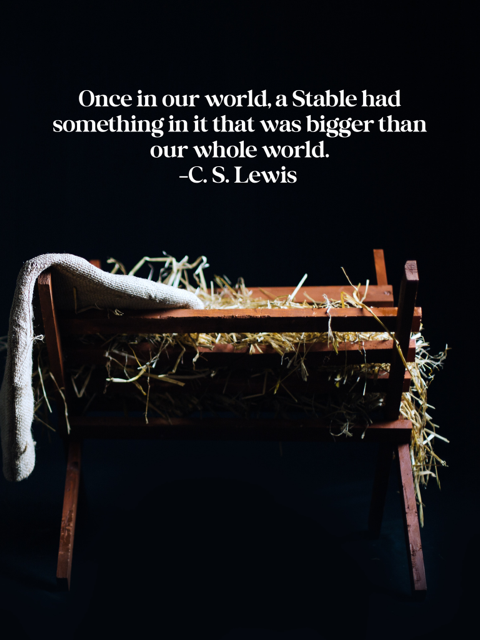
Once in our world, a Stable had something in it that was bigger than our whole world. C. S. Lewis
These Fridays seem to come around faster and faster. I haven’t gotten everything done I wanted to this week–but I’ve still got today and tomorrow! And it’s been a good week overall. It’s nice to pause for a moment with Susanne and friends at Living to Tell the Story to reflect on and share the blessings of the week.
1. Another Chick-Fil-A biscuit. One morning I woke up to find Jim had gone to the gym. There’s a Chick-Fil-A right across from the gym (hardly seems like a fair temptation, does it?) I texted him to see if he might pick up breakfast at CFA on his way home. Funny thing was, he didn’t see my text until after we had eaten–he had gotten CFA for us to celebrate his first day back at the gym after his surgery.
2. Dishwasher chores done. I usually unload the dishwasher sometime during the day and load it back up right after dinner. Somehow one evening last week I hadn’t done either when I dozed off on the couch. I woke up to hear Jim unloading and loading it. Much appreciated!
3. Leftover meals. Another one I forgot from last week: a couple of nights we didn’t want anything busy or heavy, and we had enough leftovers on hand to just heat up plates. Nice to have an easy dinner plus declutter the refrigerator.
4. Vitamin E capsules. I’ll spare you the details, but I have a couple of bothersome skin patches. The doctor basically dismissed it as nothing one year. This year I persisted. He prescribed a steroid cream, which worked wonders—but also raised my blood sugar. At church one morning, one woman was telling another whose husband had just had surgery about puncturing Vitamin E capsules and using their oil on the scars to reduce scar visibility as they heal. I wondered if they might work on my skin issue–and they did! (Note: a little research showed it’s not recommended to use it on scars while they’re forming: best to ask your doctor’s advice.)
5. Warmth and coziness. It’s the time of year when I am especially glad for winter clothes, sweaters, and throw blankets. And I am immeasurably thankful to be able to heat our home at the touch of a button.
Bonus: Canceled plans. With age and some physical issues, it’s hard for me to be out several days in a row. We had something scheduled for six out of the next seven days beginning with Wednesday. One thing I just decided not to go to. Sadly, Mittu was sick and we missed something we were going to attend together. But having a lightened schedule is a great stress reducer.
In Secrets She Kept by Cathy Gohlke, Hannah Stirling’s mother has just passed away. More than mourning her mother, she mourns the loss of what could have been. Hannah’s mother had been distant from Hannah and her father for as long as she could remember.
Going through her parents’ home for some clue about her mother’s past turns out to be fruitless. When she sees the lawyer to finalize her mother’s affairs, Hannah is surprised to be given a key to a safe deposit box that Hannah had never known about. But all she finds there is her parents’ wedding certificate, her father’s military discharge papers, and a few empty envelopes with German addresses and stamps on them.
The paperwork, however, lets her know a shocking surprise: the man she called Daddy all her life could not have been her real father.
The point of view switches to thirty years earlier in Germany, when Hannah’s mother, Lieselotte Sommer, was a teenager just before Kristallnacht. Her mother lay dying, her brother was a whole-hearted member of the Hitler Youth, and her father was a rising member of the Nazi party. Lieselotte had loved her brother’s friend, Lukas Kirchmann, for as long as she could remember. She helps him and his family help Jews with food, false papers, and anything else they can. She longs for the day they can marry.
But Lieselotte’s father puts pressure on her to marry a Nazi officer and raise Aryan children for the Fuhrer. Her father has been distracted, but she never guessed the depths he would go to to further his own ends.
Switching back to Hannah again, her lawyer researches the German addresses on the envelopes in her mother’s safe deposit box. He discovers that she has a grandfather she never knew about. Her mother, Lieselotte, had said she was from Austria and her family all died in the war.
Hannah travels to Germany to meet her grandfather, to try to find out more about her mother, and to discover who her father was. At first she enjoys the connection with her grandfather. But her research uncovers horrifying family secrets.
This book was riveting. I listened to the audiobook, free at the time from Audible’s Plus Catalog, and eventually began looking for extra time to listen more. All the characters, including side characters, are well-developed and the plot. There’s so much more I’d love to say, but I don’t want to spoil anything for potential readers. So I’ll just say it’s a really good book and highly recommended.
I’ve mentioned many times that I considered Elisabeth Elliot my “mentor from afar” for most of my adult life. I discovered her books in college, four decades ago, beginning with Through Gates of Splendor, Shadow of the Almighty, and The Journals of Jim Elliot. I’ve read almost all her books ever since, some of them several times, as well as her newsletters.
Most of you know that Elisabeth was the wife of Jim Elliot, one of five missionaries killed when trying to reach a tribe in Ecuador then known as “Aucas” (now known by their name for themselves, Waorani). A few years later, Elisabeth, her young daughter Valerie, and Rachel Saint, sister of one of the other missionaries, were invited to live with the Waorani. After writing Through Gates of Splendor about “Operation Auca” and the five missionaries, then her husband’s biography, and several articles, Elisabeth began to feel God called her into a ministry of writing. She and Valerie came back to the USA, where Elisabeth spent decades writing, speaking, and teaching.
Elisabeth’s public ministry ended in 2004 when her dementia began to make travel and speaking impossible. She passed away in 2015 at the age of 88. She’s regarded as one of the most influential Christian women of the last 100 years.
It was only a matter of time before biographers started telling her story. In Elisabeth Elliot: A Life, Lucy S. R. Austen harmonizes Elisabeth’s public writing with the journals and letters Austen had access to, which I feel is the strength of this book.
Elisabeth never put herself on a pedestal. She was quite honest about her faults and foibles. Austen takes care to present Elisabeth realistically, not idealistically.
However, I felt that Austen often sat in judgment on Elisabeth’s writing, criticizing such things as her approach to discerning God’s will in her early years, Jim’s behavior as they dated, the difference between what Elisabeth wrote in her journals and what she wrote publicly thirty years later, and so on. I have questions marks and notes of “author judgment” in several margins.
I knew much about Elisabeth’s earlier life from her books and writing. I was looking forward to learning more about what happened after she came back to the USA. But Elisabeth’s earlier life takes up two-thirds of the book, with her last fifty-two years filling only a third. That may be due to several factors: people’s interest in her missionary career; a number of questions and issues about that time; the decreasing number of family letters sent. And then, a lot of the narrative about her time in the States reads like lists of where she traveled and spoke, along with whom she visited and who visited her.
I was heartened to see some of her questions and struggles that emphasized that she was in many ways an ordinary Christian woman dealing with some of the same issues we all do. I was sad to hear of serious issues in her second and particularly third marriages.
Elisabeth seemed, by all accounts, to be a classic introvert. I was sad to see that introversion was thought to be unspiritual in her early life and that she fought against it rather than seeing it as the way God made her.
I was surprised to read that she thought speaking was not her main ministry and, in fact, took away from her writing ministry. I’m thankful to have heard her speak in person twice.
Her views on many things changed and solidified over the years, as happens with most of us. Her journals and sometimes her letters were ways of processing her thoughts. I wouldn’t be too alarmed by some of the views she seemed to hold or wrestled with along the way.
As it happened, I was midway through the book when I turned on the replay of Elisabeth’s radio program, Gateway to Joy, on BBN Radio one morning. She was doing a series called “Jungle Diaries,” reading from her journals of her time in Ecuador. She said she had not looked at them in forty years. She commented that people think she “has it all together,” but her diaries assured that she did not then, and she still did not claim to.
She also commented that her “theology has been developed” since those writings, but what she wrote was raw and real and honest. Then she mentioned that she was shocked to read of her desire to go to the Aucas. She “had no recollection of wanting to go to the Aucas, certainly not that soon after Jim died” (“Jungles Diaries #1:Journal Beginnings,” aired October 16, 2023).
I was quite surprised to hear her say that, as her books indicated that she strongly wanted to go. But then I thought about my own life forty years ago. I was four years married and would soon be expecting my first child. I remember where I worked, where we went to church, who our friends were. But there’s more I don’t remember than I do.
So I feel that Austen often made too much of the differences between what Elliot wrote over a span of forty or more years. But I think Austen tried to be faithful with the material she had.
In writing circles, we’re often told that we might have a perfectly fine manuscript that may be rejected because a similar book has just been published. For that reason, I was surprised to see Austen’s biography come out in-between the two parts of Ellen Vaughn’s “authorized” biography. Perhaps the publishers felt there was sufficient interest in Elisabeth to warrant two biographies of her published so close together. If so, I think they were right.
But I hope sometime someone writes a simple biography of Elisabeth, not analyzing or explaining or annotating, but just telling her story.
One of the main take-aways from listening to or reading about Elisabeth is that her supreme desires were to know and obey God. She was no-nonsense, yet she had a sense of humor. She was sentimental, but she wasn’t unfeeling. She wasn’t perfect, and she wouldn’t say this, but I think she went further than many of us in her spiritual journey.
(Updated to add: I thought I’d share a couple of other, more positive reviews from friends I know and trust: Ann’s is here, and Michele’s is here.)
In my early Christian life, whenever something went wrong, I would doubt God’s love for me. When preachers said God did things for His glory and our good, I would think, “His glory maybe, but my good? How is this good for me?”
There may be many reasons for that reaction, too many to explore here. But surely one was being spiritually immature and not knowing my Bible well enough. Another was the mistaken (and also immature) notion that if God loved me, I wouldn’t have problems. A popular book at the time was If God Loves Me, Why Can’t I Get My Locker Open? I never read the book, but I identified with the feeling.
Satan has capitalized on those feelings since the beginning. When he came to tempt Adam and Eve, he questioned what God said, contradicted it, and insinuated that God didn’t really have their best in mind.
Perhaps that’s one reason Paul prays in Ephesians 3 that God would “grant you to be strengthened with power through his Spirit in your inner being, so that Christ may dwell in your hearts through faith—that you, being rooted and grounded in love, may have strength to comprehend with all the saints what is the breadth and length and height and depth, and to know the love of Christ that surpasses knowledge, that you may be filled with all the fullness of God.” It’s interesting that the next well-known verse in that passage comes in this context: “Now to him who is able to do far more abundantly than all that we ask or think, according to the power at work within us, to him be glory in the church and in Christ Jesus throughout all generations, forever and ever. Amen.”
God wants us to know and rest in His love.
Why?
Well, anyone who loves wants the other person to know it.
But also, when we’re secure in God’s love, we’ll be less inclined to believe Satan’s lies. We can go forward through whatever trial is ahead knowing God is with us and has allowed it for some good purpose. We can obey Him because we know He is good, righteous, kind, and loving. We can love others out of the overflow of God’s love to us.
So how can we remind ourselves of God’s love when we might not feel it?
Remember what He did to save you. God would not have put up with all He did throughout humanity’s history, and Jesus would not have come to earth to live and die for us, if they did not love us. John 3:16, probably the most famous Bible passage in the world, tells us, “For God so loved the world, that he gave his only Son, that whoever believes in him should not perish but have eternal life.”
God’s law convicted me of my sin and showed me my need for a Savior. But it was His love that drew me, that convinced me He would receive me. He loved me when I was still in sin, His enemy, and uninterested. “God shows his love for us in that while we were still sinners, Christ died for us” (Romans 5:8).
Chas. H. Gabriel expressed this beautifully in his hymn “He Lifted Me”:
He called me long before I heard, Before my sinful heart was stirred, But when I took Him at His word, Forgiven, He lifted me.
From sinking sand He lifted me, With tender hand He lifted me, From shades of night to plains of light, O praise His name, He lifted me!
In Hosea, God says He drew Ephraim with “gentle cords, bands of love.” James Grindlay Small captures this in “I’ve Found a Friend”:
I’ve found a Friend, oh, such a Friend! He loved me ere I knew Him; He drew me with the cords of love, And thus He bound me to Him. And round my heart still closely twine Those ties which naught can sever, For I am His, and He is mine, Forever and forever.
Get to know God better. Jesus said, “And this is eternal life, that they know you, the only true God, and Jesus Christ whom you have sent” (John 17:3). Eternal life begins with knowing God. But we come to know Him increasingly more through our lives. We learn about Him from nature and other people, but the primary way of knowing Him better is through His Word. The more we know Him, the more we rest in His character and love.
Remember how He has blessed you. I’ve mentioned before “Ebenezers,” those times in your life when you especially saw God move and work in your behalf.
Meditate on His Word. I’ve referred to a few verses about God’s love. Here are a few more:
The LORD delights in you (Isaiah 62:4).
Can a woman forget her nursing child,that she should have no compassion on the son of her womb?Even these may forget,yet I will not forget you.Behold, I have engraved you on the palms of my hands;your walls are continually before me.(Isaiah 49:15-16).
The Lord takes pleasure in those who fear him, in those who hope in his steadfast love (Psalm 147:11).
The Lord your God is in your midst, a mighty one who will save; he will rejoice over you with gladness;he will quiet you by his love; he will exult over you with loud singing (Zephaniah 3:17).
But you, O Lord, are a God merciful and gracious, slow to anger and abounding in steadfast love and faithfulness (Psalm 86:15).
As the Father has loved me, so have I loved you. Abide in my love (John 15:9).
See what kind of love the Father has given to us, that we should be called children of God; and so we are (1 John 3:1).
In all these things we are more than conquerors through him who loved us.For I am sure that neither death nor life, nor angels nor rulers, nor things present nor things to come, nor powers,nor height nor depth, nor anything else in all creation, will be able to separate us from the love of God in Christ Jesus our Lord (Romans 8:37-39).
May the Lord direct your hearts to the love of God and to the steadfastness of Christ. (2 Thessalonians 3:5).
Listen to Scripture-based songs about God’s love, or read the lyrics. I’ve mentioned a few already. Here are some more:
Could we with ink the ocean fill, And were the skies of parchment made; Were every stalk on earth a quill, And every man a scribe by trade; To write the love of God above Would drain the ocean dry; Nor could the scroll contain the whole, Though stretched from sky to sky.
Here is love, vast as the ocean, Loving-kindness as the flood, When the Prince of Life, our Ransom, Shed for us His precious blood. Who His love will not remember? Who can cease to sing His praise? He can never be forgotten, Throughout heav’n’s eternal days.
“How Deep the Father’s Love For Us” by Stuart Townend (This is still under copyright, so I won’t post its lyrics, but you can find them here).
“O Wondrous Love” by Steve and Vikki Cook is also still under copyright: the lyrics are here.
Loved with everlasting love, Led by grace that love to know; Spirit, breathing from above, Thou hast taught me it is so. Oh, this full and perfect peace! Oh, this transport all divine! In a love which cannot cease, I am His, and He is mine.
In heavenly love abiding, No change my heart shall fear; And safe is such confiding, For nothing changes here: The storm may roar without me, My heart may low be laid; But God is round about me, And can I be dismayed?
Remember God’s love and truth work hand in hand. Some people emphasize God’s love to the exclusion of His righteousness and holiness. They see God as a doddering old grandfather who overlooks any wrongdoing and slips them sweets when their mother isn’t looking. They don’t understand that God is a God of truth as well as love, that it wouldn’t be loving of Him to let us go on in our sin without chastening.
A loving parent has to say no sometimes, or require hard things. A child might feel the parent would show more love by giving everything the child wants or making life easy. But that kind of behavior is selfish rather than loving, wanting the child’s approval (or wanting to avoid a tantrum) instead of doing what would build the child’s character.
Remember God’s love is based on His character, not ours. When we’re doing what we’re supposed to, we “feel” loved by God. But when we fall and fail, we feel maybe His love has dimmed a little, if not evaporated.
But the Bible tells us that “As a father shows compassion to his children, so the Lord shows compassion to those who fear him. For he knows our frame; he remembers that we are dust (Psalm 103:13-14). Verse 17 goes on to say, “But the steadfast love of the Lord is from everlasting to everlasting on those who fear him.”
He chastens us like a father because He loves us (Hebrew 12:5-11).
Though John 3:16 says God loves the world, that doesn’t mean the whole world has automatically become His. Some reject or ignore God’s love and gifts.
“God gave us eternal life, and this life is in his Son. Whoever has the Son has life; whoever does not have the Son of God does not have life” (1 John 5:11-12).
If you do know God, rest in His love, remind yourself of it often.
May you “come to know and to believe the love that God has for us. God is love, and whoever abides in love abides in God, and God abides in him” (1 John 4:16).
I didn’t think I’d have a Laudable Linkage this morning. It’s been a busy week, and I am way behind on blog reading. But I had a little free time yesterday afternoon and found these good reads.
Picture Perfect Christmas. “Every time I look awful, I run into my most together friend. HER. That altogether all together friend. I try not to let it, but it surely can make me cranky. And angsty. Crangsty.”
Victim Blaming and the Rich Young Ruler, HT to Challies. “The way that Jesus responded to the rich young ruler is so different from what comes naturally to me. When I see someone suffering, my mind often seeks to figure out how they are at fault for their own suffering. And that response is wrong for two main reasons.”
Grace in Afflictions. “I have been meditating for several weeks on 2 Cor. 4:15-18. The expression “light affliction” has been returning to my mind as I deal with daily, nagging physical conditions that are burdensome and uncomfortable. I’m seeking relief, improvement, and help from any source available. Even though I’m plagued by real challenges and wearing out, I’m still striving for healing and personal progress in my body and my soul. To respond I’m fleeing regularly to my study of God’s grace as revealed in scripture.” I especially love the last paragraph here.
Repeat Forever. “Can we linger just a little longer on thanksgiving before we move onto Christmas? ‘I will bless the Lord at all times; His praise shall continually be in my mouth.‘ (Psalm 34:1, NASB). One of the definitions of ‘continually’ is ‘without an intermission’ (dictionary.com). In other words, ongoing.”
Though we are keenly aware of the abuses that have grown up around the holiday season, we are still not willing to surrender this ancient and loved Christmas Day to the enemy. – A. W. Tozer
Happy first Friday of December! It was nice to have a buffer week between Thanksgiving and the first of December. Though life is always busy, December is especially so. It’s even more important to schedule pauses for remembering what’s important and counting our blessings. Susanne at Living to Tell the Story hosts an opportunity to do that with Friday’s Fave Five.
Here are a few of mine:
1. Decorating for Christmas with the family. I thought about waiting til next week, just from tiredness. But I am glad we went ahead. I am so thankful that the family helps with this, even though Jason and Mittu have their own house to decorate. Not only do many hands make light work, but it’s fun to reminisce as we do. Mittu made a great lunch. for us all.
2. Lunch with Melanie. We try to get together once a month or so, but it had been a long while. We had gift cards to Red Lobster and enjoyed catching up. By the way, she had a birthday this week! Some of you know her through FFF or other blogging means—feel free to pop over and wish her a belated happy birthday.
3. A good eye exam with no new issues or problems.
4. Hot oil hair treatment. I have very dry skin and have to put lotion all over year-round. But cold, dry weather really does a number on me. I couldn’t put lotion on my scalp, however. Then I remembered I used to use VO5 hot oil treatment—a little tube you put in a cup of hot water and then massage its contents into your scalp before shampooing. I even had some in the bathroom cabinet. It felt so good.
5. Online shopping. We got a good chunk of our Christmas shopping done this week, and now enjoy receiving the deliveries!
The end of November finds us in a cold snap transitioning to the Christmas season. Since Thanksgiving was the earliest it can be, it feels like we have a bonus week to get ready for Christmas.
Jim spent most of this month continuing to recover from his surgery in October. He saw both surgeons for post-op visits plus had his yearly physical. He can pretty much do all his usual things, but still tires easily and still has some abdominal pain.
I had my yearly physical and eye exam this month, thankfully with no new issues cropping up except an easily fixed vitamin deficiency.
We enjoyed our annual family costume party at my son and daughter-in-law’s house and Thanksgiving at ours, and everyone pitched in to help us decorate for Christmas last weekend.
Creating
I made one card this month for my friend Melanie‘s birthday.
The “Happy Birthday” was printed from the computer, then I used a rose corner punch on opposing corners. I was going to do all four corners, but the punch was bigger than I had thought. I liked how it turned out, though.
We didn’t watch much of interest this month except one movie called Storming Juno. It’s not the best made film I’ve ever seen, but it was interesting. It’s about Canadian troops that were first to arrive at Normandy on D-Day and first to achieve their objective. At the end they showed actual footage as well as interviews with several of the soldiers who were there.
Reading
Since last time, I finished (titles link back to my reviews):
As Dawn Breaks by Kate Breslin, fiction. A young woman about to be forced into an unwanted marriage by her guardian survives an explosion in the munitions factory where she works in 1918. She takes on the identity of her friend who died and leaves the country, with unexpected consequences.
The Wings of Poppy Pendleton by Melanie Dobson, fiction, audiobook. The young daughter of a Gilded Age couple is abducted from their castle and not heard from again. Decades later, the daughter of the castle’s caretaker first tries to avoid, and then helps a reporter trying to uncover what happened.
The Book of Lost Friends by Lisa Wingate, fiction, audiobook. Dual timeline novel set in 1875, where two half-sisters and a slave set out to find the missing master of the house, and 1987, where a first-year teacher tries to motivate her students to get interested in reading by sharing their families’ stories.
Someday Is Today: 22 Simple, Actionable Ways to Propel Your Creative Life by Matthew Dicks, nonfiction. I didn’t review it here but left a few thoughts on GoodReads.
Elisabeth Elliot: A Life by Lucy S. R. Austen, nonfiction.Just finished, hope to review next week.
Be Skillful (Proverbs): God’s Guidebook to Wise Living by Warren Wiersbe, nonfiction
Adorning the Dark: Thoughts on Community, Calling, and the Mystery of Making by Andrew Peterson, nonfiction
Being Elisabeth Elliot by Ellen Vaughn
How to Write a Sentence and How to Read One by Stanley Fish, fiction
Secrets She Kept by Cathy Gohlke, fiction
Crown of Thorns by Sigmund Brouwer, fiction
I’ve completed the workbook and videos in Jen Wilkin’s Abide Bible study course on 1, 2, and 3 John for the ladies’ Bible study at church. I’ve read many of her books but this is the first of her Bible studies I’ve done. It was quite good.
I still haven’t chosen and advent devotional book to read for December . . . which I need to do before tomorrow!
Things will probably be light on that front until December, though I’ve jotted some notes for a couple of articles.
Turning the corner into December, I’m sure we’ll be busy about the same things as many of you: wrapping presents, sending Christmas cards, attending Christmas events, and looking forward to time with the family. My oldest son flies in later in the month, so we have a lot to look forward to.
I hope you had a great November and I wish you a blessed Christmas season!
One of the main things that helps me keep a good perspective through December is reading a Christmas or Advent devotional book.
Some years I’ve followed reading plans for Scripture that specifically deal with the coming of Christ, including the prophecies of His birth. I don’t have one on hand, but I’m sure there are plenty online.
Most years, though, I read an Advent devotional book usually in addition to, sometimes instead of, my usual devotional time. So I thought I’d share some of the ones I’ve enjoyed with you. I’ll link the titles back to my reviews.
Heaven and Nature Sing: 25 Advent Reflections to Bring Joy to the World by Hannah Anderson is the newest I’ve read, just published last year. It’s also one of my favorites. Reading this book set me to reading many of Hannah’s other books this year. The title comes from a phrase in Isaac Watt’s “Joy to the World.” Hannah took inspiration from this phrase and wrote twenty-five Advent devotions based on various aspects of nature connected with the birth of Christ. Each devotion is about five pages long and written in an easily readable style.
Sample quote: “Yes, the manger signals something about this baby, but it is not simply his poverty. By being placed in the manger, he is revealed as both the rightful son of Adam charged with caring for his creation and also the eternal Son of God who created them and who provides for them. So instead of filling the manger with hay or corn, he fills it with himself.”
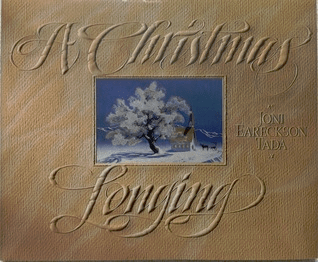
A Christmas Longing by Joni Eareckson Tada is a gorgeous book filled with her art work, drawn by mouth due to her paralysis. It’s made up of 31 readings for each day in December centered on the theme of joy.
Sample quote:”Lives hinge and eternal destinies hang in the balance when men and women come face to face with Jesus the Christ. It isn’t always peaceful. It isn’t always painless. It isn’t always easy. But bowing the knee to Jesus Christ is always right. No matter what.”
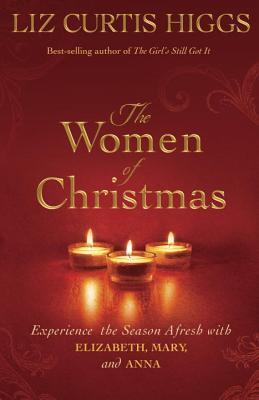
The Women of Christmas: Experience the Season Afresh with Elizabeth, Mary, and Anna by Liz Curtis Higgs. The eight chapters here are longer, around twenty pages or more. So it might not work as a devotional unless you divided the chapters up. But I thoroughly enjoyed this one. Liz did tons of research and study, but the book is warm rather than technical and stiff.
Sample quote: “When I hear women rail that the Bible is misogynistic, I wonder if we’re reading the same book. God loves women, redeems women, empowers women – then and now. On the day we call Christmas, he could simply have arrived on earth, yet he chose to enter through a virgin’s womb. On the day we call Easter, he could have appeared first to his beloved disciple John, yet he chose as his first witness a woman set free from seven demons.”
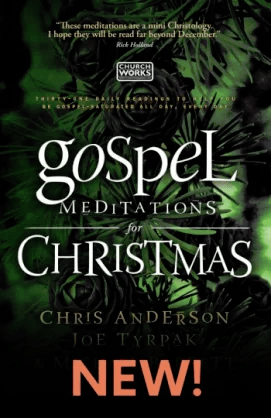
Gospel Meditations for Christmas by Chris Anderson, Joe Tyrpak, and Michael Barrett is divided into 31 pages, one a day through the month of December (or any time, really, since these truths are eternal). Each page lists a Bible passage to read and then delves into some facet of the passage for a handful of paragraphs. The primary focus of the book is various aspects of the Incarnation
Sample quote: “Matthew begins his account of the good news with a record of Jesus’ ancestry. This isn’t some boring list of personal details that Matthew came across in research and decided to include as space-filler. No, this genealogy is Matthew’s attention-grabbing introduction, and it’s jam-packed with significance.”
Expecting Christmas is a 40-day devotional by multiple authors. I wished this one was 25 or 31 days so it would fit neatly in December. I didn’t know any of the author names except one (Jennifer Dukes Lee). The selections are short, which is appreciated in a month like December. Each began with a verse or two of Scripture, a page and a half to two pages (at least in the Kindle version) of text, then three questions for refection.
The readings cover a variety of Christmas topics, though several deal with light.
Sample quote: “Mary’s response was one of quiet introspection as she treasured the good news of the gospel in her heart. The shepherds, on the other hand, left young Jesus, glorifying God and praising Him with outward enthusiasm and passion. People celebrate the gospel in different ways.”
Sample quote: “The tabernacle of old was not full of truth, but full of image, and shadow, and symbol, and picture; but Christ is full of substance. He is not the picture, but the reality; he is not the shadow, but the substance. O believer, rejoice with joy unspeakable for you come to Christ, the real tabernacle of God.”
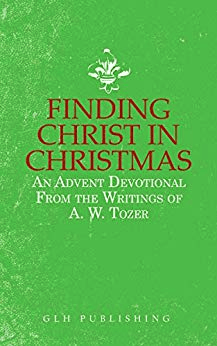
Finding Christ in Christmas: An Advent Devotional by From the Writings of A. W. Tozer has readings for December 1 – 25, ranging from just a paragraph to little more than a page. So the selections are easily readable. I felt the selections were a little haphazard, taken out of context, and some left the reader hanging a bit. But the book contained several great nuggets. Tozer’s writing is not warm and cozy, but it makes one think.
Sample quote: “The Law was given by Moses, but that was all that Moses could do. He could only ‘command’ righteousness. In contrast, only Jesus Christ produces righteousness. All that Moses could do was to forbid us to sin. In contrast, Jesus Christ came to save us from sin. Moses could not save anyone, but Jesus Christ is both Savior and Lord.”
Sample quote: “Even though you may still be unconverted and going your own way, you have received much out of the ocean of His fullness. You have received the pulsing life that beats in your bosom. You have received the brilliant mind and brain within the protective covering of your skull. You have received a memory that strings the events you cherish and love as a jeweler strings pearls into a necklace and keeps them for you as long as you live and beyond. All that you have is out of His grace. Jesus Christ, the eternal Word, who became flesh and dwelt among us, is the open channel through which God moves to provide.”
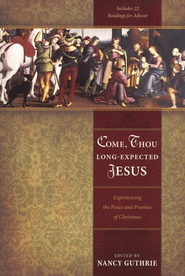
Come Thou Long Expected Jesus:Experiencing the Peace and Promise of Christmas, compiled by Nancy Guthrie, is one I have enjoyed several times. It contains 22 selections on various aspects of Advent, from Mary to conception by the Holy Ghost to Joseph to the shepherds to Jesus’s humility and others, from such teachers and preachers as Charles Spurgeon, Augustine, Martyn Lloyd-Jones to Tim Keller, John MacArthur, J. I. Packer, and Ray Ortland. I don’t know all of the authors, so I wouldn’t endorse everyone 100%, but I don’t think I read anything in this particular volume that I had a problem with.
Sample quote from J. I. Packer: “The Christmas message is that there is hope for a ruined humanity–hope of pardon, hope of peace with God, hope of glory–because at the Father’s will Jesus Christ became poor and was born in a stable so that thirty years later he might hang on a cross. It is the most wonderful message that the world has ever heard, or will hear.”
Let Every Heart Prepare Him Room: Daily Family Devotions for Adventby Nancy Guthrie is another I’ve read several times. It designed for families to read together, but works well read by individuals, too. There are 31 readings, each ending with a prayer, some discussion questions, and a few more Scriptures on the topic of the chapter.
Sample quote: “Sometimes we are given a gift that we think is not really useful to us, and therefore we never take it out of the box. We stash it away in a closet or on a shelf somewhere in case we need it someday. Sadly, that’s what some people do in regard to Jesus. They want to keep him handy for when something comes along that they can’t handle on their own, but for now they have no interest in making him part of their day-to-day lives, and so they put him on the shelf. They simply don’t believe he is as good as the Bible says he is, and so they have no real or lasting joy in having received this great gift.”
Those are all the ones I can remember reading or find mention of on the blog.
Do you have any favorite Christmas or Advent devotionals? I’d love to hear your recommendations.
In the USA, we’ve just celebrated Thanksgiving. Deliberately set for the time just after harvest, the holiday traditionally called for joy and thankfulness when provisions for the next year had been safely gathered in.
Though not everyone farms or gardens these days, we still use this time to remind ourselves just how blessed we are. Those who know the Lord, and even some who don’t, thank God for what He has given.
But I’ve learned from farming friends and history that not all harvests are created equal. One can do everything possible to raise a crop, but one can’t make anything grow. Bad weather, drought, insect invasion, or plant disease can diminish, if not totally wipe out a crop.
Some Thanksgiving seasons find us overflowing with burdens rather than blessings.
What then?
It’s relatively easy to thank God in times of health and plenty. But in times of want, illness, or sorrow, are we exempt from thanking God?
I think of Philippians 4:11-12, where Paul says, “I have learned in whatever situation I am to be content. I know how to be brought low, and I know how to abound. In any and every circumstance, I have learned the secret of facing plenty and hunger, abundance and need.”
Content in all things? Even in hunger or need?
Why would God allow His children to suffer need?
To convict of sin. Often in the Old Testament, when Israel looked to idols or other countries for help instead of God, God allowed them to suffer need. This wasn’t vindictive or petty. In love, God had to let them see that other sources they looked to were useless and powerless. This doesn’t mean every trial or need comes because one has sinned. But trials provide a good opportunity to see if any sin is hindering God from answering our prayers.
To sanctify and humble us. Paul said his thorn in 2 Corinthians 12 was given “to keep me from becoming conceited because of the surpassing greatness of the revelations” given to him.
To help us grow. In John 15, Jesus said He was the vine, his Father the vinedresser, and we’re the branches. Then He said, “Every branch that does bear fruit he prunes, that it may bear more fruit” (verse 2). I’m not good with plants, but I have discovered the truth of this principle. Many plants don’t grow as they should if they’re not cut back at times.Trimming the branches helps the plants grow not only more healthy, but more blooms. So when God removes something from our lives, we grow in ways we would not have without that pruning.
To bring us to maturity. James i:2-4 says, “Count it all joy, my brothers, when you meet trials of various kinds, for you know that the testing of your faith produces steadfastness. And let steadfastness have its full effect, that you may be perfect and complete, lacking in nothing.”
To turn our hearts to what is most important. At the end of Israel’s years in the wilderness, God told them, “You shall remember the whole way that the Lord your God has led you these forty years in the wilderness, that he might humble you, testing you to know what was in your heart, whether you would keep his commandments or not. And he humbled you and let you hunger and fed you with manna, which you did not know, nor did your fathers know, that he might make you know that man does not live by bread alone, but man lives by every word that comes from the mouth of the Lord.” (Deuteronomy 8:2-3).
As a testimony that we don’t serve Him just for His blessings. That’s what Satan accused Job of: that Job only served God because God had blessed him so much. Take away his blessings, Satan urged, and Job will curse You (Job 1). Job went through a rough time and questioned God, but he didn’t turn away from Him in faithlessness.
Elisabeth Elliot wrote in her September/October 1984 newsletter (which was later published in Keep a Quiet Heart), “It had to be proved to Satan, in Job’s case, that there is such a thing as obedient faith which does not depend on receiving only benefits. Jesus had to show the world that He loved the Father and would, no matter what happened, do exactly what He said. The servant is not greater than his Lord. When we cry ‘Why, Lord?’ we should ask instead, ‘Why not, Lord? Shall I not follow my Master in suffering as in everything else?’ Does our faith depend on having every prayer answered as we think it should be answered, or does it rest rather on the character of a sovereign Lord?”
She goes on to say, “Genuine faith is–the kind of faith that overcomes the world because it trusts and obeys, no matter what the circumstances. The world does not want to be told. The world must be shown.”
You might think, “Okay, I can see why God might allow us to suffer need sometimes. But how can I be content even then? I have a hard enough time being content even when everything is going well.”
In the Philippians 2 passage mentioned earlier, where Paul speaks of being content in every situation, whether in plenty or need, he follows that statement with a verse that we take out of context and apply to everything else: “I can do all things through him who strengthens me.”
I’ve found it amusing when two Christian ball teams claim Philippians 1:13 as they compete against each other. They’re thinking of it in terms of winning. But one team will need His strength to lose well.
In 2 Corinthians 12:7-10, Paul shares that he prayed three times for God to remove his “thorn in the flesh,” whatever that actually entailed. But God did not remove the difficulty. Instead, he promised, “My grace is sufficient for you, for My strength is made perfect in weakness” (NKJV).
Paul’s response? He didn’t whine, “That’s not fair.” He didn’t get angry. He said, “Therefore most gladly I will rather boast in my infirmities, that the power of Christ may rest upon me. Therefore I take pleasure in infirmities, in reproaches, in needs, in persecutions, in distresses, for Christ’s sake. For when I am weak, then I am strong.”
Perhaps that’s the main reason God sometimes lets us suffer need: to cause us to rely on Him.
This doesn’t mean we never seek help or take measures to deal with our needs. But we realize God is the giver of all good gifts. We can’t do anything without Him. He’s promised to meet all our needs. We don’t have to worry and fret: we can rest in His care and timing.
One time I experienced these things was minor in the grand scheme of things, but major at the time. I was getting ready to leave for a writer’s conference and prayed for a good night’s sleep. I wasn’t consciously nervous, at least not like I had been the first time I went. But I only got about an hour’s sleep all night. I tossed, turned, went to the couch, tried all my usual tricks like listening to soft music, prayed and prayed and prayed. Yet sleep wouldn’t come.
I got up around 4:30 and took a shower. I had a three-hour drive ahead of me, but knew it wasn’t safe to get behind the week in the state I was in. I had asked the Lord to search my heart for anything amiss and to help me know if this was His way of telling me not to go. I decided to try to take a nap in my desk chair and asked God to multiply my sleep like the loaves and fishes so it would be enough.
I woke up and headed out. I missed the opening session, but it wasn’t critical, and I had a wonderful time at the conference.
However, I was still confused, and even hurt, to tell the truth, that God had not answered my prayer for a good night’s sleep.
Over the next few days, some of these principles came to mind and helped. Then I realized God had answered my prayer—just not in the way I expected. The sleep I got was sufficient for my needs, even though it normally would not have been.
I’m still not sure why God allowed things to happen just that way. All I know is, sometimes He brings us to the end of ourselves so that all we can do is lay our need before Him. When we look to Him alone, He gives us the strength and grace we need.















 Stray Thoughts