Unknown's avatar

About Barbara Harper

https://barbarah.wordpress.com

Friday’s Fave Five

Friday's Fave Five

It’s been a busy week! I’m glad to sit down and recount some of the week’s blessings with Susanne and friends at Living to Tell the Story.

1. Labor Day is kind of an odd holiday in that it doesn’t have any traditions associated with it—except maybe grilling hamburgers, which we did. Labor Day seems like the summer’s last hurrah, though it will still feel like summer for a few weeks yet, past the official start of fall. But it was nice to have the day off and to have all the kids over (minus Mittu, who, sadly, wasn’t feeling well but still sent over a wonderful chocolate pie).

2. Puttering. On Saturday afternoon, I got finished with what I was working on about an hour before dinner time. There was nothing else that had to be done, so I enjoyed time just puttering around doing assorted little things. It was fun and relaxing.

3. Expandable bookcases. I had asked for and received for my birthday this expandable bookcase. Due to a mix-up my husband actually ended up getting two, but that turned out to be a good thing. They seemed a little flimsy when I first tried to set them up, but once they had books in them, they were fine. I used them to house my cookbooks a little better.

Amazon image of expandable bookcase
Amazon image
cookbooks
Before. . .
Cookbooks in expandable holder
After

4. Bathroom scrubbing by my dear husband. He has some kind of attachment to his drill that he sometimes uses to scrub the bathtub much more thoroughly than I can with my little brush and cleanser. Then he swept and mopped as well.

5. Catching up with friends. Though funerals are not favorite occurrences, we enjoyed so much catching up with old friends at the graveside of a dear older man from a church we used to attend. Then Melanie and I had our almost-monthly lunch meet-up, this time courtesy of gift cards to Cracker Barrel.

That’s my week. How was yours?

Review: A Fool and His Monet

A Fool and His Monet

In the novel A Fool and His Monet by Sandra Orchard, Serena Jones is a new member of the FBI Art Crime Team. She was motivated by the death of her grandfather during an art theft and hopes her new position will help her find his killer.

Serena’s friend, Zoe, the temporary head of security at the local art museum, brings Serena in to report the theft of two paintings in storage, a Monet and a Rijckaert. Since the paintings were in storage, the theft had not been noticed immediately. So the case was already somewhat cold. But Serena immediately begins interviewing museum employees. Her trainer, Tanner, joins her on the case. Oddly, her supervisor makes her stop investigating her lead suspect.

Serena’s mother pesters her to get a nice, safe, normal job and give her grandchildren. Her aunt fancies herself an amateur sleuth and offers Serena advice. The aunt even inserts herself into some of Serena’s investigation.

Though the book has some serious and touching moments, it’s somewhat a comedy of errors. But the case eventually gets solved with many twists and detours along the way.

I enjoyed several art-related details sprinkled throughout the book, especially one quote from Stella Adler: “Life beats down and crushes the soul and art reminds you that you have one.”

There’s a light faith element: a few mentions of God and prayer.

This isn’t my usual genre of book. But that’s one nice thing about Kindle sales: trying something you might not have otherwise.

I admit I got a little lost on some of the details. And I wasn’t fond of Serena’s aunt’s involvement. But overall this was a fun book. If you like figuring out mysteries with comedic undertones, you might like this one.

Review: Hannah Coulter

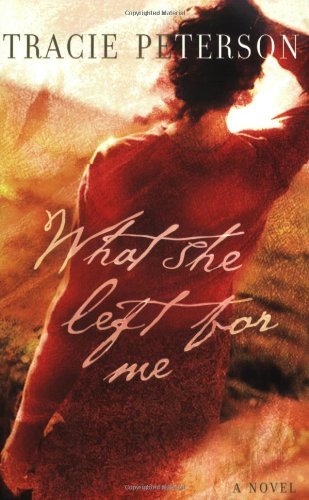
Hannah Coulter is Wendell Berry’s seventh book, published 44 years after Nathan Coulter. But the action picks up right where Nathan Coulter left off. I’ve only read these two books and Jayber Crow, but I understand that Hannah appears in some of the other Port William books as well.

Hannah tells her story as an elderly woman, twice widowed, looking back over her life. She was born in 1922 as the only daughter to her parents. Their farm was owned by her father’s mother, Grandmam, who lived and worked with the family.

Hannah had responsibilities around the farm from the time she was five or six. By the age of twelve, when her mother died, Hannah could do “a woman’s part.” She tells of her father’s remarrying a woman who “lived up to the bad reputation of stepmothers.” Grandmam watched out for Hannah, though, providing for her to go to high school and secure her first job.

Hannah met her first husband, Virgil Feltner, at work. He died in WWII while Hannah was expecting her first child. Hannah lived with her in-laws, who loved her like a daughter.

Then Nathan Coulter came back from the war and helped the Feltners out on their farm. Hannah tells of his budding interest, then hers, until they finally married and moved into the fixer-upper farm he bought.

Along with the details of their lives together, Hannah shares the history of the times and the community of neighbors that they called “The Membership.” The Membership wasn’t an official club; rather, that’s what they called the group who lived near each other and helped each other on their farms.

Over the course of Hannah’s long life, Port William saw many changes. Hannah decried many of the changes, like not knowing many of the families in the community any more, some technologicaladvances, and so on. Many of the “Membership’s” young people did not stay on the family farms, including Hannah’s.

Hannah Coulter reminds me of Laura Ingalls Wilder’s Little House books in the sense of showing how people used to live and how things changed over the decades of one person’s life. But Berry’s voice is quite different from Wilder’s.

Hannah is my favorite of the three Port William books I have read so far. There’s an unfortunate smattering of bad language, as with the other books. Michele Morin had hosted a discussion of Jayber Crow (which I think is what prompted me to read it) and mentioned once that it sometimes felt that Berry took the microphone in place of Jayber. I had that same feeling in a couple of places here, particularly in passages about the war.

But Hannah seems the most authentically Christian of Berry’s characters that I’ve encountered so far. And the main strength of Berry’s writing is the lyricism, the sense of place, community, love, and relationships.

A few quotes that stood out to me:

Love is what carries you, for it is always there, even in the dark, or most in the dark, but shining out at times like gold stitches in a piece of embroidery.

The living can’t quit living because the world has turned terrible and people they love and need are killed. They can’t because they don’t. The light that shines into darkness and never goes out calls them on into life. It calls them back again into the great room. It calls them into their bodies and into the world, into whatever the world will require. It calls them into work and pleasure, goodness and beauty, and the company of other loved ones.

I began to trust the world again, not to give me what I wanted, for I saw that it could not be trusted to do that, but to give unforeseen goods and pleasures that I had not thought to want.

Sometimes…I wander about in this house that Nathan and I renewed, that is now aged and worn by our life in it. How many steps, wearing the thresholds? I look at it all again. Sometimes it fills to the brim with sorrow, which signifies the joy that has been here, and the love. It is entirely a gift.

It is hard to say what it means to be at work and thinking of a person you loved and love still who did that same work before you and who taught you to do it. It is a comfort ever and always, like hearing the rhyme come when you are singing a song.

He was a humorous, good-natured man, maybe because he hoped for little and expected less and took his satisfactions where he found them.

A lifetime’s knowledge shimmers on the face of the land in the mind of a person who knows. The history of a place is the mind of an old man or an old woman who knows it.

Even old, your husband is the young man you remember now. Even dead, he is the man you remember, not as he was but as he is, alive still in your love. Death is a sort of lens, though I used to think of it as a wall or a shut door. It changes things and makes them clear. Maybe it is the truest way of knowing this dream, this brief and timeless life.

Any time an eighteen-year-old boy tells you not to worry, you had better worry.

Members of Port William aren’t trying to get someplace. They think they are someplace.

One theme that comes up continually is something Nathan says. When unexpected changes come, even his own terminal diagnosis, Nathan says he’s just going to “live right on.” “Living right on called for nothing out of the ordinary. We made no changes. We only accepted the changes as they came.”

I listened to the audiobook nicely read by Susan Denaker.

Have you read Hannah Coulter or others of Berry’s books? What did you think?

When Everything Goes Wrong

When everything goes wrong.

It must have seemed to the disciples like everything was going wrong.

In less than twenty-four hours, everything they had worked for the past three years seemed to unravel:

  • A “great crowd with swords and clubs” came to find Jesus in the garden of Gethsemane (Matthew 26:47).
  • Judas, one of the twelve disciples, betrayed Jesus.
  • Peter, thinking to defend Jesus, wielded his sword and cut off a man’s ear. But Jesus told him to put his sword away.
  • Jesus was wrongly arrested.
  • People lied about Jesus at His trial.
  • Jesus was falsely accused of blasphemy.
  • The Jews spit at, slapped, beat, and mocked Jesus.
  • Peter, who promised to stay with Jesus always, denied knowing Him.
  • Judas killed himself.
  • Jesus was taken to Pilate, who offered to make Jesus the prisoner he annually released for the crowd. But the crowd chose Barabbas instead.
  • Pilate had Jesus scourged and delivered Him to be crucified.
  • The Roman soldiers mocked, spit on, and beat Jesus.
  • Jesus was crucified between two thieves.
  • Jesus was mocked by the crowd.
  • Jesus died.
  • Earthquakes split rocks and opened tombs.

I can only imagine the disciples’ dismay and confusion for the three days between the crucifixion and resurrection. Jesus told them He was going to be put to death and rise again, but somehow they didn’t get it. At least, however they thought it was all going to work, they were clearly surprised and unprepared.

Their leader, their Messiah, had been cruelly treated and killed. How did it all happen, and so quickly? What was going to happen to them now? What should they do?

As they were soon to discover, God’s perfect will was being worked out. God didn’t just work in spite of all that had occurred, but through it all.

God’s fingerprints were all over this day. Does that mean He made people sin? No, but He knew what they would do.

At least 27 Old Testament prophecies were fulfilled by Christ in that one day, not to mention so many that were fulfilled over His lifetime. .

The Pharisees had not wanted to arrest Christ during the Passover “lest there be an uproar among the people (Matthew 26:3-4). But that’s exactly when it happened, so that Jesus, the Lamb of God, could fulfill what the Passover lamb represented.

When Pilate said, “Do you not know that I have authority to release you and authority to crucify you?” Jesus answered him, “You would have no authority over me at all unless it had been given you from above” (John 19:10).

Jesus “yielded up His spirit” (Matthew 27:50). He died when He had fulfilled everything and when He was ready. He died on His terms, not Pilates’ or the Pharisees’ or the soldiers’.

On this worst of days, when everything seemed to be going wrong, God was working to accomplish the means of our salvation. Though it must have seemed to the disciples that everything was spinning out of control, God’s perfect will was being accomplished.

Others in Scripture had times when everything seemed to be going wrong.

  • Job lost his possessions, his livelihood, his ten children, and then his health.
  • Abraham and Sarah were promised a son, but nothing happened for decades.
  • Joseph was the favored son, but was sold by his brothers into slavery, falsely accused, and thrown into prison. Those whom he asked to say a good word for him forgot.
  • David was anointed king, but spent years running for his life and hiding in caves before he was crowned.
  • The Jews were on the verge of being exterminated by a wicked enemy in the book of Esther. Esther was unsure whether her husband, a pagan king, would listen to her plea to save her people. Though God is not named in the book, His hand is obvious throughout.

We see their situations resolved by God’s provision and leading in just a few pages. But we need to remember they lived with questions and bewilderment for a long time, even for many years in some cases.

Olympic runner and missionary Eric Liddell said, “Circumstances may appear to wreck our lives and God’s plans, but God is not helpless among the ruins. God’s love is still working. He comes in and takes the calamity and uses it victoriously, working out His wonderful plan of love.”

When things seem to be falling apart, when God’s answer doesn’t seem to be coming, when we’re confused, when we have no idea how the current circumstances will ever work out, we can go to God. He doesn’t always let us know His plans or reasons. But He promises He loves us and He is in control. He has a purpose for everything He allows. Many verses reassure us of these things. Here are just a few:

  • “Remember the former things of old; for I am God, and there is no other; I am God, and there is none like me, declaring the end from the beginning and from ancient times things not yet done,
    saying, ‘My counsel shall stand, and I will accomplish all my purpose” (Isaiah 46:9-10).
  • “The LORD has established his throne in the heavens, and his kingdom rules over all” (Psalm 103:19).
  • “Then Job answered the Lord and said: ‘I know that you can do all things, and that no purpose of yours can be thwarted'” (Job 42:1-2).
  • “Many are the plans in the mind of a man, but it is the purpose of the LORD that will stand” (Proverbs 19:21).
  • “Our God is in the heavens; he does all that he pleases” (Psalm 115:3).
  • “The Most High rules the kingdom of men” (Daniel 4:25b).
  • “And we know that for those who love God all things work together for good, for those who are called according to his purpose” (Romans 8:28).

Throughout the Bible, we see people laying their hearts, confusion, and questions out before the Lord, often in anguish. After reminding themselves of the truth they knew about God’s character, wisdom, love and power, they came to a place of trust, submission, hope, and joy. They received His grace and help to carry on and wait for God’s answer.

We can, too.

God's counsel shall stand.

(I often link up with some of these bloggers.)

Laudable Linkage

Laudable linkage

Here are some of the good reads found this week:

Jesus Said More About Hell Than Anyone in the Bible, HT to Challies. “What a wonderful thing it is that Jesus warns us. He does not leave us ignorant of the wrath to come. He not only warns. He rescues. This is the best effect of fear: it wakens us to our need for help and points us to the all-sufficient Redeemer, Jesus. Let it have this effect on you.”

Truth to Cling to When Nothing Makes Sense, HT to Challies. “Though there have been many precious years of walking with my Savior, the past several years has shaken my confidence as the road has continued to be dark, long, and painful. Though God has been faithful in so many ways (far more than we can probably see) I have been increasingly perplexed and unsettled by his ways.”

What’s the Temperature of Your Love Relationship with the Lord? “Whether you’re teaching, planning events, cleaning the church, or filling your days with service to your family, your love for what you do and for the people you are serving is an overflow of your love for God. In protecting and preserving that vertical relationship, there’s no substitute for time spent in his presence, soaking in the truth of his Word.”

Don’t Think About Elephants! HT to Challies. “There is more to the answer than saying, ‘don’t be anxious’. That doesn’t work; we then become anxious about whether we are doing a good job of not being anxious! Let me prove it to you. I want you to not think about elephants. Whatever you do, I don’t want the thought of an elephant to enter your mind. Don’t think about their size or their ears or their trunks. How are you going? What are you thinking about right now? I think I can guess!”

7 Meaningful Ways and Reasons to Be Kind to Yourself. We can beat ourselves up unmercifully when we make mistakes, but that’s destructive. Jeanne shares better ways to respond.

On Short-Term Missions, Part 4: Semper Gumby. “When you’re ministering cross-culturally, you’re dealing with people who are different from you all day long. They think differently, they do things differently; they’re offended by different things, they laugh at different things. In that kind of environment, it’s possible for you to be highly offensive, even with the best of intentions. So you need to adjust your thinking.” This is good advice even in business or other situations where we interact with people from another culture.

Greet with a Holy Kiss? Applying an Uncomfortable Command, HT to Challies. Some good ways to think about and apply the passages referring to a “holy kiss.”

The Blessings of Boredom. “Anytime we feel the slightest hint of boredom, we look for the closest novelty to alleviate that feeling. That usually means grabbing our phones, checking social media, playing a game, reading the news, or otherwise finding something to occupy our minds. The result, however, is that we find ourselves dashing from room to hallway, room to hallway, never fully pacifying that feeling of boredom and never very much enjoying the distraction either. The sad thing is that this is a form of self-sabotage.”

God does not waste suffering, nor does He discipline out of
caprice. If He plough, it is because He purposes a crop. -- J. Oswald Sanders

God does not waste suffering, nor does He discipline out of caprice.
If He plough, it is because He purposes a crop. — J. Oswald Sande
rs

Friday’s Fave Five

Friday's Fave Five

It’s the first Friday of September! Autumn is one day closer. 🙂 That’s one blessing. I’m sharing a few more with Susanne and friends at Living to Tell the Story.

1. The Knoxville Asian Festival. I’ve wanted to go to this for ages, but we never made it til this year. Jason, Mittu, and Timothy went last year, and Timothy really enjoyed the Matsuriza Drum group from Disney World. So we especially wanted to see them this year. I would have loved to see so many more of the performing groups, but performances ran all day from about 10:30 a.m. to 8 p.m., and we couldn’t stay for all.

Ignite dancers
Local dance group

I thought it was funny that with their beautiful outfits and fans, these dancers wore white socks and sneakers.

Japanese drummers
Japanese drum group
Japanese drummers
Japanese drum group
Philippine dance group

There were booths and stands all over World’s Fair Park, some selling Asian food and wares, some selling nothing that had to do with the Orient. 🙂 It was so hot and humid that day, we just couldn’t look around much and stay for longer than we did. But we enjoyed what we did experience.

2. A voice text from Timothy asking if they could come over and hang out one evening. It’s lovely knowing your grandchild wants to spend time with you.

3. Clearing out a few things. I have a giveaway box where I stash things to donate to the thrift store, then deliver them when the box is full. That time was coming, so I also went through some old boxes in my closet. To walk into my closet, you wouldn’t notice anything different. But I know the back corner was cleaned up and sorted through, and that feels good.

4. Finding $20 unexpectedly. One of the giveaway items was a purse that was cute, but too small for me. I had already cleaned it out, I thought. But I looked through all the pockets and crevices again, and found a wad of receipts and coupons. . . and a $20 bill!

That was fun in itself. But just that morning I was looking over the list of things we were going to get our youngest son for his birthday in a few weeks. (I can say this because I don’t think he reads my blog. 🙂 ) I wanted to get him one more item than we had discussed, which was $20. Finding $20 seemed like the go-ahead to get the item.

5. Timothy at Kid’s Club. Our church has a kid’s club something like Awanas, but with a curriculum written by one of the men in the church. Timothy went this week, the first time he’s gone to something like that, and had a great time.

That’s our week. How was yours?

August Reflections

August Reflections

August has been a full but very hot month. I’m looking forward to crisp autumn breezes.

The highlight of this month was my oldest son visiting for ten days. My husband was off and the other kids were here more often, so we had kind of a stay-cation. We celebrated my oldest son’s birthday and mine in that time period. We visited the country’s largest Buc-cee’s, Seven Islands State Birding Park, and the Lost Sea Adventure, which contains the USA’s largest underground lake. We played lots of games, took turns cooking or eating out, laughed, chatted, and had some quiet times in-between all the activities.

This last weekend, we went with Jason, Mittu, and Timothy to the Knoxville Asian Festival. I’ll say more about that in tomorrow’s Friday’s Fave Five.

Timothy started fourth grade at home with an online program. He seems to be enjoying it so far.

With Jim being off most Fridays now, he, Timothy, and Jason sometimes hang out when Timothy gets done with school. Sometimes they go fishing, and they went kayaking once. Sometimes they meet for ice cream.

Jim has bought and sold microscopes online for years. Often someone will be cleaning out a father or grandfather’s attic and find an old microscope and list it for sale. Jim will clean it up, replace parts, and recalibrate it and then sell it. He does it mainly as a hobby, but it also helped put our kids through Christian schools.

A few weeks ago, he found a listing for dozens, maybe scores of microscopes. Two van-loads of them. He got them for a good price and has already sold several. He’s remade what he spent and says he may have overestimated the used microscope market. But he enjoys working on them in his spare time.

Jim’s early career was in labs, but promotions had him managing other people in the labs. Then he was moved to sales because customers needed salespeople with the technical background who could tell them what the company would be able to do. I think he’s been good at every phase, but I think he sometimes misses the hands-on work. So working on these microscopes is his happy place.

Creating

This card was for Jason and Mittu’s fourteenth anniversary.

And this was for Jeremy’s birthday.

This is the first time I’ve tried using an embossing folder on darker paper. I was glad the embossing showed up well. I searched for free clip art to find the fox in the party hat, then printed him out.

Watching

We saw a few interesting movies this month.

One was The Viceroy’s House, starring Hugh Bonneville (Lord Grantham in Downton Abbey) as Lord Mountbatten, who was tasked with overseeing Britain’s withdrawal from India and the setting up of a new government. Unfortunately, I think he was in a no-win situation. The Moslem and Hindu factions would be displeased no matter what was done. Some wanted to divide India and create Pakistan; some wanted to keep the country together. I knew very little about all this, so it was interesting to learn about.

Denial was another good movie based on a true story. David Irving has written and spoken extensively, saying the Holocaust never happened. Writer and historian Deborah E. Lipstadt disagreed with him in her book, and he sued her for libel. In Britain, the burden of proof is on the defendant. I don’t want to spoil the story by sharing the lawyer’s strategy, but it was fascinating.

Unfortunately, there was one occurrence of one of the worst bad words. I had thought this particular word was reserved for R-rated movies, and this is PG-13. My son said he thought the rule was PG-13 movies were allowed one use of it. So it’s almost like they have to toss it in because they can. Frustrating.

Sadly, we ran into the same thing with an otherwise excellent movie called Woman in Gold, another true story about a woman whose family paintings, including a very famous one of her aunt, was stolen by Nazis. She embarks on a lawsuit to have them returned, using a very young and not very experienced lawyer.

Reading

Since last time I have completed:

  • Be Worshipful (Psalms 1-89): Glorifying God for Who He Is by Warren W. Wiersbe
  • Humble Roots: How Humility Grounds and Nourishes Your Soul by Hannah Anderson. I finished it in June but felt like I needed to go through it again.
  • Dreams of Savannah by Roseanna M. White, audiobook. A Civil War-era book about two people coming to realize their assumptions about slavery and Black people are wrong–but then they have to decide what to do about it. Despite how that sounds, it’s not at all preachy. It’s wonderfully layered.
  • The Words We Lost by Nicole Deese. Ingrid Erikson is an acquisition editor for a publishing company, but she’s been under-performing due to grief over the death of her father, best friend, and romance. Her boss gives her an ultimatum: find the lost manuscript that her friend, a best-selling author, was reported to have been working on before she died. But that would require her to go back to the place and people she planned never to see again. Excellent.
  • Yesterday’s Tides by Roseanna M. White, audiobook. Two related story lines taking place in 1914 and 1942 on Ocracoke Island in North Carolina’s Outer Banks. Excellent.
  • Ladies of the Lake by Cathy Gohlke, audiobook. Four friends in boarding school in the early 1900s vow to be friends forever. But trouble brews when two of the girls fall for the same young man. He comes from a German family, which alienates one of the girls whose brother died in the sinking of the Lusitania. Deceit and betrayal cause severe ramifications for years to come. Excellent.
  • The Second Half by Lauraine Snelling. A couple just about to enter retirement are asked to keep their grandchildren while their son is deployed. Very good.
  • Elderberry Croft and Elderberry Days by Becky Doughty. A series of short stories about individuals in a trailer park and the unusual young woman who comes to live among them. Very good.
  • Nathan Coulter by Wendell Berry, audiobook. A boy comes of age on a small Kentucky farm.

I’m currently reading:

  • Be Exultant (Psalms 90-150): Praising God for His Mighty Works by Warren Wiersbe
  • Made for More: An Invitation to Live in God’s Image by Hannah Anderson
  • Elisabeth Elliot: A Life by Lucy S. R. Austen
  • How to Write a Sentence and How to Read One by Stanley Fish
  • The Phantom of the Organ by Susan Braun
  • A Beautiful Disguise by Roseanna M. White, audiobook
  • A Fool and His Monet by Sandra Orchard

Blogging

Besides the weekly Friday Fave Fives, Saturday Laudable Linkage, and book reviews, I’ve posted these since last time:

Writing

I haven’t done much work on the book manuscript, but spent more time on a couple of smaller articles.

I loved much of August, but I am eagerly awaiting September. It probably won’t feel and look like fall til near the end of the month, but every day is one day closer! We’re looking forward to Labor Day burgers Monday, my youngest son’s birthday later in the month, and the everyday joys and get-togethers in-between.

How was your August? Are you ready for fall?

(I often link up with some of these bloggers.)

Review: Nathan Coulter

Nathan Coulter was Wendell Berry’s first book, published when he was 27. This is the beginning of his eight novels set in Port William, a fictitious town based on his own Port Royal.

Nathan grows up on a family farm in Port William with his brother Tom, who he usually just calls Brother, and his parents. His father’s parents live next door on the farm that had been passed down through the generations.

Nathan’s mother is sick, so he and his brother are told to stay out of the house in the afternoons so she can rest. They wander all over, getting into various kinds of mischief.

When Nathan’s mother dies, he and Brother go to live with their grandparents. One source said this was so because the father blamed the boys for their mother’s death, but I don’t recall that being the case. One problem with an audiobook is that it’s hard to go back and look up details like this. Another source cited the father’s depression.

Whatever the father’s issues, he was a taciturn man, generally quiet, tending to motivate the boys by taunting them rather than encouraging them. His reason for living was work. He handled everything by working. He was determined to outwork everyone else.

We see events unfold from Nathan’s point of view, though he doesn’t say much. The book mainly describes life on a farm in a small Kentucky community. But the theme seems to be Nathan’s journey to becoming a man. One scene where all the men are working hard to get a tobacco harvest in on time reads with the tension of Ben-Hur’s chariot race as the father challenges Tom, who has never beat him before but is coming closer all the time. The men seem to be in the various stages of manhood: the grandfather lamenting his decline and inability to do what he used to, the father in his prime, the oldest son growing in strength almost to the point of the father.

Unfortunately, Nathan doesn’t have many good examples. His grandfather and father are harsh and distant. His uncle Burley is kind, but has a wild streak.

The version of the book I read ends with the death of Nathan’s grandfather, when Nathan was sixteen, almost like the baton is passing to the next generation. I’ve read that the book originally was longer, telling of Nathan’s growing into adulthood.

I got this audiobook (wonderfully read by Paul Michael) because it’s currently in Audible’s Plus Catalog of free titles for members and because I wanted to read more of Berry. I’ve only read his Jayber Crow until now, which I had mixed emotions about.

I had mixed emotions about this book, too. Berry’s writing is lyrical in places, his characters well-drawn, and with a strong sense of place. None of my relatives were farmers, but many did live in rural settings which Berry’s story reminded me of.

There’s a smattering of bad language. But the most offensive thing in the book is when Tom and Nathan go to a carnival, part of which has a strip-tease act–which, for some reason, boys were allowed into. Berry describes the act in too much detail, and I almost stopped the book there. The only reason I continued was because the act was presented as somewhat sad rather than titillating. If this is a story about becoming a man, unfortunately, men at some point come across this type of thing. Thankfully Nathan felt sorry for the woman and wasn’t attracted by the display. But I think the author could have gotten across his point with much less visual detail.

Also, most of the characters who are religious to any degree are odd.

I got Hannah Coulter at the same time as this book, for the same reason. I was going to review the books together, but I ended up saying more about this book than I planned to. So I’ll wait til next week to talk about Hannah, though I’ll say that I liked her story much, much more. Some of the themes Berry is know for are represented in seed form in Nathan Coulter but come to fruition in Hannah Coulter. Hannah is Berry’s seventh novel. It was written 44 years after Nathan, but its story begins just a few years later.

I started reading Berry because I know so many people who love him. His poem “The Blue Robe” is one of my favorites, along with “They Sit Together on the Porch” and “To Tanya on My Sixtieth Birthday.” I love the way he writes, lyrical and tender in places, with a strong sense of place and relationships. But I disagree with him in some areas. I’m still trying to figure him out.

Are you a Wendell Berry fan? What do you like about him?

Review Elderberry Croft

Elderberry Croft

Elderberry Croft by Becky Doughty is a series of stories that take place in the Coach House Trailer Park in southern California after Willow Goodhope moves into Space 12.

Willow is an enigma to her neighbors at first. She festoons her run-down spot with plants, wind chimes, fairy lights, and sun-catchers. She’s gorgeous enough to turn heads, but not at all flirtatious. She takes the initiative to introduce herself to her neighbors, even the standoffish ones, and seems to know just what everyone needs. She has a loud, outrageous laugh. But every now and then, someone will catch just a glimpse of hidden sorrow.

These stories are published in four books, with a sequel called Elderberry Days. I’ve wondered if they were originally published this way, or if they were blog posts or some other venue.

But here’s a little taste of the stories:

Elderberry Croft: Volume 1: January Breeze, February Embers, March Whispers

January Breeze: Kathy Kekoa watches from her window with binoculars as her strange new neighbor move in. Kathy is convinced that everyone in their trailer park has come there to die. Or, at the very least, they’re stuck. But Willow seems vibrant. Until Kathy hears her weeping one night. Willow’s gift of home-mixed tea leaves and other treats when Kathy is sick opens a door of friendship for them.

In her heart of hearts, Kathy yearns for her son, Makani, who hung up on her the last time she tried to call him.

February Embers: Richard Davis suffers from scarring resulting from extensive burns. His wife, Patti, has taken care of him for years. But she feels unappreciated, especially after she notices Richard eyeing the new neighbor. However, an unexpected gesture stirs the embers of the love they almost let die out.

March Whispers: Everyone thinks Joe Sanderson is single. He loves to cook and garden. He’s been content with his secrets. But Willow’s influence persuades him it’s time to step out of his comfort zone.

Elderberry Croft: Volume 2: April Shadows, May Enchantment, June Melody

April Shadows: Shelly keeps to herself, has several cats, follows a rigid routine, and only leaves her house once a week. But a seeming stalker in the neighborhood draws her out of her self-imposed isolation.

May Enchantment: Eddie is the manager of the trailer park. His new tenant, Willow, is sure shaking things up around the place. He feels protective of her, especially when his lazy lecherous brother notices her. When Eddie meets the reported stalker one night, nicknamed Shadowman by the park, his assumptions are upended and he doesn’t know what to think.

June Melody: Myra may be a hypochondriac, but she has a sharp eye to notice and welcome misfits and oddballs. She loves to be needed. But an accident lands her flat on her back, and Willow is the first to help her.

Elderberry Croft: Volume 3: July Madness, August Memories, September Longing

July Madness: Donny Banks, Eddie’s brother, is single again and moves in with his mother—again. She’s always been soft with him and let him get away with most anything. But he’s going too far, and she has to stop coddling him.

August Memories: No one knows Al Tanner’s deepest secret. The day of reckoning he always knew would come has finally arrived. He’s ready to take the consequences. But Willow presents him with another option. Dare he hope life could turn out differently?

September Longing: Prudence Merriweather loves hot pink and animal prints, both in her clothing and decor. She’s been dating Carney, a huge trucker, for ages. But his distance in their last phone call makes her wonder where his heart really is.

Elderberry Croft: Volume 4: October Mourning, November Awakening, December Dawning

October Mourning: Andrea and George met at the post office where they both work and love their lives. Andrea’s pregnancy was a surprise, but they’re both looking forward to their baby’s arrival. But Andrea’s past threatens everything. Willow offers to help, but doing so will mean sharing a painful part of her own past.

November Awakening: Doc is a pleasant man who drinks a little too much. But no one knows he suffers from post-traumatic stress which drove him from his wife and daughters. When he finds Willow burning letters in her yard late one night, he recognizes the pain in her eyes and tells his story, hoping to relieve her.

December Dawning: Willow is finally able to face what she was running from. She knows it’s time to start on the long road to healing. But how can she leave this community who has become family to her?

Elderberry Days: Season of Joy is the sequel to the series. Willow finds that reconciliation and facing the tragedy she ran from is just the first step in healing. The road back to wholeness is a long and slow journey. But her friends help her along the way. In-between chapters of this book are recipes for the elderberry treats and remedies that have been mentioned in the books.

Three things stood out to me in these stories. First, ministry to others doesn’t have to be demonstrated in grand gestures or “official” ministry channels. Thoughtfulness and kindness go a long way. Secondly, it can be therapeutic to help other people with their needs, but it’s no substitute for dealing with your own. Thirdly, everyone has a story. Someone who seems eccentric or oddballish may have hidden hurts.

I got the first set of three stories several years ago when it was free for the Kindle. I just recently rediscovered it when looking to catch up with some of my older Kindle volumes. Of course, when I read the first one, I had to continue with the rest of the series. Thankfully, each book was not expensive.

Willow might seem too good to be true from the description, or the stories a little fairy-taleish. But they are not. The characters and story lines are realistically drawn.

One thing I didn’t like, though, is the description that the author’s books include “a bit of magic now and then.” Magical realism was one of the categories for the book. The only way that really came out was in each character perceiving Willow’s scent in a different way, a way that reminds them of something from their past. Also, Willow often seems to know just what to do or what is needed, but she attributes that to God’s guidance as she prayed. If you’ve got the Lord’s guidance and provision, what do you need with magic? But, as I said, the “magic” wasn’t a major part of the story.

The only other negative was that all the books with the same name or similar names were confusing. Then, after I read all four, I discovered the first four books had been put together in one volume under Elderberry Croft: Seasons of the Heart. (which looks like a separate book until you read the description). It would have saved a little money (at least according to the current prices) to have gotten the one volume rather than four different Kindle books.

But other than that, I loved the stories. I had never read Becky Doughty before, but I’d be willing to read some of her other books now. I enjoyed all the characters (though I lost track of who a couple of them were) and story lines and how everything wrapped up.

Trusting God When Our Children Leave the Nest

Trusting God for our children when they leave home

Our oldest son was just here for about ten days. Though saying good-bye was not as intense as the first time he left the nest, it never gets any easier.

My blog and Facebook feeds have been filled with posts about sending a child off to college. For some it’s the first major separation, greater than the first sleepover or week of camp. That first extensive step away from home as adult offspring, whether to college or some other venue, heralds the time when our kids will fully leave the nest behind and start their own homes, families, careers, and traditions.

It’s one thing when our adult children are going to people or places where we have every reason to trust they’ll be safe and continue to grow spiritually. It’s another thing when we have serious reservations about their pathway.

Monica, the mother of Augustine, is famous for praying faithfully for her son’s salvation. At one point, he decided to go to Rome. Monica felt Rome would not be good for him. She pleaded with him not to go, so much so that Augustine eventually lied to her and then slipped away. But it was in Rome that Augustine met friends who were able to help him along in his understanding so that eventually he did come to the Lord.

Augustine wrote, “And what was it, O Lord, that she was asking of thee in such a flood of tears but that thou wouldst not allow me to sail? But thou, taking thy own secret counsel and noting the real point to her desire, didst not grant what she was then asking in order to grant to her the thing that she had always been asking.”

That comforts me when my children want to go to unknown places with unknown people. God knows the places He has prepared for them and the people He wants them to meet.

When my kids were home, it was my nightly routine to check on them before I went to bed. When they were babies, I’d look for the rise and fall of their chests or place a hand on their backs to make sure they were breathing.

In their boyhood, I’d find them sprawled in all sorts of configurations on their beds, covers tangled or on the floor.

As they got older, I wouldn’t actually open their doors any more while they slept. But I was comforted to know they were home safe in their own beds. When they were out, I’d stay up (or at least dozing out on the couch) until they got home. Then I could rest at ease.

But when they step out into their own adult lives, we don’t have that mother hen satisfaction of having everyone safely home under our roof.

It’s a big adjustment.

But it’s also a good reminder. Our care, though heartfelt and intense, is limited. God’s care is not.

I don’t delve much into poetry, but these thoughts inspired a poem a few years ago. It’s not perfect, but I offer it to you in hopes it might be a comfort.

A Mother’s Nightly Ritual

Before a mother goes to bed
She checks each little downy head,
Places a hand on back or chest
Of each sleeping child at rest,
Making sure that all is well
Before succumbing to sleep’s spell.

As children grow and youth abounds,
Yet Mother still must make her rounds.
She can not rest at ease until
Her little ones are calm and still,
Safely tucked into their beds,
Then softly to her own she treads.

From childhood into youth they grow,
And she waits up until she knows
They’re settled safe and sound at home
Til the next day when they roam.
Though now they stay up long past her,
She can’t rest til they’re home, secure.

Her birds fly later from her sight.
Their beds are empty now at night.
She cannot check the rise and fall
Of sleeping breaths within her walls.
Yet she trusts they’re safely kept
By Him who never once has slept.

Though now they sleep beyond her care,
They never move beyond her prayer.
Her nightly vigil now is to
Trust them to the same One Who
Watched o’er Jacob while he roamed,
And kept him safe though far from home.

Barbara Harper
Copyright 2010

Psalm 121:8: The Lord will keep your going out and coming in from this time forth and forevermore.

(I often link up with some of these bloggers.)