Unknown's avatar

About Barbara Harper

https://barbarah.wordpress.com

July Reflections

July reflections

I was just telling a friend that I’m usually longing for fall by the end of summer, but that yearning is already upon me. July has had some fun spots, but it’s been hot and muggy. I’m glad it’s about over.

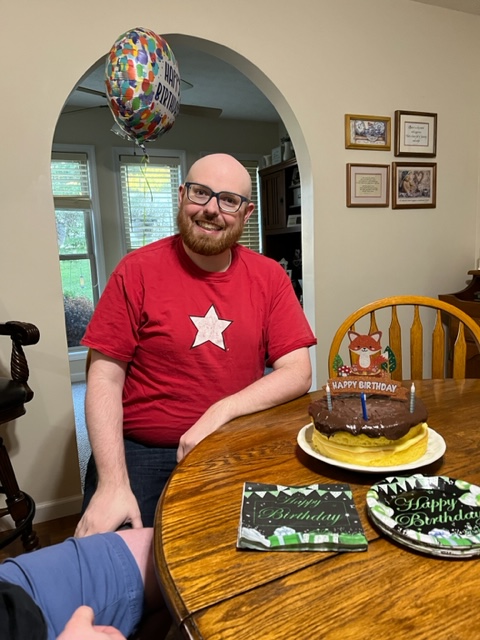
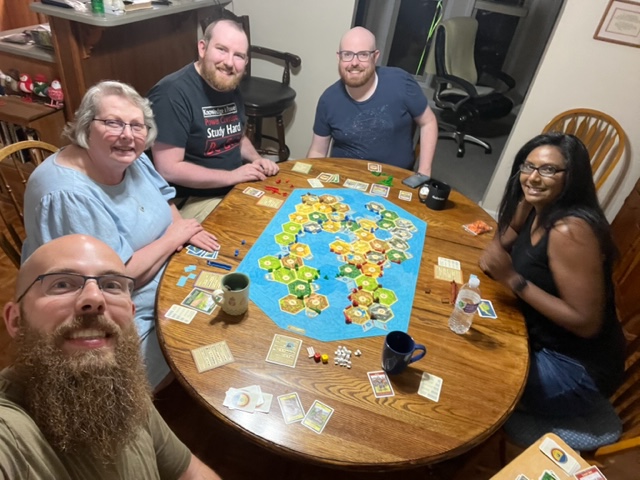
One of the highlights of July was celebrating Independence Day with the family, with the usual burgers, hot dogs, and fireworks. Another was my middle son’s birthday.

Jason birthday

The rest of the month was made up of enjoyable everyday activities.

Creating

This card was for Jason’s birthday:

Birthday card for son

The “happy birthday” was embossed with the Cuttlebug. The letters in “son” were puffy stickers. The blue squares were cut from a thick cardstock with a chevron pattern, though that doesn’t show up here.

These two were for ladies in the church who had surgeries with long recovery times.

Thinking of you card

The words were made with a stamp.

Watching

We haven’t really seen much I would recommend except Another Mother’s Son. It’s based on the true story of a mom in the Island of Jersey during WWII. The Germans occupied the area and brought in Russian POWs to work. One escaped, and this mom took him in because she would want someone to do the same for her son.

Reading

Since last time I completed (linked to my reviews):

  • Every Ocean Has a Shore by Jamie Langston Turner. Three people who happened to be together during a crisis continue to play a part in each other’s lives.
  • When the Day Comes by Gabrielle Meyer, audiobook. Libby Conant is a time crosser who lives in 1774 Williamsburg and 1914 New York. She’ll have to decide by her twenty-first birthday which timeline to live the rest of her life in. Excellent, and a unique twist.
  • In This Moment by Gabrielle Meyer, sequel to When the Day Comes, audiobook. Maggie is a time crosser, but because both her parents were as well, she has three timelines instead of two: 1861, 1941, and 2001. Excellent.
  • Sarah, Plain and Tall by Patricia MacLachan. I’d seen the film with Glenn Close years ago but had not read the book til now. Excellent writing and story.
  • Blogging for God’s Glory in a Clickbait World by Benjamin Vrbicek and John Beeson. Very good.

I’m currently reading:

  • Be Worshipful (Psalms 1-89): Glorifying God for Who He Is by Warren W. Wiersbe
  • Humble Roots: How Humility Grounds and Nourishes Your Soul by Hannah Anderson. I finished it in June but felt like I needed to go through it again.
  • Dreams of Savannah by Roseanna M. White, audiobook
  • The Words We Lost by Nicole Deese

Blogging

Besides the weekly Friday Fave Fives, Saturday Laudable Linkage, and book reviews, I’ve posted these since last time:

  • Do You Want to Be Free? The world thinks freedom is being able to do whatever one wants. They don’t realize they’re in bondage because their chains are so pleasurable. But the pleasures of sin only last for a short season.
  • Devotional Time in Different Seasons of Life. It’s okay if our Bible reading and prayer time looks different in different stages of life.
  • How to Return to Your First Love. We can get a little stale in both our romantic and spiritual lives, and some of the same advice can apply to each.
  • The Most Important Way to Change. We like self-help articles and blog posts, but we overlook the primary means God uses to work change in our hearts.

I need to forewarn you that I’m going to have to change themes sometime soon. I’ve had some behind-the-scenes trouble with my blog and have been advised that my current theme (blog layout) is an old one which isn’t implementing all of WordPress’s newer programming. I’ve just started looking at other themes and none has grabbed me right off the bat. But I wanted to let you know why things might suddenly look different here in the future.

I didn’t realize it until yesterday, but today is my 17th blogging anniversary! Thank you for reading, responding, and making blogging such a blessing.

Writing

I’ve been able to incorporate the edits from my critique group in my manuscript. I’ve also worked on a devotional that I think is almost ready to submit to an online site.

Looking forward

August is a big month for us with two birthdays and my oldest son’s visit from RI. We usually work some family outings in during that time and enjoy a lot of time together.

How was your July? Are you looking forward to anything in August?

(I often link up with some of these bloggers.)

Blogging for God’s Glory in a Clickbait World

Blogging for God's Glory

In Blogging for God’s Glory in a Clickbait World, Benjamin Vrbicek and John Beeson propose this definition of blogging for God’s glory: “Blogging for God’s glory means . . . first, to have our motivations aligned with God’s, and second, to pursue excellence in the craft, including theological precision, beautiful prose, visual appeal, and the edification of readers, all drawing from the best industry practices” (p. 14).

First they deal with aligning our motivation with God’s. That’s often the most difficult part to maintain. Usually a Christian blogger begins by wanting to share posts that glorify God and help others. But “our own motives . . . are always layered and mixed” (p. 3). And though Christian writing instructors tell us not to worry about the numbers of those following, liking, and sharing our posts, those who want to move from blogging to publishing a book are told agents and publishers will look at those numbers and won’t consider taking a writer on unless those numbers are high. It’s a continual but necessary struggle to keep our focus on writing for God’s glory and purposes and trusting Him with the results, even when it doesn’t seem like many people are reading.

The authors apply the goal of writing for God’s glory into the everyday nuts and bolts of writing. Write with the reader in mind rather than anticipating accolades. Know your why, what difference you want to make. Serve others, not yourself. But that doesn’t mean never talking about yourself: Paul wanted to proclaim “not ourselves, but Jesus Christ as Lord” (2 Corinthians 4:5), yet 2 Corinthians is “Paul’s most autobiographical letter. He shares much of his own story not because he is narcissistic, but because he knows the church is struggling to trust him and he needs to build rapport” (p. 22).

“If we have any hope of offering others wisdom, listening to God must become a primary and ongoing habit.” We can’t share what we haven’t first taken it. That doesn’t mean every blog post needs to exposit Scripture or be a devotional, but it should still be “subject to God’s truth and ought to reflect His light” (p. 31).

Then, “Christian writers must labor not only to write what is true but also write in a manner that adorns the truth” (p. 38). We need to focus on building up, not tearing down. That doesn’t mean we never share what’s wrong, but we do so with discernment and with the purpose of helping.

The authors give helpful advice with the mechanics of blogging: discerning how much time to give to it, in connection with your other obligations; setting a schedule that works for you; dealing with writer’s block; engaging social media; blogging costs, platforms, layouts; using photos without plagiarizing; networking; monetizing; and more.

They include several appendices. One is a compilation of several bloggers’ answers to the question of whether blogging is dead. One is a glossary of blogging terms. One is a collection of sidebar quotes in the paper version that wouldn’t work in the e-book formatting.

A few other quotes that stood out to me:

Where can you offer yourself to your audience for the sake of proclaiming Jesus Christ as Lord? How can your life become a bridge for the gospel to travel? What work has God done (or is doing) in you that will encourage others? (p. 22).

Don’t feel compelled to chase whatever is hot. Be true to who God has made you to be (p. 23).

Blogging ought to grow us in holiness. When we blog for God’s glory, the discipline of writing becomes integrated into the web of our spiritual disciplines (p. 29).

It is not the size of our platform that assures us how far our words will reach, but rather it is our trust in a God whose word never returns void (Isa 55: 11) (p. 32).

Writing comes down to making and remaking slight improvements to achieve better clarity and aesthetic; writing is the pursuit of marginal gains, insignificant by themselves but significant in the aggregate (p. 37). (I loved the illustration they used here of an eye doctor trying different lenses, asking each time which is better.)

So why should we worry about getting the tone and the content right when we know fewer people will read an article if we write with discernment? We bother because God is God, and on the day of judgment we will give an account for every careless word we have ever blogged (Matt 12: 36) (p. 42).

I think this book is an excellent resource, especially when we need to adjust our motives away from the manipulative and self-focused approach of the world and remind ourselves of our real purpose: glorifying God. 

The Most Important Way to Change

If we become concerned about a character trait we see in ourselves that we’d like to change, we might search Google for blog posts. “Ten Ways to Tame Your Temper” or “Six Ways to Curb a Sharp Tongue.” *

We might read a book on the subject, seek counsel, or even do a topical Bible study.

We might set standards and rules for ourselves.

There’s nothing wrong with any of those approaches. I’ve used them all and found help in each one.

But we often forget the primary means God gave us to change.

And we all, with unveiled face, beholding the glory of the Lord, are being transformed into the same image from one degree of glory to another. For this comes from the Lord who is the Spirit” (2 Corinthians 3:18).

We’re changed bit by bit by beholding His glory.

Well, how does that work?

When Moses asked to see God’s glory, God said, “I will make all my goodness pass before you.” Then “the Lord passed before him and proclaimed, ‘The Lord, the Lord, a God merciful and gracious, slow to anger, and abounding in steadfast love and faithfulness” (Exodus 33:18-23; 34:5-7).

GotQuestions defines the glory of God as “the beauty of His spirit . . . that emanates from His character, from all that He is.”

John Piper says, “The glory of God is the manifest beauty of his holiness. It is the going-public of his holiness. It is the way he puts his holiness on display for people to apprehend. So, the glory of God is the holiness of God made manifest.”

When we read and study our Bibles or listen to sermons, we don’t just look for principles, helpful as those are. We look for God. What does this passage say about Him? What is it demonstrating to me about Him? We behold Him, see Him, worship Him in all His goodness.

When I’m battling pride, nothing helps me more than thinking of Jesus, “who, though he was in the form of God, did not count equality with God a thing to be grasped, but emptied himself, by taking the form of a servant, being born in the likeness of men. And being found in human form, he humbled himself by becoming obedient to the point of death, even death on a cross” (Philippians 2:6-8).

When I’m craving things I shouldn’t have, I think of Jesus being tempted with bread after 40 days of fasting in the wilderness. He had a legitimate need to eat, but He resisted Satan’s temptations to partake on his terms.

When I have trouble loving others as I should, I think how Jesus loved me when I was unlovable and undeserving.

When I’d rather hold a grudge than forgive, I think how He has forgiven me so much more than anything I’m asked to forgive others.

When I see Him in the gospels meeting people’s needs, busy but not stressed, I’m helped to avoid becoming frenzied with all I need to do.

Interruptions are my biggest pet peeves. Realizing that the incident with the woman with the issue of blood was an interruption to Jesus’ journey to heal Jairus’ daughter added a dimension to these situations I had not realized before. Jesus was not ruffled at the delay. He took it in stride.

When I behold Him, I see my limitations. I’m painfully aware I am not Him. I’m humbled to realize just how much I need Him.

When I behold Him, anxiety flees away. He can take care of any problem that comes up.

Hannah Anderson wrote in Humble Roots: How Humility Grounds and Nourishes Your Soul about the Colossians who “believed they could reach purity by adhering to certain standards” and were “holding fast to their regulations” instead of Christ.

Ultimately the Colossians’ pride was revealed by what they were looking at, by what had captured their attention. Instead of being concerned with eternal realities, they were concerned with regulating temporary realities. Instead of being consumed with Christ’s glory, they were consumed with their own. But it is only by beholding Christ that we are changed. It is only by beholding Christ who Himself took “on the form of a servant” that we learn to serve each other (p. 94).

Standards and regulations have their place. But real heart change occurs as we behold God’s glory.

May our heart’s cry be like David’s:

O God, you are my God; earnestly I seek you; my soul thirsts for you; my flesh faints for you, as in a dry and weary land where there is no water. So I have looked upon you in the sanctuary, beholding your power and glory. Because your steadfast love is better than life, my lips will praise you (Psalm 63:1-3).

One thing have I asked of the Lord, that will I seek after: that I may dwell in the house of the Lord all the days of my life, to gaze upon the beauty of the Lord and to inquire in his temple (Psalm 27:4).

Changed to be like Jesus

___
*Made up titles.

(I often link up with some of these bloggers.)

Laudable Linkage

good links

Here are some of the latest links to helpful reads:

Be Careful When Defending or Opposing Christian Nationalism. Different people mean different things by the term.

Not Brave, HT to Challies. “I don’t know about you, but I am not brave. I dread criticism and judgment. I’d rather work behind the scenes than live in the spotlight and be open to the critique of others. The world is hostile and people can be harsh. Let someone who likes the attention rise up and be the focus. Have you ever uttered these sentiments? If so, you are not alone.”

Raising Little Image-Bearers, HT to the Story Warren. “I think my early parenting was often shaped by the unexamined thought, ‘Look at this small person I have made and will shape into my perfect-parenting-book-inspired image!’ . . . We long for the Bible to give us clear steps on how to produce wonderful children. But what if instead of looking for step-by-step instructions, we zoomed out to the bigger picture from Genesis 1:26-28 of what God has crafted.”

Use Your Comfort Zone to the Glory of God, HT to Challies. “‘Get out of your comfort zone.’ We hear it all the time, from friends, family, business leaders, church leaders, and actually, the whole rest of the world, it seems. But I’m going to encourage you here to do just the opposite: to find your comfort zone and stay in it.”

Should Our Joy Depend on Our Circumstances? HT to Challies. “Instead of saying, ‘My circumstances don’t matter; they’re not the source of my joy,’ we’d be better off saying: ‘God uses my best circumstances to encourage me, and He can use my worst circumstances to enrich me.'” Yes! I’ve often been frustrated by the dichotomy many see between happiness and joy. I usually see it in the saying, “God wants you to be holy, not happy”—as if we can’t be both.

How Can I Lead a Quiet Life When My Job Requires Self-Promotion? HT to Challies. “First Thessalonians 4:11–12 talks about making it your ambition to lead a quiet life. As a commercial real estate broker, I’m told to advertise and promote myself to attract new clients. How should I reconcile these apparently opposing positions?”

Stop Calling Them Names, HT to Challies. “If you’re prone to use name-calling with theological opponents, consider three passages in Scripture and how they address our unhealthy culture in evangelicalism of pejorative labeling.”

The Goal of Scripture Memorization is not Recitation, HT to Challies. “As I’ve grown up in the faith and studied God’s Word, though, I’ve realized that the goal of Scripture memorization is never to recite it for the applause of men or to win a competition. Though the programs of my childhood smartly utilized games and competitions to encourage us to memorize, the goal was to store up God’s Word like a treasure so that when we needed to remember the gospel or God’s character or how to live as His people, the words of the Bible would already be buried deep within us. The point of Scripture memorization, I realized, was to remember.”

Help for Family Devotions, HT to Challies. “Many families attempt to practice family devotions but end up falling off the bandwagon for various reasons. If you’ve ever been discouraged about family devotions, here are five encouragements to help your family navigate the frustrations.”

Ten Reasons the Old Testament Matters for Christians, HT to Challies. “Should I as a believer in the twenty-first century claim Old Testament promises as mine? Does the Mosaic law still matter today for followers of Jesus? Is the Old Testament Christian Scripture, and if so, how should we approach it?”

12 Axioms for Young Missionaries, HT to Challies. Though aimed at missionaries, these “business proverbs” are useful when involved in any kind of ministry.

Introducing “Remembering Our Parents.” My friend Lois has created an Instagram community “for all of us with moms and dads who are gone but definitely not forgotten.” Readers can share a memory or story and photo of their parents. This post tells how it came about and suggests prompts for what to share.

God's self-exaltation is not because he's incomplete without praise, but because we're not complete without it. John Piper

Friday’s Fave Five

It’s a dark and stormy day as I write Thursday afternoon. The rain should become more sporadic through the day, so hopefully the flood warnings for this evening won’t become reality.

But what better activity can we take part in on an overcast day than counting blessings. I’m sharing with Susanne and friends at Living to Tell the Story.

1. Jason’s birthday was this week. We enjoyed celebrating him with homemade deep dish pizza, salad, bread sticks, and carrot cake at his and Mittu’s house.

2. An improved hair dryer.I turned my hair dryer on one morning to discover it was suddenly turbo-charged. My husband had used it one morning and thought it was running a little sluggishly, so he took it apart and vacuumed out the lint and dust inside. I can dry my hair in half the time now!

3. Praying with people is something I approach reluctantly. I’m not sure why—maybe it’s just my natural introvert tendencies. The most recent church we were members of didn’t have a mid-week prayer service, though we prayed together at Bible studies and such. Several of the churches we’ve visited over the last few months had Wednesday night prayer meetings, but usually the pastor led in prayer after everyone gave prayer requests. The church we’re currently attending has a prayer meeting where we split up into groups of three adults and a few teens or children. The idea is for us not only to get to know the younger folks, but that they might learn from praying with older people. Then the young ones are dismissed to a time in the gym while the adults keep praying.

It’s a little uncomfortable until I find whoever I am going to pray with. But I am always glad for having prayed together. Last night, one of the women I was with was either very perceptive, or the Holy Spirit was guiding her (probably both things were true) as she expanded her prayer beyond the few sentences I shared.

Then it was really sweet praying with children. We had three girls with us who were maybe 8-10. They were so earnest in sharing prayer requests and were not afraid to join right in when we took turns praying.

4. A perfect word of encouragement from Scripture right when I needed it.

5. A bright new day. Friday morning, the storms and flood warnings are over, we didn’t lose power, and Jim made it home safely from a day trip for work.

Have you found bright spots in your week?

Review: In This Moment

In This Moment is the sequel to When the Day Comes by Gabrielle Meyer. Maggie is the youngest daughter of Libby from the first book. Like Libby, Maggie is a time crosser. But because both Maggie’s parents were time crossers, she has three paths instead of two.

One of her timelines is in Washington D.C. in 1861, where she goes by Margaret and is the daughter of a senator. The Civil War has begin, and after hearing of Confederate spies in the area, she keeps alert. She helps Clara Barton nurse wounded soldiers, but incognito, because such work would be frowned upon in society. Maggie wouldn’t care what people thought, but she has to think of her father’s reputation.

When Maggie goes to sleep in 1861, she wakes up in 1941. Her time crossing parents reside in Williamsburg, VA. Maggie is a nurse who joins the Navy along with her sister, Anna. But when they are asked to join a team on a hospital ship in Pearl Harbor, Maggie wrestles with what she knows will happen.

When Maggie goes to sleep in 1941, she wakes up in 2001 in D. C., where she is in medical school training to become a surgeon.

Though it takes Maggie 30 years to get through 10 normal years, no time is lost between her timelines. When she wakes up in one timeline, it’s the next day after the last time she was there.

Like her mother, Maggie will have to choose which timeline she wants to stay in by her twenty-first birthday. Then her body will die in the other two time periods.

Her mother knew all her life which timeline she wanted, though she had to wrestle with the fact that her preference might not be what God wanted. However, Maggie has no clear preference. She loves all of her timelines and her families. She has important work to do in each one. She’s frustrated that God seems silent on the matter.

Maggie has determined not to become romantically involved in any timeline before her twenty-first birthday because she doesn’t want the complication for her decision-making. But an attractive man becomes part of each of her lives.

Since Maggie is involved in medicine in all three lives, it’s hard not to let her twenty-first century medical knowledge impact her work in 1861 and 1941. If she knowingly tries to change history in any timeline, she’ll forfeit her life in that timeline early. She also struggles with the knowledge of what will happen in 1861 and 1941 and the desire to warn people. But no one in any of her timelines knows that disaster is looming in September 2001.

i loved this book just as much as the first one. I wondered how Gabrielle could write another book about time crossers without repeating some of the same scenarios in the first book. But though Maggie and her parents wrestled with some of the same things, their circumstances and challenges were very different.

I liked the fact that the 1861 and 2001 timelines both occurred in Washington, D. C., but with vast differences.

Happily, the audiobook this time included the author’s notes about what circumstances and people were real and which were made up. I always enjoy that information after finishing a historical fiction book.

There were just a couple of small things I disagreed with here—one character saying he had to learn to love himself before others could love him, and another who determines to “follow her heart.”

But overall, I loved this book. I kept looking for ways to sneak in a few minutes listening more than my usual times. There is at least one more book coming in this series, and I am looking forward to it.

How to Return to Your First Love

How to return to your first love

Imagine a good friend tells you she’s thinking of leaving her husband. The magic is gone. They don’t love each other any more. They’re just going through the motions.

After listening to your friend, if she’s open, you might suggest several things. As I thought of these, I realized many of them paralleled how we could return to our first love spiritually.

In Revelation 2:1-7, God instructs John to write a letter to the church at Ephesus. They are commended for several things: They’ve worked hard and endured patiently for His name’s sake. They cared for truth and have tested and rooted out false apostles. Those are all good traits. Yet, Jesus said, “I have this against you, that you have abandoned the love you had at first.” It’s possible to work hard for the Lord and stand for truth, yet not do so out of love for Him.

Jesus commands them to “Remember therefore from where you have fallen; repent, and do the works you did at first.” Otherwise, He warns, He’ll have to remove them.

So how do we return to our first love? We can’t just flip a switch and turn on the right feelings.

Pray. The first step is to ask for help. A marriage on the brink of divorce has a lot of deep issues. Usually by the time a couple gets to that point, they’ve already made up their minds, and it’s extremely hard to turn things around. They’re going to need God’s help.

Spiritually, we start at the same place. We may be confused. “I thought I was doing everything right.” We need wisdom and insight to see how we’ve drifted into serving without love. It’s true, love is not just a feeling. But according to this passage and 1 Corinthians 13, love is not just service, either.

Romans 5:5 tells us “God’s love has been poured into our hearts through the Holy Spirit who has been given to us.” And love is a fruit of the Holy Spirit (Galatians 5: 22-23).

Paul prays for love in various churches:

  • That they might be “rooted and grounded in love” and “may have strength to comprehend with all the saints what is the breadth and length and height and depth, and to know the love of Christ that surpasses knowledge” (Ephesians 3:18-19).
  • That their “love may abound more and more, with knowledge and all discernment” (Philippians 1:9).
  • That “the Lord make you increase and abound in love for one another and for all” (1 Thessalonians 3:12).

We can pray these things for ourselves in our relationships with others and the Lord.

Remember His attributes. You could ask your friend to remember what attracted her to her husband in the first place. Sure, his looks and physique changed over the years (so did hers). But she probably married him because she saw something in his character that she liked.

A few years ago, I read Jen Wilkin’s book on God’s attributes: None Like Him:10 Ways God is Different From Us (and Why That’s a Good Thing) and In His Image: 10 Ways God Calls Us to Reflect His Character (linked to my reviews). I expected that studying God’s attributes would inspire worship, but I was surprised to find that the study also increased my love for God. I shouldn’t have been surprised: the more we meditate on how wonderful He is, of course we’re going to love Him even more.

Remember your past history. When a couple has been together for a while, they accumulate a lot of shared experiences: fun times, the trials they worked through, the inside jokes. They have a history they share with no one else. Remembering those times might draw them closer together.

The apostle John wrote, “We love Him because He first loved us” (1 John 4:19, NKJV). Calling to mind the ways God has shown love to me inspires love for Him.

Looking back over my history with God warms my heart. He set off a series of events to bring me to faith in Himself. He loved me and drew me before I knew Him.

He has blessed me in countless ways ever since. Some years ago, I was inspired to create a list of “Ebenezers.” Samuel once set up for Israel a stone he called an Ebenezer, meaning “a stone of help,” to commemorate what God had done for them. So one year I wrote an extensive list of those special moments in my life when God intervened in a way that could only have come from Him. Remembering answered prayer and times God spoke to my heart from His Word, and so many other evidences of His care in my life, fuels my love for Him.

Psalm 63 gives a vivid picture of such remembrances:

My soul will be satisfied as with fat and rich food,
and my mouth will praise you with joyful lips,
when I remember you upon my bed,
and meditate on you in the watches of the night;
for you have been my help,
and in the shadow of your wings I will sing for joy (verses 5-7).

Spend focused time together. Life can settle into routines, and couples end up just passing each other while doing errands, talking only about the mundane affairs of life. We need time to set aside everything and just focus on each other, share our hearts, and listen to each other. That may be a date night or just sitting at the table with coffee.

The same happens with God. As I said last week, routines help establish time with the Lord. But after a while, they can feel just routine, like we’re just working through a list and not connecting. Remembering that I am meeting with my Lord alone helps me refocus.

Forgive. A couple on the brink of divorce has accumulated a lot of hurts and slights. It’s easy to only see the negative. It may take time and counseling to work through all of that, but at some point, they’ll need to learn to forgive each other.

Elisabeth Elliot said once that a wife may like 80% of what her husband says and does, yet focus and harp on the 20% she doesn’t like. Once we get fixated on the negative, it fills our vision til that’s all we can see.

This one is different in our relationship with God. Some people speak of “forgiving God” when He does things we don’t like, but I cringe at such talk. We don’t need to forgive Him. He’s the Holy, pure, all-wise, all-powerful, righteous God of the universe! He does nothing wrong. It’s a little audacious to think of us forgiving Him.

Yet, He does things that confuse us. He may not have answered a heartfelt prayer. He may have allowed a tragedy. We might be hurt, resentful, or even angry. But we’re in trouble if we hold these things against Him. Jesus said, ” Blessed is the one who is not offended by me” (Matthew 11:6).

Thankfully, we have the psalms and prophets as examples of people pouring out their hearts before God, sometimes in confusion and anguish and anger. They remind themselves of what they know to be true about God—that He loves them, that He will take care of them and meet their needs— and they find peace. So we need to remind ourselves of who God is and His right to rule in our lives according to His purposes. And we remind ourselves that He doesn’t bring suffering in our lives capriciously. “For the Lord will not cast off forever, but, though he cause grief, he will have compassion according to the abundance of his steadfast love; for he does not afflict from his heart or grieve the children of men” (Lamentations 3:31-33).

Put the other first. When human relationships are on the verge of breaking up, selfishness has likely crept in, probably on both sides. One of my former professors (Dr. Walter Fremont) used to say love is the self-sacrificing desire to meet the need of the cherished object. It’s easy to focus on what we want others to do for us—or what they’re failing to do for us—and overlook our own failings.

God doesn’t “need” anything from us. But there are things He asks of us. We ask Him to bless our plans without considering whether they are His plans. Paul reminds us, “If then you have been raised with Christ, seek the things that are above, where Christ is, seated at the right hand of God. Set your minds on things that are above, not on things that are on earth” (Colossians 3:1-2).

I don’t mean to be simplistic about either romantic love or spiritual love. There may be a lot of layers to peel back and issues to work through. People may need help and counsel in either case. But these steps can get us started in the right direction.

What helps you rekindle your love for God?

May the Lord direct your hearts to the love of God

(I often link up with some of these bloggers.)

Laudable Linkage

Here are some good reads found this week:

He Gives to His Beloved Sleep, HT to Challies. “It was two o’clock in the morning and my newborn was asleep in the bassinet next to me. Most of the time, a newborn sleeping is cause for celebration and slumber but on this particular night, fears about my son’s life plagued my mind.”

The Character of Revival. “Apparently, the essential ingredients of revival are not sincerity, passion, zeal, emotion, organization, expense, unity, sacrifice, effort. Apparently, you can have all that, and yet not have revival.”

When Healing Hurts. “In my life, I’ve had to trust God to heal many things. It’s been painful as He’s had to break me and allow me to hurt to remove sins of pride and addiction from my life. Do I trust him still? Absolutely. In fact, because He has healed me from mental, physical, and spiritual needs, I trust Him more.”

Another Great Consequence. Dan Olinger has been working his way through the consequences of God’s work in us, and this week details why we can have joy in trials.

Humble Words, HT to Challies. “Articles, blogs, and books give us great encouragement, but we cheat ourselves out of so much encouragement when we expect the same kind of counsel from every saint around us. Most often the answers we seek can’t be summed up in key takeaways anyway. Our lives are so much more complicated than that.”

Hospitality Is an Everyday Endeavor. “When we think of hospitality as an event, we lose a lot of the meaning behind its purpose. Hospitality is about showing kindness to others, whether we know them well or not, without grumbling or complaining. (1 Peter 4:9) It’s more than an event. Practicing hospitality is cultivating a spirit that is generous, welcoming, and warm, and its purpose is to show what the love of Jesus is like.”

Angry and Holy: How Your Anger Can Be Righteous. “When I started therapy, however, I was taught that anger isn’t an enemy to squash. As I, in turn, searched Scripture, the Holy Spirit guided me to see that he’s not anti-anger either. All anger isn’t sin. Rather, anger is a good emotion when rightly used. As a professional emotion-stuffer, this has been a hard lesson to learn and one that God, in his good patience, is teaching me over and over again as I parent my children and re-teach myself.”

Going to Church Is Hard but Worth It, HT to Challies. “Sundays never fail to be tough. The plan is always to have the house clean and organized on Saturday, to do family devotionals, to set out and iron clothes for the morning, to go to bed early, and have a big happy breakfast together Sunday morning. Things never go according to plan.”

When You Don’t Like Your Wife, Love Your Wife. “The thing about love is that it is more likely to grow cold when you fail to give it than when you fail to receive it. The one sure way to fall out of love with your wife is to stop loving her—to stop doing deeds of love and speaking words of love and otherwise displaying a heart of love. Love is like a muscle that atrophies with disuse and that strengthens with exercise.” These things are true for wives with their husbands as well.

Is Manifestation a Worthwhile Pursuit? (Short answer: No.) I’ve seen manifestation pop up in conversations here and there. Lauren explains what it is, what’s wrong with it, and a better way to think.

Worship prepares us for crises.

Friday’s Fave Five

We’re almost halfway through July already. I’m not sure how that happened so quickly, but it’s time once again for a break to remember the best parts of the week with Susanne and friends at Living to Tell the Story.

1. Job provision. I mentioned a couple of weeks ago that the particular service desk where my youngest son, Jesse, worked was closing. But the company felt they had places for everyone at other desks. (Same company, same location, but they do IT work for a variety of businesses.) He got confirmation just yesterday that he was hired for another desk, pending a security check–which should not be a problem since he cleared security before. There was no reason to think it wouldn’t all work out, but it’s a joy and relief to know it did and his immediate work future isn’t in question.

2. Recipe updates. A few years ago, I organized notebooks for recipes I had cut from newspapers and magazines and, more recently, printed out from the Internet. For some time now, I’ve wanted to go through those, pull out what I didn’t want any more, and add in some new ones. I had a strong desire earlier this week to accomplish something that did not involve the computer, so I spent a few evenings sorting, culling, adding, and rearranging the recipes in the notebooks. I still have a couple of small notebooks to do, but I went through the biggest ones. It felt quite good to do so! And as an added bonus, we had a few laughs over “What was I thinking when I cut this out?” recipes, like this one:

Mock Apple Pie
“Mock Pecan Pie”

Jim said, “Yep, that makes a mockery of pecan pie.” I like pinto beans, but not masquerading as pecan pie filling.

3. A successful new recipe. Oddly, after all that recipe shuffling, I was uninspired to cook this week. But I pulled out one recipe I’d wanted to try for a while, Asian Lettuce Wraps. I didn’t have some of the ingredients on hand, so I made a simplified version using ground turkey instead of chicken. It was really good. We had some romaine leaves on hand that Jim uses in place of tortillas for tacos and hamburger buns to try to reduce his carbs, so we used those. I think I might try Bibb lettuce next. This is a versatile recipe that can be adjusted for various substitutes, so I am sure we’ll be using it again.

4. Chung’s Mini Frozen Egg Rolls. These are very good and do surprisingly well in the microwave. They made a nice supplement to the Asian wraps for both dinner and lunch the next day.

5. Good toilet paper. 🙂 When TP was in short supply during the pandemic, we got some of the lowest bargain basement brands as “extras.” We hadn’t had to use them much. But this week I missed going to the store at my usual time, and we ran out of TP. I opened one of the individually wrapped store brands–and I was never so glad to finish a roll of toilet paper in my life. Think the worst public gas station TP. Yuck. This may sound silly, but since we use TP every day, and it affects our hygiene and comfort level, I’m happy our regular brand is readily available these days.

How are you this week?

Sarah, Plain and Tall

I saw the film version of Sarah, Plain and Tall with Glenn Close several years ago and loved it. I hadn’t known then that it was based on a children’s book by Patricia MacLachlan. I just recently read the Kindle version.

The story opens with Anna, her younger brother Caleb, and their widowed father living on the prairie in the late 19th century. Written from Anna’s point of view, she notes that her parents used to sing all the time, but her Papa never does any more.

Papa tells the children he has placed an advertisement for a wife and received a reply from Sarah, a woman in Maine. She lives with her brother, but he is getting married. She’s concerned she will miss the sea, but she’s willing to come out by train to the prairie and meet the family.

Sarah exchanges letters with papa, Anna, and Caleb until she arrives. Sarah is different and does unusual things. They all like each other, but the children are afraid Sarah misses the sea too much to stay.

This was a lovely story written in a simple yet beautiful style.

A few of my favorite quotes:

Outside, the prairie reached out and touched the places where the sky came down.

My brother William is a fisherman, and he tells me that when he is in the middle of a fog-bound sea the water is a color for which there is no name.

There is no sea here. But the land rolls a little like the sea.

I shook my head, turning the white stone over and over in my hand. I wished everything was as perfect as the stone. I wished that Papa and Caleb and I were perfect for Sarah. I wished we had a sea of our own.

This book won a Newberry Medal, and the Kindle version I read included the author’s speech upon receiving it. She said the story was based on a real Sarah from Maine who had traveled to the prairie to become the wife and mother of a friend of the author’s mother. This speech contained a couple more favorite quotes:

Every writer should have a loving reader who has the courage to write both “I love this” and “Ugh” on the same page.

When Julius Lester praises children’s literature as the “literature that gives full attention to the ordinary,” he echoes my parents’ belief that it is the daily grace and dignity with which we survive that children most need and wish to know about in books.

My parents believed in the truths of literature, and it was my mother who urged me to “read a book and find out who you are,” for there are those of us who read or write to slip happily into the characters of those we’d like to be. It is, I believe, our way of getting to know the good and bad of us, rehearsing to be more humane, “revising our lives in our books,” as John Gardner wrote, “so that we won’t have to make the same mistakes again.”

I knew there was one sequel to the book, Skylark. But I hadn’t known there were three more. The Kindle version contains the first chapter of each of the books. Someday I hope to read the rest.

I wanted to rewatch the videos of both Sarah, Plain and Tall and Skylark, but they don’t appear to be available to stream from anywhere. I might see if the library has the DVDs.

Have you read or watched Sarah, Plain and Tall? What did you think?