Unknown's avatar

About Barbara Harper

https://barbarah.wordpress.com

Review: Made for More

Made for More by Hannah Anderson

In Made for More: An Invitation to Live in God’s Image, Hannah Anderson writes, “the goal of this book is to call women to recover an understanding of ourselves that is more basic than our gender. It’s a call to recover the image of God in our lives—to re-imagine not simply what it means to be a woman but what it means to be a person made in the very likeness of God Himself” (Location 131, Kindle version).

We tend to link our identity to various categories: gender, religion, vocation, location, political affiliation, etc. But such labels not only can’t embrace all of what we are, they can be divisive with people in other categories.

In order to know who we really are, we must first know who our Creator is—“accepting Him for who He is, not who we can conceive Him to be” (Location 287). Acts 17:28, Paul said, “In him we live and move and have our being.” “Simply put, there is one God and He is the Giver of all life. He created the world, and everything in it finds its source, its purpose, and its goal in Him” (Location 263).

Literally translated, imago dei simply means “in the image of God.” But in reality, imago dei means so much more. Imago dei means that your life has purpose and meaning because God has made you to be like Himself. Imago dei means that your life has intrinsic value, not simply because of who you are as an individual, but because of who He is as your God. Imago dei means that your life is sacred because He has stamped His identity onto yours (Location 402).

Yet God did not make us all alike. “We are different from each other and therefore dependent on each other. In other words, while each of us is fully made in the image of God, none of us can fully reflect and represent God alone. Instead we reveal the nature of God together; and as a result, we also find identity together” (Location 470).

Even though God created humans in His image, the first two sought their identity elsewhere, creating an identity crisis for the rest of the human race. “If they disobeyed, they would not simply be rejecting Him—they would be rejecting everything that was true about themselves as well. By choosing to turn from God to something else for knowledge, they would blind themselves to their own nature. And they would die because they would cut themselves off from the only thing that made them alive in the first place—God Himself” (Location 580).

Now, “Instead of living in dependent communion with Him, we fight for autonomy and the ability to rule our own lives; instead of loving and serving each other, we manipulate others to serve our own purposes; instead of exercising creative care of the earth, we consume it in our own greed and lust. Instead of unity, there is disunion; instead of harmony, there is brokenness” (Location 615).

The only way to get back to living in God’s image was for Jesus to identify with us that we might identity with Him.

The greatest identity shift that has ever happened was when God Himself became human and lived and died for us so we once more might live in Him. . .

[Jesus] is both the Image and the perfect Image Bearer, the Creator who deigns to live in His own creation. Despite being God, Jesus humbled Himself, took on human flesh, and came to live and die so that through His very life, death, and resurrection—through His metamorphosis—we ourselves might be changed (Location 764).

However, “Finding identity in Christ cannot be confined to one moment, because union with Christ is not simply an event; it is a state of being, a way of existing” (Location 810).

And that’s just the first third of the book. Hannah goes on to show how being made in God’s image affects what and how we love, our desires, roles, relationships, how we care for creation. Being made in God’s image, reflecting Him, guides our intellect, work, talents, and gifts.

The first book I read of Hannah’s was her advent book, Heaven and Nature Sing: 25 Advent Reflections to Bring Joy to the World, last December. I liked it so well, I wanted to read her other books. Though I didn’t do this on purpose, I ended up reading her books published at that time (two more have been written since) in reverse order according to my interest. Made for More was her first, but I read it last. Every time I considered it, I thought, “But I know what it means to be made in God’s image.” However, even though I knew basically what it meant, I had not considered it in all the depth and fullness and implications Hannah detailed here.

This is a book I should probably reread at regular intervals to remind myself of its truths.

I highly recommend this book to you, whether you have a working knowledge of what it means to be made in God’s image or not. If not, Hannah will explain it well. If so, you’ll understand it more fully and beautifully.

Review: The Rose of Winslow Street

The Rose of Winslow Street book

In The Rose of Winslow Street by Elizabeth Camden, Libby Sawyer and her elderly father were spending their summer visiting with her brother and his family when they received astonishing news. A group of people had moved into their long-time home in Colden, Massachusetts, claiming they owned it.

Michael Dobrescu fled from Romania with his sons, sister, and two friends in 1879. His late uncle had willed him the house on Winslow Street. So Michael took ownership, figuring the court system would work everything out in the long run.

As it turned out, Michael and his family were not gypsies, as Libby’s father asserted. And he did have a valid claim to the house. But Mr. Sawyer did as well.

The two families were at a standoff as the lawyers researched their claims. The townsfolk stood solidly behind the Sawyers, even to the point of refusing to do business with the Dobrescus.

But Libby felt that the family shouldn’t be mistreated, even as she hoped they’d move out soon. She started bringing them baskets of food. She found Michael infuriating and distrustful at first. But over time, she got to know the family and their story.

She grew to care for the Dobrescus, especially Michael. But she could not be disloyal to her father.

I liked that this story was a different premise than anything I had ever read before. It showed well how we can misjudge and make assumptions about people who are different from us.

There are other layers to the story as well. Libby can’t read, though she’s had multitudes of lessons and tutors. Her father thinks her mentally deficient, and Libby has always lived in her “perfect” brother’s shadow, even though she has gifts and talents of her own.

Also, Michael’s sister experienced horrors at the hands of the Ottomans who were fighting the Romanians. Broken and fragile, she has a long road to recovery.

I had never read anything by Elizabeth Camden. I thought the writing was mostly good, but there were a few inconsistencies in the plot line and writing pet peeves that marred it a little.

I’ve been struggling with whether to say this, and I want to say it carefully. Let me preface it by saying I believe a person is saved by believing in Jesus Christ as Lord and Savior, repenting of their sins, relying on His death on the cross for their sins and His perfect life lived in their place. I believe a person can be saved no matter what denomination they are in. I have known Catholics who I believe are saved. But the Catholic church as a whole, though it teaches faith in Christ, also adds extra-biblical requirements from the church. So it concerns me when the main spiritual emphasis in a book is Catholic. It makes sense from a historical standpoint that the Dobrescus are Catholic. But when going further into that denomination is the answer to part of their situation, I see that as a problem from a Christian fiction viewpoint.

I listened to the audiobook when it was free on Audible’s Plus Catalog. I thought narrator Barbara Rosenblat did a wonderful job, especially with the accents.

My Nest Is Empty, but My Heart Is Full

I’m not sure I like the term “empty nest” as a description of life when children grow up and leave home.

Have you ever seen a used empty nest?

Some type of little brown birds used to build a nest every year on top of the corner post of the porch. We could watch their life cycle from our front door: the parents building the nest, the mother sitting, the babies growing and straining their beaks toward the food brought by the parents.

Finally, the parent birds would fly to a nearby bush and call for the babies to come. The babies didn’t move from the nest at first. But eventually, one by one, they flew off.

When we were sure they weren’t coming back, we’d take the nest down and brush away the debris of broken twigs and bird droppings from the post. The nest itself was a mess, as four or five baby birds lived there for weeks without a designated spot for relieving themselves.

Mother bird and I share similarities of raising a flock who have successfully gone on to live independently as adults. But that tattered, speckled, messy weaving of twigs doesn’t match up with how I envision my home or life after grown children leave.

As my oldest sons approached adulthood, I wasn’t sure how I’d cope when they left home. I always felt being a wife and mother were my main responsibilities and priorities. How could such an intense relationship with daily interaction abruptly change? How could I suddenly flip a switch from full-time mother to a “retired” one?

Actually, it wasn’t such a sudden switch after all. From the time we first teach them to feed and dress themselves and become responsible, we show them how to start operating independently of us. As they learn to drive, become involved in youth group or music lessons or a part-time job, they spend more and more time away from us. They go to camp and then youth group mission trips. When they go away to college, they take first steps towards adult living while coming home for breaks. (Even though mine commuted to college while living at home, they spent their days and evenings away.)

So by the time kids leave home, they and their parents have had some experience being separated.

Still, that initial move away from home is hard. My middle son left first, getting married a couple of months after college graduation. It didn’t hit me until he started bringing home boxes to pack his stuff in. When I got teary, he made a sign that said “Sewing Room” and put it on his door.

Even though he didn’t live under our roof after marriage, he and his wife lived just a few minutes away, and we saw them frequently.

Then we found out that we were going to be the ones moving away when my husband’s job transferred him to TN.

My oldest lived at home for a while after graduation, not sure what his next steps should be. But when we found we were moving, he decided it was time to step out. He had several friends in RI, and one of them offered him a job.

So it felt like our “nest” emptied by two-thirds all at once, as we left my middle son and his wife in SC, and our oldest went to RI, and we moved to TN.

That was agonizingly hard for all of us.

My youngest son moved with us, finished high school, and attended college locally. He lived at home for a few more years, but moved out a couple of years ago. He’s not far away, thankfully, though he’s talking about (and I am praying against) possibly moving to Washington state or Canada.

So my “nest” has been officially empty for a few years now. Here are some thoughts that helped the transition.

Though our children don’t live at home any more, I have not stopped being a mother.

I miss the everyday hearing how their day went and knowing what they’re up to. But I’m abundantly thankful for texts, emails, and FaceTime.

Sometimes they ask advice, and I try to refrain from offering any unless asked.

We still see each other frequently.

I still pray for them, sometimes I think even more intensely.

Though wifing and mothering were my first priorities, they weren’t exclusive. How much to be involved in other things was always a struggle as my children were growing up. But I felt service, both within church and to individual people, was important. I wanted to serve, but I also wanted them to see service was a normal part of Christian life.

I also wanted them to see that hobbies and friendships with others outside the home were healthy.

I had things to look forward to when my kids moved out. Though I missed them, I enjoyed turning one of their bedrooms into a sewing/craft room. Not only was that fun, but it helped so much to have a place for all my materials, to work on projects, and to leave them out.

I look forward to writing more.

I enjoy being able to pick up and and go somewhere with my husband without concerns about babysitters or teenagers at home.

I could “mother” others. Titus 2 specifically instructs older women to teach and encourage younger women. Sometimes that happens via a formal mentoring situation; most often it happens through friendships and “doing life” together. Though we might not consider ourselves “older women” when the nest first empties, we’re older than someone and can encourage them along the way.

Phyllis Le Peau followed Jesus’ admonition “to feed the hungry, care for widows, and visit those in prison.” She found ways to serve in each of those areas.

My mother-in-law’s hospice chaplain had taken on that as well as a jail ministry in retirement years.

An older lady in our church took it upon herself to visit my mother-in-law a couple of times a month in assisted living. When we moved and my mother-in-law lived with us, one lady in the church wrote regular newsy notes.

Though physical issues may arise and strength may wane as we get older, there are still a number of ways older women can serve others.

I think older women are some of the best at what someone called the “ministry of the pew”–showing an interest and talking with others. At every church we visited in the last year and a half, there was always an older woman who went beyond “We’re glad to have you with us” to make us feel especially welcome.

God’s grace is sufficient for every need at hand. God will enable us to transition to the empty nest years when they arrive—not three years before. He is always with those who believe on Him. He created the family structure such that our children grow up, “leave father and mother,” and serve Him as adults. We can trust Him for our children as they leave the nest, and for ourselves as we serve Him in different ways.

I loved being a full-time mother. But God doesn’t want me to live with regret and longing for the past. He has something for me at each new stage of life.

(I often link up with some of these bloggers.)

Laudable Linkage

For those of you who enjoy the Friday’s Fave Fives, I’m sorry I missed posting yesterday! I usually write those posts on Thursday, but this past Thursday I was in atrial fibrillation most of the day. :/ Then Friday was very busy. But I’ll catch up next week.

These linkage posts, however, I add to throughout the week as I read here and there. Perhaps you’ll find some of these interesting and beneficial.

Eternal Security: Fives Reasons God’s Gift of Salvation is Secure. “Can you lose your salvation? Some teach that you can. Others feel like they have. But what does the Word of God promise regarding the eternal security of those who have truly trusted Christ as their Savior?”

Quiet Time and Evangelism: How Much Is Enough? HT to Challies. “Spiritual disciplines are great (and necessary) when the goal is to know God better. Spiritual disciplines are soul-crushing when the aim is to get our metaphysical workout in each day, knowing that we could always exercise more if we were better Christians.”

Meditate on Scripture by Breaking it Down Into Phrases. “One of the best ways to meditate on Scripture is to break it down into phrases and detail the meaning. This can help you to better understand the text and to apply it to your own life.”

How to Mourn Over Your Sins, HT to Challies. “‘Blessed are those who mourn, for they shall be comforted.’ (Matthew 5:4). Spiritual mourning is laden with blessing, and we are to go after it and get as much of it in our lives as we possibly can. The more you know of this mourning, the more joy you will experience in your life.”

What My Wife Taught Me About Life. “Last month, just about a year after my wife Phyllis died, I reread her book Handbook for Caring People, now out of print. I once again saw how this book reflected her own life of being deeply attuned to the needs of people—emotionally, physically, spiritually. I wasn’t the only one who thought she was perhaps the most caring person they’d ever known. So did dozens and hundreds of others.” Andrew Le Peau is the author of Write Better: A Lifelong Editor on Craft, Art, and Spirituality (linked to my review).

Reflections on the Reformation. I liked this balanced perspective.

Three Encouragements for Difficult Projects. “If you’ve ever been in the midst of a long, challenging project, you know the war you experience with regret, frustration, and self-flagellation.”

Aged Care Ministry: 3 Challenges and 5 Responses, HT to Challies. “I lost count over the past three years of how many Christians said to me: ‘Those old people must be very open to the gospel, as close to death as they are.’ It’s a plausible idea, but not at all true to my experience. I did not at all find nursing home residents more open to the gospel, but generally less so than those younger in years with more years of life ahead of them. I begin by describing three challenges to bringing the gospel to the frail elderly, and five possible responses to those challenges. I conclude with a word about how all people serve God, no matter how frail and incapacitated they are.”

Joni Eareckson Tada quote about abiding in Christ

October Reflections

October reflections

October has gone by in a blur. The last half was taken up with Jim’s surgery and recuperation. Much of the first half involved getting ready for it.

I mentioned on a couple of Friday’s Fave Fives that he went in for one surgery, but was discovered to have an undiagnosed hernia in his abdominal wall with some of his intestines poking through. Thankfully they weren’t in there tightly, so his digestion wasn’t affected. But, by God’s grace, another surgeon was available and willing to repair it while they had him open. Plus she was familiar with and a great fan of the robotic “arms” the original surgeon was using. We were incredibly thankful everything was able to be taken care of in the same operation.

Recovery has been a good days-bad days experience. But that’s probably how it usually goes.

This recovery time takes me back to pandemic loneliness, with not seeing anyone and watching church via Facebook Live. It had taken me a while to get used to socializing in person again after restrictions were lifted. And to get used to our current church being a bit busier than we’re used to. But I find I do miss people after all. 🙂 Thankfully we do have texts and emails and Facebook, and we have had people checking in with us and asking if we need anything.

Since the Covid pandemic began, we started having a family costume party on Halloween night. All of Timothy’s usual trick-or-treating places (the zoo, the mall) were closed then. But we enjoyed it so much, we’ve kept up the tradition ever since. We won’t be able to have it this year yet, with Jim not feeling up to it and Timothy being sick. But we going to try to in the next couple of weeks.

Our fall color finally came in, I think a bit later than usual. I have not been out much, but I’ve seen enough to be “filled up” and ready for the drabness of winter.

We’ve had a few cold days, but it’s been unseasonably warm lately. However, we’re due to have nights in the 20s this week.

Creating

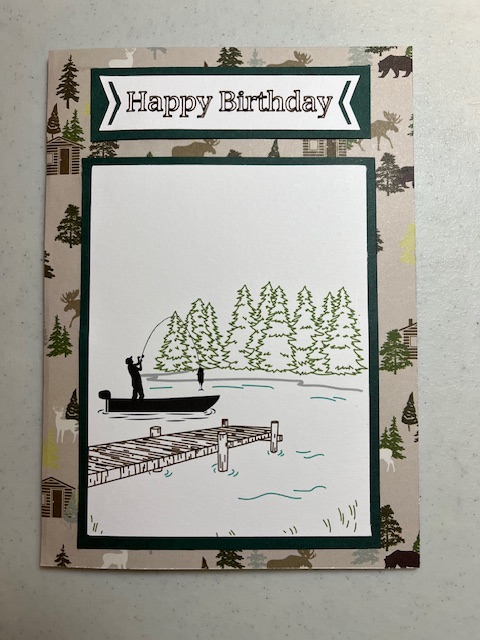
I don’t usually make cards in October, since we’re past “birthday season.” But I did this year for Pastor’s Appreciation month as well as a few friends going through various trials.

These were for the two pastors. I ended up making a similar design for both.

Fall thank you card
Fall thank you card

The “Thank you” message was embossed with the Cuttlebug, and the bigger leaves were cut out with the Cuttlebug as well.

(Don’t tell anyone, but just between us, the smaller leaves on the corners of the “Thank you” on the second card were put there to cover up a decorative corner-cutting punch that didn’t turn out right. 🙂 )

And these were for a couple of friends who lost a loved one.

Fall thinking of you card
Autumn Thinking of you card

I made these four the same day, so I kept them relatively simple.The wording on these was made with a stamp.

This last one was for a friend recovering from surgery (his was the same day as Jim’s). I had time to play with it a little more.

Fall thinking of you card

I ended up liking this one the best. I wished I could have gone back and touched up the others a little more—but I had already mailed them.

And I liked the little leaves (made with punches) on the corners so much that I used them again, even without a mistake to cover up. 🙂

Watching

We’re trying out a couple of new TV shows that seem pretty good so far. It seems like every time I mention a TV series, though, something objectionable comes up on them right after.

One movie we saw that was pretty good was Return to the Hiding Place. It was based on rue events during WWII. One of the young men hiding out at Corrie ten Boom’s place was a teenager named Hans Poley. He was a student who had defied an order of the Nazis, and Corrie was his mother’s friend. He got false identity papers and joined the Dutch resistance, sneaking out at times to help them.

Reading

Since last time I completed:

  • Aftermath by Terri Blackstock, fiction, audiobook. An explosion at a concert kills a young girl’s friends and traumatizes her. Meanwhile, police are tipped off to pick up Dustin Webb, and they find explosives in his trunk. But he didn’t put them there. He calls a long-ago neighbor who is now a lawyer for help. Very good!
  • Chasing Shadows by Lynn Austin, fiction, audiobook and print. This book follows the lives of three women in the Netherlands in three different venues of WWII: a young Jewess, a Resistance fighter, and a farm wife on the home front. Excellent.
  • Made for More: An Invitation to Live in God’s Image by Hannah Anderson, nonfiction, Kindle. Excellent! Just finished this weekend, not reviewed yet.
  • The Rose of Winslow Street by Elizabeth Camden, fiction, audiobook, also just finished and not reviewed yet.

I’m currently reading:

  • Be Exultant (Psalms 90-150): Praising God for His Mighty Works by Warren Wiersbe
  • Elisabeth Elliot: A Life by Lucy S. R. Austen
  • How to Write a Sentence and How to Read One by Stanley Fish—though I have not really read this lately, having gotten distracted by the next one.
  • Someday Is Today: 22 Simple, Actionable Ways to Propel Your Creative Life by Matthew Dicks
  • Far Side of the Sea by Kate Breslin

I’m also going through Jen Wilkin’s Abide Bible study course on 1, 2, and 3 John with a ladies’ Bible study at church.

Blogging

Besides the weekly Friday Fave Fives, Saturday Laudable Linkage, and book reviews, I’ve posted these since last time:

Writing

This month has not lent itself to much writing. But I did send an entry to Lois‘s Remembering Our Parents site about my mother-in-law, here.

Our writing critique group decided that, instead of starting a new round of presentations and critiques and then stopping for the holidays, we’d go ahead and take a hiatus now through the end of the year. And though I’m grateful for the extra time, I’m missing our bi-weekly meetings already. We still keep in touch via text, though.

Looking ahead

Hopefully Jim’s recovery will progress through the next few weeks. I need to schedule some medical appointments for myself before the end of the year. But I don’t think there’s much else on the horizon until Thanksgiving. Hopefully November will be a restful month.

How was your October?

(I often link up with some of these bloggers.)

What Are You Stirred Up About?

What are you stirred up about?

It’s easy to get whipped into anger and indignation these days. With social media, we hear people’s conflicting opinions more than we used to. News outlets keep the injustices of the world constantly before our eyes.

Some time ago, I noticed the harmful effect of stirred-up women in Acts 13:50. In the KJV this passage says: “But the Jews stirred up the devout and honourable women, and the chief men of the city, and raised persecution against Paul and Barnabas, and expelled them out of their coasts.” Some other translations use the word “stirred”; some say “incited.”

In this chapter, Paul and Barnabas had come to Antioch and shared the gospel, and many believed. “But when the Jews saw the crowds, they were filled with jealousy and began to contradict what was spoken by Paul, reviling him,” verse 45 (ESV). Then by verse 50 the Jews stirred up others to expel the preachers.

I know the passage refers to men as well, but it struck me both as a woman reader and as someone who has seen the results of getting stirred up woman both in others and in myself.

I looked up the Greek word translated as “stirred” or “Incited” in this verse and found it is only used here. So I looked up other verses using the English word “stir.” An interesting study!

One can be stirred up in a bad way (all references are from the ESV unless otherwise noted):

  • All day long they injure my cause; all their thoughts are against me for evil. They stir up strife, they lurk; they watch my steps, as they have waited for my life (Psalm 56:5-6).
  • Deliver me from those who work evil, and save me from bloodthirsty men. For behold, they lie in wait for my life; fierce men stir up strife against me. For no transgression or sin of mine, O Lord, for no fault of mine, they run and make ready (Psalm 59:2-3).
  • Deliver me, O Lord, from evil men; preserve me from violent men, who plan evil things in their heart and stir up wars continually (Psalm 140:1-2).
  • Hatred stirs up strife, but love covers all offenses (Proverbs 10:12).
  • A soft answer turns away wrath, but a harsh word stirs up anger (Proverbs 15:1).
  • A hot-tempered man stirs up strife, but he who is slow to anger quiets contention (Proverbs 17:18).
  • A greedy man stirs up strife, but the one who trusts in the Lord will be enriched (Proverbs 28:25).
  • A man of wrath stirs up strife, and one given to anger causes much transgression (Proverbs 29:22).
  • And they stirred up the people and the elders and the scribes, and they came upon him [Jesus] and seized him and brought him before the council (Acts 6:12).
  •  Then all the city was stirred up, and the people ran together. They seized Paul and dragged him out of the temple, and at once the gates were shut. And as they were seeking to kill him, word came to the tribune of the cohort that all Jerusalem was in confusion (Acts 21:30-31). (There are several passages in Acts about people being stirred up after the apostles preached.)
  • As for a person who stirs up division, after warning him once and then twice, have nothing more to do with him, knowing that such a person is warped and sinful; he is self-condemned (Titus 3:10-11).

Or one can be stirred up in a good way:

  • And they came, everyone whose heart stirred him, and everyone whose spirit moved him, and brought the Lord‘s contribution to be used for the tent of meeting, and for all its service, and for the holy garments (Exodus 35:21).
  • And every skillful woman spun with her hands, and they all brought what they had spun in blue and purple and scarlet yarns and fine twined linen. All the women whose hearts stirred them to use their skill spun the goats’ hair [for the tabernacle] (Exodus 35:25-26).
  • And Moses called Bezalel and Oholiab and every craftsman in whose mind the Lord had put skill, everyone whose heart stirred him up to come to do the work (Exodus 36:2).
  • Then rose up the heads of the fathers’ houses of Judah and Benjamin, and the priests and the Levites, everyone whose spirit God had stirred to go up to rebuild the house of the Lord that is in Jerusalem (Ezra 1:5).
  • Let us hold fast the confession of our hope without wavering, for he who promised is faithful. And let us consider how to stir up one another to love and good works, not neglecting to meet together, as is the habit of some, but encouraging one another, and all the more as you see the Day drawing near (Hebrews 10:23-25).
  • Wherefore I put thee in remembrance that thou stir up the gift of God, which is in thee by the putting on of my hands (2 Timothy 1:6, KJV).
  • Therefore I intend always to remind you of these qualities [in verses 3-11], though you know them and are established in the truth that you have. I think it right, as long as I am in this body, to stir you up by way of reminder…(2 Peter 1:13).
  • This is now the second letter that I am writing to you, beloved. In both of them I am stirring up your sincere mind by way of reminder, that you should remember the predictions of the holy prophets and the commandment of the Lord and Savior through your apostles (2 Peter 3:1-2).

Furthermore, “stirring” can be done by God, by ourselves, by other people, and by situations.

Sometimes we need stirring. Hosea speaks of sinful people “like a heated oven
whose baker ceases to stir the fire” (7:4b). A fire that’s not stirred might go out. Food that isn’t stirred while cooking will heat unevenly.

But sometimes we’re stirred up to the point of getting out of hand. Whipping cream is supposed to be stirred into a frenzy, but not scrambled eggs or vegetable soup. We can be rightly stirred up about an issue and handle it wrongly.

So when I feel “stirred up,” I need to ask myself:

What is stirring me up? Is this from God, from myself, from others?

What emotions are stirred up? Anger, spite, selfishness, jealousy? Or love and compassion?

Am I being stirred up to a mindless, destructive frenzy or to purposeful usefulness?

What am I stirred up to do? Lash out? Exact vengeance? Harm? Put someone in their place? Use my gifts to help others? Serve? Love?

I think of Amy Carmichael, stirred to compassion and action when a young Indian girl came to her care, rescued from being sold into prostitution at a temple in India. Amy eventually directed the building of an entire compound to house and teach both boys and girls.

Or William Wilberforce and Hannah More, who not only prayed against the evil of slavery but were stirred up to fight against it.

When I first read of the stirred-up women in Acts13, I only saw the danger. Their stirring led to the persecution of God’s messengers.

But after this study, I see being stirred up not just as a danger, but as a power for good or evil. Self examination in the light of God’s Word will help me understand whether that stirring is something I need to yield to or to confess and repent of.

(Revised from the archives)

(I often link up with some of these bloggers.)

Laudable Linkage

Laudable Linkage

Once again, I have not had much time at the computer this week. But here are some of the thought-provoking reads I found.

The Real War, HT to Challies. “Evil is real and it is staring us in the face. It cannot be legislated or medicated or rationalized away. It is a force that exists in every corner of the world; among all peoples, for all of human history. And we either surrender to its power, or we resist it; a cosmic conflict where neutrality is not an option.”

Prayer Requests from a Church in Israel, HT to Challies. “There is no one in Israel who doesn’t know someone impacted by this war. The state of Israel is devastated and in mourning, with funerals happening non-stop. Never before have so many Jewish citizens been murdered in one day since the Holocaust, and the rockets are still being fired into Israel, over 6,300 up till now. In the midst of all the atrocities, there are miracles that are taking place every day.

Silly Putty Bible Study, HT to Knowable Word. “Sadly, many Christians use their Bibles like Silly Putty®. Just add the Spirit, and the Bible becomes putty in their hands, able to be molded into almost anything at all. Rather than approaching the Scripture as a treasure of truth for all Christians, some evangelicals have the dangerous habit of searching the text for a personal “promise” or “word” of guidance from the Spirit that is unrelated to the text’s original meaning.”

Navel-Gazing Won’t Help You Grow, HT to Challies. “For years I spent my Christian life spiraling into hopelessness over my shortcomings. Whether they were fleeting thoughts, sinful words, or hurtful actions, they weighed me down into ineffectiveness. They stole away the joy of my salvation, replacing it with fear. Instead of looking to Christ, I had my eyes fixed on me.”

A Word to My Inner Perfectionist, HT to Linda. “Then one day, a Truth dropped into my consciousness: Amy, you are finite. It was one of those realizations I’d always known was true but hadn’t really digested. Oh, right. I actually have limits. So that means I can be responsible and still forget things sometimes.”

How Should Christians Handle Disappointment? “Jobs, finances, health, people, and relationships all have the power to disappoint us. How should we—believers in Christ—handle the disappointments that hurt our hearts and weary our souls?”

Bookish Believers. “I had always believed fiction was nothing more than entertainment; reading theology was a better use of my time. However, I realized that fiction can do something mere theology can’t, which makes it especially valuable to the Christian’s intellectual and spiritual transformation.”

The Christian does not think God will love us because we are good, but that God will make us good because He loves us. C. S. Lewis

Friday’s Fave Five

Friday's Fave Five

I can’t believe it’s the last Friday of October already. This month has flown, but that’s all the more reason to pause and recount the blessings of the week with Susanne and friends at Living to Tell the Story.

1. Healing. I mentioned my husband’s surgery last week–a double surgery when they found an undiagnosed hernia and repaired it along with the original issue. Healing always seems to be an up and down path rather than steadily increasing improvement. He’s still dealing with pain and fatigue and a few other issues, but he’s getting around really well.

2. A good report from the doctor. X-rays and a post-op exam at the doctor’s office this week showed everything was healing well. Plus the pathology report came back clear. Previous biopsies had been clear as well, but they only test a smattering of samples. It was good that the final post-surgical report came back all-clear as well.

3. Valet parking. When we went to the hospital for Jim’s doctor’s visit, we took advantage of the valet parking instead of me dropping him off at the door and then hiking back after finding a parking space. It was well worth the $3 fee.

4. Helpful gadgets. Before Jim’s surgery, he got his mom’s old walker out of storage and cleaned it up just in case he needed it. It was very helpful his first week home. Then we had kept her recliner that raises the seat up so one can get out of it easier. I don’t know what we would have done without that–probably he would have been in a lot more pain from trying to get up from a regular couch or chair.

5. Oven repair. I’d been having a time with my gas oven taking several attempts before it would come on. Then last week it came on but wouldn’t get up to the right temperature. Someone came out Thursday to replace the igniter, and we celebrated with frozen pizza cooked in a very hot oven.

That’s our week. I hope yours was good as well!

Are You Troubled?

Are you troubled?

Trouble seems to surround us sometimes.

Moses wrote, “The years of our life are seventy, or even by reason of strength eighty; yet their span is but toil and trouble; they are soon gone, and we fly away” (Psalm 90:10).

World events show just how quickly a skirmish can turn into a war, an illness can lead to a pandemic, problems with the supply chain have a ripple effect.

Then we have personal troubles: finances, illnesses, job, relationships.

And some troubles seem minor in the grand scheme of things, but loom large at the time.

Sometimes, in the midst of trouble, God seems far away. Job wished he could have a one-on-one meeting with God (which eventually happened, though the exchange didn’t go as Job envisioned it.). Many of the psalmists said things like “Why, O Lord, do you stand far away? Why do you hide yourself in times of trouble?” (Psalm 10:1).

But God is not far away.

“God is our refuge and strength, a very present help in trouble” (Psalm 46:1).

When he calls to me, I will answer him; I will be with him in trouble; I will rescue him and honor him (Psalm 91:15).

Most of the psalmists worked their way back to that reality before they ended. They didn’t contradict themselves or each other, but, like us, they needed to reorient their thoughts from how things felt to eternal truth.

God invites us to “call upon me in the day of trouble; I will deliver you, and you shall glorify me” (Psalm 50:15).

Be not far from me, for trouble is near, and there is none to help (Psalm 22:11).

The troubles of my heart are enlarged; bring me out of my distresses. Consider my affliction and my trouble, and forgive all my sins (Psalm 25:17-18).

He hides, protects us in trouble.

For he will hide me in his shelter in the day of trouble; he will conceal me under the cover of his tent; he will lift me high upon a rock (Psalm 27:5).

You are a hiding place for me; you preserve me from trouble; you surround me with shouts of deliverance (Psalm 32:7).

He’s our stronghold in trouble.

The Lord is good, a stronghold in the day of trouble; he knows those who take refuge in him (Nahum 1:7).

The salvation of the righteous is from the Lord; he is their stronghold in the time of trouble. (Psalm 37:39).

He delivers us out of trouble.

This poor man cried, and the Lord heard him and saved him out of all his troubles. . . .When the righteous cry for help, the Lord hears and delivers them out of all their troubles (Psalm 34:6, 17).

Then they cried to the Lord in their trouble, and he delivered them from their distress (Psalm 107:6).

We need to keep our focus on Him:

But the Lord answered her, “Martha, Martha, you are anxious and troubled about many things, but one thing is necessary. Mary has chosen the good portion, which will not be taken away from her” (Luke 10:41-41).

Let not your hearts be troubled. Believe in God; believe also in me (John 14:1).

Since He is with us in trouble and helps, protects, strengthens, and delivers, we can have peace.

Peace I leave with you; my peace I give to you. Not as the world gives do I give to you. Let not your hearts be troubled, neither let them be afraid (John 14:27).

And we can praise and glorify Him.

Let the redeemed of the Lord say so, whom he has redeemed from trouble (Psalm 107:2).

Call upon me in the day of trouble; I will deliver you, and you shall glorify me (Psalm 50:15).

May we always know God’s presence, protection, and peace in trouble.

May the LORD answer you in the day of trouble. Psalm 20:1

(This post was inspired by the Daily Light on the Daily Path reading for October 11.)

(I often link up with some of these bloggers.)

Laudable Linkage

Laudable Linkage

I didn’t think I’d have a Laudable Linkage since dealing with my husband’s surgery this week and not having much time on the computer. But I did have a draft started and a couple of links to add, so here we are!

You Are not Invisible to God. HT to Challies. “My daughter, in her power chair changes how I look at others. People once invisible to me, catch my eye now. I can see them with my heart.” I love the example shared here.

The Joy of Knowledge, HT to Challies. “The more we learn about God, the more we can appreciate what we see of him in the scriptures and in the world. Becoming more and more familiar with the details of his personality, his character, his likes and dislikes will allow us to see him more clearly and love him more deeply. Some may object that this is just head knowledge and relationships are more than that. That’s true. But they’re not less than that.”

5 Simple Ways to Teach Faith to Your Children. “Thankfully, long before Sunday school and professional Christian workers, God provided simple guidelines to help parents raise their children in the faith. This model has worked for centuries—even millennia—as Old Testament believers passed on their faith to their children, grandchildren, and great-grandchildren, down through the ages and into today.”

10 Ways Your Pastor Wishes You Would Pray for Him. This is good any time, but especially now since October is Pastor Appreciation Month.

Book Club for Kids: No Stress Fun with Stories and Friends. “Since my student teaching days many moons ago, book club has been my favorite way of engaging kids with others and with story. The benefits include the schoolish things you would expect (comprehension, vocabulary, ability to articulate opinion, etc.), but they also reach far beyond that. A call to responsibility, a sense of belonging, and a stirring of compassion are all wrapped up in the wonderful package deal that is book club. I’ve seen these benefits come to fruition in both classroom and homeschool settings, with peers, with mixed aged groups, and even with multi-generational groups.” Love these ideas!

An Update on Lars Gren, Elisabeth Elliot’s third husband. That article also referenced Forget Me Not: Loving God’s Aging Children, a pamphlet Elisabeth wrote when her mother faced dementia.

If you like Christian fiction set in WW2, I’m giving away a couple of books in that category here.

Quote about faith by Elisabeth Elliot