Unknown's avatar

About Barbara Harper

https://barbarah.wordpress.com

Laudable Linkage

I’ve been saying for weeks that I was behind on my blog reading. I’m almost caught up now, as evidenced by this long list of good reads.

Imagine Reading The Lord of the Rings the Way You Read the Bible, HT to Challies. “The aim of the story is really to sweep you away in the narrative, to carry you along in a story in which you are not the starring character but in which the idea is to fall in love with other characters. That’s how epic stories are meant to be read—not as tiny little morality tales, but as horizon-busting, eye-bugging, world-broadening, even life-shaping experiences.

Sometimes I Struggle With the Bible, HT to Challies. “I relate to what Mark Twain allegedly said, that ‘it ain’t the parts of the Bible that I can’t understand that bother me; it’s the parts that I do understand.’ It is comforting to know that one of my personal heroes, C.S. Lewis, shared similar feelings about the more perplexing parts of the Bible.”

I Should. . . “When we’re here, sighing over “shoulds” that overwhelm, our brain space ends up reading more like a to-do list than an ongoing conversation with God. We spend less time listening to God, and more time just asking him to help us get enough done today. The words of Jesus in Luke 10:42 strike a chord when the shoulds start to drive our days.”

Harmony of the Gospels. “When you carefully read the four Gospels, you will inevitably . . . encounter what might appear to be discrepancies or contradictions between the Gospels. How should you approach apparent contradictions? The following four starting points will help readers of the Gospels approach apparent contradictions in a helpful way.”

Is Your Gospel an Urban Legend? HT to Challies. “If you talk a big game about ‘the gospel,’ but don’t live like it’s true, the people you do life with will begin to suspect you don’t actually believe it. Worse yet, they may begin to disbelieve it themselves.”

Intersectionality and My Adoptive Family, HT to Challies. “If our family took these ideas seriously — as serious proponents intend — they would suffocate our love, steal our joy, and destroy my family. Intersectionality brings the division of mother against child and son against father in very different ways than Christ does.”

The Purpose of Discipline. “God gives us His grace during seasons of discipline so that we come to know Him more deeply. His desire is for us to know Him increasingly and intimately.”

4 Truths for Your Insecure Moments. “The next time you feel insecure, remind yourself that the parts of you that make you unique are the precise parts God wants to use to fulfill his purpose through you.”

I Didn’t Want to Go to Church, HT to Challies. “Recently it took everything within me to drag myself to church (for Wednesday night Bible study). My body was tired, my mind exhausted, and my heart fatigued. Further, it meant bringing both children who, for one reason or another, always decide to act wild on those nights. Long story short, I went to church that evening.”

First Friday Prayers; Galatians 1:24. Lauren takes every first Friday of the month to share how we can convert Scripture into prayer. This time an overlooked phrase from Galatians packs a big punch.

Living With a Legacy. The Elisabeth Elliot Foundation newsletter referenced a nice article in World Magazine about Valerie, Elisabeth’s daughter, growing up with the legacy of Jim and Elisabeth (I can see the article on my phone but not on my computer. World only allows a few views before hiding their articles behind a paywall).

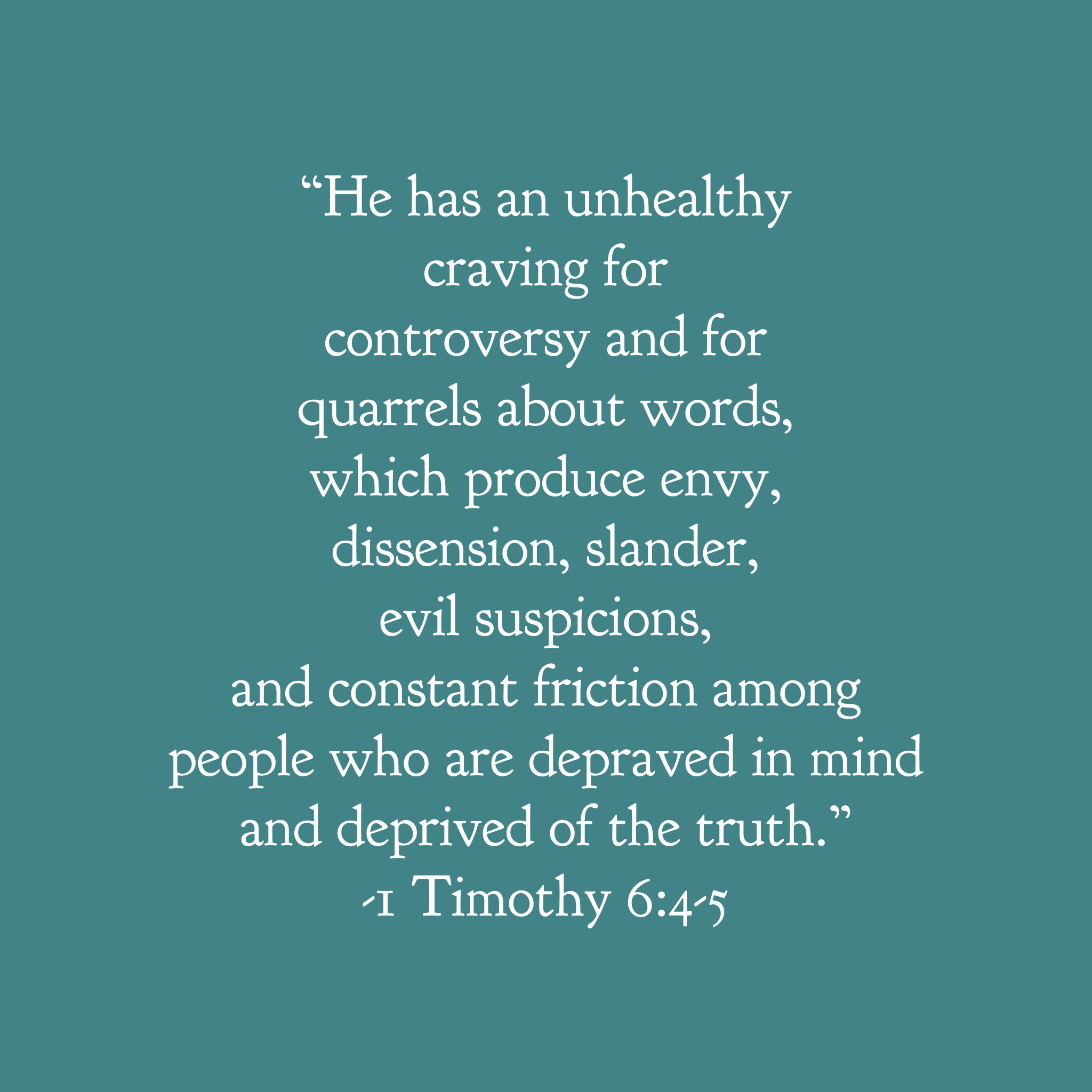
These verses grabbed my attention when I was in another part of 1 Timothy 6. Don’t they sound just like the spirit of our age? May we share right words with a right heart.
Friday’s Fave Five

This is one of those Friday mornings where I sit down and think, “OK, what did happen this week?” I’m thankful that the Friday’s Fave Fives causes me to look back and evaluate and thereby see blessings that otherwise would have been missed in the blur of time passing so quickly. We join up with our hostess, Susanne and friends at Living to Tell the Story, to share the best parts of the week.

1. Quiet weeks. As much as I love having all the family here and doing lots of activities with them, and I’ve missed all that, it helps to have some quiet days with nothing on the calendar.

2. Help with a computer issue. I needed to do something simple: put a document in a particular group folder. But I couldn’t figure it out with the program I was using, and Google searches and tutorials didn’t seem to match what my screen was showing. When my husband got off work, I asked him if he was familiar with the program. He said, “Just barely.” But he looked at what I was trying to do and helped me figure out how to accomplish it. I not only appreciate having the problem solved and knowing what to do next time, but I am thankful for his willingness to help.

3. An impromptu get-together. We met Jason, Mittu, and Timothy at Olive Garden one day this week. That’s not a place we go often—I think this is maybe the fourth time in my life I have been there. But the food was good and the time together even better. Jim and I tried some Italian doughnuts for dessert–very good!

4. Encouraging words from a couple of directions.

5. Some new fun pens. Sometimes it’s the little things. 🙂 I saw some Flair pens advertised that are regular pens on one end but have designs on the other end–one color prints little flowers, another squiggly lines, etc. I got them to add fun little touches to notes.

I had mentioned some family outings briefly the last couple of weeks. I shared more details and photos about them here yesterday.

What’s something good from your week?

Family Outings in August

I mentioned in my end-of-August post yesterday that I wanted to share about some of our outings while all the family was here, but that made for an extremely long post. So I decided to talk about those separately in this post.

The first Saturday Jeremy was here, there was a local car show that had a section of carnival-like games for kids (shooting targets with a Nerf gun, face painting, balloon animals, etc.)

Afterward, Jason and Mittu took us to a bubble tea place they like. I didn’t try the tea, but everyone else did and enjoyed it. The place had a little park next to it with a few food trucks, where we all got something to eat. I tried some Greek food, a chicken wrap. I would have liked it better without all the yogurt—I didn’t realize Greek food used that. Now I’ll know for next time. 🙂

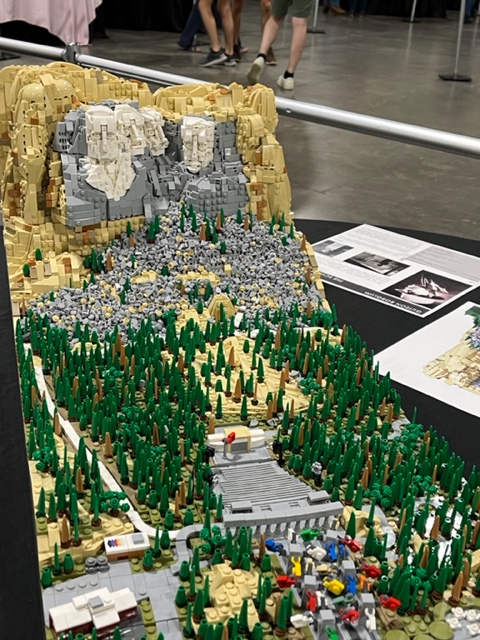
Then one day we went to the BrickUniverse LEGO Fan Convention downtown. Jim and I had thought this was something put on by the Lego company itself and were expecting some really big, elaborate displays. But the displays were made and entered by Lego aficionados. Once we adjusted our expectations, we enjoyed it–the displays were big and elaborate for individuals to put together. We took tons of photos, more than I can show here. But one of my favorites was Mt. Rushmore:

There were Lego representations of just about any famous building or structure you can think of–the Eiffel tower, the Vatican, Buckingham palace, and many more.

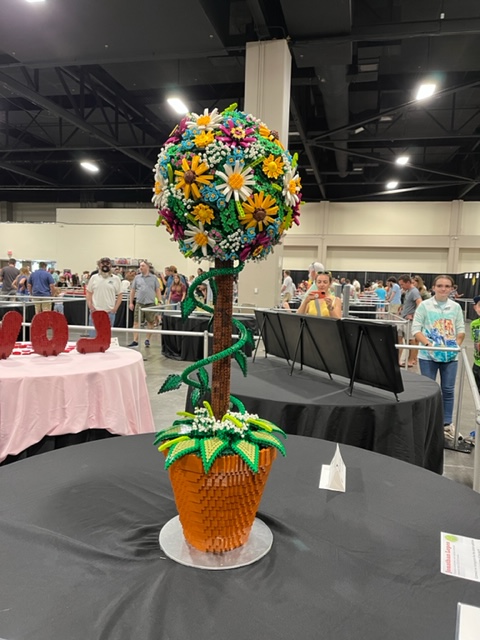
This was a cute flower:

This was a major bridge here in Knoxville (I can’t remember if it was the Henley bridge or another):

I loved all the little details, like these rowers under the bridge and the people on the sidewalk to the right:

(Excuse my finger there.)

And Batman in a little cavern on the bridge:

One morning during the week, Jason and Mittu took us to a little French creperie they’d found downtown. They had some nice gluten-free options for Mittu and Timothy. I had not had crepes since my cooking class in college. They were good! After we each finished our own, Jeremy got a cinnamon and sugar dessert crepe and Mittu and Jason got a Nutella and banana one, and they each let us cut off a piece to try. I’m not a Nutella fan, but I really enjoyed the cinnamon one.

Afterwards, we were trying to think of something downtown we could do for a little while that wasn’t too elaborate or costly. We ended up going to the Knoxville Museum of Art, which was free and not terribly big. It had a nice little kids’ room, with an oversized Lite Brite type device and other hands-on areas.

When we were there, the museum was featuring the work of Radcliffe Baily in an exhibition called Passages. One piece took up a whole room. It was made of a sea of piano keys with a slave ship and a slave in the water:

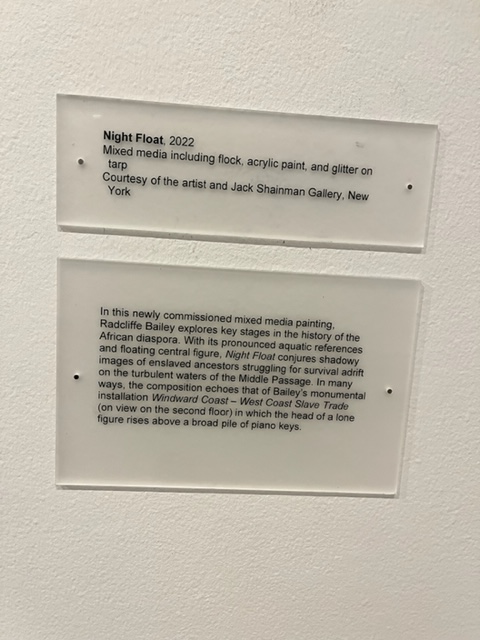
I wish one of us had taken a picture of the explanation of this piece and the significance of the piano keys. I searched and found more information on the piece at the bottom of this article. It was quite striking to see in person.

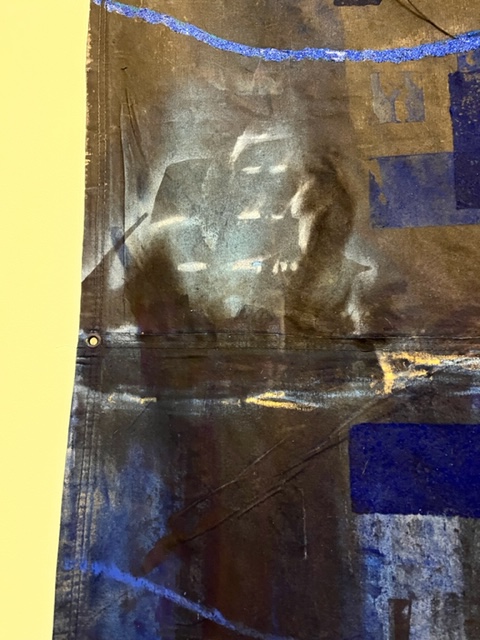
Most of his work had a mixture of painting, sculpture, and “found objects.” One of my favorites was Night Float:

This was a big piece as well, taking up most of one wall. One little inset, which you can see to the left of the big piece:

If you’re in the area, this exhibition will be up through November 6.

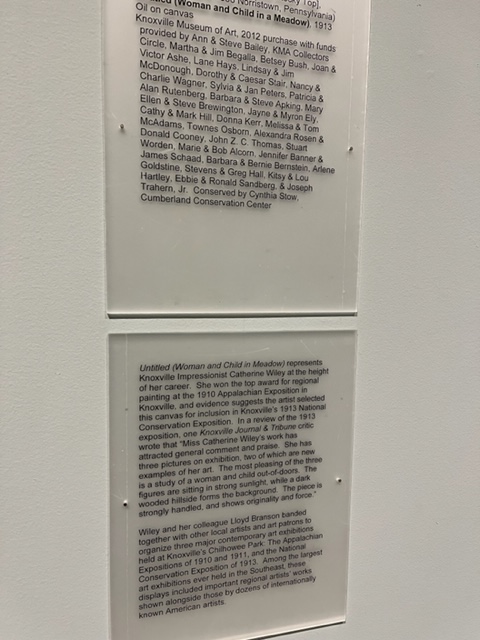
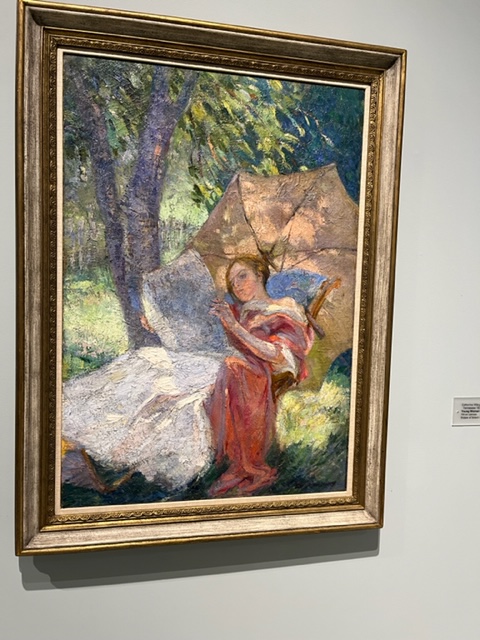
Another wing displayed art from East TN artists. There were quite a few there as well, but these were a couple of my favorites:

The following Saturday, we went to a balloon festival in Townsend, about an hour from us. But there was another museum that Jason and Mittu had been wanting to take us to in the same area, so we made a day of it and went to the Great Smokey Mountain Heritage Center first. They have an indoor display of history from the earliest known era of the area, a lot of information about the Native Americans and their homes and way of life, to early pioneers, on up through the years.

Then outside there is a collection of thirteen buildings, some of which were taken apart and reconstructed here. There were a few homes and barns, an outhouse, church, meat smoker, still, and a few others. Once again, we have a ton of photos, but here are a few:

The darkness, heat, and gnats really made me appreciate being born in the 20th century!

Timothy got to ring the church bell!

The museum had a very nice lady at the front desk when we went. They also had a temporary display of an old-time fire truck and cars.

The balloon festival didn’t allow outside food, and we weren’t sure if they’d have any food there that Mittu and Timothy could eat. So we had made some sandwiches and brought chips and drinks and found a place to eat.

The hot air balloon festival ran from 4 to 9. We got there around 5:30, I think. Nothing was done with the balloons until 6:30. I don’t know if that’s how they always do it, or if they were holding off to see what the weather was going to do. At any rate, we were glad we hadn’t gotten there at 4.

It was fun to see the balloons actually being blown up. I had never seen that in person before. It didn’t take as long as I had thought it would.

All of the balloons were tethered, and they offered rides in them–basically just up and down for a few moments. I don’t remember how much they cost, but the line for them was extremely long.

There was supposed to be a laser show at 9, but by 8 we’d had about enough, plus we had an hour’s drive home. There were an assortment of food trucks, bouncy kid things, and booths, but I didn’t explore them. I saw afterward one of the kids had taken a picture of something in a craft booth, so I wished I had walked through to see what was there. But I was also pretty tired by that point in the day and week. 🙂

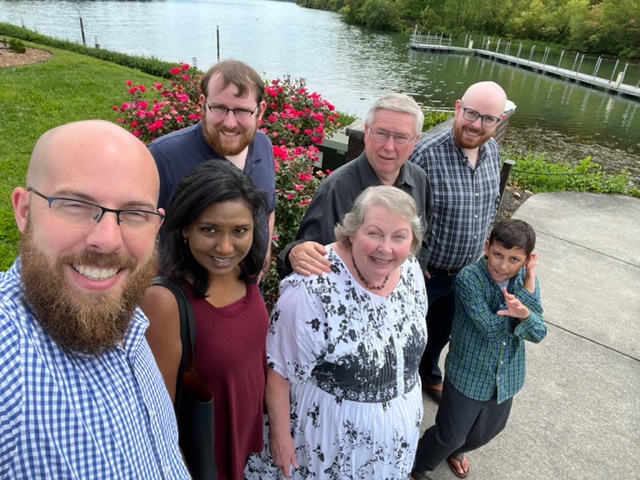
Sunday after church we went to one of my favorite restaurants for my birthday dinner. We always try to get one photo of all of us together, so we took advantage of the restaurant’s view to do that. This was probably the best shot.

It doesn’t look like the sun was out, but it was in our eyes, so we were squinting a bit. 🙂

Hubby and me

So, as you can see, we had a very nice but very full time together!

August Reflections

August’s heat and humidity have us longing for cool fall breezes. Each day brings us closer to them!

We enjoyed an extended time together as a family when my oldest son came to visit for about ten days. My husband took a week off, and Jason, Mittu, Timothy, and Jesse were here much of the time, though Jason and Jesse still worked most days.

I think I only ended up making dinner 3 nights. We went out some nights, Jesse made dinner for us one night at his place, and Mittu made dinner a few nights. We hadn’t coordinated beforehand spreading meals around, but it worked out nicely.

We celebrated Jeremy’s birthday at the beginning of his time here and mine near the end. It’s nice when the calendar works out so he can be here for both celebrations. We joked at the beginning of his, “Should we Face Time Jeremy?” We’re used to putting him on the TV screen for other celebrations when he can’t be here in person.

We played lots of Jackbox games, enjoying some old favorites as well as trying out some new ones. We also played Uno and even got out Settlers of Catan for the first time in a long time. It was Timothy’s first time to play the latter, and he lasted through most of the game. It’s a lot for a 8-year-old to take in.

We usually try to have one major outing during the week and maybe a couple of smaller ones. But this time there were several interesting things occurring that we took advantage of. I’ve mentioned a few of them during Friday’s Fave Fives, but wanted to go into more detail here. But that ended up making this already long post twice as long, so I am going to share details and photos in a separate post tomorrow.

Creating

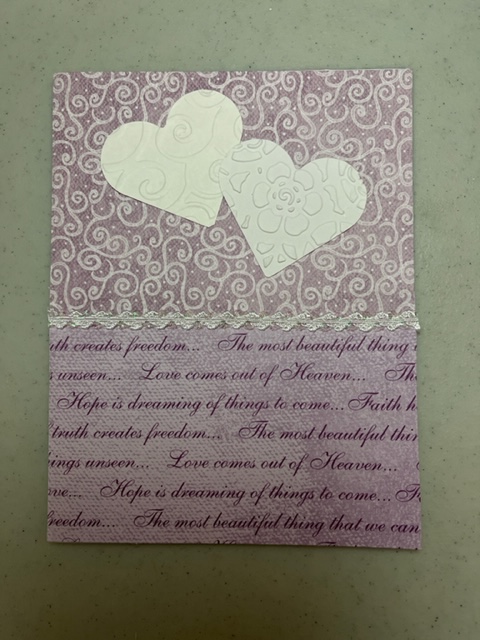
I made two cards this month. The first was for Jason and Mittu’s anniversary:

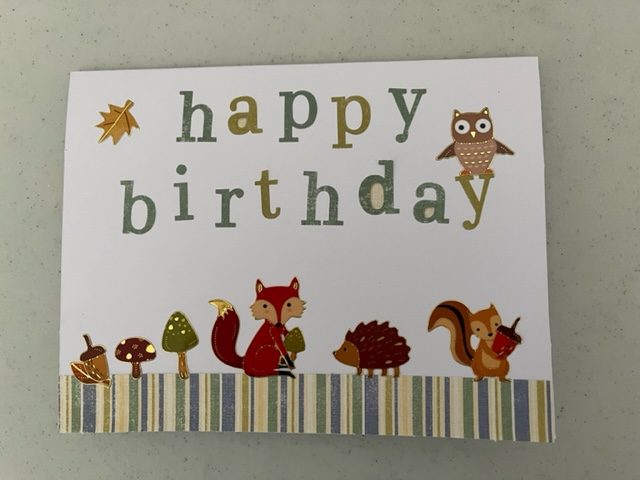
And this was for Jeremy’s birthday:

Watching

We really enjoyed War Horse. It’s been out for a few years, and I remember when I saw it advertised that it looked good. But then we forgot about it. It follows a horse’s path from a farm through many hands during WWI. I was especially struck by how just one person in each scenario saw the horse’s worth and made a difference in its treatment or next step, which enabled it to continue on–an apt metaphor for making a difference for good in the lives of people we meet. I don’t think that was the main point of the movie, but that’s something I got from it.

A Call to Spy was very good as well (except for a few instances of taking God’s name in vain. 😦 ). It was based on true events about women being recruited as spies during WWII, and followed the path of two in particular.

Reading

Since last time I have finished (linked to my reviews):

  • Where I End: A Story of Tragedy, Truth, and Rebellious Hope by Katherine Elizabeth Clark, a true story. Katherine was playing tag with some children at her son’s school playground when a boy jumped off the jungle gym and onto her head, breaking her neck and paralyzing her instantly.
  • Something Good by Vanessa Miller, a great novel about “Three Women. Two Mistakes. One Surprising Friendship That Changes Everything.”
  • The London House by Katherine Reay, a novel about a woman who seeks the truth when an old friend tells her he is about to publish an article that says her great aunt was a Nazi sympathizer. (Audiobook).
  • The Stranger by Melanie Dobson, a novel set in the Amana colonies in 1894. A stranger with a sick daughter stops to get help in the commune and falls in love with one of its inhabitants. But the group is wary of outsiders.
  • To Treasure an Heiress by Roseanna White, a novel about a race to discover pirate treasure, but with surprising depth and truth. Very good. (Audiobook).
  • Lady Almina and the Real Downton Abbey: The Lost Legacy of Highclere Castle by Lady Carnarvon. The current countess of the castle that was used for Downton Abbey tells some of the castle’s history, particularly that of Lady Almina, who converted it to a hospital during WWI. (Audiobook and Kindle).
  • O Love That Will not Let Me Go: Facing Death with Courageous Confidence, complied by Nancy Guthrie. Nancy has collected excerpts from writings as far back as the Puritans to modern-day writer on the subject of death and dying. Excellent, excellent, excellent.

Normally I have a Warren Wiersbe commentary in my reading list. I am in 1 Chronicles now, and Wiersbe included it in with his book on 2 Samuel, Be Restored: Trusting God to See Us Through. I’m not rereading the whole thing, since I did in April, but I am looking through the parts that specifically mention Chronicles.

I’m currently reading:

  • Essentialism: The Disciplined Pursuit of Less by Greg McKeown
  • Jesus Led Me All the Way by Margaret Stringer
  • The Hatmaker’s Heart by Carla Stewart
  • The Lost Heiress by Roseanna M. White (audiobook)

Blogging

Besides the regular Friday Fave Fives, Saturday Laudable Linkage, and book reviews, I’ve posted these since last time:

  • Labels and Lenses. Labels are helpful and necessary. But we need to look at our lives and theology through the lens of Scripture, and not look at Scripture through the lens of our labels.
  • Why Keep Reading the Bible, especially when you’ve read it several times before?
  • Making Time to Read the Bible. If we don’t make time for it, we likely won’t find time for it. Some tips to make that time for what Jesus called the one necessary thing.
  • How Can We Make Our Souls Fire Resistant? Just as leaves can smolder and then erupt into flame, sin can flame out in our hearts. What can we do to avoid that happening?
  • What Can We Learn from Bible Genealogies? Genealogies are probably no one’s favorite part of the Bible. But what might God want us to learn from them?

I overlooked my blogging anniversary at the end of July. 16 years! And, as of today, 5,189 posts. Thank you for reading and making blogging such a blessing to my heart.

As we turn the calendar to September tomorrow, we look forward to Jesse’s birthday and a visit from my folks at the end of the month.

How was your August? Anything interesting happen?

To Treasure an Heiress

In Roseanna M. White’s novel, To Treasure an Heiress, Beth Tremayne loved exploration and adventure. She lived in the Isles of Scilly in the early 1900s and traveled to all of them in her sloop. She found some old letters and a map in her grandfather’s house that indicated a legendary pirate king had lived on her island, Tresco, and had left a fortune somewhere in the vicinity. That was fuel to Beth’s adventure-loving heart.

Beth had a trinket box, given to her by her mother, which had King Rupert’s seal on the top. Beth sent the box to the father of her friend at finishing school who was an expert in antiquities. Her friend’s father, Lord Scofield, authenticated the box—but then sold it! Worse yet, both Lord Scofield and his buyer, Lord Sheridan, were intrigued by the thought that more items connected to King Rupert might be on the islands. Scofield was interested mainly in the purported treasure, but Sheridan was a descendant of Rupert and interested in artifacts.

Worst of all, Sheridan had actually come to Tresco. Beth’s efforts to shield her family from the repercussions of her search had failed miserably. Her grandmother urged her to forgive and to work together with the family, and even Sheridan, to find Rupert’s treasure. But Scofield is looking as well and isn’t above using less than honorable means.

A secondary story line involves Beth’s former governess, Senara, who had been dismissed from her most recent job due to indiscretions. Senara had fallen in love with a man who had misled her, and now she feels tarnished and ashamed. A new friend helps her see that with God’s forgiveness, she can be forgiven and made new.

He makes us with great worth. Creates us that way intrinsically. Our sins, our bad choices, perhaps they coat us like mud. But the mud cannot take away the value He instilled in us. Mud does not make a pearl any less valuable. If it did, they why would Jesus have deemed us worthy of the sacrifice of His life? Because He loves us, as does the Father. Because we are valuable. And the blood of Christ, when it washes us clean, fully restores us to what He created us to be. A pearl cannot be stained. No matter how many centuries it sits in mud, wash it in a bit of water and it’s gleaming again.

This book is a sequel to The Nature of a Lady, which I enjoyed last year. I think this book could be read alone, but it’s richer together with the first. I normally wouldn’t be attracted to a book about chasing pirate treasure, but I have loved everything I have read of Roseanna’s. She manages to bring out deeper levels of meaning for her characters. Parts of the story are touching and sweet; some are even funny.

I didn’t like Lord Sheridan at all in the first book, and when this one hinted at a romance between him and Beth, I didn’t think it would work. But he grew on me in this story.

I found the resolution just a bit anti-climactic. But all in all, I found this a lovely story.

I listened to the audiobook, nicely read by Liz Pearce.

What Can We Learn from Bible Genealogies?

If Leviticus doesn’t kill your Bible reading plans, Chronicles might.

When our church was going through 1 Chronicles, our Bible study leader said his children asked, “Do we have to read the genealogies?” He admitted he was thinking the same question.

The genealogical sections of the Bible are probably no one’s favorite part of Scripture. Our pastor has often said, “Every part of the Bible is inspired by God, but not every part is inspirational.” We’re probably not going to get warm fuzzies from those lists of unfamiliar names.

But because the genealogies are as inspired by God as every other part of Scripture (2 Timothy 3:16), they have much to teach us.

The Holy Spirit doesn’t waste words. God’s works and thoughts are “more than can be numbered” (Psalm 40:5, NKJV). A former pastor used to say the Bible is divinely brief: of all the things God could have shared with us, He chose the particular words in the Bible. So everything in the Bible is there for a purpose.

Our pastor’s wife used to say of some of the “drier” passages of the Bible, “Keep digging until you find the golden nuggets.”

So what can the genealogies teach us?

God keeps records. Detailed records. Every person on those lists was someone known of God and loved by God. And He knows and cares about us as well.

Some genealogies act as bookends or transitions. For example, Genesis 36 wraps up Esau and his descendants before Jacob’s story switches focus to Joseph.

The Bible is history. Bible professor Dan Olinger said he was thrown for a loop when he learned that some theologians teach that the narratives of the Bible, particularly the Old Testament, are fables. These teachers say we’re meant to learn lessons from OT stories like we do from Aesop’s fables, but the stories and people were made up. Dan struggled with this view until he realized that the genealogies ground the Biblical narratives in history. In fables, it doesn’t matter where the characters lived or came from or who their descendants were. But those details do matter in history.

God keeps His promises. Part of God’s covenant with Abraham was that in him, “all the families of the earth shall be blessed” (Genesis 12:3). God repeated this promise to Jacob three times (Genesis 12:18; 26:4; 28:14). God had promised David that his throne would be established for ever. Paul says God “promised beforehand through his prophets in the holy Scriptures, concerning his Son, who was descended from David according to the flesh and was declared to be the Son of God in power according to the Spirit of holiness by his resurrection from the dead, Jesus Christ our Lord” (Romans 1:2-4). Matthew’s genealogy establishes Jesus’ human and royal lineage from Abraham through David. Jesus was the long-awaited fulfillment of God’s promises to His people through the ages.

Jesus loves sinners. Luke’s genealogy traces the line of Christ all the way back to Adam, establishing His humanity. Matthew mentions some people we might be surprised to see there.

All of the names shout that Jesus is not only the long-awaited King but that He is the King of grace! This entire family deserved to be rejected by God for notorious wickedness—for lying (Abraham), deceit (Jacob), immorality (David), double-mindedness (Solomon), arrogance (Rehoboam), unbelief (Ahaz), and idolatry which included child sacrifice (Manasseh). And this family had a history of disreputable women, who were “outsiders” for one reason or another. Tamar was the seductive Canaanite (v. 3), Rahab, the prostitute from Jericho (v. 5), Ruth, the Moabitess (v. 5), and Bathsheba, the adulteress (v. 6). You see, Jesus was born into a family that was notoriously deserving of judgment. But that means He’s not afraid to be associated with sinners, including immoral Gentiles—including me and you! (Joe Tyrpak, Gospel Meditations for Christmas, p. 11).

Thomas Overmiller writes:

If the genealogy of Jesus himself featured mothers with disgraced or shameful reputations, then why should you expect anything different? God does not weave people into his purposes and plans because they come from a pristine family background. He weaves people into his plan instead who have disgraceful backgrounds, the kind of disgrace that comes from our own sin and the kind that comes from the sin of others towards us. God delights to find sinners and save them. He delights to redeem us from the power of sin and from the pain of sinful things that other people have done to us. The grace of God shines through disgraced people (A Genealogy of Grace: Mothers of the King).

Genealogies encourage God’s people. I don’t think I realized before this trek through 1 Chronicles that it was written to the Israelites going back to their land after having been in exile in Babylon for 70 years. They needed to be reminded of their identity and encouraged that they were “still God’s people and retain their central place in God’s purposes for humanity” (Brian E. Kelly, ESV Study Bible, p. 705).

The Chronicler sought to address some urgent questions of his day concerning the identity of Israel. He wanted to instill fresh confidence in the people. The genealogies of Israel that begin the work (1 Chronicles 1–9) start by tracing the people’s ancestry back to Adam, a striking reminder that Israel was at the center of God’s purpose from the very beginning of creation. Although only a “remnant” and a provincial outpost in a great empire, Israel must remember that its security and destiny rest with Yahweh, “who rule[s] over all the kingdoms of the nations” and has given the land to Abraham’s descendants “forever” (2 Chron. 20:6-7) (Brian E. Kelly, ESV Study Bible, p. 701).

Genealogies remind us that life is short and death is sure until the Lord returns. I don’t remember the details or the source, but I heard about a girl who invited her unsaved dad to church. The pastor happened to be in a section of genealogies. The girl was discouraged, thinking this was the worst of all sermons for her dad to hear. But her dad became a believer. He said that hearing over and over that so-and-so lived, had children, and then died struck him. The repeated phrase “and he died” drummed itself into his mind, and he decided he needed to prepare for his own end.

Many of the Bible genealogies are “telescoped”: they don’t include every ancestor in a given line. This accounts for some discrepancies between lists. Each of the genealogies is there for a particular purpose, so the author will only include the names that are pertinent to his theme.

I hope you’re more encouraged about Biblical genealogies now. They still might not be the most exciting parts of the Bible, but they’re a rich and integral part.

Does anything in this list of what genealogies teach us resonate with you? Can you think of other purposes for genealogies in the Bible?

(I often link up with some of these bloggers.)

Laudable Linkage

I have just a short list of links to share as I am still way behind in my blog reading.

Six Steps to Shield Yourself from Satan, HT to Aritha. “So, no matter how many flaming darts Satan fires against us, the shield of faith can extinguish them all. But that doesn’t happen automatically. Shields need to be picked up, and used. So, how do we do that? Here are steps I have found helpful.”

The Lord’s Prayer: Antidote to Expressive Individualism, HT to the Story Warren. “Expressive individualism, the view that who you are is who you feel yourself to be on the inside, is the dominant approach to identity formation in our day. . . This approach to self-understanding is a challenge to a Christian view of the self at every level.”

Inconvenienced, HT to Lisa. “I feel the sting of guilt because I don’t want to be inconvenienced in this way. I want to carry on with my personal schedule as planned. I’m ashamed to say this. I don’t want my routine interrupted. How totally selfish is that?” I can identify.

Three Significant Ways to Teach Your Son The Value of Marriage. “With marriage feeling so ‘optional’ in our present culture, how do we communicate its value and significance to our sons?

Update: I thought I hit “publish” this morning! I guess I didn’t. My apologies.

Friday’s Fave Five

I enjoy this weekly tradition of stopping with Susanne and friends at Living to Tell the Story to remember and acknowledge the best parts of the week, to thank God for them and savor them just a little longer by sharing them.

This has been another very full and very good week.

1. My birthday. My family does a wonderful job making me feel special on my birthday. Their love and care took a bit of the sting out of this being a milestone birthday. We went out to one of my favorite restaurants for lunch, and Mittu made my favorite Texas Sheet Cake.

2. More family time. My oldest son was here for about ten days, and my husband was off for a week. The rest of the family was here more than usual, and we packed a lot of visiting, feasting, and game playing into our time together. Mittu made dinner a few times and Jesse had us over to his place for one dinner.

3. Fun outings. I’ll share more about these next week, but we had several outings together. One was a hot air balloon festival.

4. The family all together at church. Jason and Mittu and Jesse attend elsewhere, but while Jeremy was here, we all attended together on my birthday. That was a special blessing to my heart.
5. A made-for-me cup-holder. I like my cold drinks super-cold, so I often put them in the freezer for a bit. It’s even better if they get a little slushy. It’s never been a problem before, but last week my glass of orange juice tipped over and dripped down the side of the freezer, on every shelf below, and made a little puddle at the bottom. My husband has a little 3D printer and made this cup holder to keep spills from happening in there again.

I hope you’ve had a great week as well!

A Book About Death and Dying That Is Not Morbid

Why would anyone read a book on dying if death is not imminent for oneself or loved ones?

Well, in my case, I saw a few quotes that I liked from O Love That Will not Let Me Go: Facing Death with Courageous Confidence, complied by Nancy Guthrie, in Aging with Grace. I’ve read and enjoyed some of Nancy’s other compilations (Come Thou Long Expected Jesus about Christmas and Jesus, Keep Me Near the Cross about Good Friday and Easter). I had not known about this one, but when I did, I wanted to get it, too.

And then, I’ve always dreaded death, even as a Christian. I knew heaven was something to look forward to, with the presence of Jesus and the absence of sin, sickness, sorrow, and crying. I assumed that God would give me grace to die when the time came, and I just tried not to think about it much. So I thought this book might provide some help in that regard.

As with Nancy’s other compilations, this book is made up of excerpts from the writings or sermons of Christians as far back as the Puritans and as modern as Joni Eareckson Tada, John Piper, and Randy Alcorn.

The book is divided into four parts:

  • A Reality That Will Not Be Denied
  • An Aim That Keeps Me Pressing On
  • A Hope That Saves Me From Despair
  • A Future That Will Not Disappoint

Ecclesiastes reminds us, “It is better to go to the house of mourning than to go to the house of feasting, for this is the end of all mankind, and the living will lay it to heart. . . . The heart of the wise is in the house of mourning, but the heart of fools is in the house of mirth” (7:2, 4).

J. I Packer writes:

In every century until our own, Christians saw this life as preparation for eternity. Medievals, Puritans, and later evangelicals thought and wrote much about the art of dying well, and they urged that all of life should be seen as preparation for leaving it behind. This was not otiose morbidity, but realistic wisdom, since death really is the one certain fact of life. Acting the ostrich with regard to it is folly in the highest degree (pp. 15-16).

John Owen says in “Hope Is a Glorious Grace” that we’re like travelers. Some are so busy about other things, they don’t give much thought to the place they are going. Others learn as much as they can about their destination so that they are better prepared and know what they are looking forward to through the discomforts of the journey.

Thomas Boston says, “The less you think on death, the thoughts of it will be the more frightful– make it familiar to you by frequent meditations upon it, and you may thereby quiet your fears. Look at the white and bright side of the cloud– take faith’s view of the city that has foundations; so shall you see hope in your death. Be duly affected with the body of sin and death, the frequent interruptions of your communion with God, and with the glory which dwells on the other side of death– this will contribute much to remove slavish fear” (p. 115).

Several themes came up in many of the selections: Jesus has taken away the sting of death by His own death for us and His resurrection (1 Corinthians 15:53-56). Death is “the last enemy” (1 Corinthians 15:26), but it is a defeated enemy. This world is our temporary home: we’re just strangers and pilgrims here (1 Peter 2:11). God is preparing us for “a better country, that is, a heavenly” (Hebrews 11:16). God will accompany us through the pangs of death and usher us into His presence. Keeping this end in mind should affect how we live here.

One of the best chapters is “Comfort against Fears in the Dying Hour” by Thomas Boston. It’s excerpted from a longer sermon here. The part in this book starts near the end where he talks about different “cases” and gives help for them—fear of leaving loved ones and friends behind, of the sad state of one’s spiritual condition, of dying too soon, of pain or losing one’s senses at the end

I have multitudes of quotes marked, much more that I can share here. But I’ll try to leave you with some I found most helpful.

Death’s sting has been removed, but its bite remains. It does not have the last word for believers, but it remains the believer’s antagonist until the resurrection of the body. The good news is never that one has died, but that death has ultimately been conquered by the Lord of Life (Michael Horton, pp. 23-24).

“And we all, with unveiled face, beholding the glory of the Lord, are being transformed into the same image from one degree of glory to another” (2 Corinthians 3:18). You become like what you choose to behold. Behold Christ, you become Christlike. Gaze upon superficiality and immorality, and it’s equally predictable what you’ll become. Who you become will be the cumulative result of the daily choices you make (Randy Alcorn, pp. 55-56).

Our witness for Jesus is frequently manifested in our absolute weakest moments rather than when we are at full strength (John Eaves, p. 71).

We forget that throughout biblical history, trials, hardship, and death are equally a part of our witness to an unbelieving world as are healing and deliverance and divine blessing (John Eaves, p. 73).

In sickness the soul begins to dress herself for immortality. . . The soul, by the help of sickness, knocks off the fetters of pride and vainer complacencies (Jeremy Taylor, p. 79).

Richard Baxter says God uses sickness “to wean us from the world, and make us willing to be gone” (p. 97).

What more should God do to persuade you to accept death willingly and not to dread but to overcome it? In Christ he offers you the image of life, of grace, and of salvation so that you may not be horrified by the images of sin, death, and hell. Furthermore, he lays your sin, your death, and your hell on his dearest Son, vanquishes them, and renders them harmless for you. In addition, he lets the trials of sin, death, and hell that come to you also assail his Son and teaches you how to preserve yourself in the midst of these and how to make them harmless and bearable (Martin Luther, p. 108).

You say that you cannot abide the thought of death. Then you greatly need it. Your shrinking from it proves that you are not in a right state of mind, or else you would take it into due consideration without reluctance (C. H. Spurgeon, p. 148).

O Lord, when the hour comes for me to go to bed, I know that thou wilt take me there, and speak lovingly into my ear; therefore I cannot fear, but will even look forward to that hour of thy manifested love. You had not thought of that, had you? You have been afraid of death: but you cannot be so any longer if your Lord will bring you there in his arms of love. Dismiss all fear, and calmly proceed on your way, though the shades thicken around you; for the Lord is thy light and thy salvation (C. H. Spurgeon, p. 152).

I appreciated that a couple of writers put words to something I had not been able to express: dread of the “strangeness to the other world” (Owen, p. 100). It’s always a little nerve-racking to go to a new place, but it seems silly to feel that way about heaven. But I’m glad I am not the first person who has. Thomas Boston reminds, “Your best friend is Lord of that other world” (p. 113).

This book was a great blessing to me many mornings as I read it. I’m sure I’ll read it again in the future. I heartily recommend it.

(I often link up with some of these bloggers.)

The Stranger

In Melanie Dobson’s novel, The Stranger, banker Jacob Hirsch lost his job in 1894 Chicago. His wife had died the year before. He decides to scrape together the cash he can and take his four-year-old daughter, Cassie, to Washington, where he heard work was available.

But Cassie falls ill on the train. Jacob gets off in Iowa, desperate to find help, though he has little money. A woman approaches him, speaking German. She takes Jacob and Cassie to the nearby doctor, who diagnoses Cassie with diphtheria and quarantines them. Liesel, the German woman, insists on staying to help nurse Cassie since Jacob is injured as well.

Jacob learns that the community he’s in is called the Amana Colonies. Its founders immigrated from Germany in the 1830s and the group lived a communal life style. The families lived in individual homes, but each member was assigned a job in the community. They were a charitable group, providing meals and help to those in need. But they were suspicious of outsiders and preferred that they move along as soon as possible.

Liesel works in the gardens, though she wants to work with children. It was arranged that she would marry Emil some day, a baker who wants to be a carpenter. She doesn’t really know him, but she assumes they’ll grow to love each other eventually. She finds it strange, though, that he hasn’t sent word to her or checked on her since she has been quarantined.

In close quarantined quarters, Jacob and Liesel find much to admire about each other. After quarantine is over, Jacob is asked if he will help out in the community while Cassie continues to recover. Liesel offers to take care of Cassie while Jacob works.

The Amana elders commend Liesel for her help but warn her about becoming too close to Jacob. Her father is more adamant than most, with his suspicion of outsiders heightened by his own wife’s leaving him and Liesel and the colonies.

But as Jacob and Liesel’s feelings grow, their dilemma does as well. Would Jacob be willing to stay? Would the elders even let him? Would Liesel be willing to leave the only community she has known for Jacob?

And, unbeknownst to either of them, unexpected trouble is brewing for Jacob back in Chicago.

I had heard of the Amana colonies briefly before. Some might confuse them with the Amish or Mennonites, but there are differences. Neither of those groups lives communally, but they all value hard work and simplicity. The Amana group was known as the Community of True Inspiration, and its followers were called Inspirationalists. They believed that God spoke through certain “instruments” in their time just as He did in Bible days, and they placed their books on Inspirationalist sayings on an equal plane with the Bible. Some of their sayings (sprinkled between chapters in this book) sound Christian-ish, but others are a little off. Like “Whosoever sincerely seeks the treasure within their heart must seek with diligence, abandoning all else. You must search deeply until you reach the unfathomable, wherein you shall be absorbed,” Johann Friedrich Rock, 1717 (p. 118)—whatever that means. So I would call this historical fiction, but not Christian fiction.

But I enjoyed learning more about the Amana colonies, and I enjoyed the story.

Amana members disbanded the commune in 1932, but the society is till there. Amana appliances came from this area, and that business was later bought by Whirlpool. Now the colonies offer tours and sell wares.