Song of Solomon

Song of Solomon

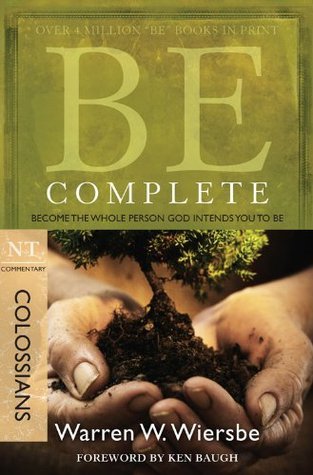
Long-time readers know that I have been using Warren Wiersbe’s “Be” commentaries as companions on my current trek through the Bible. I thought he had written one for every book of the Bible. But when I came to the Song of Solomon, I couldn’t find a corresponding “Be” commentary for it. I searched all the titles. Since SoS is a smaller book, I figured its commentary was probably tucked in with another book’s. But I looked at the table of contents for all the Be books I thought it might be included with, and didn’t see it.

Then I found The Bible Exposition Commentary: Wisdom and Poetry by Wiersbe which covered Job through Song of Solomon. I found a used copy online for $3.99, so I went ahead and got it. As it turns out, the Bible Exposition Commentary series is made up of Wiersbe’s “Be” commentaries. The part dealing with SoS is only about eleven pages.

The subtitle of Song of Solomon says “The Song of Songs, which is Solomon’s.” Both Wiersbe and the ESV Study Bible notes say this means something like “the greatest of songs”—similar wording used in King of kings and Holy of holies.

There are a number of different ways to interpret SoS. Wiersbe thinks Solomon is the bridegroom in the book. The ESV notes say it’s more likely that the book was written in Solomon’s honor or during his reign, but the bridegroom in the story is a shepherd. Both sources also disagree on when exactly in the book the couple marries. But neither of these are major factors in understanding the book.

They do agree that, to some extent, the book is an allegory of God’s love for His people (Ephesians 5:31-21 also says marriage pictures Christ and the church), and on another level it’s a celebration of married love.

While the Song of Solomon illustrates the deepening love we can have with Christ, we must be careful not to turn the story into an allegory and make everything mean something. All things are possible to those who allegorize—and what they come up with is usually heretical.

It’s almost laughable to read some of the ancient commentaries (and their modern imitators) and see how interpreters have made Solomon say what they want him to say. The language of love is imaginative and piles one image on top of another to convey its message. But to make the bride’s breasts represent the two ordinances, or the garden stand for the local church, or the voice of the turtledove mean the Holy Spirit speaking, is to obscure if not destroy the message of the book. Other texts in the Bible may support the ideas expressed by these fanciful interpreters, but their ideas didn’t come from what Solomon wrote (p. 542).

(I love that line—“All things are possible to those who allegorize.” 🙂 )

There are different speakers in the book: the shepherd, shepherdess, and a chorus of others, often referred to as the daughters of Jerusalem. Thankfully, the editors of the ESV and most other modern versions puzzled out who was speaking when and provided us with designations.

We follow the bride and groom through various troubles (she doesn’t open her door to him one night and regrets it, then goes searching for him), deepening love, marriage, and admiring descriptions of each other

Both sources give helpful details in understanding the text. For instance, the bride is compared to a “mare among Pharaoh’s chariots”–but that probably means “the best of its kind,” not that she looked like a horse. Wiersbe says of some of the other descriptions of the bride in Chapter 4:

Doves’ eyes would reflect peace and depth. The bride’s teeth were clean, even beautiful. When you remember that ancient peoples didn’t quite understand dental hygiene, this was an admirable trait. Healthy teeth would also affect her breath (7:8). She had a queenly neck and a posture with it that exuded control, power, and stability. She was a tower of strength! (p. 546).

Another comment that stood out to me came from 2:10, 13), where the bridegroom says, “Arise, my love, my beautiful one, and come away.”

“Come” is the great word of the Gospel of God’s grace. It is God’s loving invitation to the weary who need rest (Matt. 11:28-30), the sin-stained who need cleansing (Isa. 1:18), the hungry who need nourishment (Luke 14:17), and all who thirst for the water of life (Rev. 22:17). But “come” is also His invitation to His own people: “Come and see” (John 1:39), “Come and drink” (John 7:37-38), “Come and dine” (John 21:12). In this text, the king invited his beloved to  leave her home and work and go with him to enjoy an adventure in the country (p. 544).

Chapter 2:3-4 says, “As an apple tree among the trees of the forest, so is my beloved among the young men. With great delight I sat in his shadow, and his fruit was sweet to my taste.
He brought me to the banqueting house, and his banner over me was love.” Elizabeth Poston wrote a beautiful song based on this passage called “Jesus Christ the Apple Tree:

The first time I read SoS, which was probably in high school, I was surprised that it contained some graphic phrases and images. The Bible is often quite frank about the body and its functions.

In early married years, I was comforted by SoS. Growing up even in an unchurched family, about all I heard about sex growing up was “DON’T.” This book and passages like Hebrews 13:4 (“Marriage is honorable among all, and the bed undefiled; but fornicators and adulterers God will judge,” NKJV) helped me understand that God created sexual love to be enjoyed by a husband and wife.

In his last couple of paragraphs, Wiersbe acknowledged the difficulty of preaching or teaching Song of Solomon in such a hyper-sexualized society as we have these days. He advised its use in premarital or marital counseling. He closed by saying:

In using this book in public ministry, we must be wise as serpents and harmless as doves and not allow our good works to be classified as evil. Some people are against anything in the pulpit that deals with sex, while others wonder where they can get the help that they desperately need. Wise is the minister and teacher who can keep the right balance (p. 550).

It had been a long while since I read Song of Solomon. It was a blessing to spend time there again, aided by the ESV Study Bible and Wiersbe’s commentary.

(I often link up with some of these bloggers.)

Review: Yours Is the Night

Yours Is the Night by Amanda Dykes

In Yours Is the Night by Amanda Dykes, Matthew Petticrew grows up with his sister on a racetrack in New York in the early 1900s until the father who never claimed them sent them away. Matthew’s sister, Celia, was sent to nursing school, Matthew to be a groom at the stables of Harvard University.

When Matthew travels with some Harvard boys to Plattsburg Training Camp to deliver horses, a chance meeting with his childhood hero, Jasper Truett, one of Theodore Roosevelt’s Rough Riders, changes his life.

Matthew and three acquaintances are sent to the Argonne forest for more wood to reinforce the trenches.

One of the men, George Piccadilly, is a Brit whose parents had sent him to Harvard to get a divinity degree to avoid having to fight in the first World War. However, through a series of events, he ends up at Plattsburg Training Camp . He has no use for religion but somehow ends up a chaplain. His joviality and Matthew’s seriousness don’t seem like they would mix, but George sticks close to Matthew because he looks like he would know how to survive. Plus George thinks he can lighten Matthew up a bit.

The last acquaintance is Henry Mueller, a bookish young man who was recruited as a fresh-faced, boy-next-door to write for the newspaper about the war under the pen name Hank Jones.

As they gather wood, they hear a woman singing. George dubs her the Angel of Argonne. And then one night they meet her in person at the freshly dug grave of her grandfather.

Mireilles, called Mira, grew up with her father and grandfather in the Argonne. When the war came crashing into their quiet lives, Mira’s father went to fight. Now her grandfather is gone, too.

The men feel they can’t leave her alone in her forest home so near the front lines. But they don’t want to send her out alone, either. They obtain permission to accompany her to her nearest relative’s house.

The journey will change each of them.

It took me longer to get into this book than Amanda’s previous book, Whose Waves These Are. The point of view shifts back and forth between Matthew, George, Hank, Jasper, and Mira. It took a little while to get them all sorted out. Plus there was a lot of bickering between George, whose character I didn’t really like at first, and the other two younger men. It was understandable, even funny at times. But not my favorite.

But at some point, everything clicked into place. The last few chapters were just beautiful. I loved the ending. Right after finishing, I went back and reread the first few chapters, understanding them better.

The prologue and epilogue tell of the choice of a casket for the Tomb of the Unknown Soldier. In the author’s notes, Amanda tells of visiting the tomb on the centennial anniversary year and how much the symbolism meant to her. She writes that she did not mean to fictionalize the unknown soldier, but “His anonymity allows him to represent the countless ones who never came home. . . . I hope that only respect, gratitude, and a fierce guarding of the real soldier’s true story—untouched by this imagined one—is found in these pages.”

Some of the other quotes I liked:

That burning justice is a gift. . . . But you be sure and save it for where it’s needed. Some battles aren’t battles after all (p. 23, Kindle app).

I understood the way words can shape hearts. Evade the creation of mobs and fear, and instill a home-front army of citizens armed with hope (p. 65).

The sky rumbled like only the earth should, and the earth bled like only people should, and people—people lived and died like nobody, ever, should (p. 151).

War happens. We help. It’s what we do. Not one of us can fix this whole mess, but maybe we can help this one moment (p. 151).

Men of few words, I was realizing, said much with their silence over here (p. 174).

“The matches . . . they are hope.” They are hope. The three words socked the air from me. Bringers of hope . . . creators of light from dark, when struck on hard places (p. 178).

It’s not mine to change what has happened . . . I cannot. It is mine to walk through what will come (p. 181).

There are none who can undo the past. But there is one who will carry the pain of it. He knows too well the sting of injustice. No, more than that. The blood of it. But with it, He bears the scars of his own injustice with the same hands that carry me now (p. 182).

Her brother was a thoughtful speaker, one who weighed his words and chose few of them to speak, ones that seemed always to carry so much in their depths. His sister seemed to do just the opposite—speak her words, then catch them and consider them, then say more words to explain. As if she were swimming in them, and happily so (p. 195).

What if what we believe to be our shortcomings, our oddities, are actually purposeful quirks that suit us for the moments we were made for? (p. 257).

Though I loved Whose Waves These Are more, I came to enjoy this book quite a lot as well. I’m a fan of Amanda’s writing and eager to read more of her books.

Review: All My Secrets

All My Secrets by Lynn Austin

In Lynn Austin’s Gilded Age novel, All My Secrets, one of the wealthiest men in America has just died. The Stanhopes were contemporaries of New York’s elite families, like the Vanberbilts, Astors, and Van Burens.

Arthur Benton Stanhope III, known as A. B., was only forty-six when he passed. At the reading of his will, his mother, Junietta, wife Sylvia, and daughter Adelaide, or Addy, all found out that the original Arthur Stanhope had written his will in such a way that the Stanhope business and the bulk of the family money could only be passed down to the closest male heir. A small trust was left for Sylvia and Addy, but it was not as large as it might have been if the investments had the expected time to grow. But with a little economy, and perhaps the sale of the family yacht, they should manage fine.

Such economic measures, however, would send them toppling from the pinnacle of society they enjoyed. That was fine with Junietta. But Sylvia’s position and reputation as a hostess were her life. Sylvia decided the best thing they could do was find acceptable suitors to discreetly introduce Addy to in the hope that she might marry well before their financial state became too dire.

Addy didn’t like the idea of marrying a man for his money or feeling like a bargaining chip. Her mother assured her the choice was hers, and she wanted her to be happy. But Addy felt duty-bound to do everything in her power to keep the only home she had ever known in the family for her mother’s sake. Addy herself, didn’t want anything to change more than it had to.

Junietta thought their palatial home was a monstrosity. It had more rooms than they could ever possibly use. Addy had gotten lost in them as a child. The rooms they did inhabit were too large, their decorations overdone. The money expended on their balls and dinner parties could feed other families for weeks. Their contemporaries were gossipy rivals more than friends.

Junietta was more or less trapped in her marriage, but she wants Addy to know she has choices. Will Addy ever warm to the idea that the excessive wealth they are used to is wasteful, that there are better ways to live? Or would Addy write her grandmother off as eccentric? Junietta was going to have to reveal some of the secrets of her past that changed her own views. Would she have time to, before her erratic heart gave out?

I enjoyed this book a lot. I don’t see many novels set in this era, so it was fun to experience that time. Junietta’s secrets were revealed gradually in flashbacks, eventually prompting Sylvia to share secrets of her own. I enjoyed the characters and the natural way the faith element was woven in. The author makes sure to emphasize that being rich is not a sin in itself, and being poor is not inherently virtuous. But we’re all stewards of what we’ve been given.

But the book isn’t just about stewardship. It also involves loss, love, grief, life choices, forgiveness, and more.

In a fun coincidence, my oldest son visited the Marble House in RI with friends. It was built by William Vanderbilt for his wife, Alva, and started off the “summer cottage” fad among the elite (the “cottages” being 50+ rooms rather than what we think of as a cottage). The day after my son told us about his visit to this house, it came up in this book.

I enjoyed the audiobook, nicely read by Sarah Zimmerman. As usual, the audio version did not contain any of the author’s notes at the end, but I found some of that information in an interview with the author here.

I wished that the author had included an epilogue. The characters are left in such a way that we have a good idea what will happen to them, but I would have liked things to be a bit more wrapped up at the end. I just learned in the interview mentioned above that the author has written a novella with these characters that will come out at Christmas.

Review: Be Satisfied

Be Satisfied: Ecclesiastes

Be Satisfied (Ecclesiastes); Looking for the Answer to the Meaning of Life is Warren Wiersbe’s commentary on that book of the Bible.

Ecclesiastes is a little different from the rest of the Bible. It almost sounds pessimistic at first glance. I like to think of it as “Life in a fallen world from a human point of view.”

Solomon writes about the “vanity” (a word used 38 times in this short book, meaning “emptiness, futility, vapor, that which vanishes quickly and leaves nothing behind,” p. 15) “under the sun” (a phrase used 29-times along with “under heaven” ). It’s assumed that Solomon wrote this book later in life. He calls himself “the Preacher” here, which, Wiersbe said, comes from a word which is “the title given to an official speaker who calls an assembly” (p. 17). “The Greek word for ‘assembly’ is ekklesia, and this gives us the English title of the book, Ecclesiastes” (p. 17).

But the Preacher did more than call an assembly and give an oration. The word koheleth carries with it the idea of debating, not so much with the listeners as with himself. He would present a topic, discuss it from many viewpoints, and then come to a practical conclusion. Ecclesiastes may appear to be a random collection of miscellaneous ideas about a variety of topics, but Solomon assures us that what he wrote was orderly (12:9) (p. 17).

Some of the “vanities” Solomon observed:

You work hard all your life—and then you die.

Rich or poor, wise or foolish, everyone ends up in the grave.

The person you leave your accumulations and money to may not manage them well, but there’s nothing you can do about it.

Wealth and achievements don’t satisfy, at least for long.

There’s injustice even in the very places that are supposed to promote justice.

Power often rests with oppressors, leaving the oppressed no comfort or help.

Life seems like an endless cycle of the same old thing.

Sometimes good people suffer wrong and the wicked are rewarded.

We’ve all made some of the same observations, and that can make life seem pretty bleak.

Thankfully, though, those facts don’t tell the whole story.

Life is “not in vain” if it is lived according to the will of God, and that is what Solomon teaches in this neglected and often-misunderstood book (p. 17).

When you belong to the family of God through faith in the Son of God, life is not monotonous: It is a daily adventure that builds character and enables you to serve others to the glory of God. Instead of making decisions on the basis of the vain wisdom of this world, you will have God’s wisdom available to you (James 1: 5) (p. 22).

Face life honestly, but look at life from God’s perspective. Man’s philosophies will fail you. Use your God-given wisdom, but don’t expect to solve every problem or answer every question. The important thing is to obey God’s will and enjoy all that He gives you. Remember, death is coming—so, be prepared! (p. 24).

In Ecclesiastes 3: 11, Solomon explains why men and women are not satisfied with life: God has put “eternity in their heart” (NASB, NKJV) and nobody can find peace and satisfaction apart from Him. “Thou hast made us for Thyself,” prayed St. Augustine, “and our hearts are restless until they rest in Thee” (p. 31).

Life is something like a doctor’s prescription: taken alone, the ingredients might kill you; but properly blended, they bring healing. God is sovereignly in control and has a time and a purpose for everything (Rom. 8: 28). This is not fatalism, nor does it rob us of freedom or responsibility. It is the wise providence of a loving Father who does all things well and promises to make everything work for good (p. 54).

God balances our lives by giving us enough blessings to keep us happy and enough burdens to keep us humble (p. 105).

Solomon does mention some of the blessings of life as well: enjoying the rewards of your labor, companionship, food and drink, wisdom, and more.

He includes some general proverbs and warnings.

Solomon concludes his observations by saying, “The end of the matter; all has been heard. Fear God and keep his commandments, for this is the whole duty of man. For God will bring every deed into judgment, with every secret thing, whether good or evil” (12:13-14).

Solomon was not suggesting that we are passive actors in a cosmic drama, following an unchangeable script handed to us by an uncaring director. Throughout this book, Solomon has emphasized our freedom of discernment and decision. But only God knows what the future holds for us and what will happen tomorrow because of the decisions we make today (p. 124).

Though man’s wisdom couldn’t explain everything, Solomon concluded that it was better to follow God’s wisdom than to practice man’s folly (p. 147).

When Solomon looked at life “under the sun,” everything was fragmented and he could see no pattern. But when he looked at life from God’s point of view, everything came together into one whole. If man wants to have wholeness, he must begin with God (p. 157).

After the beautiful “For everything there is a season” passage, Solomon says this:

I have seen the business that God has given to the children of man to be busy with. He has made everything beautiful in its time. Also, he has put eternity into man’s heart, yet so that he cannot find out what God has done from the beginning to the end. I perceived that there is nothing better for them than to be joyful and to do good as long as they live; also that everyone should eat and drink and take pleasure in all his toil—this is God’s gift to man (3:11-13).

We won’t understand everything in this life. But we know everything is not as it appears. God sees the big picture. And this life is not the end. His ways are best.

I enjoyed this time with Ecclesiastes, and I feel I gleaned more from it than I have before.  The ESV Study Bible notes and Wiersbe’s thoughts were a big help.

(I often link up with some of these bloggers.)

Review: The Lazy Genius Way

The Lazy Genius Way

Suppose you want to reorganize your pantry. You might research organizational systems, pull everything out, dust shelves and canned goods, check expiration dates, sweep, buy cute containers, make labels, and spend the better part of a day, if not days, placing items in just the right order. And then you get frustrated when that order is not maintained.

Or you might go the opposite extreme and decide nobody has the time and energy for that.

Kendra Adachi calls these the “genius” and “lazy” approaches. She proposes a happy medium: that we be geniuses about what matters and lazy about what doesn’t. She shares thirteen principles for implementing this in her book, The Lazy Genius Way: Embrace What Matters, Ditch What Doesn’t, and Get Stuff Done.

For those of us who tend to make any small need into a major project, Kendra says, “When you care about something, you try to do it well. When you care about everything, you do nothing well, which then compels you to try even harder. Welcome to being tired” (p. 11. Kindle version).

On the other hand, “Little did I know you can be just as exhausted from not trying as you can from trying too hard. Managing apathy and survival mode takes as much energy as managing rules and perfection” (p. 15).

One of her premises is that there is no one right method or tool that will appeal to and work for everyone. If we’re to be geniuses about what matters, that will differ from person to person.

She mentioned that she likes to make bread. She cares about it and puts a lot of effort into it. But it’s fine if others have no desire to make bread and buy the bargain brand.

She likes comfortable clothes in neutral colors and doesn’t like top spend a lot of time on clothing decisions. But she acknowledges that others like to pill out five different outfits before they decide what to wear, and that’s fine.

That’s why she comes back again and again to acknowledging what’s important to you, not Instagram or the neighbors or whoever.

Some quotes that stood out to me:

I want to stop judging women who have it all together, assuming they have something to hide. I want to stop applauding chaos as the only indicator of vulnerability (p. 16).

You might think a routine is nothing more than doing the same things in the same order every day, but that’s not the whole story. Routines are meant to lead you into something else (p. 74).

It’s easier to clean up a cup of spilled milk than it is to mend a second-grader’s hurt feelings (p. 89).

House rules are about connection, not protection. They keep the first domino from tipping and knocking over a lot more (p. 99).

The goal isn’t to maintain control but to be in a better headspace to engage with what matters—namely, your people (p. 99).

You can celebrate where you are without being distracted by where you’re not yet (p. 210).

You’re tired because you’re trying to overcome the world. but we can take heart because the God of the universe has already done that (p. 211).

Though this book is not advertised as a Christian book, and the author doesn’t base her principles on the Bible, a few sentences like that last one are sprinkled through the book.

One thing I loved about the book is the recap statements at the end of each chapter. I get frustrated wishing I could retain everything I read from nonfiction. Having the key points collected at intervals helps me pull things together at the end of each chapter plus provides a quick place to review.

Kendra writes in an easily understandable and relatable way. Don’t miss her footnotes—many of them are funny asides.

My only minor criticism is that the explanations and examples seemed perhaps a little overdone in places. But I suppose a wide variety of examples makes the book applicable to more people.

Kendra also has a Lazy Genius Podcast, but I have not listened to it yet.

This book was all the rage a few years ago. I kept seeing it mentioned everywhere. I was intrigued, but didn’t get around to it. I’m glad I finally did.

(I often link up with some of these bloggers.)

Review: Now and Then and Always

Now and Then and Always

In Now and Then and Always, a novel by Melissa Tagg, Mara Bristol found refuge. Her father had left the family when she was a child. Her mother was so distraught that she was emotionally unavailable to Mara. When her mother died, Mara found various nanny jobs until the last one ended in disaster and danger.

Learning of the Everwood Bed and Breakfast through a rest stop brochure, Mara heads to Maple Valley, Iowa, to find it. The building is charming with good bones, but it’s a little run down. However, it is presided over by a sweet older lady, Lenora, who takes Mara in. Mara is not a Christian and had never felt she was important enough for God to notice. But Lenora sees her as a God-sent daughter. Mara’s stay extends for months.

Then one day, Lenora has to take a trip and asks Mara to take care of the B&B until she returns.

Except she doesn’t return. She doesn’t have a cell phone, so Mara can’t contact her. When foreclosure notices arrive, Mara wonders if Lenora knew of the impending doom and fled. Once again, Mara feels forsaken and alone.

One stormy night, Detective Marshall Hawkins arrives on the Everwood’s doorstep. His only daughter had died two years before, and he’s stuck in his grief. His wife left him. He nearly got addicted to painkillers for constant migraines. He refused to admit anything was wrong, until mistakes in his job led his captain to put him on administrative leave. Marshall packed up and headed out with no destination in mind until stumbling upon Everwood, which looks just like the ideal house that his daughter loved in a magazine ad.

Mara becomes friends with some of the townspeople and with Marshall, who help her renovate Everwood. But as the house reveals its secrets they begin to wonder if Lenora knew them and if she is in danger.

There’s a lot going on in this book. Each main character and even the side characters have multiple issues. Then there’s the house itself and its secrets and background. The mystery of what went on there and what happened to Lenora were both quite good mysteries.

I ended up enjoying the book and I was glad I stuck with it, but I was about ready to toss it during the first two chapters. Much of the dialogue was extremely stilted due to paragraphs of backstory or description or information between each line.

Some of my favorite quotes:

Far be it for me to speak for the Almighty, but I feel fairly confident saying God isn’t looking for impressive people. He’s looking for people who are willing to be impressed by Him.

But I don’t want to spend my life letting my pain be the lens through which I see the world.

Kindness is its own shade of heroism.

Don’t underestimate God’s ability to use even the things we label as random.

She didn’t have to know how it would all work. She just had to take the next step.

I listened to the audiobook, which is free for Audible subscribers until May 7.

Two Books on Isaiah

Isaiah is the OT book most quoted in the NT and foretells Christ’s first and second comings as well as His death for our sins.

Isaiah has some of the most well-known Bible passages:

For to us a child is born, to us a son is given; and the government shall be upon his shoulder, and his name shall be called  Wonderful Counselor, Mighty God, Everlasting Father, Prince of Peace (Isaiah 9:6).

But he was pierced for our transgressions; he was crushed for our iniquities;
upon him was the chastisement that brought us peace, and with his wounds we are healed. All we like sheep have gone astray; we have turned—every one—to his own way;
and the Lord has laid on him the iniquity of us all (Isaiah 53:5-6).

Isaiah contains some of my own personal favorite verses, in addition to those above (just to name a couple):

Fear not, for I am with you; be not dismayed, for I am your God; I will strengthen you, I will help you, I will uphold you with my righteous right hand (Isaiah 41:10).

For thus said the Lord God, the Holy One of Israel, “In returning and rest you shall be saved; in quietness and in trust shall be your strength” (Isaiah 30:15).

But Isaiah is not the easiest book in the Bible to read. It shares prophecies and histories that are a little hard to decipher. An understanding of the historical context is needed to fully comprehend some of the book.

Our Wednesday night Bible studies went just through Isaiah using Tim Chester’s Isaiah for You. I’ve been using Warren Weirsbe’s “Be” commentaries on my current trek through the Bible, but I thought it might be too much to use two sources along with the ESV Study Bible notes. However, the two worked well together.

Isaiah is a long book of 66 chapters. A detailed commentary on every verse would be quite a tome. I’m sure there are some out there. Wiersbe provided short commentary on each chapter. Chester wrote detailed commentary on some of the pivotal passages but briefly summarized the chapters in-between.

Be Comforted, Wiersbe commentary on Isaiah

Wiersbe’ book is Be Comforted (Isaiah): Feeling Secure in the Arms of God. He draws his title from Isaiah 40:1: “Comfort, comfort my people, says your God.”

The English word comfort comes from two Latin words that together mean “with strength.” When Isaiah says to us, “Be comforted!” it is not a word of pity but of power. God’s comfort does not weaken us; it strengthens us. God is not indulging us but empowering us. “In quietness and confidence shall be your strength” (p. 11, Kindle version).

The need for comfort arises from the bad news of the first several chapters. Israel has sinned in turning to idols, in worshiping ritually rather than from the heart, and in looking to pagan nations for help instead of God. Because of their unrepentant sin, God had to judge them, and He did so in various ways.

But God’s judgment is meant to be restorative, not just punitive.

The name Isaiah means “salvation of the Lord,” and salvation (deliverance) is the key theme of his book. He wrote concerning five different acts of deliverance that God would perform: (1) the deliverance of Judah from Assyrian invasion (chaps. 36—37); (2) the deliverance of the nation from Babylonian captivity (chap. 40); (3) the future deliverance of the Jews from worldwide dispersion among the Gentiles (chaps. 11—12); (4) the deliverance of lost sinners from judgment (chap. 53); and (5) the final deliverance of creation from the bondage of sin when the kingdom is established (chaps. 60; 66: 17ff.) (p. 25).

Isaiah didn’t preach God’s judgment with glee. “Isaiah was a man who loved his nation. The phrase ‘my people’ is used at least twenty-six times in his book” (p. 16). He also “interspersed messages of hope with words of judgment” (p. 19).

Isaiah for You by Tim Chester

Of course, Chester makes many of the same points and observations that Wiersbe does in Isaiah for You: Enlarging Your Vision of Who God Is. He sees Isaiah as something of “a bridge between the Old Testament and the New Testament” (Location 38).

Before, when I’ve read Isaiah, I’ve gotten a lot out of key passages like chapters 9 and 40 and 53, but I’ve gotten a little lost in some of the details in-between. I found Chester’s short chapter summaries to be very helpful in keeping the narrative and timeline of Isaiah in view.

Chester perhaps emphasizes application a little more than Wiersbe does, though Wiersbe brought out a lot of application as well. One point Chester brings out repeatedly is how these truths in Isaiah should inspire evangelism. God’s ministry with Israel was meant to be a light to other nations as well as their own, and the coming kingdom is one that will include every nation, tribe, and tongue.

They were to live under God’s rule expressed in the law in such a way that the nations would see that it is good to know God (Deuteronomy 4: 5-8). Isaiah himself uses this kind of language in Isaiah 2: 2-5: “Come, descendants of Jacob, let us walk in the light of the Lord.” Why? So that “many peoples will come and say, ‘Come, let us go up to the mountain of the Lord’”. The people of Israel were to attract the nations to God (Location 2321).

Chester also brings many parallels that I hadn’t previously seen before between the exodus of Israel from Egypt and our salvation. He includes Israel’s release from Babylonian captivity as another kind of exodus.

Isaiah doesn’t just deal with Israel’s problems current at the time. He tells them some of what’s coming in their future as well as ours.

And Isaiah lifts us out of the cares of this life to point us towards God and His glory.

And here is a glory that we do not have to earn or create or build. It is the glory of God, and he shares it with us. All we need to do is look! We simply contemplate God’s glory, and, as we contemplate it, we are glorified. So where do we look? God’s word continues: “For God, who said, ‘Let light shine out of darkness,’ made his light shine in our hearts to give us the light of the knowledge of God’s glory displayed in the face of Christ” (2 Corinthians 4: 6). We look into the face of Christ. That is where you will see the glory of God, and that is the look that will transform you (Location 1001).

There’s so much more that could be shared, both from Isaiah and these two books. Let me encourage you not to be afraid of reading Isaiah. It provides a rich study, and both of these resources help us understand it.

Review: Whose Waves These Are

Whose Waves These Are by Amanda Dykes

Whose Waves These Are by Amanda Dykes begins in September, 1944. Identical twin brothers in a small Maine village, Ansel-by-the -Sea, have just turned eighteen. Enlistment in military service has been closed “to protect the home-front work force,” but the draft is in effect. A letter arrives from the President ordering one of the twins to report for duty. Robert Bliss assumes, hopes, the letter is for him. He’s single, ready to go. His brother, Roy, is married to Jenny–the girl Robert has loved for years but didn’t speak up for soon enough. Roy and Jenny have just discovered they’re going to be parents.

But, no. The letter is for Roy.

Robert proposes that he could go in Roy’s place. They’ve stood in for each other many times. But Roy argues that it’s his turn to help save others.

Then we’re whisked to Chicago in 2001, where Annie Bliss crunches numbers. She was an anthropology major, but her first assignment to help a small village ended in disaster. In her current job, at least she can’t hurt anybody.

Then she receives news that her “Grandbob” back in Ansel-by-the-Sea is in grave condition in the hospital.

Annie speeds back to Maine, where she had visited as a child when her parents’ deployments overlapped and they left her with Bob. There she is known as “Bob’s Annie.”

While Bob is unconscious, Annie gets reacquainted with the people she knew. There’s one newcomer since she lived there, a quiet, brooding postman and EMT named Jeremiah Fletcher, or Fletch. Annie discovers boxes of rocks in a closet in Bob’s house. Jeremiah shows her even more in the boathouse. Bob has left her a key, but no word about what it belongs to. As Annie asks around town, people either don’t know or aren’t sharing what Bob was up to.

The point of view switches back and forth between these two time frames. The older one unfolds what happened with the brothers during the war and the years afterward. As one grieves the loss of the other, he writes the only poem of his life asking for rocks to represent people lost during the war. He plans to build something to represent hope and healing. But another tragedy halts his efforts.

The twenty-first century timeline shares Annie’s story and shows her discovering the pieces of her history that she had not known.

I loved this book. I just wanted to sit and hug it after finishing it. It left me wishing I could visit Ansel-by-the-Sea, if it were a real place and these people lived there. I love books with a strong sense of place, whose stories could not have taken place anywhere else.

I loved the characters. I loved the way the author unfolded and wove together everyone’s stories.

I also loved many of the author’s turns of phrases. A few:

A wake is a ripple left after a departure (p. 41).

He said it was time to be part of the unbreaking, of the making of something. He told me there was a Carpenter who was going to build me right up, too (p. 75).

She looks at Bob lying there, face mapped in wrinkles carved from compassion (p. 79).

She’s used to city life, rich in its own way, with an energy and bustle from the lives there, but where eye contact is a safety issue and a good neighbor is your insurance company’s tagline (p. 87).

Annie tries for small talk. Which, as she’d learned, could sometimes lead to large talk. Which made the small talk bearable (p. 131).

Don’t get stuck in the dark . . . There’s a whole lotta light . . . Go there instead (p. 171).

Saluting—a stance of the fiercest heartache schooled into firmest respect (p. 173).

The song she offered up was all the more beauitful in its wavering and brokenness. Courageous, and offering. The laying out of her broken heart before her God (p. 188).

Words begin to light up, pour right through, like someone turned on a faucet and he’s just trying to catch them. They’re not his, really, he’s just the one scratching them out (p. 188).

He slaps courage back into himself and goes to church (p. 202).

I choose to believe there is some shred of light left in him. A light I pray he fights for (p. 238).

His thoughts are becoming more like an ongoing conversation with heaven, these days—usually more questions than anything else. And this was a big one. What now? (p. 249).

He looks like someone who’s been cut loose to drift and hasn’t found shore (p. 252).

Not healed . . . but held. Like the pieces of him have been gathered right up, and that is enough for now. The rest will follow (p. 275).

The strength of the storm does not change whose waves these are. There is One mightier still (p. 348).

I was motivated to read this book because I had seen high praise for it. That praise was well-deserved. I’ll be looking up more of Amanda Dykes’ books to read.

Review: You’re the One that I Want

You're the One that I Want by Susan May Warren

You’re the One that I Want is the sixth book in Susan May Warren’s Christiansen family series set in Deep Haven. Minnesota.

Though each book involves the whole family, each focuses primarily focuses on one of the adult children. This time it’s Owen’s turn, the fifth child and youngest brother.

Owen had figured heavily in the first two books as well, especially the second. He had played hockey since his earliest childhood and excelled through the ranks until he landed a spot on the MN pro team. The fame, acclaim, and money all went to his head, however. He became something of an entitled jerk until a tragic accident took the sight in one eye, derailing his career.

Exploding with anger and grief, Owen roamed about, working different jobs, leaving a trail of one-night stands behind him.

What he doesn’t know is that one of those encounters resulted in a pregnancy. The girl in question later met and fell in love with Owen’s brother, Casper.

If that sounds kind of soap-opera-ish, yes, even one character admitted as much. However, people do get themselves entangled in such messes, though maybe not within their own family.

As this book opens, Owen’s anger has been spent. He’s cleaned up his act, more or less, no longer involved in reckless behavior. He’s on a crab-fishing boat in the Bering Sea with a reputation for kindness and hard work. He just takes life a day at a time, too ashamed to go home.

Scotty is the captain’s daughter and first mate. Her mother had died in childbirth. Her father makes her call him Red rather than Dad and suppresses emotion. Scotty has been on the boat most of her life. She’s had to be tough to command the men in her father’s stead and ward off any unwanted attention.

When Scotty is swept overboard in a storm, Owen jumps in to save her. They spend a night in a life raft until they’re rescued, nursing injuries and telling each other their lives.

Casper and Raina had worked out their issues in the fourth book. Casper wants to marry Raina and raise her daughter as his own. But he feels the right thing to do would be to track down Owen, tell him the situation, and bring him home. He wants to get Owen’s blessing and ask him to sign over his rights to his daughter.

Meanwhile, Casper is unaware that he’s wanted for questioning in the murder of Raina’s old boyfriend, Monty. He and Casper had an altercation the night Monty was killed, and Casper seems to be the last one who saw him alive.

When Owen and Casper try to fly home, Casper is taken into custody. Scotty, who has taken a job in the police force in Alaska since her dad is selling their boat, agrees to accompany them back to Deep Haven in an official capacity. Owen is thrilled to have more time with her.

There, Scotty encounters the love and loyalty of a family like she has never known. Though she’s drawn to them, she’s also not sure she would ever fit in. She’s had a very different upbringing and has no use for faith—even though she did break down and pray through Owen’s injuries.

If that sounds like a lot of drama for one book—it is! I’ve mentioned before that though these books fall into the romance genre, they’re something of a family drama as well.

Reading, or listening to, six of these books in a row, one catches some of the writer’s repeated quirks. Here are a few:

  • Several of the female characters are said to catch their lip in their teeth.
  • All the males are “sculpted” and “chiseled.”
  • Most of the kissing scenes involve saying what one or the other “tastes” like, usually involving whatever they last ate or drank (yuck) and and then adding that they taste of “freedom” or “summer days” or some such.

I roll my eyes at some of that, but that seems to go with this genre—one reason I don’t read it much.

I did like how the series wrapped up, though. Amid some of the silly moments were embedded some deep truths about faith, grace, and forgiveness.

Some of my favorite quotes:

In order to live without the haunting voice of regret, you must learn to forgive yourself, to embrace mercy, to open your eyes and see God in your past and His grace in your future. Your mistakes don’t define you. Your past doesn’t define you. You are not the sum of your bad decisions. You are the decision you make right now.

Fresh-baked cookies do not make a successful marriage . . . It’s knowing each other, valuing the same things, being what the other person can’t be, making each other better people.

So you made some bad choices. Some of God’s best players were His imperfect, broken prodigals. In fact, iffy players are God’s best picks. He specializes in short-tempered, reckless, flawed people to accomplish his plans.

God is constantly using broken, messy people to restore the world and bring glory to Himself, to touch other people.

Once you became a Christiansen, you had to get used to being loved large, to belonging to a family that didn’t have it all figured out, but weathered life by holding on to faith.

Unfortunately, the audiobooks didn’t include author’s notes, and Susan didn’t have any notes or background information on her website for the last two books in the series as she did for the previous ones.

Besides these major books in the series, there’s a prequel novella focused on the relationship of the parents, John and Ingrid, as well as two Christmas novellas. There’s also another collection of novels set in Deep Haven written after the Christiansen family series with other authors. However, though I enjoyed the series, I want to get away from romances for a while. I’ll probably read John and Ingrid’s story just to finish out the series and save the Christmas ones for December.

Review: The Wonder of You

The Wonder of You by Susan May Warren

The Wonder of You is the fifth in Susan May Warren’s Christiansen family series.

So far, each book has focused on one of the six siblings in small-town Minnesota family in birth order. The last two books flip the order, though.

Amelia is the youngest and always wanted to venture out, away from Deep Haven. She took a photography course in Prague, but came home early. She had met a man there, Roark St. John, and thought they were in love. But when she saw him with someone else, she came home, brokenhearted.

She’s disappointed in herself, but figures maybe she was wrong about her life direction: maybe she’s meant to stay in Deep Haven after all and marry the boy she’s known all her life and dated through high school, Seth.

Then Roark shows up on her family’s doorstep one day with flowers and an apology. Her brothers run him off, but Amelia feels she should at least listen to what he has to say.

Roark has given himself two months to try to win Amelia back before giving in to his uncle’s insistence that he come home to Brussels and take over the family business.

Amelia has insisted that there be no lying between them, but Roark is not sure how much he should tell her about his past mistakes and his fear that God has forsaken him.

In one subplot, a visiting family drowns, leaving behind their newly-adopted daughter from Ukraine who speaks no English. She comes to stay with the Christiansen family, growing close to Grace. When it appears she might be sent back to the Ukraine, Grace begins to wonder if she and Max could adopt her. But Max had long ago determined not to have children. He carries the gene of a disease that killed his father, and he is not going to leave behind fatherless children to experience the same tragedy he did.

Amelia’s character is somewhat immature, but she’s only twenty. She deals with what a lot of young people go through in trying to discern what God wants them to do in life. I liked that the author brought out that calling is not only a matter of which guy, which vocation, and which country one should choose, but having a heart that pursues God, trusts in His sufficiency, and wants to do His will.

And Roark needed to learn that the past is forgivable and God gives grace for each new day.

As I’ve said before, I like stories where the characters learn and grow, whether that story is a romance or another genre. That’s certainly the case in this series.