Book Review: The Picture of Dorian Gray

Dorian GrayThe Picture of Dorian Gray by Oscar Wilde begins with a preface from Wilde about art in which he says some pretty preposterous things, such as “There is no such thing as a moral or an immoral book” and “No artist has ethical sympathies. An ethical sympathy in an artist is an unpardonable mannerism of style.” Though this fits in with his views of “art for art’s sake,” his story seems to contradict the view that art is amoral in itself. Since it was added in a later edition of the novel, after the first printing caused a ruckus, perhaps he meant it as a disclaimer.

The story itself begins with an artist, Basil Hallward, and his friend, Lord Henry Wotten, discussing Basil’s painting of an extremely good-looking young man, Dorian Gray. Lord Henry feels the painting is Basil’s best work and wants to know the subject, but Basil demurs, saying that Dorian has come to mean much to him and to have greatly influenced his art. Basil doesn’t want Henry to even meet Dorian, but as fate would have it, Dorian arrives just at that moment. Basil urges Henry not to spoil or badly influence Dorian, but Henry just laughs — and then proceeds to spoil Dorian by telling him how beautiful he is, how sad it is that his youth and beauty won’t last long, how he needs to adopt a new hedonism and live for his senses, that “Nothing can cure the soul but the senses, just as nothing can cure the senses but the soul.” He awakens new feelings and sensations in Dorian such that when Dorian sees the completed painting of himself, he mourns “How sad it is! I shall grow old, and horrible, and dreadful. But this picture will remain always young. It will never be older than this particular day of June…. If it were only the other way! If it were I who was to be always young, and the picture that was to grow old! For that–for that–I would give everything! Yes, there is nothing in the whole world I would not give! I would give my soul for that!”

And mysteriously, somehow that’s what happens. He doesn’t realize it until after he falls in love with an actress and then, when she disappoints and embarrasses him, he mercilessly spurns her. When he next sees the portrait, he notices a hint of cruelty about the mouth that he hadn’t noticed before. At first he thinks he is imagining it, but then he decides to make amends by writing to the actress and apologizing, only to find that she has taken her own life. He doesn’t feel her death as deeply as he thinks he should, and Lord Henry soothes him that it’s all right, it’s even an artistic end to her existence. Thus Dorian decides “Eternal youth, infinite passion, pleasures subtle and secret, wild joys and wilder sins–he was to have all these things. The portrait was to bear the burden of his shame: that was all…For there would be a real pleasure in watching it. He would be able to follow his mind into its secret places. This portrait would be to him the most magical of mirrors. As it had revealed to him his own body, so it would reveal to him his own soul.”

Dorian locks the painting away in an unused upper room so no one else can see its transformation and then proceeds to try every kind of “infinite passion, pleasures subtle and secret, wild joys and wilder sins.” He still wrestles with his conscience at times, but convinces himself that every sin is really someone else’s fault and due to their provocation.

“There were moments, indeed, at night, when, lying sleepless in his own delicately scented chamber, or in the sordid room of the little ill-famed tavern near the docks which, under an assumed name and in disguise, it was his habit to frequent, he would think of the ruin he had brought upon his soul with a pity that was all the more poignant because it was purely selfish. But moments such as these were rare. That curiosity about life which Lord Henry had first stirred in him, as they sat together in the garden of their friend, seemed to increase with gratification. The more he knew, the more he desired to know. He had mad hungers that grew more ravenous as he fed them.”

Though in some quarters he gains a bad reputation, most people feel as one girl did who, when “He had told her once that he was wicked, she had laughed at him and answered that wicked people were always very old and very ugly,” or, as Lord Henry had thought upon first meeting him, “There was something in his face that made one trust him at once. All the candour of youth was there, as well as all youth’s passionate purity. One felt that he had kept himself unspotted from the world. No wonder Basil Hallward worshipped him.” When a later turn to “do good” has no edifying effect on the portrait, he realizes even that desire was filled with vanity and hypocrisy. He retains his youth and beauty for the next eighteen years while the portrait continues to age and degrade, until he comes to an abrupt tragic end.

Though this was not a pleasant book to read, it is fascinating on several levels. At first I felt some sympathy for Dorian in that he seemed innocent and simple until Henry influenced him. But even before that Basil said of him, “As a rule, he is charming to me, and we sit in the studio and talk of a thousand things. Now and then, however, he is horribly thoughtless, and seems to take a real delight in giving me pain. Then I feel, Harry, that I have given away my whole soul to some one who treats it as if it were a flower to put in his coat, a bit of decoration to charm his vanity, an ornament for a summer’s day.” So perhaps Henry just stirred the flames of what was already there.

Lord Henry is an enigma as well. He says perfectly horrible things, such as

“We are punished for our refusals. Every impulse that we strive to strangle broods in the mind and poisons us. The body sins once, and has done with its sin, for action is a mode of purification. Nothing remains then but the recollection of a pleasure, or the luxury of a regret. The only way to get rid of a temptation is to yield to it. Resist it, and your soul grows sick with longing for the things it has forbidden to itself, with desire for what its monstrous laws have made monstrous and unlawful,”

Yet his friends don’t seem to take him seriously, saying things like, “You never say a moral thing, and you never do a wrong thing. Your cynicism is simply a pose.” and “I don’t agree with a single word that you have said, and, what is more, Harry, I feel sure you don’t either.” When Dorian tells Henry that a book he had given him had poisoned him, Henry replies,

“My dear boy, you are really beginning to moralize. You will soon be going about like the converted, and the revivalist, warning people against all the sins of which you have grown tired. You are much too delightful to do that. Besides, it is no use. You and I are what we are, and will be what we will be. As for being poisoned by a book, there is no such thing as that. Art has no influence upon action. It annihilates the desire to act. It is superbly sterile. The books that the world calls immoral are books that show the world its own shame. That is all.”

Yet earlier Dorian muses, “Words! Mere words! How terrible they were! How clear, and vivid, and cruel! One could not escape from them. And yet what a subtle magic there was in them! They seemed to be able to give a plastic form to formless things, and to have a music of their own as sweet as that of viol or of lute. Mere words! Was there anything so real as words?” contradicting both Lord Henry’s opinion and Wilde’s preface.

Henry seems fascinated and delighted by the psychological effect his own words have on Dorian, even though he has no idea of the extremes to which Dorian takes them, yet he morally “gets away with” his horrible influence. Early in the book when he is just hearing about Dorian, he picks a flower to pieces while he talks and listens, symbolic of the destruction his influence will have not only on a beautiful flower but a beautiful person.

There are several take-aways from reading Dorian Gray:

That last reference, oddly, was brought up in the book by Lord Henry, though he quickly denounced the thought that man even had  soul (yet he felt art did). It’s amazing that there are so many Scriptural principles in the story since Wilde, as far as I can tell, was not a believer. I’m not sure what Wilde’s purpose would have been in writing it other than just an interesting story if he didn’t believe there was any morality to it, but despite his beliefs or lack of them, truth shines through.

The Kindle version is free and the audiobook is $2.99 at the time of this writing, and the text is online here and other places.

Reading to Know - Book Club

(This will also be linked to Semicolon‘s Saturday Review of Books.)

Book Review: The Victory Club

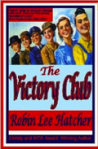
Victory ClubThe Victory Club by Robin Lee Hatcher tells the story of four women who are friends, who work at the same base in Idaho, and who are all affected in various ways by WWII.

Margo teaches French to Army Air Corp officers who will soon be shipping out to France. Her only son is overseas and her daughter works at the same base. Though a believer, Margo isn’t a joyful one, punishing herself for sins of the past by rigidly keeping what she sees as the laws of Christianity.

Dottie, Margo’s daughter, is a young women madly in love with her new fiance who has just been shipped out. She’s bright and happy but soon faces a trial that will be difficult for herself and her fiance as well as her mother.

Lucy was married December 6, 1941, the day before the bombing of Pearl Harbor. Her new husband enlisted and was shipped out soon thereafter, leaving her with an aching loneliness.

Penelope’s husband injured his back and was unable to enlist, but instead of being grateful to have him home, she despises him and thinks he is faking his injury.

After a few months of all of them struggling individually, Lucy suggests they start a Victory Club to pray for and support each other, to seek ways to help those in their community, and to take their minds off their troubles. It gets off to a shaky start but eventually becomes a regular part of most of their lives.

I thought the characters were well-drawn and their struggles, temptations, failures and victories were realistic, and I enjoyed reading about them.

(This will also be linked to Semicolon‘s Saturday Review of Books.)
What’s On Your Nightstand: March 2013

What's On Your NightstandThe folks at 5 Minutes For Books host What’s On Your Nightstand? the fourth Tuesday of each month in which we can share about the books we have been reading and/or plan to read.

March has been a mixed-up month, with warmer temperatures earlier in the month and snow now after the official first day of spring. Wintry days make me long to curl up with a good book, and I wish I could actually do so more often. But I did get a good bit of reading in.

Since last time I have finished:

Dreams in the Medina by Kati Woronka, courtesy of a free voucher Lisa graciously shared with me, a coming-of-age story about several girls in Syria, reviewed here.

The Secret Thoughts of an Unlikely Convert by Rosaria Champagne Butterfield: a lesbian leftist professor who hates Christians….becomes one. Reviewed here, I am predicting this will be one of my top ten books of the year.

The Last Superhero by Stephen Altrogge, reviewed here. Fun read about an unlikely family of superheroes — an aging grandfather, a klutzy father, and an 8th grade son — going after a new villain.

Escaping My Story by Stephen Altrogge, about a fan of a not-too-great author of spy novels who suddenly finds himself in the real-life plot of one of the novels, with a dire outcome looming. This is the first of something like six installments of a serial novel: I think I’ll wait to review it til I’m done with the series.

Out to Canaan by Jan Karon (audiobook), Book 4 of the Mitford series, in which Father Tim contemplates and prepares for retirement, Mayor Cunningham faces an unlikely opponent, and a mysterious Florida corporation is trying to buy up Mitford property, including Miss Sadie’s Fernbank. Not reviewed, though very much enjoyed.

A New Song by Jan Karon (audiobook), in which Father Tim supplies a pulpit as an interim in Whitecap, an island on the NC coast, gets a disturbing phone call about Dooley back in Mitford, and discovers a mysterious neighbor. Also not reviewed though enjoyed.

Betsy-Tacy and Betsy-Tacy and Tib by Maud Hart Lovelace for Carrie’s Reading to Know Book Club for March, reviewed here.

I’m currently reading:

Introverts in the Church: Finding Our Place in an Extroverted Culture by Adam S. McHugh.

The Picture of Dorian Gray by Oscar Wilde, audiobook. I had forgotten this was coming up later in Carrie’s Book Club. I may save my review for then, or go ahead and write it when I am done and just link back to it then.

The Victory Club by Robin Lee Hatcher set in WWII.

Up Next:

The Guardian by Beverly Lewis, third in her new Home to Hickory Hollow series.

Betrayal by Robin Lee Hatcher, second in the Where the Heart Lives series.

The Freedom of Self-Forgetfulness by Tim Keller.

In This Mountain by Jan Karon (audiobook).

His Ways, Your Walk, focusing on Bible passages written specifically to women, newly published by my friend Lou Ann Keiser. I was honored to be asked to read the manuscript for this before it was published, and it’s so neat to actually see it in print!

After that, I’m not sure. I’ve got scores to choose from.

What’s on your nightstand?

Betsy-Tacy

For the March installment of Carrie’s Reading to Know Book Club, Annette at This Simple Home chose any title by Maud Hart Lovelace.

I had never read anything by Lovelace: I had never heard of her when my kids were younger.I have a special fondness for her last name: at some point in my childhood I wanted a more romantic sounding, flowy name, and I came up with “Crystal Lovelace.” 🙂 I don’t think I ever told anyone and I don’t think it lasted long.

I read a bit about her online and liked the fact that the Betsy-Tacy stories were based on her experiences as a child, and the first books were written on a young child’s reading level and then progressed in difficulty through the next books, so a child could “grow up” with the books. They were written from 1940-55 but the stories take place in an earlier era (late 19th, early 20th century) in Minnesota.

I thought I might enjoy some of the later books better, when Betsy and Tacy are older, but I like to begin at the beginning, so I read Betsy-Tacy and Betsy-Tacy and Tib. I was afraid they might be a little too “sweet,” but they weren’t: they were fine.

The first book tells of Tacy’s family moving in across the street from Betsy’s and how their friendship got off to an inauspicious start due to Tacy’s shyness, but soon they became almost inseparable, causing everyone who knew them to link their names together. I enjoyed reading about their imaginative play. Usually Betsy is supporting and encouraging shy Tacy in situations such as the first day of school, but when Betsy gets a baby sister that she’s not too excited about at first, then Tacy, who has many siblings, encourages Betsy. At the very end of Betsy-Tacy, they find out a new girl lives in the chocolate-colored house they’ve always admired, thus setting the scene for Betsy-Tacy and Tib.

People thought that adding a new girl to such a close friendship as Betsy and Tacy’s would cause problems, but the girls forge new bonds. Tib is a little different – she is more practical and often doesn’t “get” their pretending and states the obvious, but “Betsy and Tacy liked her just the same.” It’s interesting to get a child’s viewpoint on how cutting a lock of each other’s hair to put in a locket turns into a disaster, or how a club about being good made them especially bad one day. I often had to remind myself when my kids were young to look at things from their point of view, not to excuse wrongdoing, but to remind myself their thought patterns and the process whereby they came to do what they did was often much different from what I would have thought. Children’s books are good for that, and for creative solutions, such as the time the girls were allowed to play and make houses out of some old wood that then had to be stacked and put away. Instead of the father thundering that the children needed to stop playing and leave so the work could be done, he came up with a new play scenario so they could demolish their “house” in fun and not in tears.

Betsy and Tacy share common antagonists in their older sisters, although they do admit they are nice and helpful sometimes. This has nothing at all to do with the books, but it got me to thinking about being the oldest sister. It’s easy for older children to seem bossy when they are often put in charge or asked to tell the younger one it is time to come in or whatever. I’m the oldest of six, and I don’t think I have a reputation as the bossy older sister. I’ve tried not to be that way as an adult, and I don’t think I was as a child, though my sisters and brother might offer a different opinion if I asked them. 😀 My brother is four years younger and my oldest sister eight years young, and the next three followed a little more quickly, with the youngest being born when I was 17. A while after my parents divorced my brother went to live with my dad, and I was the official babysitter and acknowledged second-in-command to my mom. I don’t remember their being any resentment about that — it just seemed to be the way it was, and it may have been helped by the difference in our ages. A sibling closer in age might not have accepted it so easily, seeing me more as a peer, and I might have been more tempted to “lord it over” them if we were closer in age, trying to establish a shaky and unrecognized authority. But in our extended family, there is a sibling and spouse who very much hold on to the “we’re oldest, we’re in charge, we’re wiser” card (which really bugs me as another “oldest.” 🙂 ) I don’t know why I am going into all this and I may take this paragraph out — the view of the older sisters as antagonists just got me thinking. I was originally thinking maybe if an oldest child wasn’t put “in charge” except when really needed, that might lessen some of the younger children’s resentment, but I don’t know: human nature being what it is, people under the same roof are usually going to have some difficulties to work out one way or another.

The fact that reading (even children’s books) makes me think is one of the things I like about it, but to get back to these particular books: a part of me would love to continue on reading through the series. I’d love to see how the girls grow up. But the other stacks of books in my house and on my TBR list need attending to, so maybe I’ll come back to them another time. I do plan on introducing them to my grandchildren some day, especially if they are girls (I am very much planning to be the reading Grandma. Maybe reading and baking. 🙂 ).  But I might get back to the series even before then.

Thank you, Carrie and Annette, for introducing me to this series!

(This will also be linked to Semicolon‘s Saturday Review of Books.)

Winner of the Little House Cookbook

Laura Ingalls Wilder Reading Challenge

I’m so sorry — somehow I completely forgot that I was going to draw from among the participants in the Laura Ingalls Wilder Reading Challenge LAST WEEK to give away a copy of The Little House Cookbook!

So I attended to that just now, and the winner is……

sjbraun at Girls in White Dresses.

Congratulations! I’ll get that off to you hopefully in a timelier manner than that in which I drew for it!

Thanks to all of you for participating! You’ve enriched the challenge and made it more fun!

Book Review: The Last Superhero

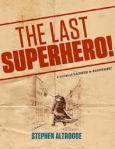
Last SuperheroA lot of what I had been reading lately required a good bit of concentration, so I was in the mood for something light and fun. Scrolling through my Kindle app downloads, I came across The Last Superhero by Stephen Altrogge. I don’t remember where or who recommended him, but when I saw this book offered for free (at this writing it’s 99 cents), I decided to give him a try.

The story is about a family of superheroes. The grandfather, John Utticus Wagner, is something is a legend in the superhero community. But his son is something of a klutz: he has superhuman strength, but has trouble controlling it. So after nearly killing three professors and causing assorted other problems, he’s kicked out of Superhero College. His wife has super speed…but has trouble stopping. You can imagine the kind of trouble that causes. They decide being superheroes isn’t working out so well for them, so the dad decides to become an accountant. They have Junior, or John Utticus Wagner II, who also has super strength, but without any training, he doesn’t know how to use his, either.

Though the dad has some regrets about not carrying on the family business and some longing to be an able superhero, life goes along pretty well until a new villain, Boom, starts blowing things up around town. Then the three generations of men — an aging superhero, a klutz, and an 8th-grader — decide to go into training to find and defeat him.

Those of you who know me well know this isn’t my usual fare. But it did fit the bill of a clean, light, fun read, at least until a tragedy at the end. The ending sets things up for a sequel, but I don’t know if any is in the works.

Altrogge’s tone had me smiling throughout the books. Here are a few excerpts. The book is written from Junior’s point of view.

Girls like guys who are tall, dark, and handsome, not pale, short, and able to punch a hole in a steel door.

Now you, the reader, probably already know this, but it doesn’t hurt to point out that the last sentence my Grandpa said is something dark and sinister called ‘foreshadowing.’ If this were a movie, the camera would probably zoom in close on Grandpa’s face as he said the words. See, my Grandpa said that he was glad he didn’t have to deal with ‘The Plague’ any more. But maybe they’re not as gone as he thinks. Maybe they’ll play into this story somehow. You probably think you have the whole thing figured out, but trust me, you don’t.

Mom was getting really worked up, and tears began to trickle down her cheeks. As I’m sure you know, it’s a really, really bad sign when your mom starts crying. It can’t get much worse than that. Mom tears are one of the most powerful forces in the universe.

The carpet was so thick I could have made carpet angels.

There are also a number of funny asides about other well-known superheroes, and apparently thee Wagners were behind a number of famous incidents in history. 🙂

I didn’t know, until I looked him up after reading the book, that Altrogge is a pastor and a co-writer at The Blazing Center, a blog I’ve looked at and linked to occasionally. The book isn’t Christian fiction, though there is a Bible verse quoted: it’s just good clean fun. And though I don’t normally like the dad in a story portrayed as a klutz (there’s too much of that on TV), it’s not done here in a disrespectful way: he’s not a clueless idiot, he just doesn’t have quite the superhero capabilities as others do.

Overall I really enjoyed it as a fun weekend read, and I’ve already bought another of Altrogge’s books, Escaping My Story.

(This will also be linked to Semicolon‘s Saturday Review of Books.)

Book Review: The Secret Thoughts of an Unlikely Convert

I don’t know when 148 pages of someone’s life story has impacted me more. There are sections where I have sticky tabs and markings on several pages in a row.

Unlikely ConvertThe Secret Thoughts of an Unlikely Convert: An English Professor’s Journey Into Christian Faith is Rosaria Champagne Butterfield’s story of how she, as an atheist, leftist, feminist, lesbian professor specializing Critical Theory, or postmodernism, and whose specialty was Queer Theory, who hated Christians, encountered and embraced the truths of Christianity in what she calls a “train wreck” of a conversion.

After a few pages detailing how she came to her professorship and worldview, she describes a kind and inquiring letter from a pastor in response to an article she had written.

The Bible makes it clear that reason is not the front door of faith. It takes spiritual eyes to discern spiritual matters. But how do we develop spiritual eyes unless Christians engage the culture with those questions and paradigms of mindfulness out of which spiritual logic flows? That’s exactly what Ken’s letter did for me – invited me to think in ways I hadn’t before (pp. 8-9).

The letter had invited her to call him, and after a week, she did. He invited her to have dinner with him and his wife at their home, and she accepted. She was also at this time doing research for a book on the Religious Right and figured he could answer some of her questions. “Even though obviously these Christians and I were very different, they seemed to know that I wasn’t just a blank slate, that I had values and opinions too, and they talked with me in a way that didn’t make me feel erased” (p. 10). Thus began two years of regular meetings and studying Scripture before she ever set foot in a church, which Ken and his wife knew would probably be “too threatening, too weird, too much” (p. 11) for her. “Good teachers make it possible for people to change their positions without shame. Even as Ken prayed for my soul, he did it in a way that welcomed me into the church rather than made me a scapegoat of Christian fear or an example of what not to become,” (p. 14.)

Gradually she came to believe, but she knew it would cost her. “I clung to Matthew 16:24, remembering that every believer had to at some point in life take the step I was taking: giving up the right to myself, taking up his Cross (i.e., the historicity of the resurrection, not masochism endured to please others), and following Jesus.” “I learned that we must obey in faith before we feel better or different. At this time, though, obeying in faith, to me, felt like throwing myself off a cliff” (p. 22). “One doesn’t repent for a sin of identity in one session. Sins of identity have multiple dimensions, and throughout this journey, I have come to my pastor and his wife, friends in the Lord, and always the Lord himself with different facets of my sin” (p. 23).

She tells of a woman she knew and counseled who was in a Bible-believing church but was in a secret lesbian relationship. Her secret denied her the help and prayers of other believers and only resulted in shame and pretense. When Rosaria asked why she didn’t share her struggle with anyone in her church, she replied, “If people in my church really believed that gay people could be transformed by Christ, they wouldn’t talk about us or pray about us in the hateful way they do” (p. 25). Rosaria then asks readers, “Do your prayers rise no higher than your prejudice? I think that churches would be places of greater intimacy and growth in Christ if people stopped lying about what we need, what we fear, where we fail, and how we sin” (p. 25).

Rosaria was a tenured professor in subjects that would now radically change because of her conversion. When she let it be known that she was now a Christian, both she and her gay friends felt she had betrayed them and turned traitor. “I…was alert to the reality that God had ministry waiting for me. I prayed that I would be strong for the task at hand. Yes, I was still a laughing stock in the gay community. Yes, I was still a traitor and an example of what not to be. But so too was Paul the Apostle shamed among Pharisees, and I trusted that God would take my life and make a place for me” (p. 50).

The rest of the book tells how God did just that, both in her career and ministry to others, leading her to marry a pastor, to eventually adopt four biracial children, and to become a homeschooling mom.

Along the way, she shares an eye-opening perspective of what Christianity looks like to others. For instance, when she moved to a community where there were Bible verses on bumper stickers and placards, instead of it looking like people were sharing a bit of light, it looked to her like the community was for “insiders” only. Christians seemed like “bad thinkers” or even anti-intellectual to her before this journey, using Scripture to shut down conversations rather than to shed light. Unfortunately, that is too often true: instead of truly discussing what the Bible has to say and being “ready always to give an answer to every man that asketh you a reason of the hope that is in you with meekness and fear” (I Peter 3:15b), some Christians take offense at being asked and use Scripture to bludgeon. One of my own family members has been turned off, not so much to all Christian truth, but to Christian community because of this experience.

One theme that comes out throughout the book is the willingness to engage people who are different from us in any way. Thank God the pastor and wife who first shared Christ with her looked past her butch haircut and gay and pro-choice bumper stickers to the need of her heart. But even after she became a Christian, she ran into this phenomenon in various churches. When her husband was the guest speaker at a church and she was getting out of the car holding one of her children while the other was asleep in the car seat, a man said to he, “So, is it chic for white women to adopt black kids these days?” After asking him if he was a Christian, she said, “So, did God save you because it was chic?” When her husband started pastoring a small church plant made up mostly of college students, families would come for a month or so and then leave because of a “lack of fellowship” with people just like themselves. I could step on a small soapbox here: I get so discouraged when people within the same church only want to fellowship with people just like themselves — same age bracket, some marital or parental status, same way of educating or disciplining children, etc., etc.

If I shared everything else I marked, I’d be nearly rewriting the book here, so I can’t do that. But here are just a few more things that grabbed me:

“Since all major U. S. universities had Christian roots, too many Christians thought that they could rest in Christian tradition, not Christian relevance” (p. 7).

“When we read in the book of Romans, “And we know that God causes all things to work together for good to those who love God, to those who are the called according to His purpose” (8:28), we are not to be Pollyanna about this. Many of the ‘things’ we will face come with the razor edges of a fallen and broken world. You can’t play poker with God’s mercy – if you want the sweet mercy then you must also swallow the bitter mercy. And what is the difference between sweet and bitter? Only this: your critical perspective, your worldview. One of God’s greatest gifts is the ability to see and appreciate the world from points of view foreign to your own, points of view that exceed your personal experience”  (p. 125).

“Many people in our community protect themselves from inconvenience as though inconvenience is deadly. We have decided that we are not inconvenienced by inconvenience. The needs of children come up unexpectedly. We are sure that the Good Samaritan had other plans that fateful day. Our plans are not sacred” (p. 126).

When a teenage girl in foster care with mental illness heard a pastor speaking about God’s call, afterward she “approached Pastor Steve and said, ‘Steve, I hear voices all the time. How do I know the difference between hearing the voice of God and hearing the voices of my own sick mind?’ Pastor Steve said, ‘Dear one, we all have the check the voices of our own sick mind with the Bible. Daily. You are no different'” (p. 128).

One thought that came to mind while reading the book was, “Why don’t we see this happening more often?” If the gospel is the power of God unto salvation, and it is, then why don’t we see such transformative conversions more often, and why are those raised in Christian culture often so anemic? Sometimes I long with the Psalmist “To see thy power and thy glory, so as I have seen thee in the sanctuary” (Psalm 63:2). Is it because we don’t share the gospel in a kind and loving way enough? Or is it because not many people are truly willing to examine the claims of the Bible and bring themselves under its authority? Maybe both. I’ve seen online encounters where non-Christians have as much of a “smackdown” way of encountering Christians as Christians do encountering them. I know I would have been scared to death to engage someone like Rosaria before she was saved: I’d have been afraid that I wouldn’t be able to answer her questions and she’d be able to run rings around me with her reasoning ability. But I have to remind myself that those whom God brought across her path with just the right thing to say at the right time were operating under the leadership of the Holy Spirit, not their own wisdom and insight. Sometimes we look for a formula: we see articles or pamphlets about “How to witness to atheists” or whomever else, and those can have some helpful points, but we can’t memorize a script and then present it to people. We need to share a Person and show His love to others and trust Him for the right words to say and pray for His working in hearts.

Rosaria writes now from a Reformed Presbyterian perspective, and since I am not from that perspective, I’d disagree with a few minor points here and there, but I am not going to nitpick about them. I do believe Christians can agree on the big issues and agree to disagree about smaller ones.

There is a condensed version of her testimony here, but I do encourage you to read the book as well. I believe it’s going to go down as one of my top ten of the year.

(This will also be linked to Semicolon‘s Saturday Review of Books.)
Book Review: Dreams in the Medina

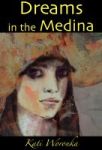
Dreams in the MedinaI first encountered Dreams in the Medina by Kati Woronka when Lisa reviewed it. We discussed how fiction can sometimes make things more real to us or cause us to care more than we otherwise would. Later Lisa said the author had given her a voucher to share the book with one other person, and since she knew I liked fiction, she graciously offered it to me. Thank you, both Lisa and Kati!

The Medina is a student housing complex of the University of Damascus, and Dreams tells the story of four women students. Most of the story focuses on Leila, a practicing Muslim whose world is expanding by what she is learning in her English literature courses and exposure to other cultures. Huda is excessively studious, but the others don’t realize the extent her family is depending on her to do well, and the pressure almost has tragic ends. Huda is a Muslim by culture but is largely untaught about it and doesn’t mind questioning its teachings. Maha is a Christian but doesn’t seem to know a whole lot about her faith (for example, she can’t answer why offerings are taken at her church when another girl thinks she has to “pay” to come), but she seems the most stable of the group. Roxy is a free spirit, and unbeknownst to her family is a second wife to a Muslim man.

There are recognizable college activities common to most any culture: trying to cram studies in, visiting each other’s rooms, socializing, girl-talk, thrills and sorrows with the opposite sex, and questions and struggles on the road to becoming an adult.

But of course there are differences as well. They make tabouli in their rooms rather than ordering pizza. Conflicts come from things like washing one’s feet for ablutions before prayer in the same sink where food is prepared. Family expectations carry more weight than one’s personal desires. And the various degrees of their faith and practice affect them in a myriad of ways.

I was surprised at first by the different practices of Muslims from different villages, but then realized that they might be surprised by the variation in professing Christians here as well.

Since the book is written primarily from Leila’s point of view as a Muslim, there are statements I wouldn’t agree with as a Christian, like the assumption that the Bible and the Quran agree (in a few minor things, maybe, but not overall), but I can understand such statements coming from her, and her perspective as she gets to know Maha better and even attends her church once are interesting. One statement stood out that the prominent display of a cross in the church “was completely unapologetic in its declaration that Christians are all about the cross.”

Overall this was a nicely-written window into a world I knew very little about. I ashamed to say that before this book I wasn’t even aware that there was a civil war in Syria. Though the setting of the book is before the war (I think — I don’t remember a mention of it), the pictures of these women and the country have made the people more real to me now and raised my awareness, and I think those would have been some of Kati’s goals.

Dreams in the Medina is available for Kindle or for various e-readers. Though not an expensive book, it is on sale half-price for a few days at Smashwords. You can follow Kati’s blog and read more about the background of the book here.

(This will also be linked to Semicolon‘s Saturday Review of Books.)

Laura Ingalls Wilder Reading Challenge Wrap-Up

Laura Ingalls Wilder Reading Challenge
With the end of February, we come to the end of the Laura Ingalls Wilder reading Challenge for this year. If you’ve read anything by, about, or related to Laura this month, please share it with us in the comments. You can share a link back to your book reviews, or if you’ve written a wrap-up post, you can link back to that (the latter might be preferable if you’ve written more than one review — the WordPress spam filter tends to send comments with more than one link to the spam folder. But I’ll try to keep a watch out for them.) We’d also love to hear if you’ve done any “Little House” related activities.
And, if you’ve participated this month, you’re eligible for the drawing for a copy of The Little House Cookbook, compiled by Barbara M. Walker and illustrated by Garth Williams (the same illustrator for my set of Little House books). I’ll choose a name through random.org. a week from today to give everyone time to get their last books and posts finished. You’re eligible even if you don’t have a blog: just share with us in the comments what you read and a few of your thoughts about it. If you already have this book, I can substitute a similarly-priced Laura book of your choice. I’ve spent some time looking through it: it’s more than just recipes: it shares a lot of interesting information as well as excerpts about food and cooking from the books.
For myself, I had planned to make some items from it and have something of a birthday party for Laura on her birthday, the 7th, but that was when my mother-in-law was ill, and between that, moving her to a new place, and my husband’s surgery, I didn’t do any “Laura” activities, but I did manage to get a few books read. These link back to my reviews:
West From Home by Laura Ingalls Wilder, a compilation of letters Laura wrote to Almanzo while visiting their daughter, Rose, and Rose’s husband, and the World’s Fair.
Let the Hurricane Roar by Rose Wilder Lane. Laura’s daughter wrote a fictionalized account of some of her grandparent’s experiences.
On the Banks of Plum Creek by Laura Ingalls Wilder, covers the same events as Let the Hurricane Roar plus a few more: a grasshopper plague, blizzards, attending school for the first time, meeting Nellie Oleson.
I had originally planned to read Farmer Boy, about Almanzo’s childhood, but when I discovered the Plum Creek book covered some of the same events as Rose’s book, I wanted to go ahead and read it while the other was fresh in my mind. Farmer Boy was the second book written of the Little House books, but it can really be read at any point. I do want to read it before Almanzo shows up in Laura’s story, though!
Thank you all for participating! That’s what makes this challenge so fun. I’ve already come across a book or two I hadn’t known of before that I want to read next time through some of your reviews. I’m looking forward to your thoughts on what you’ve read!

What’s On Your Nightstand: February 2013

What's On Your NightstandThe folks at 5 Minutes For Books host What’s On Your Nightstand? the fourth Tuesday of each month in which we can share about the books we have been reading and/or plan to read.

February has seemed like a much longer month than 28 days this year. But I’ve managed to get some reading and audiobook-listening in.

Since last time I have finished:

Emily of New Moon for Carrie’s Lucy Maud Montgomery Reading Challenge, reviewed here.

The Tenth Plague by Adam Blumer, reviewed here. Suspenseful Christian fiction about a warped man who uses the Biblical ten plagues of Egypt as a playbook to exact revenge, and the couple who is trying to find and stop him.

The Scarlet Letter by Nathaniel Hawthorne, reviewed here, for Carrie’s Reading to Know Book Club.

Let the Hurricane Roar by Rose Wilder Lane, reviewed here. Laura’s daughter wrote a fictionalized account of some of her grandparent’s experiences. This one and the next two were for the Laura Ingalls Wilder Reading Challenge which wraps up Thursday.

West From Home by Laura Ingalls Wilder, reviewed here, a compilation of letters Laura wrote to Almanzo while visiting their daughter, Rose, and Rose’s husband, and the World’s Fair.

On the Banks of Plum Creek by Laura Ingalls Wilder, reviewed here. It covers the same events as Let the Hurricane Roar plus a few more: a grasshopper plague, blizzards, attending school for the first time, meeting Nellie Oleson.

These High Green Hills (audiobook) by Jan Karon, Book 3 of the Mitford series, not reviewed. There is a lot in this book: dealing with a case of child abuse, an unidentified burn victim, and the death of a long-time Mitford resident, as well as the continuing adventures of Father Tim and the rest of Mitford.

I also wrote about books I remember reading as a child and my reading history here.

I’m currently reading:

Dreams in the Medina by Kati Woronka, courtesy of a free voucher Lisa graciously shared with me, a coming-of-age story about several girls in Syria.

Out to Canaan by Jan Karon (audiobook), Book 4 of the Mitford series.

Secret Thoughts of an Unlikely Convert by Rosaria Champagne Butterfield: a lesbian leftist professor who hates Christians….becomes one. Just started this one and can’t wait to dig in more.

Coming up next:

Introverts in the Church: Finding Our Place in an Extroverted Culture by Adam S. McHugh. I know it’s okay to be an introvert, but I struggle with whether I sometimes play the introvert card when I should be seeking God’s grace to extend myself. We all need to leave our comfort zones sometimes.

A New Song by Jan Karon.

A Maud Hart Lovelace book for Carrie’s Reading to Know Book Club for March. I’ve never read her: any suggestions?

I need to pick something from my multitude of Kindle app downloads! But I’ll decide that after I finish some of the above.

So what are you reading?

Update: I am linking this post up with

btt  button Booking Through Thursday, a weekly meme related to books. Today’s (2/28) question is “what are we reading,” which ties in nicely with this post. 🙂