Book Review: Belonging

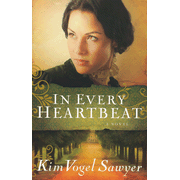
I’ve been wanting to get Belonging by Robin Lee Hatcher ever since it was published a few months ago, but I had enough books stacked up to last til Christmas, so I put in on my Christmas list and made myself wait til then, when I did indeed find it under the tree.

If the book had been authored by anyone but Robin, I probably would not have picked it up based on the plot of a new schoolteacher coming west to make a life for herself. When I first began reading Christian fiction some 30 or so years ago many books had this element to them. But I’ve enjoyed others of Robin’s books, and they have a soft spot in my heart because they’re frequently set in Idaho, where my husband grew up. But just a few pages into this one I forget about any other plotline involving going west.

Felicia Kristofferson lost her mother at a young age and was sent with her brother and sister on an orphan train until they were each taken in to separate homes in separate cities. Felicia grew up in the home of an older couple where no love was expressed: she was really more of a housekeeper and caretaker. She went to college to become a teacher but afterward stayed with the Kristoffersons til their deaths. When she hears of an opening for a schoolteacher in Idaho, she heads west despite the small amount of pay, trusting God to lead and keep her.

Colin is a widower with a young daughter who is not happy about the school board hiring an inexperienced young single female teacher. He assumes she’ll marry at the first opportunity, leaving the board and the students in another upheaval to find a new teacher. But his daughter, Charity, takes to Felicia immediately, and he reluctantly decides to give her a chance. Colin is also not on the best of terms with the God who took his wife from him.

Though Colin has no desire to marry again, he can’t help but notice the attractive widow Kathleen has been especially friendly toward him (at her mother-in-law’s urging). It would make sense for them to marry in many ways,  yet he can’t help finding himself attracted to the new schoolteacher in spite of himself.

Felicia, meanwhile, doesn’t understand why Colin is warm toward her sometimes and gruff and distant at others or why her friend Kathleen’s mother-in-law seems to be  sowing seeds of discord against her.

Felicia, Colin, and Kathleen each have issues to work through, which, of course, makes up the plot of the book. I did enjoy their journeys, especially Colin’s. I love how Robin doesn’t write “just” a romance story, but rather a “life” story, dealing with the deeper issues in people’s hearts and their walk with the Lord.

(This review will also be linked to Semicolon‘s Saturday Review of Books.)

Book Review: Anne’s House of Dreams

L. M. Montgomery Reading Challenge I am so glad Carrie set her annual Lucy Maud Montgomery Reading Challenge to occur in January. I picked up where I left off from last year’s challenge with Anne’s House of Dreams, and it’s such a cozy read. This was one of my favorites the first time I read the books, next to the first, Anne of Green Gables.

In this book Anne and Gilbert finally marry and move to Four Winds Harbour where Gilbert takes over the medical practice of his uncle. The first few chapters are given over to preparations for the wedding and then the wedding itself, and it’s a joy to see Diana (grown, married, with young children), Marilla, Rachel Lynde, and all the rest. One of the most poignant scenes to me was when Marilla stood at the gate as Anne and Gilbert drove away after their marriage.

The house they rent as newlyweds is truly a house of dreams, with all the delightful things Anne loves as well as a lighthouse and it’s keeper, Captain Jim, as near neighbors. The eccentric Miss Cornelia (whom I frankly got a little tired of in places), “Susan at the helm,” and the mysterious, beautiful, yet initially aloof Leslie Moore with her tragic lot in life round out the main cast of characters.

I like, though, that LMM didn’t make the whole book idyllic and fairy-taleish. Anne faces her first deep sorrow of her adult life, and she and Gilbert have their differences of opinion in places. But they are happy overall. It’s fun to see Anne “grown up,” still passionate and dreamy yet more mature.

It was funny to read that Anne wasn’t sure if she liked the idea of Avonlea being “spoiled” by the “modern inconvenience” of the telephone. Every new technology will have its detractors. 🙂

There were a couple of things I didn’t like, namely the china dogs being referred to as the “household gods,” and references to ghosts, but overall it’s a sweet book with just the right blend of delight and pathos.

When I first read this book, I was hoping that the Anne films by Kevin Sullivan & Co.would continue until they got to this one. I was so happy to hear they were going to make a film about Anne and Gilbert’s first years as a couple — until I saw it. It’s a travesty. Instead of this sweet story that LMM wrote, Sullivan took the characters and placed them several years ahead, to the time that corresponds with Rilla of Ingleside, a later book, and incorporates some of that story.

I got to wondering if Four Winds harbour was a real place and had fun looking around “The Geography of Four Winds, Glen St. Mary, and Ingleside.”

I enjoyed rereading this book and visiting with Anne and Gilbert again.

(This review will also be linked to Semicolon‘s Saturday Review of Books.)

Lucy Maud Montgomery Reading Challenge

L. M. Montgomery Reading ChallengeIt’s time for Carrie‘s annual Lucy Maud Montgomery Reading Challenge! I so enjoyed this last year and the year before! The Anne books in particular are ones I love to read over and over, and this challenge gives me a chance to do that for a month, but helps me to keep it confined to a month — once I start the series I want to go all the way through them, and this helps me pace it out so it doesn’t take over my reading completely.

In previous years I read Anne of Green Gables, Anne of Avonlea, Anne of the Island and Anne of Windy Poplars for this challenge and watched Anne of Green Gables: The Sequel (all links are to my reviews) because it covers three of those books. I also read Looking for Anne of Green Gables: The Story of L. M. Montgomery and Her Literary Classic by Irene Gammel, and found some of it insightful but some of it woefully off-base.

This year I want to continue the Anne series with Anne’s House of Dreams (the one I’ve been most wanting to get to!) and Anne of Ingleside. If those go pretty quickly, I may go on the the last two books, but I am just going to commit to those two for now.

Besides the enjoyment of reading LMM books, it’s also enjoyable to do so with others at the same time and see their thoughts as well. I’m looking forward to a good month with Anne!

Favorite Books of 2011

I posted a list of books read this year here. It’s been a great year for reading! Here are some of my favorites from the year and why: you can click on the links to the reviews for more reasons why I liked them.

Non-fiction:

1. Beyond Suffering: Discovering the Message of Job by Layton Talbert, reviewed here. This book would qualify both for most edifying and most thought-provoking. I don’t just recommend it, I encourage you to read it if you’ve ever wrestled with the issue of suffering or the book of Job.

2. The Misery of Job and the Mercy of God by John Piper, reviewed here. This was referred to and recommended in the above book. It’s a beauitful poetical rendition of Job, another way of thinking through and processing it.

3. The Way into Narnia: A Reader’s Guide by Peter Schakel, reviewed here. I came across this in the library catalog while searching for the Narnia series for Carrie‘s Narnia challenge this year. I had thought it might be too academic or too arrogant, but it wasn’t: it greatly enriched my Narnian reading.

4. A Novel Idea: Everything You Need to Know about Writing Inspirational Fiction, reviewed here. Written by various authors, this book explored just about every aspect of writing inspirational fiction.

5 and 6. By Searching: My Journey Through Doubt Into Faith and In the Arena by Isobel Kuhn, reviewed here. I think of these two together because the first one covers the first part of her life and the second one overlaps a bit and then covers the rest of her life. Isobel became a missionary to a primitive area in China, and this is a record of an ordinary, flawed woman (like the rest of us!) who loved and followed God closely. I’ve read these many times and they’re among my all-time top 98.

7. Living with Purpose in a Worn-out Body: Spiritual Encouragement for Older Adults by Missy Buchanan, reviewed here. I got this for my mother-in-law but was edified by it myself.

Fiction:

1. Words by Ginny Yttrup,  reviewed here.  Top book of the year. Beautifully written. Hard to believe this is Ginny’s first novel! I was captivated from the first pages, as ten year old Kaylee has lost her words, her voice, after suffering unspeakable abuse. I wouldn’t normally be drawn to a story on that topic, but this book is as much about healing, for Kaylee as well as Sierra, a young woman who can’t forgive herself for her own past, and Ginny doesn’t present any of the situations in a maudlin or sensationalizing manner. As I said in my review, “The book is riveting, hard to put down, eloquent, and full of depth.”

2. A Memory Between Us by Sarah Sundin, reviewed here. Loved the characters in this WWII-era novel. Loved Sarah’s whole Wings of Glory series, but I think this is my favorite of the three.

3. Faithful by Kim Cash Tate, reviewed here. I wouldn’t normally have picked up a book about one woman finding out her husband was having an affair and another tempted in a similar way, but real women, even Christian women, do face these things, and Kim’s story was both engaging and helpful.

4. Just Between You and Me by Jenny B. Jones, reviewed here. This would qualify for “most fun” book of the year. The dialogue just zings, and the story about having to face one’s fears before helping others is good as well.

5. Lady in Waiting by Susan Meissner, reviewed here. I dubbed this “A tale of two Janes,” one modern and one historical (Lady Jane Grey). Susan beautifully wove together both women’s stories of seeming victims of circumstance finding they each have “far more influence over her life than she once imagined.”

6. Love’s Pursuit by Siri Mitchell, reviewed here. A model young Puritan woman struggles with being “good enough.”

7. She Walks in Beauty also by Siri Mitchell, reviewed here. A young girl groomed for snagging the most eligible heir during the Gilded Age finds that there’s a dark underside to all the glitter and glamor. When one man tells her God loves her just as she is, she doesn’t believe him, because no one else has ever loved her that way, until she’s sees that kind of love in him.

8. While We’re Far Apart by Lynn Austin, reviewed here. Another WWII-era novel, this one woven from the stories of a girl whose father enlists as a way to handle the grief of losing his wife, a young woman who pines for him, and a Jewish neighbor worried over his son’s family in Hungary and grieving the loss of his wife as well. I was pulled in from the first pages.

Classics:

1. A Tale of Two Cities by Charles Dickens, reviewed here. One of my all-time favorite novels, tied with Les Miserables.

2. The Lion, the Witch, and the Wardrobe by C. S. Lewis, reviewed here. Thanks to Carrie for giving me the excuse I needed to revisit these books with her challenge!

Beyond Suffering and Words would be my two top favorites of the year, but there were many wonderful books along the way. I’m looking forward to even more next year!

(Sherry at Semicolon‘s invites us to share our book lists for the year in this week’s Saturday Review of Books, and Booking Through Thursday asks this week for our favorite books of the year.)

btt button

Books Read in 2011

Non-fiction:

A Big Little Life by Dean Koontz, not reviewed.
A Novel Idea: Everything You Need to Know about Writing Inspirational Fiction, reviewed here.
Beyond Suffering: Discovering the Message of Job by Layton Talbert, reviewed here. Excellent.
Boyhood and Beyond: Practical Wisdom for Becoming a Man by Bob Schultz, read with my youngest son reviewed here.
By Searching: My Journey Through Doubt Into Faith by Isobel Kuhn, reviewed here.
Coffee Shop Conversations: Making the Most of Spiritual Small Talk by Dale and Jonalyn Fincher, discussed here.
Created for Work: Practical Insights for Young Men by Bob Schultz, read with my son, reviewed here.
Daily Light on the Daily Path, a devotional book of Scripture verses compiled by Samuel Bagster.
50 People Every Christian Should Know: Learning From Spiritual Giants of the Faith by Warren Wiersbe, a review here.
Goforth of China by Rosalind Goforth, reviewed here
Gospel Meditations For Men by Chris Anderson and Joe Tyrpak, with my son, not reviewed.
Gospel Meditations For Women by Chris Anderson and Joe Tyrpak, not reviewed.
In the Arena by Isobel Kuhn, reviewed here.
Jesus, Keep Me Near the Cross: Experiencing the Passion and Power of Easter, compiled by Nancy Guthrie.
Living with Purpose in a Worn-out Body: Spiritual Encouragement for Older Adults by Missy Buchanan, reviewed here.
Looking for Anne of Green Gables: The Story of L. M. Montgomery and Her Literary Classic, by Irene Gammel, reviewed here.
One Thousand Gifts by Ann Voskamp, reviewed here.
Selfishness: From Loving Yourself to Loving Your Neighbor by Lou Priolo, not reviewed but I shared some quotes from it here.
10 Gospel Promises For Later Life by Jane Marie Thibault, reviewed here. Serious problems, sadly disappointing.
The Best Seat in the House: How I Woke Up One Tuesday and Was Paralyzed for Life by Allen Rucker, reviewed here.
The Book Lover’s Devotional: What We Learn About Life From 60 Great Works of Literature by various authors, reviewed here.
The Invitation by Derick Bingham, devotional book from John’s gospel.
The Misery of Job and the Mercy of God by John Piper, reviewed here.
The Way into Narnia: A Reader’s Guide by Peter Schakel, reviewed here.
Thunder Dog: The True Story of a Blind Man, His Guide Dog, and the Triumph of Trust at Ground Zero by Michael Hingson, reviewed here.
Women’s Ministry in the Local Church by Ligon Duncan and Susan Hunt, reviewed here.
Worldliness: Resisting the Seduction of a Fallen World edited by C. J. Mahaney, reviewed here.

Christian Fiction:

A Heart Most Worthy by Siri Mitchell, reviewed here.
A Long Walk Home by Barbara Andrews, reviewed here.
A Memory Between Us by Sarah Sundin, reviewed here.
A Penny For Your Thoughts by Mindy Starn Clark, short review here.
A Walk In the Park by Barbara Andrews, reviewed here.
Amy Inspired by Bethany Pierce, reviewed here.
An Unlikely Blessing by Judy Baer, short review here.
Blue Skies Tomorrow by Sarah Sundin, reviewed here.
Crossing Oceans by Gina Holmes.
Faithful by Kim Cash Tate, reviewed here.
Just Between You and Me by Jenny B. Jones, reviewed here.
Lady in Waiting by Susan Meissner, reviewed here.
Learning by Karen Kingsbury, not reviewed.
Leaving by Karen Kingsbury, short review is here.
Lion of Babylon by Davis Bunn, reviewed here.
Longing by Karen Kingsbury, not reviewed.
Love Finds You in Camelot, Tennessee by Janice Hanna, short review here.
Love’s Pursuit by Siri Mitchell, reviewed here.
Masquerade by Nancy Moser, reviewed here.
Mine Is the Night by Liz Curtis Higgs, reviewed here.
No Distance Too Far by Lauraine Snelling, reviewed here.
One Imperfect Christmas by Myra Johnson, not reviewed.
Peace Like a River by Leif Enger, reviewed here.
She Walks in Beauty by Siri Mitchell, reviewed here.
Snow Day by Billy Coffey, reviewed here.
The Christmas Shoppe by Melody Carlson, not reviewed.
The Damascus Way by Janette Oke and Davis Bunn, reviewed here.
The Deepest Waters by Dan Walsh,  reviewed here.
The House on Malcolm Street by Leisha Kelly.
The Judgment by Beverly Lewis, reviewed here.
The Mercy by Beverly Lewis, not reviewed.
The Shape of Mercy by Susan Meissner, reviewed here.
While We’re Far Apart by Lynn Austin, reviewed here.
Words by Ginny Yttrup,  reviewed here.

Classics and other fiction:

A Tale of Two Cities by Charles Dickens, reviewed here.
Anne of Avonlea by Lucy Maud Montgomery, reviewed here.
Anne of the Island by Lucy Maud Montgomery, reviewed here.
Anne of Windy Poplars by Lucy Maud Montgomery, reviewed here.
Cranford by Elizabeth Gaskell, reviewed here.
Prince Caspian by C. S. Lewis, reviewed here.
The Lion, the Witch, and the Wardrobe by C. S. Lewis, reviewed here.
The Lion, the Witch and the Wardrobe Graphic Novel illustrated by Robin Lawrie, reviewed here.
The Little Women Letters by Gabrielle Donnelly, reviewed here.
The Map In the Attic by Jolyn Sharp, short review here.
Voyage of the Dawn-Treader by C. S. Lewis, reviewed here.

That’s 73 books, if I counted correctly, though three of them were just booklets of 30 or so pages. That’s better than I’ve done in the years since I’ve been keeping records, though I’m not necessarily on a quest to read more books each year. I’d rather take the time to read well and to read quality than just to get through as many books as possible.

This was also the year I finally completed my first book in a e-reader. I liked it for traveling, and I did enjoy the book, but I think I still like real paper books best. But I do like getting books for free or very inexpensively through the Kindle ap at Amazon!

It’s been a great year for reading, and I trust next year will be as well.

(Sherry at Semicolon‘s invites us to share our book lists for the year in this week’s Saturday Review of Books.)

What’s On Your Nightstand: December

What's On Your NightstandThe folks at 5 Minutes For Books host What’s On Your Nightstand? the fourth Tuesday of each month in which we can share about the books we have been reading and/or plan to read.

Here is what I finished since last time:

Created for Work: Practical Insights for Young Men by Bob Schultz, read with my son, reviewed here. Pretty good resource.

The Best Seat in the House: How I Woke Up One Tuesday and Was Paralyzed for Life by Allen Rucker, reviewed here.

While We’re Far Apart by Lynn Austin, reviewed here. One of my favorites of the fall.

One Imperfect Christmas by Myra Johnson, not reviewed. Natalie fails to come help her mother take down Christmas decorations, her mother has a stroke, Natalie blames herself and distances herself from her husband and daughter…not a light, pleasant, frothy Christmas read. I liked where it ended up, but it was a little too depressing and annoying with the couple fighting.

The Christmas Shoppe by Melody Carlson, not reviewed. An unconventional,even  weird stranger comes to town, opens a strange shop on the main street, putting the town in an uproar, until individual townspeople begin to visit the shop. I’ve liked others of Melody’s books, and I thought this was well-written (especially liked how the first line of the last chapter echoed the first line of the first chapter), and I liked the characters and underlying theme. But I just didn’t really care for the story or the premise of the “magical” store.

Longing, book three in the Bailey Flanigan series by Karen Kingsbury, not reviewed. I was thinking as I started that the story between Bailey and Cody had kind of dragged out long enough, but I did enjoy this story, and it doesn’t look like the series will end up where originally thought with the next book,  but then one never knows!

The House on Malcolm Street by Leisha Kelly. Just finished this yesterday.  After the loss of her husband and infant son, Leah has no resources and no place to go with her young daughter except to accept the invitation of her husband’s aunt to live in her boardinghouse. She’s angry at God and fearful of many things, yet begins to find healing.

Crossing Oceans by Gina Holmes, my very first completed book on an e-reader! Also just finished this yesterday. A woman who is dying of cancer brings her five-year-old daughter home to try to discern who should raise her. I may review these last two more fully later in the week if possible.

I’m currently reading:

Let Every Heart Prepare Him Room by Nancy Guthrie, reading with Jesse.

Belonging by Robin Lee Hatcher. Just started this yesterday.

Coming up next:

I’m totally not sure yet…My head is still spinning from celebrating Christmas in four stages and having everyone home for a while. Jim and Jesse are both off for the rest of the week, and I’m not sure what we’ll be doing after Jeremy leaves. I do have several books stacked up but haven’t decided what to read yet except for a couple of books for Carrie‘s Lucy Maud Montgomery Reading Challenge in January.

I’m working on a list of books read this year and favorite books of the year to post later this week.

Book Review: Created For Work

After enjoying Boyhood and Beyond: Practical Wisdom for Becoming a Man by Bob Schultz with my youngest son, we tried another of his books, Created for Work: Practical Insights for Young Men. The title attracted me because I think developing a strong work ethic in young people is becoming a lost art and because people generally have a negative view of work. It was a revelation to me years ago to realize that God created and ordained work before the fall of man into sin: it’s not part of the Curse, though it is harder because of the Curse.

I don’t recall that Schultz brought out that aspect of work, but he brought out many others, using his own work and experience as an independent contractor as a backdrop for many of his insights. He discusses things you’d expect concerning work, like diligence, initiative, working within the rules, finishing well, etc. But he brought out other things I would not have thought of: looking at things from a boss’s perspective, dealing with a loss of confidence, irritations between coworkers, admitting when you’re wrong and learning from it, the dangers of diligence (becoming self-satisfied and indulgent after success), and even the way the Lord brings you into contact with other people through your work to whom you can minister. Another valuable insight was that of balancing initiative: his example was a young man who saw a neighbor’s fallen tree and decided to cut it up into firewood for them, only to discover afterward they had planned to take it to the mill to be turned into lumber.

There were just a couple of places where I disagreed with the author a bit. In one chapter titled “Great Grandpa Cornelius,” Schultz is encouraging boys to be diligent workers even before they’re of age to work at an outside job, and I agree with that. But he makes the statement, “If someone provides your food, shelter, and education, you’re a liability” (p. 42). I wouldn’t say that to a boy in the home. He goes on to say that you had no choice as a baby to have others work for you, but as soon as you can you want to work to become an asset. And I agree with that as well. From the time our boys were little, though they had jobs in the home and allowances that were loosely tied to each other, the main reason for their jobs wasn’t to earn an allowance or even to “help” their parents, but to pull together as a family and contribute to the family and to get in the habit or working. So I agree with all of that in principle, I agree with teaching boys (and girls) to work for a variety of reasons, but I still wouldn’t call being provided for as a boy at home being a liability. When he gets to be 30 or so, well, that’s different. 🙂

In another chapter titled “My Instructor,” he describes a time when his boss wanted him to install trim with costly wood in a beauitful, expensive home. He was worried because he hadn’t had much experience with the particular type of work his boss wanted him to do, worried enough to lose sleep the night before the job. He felt God was telling him that since He created the world and told Solomon how to build the temple and Noah how to build the ark, He could tell him how to do this job. And He did, through a painter who came through and gave him an off-the-cuff tip. I can’t argue with his experience, and I’ve had the experience as well of being stuck in the middle of some task, praying for wisdom, and feeling that God gave me the idea of what to do about it. But I wouldn’t want someone to take this particular experience as a substitute for owning up that you don’t know how to do a particular job or seeking out instruction on how to do it beforehand.

And finally, in a chapter on unemployment compensation he writes that he feels that such is government aid and that instead of filing for unemployment, he should find other work he can do as unto the Lord and for His kingdom, such as yard work for a widowed neighbor, etc. My husband and I feel that unemployment compensation is a form of insurance rather than a “handout” and is a legitimate and responsible way to care for one’s family between jobs. I do agree with the other principles in the chapter, however, that ultimately we work for God, not for money, though He usually provides through a job, and that there are many useful things one can do during a jobless time, like work for others and get ones’ tools ready and prepared for the next opportunity.

The space and time to explain those few caveats makes it looks I disagree with more than I agree with, and that’s not the case: I think this is a valuable resource for boys and young men. If I’d had this when my boys were younger, I think I would have gone over it with them then as well as again as older teenagers about to leave home.

(This review will also be linked to Semicolon‘s Saturday Review of Books.)
Book Clubs and Bookish Questions

Reading to Know - Book ClubCarrie at Reading to Know is hosting a book club for the next year. You can read more about it here. There’s quite an eclectic list of titles to be covered.

I was honored to be asked to lead one of the discussions, so I’ll be reading Uncle Tom’s Cabin in October. Why Uncle Tom’s Cabin? Mainly because I have been wanting to reread it, and this seemed like  good time to do so. Discussing it with others who have read it is icing on the cake!

When I was growing up, I had heard of Uncle Tom, but had no interest in reading the book. I knew that slavery was wrong but didn’t want to read firsthand how awful it really was. I had heard how awful, in school, on various TV programs, etc., but a novel about it seemed like it would be morbid.

But one day when I was in my twenties or early thirties, my pastor mention in passing that Uncle Tom was the kind of Christian you’ve always wanted to be. Well, that piqued my interest, so I did read it some time thereafter and discovered he was right. I was saddened later to hear the name “Uncle Tom” used as an insult on one of the black comedies of the 80s, and I have heard it used that way since. In these day of standing up for one’s rights, meekness is not highly valued. Tom was meek, but he wasn’t weak and kowtowing.

So I’ll be looking forward to revisiting that story and seeing what my impressions are now a couple of decades later. I hope you’ll make plans to join me! And some of the other bloggers involved in the Book Club as well.

I’ve had a couple of questions or comments lately wondering how I find time to read and how I choose what to read. I answered those individuals, but thought I might answer those questions here as well.

How do I find time to read?

A few weeks ago I had this quoted from a comment on 5 Ways to Make More Time to Read on a The Week in Words post: Reading allows me to thrive.  If I don’t, then I feel stagnant. ~ Michael D. Perkins

I feel exactly the same way. If I don’t have some time to read every day, I feel mentally and intellectually dry and dull. I read more some days than others, but I do try to read (from books, not just the computer) every day. Here’s where I usually fit in in:

1. I hope this isn’t crass or TMI, but honestly, a great deal of my reading is done in the bathroom. 🙂 I used to have a link to a cute article on that, but apparently it has been taken down. In searching for it I did find Chamber Plots and Why Do Some People Read in the Bathroom amusing. It’s mainly a profitable way to spend the necessary time in there. More than one person referred to it as their Fortress of Solitude. 🙂

2. Any waiting time. If I am going to a doctor or dentist, a book is a must. Not only does it help pass the time in an edifying way, but it helps me combat nervousness by occupying my mind. Also, before the boys started driving on their own, I usually took a book with me when I picked them up from a youth activity or ball practice. That way if their event ran overtime, instead of stewing in impatience I looked on it as a few stolen moments to read.

3. Driving. Well, not while I’m driving. But if we’re going somewhere more than 20-30 minutes away, I bring something to read. I’m thankful I can do that: I know it makes some people carsick to read in the car.

4. Sunday nights. We’re not legalistic about it, but we try to make Sundays different and more restful than other days by not doing any work other than what it takes to get to and from church and meals on the table and then cleaned up. Sometimes we don’t really get to rest until after the evening services, but it’s nice to come home then and relax, knowing that I don’t have to toss some laundry in or whatever. Sometimes these days we’re Skyping with Jeremy or doing something with the kids or doing stuff on the computer on Sunday evenings, but otherwise, if there is time, I like to stretch out on the couch with a good book. Occasionally in the summertime I might do that in the evenings as well, if we’re up and there’s nothing on TV and everyone is otherwise occupied. But I rarely just sit down during the day with a book unless I’m in a part where I just can’t put it down or unless I am not feeling well.

5. Meals. Usually if I am home by myself, I am at the computer for breakfast and lunch. But sometimes when I have had enough of the computer, I’ll read a bit while eating.

6. In conjunction with devotions. If I am reading a Christian non-fiction book that is not a biography, this is when I’ll usually work it in. Just occasionally I will take a break from reading the Bible through and read a book like this in place of devotions, or I might read it after devotions. But it takes a different mindset for me to read non-fiction: I can’t just pick it up here and there and get as much out of it. I like to read it in chapters or at least in sections at a time.

And that’s about it, I think. I do manage to get through a number of books that way.

How do I choose what books to read?

Since starting to read blogs, I’ve kept a TBR (to be read) list on file so I can jot down recommendations from bloggers I’ve come to know and trust. Many of the blogs I read discuss books to some degree and provide more fodder for my list.

But even before using the Internet so much, my friends’ recommendations gave me lots to read. It just occurred to me while writing this that my friends in “real life” (not that you all aren’t real, of course 🙂 ) don’t really discuss books that much any more. I wonder if it is because we’re spending more time on the Internet or what?

Of course, once I find an author I like, I’m alert for when they have a new book out, and I might try to backtrack and read their older books.

I don’t do this as much any more since my TBR list has gotten so long, but sometimes I’d peruse the shelves of book stores or libraries and pick up something that looked good. (I miss bookstores in malls!) The Christian book store here keeps a regular clearance table year round (whereas my former one in SC just had a huge after-Christmas clearance sale once a year), so if I am in there and have time, I’ll scout out the clearance sales.

Sometimes if I see something interesting in a store, I might wait and check the reviews on Amazon.com or Christianbook.com before buying.

Sometimes I am inspired to read a book when I’ve seen a film based on it.

Every once in a great while. I’ll go to Christianbook.com and click on Fiction and see what’s new.

Usually I read Christian fiction, Christian non-fiction, biographies, and classics, in more or less that order. Occasionally I’ll delve into something modern and not Christian, but it’s getting harder to do so without running into objectionable content. I saw some good reasons for reading non-Christian books, and I agree with them, but it’s hard to find the right balance.

And that, I think, is probably much more than you wanted to know about my reading habits.

Book Review: The Best Seat in the House: How I Woke Up One Tuesday and Was Paralyzed for Life

I’ve been wanting to read The Best Seat in the House: How I Woke Up One Tuesday and Was Paralyzed for Life by Allen Rucker for a long time as he has the same ailment I did/do, Transverse Myelitis, and I “met” him at the Transverse Myelitis Internet Club.

His case is worse than mine as he was paralyzed from the waist down and hasn’t recovered more than a bit of movement, but there were many things I could identify with. In fact, the first several pages were a little hard for me to read due to bringing back so many similar thoughts, experiences, and sensations (or lack thereof).

Allen details the initial paralysis and treatment, the clinging to hope that he would recover, the denial, anger, and depression in realizing that he wasn’t going to recover much movement, and finally acceptance and learning how to live with paralysis. He discusses the effects of his condition on his family and his career as a Hollywood writer. As he says in the introduction, “I became paralyzed and then had no choice but to get on with my life in ways that has eluded me before.”

He’s also quite honest with his feelings throughout the book, and that was the “meat” of the book for me. He writes of the first few weeks after coming home from the hospital:

I felt a bit like a wild animal that had been captured, hospitalized, and rehabilitated and was now going through the gradual process of being reintroduced to its native surroundings. I knew I wasn’t ready to bound back into the outback of human society. I was a little week from six weeks in a hospital bed, but that wasn’t really the problem. The problem was psychological. I was embarrassed, ashamed, and scared. I had been stripped of my dignity (p. 54).

Years later, he knew things were different in his own outlook when watching an episode of Law and Order in which a woman “wanted to exercise her right to die because she was a hopeless paralytic. ‘I’m weak,’ she said, ‘tired, in constant pain, incontinent, and I’ll have to spend the rest of my life in a wheelchair.'” Allen’s response was, “So? What’s the problem?” (p. 174).

He tells of some of the bizarre things that happened to him, like the EMTs who first attended him thinking he was having a panic attack , a muscle spasm, or otherwise faking it and chiding him for taking up their time when someone might really need their help, or being pushed out of the way in his wheelchair during someone’s race to an elevator, or a somewhat stoned man who saw him in a line at Starbucks and then started pushing him to the front of the line to buy him some coffee “for everything this guy did for us in Nam” (p. 61).

The book is laced with Allen’s humor. I particularly enjoyed his idea for a daily flip calendar with the benefits of being paralyzed with maxims such as “You’ll never again hear the words, ‘Hey, while you’re up could you get me…..,'” or “You have to buy a new pair of shoes only once every five years” (pp. 176, 178).

He also discusses other people’s reactions to paralysis, from the awkward to the overly sympathetic to those who encourage wheelchair athletics and such. Of the last he says, “The problem for chair users is feeling pressured to do things you think are unwise, or just uncomfortable, in order to keep up a hearty appearance. If you are in no condition or mood to ski, bowl, or get down on the dance floor, just roll away. It’s your God-given right to just be paralyzed. You don’t need the stress of being super-paralyzed…You have nothing to prove. Paralysis isn’t a contact sport or a race to sainthood” (p. 211). He goes on to say. “This kind of thinking runs counter to the aggressive ethos of the ‘new disabled'” which might work well for those in the twenties, but “you just might find that operating inside your limitations could be liberating” (p. 212).

Most of you who read here regularly know I usually read books from a Christian viewpoint, and this book is not that. There is a smattering of course words and crass remarks, some philosophies I wouldn’t espouse, some views I wouldn’t hold to personally. But aside from that, I really appreciated Allen’s insight.

This book would be good for anyone with transverse myelitis, anyone who is paralyzed for any reason, or anyone who knows someone who is paralyzed or in a wheelchair or has transverse myelitis — or anyone interested in any of the above.

(This review will also be linked to Semicolon‘s Saturday Review of Books.)
Book Review: While We’re Far Apart

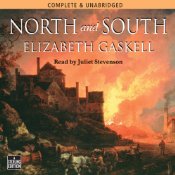
While We’re Far Apart by Lynn Austin wasn’t on my radar, but I saw it on a clearance table and seemed to remember it had been favorably reviewed by a few other bloggers I read, so I picked it up. I’m glad I did.

The WWII-era story is told from three points of view. Esther’s  family is reeling from the loss of their mother in an accident when they receive a second blow: news that their father, Eddie, in his grief, decided to enlist. Esther’s anguish in just the first few pages is palpable.

Eddie had counted on his mother to watch his children while he is at war, but she is unwilling and not really able. But neighbor Penny volunteers to. Penny has been quietly in love with Eddie for years. Though she’s sad at the family’s loss, she hopes eventually Eddie will notice her. Her elderly parents strongly disapprove: they’ve rarely let her out of the house, constantly berated her lack of “sense,” and are deathly afraid of strangers, especially those in the Jewish section of Eddie’s neighborhood.

Jacob Mendel is the family’s Jewish landlord, grieving the loss of his wife in the same accident that took Eddie’s wife, angry and withdrawn from his synagogue as well as God Himself, anxious for news from his son’s family in Hungary who are right in the path of Hitler’s advancing army.

Lynn masterfully weaves together the threads of these lives and puts faces on the various aspects of WWII as Esther resents Penny, begins receiving attention from neighboring teen, Jack, and deals with a serious problem with her brother. Penny discovers that taking care of children isn’t easy and doesn’t necessarily garner the attention of their father, but venturing out into the unknown world broadens her horizons. She finds she’s more capable than her parents gave her credit for, but she also begins to unearth secrets that may turn her own world upside down. Mr. Mendel reluctantly opens his heart just a crack for Esther as they both deal with God’s seeming silence.

Lynn’s descriptive phrasing enhances the story as well. “‘You–what!’ Grandma exploded like a shaken soda bottle.” “His words gave Esther the same empty, floating feeling she’d had after Mama died, as if she were a fluff of dandelion, no longer tethered to the earth.”

I was pulled in on the first pages, ached and rejoiced along with the characters, and was reluctant to leave them at the end.

(This review will also be linked to Semicolon‘s Saturday Review of Books.)