What’s On Your Nightstand: November

What's On Your NightstandThe folks at 5 Minutes For Books host What’s On Your Nightstand? the fourth Tuesday of each month in which we can share about the books we have been reading and/or plan to read.

Here’s what I finished since last time:

Thunder Dog: The True Story of a Blind Man, His Guide Dog, and the Triumph of Trust at Ground Zero by Michael Hingson, reviewed here, pretty interesting.

Coffee Shop Conversations: Making the Most of Spiritual Small Talk by Dale and Jonalyn Fincher, recommended by Lisa, reviewed here, mixed emotions.

Love’s Pursuit by Siri Mitchell, Christian fiction about a woman in Puritan New England struggling to live by “the rules” yet realizing they were not helping her to be truly righteous, reviewed here. One of those books that keeps you thinking long after you close it.

The Mercy by Beverly Lewis, last of The Rose trilogy, not reviewed, but a fitting wrap-up and an enjoyable read.

Cranford by Elizabeth Gaskell, reviewed here, pleasant but not riveting.

I’m currently reading:

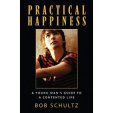
Created for Work: Practical Insights for Young Men by Bob Schultz, reading with my youngest son.

While We’re Far Apart by Lynn Austin.

The Best Seat in the House: How I Woke Up One Tuesday and Was Paralyzed for Life by Allen Rucker about dealing with transverse myelitis (same ailment I have) and it’s after-effects. Very interesting though marred by a smattering of bad language.

Next up are:

Longing, book three in the Bailey Flanigan series by Karen Kingsbury.

One Imperfect Christmas by Myra Johnson.

I haven’t decided for sure what’s after that, but I have a stack of a dozen or so to choose from, not to mention my ever-growing TBR list.

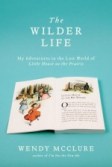
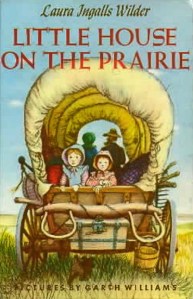
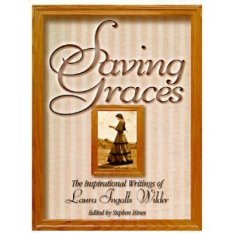
I also wanted to let my fellow readers know I am hosting a Laura Ingalls Wilder Reading Challenge here in February. You can read more about it here. Hope you’ll make plans to join us!

Book Review: Love’s Pursuit

Love’s Pursuit by Siri Mitchell takes place in a Puritan community in Stoneybrooke, Massachusettes. Susannah Phillips outwardly is a model of Puritan goodness and righteousness, but inwardly she almost constantly wrestles with wrong desires and motives.

A perceived threat of Indian attack leads the government to send a captain out to protect the community and train the men to defend themselves, and his “heathen” dress and ways stand out. The captain boards with Susannah’s family, and at first his talk about God, so different from her understanding, seems foolish to her. But gradually some of what he says begins to penetrate her thinking and make her wonder if what he says is true.

The captain unsettles not just her religious thinking, but her romantic notions. She is almost engaged to John Prescotte, but the captain makes his interest clear.

Furthermore, town leader and most eligible bachelor Simeon Wright shows an unwelcome interest in Susannah as well. Though outwardly Simeon is the epitome of Puritan manhood, there’s something not quite right about him from the very beginning.

A subplot concerns a young goodwife named Small-hope, rescued from an abusive home by her husband, yet holding herself protectively away from him as well as the rest of the community. Will the need to save someone else propel her from her shell, or will she stay safely retreated?

The story doesn’t go where one thinks it will at first: in fact, the climax almost had me wailing out loud, “Noooooo!!!!” But I think it underscored that the “love’s pursuit” Susannah most needed was not man’s, but God’s.

Love’s Pursuit is no featherweight romance. Siri Mitchell has done a marvelous job drawing the characters and portraying Susannah’s inner turmoil in her relationship with God and man as well as the problems of living in a community where one’s righteousness is based on performance and keeping the rules.

(This review will also be linked to Semicolon‘s Saturday Review of Books.)

Book Review: Cranford

I first heard of Cranford when I saw ads for the BBC production. Somehow I wasn’t drawn in enough to tape it then, but when I saw the book during Borders’ close-out sales, I picked it up.

I hadn’t read anything by Elizabeth Gaskell, though I enjoyed the DVD of Wives and Daughters.

This book was originally told as installments in Charles Dickens’ magazine, Household Words. That may be why there doesn’t seem to be much of an overall plot arc, but rather a series of vignettes into the lives of a group of ladies who are friends in mid-nineteenth century England.

At first, when the story began by describing how the community was mostly made up of women, I was afraid it was going to be a pre-feminist rant against men, but thankfully that was not the case.

The two central characters are sisters, Deborah and Matty Jenkyns. Deborah is the stronger of the two, and thus her influence on Matty lingers long after Deborah dies fairly early in the book. Deborah is firm and opinionated: Matty is sweet but easily confused. The story is told through the eyes of a frequent visitor, Mary Smith.

At first, honestly, I was a little bored with the book. But gradually I began to see the humor in various incidents and a little Austenesque poke at the ironies of life in those times, people’s foibles, etc. In one example, the ladies were visiting a Mrs. Jamieson, who had both milk and cream for tea time but gave the cream to her spoiled dog, Carlo. “[Carlo] knew cream quite well, and constantly refused tea with only milk in it: so the milk was left for us, but we silently thought we were quite as intelligent and sensible as Carlo, and felt as if insult were added to injury, when we were called upon to admire the gratitude evinced by his wagging his tail for the cream, which should have been ours.”

By the later chapters the book seemed more of a character study of Matty, who at first seems simple and unassuming but is gradually revealed to bear up under trials large and small, including the loss of a brother, the loss of a possibility, of love, and the loss of fortune with a depth of character, fortitude, and sweetness. Other characters in the book, as well, show strength and compassion in spite of their idiosyncrasies.

One of my favorite quotes in the book comes when one member of the friends is engaged, to the shock of the others. Maddy softens to the idea before the others and says, “A man has a sort of knowledge of what should be done in difficulties, that it is very pleasant to have one at hand ready to lean upon.”

This edition is a Penguin Classic with copious end notes. I’d so much rather they had been footnotes, because it did interrupt the flow of the story to keep  having to turn to the back of the book, but I kept doing so, afraid I was going to miss something enlightening. I think there were a few too many notes, unless this was designed for younger students: some of its explanations seemed obvious to me.

I had wanted to watch the BBC film before reviewing the book, but I hadn’t realized it was a five part series including material from others of Gaskell’s books. I might look for it during the summer.

Cranford wasn’t spell-binding and didn’t leave me eager to add another Gaskell book to the queue, but it turned out to be a pleasant read in the end.

(This review will also be linked to Semicolon‘s Saturday Review of Books.)

Announcing: A Laura Ingalls Wilder Reading Challenge

Last year during Carrie‘s Lucy Maud Montgomery Reading Challenge, I remarked that I was thinking about doing the same thing with either Laura Ingalls Wilder or Louisa May Alcott. There seemed to be a lot of interest in Laura, so in trying to determine what month would be good for a challenge, I saw that her birth and death both occurred in February. February seemed the ideal month, then, to have a reading challenge focused on Laura Ingalls Wilder.

You can read anything Laura has written or anything written about Laura. You can read alone or with your children or a friend. You can read just one book or several throughout the month — whatever works with your schedule. If you’d like to prepare some food or crafts somehow relating to Laura or her books, that would be really neat too.

On Feb 1, 2012, I’ll have a post up where you can sign in and let us know you’ll be participating and what you think you’d like to read that month. That way we can peek in on each other through the month and see how it’s going (that’s half the fun of a reading challenge). On Wed., Feb. 29, I’ll have another post where you can share with us links to your wrap-up post. Of course if you want to post through the month as you read, as well, that would be great, and I might share those from time to time. You don’t have to have a blog to participate: you can just leave your impressions in the comments if you like.

I’m really looking forward to getting back in touch with these books. I’ve read the whole original Little House series at least once, maybe more, but I am not sure whether I’ll reread those or a biography of her and a book of her newspaper columns I have been wanting to get to as well.

So, what do you think? Anyone interested? Make plans now to join us this February — I’m looking forward to seeing you then!

The Laura Ingalls Wilder Reading Challenge

Thoughts on Coffee Shop Conversations: Making the Most of Spiritual Small Talk

The first few years after I was saved as a teen-ager, whenever I heard anyone teach or preach about witnessing to others, we were instructed to somehow get to the point of asking, “If you were to die tonight, do you know that you’d go to heaven?” Then, if the person would allow us, we were to share with them the Roman’s Road. I think the Roman’s Road is a good tool, but I don’t think you necessarily have to use it exactly as is to witness to someone. It’s good to be familiar with several Scriptures so the Holy Spirit can bring them to mind as needed.

But in recent years I have struggled with that question, “If you were to die tonight, do you know that you’d go to heaven?” For one thing, it puts the emphasis on what happens after death, as if eternal life started then and not at salvation. Preachers lament over people having a “fire escape” mentality to salvation, as if the only important thing about it is escaping hell, and I can’t help but think that’s because that’s the way Christians have presented it over the years. In addition, I can’t recall any witnessing exchange in Scripture ever using a variation of that question. My next time through the New Testament, I want to especially note how Jesus and the apostles dealt with people.

In more recent years I’ve heard the question, “When you stand before God some day, if He should ask you, ‘Why should I let you into My heaven,’ what would you say?” I like that a little better because the answer instantly reveals what a person is trusting in, but it still focuses on life after death, and though that is vitally important, it’s not the totality of salvation. The forgiveness of sins, overcoming sin, becoming a child of God, knowing God, having a Friend and Comforter in this life, all those seem to be glossed over on the way to dealing with he emphasis of life after death.

Besides wrestling with these issues, I struggle with figuring out how to even get to the gospel in everyday conversations with people about the weather, the produce, etc., all the while a part of me is scared to death and looking for excuses not to get to the gospel.

So against this background of conflicting thoughts, Lisa’s review of Coffee Shop Conversations: Making the Most of Spiritual Small Talk by Dale and Jonalyn Fincher piqued my interest.

I just finished the book last week, and I agree with Lisa, there is much that is helpful in it: when we talk about the Lord, we need to be respectful rather than belligerent or bombastic, remembering that  “the wisdom that is from above is first pure, then peaceable, gentle, and easy to be intreated, full of mercy and good fruits, without partiality, and without hypocrisy” (James 3:17). We need to get out of our Christianese to think about how a lost person is perceiving and understanding what we’re saying. In conversations with lost people, we need to avoid getting derailed by issues that even Christians disagree about. We need to be careful about our own attitudes even when we think non-Christian people aren’t around, joking about certain types of sin and sinners (“Mocking others, even behind their backs, destroys our capacity to respect them when we speak face to face” [p. 36]). We need to “allow others to remain unconvinced” rather than badgering them into making a “decision” now. (I can testify to having a couple of family members who were supposedly saved when the person talking with them backed them into a corner and wouldn’t let them go without their responding to the gospel, but those kinds of decisions are not usually genuine decisions if the person is just trying to get the Christian out of their face while being too shy or polite to put it into those words.) I agree we need to relate to people as people and not “projects.” The chapters on “One True Religion?” and “Talking About the Resurrection” were particularly helpful to me.

But I have to confess there were a few things I either didn’t agree with or was wary of in the book. And in discussing a few of these, I am not trying to be nitpicky or critical: I am trying to exercise discernment and understanding. If some of these things come across to me this way, I am sure they do to others as well.

For instance, on page 14 the authors write:

While we believe Jesus distinguishes himself as the Savior and King of us all, while we obey his teachings because we believe they give us the best road map for life, we also believe the biblical idea that all humans — be they Christians, Buddhists, Mormons, atheists — are made in God’s image. All humans reflect God in varying degrees of clarity. Therefore we approach every conversation as fellow learners rather than posturing as experts. We can gather data and truth even from those who do not follow Jesus, growing in wisdom and love, and giving others dignity by assuming they are doing the same. If we want our conversations to always be full of grace, then humility, not deft arguments or clever words, must become our first concern.

I agree with the last sentence, and I agree that when talking with someone with a different belief system, we don’t need to “blast” them for what they believe or come across as “superior.” And I do believe that God created man in His image, and that we still reflect something of His image even though that reflection has been marred by the entrance of sin into the world, yet I don’t believe  false religions reflect Him (and the authors don’t either, but that sentence just could be misconstrued). I agree that while talking with someone from a different belief system, we will probably exchange our differing beliefs, and that gives me a window into how he is thinking and an opportunity to share what I believe the Bible says (kindly). And that’s only polite — I can’t expect him to listen to what I say unless I listen to what he says. So I think ultimately we’re on the same page in this, but the sentence that everyone in every religion reflects God’s image could come across as saying that every religion contains truth, which is not what the authors believe. On page 25 the authors mention various outcasts of society (adulterers, demon-possessed, tax collectors, etc.) who followed Jesus, saying, “He loved them beyond their labels, seeing them as people, bearing the image of God.” Again, I agree with the first part of this sentence, but He loved them despite the fact that God’s image in them was marred because of sin, not because there was something of God’s image still left in them.

On page 25 the authors write, “Jesus didn’t act like many many evangelicals. When Jesus met people, he dignified their search for the good life, giving them parables to mull over and offering winsome, playful banter when they could handle his verbal sparring.” The footnote to this sentence references Matthew 13 and Mark 7:24-30. I’m sorry, but I don’t see anything playful in those passages.

On page 68 the writers say, “By coming to earth in the flesh, Jesus put his stamp of approval on what humans are.” My first response to that was, “Huh?” The next sentence says, “Jesus’ life proves God still finds humans worth redeeming.” Yes, I agree with that, but the first sentence threw me a little bit, because my response was, “He came to redeem us from what we are — sinners — not approve us.” In context I could see what they meant, but many places like this gave me pause at first.

From page 151:

Jesus taught that we live with evil and self-centeredness in our hearts. “For out of the heart come evil thoughts, murder, adultery, sexual immorality, theft, false testimony, slander.” [Matthew 15:19]. According to Jesus the human problem that lives inside us is beyond our powers to fix. Our humanity could only be restored when an uncorrupted, fully human person comes as an example and sacrifice, not only to break the evil within but to empower humans to become fully human in relationship with God and others. Jesus empowers us to do what many religions only tell us to do: grow in love, discipline, and truth. In Christianity, as in all religions, good works are important, but these good works don’t earn the love of God, they evidence the love of God working in us. And unique from all Eastern religions, the end of humanity is not escape from the earth but a remaking of it.

There’s a lot of great stuff in that paragraph that I fully agree with, but that one sentence in the middle about being fully human jars me a bit. Jesus was and is, of course, much more than fully human, He is the Son of God, and when we’re saved we don’t become just fully human, we become children of God, though not in the same sense as Jesus’ Deity (we don’t become gods, as the Mormons believe, and the authors aren’t trying to convey that). I know the authors believe in Jesus’ Deity and in what happens to us to us at salvation, but I think the phrasing of that one sentence can be misconstrued and misunderstood. The authors bring up the idea of Jesus making us “appropriately human” again on p. 213, and that seems to be the focus of their web site .

In the chapter “The Hope For Human Healing,” Jonalyn mentions a moment of lust, and “Instead of berating myself for for being flirtatious or lustful, I simply prayed, ‘Jesus, I invite you into my lust'” (p. 154). I wrote in the margin, “Where is the Scriptural basis for this?” It sounds like inviting Jesus to join in one’s sin, though of course that is not what she means. Earlier in the chapter they mention Brother Lawrence learning to “invite Jesus into every moment, from washing dishes to saying prayers’ (p. 153). I wrote in the margin there, “Is He not already there? There’s a difference between invitation and acknowledgment.” Jesus is everywhere: I just need to remember that and acknowledge His presence, and in a lustful moment my response would have been, “I’m sorry — please help me with this.” It may just be a matter of semantics, we may mean basically the same thing by our different ways of phrasing it.

When people ask the authors whether they follow one religion or denomination, they say, “We follow Jesus. We think he was on to something” (p. 158). I agree that denominational labels don’t save and may sidetrack people, and I agree that we need to keep pointing people to Jesus rather than our “system,” but I think “he was on to something” is very, very weak.

Just to mention a few other problems: The Finchers are more liberal than I am in many of their views about mountains and molehills in the two chapters talking about those. Dale mentions coming from a very strict religious background, and sometimes people who do that go maybe a little too far the other way, in my opinion. And I saw more emphasis on philosophy than depending on the Spirit and Word of God. We do need to think about what we’re saying, how we’re coming across, how the other person might be processing what we’re saying, rather than just lapsing into a witnessing spiel. But as we seek the Lord in knowing how to speak of Him to others, we can trust Him to bring the thoughts and Scriptures to mind that are needed for the moment. God’s Word is what opens people’s eyes, convicts them, draws them to Himself, brings them life (John 6:63) and faith (Romans 10:17).

I was almost feeling like the authors thought every person needed to study philosophy and other religions before talking to people about the Lord, until I came to this paragraph:

Our hope is that you will find many friends to learn from as you talk about Jesus. We want this book to serve not merely as a collection of apologetic tools, but as a road map guiding you toward freedom to be yourself as you talk about Jesus. We hope you will customize your conversations to the unique gifts God has forged in your soul. May you develop your own questions and ideas to introduce others to the God of Israel. May you continue to be taught and humbled by the humans God places in your life (p. 218).

I can say Amen to that.

I think it is wise to try to discuss the gospel as inoffensively as possible (II Cor. 6:3: “Giving no offence in any thing, that the ministry be not blamed). But we have to remember that the gospel in itself will bring offense sometimes. Paul speaks of the offense of the cross. Look at the reaction Christ Himself as well as the apostles received when they shared the gospel. People don’t like hearing that their way of thinking and doing is wrong, no matter how kindly we try to put it. True, too many people have caused offense by their personalities and prided themselves that they were suffering persecution for the gospel’s sake when it was their own fault. But we can’t go too far the other way (which is something I struggle with), trying so hard not to offend the person that we hold back or tone down the truth.

I apologize that this hasn’t been a book review so much as a hammering out of my own thoughts in regard to witnessing in general and the book in particular. I encourage you to see Lisa’s review — she did a much better job. 🙂 For my part, though I found much that was helpful and much that I agreed with, there were enough parts that I either disagreed with or that raised questions for me that I couldn’t endorse it completely. But I think much good could be gleaned from it by a thoughtful and discerning reader.

(This review will also be linked to Semicolon‘s Saturday Review of Books.)
Book Review: Thunder Dog: The True Story of a Blind Man, His Guide Dog, and the Triumph of Trust at Ground Zero

Thunder Dog: The True Story of a Blind Man, His Guide Dog, and the Triumph of Trust at Ground Zero tells of Michael Hingson’s ordeal on 9/11. He was working on the 78th floor of the north tower of the World Trade Center when he and his colleagues heard an explosion and felt the building tilt. Not knowing what had happened, they evacuated everyone and then tried to power down computers and such, but quickly decided they need to leave the building. The only way to do so was by 1,463 stairs.

There was just one problem. Michael has been blind almost since birth and had his guide dog, Roselle, with him.

But it’s not really a problem. Michael’s parents “mainstreamed” him before the concept became popular. During his childhood Michael’s parents calmly fielded neighbor’s concerned calls about their blind son zipping around the neighborhood on his bicycle.

Interspersed between details of 9/11 are flashbacks from Michael’s life: childhood, education, work life, acquisitions of guide dogs, marriage, and then how 9/11 impacted the rest of his life. Though I know that’s the style these days, I do miss the time when a book started at the beginning and told a story straight through to the end. But it’s not at all hard to follow, and both aspects of the story are quite interesting.

(This review will also be linked to Semicolon‘s Saturday Review of Books.)

What’s On Your Nightstand: October

What's On Your NightstandThe folks at 5 Minutes For Books host What’s On Your Nightstand? the fourth Tuesday of each month in which we can share about the books we have been reading and/or plan to read. You can learn more about it by clicking the link or the button.

Well, the end of this month didn’t catch me by surprise as the last few have. Here’s what I’ve been reading since last time.

I finished:

Worldliness: Resisting the Seduction of a Fallen World, edited by C. J. Mahaney, reviewed here. Excellent.

Boyhood and Beyond: Practical Wisdom for Becoming a Man by Bob Schultz, reviewed here, read with my son. Excellent as well.

By Searching: My Journey Through Doubt Into Faith and In the Arena by Isobel Kuhn, reviewed together here. Excellent, among my most often reread books. Isobel was a missionary to China and these books wonderfully detail things the Lord taught her both in coming to faith in God and then in living for Him.

The Little Women Letters by Gabrielle Donnelly, reviewed here. Story of a descendent of the March family who discovers some of Jo’s letters. Loved the premise but was greatly disappointed in the book.

Abandoned: The Shop on Blossom Street by Debbie Macomber. I dropped it early on due to explicit sexual content (who knew such would be in a book about ladies getting to know one another over knitting?!)

I’m currently reading:

Coffee Shop Conversations: Making the Most of Spiritual Small Talk by Dale and Jonalyn Fincher, recommended by Lisa.

Thunder Dog: The True Story of a Blind Man, His Guide Dog, and the Triumph of Trust at Ground Zero by Michael Hingson.

With my son: Created for Work: Practical Insights for Young Men by Bob Schultz.

Next up:

Love’s Pursuit by Siri Mitchell.

The Mercy by Beverly Lewis, last of The Rose trilogy.

Cranford by Elizabeth Gaskell.

What have you been reading?

Book Review: The Little Women Letters

In The Little Women Letters by Gabrielle Donnelly, a descendant of Jo March discovers some of her letters the attic. The modern Atwater family has three sisters who are similar in some ways to the March sisters, and Lulu, the one most like Jo, is the one to discover the letters. She’s at a crossroads in her life but doesn’t know which way to go and is getting heartily tired of questions and advice about career paths she should take. Over time she finds comfort in the similarities between herself and her great-great grandmother Jo. Meanwhile older, sensible sister Emma is preparing to be married and younger, vivacious sister Sophie is trying various acting roles.

The Atwater family isn’t meant to be an exact modern representation of the March family, but there are similarities, and some plot lines that follow incidents in Alcott’s book.

But there are differences as well…

The March girls had their spats, but they were teens and younger and learned to handle their differences better as they matured. The Atwater girls are all grown and out of their childhood home yet fight constantly and are quick to take offense. They were relating to other other better by the end of the book, but I got so sick of their bickering. The March girls seemed normal; the Atwater girls excessive.

Then, there is a wholesomeness to Little Women, which is missing from this book. This one has a smattering of “damns,” “hells,” and God’s name thrown around as an expression of disgust and exasperation (which I hate). I knew to expect that in a secular novel (and I am sure it is tame compared to a lot of what is out there), but I don’t have to like it. There is a quite vulgar sentence from a drunk man in a section where Lulu is working in a pub: we didn’t need to have that in order to get the idea of what kind of man he was and what Lulu faced while working there.

The counterpart to wise Marmee is feminist Fee, a free spirit who was married barefoot on the beach by a shaman. In a scene that hearkens back to Meg’s spending more than she should have buying fabric that she then has to ask her more well-to-do friend to buy back from her, Emma falls in love with a pair of designer shoes that cost as much as the refrigerator she and her boyfriend have been saving for, and in a moment of weakness lets herself be talked into buying them for her wedding. When she tells her mother about it, Fee says that because “the woman works far harder around the home than the man does,” she entitled to treat herself now and then (pp. 120-121). 🙄

I think it also jarred me a little that the book was set in England. Not that I am prejudiced against the British, but Little Women was very much an American book, set in a staunch New England family. I would have felt just as jarred if the modern family was distinctly Southern or western, even though it’s perfectly plausible that the March descendants would be scattered far beyond New England. And I don’t usually have trouble “getting” either dramas or comedies set in England, but I wonder if the setting had to do with my not understanding some of the humor — though the father’s having an imaginary wife struck me as very odd rather than humorous.

There were aspects I did like to the author’s writing. A couple of times she skillfully led me along thinking the plot was going to go one way and then it surprised me. She conveyed Lulu’s feeling of not fitting in anywhere (much like Jo’s) very well. By the end of the book I was more sympathetic to the characters and I liked how the book ended.

But overall, though the premise was wonderful, I am afraid the book fell far short of my expectations.

(This review will also be linked to Semicolon‘s Saturday Review of Books.)

Book Reviews: By Searching: My Journey Through Doubt Into Faith and In the Arena

I first heard of Isobel Kuhn either in college or in the church where we were members when we first married, where there was an emphasis on reading missionary biographies. I’ve read her books By Searching: My Journey Through Doubt Into Faith and In the Arena (as well as her others) several times and know some parts of her story as well as my own. But I always enjoy reading them again, going over what’s familiar and being reminded of what I’d forgotten. Her name is well-known in some areas but not as well known, perhaps, as some of the house-hold names of classic missionary biographies, so I want to keep her story before people. She herself would probably be loathe to read that sentence, as she wouldn’t want her name to be promoted, but rather the God who worked in and through her. I feel the same, but by presenting her story I’m ultimately promoting His grace and work.

 In By Searching she shares how she came to know the Lord. She had been raised in a Christian home in Toronto, Canada, and when she went off to a secular college, her parents took care to drill her in arguments against modernism and other affronts to truth that she would encounter there. In one of her first classes, her professor asked if anyone believed in heaven and hell, in Genesis, etc. Only Isobel and one other student raised their hands. The professor didn’t present arguments against the Bible: he only said, “Oh, you just believe that because your papa and mama told you so.” On the way home from class, Isobel examined why she believed what she believed in light of what she was learning in her classes and concluded the professor was right: she only believed because of what her parents said. She determined to “accept no theories of life which [she] had not proved personally” (p. 7). She wouldn’t say there was no God, but rather that she didn’t know whether there was or not, and instead of seeking out the answer to such an important question, she determined that, since one can’t know, then it really didn’t matter what one did. So she gave up going to church so she could sleep in on Sunday to rest up after parties and dances through the week, she set aside Bible reading, and she gave herself to the activities she had always been taught were “worldly.”

At first everything was pleasant and fun, but she discovered before long that nothing satisfied. One night she was so low that she even contemplated taking her own life, but a groan from her father in his sleep in another room reminded her of the devastating effect that would have on her family. She prayed, “God, if there be a God, If You will prove to me that You are, and if You will give me peace, I will give you my whole life.”

The rest of the book tells how He answered that prayer. “To find that He is, this is the mere starting-point of our search. We are lured on to explore what He is, and that search is never finished, for it grows more thrilling the further one proceeds” (p. 94).

The title for In the Arena comes from the thought that God brings His children to various platforms, or arenas, to show Himself not only to them but to anyone observing. The book overlaps a bit at the beginning with parts of By Searching, but it’s done for the purpose of showing God in various arena experiences. One of the earliest was the staunch opposition of her mother to her going to the mission field, even though her mother was an earnest Christian and even a president of the Women’s Missionary Society. Her mother wanted her to marry well and move in “good society,” and the thought of her daughter depending on the charity of others was more than she could bear. I’ve always thought Isobel’s response to this was ideal, praying and seeking wise counsel rather than adamantly opposing her mother (though there might be times when a person has to obey God in opposition to a parent’s wishes, but when possible it should be handled gracefully.) God did turn her mother’s heart, and continued to manifest Himself to Isobel through Bible college, leading her to her husband, calling them to China, various problems, frustrations, losses, needs, rewarding work, up through facing cancer at the end of the book.

There is so much I’d love to share with you that the Lord spoke to me about in these books…but I’d end up copying most of them here if I shared everything. But here are a few of the most memorable.

On the ship on the way to China, a veteran missionary was meeting with the new girls going over, and one day she said, “Girls, when you get to China, all the scum of your nature will rise to the top.” Isobel “was shocked. Scum? Was that not a strong word? All of us were nice girls, were we not? Scum? A bit extravagant surely. And so I was totally unprepared for the revolt of the flesh which was waiting for me on China’s shores. The day was to come when on my knees in the Lord’s presence I had to say: ‘Lord, scum is the only word to describe me.'” (In the Arena, p. 37.) She then went on to explain some of those “revolts of the flesh” included, in going to a poor area, the realization that it costs to be clean, being unprepared for true poverty even though she had tried to prepare herself, fleas, lice, bedbugs and such, food that she couldn’t take at first, the tribespeople’s lack of understanding the “odd” desire for a bit of privacy sometimes, etc.

In By Searching, she tells how one by one God led her to give up various “worldly” practices, and I feel I should say here that a modern reader might disagree with whether some of them were worldly. But suffice it to say she felt led to lay them aside (“All things are lawful unto me, but all things are not expedient: all things are lawful for me, but I will not be brought under the power of any. All things are lawful for me, but all things are not expedient: all things are lawful for me, but all things edify not.’ I Corinthians 6:12; 10:23), and she didn’t miss any of them. The thing that most stood out to me was her calling them “extinguished tapers” in comparison to the “Rising Sun.” I’ve often thought the emphasis in combatting worldliness shouldn’t be so much in opposing some practices that people can argue over, but in emphasizing love for Him, for in that love lesser things will fall away in themselves.

In another vein, when I first started reading missionary biographies, I felt they were such godly Christians that I should do everything they did. You run into trouble after a while, though, as some of them might do different things! She mentions one of those extinguished tapers was voracious reading of romance novels, “not the modern sexy novels, but clean, exciting love stories” (By Searching, p. 47.) She had trouble putting them down and felt the untrue-to-life plots would make her discontent with everyday routine. One night after staying up until 1 a.m. reading an exciting novel, she then tried to read her Bible, and it seemed flat to her and the Lord seemed far away. She felt it was like filling up with candy and ice cream and spoiling her appetite for good nutrition. So for about fifteen years she gave up all fiction, but she came back to the classics when she had to spend a lot of time alone in China while her husband traveled, because they were wholesome and, since she had read them before, they didn’t have the grip on her that some other books might. I would say that it is right and noble to give up anything that you feel might hinder or hamper your love for the Lord, especially in light of the verses in Corinthians mentioned in the previous paragraph, and some people may feel led to give up some things that aren’t necessarily wrong in themselves but they feel the Lord would have them put aside for various reasons. But I obviously don’t feel the same way about fiction as she did, though I know some who do. I don’t think there was anything in the way of Christian fiction then (this would have been in the 1920s or 30s), and even ice cream and candy aren’t inherently sinful but rather need to be kept in moderation. There is some fiction, even Christian fiction, that I would avoid, and if I felt even the good kind was a hindrance in any way, I’d have to reexamine it, but I don’t feel led to toss it out as a genre.

Something that stood out to me in this reading that I hadn’t remembered from before was that for a time she suffered from stage fright in leading meetings with a group of working girls while waiting to go to China. She had had to give a speech at her college graduation and her mind went blank during it, and that seemed to set off a fear of being in front of people. At times while girls were setting up  for the meeting, she had to go to the bathroom for privacy and cry to the Lord for the nerve to do what she had to do. That touched me because I have done the same thing in bathrooms before meetings!

Another quote that stands out to me was in the context of seeking God’s guidance in whether to try to leave China when the Communists were taking over the area. A Bible verse on a calendar seemed to give direction one way, yet she knew not to take a verse at random out of context. She remarks “You only learn to discern His voice by experience. If you want to be able to hear it in the crises of life, you must first seek it in the common places of life” (In the Arena, p. 190).

I could go on, but suffice it to say that Isobel Kuhn’s life is an inspiration to me. She readily admits her flaws, but she steadfastly followed her Savior, and He worked mightily in and through her.

I have read all of her books, some of which tell more of the work in China. One, Green Leaf in Drought (linked to my review) tells of the last China Inland Missionaries to be released from China after the Communists took over. Another, Whom God Has Joined (also linked to my review), was originally titled One Vision Only and focuses on her marriage. It’s both poignant and humorous. One of my favorites is Second Mile People where she tells of some of the main people who influenced her life: I mentioned one in a previous post, A sense of Him. I want to read that one again soon. Also due to her writings I read two biographies of the man who influenced her for China, gave wise counsel in regard to her mother, and was her missions director in China, J. O. Fraser, in Mountain Rain by Eileen Crossman and Behind the Ranges by Geraldine Taylor. I’d love to read those again some time, too.

I hope you’ll explore some of her life and writings and will be as blessed by them as I have.

(This review will also be linked to Semicolon‘s Saturday Review of Books.)

Book Review: Boyhood and Beyond: Practical Wisdom for Becoming a Man

I’m not sure how long I’ve had Boyhood and Beyond: Practical Wisdom for Becoming a Man by Bob Schultz, but I rediscovered it while going through a box of books after our move. I just finished going through it with my 18 year-old-son. At first I thought it might be a little “young” for him, but it wasn’t. He seemed to get a lot out of it (I should have asked him his impressions before he left for school!) I would say the book would be useful for as young as older elementary-age boys through teens. The truths in it would be good for any young men.

At first I was a little miffed when Bob wrote in the introduction that he had never had sons but had been asked to write this book. I thought it would have been more effective coming from someone who had raised sons. But then I realized that even though I have never raised daughters, I do know a thing or two about being a woman. 🙂

I also wasn’t sure at first if it would work for our time together: Jesse and I usually go through some type of devotional book just before bedtime, and so I usually try to find things that are just a page or so long, because at that point in the night we don’t want to get out workbooks or study guides or wrestle through long, difficult chapters. I’m aiming more for just something to think about at bedtime. These chapters are about 5 pages long, but they don’t take long to read, and they are built around one thought or truth.

Bob covers a lot of ground: studying nature, admitting wrong, the Bible, industry versus sloth, leadership, forgiveness, “getting back up,” preparing for a wife and children, even “a time to kill” (the title of that one made me wary, but it was a good chapter). There are 31 chapters, each covering some direct aspect of manhood or relating some Bible truth to becoming a man. Each chapter begins with a quote and ends with a few questions.

I especially appreciated some of the thoughts in the chapter on authority. He had an aspect I had never heard put quite like this: “God does not give you authority so that you can force others to obey your wishes. Authority is the opportunity to use all your skill, all your resources, and all your wisdom to make those under you successful” (p. 26).

There were just a couple of places where I didn’t agree 100% at first. There is one section under Leadership where he describes a boy who doesn’t say thank you or hello whose parents make the excuse, “Joey is just being shy today.” Schultz goes on to say, “The truth is that Joey is just caught up in himself. Joey thinks too much of his own feelings and thoughts to consider someone else. Joey is simply selfish” (p. 111). It depends somewhat on age: I think this kind of reaction might be more natural in a toddler, though as parents we should work even then to teach them to say thank you, etc. There is a difference between rudeness and shyness, and I think a child does need to be taught to overcome his natural shyness to speak to people. At first reading I thought Schultz was equating shyness with selfishness, and my response, having battled painful shyness myself, was that it wasn’t sinful or selfish in itself, but it could easily be selfish if we constantly retreat from people or do let it hinder us from interacting like we should. But after going over the section again, I don’t think he is saying that shyness equals selfishness, but rather that it can cause us to react selfishly if we let it, and I’d agree with that. He goes on to illustrate how a selfish boy goes to a party thinking of himself (what’s to eat, will we do anything fun, will anyone talk to me) while a boy destined to be a leader will look for others who might need someone to talk to, ways to help, etc.

Another chapter on dealing with pain encourages that pain comes to everyone, but we don’t stop what we need to do over every little ache or twinge, whine about it or how hot it is, etc. Again, at first reading, I was a little afraid he was carrying it a bit too far into a macho disdain for doctors or issues that need attention or recuperation. I’ve known men and women who continued to come to work or church when staying home would have helped them get better sooner (and kept them from infecting others in some cases). But a closer look assures that he’s not advocating that kind of response.

Overall it is a good, balanced book with a lot of helpful advice and encouragement.

(This review will also be linked to Semicolon‘s Saturday Review of Books.)