Cydney is approaching her 40th birthday, single, wondering why God has not fulfilled her desires for a husband and children, stung by the fact that her thoughtless sister planned for her wedding to take place on Cyd’s birthday. But as the handsome and likable best man shows interest in Cyd, she’s flattered and even attracted, yet sure he is not the one for her.
Dana seems to have a perfect marriage — until her husband is caught having an affair.
Phyllis has been praying for her husband to come to Christ ever since she did six years previously, but he remains adamantly opposed to anything smacking of Christianity. Then at a college reunion she runs into an old friend who is widowed and seems a sensitive, thoughtful, godly Christian man, and she finds herself torn between the marriage she has and the ideal one that could be.
Each of these women learns in various ways what it means to trust in God’s faithfulness and to be faithful personally in their situations.
This was a hard book to put down — I kept wanting to let everything else go so I could keep reading and see what happened! Kim Cash Tate made it very easy to like her characters and to empathize with them and to be drawn into their struggles.
I know some women might avoid a book like this because of its subject matter, but real women in this world do face these kinds of situations, and Kim shares both the struggles and temptations they face as well as both spiritual and practical ways to deal with them in a gracious and non-preachy manner. Nevertheless I would urge caution before allowing a teen to read it: I definitely recommend a mom previewing it first.
(This review will also be linked to Semicolon‘s Saturday Review of Books.)
I won two books in the Sand Dollar series, A Walk In the Park and A Long Walk Home by Barbara Andrews, in a contest held by Mocha With Linda, who knows the author. Either could probably be read as a stand-alone book, but their enjoyment would be enhanced by reading them both.
InA Walk In the Park, Barbara Andrews tells a very sweet and tender story of Mac Richmond, who became a troubled young child acting out his grief over the death of his parents until he found an outlet for his emotion in sculpting. He grew up to become a brilliant, well-known sculptor of female figures, and though he talked easily to “his girls,” as he called them, he was too shy to talk to women in real life…until he met Maddie.
A Long Walk Home tells the back story of Berdine, Mac’s housekeeper from the previous book, and then ties the two stories together at the end. Though small of stature, Berdie had “the heart of a lion,” fiercely protective of others whom she loved and ready to defend them. Her childhood friendship with Michael became complicated as they grew older, and Berdine’s parents did not want her to see him. Berdine came upon a fight between Michael and the school bully, and jumped in to defend him, not realizing she was embarrassing him. When he left town the next day without a word to her, she grieved, fearing she had ruined her friendship with him. She withdrew from her family due to their lack of understanding and threw herself into her studies. Just after her senior year, she accidentally runs into Michael at Parris Island, where he is in basic training as a Marine recruit, and is stunned by his coldness to her…until they get a chance to talk and learn of the changes the years have made for each of them. Is there any hope of renewing their friendship, or of something more? And what about Michael’s new-found faith and Berdie’s disinterest in it?
Barbara knows how to weave a tale and pull the heartstrings. Both books were very realistic, the characters were well-developed, and the plots pulled me in emotionally. You might need to keep a box of tissues nearby.
My only quibble was the amount of physicality between Michael and Berdie in the second book. I know I am more conservative than many in this area, so I know not to expect most books to follow my convictions of how much physical contact an unmarried couple should engage in, yet I know some of you feel the same way, so I feel I should mention it. There were no sexual scenes at all, but Michael is trying to keep the physical aspect of their relationship under control, yet in one scene he spins Berdine around and stops to “slowly let her body slide down his until her feet met the sand” (p. 215), I want to tap him on the shoulder and say, “Um, fella, that’s not the way to avoid temptation!” That’s probably the worst incidence, and if it were not for that I would give the book 5 stars.
(This review will also be linked to Semicolon‘s Saturday Review of Books.)
Pray to BLESS. I’ve heard and read a number of acronyms as a help to prayer, but I had never come across this one before. Very helpful.
The New Evangelical Virtues. Tim Challies masterfully discusses “characteristics that seem to pass as virtues today…doubt, opaqueness, and an emphasis on asking rather than answering questions.” “Humility is not found in doubting what is true, but in believing that what God says is true is true indeed.”
Spring Cleaning Your Facebook Account. No, not a discussion of purging your “Friends” list, but rather helpful questions to check our hearts. It’s not that the technology is bad, but what’s in our hearts is going to reveal itself even there.
Just Between You and Me by Jenny B. Jones is one of the most fun books I have read in a long time, yet it is not without depth: the subtitle is “A Novel of Losing Fear and Finding God.”
Maggie is a cinematographer who has traveled all over the world and loves to challenge herself in her spare time by sky-diving, exploring caves, etc. Yet the thought of returning to her hometown of Ivy, Texas has her quaking in her boots…not that she’d admit it to anyone. But a family emergency calls her home, and she finds a serious situation with a sister who refuses to take her meds for her bipolar condition and her niece, Riley, left behind with Maggie’s widowed father. Riley has seen too much and been left too much on her own and is totally out of control, and the last person she wants to tell her what to do is an aunt who is basically a stranger.
Riley does respond well to the local vet, Conner, but Maggie and Conner butt heads over…just about everything. Conner begins to find that his first impressions of Maddie may have been wrong, and Maddie finds that helping her niece entails facing her own fears.
The dialogue just zings in this book — talk about witty repartee! And the bits between the dialogue aren’t bad either. Here are a few samples:
John’s hand strokes along mine, and my stomach does a little flip. Not the good kind that makes you want to break out into a show tune. More like the sort of quivering that happens when you’ve swallowed one too many bites of questionable sushi (p. 6).
I go directly to the aisle with candy. It’s like I have the gift of sugar prophecy (p. 13).
“Well, thank you, Dr. Phil. I appreciate the parenting advice. If only it were that easy for the rest of us.” I walk toward the door, my shoes slapping the tile. It’s hard to make a dramatic exit when you’re wearing flip flops (p. 186).
From a message about Jonah: “Fear is the opposite of faith, and where does that get you? Swimming in the guts of a fish. You can’t outrun God. But you know what the good news here is? You also can’t out love him” (p. 209).
From what I can tell, it looks like most of Jenny’s books are Young Adult fiction, but I’ll be seeking out her other books for adults and looking forward hopefully to more. I may even try one of the YA ones. This was my first Jenny B. Jones novel, but it won’t be my last.
(This review will also be linked to Semicolon‘s Saturday Review of Books.)
The folks at 5 Minutes For Books host What’s On Your Nightstand? the fourth Tuesday of each month in which we can share about the books we have been reading and/or plan to read. You can learn more about it by clicking the link or the button.
Since last time I finished:
A Memory Between Us by Sarah Sundin, set in WWII — riveting. hard to put down, very good, reviewed here.
One Thousand Gifts by Ann Voskamp, a book about learning to give thanks and see God’s hand in every moment, reviewed here.
The Damascus Way, biblical fiction by Janette Oke and Davis Bunn about the early believers, reviewed here.
Just Between You and Me by Jenny B. Jones, one of the most fun novels I’ve read in a long time. I hope to have a review of it up in just a bit. My review is now up here.
I’m currently reading A Walk In the Park by Barbara Andrews, a very sweet and tender story about a sculptor who easily talks to “his girls” that he sculpts but can’t seem to talk adequately to a real, live one — until he meets Maddie.
One sign of the first day of spring is Katrina‘s annual Spring Reading Thing! The idea is simply to set some kind of goal for what you want to read this spring, as short or long as you think you can manage, write up a post, link to Katrina’s, and then write a wrap-up post of how you did at the end of spring. It’s a fun way to check in with others who love to read and see what they’re up to, add to the ever-growing TBR list, and maybe incorporate some of those books you’ve been meaning to get to. And maybe even win an Amazon gift certificate! More information is here posting guidelines are here, and the sign-up/link-up post is here.
I have no shortage of books to read — it’s just a matter of deciding which ones to choose for the challenge. But here are some:
I like to include at least one classic: I think I’ll choose A Tale of Two Cities by Dickens. I’ve read it before — it’s one of my top two favorite classics — but it has been a long time.
The Damascus Way, is the third installment in biblical fiction series Acts of Faith by Janette Oke and Davis Bunn, yet I think it could easily be read as a stand-alone book if you’ve not read the previous two in the series.
If you’re very familiar with the story of the Apostle Paul’s conversion on the road to Damascus in the book of Acts, then the title of this book would suggest to you that it might be about him. It does cover that incident, but until it reaches that point, Paul — known as Saul pre-conversion — is seen once and referred to many times. He is less a character in the story through most of it than a sort of dark cloud of threatening persecution of the believers.
That increasing persecution drove many of the early believers from Jerusalem in the Bible, having the effect of scattering the gospel with them across the land, and that’s the background of the story that is portrayed here. Abigail, the widow of Stephen, reluctantly leaves with her young daughter, Dorcas, and a group of believers heading one way. Jacob, her brother, is a guard for a wealthy merchant’s caravan and becomes a courier for the underground network of believers. One of his contacts, to his surprise, is Julia, the beautiful daughter of his employer.
Julia is the only daughter of the merchant, and though well-to-do, she realizes that she and her mother are not welcomed in the community. Discovering why shakes her world to its core, and her turmoil leads to faith in Christ. She and Jacob are the primary characters in this story, though there are strong subplots involving Abigail as well as Linix and Alban, two Roman soldiers who became believers in the previous books.
I enjoyed seeing how believers from various backgrounds and nationalities who would formerly have been enemies became one in Christ.
And one passage that came back to mind many times after reading it involved the testimony of what we call “the woman at the well.” I knew that she came out to draw water alone at a time when other women were not there because of her shame and her status. I knew that she was surprised that Christ spoke to her in the first place and that He knew all about her. But one sentence in the story said, “He seemed to know all about her, yet He did not shun her” (p. 265). Though the last few words are not explicitly said in Scripture, they are implied, and though I knew that in one sense, in this reading the contrast between the shunning of “good people” and the kindness and respect shown by the Savior really stood out to me.
For all the possible intrigue of the dangerous activities of the couriers and the secrecy of the believers to avoid persecution, you would think this would have been a real page-turner, but the plot seemed to drag to me in a few places, which I don’t remember happening in the previous books. But I may have just been a little “off” somehow while reading it — other reviews of it I have read use words like “sweeping,” “intriguing,” and “vivid.”
Nevertheless, I am glad to have read it and can recommend it. I’m not sure if there will be further books in the series — since it is covering the book of Acts and there are several more chapters after Saul’s conversion, I would hope so. If so, I’ll be looking forward to them.
(This review will also be linked to Semicolon‘s Saturday Review of Books.)
One Thousand Gifts: A Dare to Live Fully Right Where You Are by Ann Voskamp began as something of a teasing dare: a friend had named one hundred things she loved and asked Ann if she could name 1,000. Ann began keeping a notebook open in her kitchen to record things she was thankful for, little dreaming how it would impact her life.
But this is no Pollyanna-ish “glad game.” Ann discusses finding joy even through loss and pain and circumstance that don’t make sense and childish skirmishes. And giving thanks, she finds, does more than engender gratitude and praise to God, though that’s plenty: it also wards off things like anxiety, because when we’re in the habit of giving thanks, we’re in the habit of seeing evidence of God’s love and care all around us.
Ann’s writing style here is much the same as it is on her blog, and it is hard to know how to describe it: it has a poetic quality to it, somewhat ethereal, seemingly stream-of-consciousness, though it is not random: there is definite movement and flow toward a purpose and end. And it’s not fluff, for there is serious study underneath. My own writing style is more practical and straightforward: neither is right or wrong, better or worse, they’re just different, and my different way of thinking left me feeling a little lost sometimes, but other times I was moved to tears or touched to the core.
I wish I had jotted down notes from the main points in each chapter. Some of the main ones are repeated and easy to take with you from the book. But here are some quotes that I marked:
Daily discipline is the door to full freedom, and the discipline to count to one thousand gave way to the freedom of wonder…(p. 84)
Joy and pain, they are but two arteries of the one heart that pumps through all those who don’t numb themselves to really living. (p. 84).
Can it be that, that which seems to oppose the will of God actually is used of Him to accomplish the will of God? (p 88).
I am beset by chronic soul amnesia. I am empty of truth and need the refilling. I need come every day — bend, clutch, and remember — for who can gather the manna but once, hoarding, and store away sustenance in the mind for all of the living? (p. 106).
How do you open the eyes to see how to take the daily, domestic, workday vortex and invert it into the dome of an everyday cathedral? (p. 120-121).
Peace can shatter faster than glass (p. 174).
My own wild desire to protect my joy at all costs is the exact force that kills my joy (p. 178).
I wouldn’t agree with every little theological point, but that could probably be said of many books that I read, and I am not going to dissect the differences here. I will just mention a couple of things, though.
In the last chapter, titled “The Joy of Intimacy,” Ann uses what could be called sexually charged language to describe intimacy with God, such as, “I fly to Paris and discover how to make love to God” (p. 201) and “To know Him the way Adam knew Eve. Spirit skin to spirit skin” (p. 217)…and others I am not comfortable putting here. I know how she means it: she doesn’t mean anything physical or inappropriate: she’s merely discussing spiritually unfettered union and communion. There are Bible passages that speak of God as a husband, the church is called the Bride of Christ, and the last few verses of Ephesians 5 say that the marriage union is symbolic of that between Christ and the church. But still…it’s jarringly graphic, and sadly, I think a stumblingblock to many readers: some have only discussed that chapter on their blogs, and from comments there and on various book reviews, some people have laid aside the book after coming to or hearing about those passages. Personally I wouldn’t lay aside the whole book because of those references, but I would just say read cautiously and with discernment, as we should with any book. (Update: Ann comments on her use of language in this chapter in the second comment here.)
Another disturbing thing to me was a quote from Mother Teresa — not the quote itself but the regarding of her as a spiritual authority, which I don’t believe her to be for these reasons. I don’t want to offend my Catholic friends, but as I have said before, a person is not saved by or because of their denomination: we’re saved by grace through faith in Christ alone.
For these and other reasons, I couldn’t endorse the book 100%, but I did benefit from it in many ways.
There is a book club discussing this book at bloom (in) courage where two other ladies discuss the individual chapters with Ann. The videos are long, about 10-12 minutes for each chapter, and I’ve only watched five or six of them. Some of the discussions are more helpful than others, but they did help to relate to Ann better, hearing her talk in everyday language.
A little taste of the book and it’s style can be seen here in its trailer:
As the title suggests, 60 different books, ranging from old classics like The Count of Monte Cristo and War and Punishment to modern works like The Boy in the Striped Pajamas and A Prayer For Owen Meany are discussed in light of their spiritual truths. Most of the books are not written from a Christian worldview, yet even secular books convey spiritual truth: as someone once said, “All truth is God’s truth.”
The format of the devotionals gives a bit of background information about the book and usually a plot summary and then something that the devotional writer gleaned spiritually from the book. Each devotional ends with a Bible verse and a couple of questions for further thought. In a few cases just a scene from the book is discussed. In many cases the spiritual viewpoint may not be the overriding theme of the book, but rather just an aspect. In many cases as well, what the devotional writer may have seen was not necessarily what the book author intended: for instance, the chapter discussing Anne of Green Gables is titled “A Father to the Fatherless” and discusses how we come to God as orphans, and as a loving Father, He takes us to Himself and adopts us as His own. From everything I have read about Montgomery’s writing of Anne, I don’t think she had that theme in mind as she wrote, but it is certainly a valid spiritual application. That’s one thing that makes discussing books enjoyable: hearing what others got from them. But overall, the spiritual take-away is more direct: Captain Ahab’s hatred for Moby Dick dragging him down, both literally and spiritually, for instance.
I was a little apprehensive of reading the devotionals for those books I had not read yet for fear of spoilers, but overall they only enhanced my desire to read the book. My to-be-read list has grown after reading this book.
This was a very pleasant read and I am glad to recommend it.
(This review will also be linked to Semicolon‘s Saturday Review of Books.)
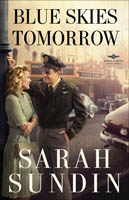
A Memory Between Us by Sarah Sundin is set in WWII. Lieutenant Ruth Doherty is an army nurse stationed in England. The shame of her past and the pressure of supporting her younger siblings causes her to keep to herself. She welcomes neither the outreach of friends nor the overtures of servicemen, but her efficient and cheerful labors make her a favorite among patients.
Major Jack Novak finds himself a patient of Ruth’s one day. He’s as attracted to her as the other guys, but he realizes he’ll have to tread carefully to break through her “no dating” policy. Meanwhile he wrestles with the expectations of his father that he will become a pastor and his own desires and abilities as an officer. He develops a plan of action to win Ruth’s heart as well as a promotion against a rival.
The optimistic confidence of WWII soldiers is appealing, but Jack has to learn that he can’t trust in his own plans and God-given abilities: he needs to trust in the Lord directly. And Ruth needs to learn that the walls she has built around herself are no protection and in fact hinder her from receiving support from friends — support that she doesn’t think she needs at first.
I loved these characters — I don’t feel as if I am doing them justice. I loved the fact that they’re both flawed, but they both make progress in their walk with God, and I loved that their interaction at the end wasn’t suave and smooth but sweet and a little goofy.
Sarah Sundin did a masterful job drawing me into the characters and the raw emotion of their struggles, and the setting is perfectly balanced: not so overrun with details so as to lose the story but informative enough to make me feel I was experiencing it for myself. I didn’t want to put this book down, and I wished there was more of it to read when I finished it.
This book is the second in the Wings of Glory series, the first being A Distant Melody (my brief review here) about Jack’s brother Walt, but I believe it could be easily enjoyed alone. I’m very much looking forward to the next installment about third Novak brother Ray this summer.
(This review will also be linked to Semicolon‘s Saturday Review of Books.)