Review: Take a Chance on Me

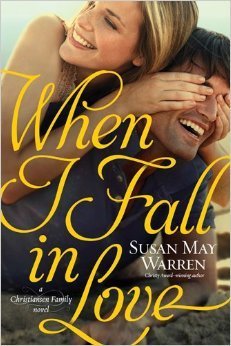
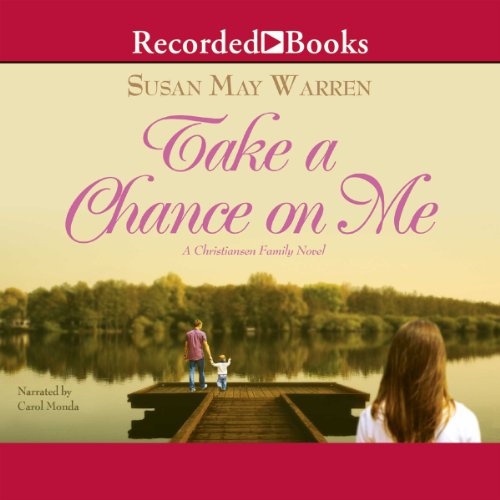
In Take a Chance on Me by Susan May Warren, Darek Christiansen is a single father working with his parents on the resort they’ve had for years: Evergreen Lake Resort in Minnesota. Darek had been a firefighter, but when his wife died, he worked at the resort to help take care of his son.

He and his wife, Felicity, and friends Jensen and Claire had grown up together in the area. But Jensen was responsible for Felicity’s death. Darek is angry at Jensen, at himself, at God.

Ivy Madison has just moved to the area as the new assistant county attorney. When she bids on Darek for a date at a charity auction, she doesn’t know what to make of his curmudgeonly behavior. But she sees a tender side of him when he’s with his son.

Ivy had grown up in the foster care system, and Darek’s family feels like the one she had always longed for.

But then she has a stunning realization. Before moving here, she had been asked to write a proposed plea deal for a man guilty of vehicular homicide. Since the incident was an accident, she suggested that the man do hours of community service rather than jail time.

After learning Derak’s story, Ivy realizes Jensen is the man whose plea deal she crafted. When Darek learns that Ivy was the one who kept Jensen out of jail, will he forgive her?

Meanwhile, a wildfire rages nearby. Firefighters are on it, but can they keep it from engulfing the town and resort?

Another plot line involves Claire, her unrequited love for Jensen, and her desire to stay in town while her missionary parents want her to go to college at age 25. There’s also a tussle when Claire’s grandfather has an accident. She wants to take care of him; her parents want to move him to a home.

I thought this was the first Susan May Warren book I had read, but I see I had read a few of her Christmas books in past years: Evergreen: A Christiansen Winter Novella (which I just realized involved the family from this book), The Great Christmas Bowl, and Baby, It’s Cold Outside.

The point of view switches back and forth between Darek, Ivy, Jensen, and Claire. One interesting thing about this story is that at first, Darek seems like the innocent wounded party and Jensen seems like the bad guy. But as we learn more of what happened and get to know them better, we see Darek (as well as Felicity) has done things he’s not proud of, and Jensen has good qualities no one appreciates at first.

I thought the faith element was woven in naturally.

Favorite quotes:

I knew your future would take you far from Evergreen Lake. I feared it would take you far, also, from your legacy of faith. Watching your son leave your arms has no comparison to watching him leave God’s. You never seemed to question the beliefs your father and I taught you. Perhaps that is what unsettled me the most. Because without questioning, I wondered how there could be true understanding.

“Small acts of justice can make great ripples in the community.” “Or tear it apart.”

We can’t hold onto something so hard that it destroys everything else we love.

I disagreed with one character saying that God acts almost entirely out of the emotion of love. Love isn’t just an emotion. And I wouldn’t say God acts primarily on emotion.

And I was disappointed Susan spelled out a metaphor that arose with the wildfire and something that was going on in the plot. It was kind of neat to make that connection, and I felt it would have been stronger if the reader had been allowed to make it for herself rather than being told.

But overall I liked getting to know the characters and their situations and where everyone ended up in their journeys. I enjoyed the audiobook narrated by Carol Monda. I didn’t realize that this book was the first of seven involving the Christiansen family. I was able to find several of them for free with Audible’s Plus Catalog,

Review: Organizing for the Rest of Us

Organizing for the Rest of Us

In my early married life, I read Sandra Felton’s The Messies Manual and received her newsletter for several years. Those helped me immensely. I don’t know if my husband realizes how much he’s indebted to Sandra. 🙂

But I realized that organization isn’t a destination. It’s a continual journey. You can’t just set up routines and places for things: you have to maintain them. And you continually get new things, get rid of old things, or get ideas of ways your organization could work better.

So I still read occasional books about organization. I don’t read books on decluttering because, though decluttering is a part of organization, it’s just one part. I don’t read books on minimalism because they go too far for my tastes.

Some of the more recent books I’ve read on time management and productivity focus on the larger principles. Those are needful and foundational. I need those reminders sometimes. But I’m more in need of practical everyday life hacks, those “Why didn’t I ever think of that?” ideas and solutions.

I just recently discovered Dana K. White’s Organizing for the Rest of Us: 100 Realistic Strategies for Keeping Your House Under Control when it was on sale for the Kindle. It’s full of great ideas, laced with humor, and written concisely. You could easily skim through chapter titles and just read about the areas you want help with. But I enjoyed the whole book.

Dana started sharing tips on an originally anonymous blog titled A Slob Comes Clean. It resonated with so many people that it grew into books, podcasts, and speaking engagements.

Dana was one of those people (like me) who wasn’t naturally organized. She discovered her tips one at a time while trying to “deslobify” her own house.

One of her principles I liked is that clutter is personal. Maybe that’s why I don’t like decluttering and minimalist books—I didn’t always agree with what they said I needed to get rid of. Dana defines clutter as “anything that gets out of control in your home” (p. 6, Kindle). “You can keep anything. You just can’t keep everything” (p. 58).

One of my favorite tips from this book was not to take everything out of a closet or cabinet when trying to organize it. Most of us do that, then we get tired or need to go tend to something else, and we have a massive mess on our hands. Instead, Dana urges taking one thing out at a time and deciding immediately what to do with it. Have a trash bag and donation box handy to put items that you want to get rid of. If you decide the item is something you want to keep, immediately put it where it goes. That may seem to take longer in the short run. But dealing with the item immediately saves having a pile of items to put away when you’re done and fatigued. Plus handling it just once cuts down on rethinking it. And if you’re interrupted or tired, you don’t have a mess to clean up (or shove back into the closet) before you can move on.

This was a fun and very helpful book. Highly recommended.

Review: Dear Henry, Love Edith

Dear Henry, Love Edith

In Becca Kinzer’s debut rom-com novel,. Dear Henry, Love Edith, Edith Sherman is ready to make a new start. Her marriage was difficult and about to end when her husband became ill and passed away. She stayed with him til the end, and they reconciled. But the problems there and in her relationship with her parents has soured her on marrying again. She had given up her hopes and dreams of traveling the world, and now is the time to pick them up again. She plans to go to South Africa to help in a mission there as soon as her passport arrives.

In the meantime, she heard from a friend that a crisis nursery in the small town of Westshire, IL could use her nursing skills for the summer. She had planned to stay in the house of a friend of a friend, Kat, who would be away during that time. But Kat sent her a note that a pipe had burst in her house. However, her uncle Henry had an upstairs he wasn’t using and would be glad to have her stay there until the damage was repaired.

Henry actually wasn’t glad. But since he was recovering from a knee injury and couldn’t use the upstairs, he reluctantly agreed that what he assumed was an older widowed missionary lady could stay there.

Edith, on her part, assumed that the uncle of someone her age would be an older bachelor. She didn’t realize that Kat and her uncle were just a few years apart.

For several weeks, living in different parts of the house and working different times, Edith and Henry didn’t meet and left notes for each other. Each assuming the other was older, their notes became more friendly and confidential.

Meanwhile, Henry can’t help but notice a beautiful brown-eyed blond in town. They run into each other several times without getting each other’s names. Then Henry realizes this is the Edith living upstairs in his house.

Edith notices Henry, too, and it’s only a matter of time before they find each other out and admit their attraction. But Edith remains firm about not marrying. And besides, she’s leaving the country soon.

I don’t usually read romantic comedies, but I saw good reviews for this one. When it was on sale for the Kindle and then free for Audible, I decided to try it. There were a lot of funny and cute moments, and the overall story was sweet. I enjoyed a lot of the banter. The “comedy of errors”—misunderstandings or things going wrong that escalate— is not my favorite type of humor. Nothing wrong with it, I just find it tiresome and not funny. I preferred the more serious parts. Even though this was meant to be a funny story, there was a lot of depth to it.

Though this was a Christian novel, at first I didn’t see much Christian about it besides an occasional mention of church or prayer. But later on, as the two main characters wrestle with their various issues, they pray and seek God more earnestly.

Unfortunately, there was one reference I was dismayed to see in a Christian novel. It wasn’t obvious, though, so I think some might overlook it.

If you like romantic comedies, you might like this book.

Review: The Winter Rose

The Winter Rose by Melanie Dobson is a dual-timeline novel.

Grace Tonquin is an American Quaker woman living in Vichy France during WWII. She had left behind the lifestyle of her actress mother, Ruby. Now she works with a network of others to help Jewish children escape France over the Pyrénées mountains into Spain. Grace has been told by Roland, her friend and leader, this must be her last group. Previously she had gotten the children to those who would take them over the mountains; now she must go with them. It was no longer safe for her to remain in France.

One boy, Louis, ends up having to remain behind in hiding with Helene, a woman who worked with Grace. Grace takes the remaining eleven children through various dangers until they finally arrive in Spain.

Most of the children are sent to live with relatives. Grace takes two of the children, siblings Elias and Marguerite, home with her to Oregon. She and Roland marry, and they raise the children as their own.

In 2003, Addie Hoult comes to Tonquin Lake in OR to look for any remnants of the Tonquin family. Her mentor and father-figure, Charlie Tonquin, is desperately ill and needs a transplant preferably from someone related. Charlie has always steadfastly refused to share anything about his family or his past. But Addie is determined to try to find his relatives, hopefully even his long lost sister.

I had seen films about people who helped Jewish children escape over the mountains. However, those movies ended with the children getting safely over, where it was assumed they lived happy and stable lives afterward. This book deals with the aftermath some of them faced. Even getting to safety, many of them couldn’t help but be traumatized by having to leave their homes and families, travel in difficult conditions, and witness things children should not have to see.

Some of the quotes I liked best:

She didn’t understand, nor would she ever, why God didn’t rescue everyone in this life, but it was her job, her grandfather had often reminded her, to be faithful in caring for those God gave to her (p. 37, Kindle version).

No one wants to hold you against your will. We want you to master your will so you can be in control of yourself (p. 189).

Living, I think, defies the loss. Loving well defies it, too (p. 301).

I enjoyed Melanie’s notes at the end where she told some of the history the novel was based on as well as what was fictional. She included some of that information on her website here.

When I’ve shared Melanie’s books before, some have wondered if she was related to or connected with the Dobsons of Focus on the Family. The “About the Author” page at the back of the book says, in part, “Melanie is the previous corporate publicity manager at Focus on the Family, owner of the publicity firm Dobson Media Group, and a former adjunct professor at George Fox University.” Since her husband’s last name is Dobson and she worked at Focus, I assume he is related somehow–unless the same last name is just a coincidence.

Overall, I thought this was a good book. I got a little lost in some places, unusual for Melanie’s books. But I appreciated getting to know “the rest of the story,” as Paul Harvey wold have said, behind some of the displaced children of WWII and the people who helped them. However, they aren’t the only ones in the story dealing with past wounds and needing to heal from their experiences. That seems to be the common theme among many of the characters.

Review: When I Close My Eyes

When I Close My Eyes, a novel by Elizabeth Musser

When I Close My Eyes by Elizabeth Musser is told from three different viewpoints.

Henry Hughes is ex-military with a wife and young son, Jace. Jace has had heart problems most of his young life and needs open-heart surgery. Henry doesn’t know how he’s going to pay the medical bills. His friend mentions he could get him a “job” with another friend–a job as a hit man. Henry is so desperate, he agrees to take on such a job just this once.

He stakes out the lady he has been hired to kill on a street in Asheville, NC, takes aim as she goes to her car—but she turns her head just as he fires. Consequently, the bullet that went through her brain puts her in a coma, but doesn’t kill her. He won’t get his money if she doesn’t die, but he can’t do anything else since people come running.

Henry hadn’t known anything about the woman he tried to assassinate, but when her name is splashed all over the news, he learns she is a best-selling author, Josephine Bourdillon. He begins to read her books and wonders if she really believes what she’s written about faith and forgiveness. He vacillates between wanting to ask her and needing to finish the job.

In her coma, Josephine remembers her past: society parents who kept up appearances despite fighting, alcoholism, and philandering behind the scenes, a rebellious, dramatic sister, and her own struggle with depression. She felt she had to be the perfect daughter to maintain the family myth and had to carry the weight of helping her sister, who, more often than not, didn’t want help.

Josephine’s daughter, Paige, has rejected the faith of her parents due to the hypocrisy of her grandfather and another family friend. Paige is a junior in high school but mature for her age. Her sister, Hannah, comes home from her year of studying in France to be with the family in the wake of Josephine’s shooting.

As police investigate, Paige is concerned that they’ll find out about what the family calls “the awful year.” Besides the death of her mother’s parents that year, there are hints of a secret that Paige doesn’t want to get out, a secret that might implicate someone in the family.

The “whodunnit” part of the story was handled well. Henry, of course, pulled the trigger, but once police find him, they want to know who hired him. I was sure it was one character—not the character the story points to at first—but I was wrong.

Depression is a big part of the book. Elizabeth said in a couple of interviews (here and here) that though her family was different from Josephine’s, her journey with depression was very similar. She wanted to bring light to that topic and show that even people of deep faith can struggle with depression. I would caution readers who might be sensitive to this that there is a suicide attempt in the book.

Other themes are hypocrisy and God’s grace.

I love that Elizabeth draws from her own experiences. She grew up in Atlanta, and she and her husband have been missionaries to France for several decades. Both Atlanta and France are featured in this book. The bulk of the story takes place in Asheville, NC. I’m not sure if Elizabeth has connections there, but that’s a city I love to visit. The drive some of the characters took on I-40 through the mountains is very familiar to me.

Some of my favorite quotes:

Mama always said that the painful things of life got redeemed in her stories.

The bad stuff hadn’t been able to snuff out the good stuff, or maybe it even happened because of the bad stuff.

My parents knew a lot about real, deep-down love. They knew it hurt. They knew it cost something valuable. They knew it was worth keeping.

There were just a couple of things I didn’t like. One was the use of a couple of words that aren’t profanity, but aren’t usually found in Christian books (though one is in the KJV. However, it’s not used there like it is used today). The other was bedroom scenes with Josephine and her husband, and mention of Henry’s wife in a see-through nightie. Nothing explicit was shown, but it was still more than I wanted to read. None of these things needed to be in the book. They only make up maybe half of one percent of the total book, but they still marred it a little.

Overall, however, the story was very good and the characters were well-developed.

I listened to the audiobook nicely read by three different narrators.

Review: Adorning the Dark

Adorning the Dark by Andrew Peterson

My first encounter with Andrew Peterson’s music was when a friend put the music video for “Dancing in the Mine Fields” on Facebook. The song is sweet one about marriage, and the video features several older couple holding their wedding portraits.

Then when I read The Yearling by Marjorie Kinnan Rawlings, I loved it so much I looked up some background information about it. I discovered another music video of Andrew’s called “The Ballad of Jody Baxter,” Jody being the main character in The Yearling.

Those songs are folksy, but many of you might be familiar with a contemporary song of Andrew’s titled “Is He Worthy?” We sing this at church sometimes.

I knew that Andrew had written a series of fantasy novels for children called The Wingfeaher Saga. I have not read them yet, but I want to. I’ve heard good things about them.

And somewhere along the way, I learned that Andrew was instrumental in forming The Rabbit Room, a site dedicated to “Cultivating and curating story, music, and art to nourish Christ-centered communities for the life of the world.” I have read a few articles there.

Even with that limited knowledge, I was interested when I saw Andrew’s Adorning the Dark: Thoughts on Community, Calling, and the Mystery of Making come up for a Kindle sale.

Andrew says he writes and speaks on this topic as “a practitioner, not an academic,” which means he “learned by doing, which is a nice way of saying that that I learned by doing it wrong half the time” (p. 4, Kindle version).

But not writing as an academic made the book extremely relatable. Andrew shares his journey, his testimony, and what he learned along he way.

Though he writes frequently of song-writing, many of of illustrations work for other kinds of writing and artistic expression as well.

In the first chapter, Andrew shares that many people know Bach wrote S. D. G., standing for Soli Deo Gloria (“glory to God alone”) on his manuscripts. But Andrew shares what few people know: that Bach also wrote “Jesu Juva,” Latin for “Jesus, help!” on his manuscripts as well. That’s an emphasis throughout the book. Andrew says is calling is “to use whatever gifts I’ve been given to tell the truth as beautifully as I can” (p. 4), and “to make known the heart of God” (p. 5).

He writes about battling self-doubt, creating as an act of worship, the fact that creating is work, not magic, that writing what we know doesn’t mean the polished end, but the struggle. He writes about humility, self-consciousness, and the fact that we don’t create to draw attention to ourselves even though “art is necessarily created by a Self” (p. 28). He references Lewis and Tolkien and others and talks about imagination, serving the work, and serving the audience.

One of the references to Lewis described his use of the word sehnsucht, an inconsolable longing which is evidence we were made for something more than we see and experience in this world.

One favorite section was about the tension between art and agenda and what makes Christian art Christian.

One great problem with much art that’s called “Christian” is agenda, which is to say that it’s either didactic, or manipulative, or merely pragmatic—in other words, the artistic purity of the work tends to take a back seat to the artist’s agenda (p. 47).

Art and agenda can and do coexist . . . Agenda is bad when it usurps the beauty. Christian art should strive for a marriage of the two, just as Christ is described as being “full of grace and truth” (John 1: 14). Truth without beauty can be a weapon; beauty without truth can be spineless. The two together are like lyric and melody (p. 47).

He describes revision, or selectivity, as “[pulling] the weeds before they choke the flowers” (p. 61) and being “able to discern what’s necessary to the aesthetic of the song and what isn’t. Then lose what isn’t” (p. 59). He points out that it takes forty gallon of maple sap to make one gallon of maple syrup. You wouldn’t put the sap on your pancakes. But once it’s boiled down, it’s perfect. On the other hand, “Revision is crucial . . . but it’s possible to monkey with something so much that the magic dies” (p. 99).

He writes that creating is not just inspiration, but also discernment and discipline—or dying to self.

He tells how art nourishes community and community nourishes art.

One of my favorite sections talks about how creativity isn’t just being “artsy.” We’re creative because we’re made in the Creator’s image. Andrew says the Rabbit Room’s conference, Hutchmoot, was meant to “encourage people to look for the glimmer of the gospel in all corners of life, that they would see their God-given creativity in both their artistic works and their front gardens, in their home repair and the making of their morning coffee, and that they would call out that glorious creativity in everyone they meet” (p. 89). His wife would “never claim to be an artist, but she’s one of the most creative people I know. Her song is our family” (p. 104).

I have multitudes of quotes marked besides what I’ve already shared. Here are a few:

Who do I think I am, anyway? We need not look anywhere but to the eyes of our Savior for our true identity, an identity which is profoundly complex, unfathomable, deep as the sea, and yet can be boiled down to one little word: beloved. That’s it. And that’s why it’s so silly (and perilous) to use your gifting to clothe yourself with meaning. Those clothes will never quite fit (p. 15).

Living as we do in dying bodies in a dying world, our best work always falls short of the initiating vision (p. 16).

If you wait until the conditions are perfect, you’ll never write a thing (p. 26).

Jesus, you’re the source of beauty: help us make something beautiful; Jesus, you’re the Word that was with God in the beginning, the Word that made all creation: give us words and be with us in this beginning of this creation; Jesus, you’re the light of the world: light our way into this mystery; Jesus, you love perfectly and with perfect humility: let this imperfect music bear your perfect love to every ear that hears it (p. 10).

The reintroduction of fairy tales to my redeemed imagination helped me to see the Maker, his Word, and the abounding human (but sometimes Spirit-commandeered) tales as interconnected. It was like holding the intricate crystal of Scripture up to the light, seeing it lovely and complete, then discovering on the sidewalk a spray of refracted colors. The colors aren’t Scripture, nor are they the light behind it. Rather, they’re an expression of the truth, born of the light beyond, framed by the prism of revelation, and given expression on solid ground (p. 41).

Somewhere out there, men and women with redeemed, integrated imaginations are sitting down to spin a tale that awakens, a tale that leaves the reader with a painful longing that points them home, a tale whose fictional beauty begets beauty in the present world and heralds the world to come. Someone out there is building a bridge so we can slip across to elf-land and smuggle back some of its light into this present darkness (p. 42).

The real flash of inspiration came not before they started working, but during the process (p. 47).

Keep working, keep straining toward a level of excellence that will most likely elude you forever, but it’s the only way your songs are ever going to move from bad to decent to good (p. 74)

Become a student of the craft. Have conversations with people whose insight dwarfs your own; they’ll teach you what to look for (p. 74).

Constraints are wonderful things, and lead you down paths you might not otherwise take (p. 99).

One holy way of mending the world is to sing, to write, to paint, to weave new worlds. Because the seed of your feeble-yet-faithful work fell to the ground, died, and rose again, what Christ has done through you will call forth praise from lonesome travelers long after your name is forgotten. They will know someone lived and loved here.

Whoever they were, they will think, they belonged to God. It’s clear that they believed the stories of Jesus were true, and it gave them a hope that made their lives beautiful in ways that will unfold for ages . . .

This is why the Enemy wants you to think you have no song to write, no story to tell, no painting to paint. He wants to quiet you. So sing. Let the Word by which the Creator made you fill your imagination, guide your pen, lead you from note to note until a melody is strung together like a glimmering constellation in the clear sky. Love the Lord your God, and love your neighbor, too, by making worlds and works of beauty that blanket the earth like flowers. Let your homesickness keep you always from spiritual slumber. Remember that it is in the fellowship of saints, of friends and family, that your gift will grow best, and will find its best expression (p. 98).

My only tiny quibble with the book is the title. Andrew speaks throughout the book of pushing back the darkness by shining light. To me, that sounds more accurate than adorning or decorating or enhancing the darkness.

Even though our tastes in music are different and I didn’t know many of the artists or songs Andrew referenced, I got so much from this book. I did add several of the books he mentioned to my want-to-read list. Parts of this book brought me to tears. But it also stirred my soul, fired my imagination, and left me with a burning desire to keep writing.

(I often link up with some of these bloggers.)

Review: The Cost of Betrayal

The Cost of Betrayal: three suspense novellas.

The Cost of Betrayal is a trio of romantic suspense novellas by Dee Henderson, Dani Pettrey, and Lynette Eason.

In Betrayed by Dee Henderson, Paul and Ann Falcon (from Full Disclosure) are at an auction just for fun. Ann buys a box of perfumes and scarves as inspiration for painting. But when Ann looks through the box at home, she discovers an engraved jewelry box with a ring stuck in it and an engraved pink pocketknife. A retired Midwest Homicide Investigator, Ann puts her skills to work to search for the owners to try to return those items. She discovers the knife belongs to a Janelle Roberts, imprisoned for killing her boyfriend after a bad breakup.

But the more Ann looks into the case, the more she thinks Janelle is innocent. Ann’s husband, Paul, is the head of the Chicago FBI office, and they pool their resources to look into Janelle’s case. They find enough to free Janelle, but not enough to convict the person they think is guilty.

They graciously provide for Janelle to hide out on an island with a friend and psychiatrist who can help her process what has happened to her and help her decide what to do with her future. Meanwhile, they watch the suspected guilty party, waiting for her reaction to Janelle’s release.

In Deadly Isle by Dani Pettrey, Tennyson (“Teni”) Kent’s fiance has just broken up with her. Joining her cousin, Julia, for their regular swim, Teni falls behind due to her emotions. When she gets to their usual stopping place, she doesn’t see her cousin. But she does see her boyfriend from years ago, Callum. He picks her up in his boat and joins the search for Julia. Sadly, they find her body.

Teni is an underwater investigator and Maryland NRP officer, so she sets about documenting the accident, not realizing at first that Julia’s death resulted from foul play.

Then, back at home, Teni’s house explodes due to a cut gas line. Teni happened to be out investigating a noise, so her life is mercifully spared. But she and Callum wonder—is someone out for her family? Or was Teni the target in Julia’s murder?

As a storm rolls in, landlines are down and Teni and Callum are on their own trying to figure out what happened and avoid getting killed.

In Code of Ethics by Lynette Eason, trauma surgeon Ruthie St. John works on Detective Isaac Martinez when he comes into the ER with a gunshot wound. Hours later, when she goes to check on him before leaving for vacation, she finds an unknown orderly attempting to put something in Martinez’ IV. After a scuffle, Ruthie learns that Isaac has been investigating some bad cops. He had reported one for stealing money and drugs from the evidence room. But the security footage was altered, and Isaac has no proof. Now many of the cops on the force have turned against him. He needs to look for evidence, but he’s in no shape to.

Ruthie is the only medical person in a family of cops. She sneaks Isaac out of the hospital and takes him to the cabin she had rented for her vacation. She calls her two brothers for help and reports to her mother, the chief of police. Ruthie helps Isaac track down his main lead, only to discover she isn’t who he though she was.

Of these three authors, I’ve only read Dee before (except for another trio of novellas by these ladies which I had forgotten about). I’ve read and loved most of Dee’s novels. If you love suspense, she’s your girl. It was fun to “visit” with characters Paul and Ann again. (As an aside, I have heard that some of Dee’s theology is somewhat wonky in her nonfiction and a couple of her novels. I’ve not read those, and I don’t remember seeing anything amiss in the novels of hers that I’ve read. But, with any author, exercise discernment.)

I’ve seen some of Dani’s posts on Inspired by Life and Fiction (a group blog where ten authors take turns posting) and Lynette’s on The Write Conversation and the Steve Laube Agency blog. But I have not read their books yet.

The main connection with each of the novellas is the fact of betrayal. Dani’s was the scariest to me, making me jump at creaks in the house and such. Lynette’s story appears to feature characters from other books as well.

I was a little frustrated that the case in one of the stories remained unsolved. But that would happen in real life. I’m not sure if the author plans any more stories on those particular characters.

I’ve had the book on hand for a while, but when I saw the audiobook for free through Audible’s Pus Catalog, I decided to get it. It was nicely read by Susan Bennett.

If you like suspense, I am sure you’d like this compilation. Collections of novellas are a nice way to try out new authors.

Review: The Lies of Saints

The Lies of Saints novel by Sigmund Brouwer

The Lies of Saints is the third Nick Barrett novel by Sigmund Brouwer, the first two being Out of the Shadows and Crown of Thorns, linked to my reviews.

Nick was born into an elite Charleston family but was considered and outsider because his mother was. After his father’s death and his mother’s abandonment, he was raised in an uncle’s family, always aware he was not really a part of the family except by blood.

The first book had Nick coming back to Charleston after several years due to receiving a clue about his mother’s disappearance. He comes into an inheritance and the family home.

He’s not really a detective or investigator—he teaches astronomy. But a detective friend has been in a serious car accident, and Nick volunteers to help her.

It turns out that the hazing and apparent suicide of a Citadel cadet two decades ago is related to the disappearance of a debutante, both of which are also connected to a current case. As Nick asks questions, he’s repeatedly warned not to stir up this hornet’s nest. But as he continues unraveling surprising connections, he finds himself in danger.

Some favorite quotes:

Merely going through rites was a much easier task than following the spirit behind them (p. 40, Kindle app).

Without God, life was dust and had no meaning. With God, hope transformed life and its sorrows (p. 158).

“I understand,” I said. “I will tell this woman how you feel.”

Life burst into the old woman’s face. She pointed at me, still clutching the shawl. “You, young man, have no idea how I feel!”

It was a well-deserved rebuke. “No,” I said quietly. “I don’t” (p. 160).

Not so fast, my junior-grade sidekick (p. 201).

I don’t often read this kind of book, but it’s nice for a change. I like Brouwer’s breezy style of writing here. Though there are dark and scary turns, there’s a lot of underlying humor and banter as well as a few sweet moments.

Review: Being Elisabeth Elliot

Being Elisabeth Elliot is the second of a two-part biography of Elisabeth by Ellen Vaughn. The first was Becoming Elisabeth Elliot (linked to my review).

I’ve written more about who Elisabeth was in that first review and her influence in my life here, so I won’t go into all that again.

Vaughn’s was the authorized biography: she had access to all Elisabeth’s remaining journals and many letters.

After spending months agonizing over whether to leave or stay in South America, Elisabeth finally felt God would have her go home and be a writer. This volume begins with Elisabeth’s return to the US from Ecuador in 1963 with her young daughter, Valerie.

But then she struggled with what to write, now that she had the time and freedom to.

Plus she was processing much of what had happened in her life so far. Christian literature and missions meetings were filled with victorious tales which she had not experienced. “She railed against the image-conscious habits of the Evangelical Machine, whose every story must end with glorious conversion and coherent happy endings, lest God look bad” (p. 272). She rethought some of her legalistic upbringing. She found that often, God’s ways were inscrutable. He couldn’t be boxed in, figured out, or predicted.

But she found Him trustworthy nonetheless. He may not respond the way we think He should. But He proves Himself good, wise, and holy.

Her private musings during this time period might be shocking and disturbing to some. But I think many of us ask some of the same questions at points in life.

In her first book after the initial ones about her husband, his friends, and their ministry trying to reach the Waorani tribe (then known as Aucas), she wrote a fictionalized account of her experiences in No Graven Image. The book was not well-received. Many misunderstood that the graven image in question was their man-made perceptions of what God should be like.

Vaughn goes on to tell of Elisabeth’s struggles with writing, her widening speaking ministry, her challenges raising Valerie, her surprising second marriage, her husband’s agonizing death from cancer, and her third marriage to Lars Gren. She mentions how some of her books came into being, especially the first few. I would have liked to learn more about the rest of her books.

I was surprised how often Elisabeth said in her journals that she never sought a platform, never wanted to get in the middle of a public debate on thorny issues (especially femininity in a feminist word). But she felt as God gave her openings, she needed to share His truth.

Though she came across as self-assured, she struggled with self-doubt.

I was surprised to learn that she dearly wanted to write a great work of fiction.

From the time Elisabeth Elliot returned to the United States from Ecuador in the early ’60s, she had devoured classic and modern literature that evoked the human condition against the backdrop of God’s mysterious universe. She wanted to write great novels. She wanted to engage and stir urbane New Yorkers. She wanted to call into being essential human truths through the power of story. She wanted pages that she had written to stir people’s hearts in the same way she was so deeply stirred, her heart and eyes lifted up, by well-crafted literature, visual art, and music (p. 253).

She attempted this, but ultimately felt it was beyond her. Many of us are glad God led her as He did, writing nonfiction for Christian women.

Much of what I would have liked to know more about was lost due to Lars burning “most of her journals from the years of their marriage, a choice he now regrets” (p. 274).

I started this book with reticence because I had heard negative things about it. I thought Vaughn’s writing was engaging and readable. I agree that she shared some things from Elisabeth’s journals about her physical relationship with her second husband, Addison, that would have been best left out. I agree, too, that she inserted herself into the narrative more than she should have. Vaughn’s husband died of cancer right after she wrote about Addison Leitch’s death, and having traveled this journey with Elisabeth through her journals was a help to her. But this would have been better placed in an appendix or afterword. Plus she “argues” with Elisabeth in an imaginary conversation as to whether or not she should have married Lars. In various other places, we’re aware of the author in ways we should not have been.

I appreciated Vaughn’s difficulty in trying to tell the truth about Elisabeth as best she could. I can’t imagine filtering through all the material available to her and trying to discern what to share and what to leave out. Though overall she covers the same ground as Lucy S. R. Austen in her biography, they bring out many different things as well.

Elisabeth never claimed to be perfect and would never wanted to have been portrayed as such. She was more complicated than many knew.

The very last page of the book tells about the Elisabeth Elliot Foundation, which is placing all her writings and radio programs in one spot. At the very bottom, the page says the foundation’s mission is to give “Hope in Suffering, Restoration in Conflict, and Joy and Obedience to the Lord Jesus Christ.” I thought this remarkably echoed Elisabeth’s ministry as well.

Review: How to Write a Sentence and How to Read One

When I was in school, the types of sentences we learned about were declarative, interrogative, imperative, and exclamatory. There were also simple, complex, and compound sentences.

Recently I learned about right-branching sentences.

But Stanley Fish doesn’t write about any of these in How to Write a Sentence and How to Read One.

First he spends time explaining what a sentence is: organization of words in logical relationships.

If one understands that a sentence is a structure of logical relationships and that the number of relationships involved is finite, one understands too that there is only one error to worry about, the error of being illogical, and only one rule to follow: make sure that every component of your sentences is related to the other components in a way that is clear and unambiguous (unless ambiguity is what you are aiming at) (p. 20).

He suggests practicing various forms of sentences without regard to content at first to get used to logical progressions and connections. He compares this to learning scales in music.

He expounds on the subordinating, additive, and satiric styles of sentences.

The subordinating style, he says, is technically called hypotaxis. This involves “the art of arranging objects and actions in relationships of causality, temporality, and precedence” (p. 50).

The additive style, also known as parataxis, involves a “coordinate, rather than a subordinate construction” (p. 62).

The first displays “planning, order, and control”; the latter has the effect of “spontaneity, haphazardness, and chance” (p. 61), even though it might be just as carefully planned.

“Satire, the art in which ‘human vice or folly is attacked through irony, derision, or wit'” (p. 89), is a “content category . . . but there’s a lot of formal skill in writing satire” (p. 90).

Fish has a chapter on each of these styles with numerous examples from literature. He also has a chapter on effective first and last sentences, with abundant examples as well. Many of the examples are well-known; some are obscure.

My one quibble with his examples, though, is that many of them are from older writings and are so long, no editor would allow them today. One random example on page 145 (Kindle version) has 76 words and nine clauses. One can say a lot with that much material! 

Nevertheless, the point is taken that effective sentences are thoughtfully arranged, not randomly scattered. 

Some of my favorite quotes from the book:

Language is not a handmaiden to perception; it is perception; it gives shape to what would otherwise be inert and dead (p. 42).

Content must take center stage, for the expression of content is what writing is for (p. 134).

What you can compose depends on what you’re composed of (p. 138).

Evanescence can be produced by language that in its mundane use sits inert on the page (p. 146).

I think I’ll need to read this book again to benefit from it more. It had the misfortune of being dipped into in bits and pieces among other reads. But I think my brain needs a rest first. I was glad I read this via the Kindle app, where I could tap some of the words I’d never seen before and use the built-in dictionary to find out what they meant.

But I can recommend this book for thoughtful examination of what sentences are and how they can be effectively composed.