Book Review: Cassidy

cassidy2.gif

Cassidy is the newest book by Lori Wick, the first in a new series called Big Sky Dreams, set in Montana. Cassidy is a single lady, an expert seamstress who runs her own business in a growing frontier town called Token Creek in Montana. She keeps busy and happy with her sewing, her church family, and her close friend Meg. No one but Meg knows about some unsettling problems from her past. As those problems begin to encroach, Cassidy wonder what it will do to her business but especially her relationships if the situation has to come to light.

Reading something from Lori Wick is like visiting an old friend. I always enjoy her stories. They are easy reads but they contain definite spiritual struggles and lessons. Though in some ways her heroines are maybe a little too sweet and just a little naive and her heroes are a little more understanding and “tuned in” than most men, overall they are still believable people that you would like to know in real life, and they carefully consider their situations in light of Biblical truth.

Book Review: The Princess Bride

Like many people, I have viewed The Princess Bride multiple times and know many of the lines by heart. I didn’t know the film came from a book until fairly recently, so I put it on my “to be read” list. I just finished it this morning.

The film is very close to the book’s plot and characterizations because the same man, William Goldman, wrote it. There is a little more background information on Fezzik, the gentle giant, and Inigo, the master Spanish swordsman, as well as a few other situations.

princess-bride_.jpgThe book is presented as a “good parts version” abridgment of a novel by S. Mogernstern. Goldman writes a lengthy introduction to the book explaining how he first heard it: when he was ten and recovering from pneumonia, his father read “the good parts” to him as he recovered, and young William was enthralled waiting for the next installment. Later he rediscovered the book and realized for the first time that his father had only read “the good parts” and there was much more to the story. So then he goes onto a long narrative about how he came to abridge it. Then throughout the book he steps in to explain what he cut out and why. He refers later to battles with the Morgenstern estate and why he was allowed to abridge only one chapter of the sequel, Buttercup’s Baby.

I was going to say that Goldman’s asides are interesting sometimes but can be distracting and can be easily skipped over by a reader who just wants the story. But before I started writing I looked up S. Morgenstern….only to discover there was none. Evidently the whole Morgenstern original and the legal battles and even Goldman’s son who he refers to were made up (Goldman has two daughters). My mind is still taking in this twist! Very clever! Not only because of the storytelling device, but because the voice and style between Goldman’s asides (almost a manic stream of consciousness sometimes) and “Morgenstern’s” is very different. This is probably old news for many people who have loved and researched the film long before now.

It would be hard to summarize what the story is about for those unfamiliar with it. A farmer’s daughter, Buttercup,  is shamefully rude and abusive to her family’s farmhand, Westley, until she realizes and confesses that she loves him. He goes off to seek his fortune so they can be married. Then she hears that he has been killed by the Dread Pirate Roberts. Devastated, she knows she will never love again. When Prince Humperdink discovers her and asks her to marry him (or die), she acquiesces. But before the wedding she is kidnapped by a giant, a Spanish swordsman, and a “genius.” She is kidnapped, or rescued, from them by “the man in black” after he successfully matches swords, strength, and wits and overcomes them. Prince Humperdink, of course, comes after them…and I’ll leave the story there for those who don’t know it to discover. You could say the story is about the perseverance of true love, or the fact that all is not what it appears to be at first. A twist on classic fairy tales, what stays with the reader is the brilliant, witty dialogue and the memorable characters.

The only thing that mars the book is a little offensive language, mostly in Goldman’s asides. If I had known it was there, I don’t know that I would have read the book, even as much as I enjoyed it.

Booking Through Thursday: Comfort Food

btt2.jpg The Booking Through Thursday question for this week is:

Okay . . . picture this (really) worst-case scenario: It’s cold and raining, your boyfriend/girlfriend has just dumped you, you’ve just been fired, the pile of unpaid bills is sky-high, your beloved pet has recently died, and you think you’re coming down with a cold. All you want to do (other than hiding under the covers) is to curl up with a good book, something warm and comforting that will make you feel better.

What do you read?

(Any bets on how quickly somebody says the Bible or some other religious text? A good choice, to be sure, but to be honest, I was thinking more along the lines of fiction…. Unless I laid it on a little strong in the string of catastrophes? Maybe I should have just stuck to catching a cold on a rainy day….)

Well, yes, the Bible, if you want real help, comfort, relief, and perspective rather just escapism.

But yes, I do know what you mean about sometimes wanting to curl up with a throw blanket and something comfy to read. For me it would probably be just whatever work of fiction (usually the classics or Christian fiction) I’m in or whatever is next on my stack of books to read. But the books I would consider literary comfort food would be Jan Karon’s Mitford series, the Anne of Green Gables books, anything by Lori Wick or Janette Oke, Little Women or its sequels.

Book Review: Summer by Karen Kingsbury

summer-book.gif

Summer, by Karen Kingsbury, continues the story of the Baxter family begun something like ten books ago in the Redemption series (with Gary Smalley), continued through the Firstborn series, ending now with the Sunrise series. I believe there are two more books coming to finish out the Baxter saga.

Even with all of the past history, though, I think you could read any of the books or series and get much from them without having to start at the beginning. I think you’d get a lot more out of it by reading from the beginning, but you can get the gist of the pertinent background in each book enough to know what’s going on.

In this book, the storylines set up in the last book continue. Dayne, the A-list Hollywood actor, the oldest Baxter son who was just recently reunited with his birth family, married small town girl Katy Hart at the end of the last book. They are starring in a film together, but find it is not as idyllic as they thought it would be. Plus they agreed to let a reality show follow them around, thinking it would satisfy the public and keep the paparazzi at bay, but since these shows thrive on conflict, much is made of little incidents and innuendos are conjured up. So with all the other newlywed adjustments, Dayne and Katy have multiple other tensions to deal with.

Kari and Ashley are sisters who find out they are adding to their families at the same time, and to top it off, they are both expecting girls, and they dream of tea parties, first days of school, etc. But an ultrasound reveals a problem with one baby, resulting in stress and tension not only for both mothers, but for the whole Baxter family.

The Flannigan family has been intertwined with the Baxters in various ways, and daughter Bailey struggles with growing feelings for Cody, a troubled teen her parents took in to try to help who is now turning his life around, yet faces the tension of wondering how he feels, knowing she’s too young and her parents want them to just be friends, wondering if he is stable, knowing he is planning to go into the military, and probably Iraq, in a few short months.

Then there is tension brewing with the future of the Christian Kids Theater and patriarch John Baxter’s growing feelings for Elaine and his concerns about how his family might deal with his relationship.

Did you notice I used tension in every paragraph? This is probably one of the most tense novels I have read in a long time, but I believe it is one of Karen Kingsbury’s best. There are lighter moments throughout, of course. All of the storylines and characters and situations and struggles are very real and easily related to: even though most of us don’t know a Hollywood actor, we can empathize with the strain on Dayne’s marriage.

Though I don’t want to give away the outcome of any of it and spoil the story for those who haven’t read it, I have to say I really appreciated the way the pregnancy problems were handled, balancing praying and hoping for a miracle with preparing mentally, emotionally, and spiritually for the worst.

Book meme

813359_book_stack_4.jpg

I saw this a while back at Jen’s, Susanne’s, and Alice’s (and maybe a few other places that I can’t remember). I’m always up for a good book meme, though it did take me a while to find the time to sit down and think through this one.

What are you reading right now?

The Princess Bride by Samuel Morgenstern, abridged by William Goldman, and Cassidy by Lori Wick.

Do you have any idea what you’ll read when you’re done with that?

Probably Spirit of the Rainforest: A Yanomamo Shaman’s Story by Mark Ritchie, recommended by Jungle Mom, or one of the others on my summer reading list on my sidebar.

What magazines do you have in your bathroom right now?

Family Fun, Romantic Homes, Frontline, (put out by the Fundamental Baptist Fellowship), Answers (put out by Answers in Genesis), Reader’s Digest.

What’s the worst thing you were ever forced to read?

I don’t remember if I was forced to read it, but I hated Lord of the Flies. I think I read it as a teen-ager.

What’s the one book you always recommend to just about everyone?

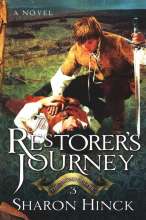
Besides the Bible, of course, I most often recommend Daily Light for the Daily Path (devotional book) and Climbing by Rosalind Goforth. Newer books I have recommended a lot in the past year are Queen of the Castle: 52 Weeks of Encouragement for the Uninspired, Domestically Challenged or Just Plain Tired Homemaker by Lynn Bowen Walker and The Restorer by Sharon Hinck. I’d recommend almost anything I’ve read, a lot of which you can find here.

Admit it, the librarians at your library know you on a first name basis, don’t they?

Not really. I read a lot of Christian fiction, but our library isn’t current with it, so I buy it and pass it on to my mother-in-law. Getting double duty out of books that way, plus frequent coupons, helps offset the cost. Now, when my kids were little and we went to the regular library programs for kids plus regularly checked out our own books, we knew the librarians pretty well.

Is there a book you absolutely love, but for some reason, people never think it sounds interesting, or maybe they read it and don’t like it at all?

Not that I remember specifically. I think some people don’t think they’d like the older missionary classics that I often refer to and quote from because of the older language and situations, but I would hope they’d give them a chance.

Do you read books while you do other things?

Sometimes. Funny, the Booking Through Thursday question today asked the same thing. I always take a book with me when I have any kind of a waiting time and when traveling. I keep a book in each bathroom. 🙂 If I am really into an exciting part in a book I will have it in the kitchen with me and read in between tasks while preparing dinner. Sometimes I’ll read while someone else is watching TV.

When you were little, did other children tease you about your reading habits?

No — it wasn’t really thought odd. Reading was strongly promoted at my elementary school.

What’s the last thing you stayed up half the night reading because it was so good you couldn’t put it down?

Usually if I read in the evenings I get sleepy. I do remember staying up pretty late not too long ago because I didn’t want to put the book I was in down — but I don’t remember what it was.

Let me know if you do this and I’ll come and read your answers.

(Graphic courtesy of the stock.xchng)

Booking Through Thursday: Goldilocks

btt2.jpg The Booking Through Thursday question for this week is:

Okay, so the other day, a friend was commenting on my monthly reading list and asked when I found the time to read. In the ensuing discussion, she described herself as a “goldilocks” when it comes to reading–she needs to have everything juuuuuust right to be able to focus. This caught my attention because, first, I thought that was a charming way of describing the condition, but, two, while we’ve talked about our reading habits, this is an interesting wrinkle. I’d never really thought about it that way.

So, this is my question to you–are you a Goldilocks kind of reader?
Do you need the light just right, the background noise just so loud but not too loud, the chair just right, the distractions at a minimum?

Or can you open a book at any time and dip right in, whether it’s for twenty seconds, while waiting for the kettle to boil, or indefinitely, like while waiting interminably at the hospital–as long as the book is open in front of your nose, you’re happy to read?

I’m more of a “Goldilocks” reader with non-fiction: I’m less able to concentrate or get anything out of it if there are distractions. But most fiction “grabs” me enough that I can read it in different conditions and with a certain amount of background noise. That’s one reason I love to bring a book to waiting rooms and such: reading is not only a pleasant way to pass the time, but it distracts me and helps me not to feel as nervous.

Book Review: Sometimes I Prefer to Fuss

It may look like book week for a few days here at Stray Thoughts. 🙂 I’ve finished three books in the last couple of weeks, but haven’t had time it discuss them yet.

Some years ago I read and enjoyed a book titled Sometimes I Prefer to Fuss by Verda Peet. When I tried to find a copy of it, though, I found it was out of print. I’ve kept an eye out for it ever since, and just recently discovered it in Amazon.com’s used books for just a few dollars.

The premise of the book can be found in the introduction:

The idea that missionaries are haloed saints, mature and perfected, above the sins of most mortals and so not needing much prayer, has done great disservice to the missionary cause. If you ever lived with missionaries you would know that their halos are askew. If I were to say that a missionary preaches the gospel, may (if female) put curlers in her hair, likes ice cream, travels a lot, longs for letters from home, can be thoughtless or domineering or depressed, perspires, has cakes that don’t always rise, never gets beyond the need of the Lord’s teaching, is concerned about her children’s upbringing and education and feels irritable in the heat, your first thought would be, “Sounds like a description of me.”

Exactly. James tells us Elijah was a man of like passions but we have trouble believing it. Our glamorization of missionaries blinds us to the need of down-to-earth prayer for down-to-earth details.

The title comes from the fact that God does send help when needed, even for “small” irritations like excessive heat and perspiration, and sticky clothes — but sometimes we prefer to “fuss” instead.

Mrs. Peet and her husband were missionaries in Thailand for about thirty years. Her book is an honest and often funny look at missionary life, but its lessons of faith are applicable to anyone.

There are so many places I marked in the book — I wish I could share them all. One thing that came up often was the need for wisdom in so many areas and the possibility of misunderstandings. For instance, even the simplest living arrangements of Americans can seem extravagant in jungle or tribal areas. One missionary who wanted to live as much like the people as possible did without a refrigerator, then overheard two of the nationals commenting that she did not get one because she was stingy. Another family who saved some of their best “goodies” from home to serve a visiting VIP heard that he later spread the word that the missionaries “lived too well.” So often they would like to just give the people material things they need, and they often do, but they don’t want to foster dependence on the missionary instead of the Lord.

Satan throws innumerable obstacles to keep people from believing or to stifle them when they do believe. The missionaries have to learn patience with a new believer’s struggling to “walk” in a faith totally foreign to anything he knows — just as a child stumbles and falls, so will a new believer until he matures. Practices that seem obviously wrong to Westerners with a heritage of a Judeo-Christian background, like premarital sex and using and selling opium, can take a while for a new believer from a different background to recognize as wrong. Then a new believer, or even one just showing an interest in Christianity, can face ridicule, ostracism, and persecution. There are thorny questions about what old practices are wrong, what a new believer should do when the demon priest declares an area or a day “taboo.” The consequences of violating a taboo are very real, but the believers can eventually learn to trust in God for protection.

With all the disappointment and heartache of those who “trusted” the Lord for the wrong reasons (like healing from a sickness when the demon rituals didn’t help) or those who did believe but fell away due to family pressure, there are also gems who have endured the refining fires to shine like diamonds. One believing lady, Celia, had a husband who was a professing Christian but not living very actively for the Lord. One day he showed up in their home with a second wife and moved her in, a common practice in their culture, but one that he should have known better than to practice as a believer. As a missionary lady came to comfort and encourage her through the Word, Celia said, “I thought I could never cook for her (the second wife) but I remembered “love your enemies,” and because of these words I overcame, and I cook and call her to eat.” I was convicted at my lack of “overcoming” minor trials by comparison.

Another quote that stood out to me was, “The trial of our faith is not to point out how faulty it is but to prove how trustworthy He is. I had always pictured God testing me to show how little I believed, but He has a more positive purpose — to increase my capacity to enjoy His faithfulness.”

Another “lesson” was to trust the sovereignty of God to work even through fallible leaders. There was an elected field council as well as a superintendent who were good men, but human like everyone else, whose temperament, background, training, quirks, and pet theories may effect their decisions. When they make a decisions that seems wrong or unfair, there is temptation to blame them. “If we see ourselves in the hands of men, we can expect to be miserable, but if we know ourselves to be in God’s hands, subject to His decisions, we can go on in peace.”

There is so much more — grace through trials and how the Lord uses them, dealing with fear, care of children, etc. This book is a good “peek” into the under-the-surface, real everyday lives of missionaries, but it is also an example of how the Lord uses “all things” to work together for good and to grow His children in grace and knowledge of Him.

Book Review: The Potluck Club Takes the Cake

The Potluck Club Takes the Cake by Linda Evans Shepherd and Eva Marie Everson is the third in a series about a group of friends from a church who started several years ago getting together for prayer and a potluck meal.

The characters and their storylines were established in the earlier two books. There’s Evie, or Evangeline, long-time church and town member, founder and acknowledged unofficial head of the Potluck Club. She’d dating her “old flame” from high school days, Vern, the sheriff, who is also the father of Donna, another member of the Potluck Club. Donna, unbeknownst to others, is not a believer and has several issues to work through — the abandonment of her mother, the abortion of a child years earlier that she still hasn’t gotten over, her father’s dating of Evie, attention from several males when she wants to be left alone, and her work as her father’s deputy. Vonnie is an older lady who is very close to Donna. Her son was taken away when he was born, and her mother told her the baby had died, all because she was prejudiced against the heritage of the baby’s dead father. In a previous book Vonnie was shocked to discover her baby was very much alive and grown and wanted to meet her. Vonnie’s husband was even more shocked — he hadn’t known that Vonnie was married before. Lizzie is just settling into the quiet serenity of an almost empty nest when one son’s family problems cause him to move back home, later bringing his wife and child with him. Then her brother has a crisis in his family, necessitating that Lizzie step in to provide care for her elderly mother. Goldie’s husband has been unfaithful for years and she finally calls him on it, moving out of the house. He begins counseling with the pastor and Goldie has to decide whether he is sincere and what she should do. And then there is Lisa Leann, newcomer, transplant from Texas, general busybody, on an all-out and obvious campaign to wrest the leadership of the group from Evie. And Clay is a local reporter who is interested in Donna and who speculates what the Potluck Club as a whole is up to.

Each chapter is told by a different character, with Clay’s observations in between chapters tying them all together. I like the set-up because you hear the different character’s voices and see events from different points of view.

When I began reading the first book, I thought, “Well, Christian fiction should have flawed characters, because we are all flawed,  but wow, these ladies are over the top!” I think, I hope, anyway that some of their character flaws are exaggerated for effect, especially Lisa Leann’s. And though the storylines may sound somewhat soap-opera-ish, Christians today do have to deal with several of the issues involved. The authors masterfully weave together each storyline ads the ladies help each other through each crisis and grow in grace and dependence on the Lord, and there are splashes of humor as well as poignant moments throughout. This was my favorite book in the series so far.

Booking Through Thursday: Statistics

btt2.jpg The Booking Through Thursday question for this week is:

There was a widely bruited-about statistic reported last week, stating that 1 in 4 Americans did not read a single book last year. Clearly, we don’t fall into that category, but . . . how many of our friends do? Do you have friends/family who read as much as you do? Or are you the only person you know who has a serious reading habit?

I am the only book-reader in my immediate family. 😦 I had visions of enjoying the classics with my kids, and we read a lot when they were little, we were regulars at the library, but somehow they all got away from the habit. My mother-in-law reads avidly and my mom did also when she was alive. Among my friends, there are several who do read books occasionally. Among my online acquaintances, though, there are many who read as much as I do and even more.

The melting point

The following is from Amy Carmichael of Dohnavur by Frank Houghton.

When the children of Dohnavur were really difficult, Amma [Amy)] sometimes told them of a day when she sorely grieved her mother.

I had been very willful and, as you know, the will of a child can be like steel. My mother did not know what to do with me, for I would not give in, and was not at all sorry. So at last she set me upon a green ottoman which was at the foot of the bed, and, perhaps to give me time to think, she said. “I am going out now.” Then she put on her bonnet.

And as she tied the ribbons of her bonnet I watched her hands moving in the dressing-table looking-glass. The table was across the corner of the room opposite the ottoman, so that when she stood with her back to me I could see her reflected in the mirror. And then I found myself looking not at her hands tying on the bonnet, but at her face.

Suddenly something melted inside me. In one moment I was in her arms, soft and sorry and wanting to be good. It was the look on her face, such a grieved look, that was too much for me.

And often since then I have thought that if when we sin we could see the face of the Saviour as in a mirror, we should never have the heart to grieve Him again.