Book Review: The Mother-Daughter Book Club

In The Mother-Daughter Book Club by Heather Vogel Frederick, sixth-graders Emma and Jess are best friends in Concord Massachusetts.

Emma loves reading and writing. Her parents are big Jane Austen fans who named their kids after her characters. Her father is a writer, her mother, a librarian.

Jess lives on a farm with her father and brothers. Jess’s mom is an actress currently working in NYC.

Emma and Jess are definitely not among the popular girls, who tease Emma about wearing hand-me-downs and call Jess “Goat Girl.”

One of the “mean girls,” Megan, was Emma’s friend years ago. But now their paths have diverged. Megan loves style and design, but her mother has dreams of math and science camp and MIT and Harvard for her.

Cassidy is a new student who loves sports, especially hockey. She’s tomboyish and doesn’t care at all about her appearance. Her mother was a super–model.

The moms cook up an idea that they’ll form a mother-daughter book club, and their first book will be Little Women by Louisa May Alcott.

None of the daughters wants to participate. Some of them clash with each other, some clash with their moms. But perhaps they can learn a thing or two from Louisa.

I don’t read many books for this age range, but a friend recommended this to me. I loved the tie-in with Louisa and Litttle Women. The girls even visit Orchard House in Concord, where Louisa lived and wrote Little Women. I also enjoyed how the girls learned and grew over the course of the book. Even the moms learned that they can’t make their daughters fit into their own “castles in the air” dreams.

The chapters all begin with a quote from Little Women and vary between the different girls’ points of view. At the end is a discussion guide, recipes, charts for planning goals, and information about starting a book club.

The only thing I didn’t like was the treatment of Mrs. Chadwick, the head “mean girl’s” mom and villain of the piece. Mrs. Chadwick seems fair game for names and derogatory comments about her anatomy from the parents as well as the girls. In one scene near the end, the girls and their moms turn the tables on Mrs. Chadwick and her daughter with some mean girls’ (and women’s) tricks of their own. I suppose, in a literary sense, this was their comeuppance. But I wish the moms had been better examples in this.

But other than that, this was an enjoyable book in many ways. It’s the first in a series of seven, each one built around a classic book. I like the idea and the characters, so I may try some of the other stories.

(Sharing with Carole’s Books You Loved, Booknificent Thursday)

Book Review: Wynema: A Child of the Forest

S. Alice Callahan is regarded as the first novelist of American Indian descent with her book, Wynema: A Child of the Forest. The book was published in 1891 when Callahan was 23; sadly, she died just three years later.

Her only foreword reads as follows:

TO THE INDIAN TRIBES OF NORTH AMERICA

Who have felt the wrongs and oppression of their pale-faced brothers, I lovingly dedicate this work, praying that it may serve to open the eyes and heart of the world to our afflictions, and thus speedily issue into existence an era of good feeling and just dealing toward us and our more oppressed brothers.

THE AUTHOR.

 The story begins with Wynema as a child amidst the peaceful habitations of her tribe. A Methodist missionary opened a school, but most of the Indians did not see the point of it. Wynema, however, was enraptured by the idea of learning. “His was the touch that brought into life the slumbering ambition for knowledge and for a higher life, in the breast of the little Indian girl.” She begged her father for a school in their own village, and he agreed. So the missionary, Gerald Keithly, sent for a woman to come and teach. The call was answered by Genevieve Weir, who believed, “God made the Indians as he made the Caucasian—from the same mold. He loves the work of His hands.”

As Genevieve tries to teach the Native children reading, English, and Christianity, she also learns their ways. When she laments some of the “barbaric” customs, Gerald wisely counsels her that white customs would seem just as barbaric to the Indians if they observed a white doctor or ballroom dance, etc., and that in many ways, they were more civilized than their white compatriots. Wynema and Genevieve become close friends.

But behind these peaceful and informative interactions, the Indians were being cheated out of money and land by the white government. Callahan shares the escalation of events leading up to the battle of Wounded Knee as well as the aftermath.

She has her main characters recognize the distinction between the kind white people who wanted to help and the others who wanted to oppress rather than lumping them all into on category.

I perused a few articles on Callahan and this book. Responses are mixed. Some felt that making Genevieve the main character, or at least equal in importance to Wynema, diminished the Native American influence. But since it was written partly to white people to show that the Native Americans weren’t “savages” and to chronicle the wrongs done to them, it seems natural to show this through a white woman’s eyes being opened as she comes to know and love them.

Another article (which I’ve spent a lot of time trying to find again and have not been able to [Update: it was not an article but the introduction to the book in the Amazon edition]) said that the book rejects the Christianization of the Native American as well as the colonization. But it seemed to me that Callahan presented both. Callahan includes a letter by Hadjo saying that “The Indians have never taken kindly to the Christian religion as preached and practiced by the whites. Do you know why this is the case? Because the Good Father of all has given us a better religion—a religion that is all good and no bad—a religion that is adapted to our wants” and that they have their own Messiah. But Wynema and others accepted the Christian message, and the general tone of the work is Christian.

Perhaps because Callahan had a Native American father and a white mother, her desire seemed to be to bring about reconciliation and understanding rather than further animosity. Part of reconciliation is acknowledging the wrongs done to another.

I’m glad that I discovered this book this year. I am counting it for the Classic by a Person of Color Category of the Back to the Classics challenge.

(Sharing with Carole’s Books You Loved)

Book Review: Summerhills

Summerhills is the sequel to Amberwell by D. E. Stevenson. This book focuses primarily on three of the adult Ayrton children.

Roger is the oldest and the heir since his father died. But he assured his four siblings that Amberwell would always be the family home and they would always be welcome. In the last book, his wife had died in the London bombings, leaving him with their infant son, who nearly died as well. Since Roger was in the military, he sent his son, Stephen, home to Amberwell to be taken care of by his sister, Nell. In this book, Stephen is approaching the age to go to boarding school. But Nell can’t stand the thought of Stephen being sent away. Roger had inherited his wife’s fortune and had been pondering the best way to use it. Now he decides perhaps opening a boarding school nearby would help others as well as himself and Stephen. Summerhills is the name of the new school, and almost all of Roger’s time on leave is spent preparing for the school: consulting with a builder, finding a headmaster, etc. Roger had no interest in other women. He felt his wife was the only woman he would ever love. But perhaps becoming reacquainted with a childhood friend will reawaken the part of his heart that he thought was closed.

Nell had kept Amberwell afloat all during the war. With the loss of most of the staff during the war, Nell continues all of the tasks involved in attending to Amberwell while also caring for her nephew and her confused mother. Nell had always been the shyest Ayrton, content to be at home. When her brother Tom’s friend, Dennis, comes to visit, he is drawn to her. But he knows he will have to win her slowly, through friendship, before he can share his heart.

Ann had been missing from a large part of the last book after her aunt more or less pushed her into marrying a man that her parents would not have approved of. In time, this man proved abusive and eventually died. Ann did her best to provide for her young daughter on her own until the rector of their village found her and urged her to come home. Now she keeps house for the rector. The new headmaster is an old friend, and Ann senses he would like for their relationship to develop into something more. But marriage has been ruined for her.

Tom, the other brother, is away at sea throughout the book but is mentioned. Connie, the oldest sister, had been married and had three children in the last book, and had gotten hold of a book advising against thwarting or correcting children. Consequently, her children are rude, uncontrolled little monsters.

There are comic scenes, often involving Connie’s children, a pretty young governess, and the banter between Nanny and Mrs. Duff, the cook. There’s not a great deal to the plot besides getting the school ready and the various romances. But it’s a sweet, cozy book with some touching moments.

A couple of characters’ fates were left up in the air. There is no other sequel, but, according the this site, some from Amberwell make an appearance in a later book, Still Glides the Stream.

Objectionable elements: a few “damns” and mentions of blacks and Chinese that would be considered racist today. Though I don’t condone such references, I wouldn’t avoid a book with them any more than I would avoid any book where the characters do something wrong in some way.

I listened to the audiobook, wonderfully read by the same reader who narrated Amberwell, Leslie Mackie.

(Sharing with Carole’s Books You Loved, Booknificent Thursday)

Book Review: Breaking Anxiety’s Grip

Dr. Michelle Bengston writes from her own experience as an anxiety sufferer, a neuropsychologist, and most of all, as a Christian, in Breaking Anxiety’s Grip: How to Reclaim the Peace God Promises.

Everyone experiences worry, anxiety, and fear on occasion to some degree. But for some, they are regular companions.

After defining terms, Dr. Bengston discusses what contributes to anxiety, etc., brain chemistry, heredity, example, our own thoughts and heart, and Satanic influence. Interestingly, “While brain chemistry can impact mood and behavior, thoughts (e.g., ‘This place isn’t safe,’ ‘I can’t handle this any more,’ ‘I’m overwhelmed,’ etc.) actually impact brain chemistry” (p. 35).

The author spends the rest of the book explaining “the tools to effectively exchange our worry, anxiety, and fear for his peace” (p. 28). She doesn’t spout empty platitudes: she has put these principles to work in response to cancer diagnoses for herself and her husband, problems in her practice, a son’s major obstacles in his career path, as well as “everyday” problems and concerns. Her tools are based on the sure foundation of Scripture.

I had read a few of Michelle’s posts when she participated in some of the same of the same blog link-ups I participate in. I always enjoyed what she had to say, so when I saw she had written this book, I got it. It sat on my shelf for a while, then I picked it up, then set it aside for another book. When I finally delved into it in earnest, I knew God had led me to read it at just the perfect time. The coronavirus pandemic began just after I started this book, and the chapters I read then helped me immensely in the uncertainty and anxiety of that unprecedented situation.

Here are just a few of the principles that most helped me:

Dealing with worry, anxiety, and fear isn’t a one-time event: it’s a process.

I’m not in control. God is. He knows best and knows the big picture. What He allows may not be what I would have chosen, but He has a purpose in it for my good.

“When concern about the future comes, we can recognize it and then refuse to entertain it. We can determine to stay in the present and in God’s presence, trusting in his perfect plan” (pp. 70-71).

We can reframe our worried thoughts to focus on God’s provision: “Instead of saying, ‘I’m worried I won’t be able to make ends meet,’ exert your trust in God and declare, ‘God, I’m trusting you to provide because you promised to supply all my needs according to your glorious riches.’ Or instead of saying, ‘I’m afraid to be alone,’ look to his promises and declare your trust in him: ‘Thank you, God, that you promise you will never leave me and will always be with me so I won’t be alone'” (p. 119).

“God’s peace is not the calm after the storm. It is the steadfastness during the storm. It is in his presence that we can find peace in the midst of the storm” (p. 140).

“When self-protection is our goal, there’s no room for trusting God’s protective love. That self-protective stance leaves us lonely and unwilling to invite others in, including God. Fear is not from God. It is a direct attack from the one who wants to prevent us from drawing close to God or knowing his trustworthy love. In reality, we are powerless to protect ourselves. Fear doesn’t protect. So self-protection is futile. What we really need is a sure protector—and only a trustworthy God can be that for us” (pp. 171-172).

“Emotions are the outward manifestations of the thoughts we believe. So when we feel anxious, it’s because we’ve believe the thoughts that prompt anxiety. Instead of acting on our feelings, we must speak out against the thoughts that caused them. We must recognize that the thoughts are from the enemy, refute them, and speak back to them” (p. 186).

2 Timothy 1:7 says, “God gave us a spirit not of fear but of power and love and self-control” (the KJV and NKJV says “sound mind”). Michelle spends a lot of time unpacking and applying those verses.

There were just a couple of places in the book where I had a question mark or maybe would have had a somewhat different view. And I wish she would have said a little more about anxiety that seems to come out of nowhere, not triggered by worry, as described here. But whatever the cause, the solution of taking our thoughts captive and applying God’s truth would be the same.

Overall, however, I found this book a great encouragement to my faith. Much of it was truth I already knew, but as was said earlier, fighting against anxiety is an ongoing process rather than a once-for-all victory. This book is an excellent tool and help in the fight.

(Sharing with Grace and Truth, Literary Musing Monday, Hearth and Soul,
Senior Salon, Global Blogging, InstaEncouragement, Worth Beyond Rubies,
Carole’s Books You Loved, Booknificent Thursday)
 

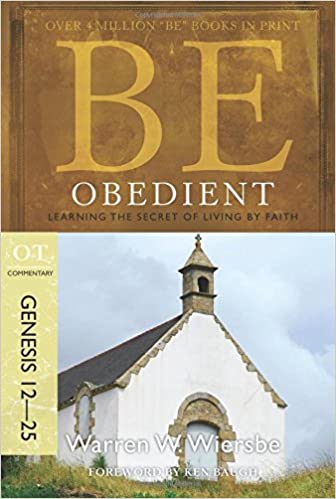
Book Review: The Wonder Years: 40 Women Over 40

The Wonder Years 40 Women over 40 The Wonder Years: 40 Women over 40 on Aging, Faith, Beauty, and Strength is a collection of essays compiled by Leslie Leyland Fields .

Many of the authors are well known (Elisabeth Elliot, Joni Eareckson Tada, Madeleine L’Engle, Ann Voscamp, Brene´ Brown). A few have passed on. Some are bloggers. Most have published a book.

They come from a variety of faith communities. I wouldn’t agree with every theological point or endorse every person or ministry represented, but I appreciated the perspective of each writer on midlife and aging.

Some of the entries came from published books; others appear to be written for this collection.

The essays cover just about every topic one could think of in connection with aging as a Christian woman. Physical issues. Changes in marriage, new marriage, new singleness. New challenges. Attitude adjustments. The empty nest. Care-giving. Preparing for our inevitable end.

As I read the first entries, I found several instances of “doing new big things.” I appreciated the emphasis that life doesn’t end at 40—or 50 or 60. But I hoped all the essays weren’t going to be like this. I didn’t particularly want to learn to ride a horse, row a canoe for ten hours, climb a mountain, move to a different country, or start a major ministry any more at this stage of life than I did when I was thirty. Or twenty. Some of us like more sedate lifestyles. I looked back at the table of contents and saw that this beginning sections was appropriately labeled “Firsts.”

The next section is labeled “Lasts.” This stage of life brings some things to an end. Some are laid aside gratefully, other regretfully.

The last section’s title and theme is “Always”—things that ring true at any age but perhaps became more poignant or are brought more into focus the older we get.

To give you just a sampling, here are some of the quotes I highlighted:

But maybe all this is more than the universal human hunt for the fountain of youth and innocence. Maybe it’s something more modest, more possible. Maybe we older women just want to be seen again. Leslie Leyland Fields, Introduction

It takes courage to stop and take stock of who we are, where we’ve been, and where we’re going. It takes strength to keep our hearts open. It takes fearlessness to keep questing after the good, the beautiful, the true. We’ll do exactly that in these pages, knowing that no matter our age, it’s never too late to keep becoming the women God wants us to be. Leslie Leyland Fields, Introduction

I want to maintain the balance between foolish risk and boring safety. I dread growing stale, losing energy. I know my senses need awakening. Luci Shaw, “Rowing into the Wild”

At fifty-one, I was learning that maturity involves living with unmet needs and unanswered questions. I began to realize that in beauty or in tragedy, God alone is in control. He is the source of my real security. Sheila Wise Rowe, “Awakened to Adventure”

Unresolved regret is a leech that steals from our present in order to feed the pain of our past, hindering our future in the process. Michelle Van Loon, “The Gift of Regret”

As the Creator of years and time, he advises us to “number our days,” not to count down to retirement, but to “gain a heart of wisdom” (Psalm 90: 12). Patricia Raybon, “Answer the Phone”

When we get old, in many situations we must either act foolishly or look foolish. It may be wise to walk more slowly, carry a cane, whatever else is needed. Even if it looks foolish to onlookers, to be prudent, we must change our ways to match our season. We needed grace to be diminished. Win Couchman, “The Grace to Be Diminished”

If you’ve read or listened to Elisabeth Elliot much, you’ve heard her talk about offering whatever happens to us up as an offering to God. Her entry here talks about the origin of that concept for her, something I had not heard before. I found that was because this entry was from the only book of hers that I had not read: A Path Through Loneliness.

Many of the entries are humorous, many are challenging. I found myself nodding along in several places, and tucking away thoughts for the future in others.

Despite my light-hearted (but true!) comment about not wanting to face certain kinds of challenges at this stage of life, I agree with Luci Shaw that I don’t want to become stale. I want to keep growing, learning, being useful.

I loved that the title proclaims this season a time of wonder. There’s still a lot of life left in us “women of a certain age,” a lot to learn, a lot to do. We become more settled in some areas, but we can always find new areas to serve and show love to others.

My blog friend Michele also reviewed this book here. I don’t remember for sure, but her post may have been what prompted me to put this book on my TBR list.

(Sharing with Booknificent, Grace and Truth, Hearth and Home, Global Blogging,
Senior Salon, Literary Musing Monday, InstaEncouragement, Worth Beyond Rubies,  Carole’s Books You Loved, Booknificent Thursday)
 

The Louisa May Alcott Reading Challenge

Louisa May Alcott Reading ChallengeTarissa at In the Bookcase hosts the Louisa May Alcott Reading Challenge in June. You can read all the particulars here. She’s also offering a nice little prize here.

Louisa is one of my favorite authors, so I am happy to be joining in again. I plan to read:

  • The Mother-Daughter Book Club by Heather Vogel Frederick, a modern story about four girls who read through Little Women with their moms.
  • Eight Cousins by Louisa
  • Rose in Bloom, the sequel to Eight Cousins, if there’s time.

I’ve read Little Women multiple times, Little Men and Jo’s Boy’s just a few, but some of Louisa’s other books only once. So I wanted to reread a couple of those this time.

If you’ve wanted to read, or reread, something by or about Louisa, now is the perfect time!

Book Review: Amberwell

AmberwellI had not heard of D. E. Stevenson until a few years ago. I’ve seen her name mentioned favorably, but had never felt inclined to check our her books. But then Hope‘s mention of Amberwell led me to try it.

Amberwell is the name of the house owned by multiple descendants of the Ayrton family in Scotland. The residents in this book have five children, two boys from a previous marriage and three girls. The parents are aloof, authoritarian, and imperious. The children are kept in the nursery much longer than usual, and the parents don’t attempt to get to know them well.

But the children are allowed to roam free on the estate, and spend most of their time outdoors playing all sorts of imaginative games.

The next section of the story jumps ahead ten years. The two boys are in the service during WWII. One daughter has married, one’s whereabouts are unknown, and one is left to keep things together on the home front. Each faces their own struggles and heartaches.

Amberwell falls into disrepair due to shortages of supplies and manpower. But it draws each of the children back like a beacon.

My thoughts:

It took me two or three chapters to get into the story, but once I did, I loved it. The last third or so of the book, I wanted to set everything else aside and just read.

At first I wondered if this was a children’s book, not only because the children were the main characters, but also because the writing seemed simple. But by the next section, the writing and the plot shifted into a higher gear.

There was one odd place where one of the girls witnessed something untoward from their father, but nothing was ever said about it again.

I listened to the audiobook read exceptionally well by Leslie Mackie. She has a lovely, soft Scottish accent but could bring out the brogue with some characters. That’s one advantage to audiobooks: I don’t usually think in the accent of the characters when I’m reading, unless the dialect is written well. But hearing a whole book set in Scotland with a Scottish accent really added to the enjoyment.

I’m delighted to have discovered D. E. Stevenson, and now I have a whole list of her books to explore. In fact, I’ve already started on the sequel to Amberwell, Summerhills.

I’m counting this book for the Back to the Classics Reading Challenge under the Classic About a Family category.

(Sharing with Carole’s Books You Loved, Booknificent)

Book Review: A Season to Dance

When I saw Susan’s review of A Season to Dance by Patrica Beal, I wasn’t sure if I’d be interested in the story. But I was touched by the author’s testimony of how she became a Christian during the course of writing the book. So when I saw the ebook on sale for the Kindle app, I decided to give it a try.

In this novel, Ana Brassfield is a ballerina with dreams of dancing at the Met one day. She’s happy in her relationship with landscape architect Peter. But her old boyfriend, Claus,  is in town to dance Romeo to her Juliet. Ana is conflicted because she never knew why Claus left ten years ago. And though she doesn’t want to be, she finds herself still attracted to Claus.

But a betrayal ends her relationship with Peter and sends her traveling to Germany. New challenges and relationships rise and fall. A chance meeting with another American and a tract lead to Ana reading the Bible, but she doesn’t understand most of it.

Many people live like Ana, pursuing dreams and relationships only to find that nothing satisfies. One of the things Ana pursues are men. In this book she is torn between two, but a side comment reveals “for years and years, I’d kept looking for that first-love magic. Forever looking—from bed to bed—but never finding it.” Since a lot of people do live this way, I didn’t have a problem with that part of Ana’s journey being mentioned. If someone’s main problem was theft, we’d see them stealing. Like the woman at the well in John 4, Ana’s main temptation was men. Still, I could have used less mention of it. Thankfully there were no explicit scenes. I don’t read many romances, so statements about how someone’s kisses taste and phrases like “nibbling my wet lips with a sigh” kind of make me cringe.

Aside from that aspect, though, I was touched by Ana’s journey. Patrica writes how she came to know the Lord while writing this book here. I appreciated that Ana’s spiritual experience was a gradual one, with understanding coming in bits, and willingness coming a little later. I think it’s that way for most people rather than one sudden flash. And I really liked that the author was clear about salvation. I know every Christian book doesn’t have to contain the plan of salvation, and there are times a more subtle message is appropriate. But sometimes when authors try hard not to spell out what salvation and conversion involve, they make it unclear and confusing.

Like Ana, the author danced ballet and lived in both Georgia and Germany, so her writing is enhanced by those experiences. I don’t know much about ballet, and I enjoyed a peek into that world. One aspect I particularly liked was that Ana’s fiance worked at Calloway Gardens in GA, one of my favorite places from the few short years we lived near Atlanta.

One of the characters contracts Huntington’s disease, and the author described the heartbreak of that illness and its effects in a realistic way.

If it weren’t for the heavy sexual aspect of this book, I’d have no problem recommending it. As I said, it’s not explicit, but it’s mentioned quite a bit. I think that part of Ana’s life could have been conveyed with a lot less information. But I loved Ana’s gradual transformation and growth.

(Sharing with Carole’s Books You Loved, Booknificent)

Book Review: Over to Candleford

Over to CandlefordOver to Candleford is the second book in Flora Thompson’s semi-autobiographical Lark Rise to Candleford Trilogy.

Candleford is a bigger town about eight miles away from the village of Lark Rise where Laura’s family lives. For years, Laura heard offhand plans about maybe going over to Candleford one day. Then finally it happens.

Laura’s father hires a cart, and the whole family drives over to visit relatives. Laura and her brother Edmund are fascinated by the new things they see. They are a bit intimidated by their relatives, though. Both families they visit are more well-to-do than Laura’s. The first has so much excess that Laura doesn’t feel comfortable. The second family is less ostentatious and more thoughtful and kind, and Laura feels more at home.

Later, Laura’s mother asks if Laura and Edmund think they could walk to Candleford by themselves. I can’t fathom sending children that young (nine and eleven) on an eight mile walk alone. But they make it.

This starts Laura on several visits to Candleford. One of my favorite parts is when she discovers a pile of old books in the attic and then discovers her uncle loves to read as much as she does.

Every afternoon when her cousins could be persuaded to go out or do what they wanted to do without her, she would tap at the door of her uncle’s workshop and hear the familiar challenge, ‘Who goes there?’ and reply, ‘Bookworms, Limited,’ and, receiving the password, go in and sit by the open window looking out on the garden and river and read while her uncle worked.

Laura’s family might seem a little rough to modern readers. They are not unkind, but they don’t coddle their children. “Her mother was kind and sensible and loved her children dearly, but she did not believe in showing too much tenderness towards them or in ‘giving herself away’ to the world at large.” When a neighbor tells Laura, “Never you mind, my poppet. Good looks ain’t everything, and you can’t help it if you did happen to be behind the door when they were being given out,” her mother tells her later, “You’re all right. Always keep yourself clean and neat and try to have a pleasant, good-tempered expression, and you’ll pass in a crowd.”

Laura starts to feel less valued than the new babies, until her mother finally treasures the bond they share in remembering early days and people that the youngest can’t.

When Laura turns thirteen, that’s about the time girls in the village found work outside the home to help support the family. But Laura is unsuited for many of the lines of work open to her and feels like a failure. Then an unexpected opportunity arises.

There is a little more plot to this book than Lark Rise, the first one. But there’s still a lot of description and short vignettes of people and customs.

I enjoyed the opening of new horizons to Laura in visiting a bigger town and unfamiliar people. I also liked her arc from a girl into a teenager.

Thompson also shares the changes that occurred during her lifetime.

They were still much as their forefathers had been; but change was creeping in, if slowly. A weekly newspaper came into every house, either by purchase or borrowing, and although these were still written by educated men for the educated, and our hamlet intellects had sometimes to reach up a little for their ideas, ideas were slowly percolating.

I smiled at this about bicycles:

But, although it was not yet realized, the revolution in transport had begun. The first high ‘penny-farthing’ bicycles were already on the roads, darting and swerving like swallows heralding the summer of the buses and cars and motor cycles which were soon to transform country life. But how fast those new bicycles travelled and how dangerous they looked! Pedestrians backed almost into the hedges when they met one of them, for was there not almost every week in the Sunday newspaper the story of some one being knocked down and killed by a bicycle, and letters from readers saying cyclists ought not to be allowed to use the roads, which, as everybody knew, were provided for people to walk on or to drive on behind horses. ‘Bicyclists ought to have roads to themselves, like railway trains’ was the general opinion.

Yet it was thrilling to see a man hurtling through space on one high wheel, with another tiny wheel wobbling helplessly behind. You wondered how they managed to keep their balance. No wonder they wore an anxious air. ‘Bicyclist’s face’, the expression was called, and the newspapers foretold a hunchbacked and tortured-faced future generation as a result of the pastime.

There’s always resistance to any progress, and then it becomes normal.

As a homebody myself, I appreciated this:

To the women, home was home in a special sense, for nine-tenths of their lives were spent indoors. There they washed and cooked and cleaned and mended for their teeming families; there they enjoyed their precious half-hour’s peace with a cup of tea before the fire in the afternoon, and there they bore their troubles as best they could and cherished their few joys. At times when things did not press too heavily upon them they found pleasure in re-arranging their few poor articles of furniture, in re-papering the walls and making quilts and cushions of scraps of old cloth to adorn their dwelling and add to its comfort, and few were so poor that they had not some treasure to exhibit, some article that had been in the family since ‘I dunno when’, or had been bought at a sale of furniture at such-and-such a great house, or had been given them when in service.

This was a sweet story, and I look forward to the next one, Candleford Green.

(Sharing with Booknificent Thursday, Carole’s Books You Loved)

Book Review: Castle on the Rise

Castle on the Rise by Kristy Cambron Castle on the Rise is the sequel to The Lost Castle novel by Kristy Cambron. I think they could be read as standalones. But I’d recommend reading both.

Laine Forrester travels to France to be the matron of honor at her best friend’s wedding. The castle setting and the events leading up to the wedding make it seem like something out of a fairy tale.

But a couple of events bring the fairy tale crashing into real life problems. For one, the groom’s estranged brother from Ireland, Cormac, shows up just before the wedding to ask him to come back to the Foley home for an urgent need.

Laine’s friend asks her to come along. Laine hasn’t told her of her own crisis and crossroads. Now doesn’t seem like the time. But the invitation is a perfect excuse to get away for a while with her adopted daughter, Cassie.

The Foleys have been bequeathed a castle from a customer’s will. They didn’t know her well and can’t figure out why she willed them a castle. Cormac’s father, Jack, just wants to call an auction house and sell everything. But Cormac feels he needs to find out what’s behind the gift. Laine’s father was an antique dealer, so she helps Cormac evaluate which items are of value.

This novel weaves together stories from three timelines, all revolving around the castle. One takes place in the 1790s during an uprising between the Irish and English. Maeve’s family owns the castle, but her father is immobilized in grief over the loss of his wife and son. So she has to take the reins. One of her first tasks is to deal with a wounded enemy.

Another strand of the story takes place during the 1916 Easter Rising. Issy’s family now lives in the manor house, but her brother goes against her father’s wishes to join the rebels. Issy feels compelled to join him, and her budding interest in photography helps document events.

As Laine and Cormac investigate, they discover more of the castle’s surprising past. They each take steps to overcome their own past wounds to be open to new possibilities.

I knew, of course, that the Irish had fought against English control at intervals. But I didn’t know many of the details. I enjoyed learning some Irish history through this book. But I also enjoyed the stories in each timeline and the obstacles each character had to overcome.

And often, whenever I cam to a stopping place, music from the Irish Tenors sprang to mind for the next little bit. 🙂

A few quotes:

[Sean] was of a sort to look far down a path—he always said, to see the good that could come of something God was crafting behind the scenes, one had to keep an eye out for it. And Issy needed that view at present because she failed to see it (p. 50).

The talk of luxuries went far deeper than a gift of fruit. Maeve knew that. Theirs were the longstanding divides between the rich and poor, Protestant and Catholic, Anglo and Irish, even oppressed and free—for hundreds of years. They’d bled into the very earth beneath their boots, and it was tasked to her to either uphold or endeavor to change attitudes around them (p. 162).

Writers are the caretakers o’ history, Byrne. We document the livin’ and dyin’ of the human cause. But our pen, however noble, however well-intended, will always bleed the color of our convictions (p. 181).

I also enjoyed Kristy’s notes at the end concerning what led to her writing the novel, her research trip to Ireland, and the true historical details she included.

All in all, this is another great book by Kristy with three stories in one.

(Sharing with Booknificent Thursday, Carole’s Books You Loved)