Cultivating Awe of God’s Word

Cultivating awe of God's Word

Are you in awe of God’s Word?

If you’re like me, you’d probably say, “Not as often as I’d like to be.”

There are times when our meeting with God is special, when He gives us just what we need in the moment, we notice something new, or we’re blessed by an old, familiar, but beloved passage.

But other times—we’re sleepy, distracted, hurried, or we’re slogging through a book like Leviticus.

I was struck recently by a quote from G. K. Chesterton in Winter Fire: Christmas with G.K. Chesterton: “The world will never starve for want of wonders; but only for want of wonder.” Though he wasn’t talking about the Bible there, I felt what he said was true of the Bible as well.

Chesterton’s quote reminded me a couple of verses:

How precious to me are your thoughts, O God! How vast is the sum of them! (Psalm 139:17.

My heart stands in awe of your words. I rejoice at your word like one who finds great spoil (treasure, plunder) (Psalm 119:161a-162).

So what can we do when we feel less than awed by God’s Word?

Employ practical helps. It’s hard to be awed when we’re sleepy or distracted. Getting enough sleep, choosing a more wakeful time of day, taking a shower or doing a few minutes of exercise first can help us be more alert. Removing distractions as much as possible helps: turning off the phone, choosing a time you can be somewhat alone, etc.

Pray. Psalm 119:18 is an apt prayer: “Open my eyes, that I may behold wondrous things out of your law.” When we’re dull in spirit, we can appropriate another of the psalmist’s prayer: “I am greatly afflicted; Renew and revive me [giving me life], O LORD, according to Your word” (Amplified Version).

Remember:

Who is speaking to us. I’m inspired by what George Guthrie says here: “I am still blown away by the idea that the God of the universe wants to communicate with us on a daily basis and that he has chosen to do so in this miraculous book we call the Bible.” As we meditate on who He is and the ways He has worked in our lives, our hearts will warm towards Him and His Word.

That God chose these specific words for us. Psalm 139:17-18 says God’s thoughts are vast, more than the sand. One of our former pastors used to say that the Bible is divinely brief. Out of the multitudes of things God could have said, He inspired and preserved in the Bible what He wants us to know. So each sentence has a purpose.

The cost and privilege of having a Bible in our own hands. Most people didn’t until after the printing press was invented in 1440 AD. Even when it became widely used, books were too expensive for many people to have. When books became more widespread, brave men like William Tyndale labored and gave their lives to have it translated into English that everyday people could read.

Past experiences with the Bible. Remembering some of those special times in the Bible that I mentioned at the beginning can reawaken our desire for it to speak to us again.

Our enemies: the world, which tries to turn our heads; our flesh, prone to wander, to laziness, to self-indulgence; and the devil, who wants to deceive and distract us. It’s no wonder we often have to fight for time and attention while reading the Bible. But the struggle is worth it.

Slow down. Sometimes we rush through our time in the Bible just to get it done or to get to other tasks. Reading a smaller amount and taking time to reflect on it is better than zipping through several chapters without retaining anything.

Ask why this passage is in the Bible. If God inspired all of Scripture, each passage is there for a purpose. What does it tell us about God?

Begin with hymns or praise. I’ve often been encouraged by missionary and writer Elisabeth Elliot’s confession in On Asking God Why: “When I stumble out of bed in the morning, put on a robe, and go into my study, words do not spring spontaneously to my lips–other than words like, ‘Lord, here I am again to talk to you. It’s cold. I’m not feeling terribly spiritual. . . .'” She found help by reading through hymns or psalms.

Get help from a good study Bible, commentary, or study group. All three have helped me by giving some background or explanation of the passage or pointing out things I overlooked in my own reading.

Keep reading in spite of feelings, or the lack of them. Another former pastor said that one of his best times of prayer began with his confession that he didn’t feel like praying. It often happens that way with Bible reading, too. We might not feel awe-inspired as we begin. But the Bible says it is living and active (Hebrews 4:12). As we read, God speaks to us and enlivens us. Even if we don’t feel any differently after reading, God has fed us.

Thank God for what we read. We often divide our quiet time with the Lord into prayer and Bible reading. But we can integrate those activities. When we read of God’s love, we can thank Him for sharing His love with us. When we read an example of His love, power, or wisdom, we praise Him for them right as we read. We can turn some of the verses into prayer and praise. Awe of God’s Word is not an end in itself, but leads us to awe of our God.

In the Everyday Gospel Christmas Devotional, Paul David Tripp says:

The beginning of Matthew presents us with a majestic one-time moment in history that you shouldn’t run past in your desire to complete your daily Bible reading. God has recorded and preserved it for you because he wants it to leave you in gratitude and awe. And that awe is meant to capture your heart with such force that it changes the way you think about who you are and how you live your life. (December 16 reading).

Awe in our Bible reading doesn’t just help us enjoy it more. As Tripp says, awe captures our hearts in order to change us. Awe is part of beholding Him: “And we all, with unveiled face, beholding the glory of the Lord, are being transformed into the same image from one degree of glory to another” (2 Corinthians 3:18).

“The world will never starve for want of wonders; but only for want of wonder,” Chesterton said. There is much to inspire awe and wonder in the Bible. May God give us eyes to see and hearts to understand.

awe of God's words

(I often link up with some of these bloggers.)
One Book That Can Speak to Everyone

One Book That Can Speak to Everyone

A few years ago, I attended my first writer’s conference. I hadn’t given any thought to attending one until I learned of a small one in a town where I used to live. I decided to try it out, and it spurred me to get serious about my desire to “write a book someday.”

I kept hearing at that conference that publishing was not what it used to be. Writers could no longer simply finish a manuscript and send it to a publisher, who would do the rest. Now publishers want potential authors to have an audience before their company will consider taking on a book.

Since shortly before that conference, I’ve been reading books, blog posts, magazine articles, and listening to podcasts about writing and publishing.

One piece of wisdom I’ve seen over and over is that telling a potential agent or publisher our manuscript is for “everyone” is a fast route to a closed door. Authors are advised to be as specific as possible in the audience they aim for.

I confess I struggle with this a little. For several years I wrote a newsletter for the ladies of the church we attended. I’m used to writing to women of all ages and stages. Occasionally we’d have an article focusing on one aspect of womanhood or another–single women, young wives and moms, older women—but most of what was written was applicable across the board. I’ve had the same approach with this blog.

Some of my favorite books seem the same way. The authors may have had a specific age group in mind, but it’s not obvious to me as I read their books. People of various ages and situations have bought certain books for years.

This trend towards specific audiences has led some books, like Gary Chapman’s Five Love Languages, to be transformed into versions for parents of children. parents of teens, singles, couples, men, and women. I wondered how he managed to write the same material for all these different groups. The illustrations would likely change in each, but it seems the basic principles would be the same.

Similarly, Stormie Omartian’s The Power of a Praying Wife led to the power of a praying husband, praying woman, praying mom, praying kid, praying teen, praying grandparent, and more.

In my more cynical moments, I wonder if this converting general books to several different audiences is a ploy of publishers and their marketers to sell more books.

But I can see that it would be helpful to take general principles and apply them to different specific situations.

These musings led me to this thought: there is one book that’s good for any age, gender, or life situation. The Bible is inspired and “for teaching, for reproof, for correction, and for training in righteousness” (2 Timothy 3:16).

There are study Bibles packaged in camouflage or sports paraphernalia for boys and pink or unicorns for girls. Bibles have been designed and illustrated for teens, women, men, even outdoorsmen.

The packaging would appeal to different specific groups, as would any devotional material or added notes. Those things can be useful. But I wouldn’t say they are truly necessary. The Holy Spirit can help us understand and apply the Bible at any age and stage of life.

Someone has said that the Bible is shallow enough for a child to wade in, but deep enough for an elephant to swim in. (1)

There are parts a child can understand. God told parents in the Old Testament to teach His Word to their children and grandchildren. Paul says Timothy has “from childhood . . . been acquainted with the sacred writings, which are able to make you wise for salvation through faith in Christ Jesus” (2 Timothy 3:15).

Of course, there are parts a child would not understand. There are parts the wisest theologian doesn’t understand completely. But I can testify, coming up on fifty years of reading the Bible with some degree of regularity, that it speaks to us and is applicable to us all through life. As we read it through different life stages, we continue to find applications to our situations.

The Bible is even good for those who oppose it. Psalm 119:130 says, “The entrance of Your words gives light; It gives understanding to the simple.” Viggo Olsen tells in his book, Daktar, how he and his wife promised her Christian parents that they would look into the claims of Scripture. However, they secretly planned to disprove the Bible so they could get her parents off their backs about Christianity. Instead, they became convinced the Bible was true and God was real. They became Christians and later went as missionaries to Bangladesh.

The same thing happened to Lee Strobel. He and his wife were both atheists and planned to remain that way. When his wife became a Christian, he tried to disprove the Bible’s reliability and claims with the zeal of the investigative reporter he was. He says in his book, The Case for Christ, that the more he searched, the more convinced he became that the Bible was true after all. He became a Christian and went on to become a minister and wrote several more books about Christianity.

There are multitudes of reasons for reading the Bible: it provides light, joy, comfort, encouragement, builds our faith, helps us fight sin, tells us more about God. But the primary reasons for reading Scripture are that it is God’s message for us and our main means of getting to know Him.

If you’ve never read the Bible, I encourage you to. You might start with one of the gospels. John gives the most in-depth look at the Son of God and His ministry.

If you’ve had a stop-and-start pattern of Bible reading, don’t be discouraged. Many of us tried in fits and starts before getting into some kind of regular pattern of Bible reading. I shared tips for finding time to read the Bible here. I’d advise starting small and simple. Too often, we make grandiose plans but then can’t keep up with them.

If you’ve been reading the Bible regularly for years, wonderful! Keep at it! There’s always more to learn, but we need the reminders of old lessons, too. If you feel you’re in a devotional rut, these tips might help.

Whatever stage of life you are in, the Bible can speak to you.

Psalm 119:130

_____

(1) Variations of this statement have been attributed to Augustine, Gregory the Great, Jerome, and John Owen, among others. Andy Naselli tells why he thinks Gregory the Great is the original source here.

(I often link up with some of these bloggers.)
Be Careful of Your Strengths

Be careful of your strengths

I don’t consider myself to be good at public speaking. Even in a few interviews I’ve done, when I’m responding and not talking by myself, I don’t feel I do well. I don’t think quickly “on my feet.” It takes me a moment to process and respond (which is one reason I like writing better).

The nerves usually calm down exponentially once I get started. But for days afterward, I think of things I should have said or could have said better.

But I want to be faithful with opportunities the Lord gives me. So when they come, I spend time in prayer while I prepare. It comforts me that Paul told the Corinthians that he had been with them “in weakness and in fear and much trembling” (1 Corinthians 2:3), though it probably wasn’t public speaking itself that made him feel that way.

Hopefully, these skills will improve over time.

I told someone recently that these things would be so much easier if I could turn off the nervousness. But then I realized those nerves probably keep me dependent on the Lord, so ultimately they’re good.

When we’re asked to do something that we’re not sure we can do, that feels too big for us, that isn’t in an area where we feel gifted, it’s almost instinctive to run to the Lord.

When we attempt something that we failed at before, we plead for and depend on the Lord’s help.

When we know we might be facing a big temptation in an area where we’re weak, we fortify ourselves with prayer and Scripture.

But what about the areas where we feel strong, where we feel our best gifts are, where we feel we can function well? Those things that we do without even thinking to pray?

It’s not that we can’t approach some tasks with confidence or the assurance that comes from experience. But we often forget we need God’s help in those areas, too. Whatever gifts we have, He gave them to us. We don’t hold them in perfection yet: we’re still growing and learning. Jesus said, “I am the vine; you are the branches. Whoever abides in me and I in him, he it is that bears much fruit, for apart from me you can do nothing” (John 15:5).

One of the most chilling Scripture passages to me is the story of Uzziah in 2 Chronicles 26. He began to reign in Judah at the age of sixteen. “And he did what was right in the eyes of the Lord, according to all that his father Amaziah had done. He set himself to seek God in the days of Zechariah, who instructed him in the fear of God, and as long as he sought the Lord, God made him prosper” (verses 4 and 5).

The next several verses tell about Uzziah’s victory in battle, his buildings, herds, crops, army, and machines. He was skilled in many areas. “And his fame spread far, for he was marvelously helped, till he was strong” (verse 15).

But when he was strong, he grew proud, to his destruction. For he was unfaithful to the Lord his God and entered the temple of the Lord to burn incense on the altar of incense” (verse 16).

It’s sadly possible to receive God’s grace and help for a task and then get puffed up as if we accomplished what He wanted us to do on our own.

He forgot where his strength, gifts, and skills came from. His pride led to presumption. Only the priests were consecrated to burn incense in the temple. They withstood him. He got angry.

Then leprosy broke out on his forehead. In that era, leprosy required quarantine. He lived the rest of his days in a separate house, and his son reigned in his stead.

His situation reminds me a bit of Samson, who took his gifts casually and flirted with the wrong kind of woman who tried to find the secret of his strength in order to tell his enemies. When she told him the Philistines were coming for him, “he awoke from his sleep and said, ‘I will go out as at other times and shake myself free.’ But he did not know that the Lord had left him” (Judges 16:20).

Jerry Bridges said in The Discipline of Grace, “Your worst days are never so bad that you are beyond the reach of God’s grace. And your best days are never so good that you are beyond the need of God’s grace.”

Jeremiah 9:23-24 tells us, “Thus says the Lord: ‘Let not the wise man boast in his wisdom, let not the mighty man boast in his might, let not the rich man boast in his riches, but let him who boasts boast in this, that he understands and knows me, that I am the Lord who practices steadfast love, justice, and righteousness in the earth. For in these things I delight,’ declares the Lord.”

I don’t want to go about my tasks without God’s power. I want to remember that I don’t have anything except what I have received from Him. I want to be just as dependent on Him when I feel sure of myself as when I feel overwhelmed. I want to remember that every good gift comes from Him and is to be used for Him.

The prayer in the song “O Great God” is what I want to express for myself. The last stanza talks about living a life dependent on His grace, for His glory:

2 Chronicles 26:15-16a

Some additional songs that help my thinking:

(I often link up with some of these bloggers.)

Devotional Time in Different Seasons of Life

Good routines help us establish good habits.

Reading the Bible is not just a good habit to get into: the Bible is our food, our letter from God. But sometimes it takes implementing a good routine to make time to read Scripture.

But then we have another problem: when our routine is upset, our good habits fly away.

My best time to read the Bible and pray is in the morning, before my mind gets cluttered with a thousand other things. Having my devotions, or quiet time, first thing helps set my heart in the right position and fortifies me for the day ahead.

But if I oversleep, have to get up early for an appointment, travel, have company, or get sick, my routine is disrupted. It’s not impossible to come back to a quiet time later in the day, but it’s much harder for me.

I imagine the same is true for you as well, whether your best time is in the morning, or right before bed, or somewhere between.

And then some disruptions occur not just in one day, but in a whole season of life.

What are the difficulties peculiar to each phase of life?

Childhood and teen years. I didn’t grow up in a Bible-reading home and didn’t hear about the importance of reading the Bible until I was around sixteen. I was busy with studies, a part-time job, and responsibilities at home. But my biggest hurdle was just getting a regular routine established. I had to start over many times. Eventually, devotional time became a matter of “want to” rather than “supposed to,” though that struggle pops up again and again.

My second big problem was understanding what I read. I had not grown up in church, and I was a new Christian. It didn’t occur to me to ask someone for help when I came to difficult passages. I just shrugged my shoulders and kept going until I came to something that spoke to my heart. But because most of it was new to me, I got plenty to “feed” on and to grow. I wasn’t aware of study Bibles then which contained explanatory notes, but that would have helped.

Early adult years. College was one of my busiest times of life. I was always an eager student, but college life was harder and more time-consuming than I expected.

In a Christian college, it’s easy to just ride on the spiritual atmosphere. We had chapel most days, prayer groups and devotions in the dorms, Bible reading and prayer at the beginning of most classes, and Bible classes themselves. Those are all beneficial, but none of them is the same as meeting with the Lord alone in a personal way.

Even if one does not attend college, life as a new adult has challenges. Working a full-time job is an adjustment. All the responsibilities of adulthood, like cooking, cleaning, grocery-shopping, are now on your shoulders. You may scramble to get going in the morning, spend time with friends or take care of responsibilities after work, and then fall into bed at night.

Then when you get married, you have all of that plus the adjustments of getting used to living with another person. Though marriage has lovely moments, there are small irritations with someone else’s routines conflicting with yours.

However, this period of time was actually the easiest for me in regard to devotional routine. Life was certainly busy. But college life was very structured and scheduled. It was easy to schedule the time to spend with the Lord. And with dorm roommates or early marriage, some discussion and flexibility helped work around each other.

Parenthood. This stage of life was hardest for me to maintain a quiet time, especially after my second child was born. Schedules evaporated. What I called the zombie weeks of disrupted sleep and nighttime feeding made me groggy. During the baby’s nap time, I had to choose between cleaning, sleeping, or reading my Bible. Usually sleep won out.

Then during the second child’s nap times, I had a preschooler who needed attention.

Getting up early—if I even could—would often result in the kids waking up, too.

I listened to Christian radio more then, but like chapel services and Bible classes, that didn’t take the place of one-on-one time with the Lord.

Don’t get me wrong–I loved my children and enjoyed them. But having solitude and quiet time was hard these years. I’d get to the end of the day and pray tearfully, “Lord, I don’t know when I could have had time with you today.”

It finally occurred to me to ask Him at the beginning of the day to help me be alert to opportunities to read for a bit. I couldn’t have a big, sit-down meal spiritually. But I could snack throughout the day. I wrote more about this in Encouragement for Mothers of Young Children.

The Taxi Years. That’s what I called the era when it seemed like we spent more time in the car than anywhere else, driving the kids to school, piano lessons, sports practices, friend’s houses, church events. I had quiet time at home during the day, but I also had to run errands, clean, and grocery shop. And at this time I was also the most active volunteering for church and school.

When we homeschooled for four years, solitude during the day was at a premium. We always had a quiet time in the afternoons when everyone was expected to read quietly or do something in their rooms, if they were too old for naps. That was my devotional time if I hadn’t had it earlier.

Empty Nest and Senior years. You’d think this stage of life would be the greatest time for Bible reading and prayer. And in some ways it is. But new challenges arrive in the form of physical issues or sleep problems. When one spouse retires and is suddenly home all day, the other’s routine needs adjusting. Often one parent or the other requires extra help, if not full time caregiving. Adult children have needs we like to be able to help with.

Illness. At any stage of life, an unexpected accident or illness can disrupt life for weeks, months, or even years. Some may think that extra time resting would allow for even more prayer or Bible reading time. But you’ve probably experienced being fuzzy-headed when you have a bad cold for a few days. Imagine that feeling over the course of a long-term illness. Amy Carmichael wrote in Rose from Brier, after being an invalid for a few years:

I have not found myself that illness makes prayer easier, nor do any of our family who have been ill tell me that they have found it so. Prayerfulness does not seem to be a flower of the spirit that grows of itself. When we are well perhaps we rather take it for granted that it does, as though what is sometimes called a “sick-bed” offered natural soil for that precious flower. I do not think that it does. A bed can be a place of dullness of spirit as well as of body, and prayer is, after all, work—the most strenuous work in all the world. And yet it is our only way of joining the fighting force. . .  So what can we do about it? (p. 199).

One night, in severe pain, when she could “no more gather myself up to pray than I could turn in bed without . . .help,” she came to Psalm 109:21: “But do thou for me, O GOD the Lord.”

And soon the prayer passed into the most restful kind of intercession, the only kind the ill can attain unto, for they cannot pray in detail and they may know little or nothing about the needs of their dearest. But He knows all, down to the smallest wish of the heart. So we do not need to coin our gold in words, we could not if we tried: we are far too tired for that, and He who knows our frame does not ask us to do anything so arduous. Do Thou for her, do Thou for him, do Thou for them, O God the Lord (p. 200).

In any stage, the first necessity is to make time with the Lord a priority. Other duties and distractions will always pull us.

In my early married years, our senior pastor was an older man and our associate pastor was perhaps in his early thirties. They were discussing with someone else the struggles to keep a consistent quiet time. The younger man looked to the older pastor and said, “I’m sure this isn’t a problem for you.” Surely a dedicated man of God who had walked with Him for decades didn’t have to wrestle with time or interruptions or his own flesh to make time to spend with God.

The older man just laughed. Of course he still struggled. As long as we have an old nature pulling against our best intentions and an active enemy trying to trip us up, we’ll struggle.

But we remind ourselves that time in the Bible in prayer is not just one more thing to do. We greatly need to fellowship with our Father, to draw grace and help and strength from Him.

The second necessity is flexibility. I don’t like a rigid schedule, but I like a certain amount of structure and predictability to my days. When interruptions or distractions come, I need to look for other ways and times to meet with the Lord. Sometimes that means setting aside other reading or pleasurable activities. I admit I don’t always feel like switching gears if I sit down to read or watch something or scroll through my phone and I remember I haven’t met with the Lord that day. But when I set aside what I was doing to spend time with Him, I am always blessed.

The third thing we need to do: rely on God’s grace. God isn’t going to zap us with a bad day for punishment if we miss meeting with Him. The Bible doesn’t tell us to read a certain amount of time or verses every day. But it does tell us to meditate on God’s Word day and night. This is one area where previous memorization comes in handy.

Some days or seasons of life are busier or more exhausting than others. A. W. Tozer said, “We must not select a few favorite passages to the exclusion of others. Nothing less than a whole Bible can make a whole Christian.” We need times to dig deep and soak long in God’s truth. If we only read a verse a day or stayed in the Psalms over the course of a lifetime, we’d be pretty weak. But during busy or exhausting days or seasons of life, when we can truly only read a verse or two, God will feed us.

Have you had to change your devotional routine in different stages of life? What helped you?

All Scripture is breathed out by God and profitable. @ Timothy 3:16

(I often link up with some of these bloggers.)
Applying God’s Word

The Bible tells us to be doers of the Word, not just hearers (James 1:22, Matthew 7:21, Luke 6:46, Romans 2:13).

But sometimes it’s hard to know what we’re supposed to do with some parts of the Bible.

Some verses are easy to understand how to put into practice. For instance, Ephesians 4:28 says, “Let the thief no longer steal, but rather let him labor, doing honest work with his own hands, so that he may have something to share with anyone in need.” The thief needs to stop stealing, obviously. But the instruction doesn’t stop with a “don’t.” It continues with a “do” to replace the “don’t”: work hard and give to others who have a need.

But what do we do with passages that don’t explicitly contain instructions about what to do or not do?

I read somewhere about a man who, after reading the creation account in Genesis 1 and 2, felt that in response he needed to clean out his garage. Well, yes, God is orderly, and to some extent He wants us to be orderly as well. But I’m not sure that’s what the creation account is in the Bible to tell us.

Here are a few tips I’ve found helpful to understand how to apply Scripture.

Pray. We need God’s wisdom to know how to put His Word into practice.

Observe and interpret first. Observation, interpretation, and application are the three sides of Bible study. If we’re off on the first two, we’ll be off on the third.

Part of observation is seeing who said what to whom in the passage. Sometimes a command or promise is given to one person or group of people in the Bible, but they are not meant for all people or all time. However, God included those passages for a reason and there’s something He wants us to learn from them.

For instance, the Old Testament law in the first five books of the Bible was given partly to express God’s holiness and partly to show people that they could never earn righteousness by keeping it, because no one could keep it completely. New Testament writers take pains to explain that Jesus fulfilled all the law in our place and we’re not under it any more. But we learn about the cost and pervasiveness of sin in Leviticus and see symbols of Christ in the sacrifices (I wrote more about what we can get out of Leviticus in Where Bible Reading Plans Go to Die.)

Study the context. Mark 14 tells of a woman who broke open an expensive alabaster box and poured the costly perfume on Jesus. I read an article years ago where the writer compared the alabaster box to a girl’s virginity, something rare and precious that she could only give once. While I appreciated the parallel the author was trying to make, she completely missed the point of the passage. Instead, she made the passage mean something it didn’t mean. This demonstration was an outpouring of the woman’s love and a foreshadowing of Jesus’ death and burial. Jesus Himself said she had “done what she could; she has anointed my body beforehand for burial” (14:8). Imagine the girls who read that article associating it with virginity for the rest of their lives and missing the extravagant love of this woman as well as the reference to Jesus’ death.

Prescriptive or descriptive? Part of interpreting the Bible (which I wrote more about here) is determining whether the passage is describing something we should emulate. Just because the Bible records people doing things in Scripture doesn’t mean it’s approving what they do or saying we should follow their example. Some of the historical passages are descriptive: they just tell us what people did. We can still make observations, but the passage isn’t there to give us an example to follow.

A prescriptive passage, though, is one that “prescribes” a certain behavior. Much of Proverbs and the epistles are prescriptive, though prescriptive passages are throughout Scripture.

I’ve seen people use Abraham’s example of looking for a wife for his son, Isaac, to say that we should promote courtship rather than dating among young people. Some said that fathers should choose spouses for their adult children, or at least be heavily involved in the process. The courtship vs. dating debate has been a hot topic that I don’t want to get into any more here; I just wanted to say that this passage in particular doesn’t teach it. We can learn from it the necessity to be careful and prayerful in finding a spouse, to look for one of the same faith, to trust God and seek His direction. But nowhere in the Bible are we told to find spouses for our children in the same way Abraham did.

Find principles to draw on. A former pastor once read an OT passage about oxen to the congregation. Then he asked, “Do any of you own oxen?” No one did. He asked, “How many of you have ever even seen an ox?” A couple of people raised their hands. The pastor said, “So this doesn’t apply to us. We just turn the page and move on, right?” We didn’t think so, and he agreed. Then he brought out several principles from the passage. An ox who accidentally gored someone was handled one way. But if the ox was known to be cantankerous and try to gore people, and the owner didn’t take any means to keep the animal penned in, the owner was more liable if the animal hurt someone. We can see the parallel with dogs prone to bite. If someone saw their neighbor’s ox wandering far from home, he wasn’t supposed to ignore it. He was supposed to help his neighbor.

Romans 14 lists several principles involving meat offered to idols. Some of the early Christians felt that meat was okay to eat, because the idol is a false god and the sacrifice didn’t taint the meat. Others felt it was wrong to eat that kind of meat because of the association with idol worship. Even though we don’t deal with this issue in most of the world today, several issues apply to actions like this where the Bible doesn’t give any clear teaching: do whatever you do as unto the Lord; be fully convinced in your own mind; don’t judge the brother who handles the meat differently than you would; don’t do anything that would cause another to stumble.

Some responses are inward. One source I read years ago said that we should end every time of Bible reading with an action item, a plan to put into practice what we read.

To be sure, if we’re convicted from the passage we’re reading that we need to confess something to the Lord or apologize to someone, we need to act as soon as possible.

But some parts of Scripture are there to promote wonder, awe, and worship of God and faith in His ability and power and wisdom. Those passages will affect our actions, but they’re concerned with the condition of our hearts.

And some passages can’t be obeyed just by checking off an action item. Say, for instance, we read the passage about loving our neighbor. We think about our literal next-door-neighbor, an elderly widow living alone. We decide next time we have the mower out, we’ll cut her grass as well as ours. And maybe we’ll make some banana bread and take a loaf over to her. And we brush our hands and think, “There! I’ve loved my neighbor.”

But did God put that command in Scripture to inspire random acts of kindness to check off our to-do list? Yes, love will manifest itself in thoughtfulness and actions. But love is more than an action item. It’s an attitude of heart to carry with us all the time. Like when another neighbor’s backyard party is too loud and long. Or when he keeps borrowing your tools and returns them broken and dirty, if he returns them at all. Or when a neighbor child rings the doorbell just after you finally got the baby to sleep. Passages like the one about the Good Samaritan teach us that our neighbors are not just the friendly ones and that ministering to others can be inconvenient and costly. But what a picture of Christ, who sacrificed Himself for us while we were yet sinners.

Much more could be said about applying Scripture. But one last point I want to make is that the more we read the whole Bible, the more we’ll understand it and know how to apply it.

What tips have you found to help you put Bible teaching into practice?

(I often link up with some of these bloggers.)

We Need Time Alone with God

In a recent magazine article, a Christian college professor expressed concern that his students weren’t Biblically literate even though they read their Bibles every day and even had parts of it memorized. His solution was that people should shift away from private, personal time in the Bible to communal times.

I don’t want to dissect and discuss the article here. However, I wanted to focus on the concept of communal vs. private times in God’s Word.

Do we need time together in the Bible? Yes. Reading and studying the Bible with others helps us get more out of the passage, encourages us, and (hopefully) keeps us from going off on tangents due to misinterpretation.

But I’m concerned that, in the battle against individualism and people pulling away from church attendance, we might go too far the other way and de-emphasize our personal walk with God.

God is the heavenly Father of all those who believe in Him. But we don’t relate to Him only as a group. Wise human fathers spend time with the family all together but also with individual members one-on-one. Our Father in heaven is even wiser. Though He created us to interact with and encourage each other, He also has a personal relationship with each of His children. And relationships thrive on communication.

When I was in college, we were sometimes reminded a Christian university was one of the easiest places to grow cold in our walk with God. Even though we heard the Word of God regularly in classes, in chapel, and in prayer groups, we couldn’t just coast on the spiritual atmosphere. We shouldn’t let Bible classes take the place of our personal time in Scripture.

Our time with others informs our personal time with God. And our time alone in His Word informs our time all together.

The psalms were sung in the congregation. Yet they are full of personal singular pronouns.

I sought the LORD, and he answered me and delivered me from all my fears (Psalm 34:4).

He drew me up from the pit of destruction, out of the miry bog, and set my feet upon a rock, making my steps secure. (Psalm 40:2).

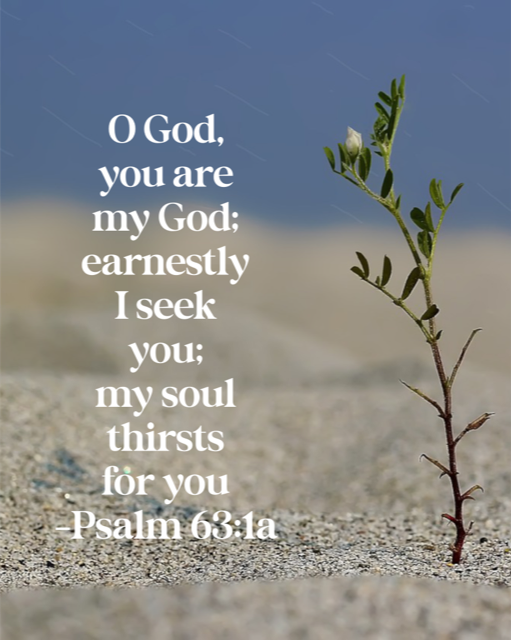
O God, you are my God; earnestly I seek you; my soul thirsts for you; my flesh faints for you, as in a dry and weary land where there is no water (Psalm 63:1).

My soul will be satisfied as with fat and rich food, and my mouth will praise you with joyful lips, when I remember you upon my bed, and meditate on you in the watches of the night; for you have been my help, and in the shadow of your wings I will sing for joy. My soul clings to you; your right hand upholds me (Psalm 63:5-8).

As much as we need each other, sometimes we have to stand alone with God.

David “encouraged himself in the Lord” (1 Samuel 30:6) when the men of Israel were ready to stone him.

Joseph spent years as the only apparent believer in the one true God that he knew when he was a slave in Egypt. His witness did seem to spread to others. But he had to remind himself of God’s truth on his own.

Two turning-point meetings with God in Jacob’s life happened when he was alone.

Daniel had friends of the same faith, but he faced the lion’s den alone, received visions alone, and prayed alone.

Paul ministered with companions but sometimes was alone.

Jesus dealt with crowds of people yet sought His Father alone.

We’ll each give account of ourselves personally to God. “For we must all appear before the judgment seat of Christ, so that each one may receive what is due for what he has done in the body, whether good or evil” (2 Corinthians 5:10).

If we’re reading the Bible regularly and still don’t know much about it, there are ways to improve. Jen Wilkin’s book, Women of the Word, was written for just that reason. I’m trying to write a book on the same topic. There are aids all over the Internet to improve our devotional time, or quiet time, or time in God’s Word. I’ve written about several aspects here.

But let’s keep things in balance. Meet with other believers to read and study God’s Word. But meet with Him alone as well.

(I often link up with some of these bloggers.)
The Power of God’s Word

When I was in college, the “Iron Curtain” separated the extended Soviet Union from the rest of the world. One campus group I participated in prayed regularly for Christians who had been arrested for their faith in eastern European countries under the rule of communism. Georgi Vins was one of the prisoners we prayed for, and it was a thrill when he was released.

One occasional guest speaker in chapel was an evangelist who made clandestine trips into the Soviet Union to encourage the Christians there. He may have smuggled Bibles and Christian literature in—I don’t remember. It’s probably a good thing that I can’t remember his name.

Once he told of a particular couple in one underground church. The wife was a Christian. The husband was not, but went with his wife to church meetings even though he was deathly afraid of being arrested.

The church didn’t have enough Bibles for everyone. It would have been too conspicuous for people to have Bibles in their homes, anyway. So when the church met in the woods, the leaders would tear out pieces of a Bible and hand the scraps to the congregants.

This particular man got a piece of Scripture that read, in part, “The Lord said to Jeremiah . . . ” Frustrated, the man thought, “Jeremiah? Who is this Jeremiah? Who has even heard of him?”

After a while, though, the man was encouraged. “If God can speak to this Jeremiah, who no one has even heard of, then God sees me and can speak to me, too.” This was the first step that led to the man becoming a believer in the one true God.

Such is the power of the Word of God that He can use even an obscure phrase of it to draw someone to Himself.

God’s Word is so powerful, He made everything in the world, except people, just by speaking. Over and over in Genesis 1, God said, “Let there be. . . ,” and there was. “By faith we understand that the universe was created by the word of God, so that what is seen was not made out of things that are visible” (Hebrews 11:3).

Jesus “is the radiance of the glory of God and the exact imprint of his nature, and he upholds the universe by the word of his power (Hebrews 1:3).

Jesus healed, stilled a storm, cast out demons, and raised the dead all by His words.

Jesus resisted Satan with Scripture (Matthew 4:1-11). Ephesians 6:16-17 says the Word of God is our spiritual sword. As Luther wrote in “A Mighty Fortress Is Our God”:

The prince of darkness grim,
we tremble not for him;
his rage we can endure,
for lo! his doom is sure;
one little word shall fell him.

Jesus is the Living Word. The Holy Spirit breathed out God’s Word through the people He used to give us the written Word in Scripture.

God’s Word is so powerful that people who sought to disprove it, like Lee Strobel and Viggo Olsen, were instead converted by it.

God’s Word is powerful to convict of sin. When Peter preached it, men were “cut to the heart, and said to Peter and the rest of the apostles, ‘Brothers, what shall we do?'” (Acts 2:37).

“For the word of the cross is folly to those who are perishing, but to us who are being saved it is the power of God” (1 Corinthians 1:18).

“For I am not ashamed of the gospel, for it is the power of God for salvation to everyone who believes, to the Jew first and also to the Greek” (Romans 1:18).

God’s power, though His Word, enables us to live for Him. “His divine power has granted to us all things that pertain to life and godliness, through the knowledge of him who called us to his own glory and excellence, by which he has granted to us his precious and very great promises, so that through them you may become partakers of the divine nature, having escaped from the corruption that is in the world because of sinful desire” (2 Peter 1:3-4).

God’s Word is so powerful, we can lean the weight of our entire soul upon it. It’s not a magic wand: it doesn’t promise healing or prayers answered just the way we want. But it promises God’s wisdom and grace. When it says we can be saved by trusting Jesus, we can. When it says He will meet our needs, He will.

God’s Word is so powerful, we can use it even when people say they don’t believe it. We shouldn’t club them with it or be obnoxious about sharing it. But as we share with people what God said, He will use His Word to open their eyes and shine His light in their hearts.

Don’t be afraid to rely on and share God’s Word. He promises it “shall accomplish that which I purpose, and shall succeed in the thing for which I sent it” (Isaiah 55:11). “For the word of God is living and active, sharper than any two-edged sword, piercing to the division of soul and of spirit, of joints and of marrow, and discerning the thoughts and intentions of the heart” (Hebrews 4:12).

(I often link up with some of these bloggers.)
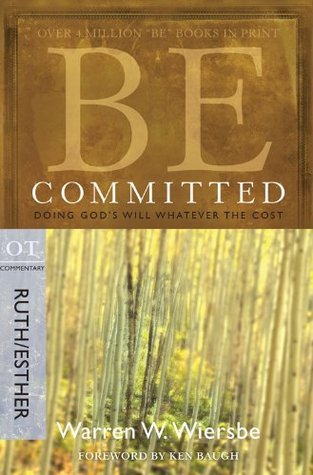
Be Committed: Commentary on Ruth and Esther

The books of Ruth and Esther are the only ones in the Bible named for women. The two women lived in different times and came from very different backgrounds. So why did Warren Wiersbe group them together in his commentary, Be Committed (Ruth and Esther): Doing God’s Will Whatever the Cost? He says:

Why do we bring these two women together in this study? Because, in spite of their different backgrounds and experiences, both Ruth and Esther were committed to do the will of God. Ruth’s reply to Naomi (Ruth 1: 16–17) is one of the great confessions of faith found in Scripture, and Esther’s reply to Mordecai (Est. 4: 16) reveals a woman willing to lay down her life to save her people. Ruth and Esther both summon Christians today to be committed to Jesus Christ and to do His will at any cost (pp. 15-16).

And then Dr. Wiersbe says something he has repeated in many of his commentaries: “Faith is not believing in spite of evidence but obeying in spite of consequence” (p. 16).

Ruth lived during the time of the judges, before Israel had kings. She was from Moab, people who were enemies to Israel. But her in-laws had come to Moab from Israel during a time of famine. Ruth had married one of their sons, but over time her father-in-law, husband, and brother-in-law all died. Ruth had come to believe in Naomi and Israel’s God, and she traveled with her mother-in-law, a bitter and broken, Naomi back to Israel.

The only recourse the women had for food was for Ruth to glean in someone else’s fields. The law at that time told farmers not to harvest every single piece of produce they grew, but to leave some for the poor. Ruth “happened” upon the fields of kind Boaz (one of my favorite OT people), who told his workers to leave some extra on purpose for her.

Near relations had the right to redeem the land of their deceased relatives, but part of the deal was marrying the widow. The nearest relation to Ruth’s husband was not willing to do this. But Boaz was the next nearest relation, and he was willing. Thus Ruth and Naomi were taken care of, and Naomi’s joy returned with the birth of her grandson–who became the grandfather of King David.

There’s much that could be said about this wonderful book. One point Wiersbe makes is this:

It is encouraging to see the changes that have taken place in Naomi because of what Ruth did. God used Ruth to turn Naomi’s bitterness into gratitude, her unbelief into faith, and her despair into hope. One person trusting the Lord and obeying His will can change a situation from defeat to victory (p. 43).

Esther lived hundreds of years after Ruth. Israel went through several kings, most of whom did not follow God. After much warning and preaching, with little response, God sent His people into exile in Babylon, which was later conquered by Persia. After 70 years, many Israelites were permitted to go back to their land. But Esther and her cousin, Mordecai, were among many Jews still in Persia.

Mordecai raised Esther because her parents had died. The pagan king, Ahasuerus, dismissed his wife for reasons found in Esther 1. His advisors encouraged him to gather the virgins of the land and . . try them out, and then choose from among them a new bride. Esther was one of the young women, and she happened to be chosen as the new queen.

Neither Esther nor Mordecai were known to be Jews at first. Wiersbe talks about the possibility that this may have meant they were not living according to God’s laws, because even the dietary laws would have separated them from other people in the land. We don’t know if this means they weren’t being faithful or if there were other reasons their nationality was not known. There also would have been problems with Esther, as a Jew, marrying a Gentile, and of course with her sleeping with the king before they were married (though she may not have had a choice about that).

At any rate, one person knew Mordecai was a Jew: Haman. Haman was a high official and hated that Mordecai would not bow to him like everyone else did. He was so angry, he plotted to kill not only Mordecai, but all the Jews. When he proposed this to the king, oddly, the king agreed without much discussion.

One interesting thing about the book of Esther is that God’s name is not mentioned once. But His fingerprints are all over the book. The suspense and irony of how God delivered the Jews from destruction is one of the most exciting stories in the Bible.

The highlight of the book is when Esther goes before the king to petition his protection for her people. According to the law of the land, if she came uninvited to see him, and he refused her, she could have been killed. But after fasting and praying for three days and asking others to do the same, she determined to go. Her “if I perish, I perish” (Esther 4:16) has rung through the centuries as an example of doing what’s right and what’s best for others despite what happens to us.

Both of these books show God’s guiding hand in the lives of His people, individually and as a nation. One encouragement to me was that God did this despite and even through a pagan king and an enemy to His people.

Finally, there is a powerful personal message in the book of Esther; for Esther, like Ruth, is a beautiful example of a woman committed to God. Ruth’s “Whither thou goest, I will go” (Ruth 1: 16 KJV) is paralleled by Esther’s “And if I perish, I perish” (Est. 4: 16 KJV). Both women yielded themselves to the Lord and were used by God to accomplish great things. Ruth became a part of God’s wonderful plan for Israel to bring the Savior into the world, and Esther helped save the nation of Israel so that the Savior could be born (p. 79).

We must never think that the days of great opportunities are all past. Today, God gives to His people many exciting opportunities to “make up the hedge, and stand in the gap” (Ezek. 22: 30 KJV), if only we will commit ourselves to Him. Not only in your church, but also in your home, your neighborhood, your place of employment, your school, even your sickroom, God can use you to influence others and accomplish His purposes, if only you are fully committed to Him (p. 80).

You Don’t Have to Choose a Word for the Year

We’re almost at the time of year when bloggers start considering their word for the next year.

For many, choosing a word for the year replaces a list of resolutions. That one word gives them focus for the year. Christians who do this usually pray about it leading up to the new year and feel this word has been given to them or impressed on them by God. They often plan activities, reading, or Bible study around their word.

I’ve read wonderful testimonies about how God has worked in someone’s heart through meditating on their word for the year.

It’s a fine practice.

I’ve never felt particularly led to do it myself. I’ve studied or focused on one topic for a while, but not necessarily from Jan. 1 to Dec. 31.

Perhaps you’ve never felt led to choose a word for the year and you wonder if you’re missing out. Or perhaps you’ve chosen one in the past but, like a forgotten New Year’s resolution, it soon faded out of memory.

I just want to emphasize a few truths:

God never tells anyone in the Bible to choose a word, a theme, or a verse for the year. He never tells anyone not to do any of those things, either. It’s just one method of studying and applying God’s Word.

God may lay on your heart to study a certain topic, truth, characteristic, etc. from the Bible, and that may or may not coincide with January 1 and may or may not last a year.

Psalm 119:105 says “Your word is a lamp to my feet and a light to my path.” Commentary I’ve read for that verse said that the lighting they had in Bible times only shone a step or two ahead. God often guides that way–day by day, just enough for the next step. Of course, He knows what is ahead and may well prepare people for it through a word for the year. But I have found that to happen through my daily Bible reading or sermons or Sunday School lessons I hear. It’s amazing how often God’s truth intersects my experience through a book I picked up seemingly randomly.

What’s more vital than a word for the year is daily seeking God in His Word.

Whether or not one chooses a word for a year, it’s good to read the Word of God every day. God can teach us through an extended focus on one word or concept. But He promises to give us guidance, hope, encouragement, and so much more as we meet with Him daily.

Granted, most people who choose a word for the year don’t do so at the exclusion of other Bible reading. Their main focus might be that one word, but they probably also follow a Bible reading plan and attend a Bible study group or church where they hear other parts of the Bible taught.

There’s value in reading large chunks of the Bible to keep the big picture in mind, and there’s value in camping out in a smaller section for a while. We need the panoramic lens to take in the beauty and wonder of the big picture of God’s Word and to place everything in context. We also need the macro lens for close-ups, for camping out with a verse at a time and mining its truths. I wrote about reasons and ways to do both here. For many, their one word is that close scrutiny.

While many people find great value in choosing a word for the year, those who don’t use that method shouldn’t feel they’re missing out or somehow not as spiritual. People have gotten by for millennia without a word for the year. On the other hand, just because this practice is relatively new doesn’t mean there is anything wrong with it. If choosing a word for the year has been a great blessing for you, or you think it might be, or you think it’s something God wants you to do, go for it, and may God bless you in it.

Jesus said, “Man shall not live by bread alone, but by every word that comes from the mouth of God” (Matthew 4:4). Let’s be faithful to partake of that bread in some way every day.

(Revised from the archives)

(I often link up with some of these bloggers.)

What Can We Learn from Bible Genealogies?

If Leviticus doesn’t kill your Bible reading plans, Chronicles might.

When our church was going through 1 Chronicles, our Bible study leader said his children asked, “Do we have to read the genealogies?” He admitted he was thinking the same question.

The genealogical sections of the Bible are probably no one’s favorite part of Scripture. Our pastor has often said, “Every part of the Bible is inspired by God, but not every part is inspirational.” We’re probably not going to get warm fuzzies from those lists of unfamiliar names.

But because the genealogies are as inspired by God as every other part of Scripture (2 Timothy 3:16), they have much to teach us.

The Holy Spirit doesn’t waste words. God’s works and thoughts are “more than can be numbered” (Psalm 40:5, NKJV). A former pastor used to say the Bible is divinely brief: of all the things God could have shared with us, He chose the particular words in the Bible. So everything in the Bible is there for a purpose.

Our pastor’s wife used to say of some of the “drier” passages of the Bible, “Keep digging until you find the golden nuggets.”

So what can the genealogies teach us?

God keeps records. Detailed records. Every person on those lists was someone known of God and loved by God. And He knows and cares about us as well.

Some genealogies act as bookends or transitions. For example, Genesis 36 wraps up Esau and his descendants before Jacob’s story switches focus to Joseph.

The Bible is history. Bible professor Dan Olinger said he was thrown for a loop when he learned that some theologians teach that the narratives of the Bible, particularly the Old Testament, are fables. These teachers say we’re meant to learn lessons from OT stories like we do from Aesop’s fables, but the stories and people were made up. Dan struggled with this view until he realized that the genealogies ground the Biblical narratives in history. In fables, it doesn’t matter where the characters lived or came from or who their descendants were. But those details do matter in history.

God keeps His promises. Part of God’s covenant with Abraham was that in him, “all the families of the earth shall be blessed” (Genesis 12:3). God repeated this promise to Jacob three times (Genesis 12:18; 26:4; 28:14). God had promised David that his throne would be established for ever. Paul says God “promised beforehand through his prophets in the holy Scriptures, concerning his Son, who was descended from David according to the flesh and was declared to be the Son of God in power according to the Spirit of holiness by his resurrection from the dead, Jesus Christ our Lord” (Romans 1:2-4). Matthew’s genealogy establishes Jesus’ human and royal lineage from Abraham through David. Jesus was the long-awaited fulfillment of God’s promises to His people through the ages.

Jesus loves sinners. Luke’s genealogy traces the line of Christ all the way back to Adam, establishing His humanity. Matthew mentions some people we might be surprised to see there.

All of the names shout that Jesus is not only the long-awaited King but that He is the King of grace! This entire family deserved to be rejected by God for notorious wickedness—for lying (Abraham), deceit (Jacob), immorality (David), double-mindedness (Solomon), arrogance (Rehoboam), unbelief (Ahaz), and idolatry which included child sacrifice (Manasseh). And this family had a history of disreputable women, who were “outsiders” for one reason or another. Tamar was the seductive Canaanite (v. 3), Rahab, the prostitute from Jericho (v. 5), Ruth, the Moabitess (v. 5), and Bathsheba, the adulteress (v. 6). You see, Jesus was born into a family that was notoriously deserving of judgment. But that means He’s not afraid to be associated with sinners, including immoral Gentiles—including me and you! (Joe Tyrpak, Gospel Meditations for Christmas, p. 11).

Thomas Overmiller writes:

If the genealogy of Jesus himself featured mothers with disgraced or shameful reputations, then why should you expect anything different? God does not weave people into his purposes and plans because they come from a pristine family background. He weaves people into his plan instead who have disgraceful backgrounds, the kind of disgrace that comes from our own sin and the kind that comes from the sin of others towards us. God delights to find sinners and save them. He delights to redeem us from the power of sin and from the pain of sinful things that other people have done to us. The grace of God shines through disgraced people (A Genealogy of Grace: Mothers of the King).

Genealogies encourage God’s people. I don’t think I realized before this trek through 1 Chronicles that it was written to the Israelites going back to their land after having been in exile in Babylon for 70 years. They needed to be reminded of their identity and encouraged that they were “still God’s people and retain their central place in God’s purposes for humanity” (Brian E. Kelly, ESV Study Bible, p. 705).

The Chronicler sought to address some urgent questions of his day concerning the identity of Israel. He wanted to instill fresh confidence in the people. The genealogies of Israel that begin the work (1 Chronicles 1–9) start by tracing the people’s ancestry back to Adam, a striking reminder that Israel was at the center of God’s purpose from the very beginning of creation. Although only a “remnant” and a provincial outpost in a great empire, Israel must remember that its security and destiny rest with Yahweh, “who rule[s] over all the kingdoms of the nations” and has given the land to Abraham’s descendants “forever” (2 Chron. 20:6-7) (Brian E. Kelly, ESV Study Bible, p. 701).

Genealogies remind us that life is short and death is sure until the Lord returns. I don’t remember the details or the source, but I heard about a girl who invited her unsaved dad to church. The pastor happened to be in a section of genealogies. The girl was discouraged, thinking this was the worst of all sermons for her dad to hear. But her dad became a believer. He said that hearing over and over that so-and-so lived, had children, and then died struck him. The repeated phrase “and he died” drummed itself into his mind, and he decided he needed to prepare for his own end.

Many of the Bible genealogies are “telescoped”: they don’t include every ancestor in a given line. This accounts for some discrepancies between lists. Each of the genealogies is there for a particular purpose, so the author will only include the names that are pertinent to his theme.

I hope you’re more encouraged about Biblical genealogies now. They still might not be the most exciting parts of the Bible, but they’re a rich and integral part.

Does anything in this list of what genealogies teach us resonate with you? Can you think of other purposes for genealogies in the Bible?

(I often link up with some of these bloggers.)