The Savior of the World Is Here

Over 2,000 years ago, Gaius Octavian became the Caesar of the Roman Empire. According to Stephen Davey, “for the first time in the four hundred year old kingdom of Rome, the Roman senate voted to give Caesar Octavian the title of Augustus. Augustus meant ‘revered or holy,’ and, until this time, it had been a title reserved exclusively for the gods.” One inscription referred to him as “the savior of the world.”

But during his time on earth, another baby was born to whom that title rightly belonged.

Which of the two would the world believe to be the real Savior? By birth, wealth, fame, and position, most people would have gone with Augustus. How could an unknown baby born to poor parents in Bethlehem claim that title?

But John wrote, “And we have seen and testify that the Father has sent his Son to be the Savior of the world” (1 John 4:14).

Many books could be written and verses shared about how Jesus is the true Son of God and Savior. He claimed those positions for Himself, they were foretold by numerous prophets, His Father testified to them as well as many others.

But though He died to save the world, only those who believe on Him come to know Him as Savior for themselves.

As Moses lifted up the serpent in the wilderness, so must the Son of Man be lifted up, that whoever believes in him may have eternal life.

For God so loved the world, that he gave his only Son, that whoever believes in him should not perish but have eternal life. For God did not send his Son into the world to condemn the world, but in order that the world might be saved through him. Whoever believes in him is not condemned, but whoever does not believe is condemned already, because he has not believed in the name of the only Son of God (John 3:14-18).

If you don’t know Jesus as your own personal Savior, I pray you will believe on Him today.

I wish you all a wonderful, meaningful, joyful Christmas.

I have never heard this song sung at Christmas, but it could be!

I cannot tell why He, whom angels worship,
Should set His love upon the sons of men,
Or why, as Shepherd, He should seek the wand’rers,
To bring them back, they know not how or when.
But this I know, that He was born of Mary,
When Bethl’hem’s manger was His only home,
And that He lived at Nazareth and labored,
And so the Savior, Savior of the world, is come.

I cannot tell how silently He suffered,
As with His peace He graced this place of tears,
Or how His heart upon the Cross was broken,
The crown of pain to three and thirty years.
But this I know, He heals the broken-hearted,
And stays our sin, and calms our lurking fear,
And lifts the burden from the heavy laden,
For yet the Savior, Savior of the world, is here.

I cannot tell how He will win the nations,
How He will claim His earthly heritage,
How satisfy the needs and aspirations
Of east and west, of sinner and of sage.
But this I know, all flesh shall see His glory,
And He shall reap the harvest He has sown,
And some glad day His sun shall shine in splendor
When He the Savior, Savior of the world, is known.

I cannot tell how all the lands shall worship,
When, at His bidding, every storm is stilled,
Or who can say how great the jubilation
When all the hearts of men with love are filled.
But this I know, the skies will thrill with rapture,
And myriad, myriad human voices sing,
And earth to heaven, and heaven to earth, will answer:
At last the Savior, Savior of the world, is King.

–W. Y. Fullerton, 1920

_____
Thanks to Stephen Davey for inspiring these thoughts in his radio message from December 15, The Inside Story.

(I often link up with some of these bloggers.)

Why Did Jesus Come as a Baby?

“Often in the account of salvation history, the future of God’s plan rests with a baby or a child.” (1).

“In Bible history, very often the birth of a baby has made the difference between defeat and victory for God’s people” (2)

In one sense, every baby born represents a new beginning with potential and hope for the future. But sometimes a baby was a major turning point in Bible history.

The first child born on earth, Cain, killed his brother, Able. Cain was exiled, but God sent Adam and Eve another son, Seth.

God had made a historic covenant with Abraham that his descendants would be as many as the dust of the earth (Genesis 13:14-17) or the stars in the sky (Genesis 15:5). In him all the nations of the earth would be blessed (Genesis 12:1-3). But Abraham had no child with Sarah, his wife, for about 25 years after the promise was made. Finally Isaac, the child of promise, was born.

When God’s people were captive in Egypt, Pharaoh demanded that all the Jewish baby boys be killed. But “By faith Moses, when he was born, was hidden for three months by his parents, because they saw that the child was beautiful, and they were not afraid of the king’s edict” (Hebrews 11:23). Moses grew up to be the deliverer of his people: God used him to bear witness to Egypt through the plagues, to lead Israel out of Egypt and to the promised land, and to give them God’s law.

In another low point in Israel’s history, when injustice was running rampant, one desperate woman prayed for a child that she promised she would give back to the Lord. God gave her Samuel, who was the pivot between the time of the judges and the kings and who called his people back to worship and serve the one true God.

A bitter woman named Naomi had lost her husband and both sons. Now she was alone with her daughter-in-law, Ruth. But God raised up a godly man to marry Ruth and give Naomi a grandson—a grandson whose grandson would be David, the great king of Israel, a man after God’s own heart.

God had promised that the Messiah would come through David’s line. But wicked queen Athaliah killed all the king’s sons—she thought. Jehosheba, the aunt of little Joash, hid him away with a nurse until he could be made king and carry on the Davidic line.

Malachi ends the Old Testament with a promise that God would “send you Elijah the prophet before the great and awesome day of the Lord comes. And he will turn the hearts of fathers to their children and the hearts of children to their fathers” (4:5-6). Then there were 400 years of silence. And suddenly one day, an old, childless priest was startled by an angel’s visit announcing that he and his aged wife, after many long years of now-abandoned prayers, would have a baby who would “turn many of the children of Israel to the Lord their God, and he will go before him in the spirit and power of Elijah, to turn the hearts of the fathers to the children, and the disobedient to the wisdom of the just, to make ready for the Lord a people prepared” (Luke 1:16-17).

And then, in yet another low point in the history of God’s people, when they were under the Rome’s rule, “when the fullness of time had come, God sent forth his Son, born of woman, born under the law, to redeem those who were under the law, so that we might receive adoption as sons” (Galatians 4:4-5).

Why did God send His Son to earth as a baby? I don’t know all the reasons. But here are a few:

To be the Son of Man But he took on our flesh that he might be Son of Man as well as the Son of God.

To defeat death. “Since therefore the children share in flesh and blood, he himself likewise partook of the same things, that through death he might destroy the one who has the power of death, that is, the devil, and deliver all those who through fear of death were subject to lifelong slavery” (Hebrews 2:14-15).

To be made like His brethren (Hebrews 2:17a).

To become a merciful and faithful high priest in the service of God (Hebrews 2:17b).

To make propitiation for the sins of the people (Hebrews 2:17c), To take our sin and punishment on Himself to atone for our sins.

To help those who are being tempted “because he himself has suffered when tempted” (Hebrews 2:18).

Those things explain why He took on flesh. But why as a baby? Partly so that He could live a whole righteous life in our place. But perhaps Charles Spurgeon is on to another reason when he says, “We might tremble to approach a throne, but we cannot fear to approach a manger. Never could there be a more approachable being than Christ.” (3)

“The greatest forces in the world are not the earthquakes and the thunderbolts. The greatest forces in the world are babies” (4). Especially this baby.

____________
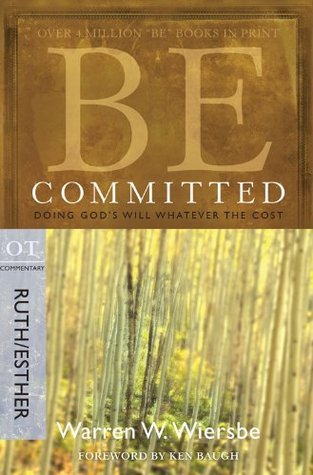
1. Warren W. Wiersbe, Be Distinct (2 Kings & 2 Chronicles): Standing Firmly Against the World’s Tides, p. 224.

2. Warren W. Wiersbe, Be Basic (Genesis 1-11): Believing the Simple Truth of God’s Word, p. 94.

3. Charles Spurgeon, Joy to the World: Daily Readings for Advent.

4. Dr. E. T. Sullivan as quoted in Warren Wiersbe, Be Compassionate (Luke 1-13): Let the World Know That Jesus Cares, p. 26.

Thanks to Dr. Wiersbe for emphasizing God’s use of babies in so many of his commentaries and whose thoughts inspired mine.

(I often link up with some of these bloggers.)

God Does Not Forget Prayers or Promises

400 years of silence.

That’s what Israel experienced after the last words of the Old Testament in Malachi. They had the law of Moses, their history, the poetry and wisdom of the psalms and Solomon’s writings, and the prophetical books.

But they had heard no new word from the Lord in 400 years.

So we can understand Zechariah’s being startled when suddenly an angel appeared before him.

After so long a time of silence, the first message God sends through an angel is, “Do not be afraid, Zechariah, for your prayer has been heard.”

Though I’ve read this passage many times, I was focused on the larger context of how it fit in the birth story of Jesus. I must have glossed over the part about answered prayer. Which prayer? Well, from the angel’s continued message, the prayer about a child.

“Your wife Elizabeth will bear you a son, and you shall call his name John.”

We can forgive Zechariah for being stunned. He replied, “How shall I know this? For I am an old man, and my wife is advanced in years.”

Zechariah had probably long ago given up on those prayers and counted God’s answer as a resounding “No.” And now—at this time, at their ages, they were going to have a baby?

As He so often does, God didn’t answer Zechariah’s “How?” He answered with “Who?”

“I am Gabriel. I stand in the presence of God, and I was sent to speak to you and to bring you this good news.”

God had sent this good news.

And the news wasn’t just good for Zechariah and Elizabeth. This baby would later become known as John the Baptist.

And you will have joy and gladness, and many will rejoice at his birth, for he will be great before the Lord. And he must not drink wine or strong drink, and he will be filled with the Holy Spirit, even from his mother’s womb. And he will turn many of the children of Israel to the Lord their God, and he will go before him in the spirit and power of Elijah, to turn the hearts of the fathers to the children, and the disobedient to the wisdom of the just, to make ready for the Lord a people prepared (Luke 1:14-17).

Gabriel told Zechariah that because the latter did not believe, he would be mute until the promise was fulfilled.

Hannah Anderson suggests that “perhaps God’s reproof was not a punishment for Zechariah so much as an invitation to experience his strength in a way that only happened in weakness. Perhaps God’s ‘now listen’ was not silencing Zechariah so much as quieting him, quieting him long enough to restore his hope” (Heaven and Nature Sing, p. 33).

When Elizabeth did give birth, and neighbors clamored to know the baby’s name, she said “John.” The people were astonished because no one else in their family was known by this name. They appealed to Zechariah, who confirmed by writing, “His name is John,” as the angel had instructed. John, meaning “God is gracious.”

And immediately [Zechariah’s] mouth was opened and his tongue loosed, and he spoke, blessing God” Luke 1:64).

He acknowledged this child would not just bring joy to his and Elizabeth’s life, but he was a part in God’s grand plan of salvation, put in place before the beginning of the world.

And you, child, will be called the prophet of the Most High;
    for you will go before the Lord to prepare his ways,
to give knowledge of salvation to his people
    in the forgiveness of their sins,
because of the tender mercy of our God,
    whereby the sunrise shall visit us from on high
to give light to those who sit in darkness and in the shadow of death,
    to guide our feet into the way of peace (Luke 1:76-79).

Though God sometimes seems silent, He hears and He cares. And though He answers the immediate concern, He has the larger, longer picture in mind. Besides praying for a child, Zechariah had probably also been praying for the coming of the Messiah. Now their child would have a part in God’s grand plan of redemption. It was John the Baptist who said, “Behold, the Lamb of God, who takes away the sin of the world!” (John 1:29) and prepared the way of the Lord.

God had not forgotten His promises then, and He still hasn’t now. He might say “No” or “Not now” when those answers are best. Sometimes the answer to our prayer request is connected to God’s overarching purpose for others as well. When the time is right, He will answer.

(Top photo courtesy of http://www.LumoProject.com.)

(I often link up with some of these bloggers.)

The Meekness of Wisdom

“Don’t try to fix it! Just listen.”

Sometimes we just want people to listen and sympathize. We may even know what to do about our problem, but we just want to be heard.

Sometimes we resent “fixers” because they haven’t taken the time to listen first. They start spouting solutions before they even know what the problem is. James warns us to be “quick to hear, slow to speak, slow to anger” (James 1:19). Proverbs 18:13 tells us “If one gives an answer before he hears, it is his folly and shame.”

Sometimes people with a lot of knowledge come across as arrogant know-it-alls. Some of them just want to show off or one-up their listeners. James says, “But if you have bitter jealousy and selfish ambition in your hearts, do not boast and be false to the truth.This is not the wisdom that comes down from above, but is earthly, unspiritual, demonic. For where jealousy and selfish ambition exist, there will be disorder and every vile practice” (James 3:14-16).

By contrast, James says, “Who is wise and understanding among you? By his good conduct let him show his works in the meekness of wisdom” (James 3:13).

That phrase, the meekness of wisdom, stood out to me. Meekness is not wishy-washy weakness. Moses was called the meekest man on the earth in his day (Numbers 12:3). Yet he faced down Pharaoh, led thousands of people out of Egypt, spent 40 days and nights alone with God when others were afraid to approach Him. Jesus said He was “meek and lowly in heart” (Matthew 11:28-30). Meekness is strength under control.

Galatians talks about restoring a fallen brother or sister in Christ “in a spirit of gentleness” (6:1-3). And Paul tells Timothy “the Lord’s servant must not be quarrelsome but kind to everyone, able to teach, patiently enduring evil, correcting his opponents with gentleness” (2 Timothy 2:24).

A truly wise man knows the answer and can give good counsel. But he doesn’t share it in pride or superiority. James goes on to say this wisdom is “from above is first pure, then peaceable, gentle, open to reason, full of mercy and good fruits, impartial and sincere” (verse 17).

A few weeks ago in our writing critique group, one member’s piece was on the way men and women think differently. One of the ladies mentioned this video, a hilarious depiction of someone with an obvious and easily repairable problem who wants her hearer to listen and not rush to “fix” it.

When I posted a link to this on my Saturday “Laudable Linkage” a couple of weeks ago, one commenter shared that someone she loved recently accused her of “fixing” instead of listening. She lamented her inclination to want to change others instead of examining her own motives.

While it’s true we need to listen first and not rush in to tell others what to do, the opposite of the coin is true as well. When we have an obvious problem and someone offers a workable solution, how wise is it to rebuff them just because we’d rather wallow in “venting” than finding an answer? The meekness of wisdom can apply to receiving as well as giving wisdom.

Proverbs is full of references about listening to wisdom, instruction, and even reproof. Just one example: “The way of a fool is right in his own eyes, but a wise man listens to advice” (Proverbs 12:15). Fools don’t listen to advice, but wise men do.

The prophets lamented that people would not listen to their wise counsel. Jeremiah said, “the word of the Lord has come to me, and I have spoken persistently to you, but you have not listened. You have neither listened nor inclined your ears to hear, although the Lord persistently sent to you all his servants the prophets” (Jeremiah 25:3-4).

God told Ezekiel that people would regard him “like one who sings lustful songs with a beautiful voice and plays well on an instrument, for they hear what you say, but they will not do it” (Ezekiel 33:31-32). What God had given Ezekiel to say in the previous verses was not beautiful music–it was a stern warning of judgment to come for their sins. Yet because the people would not listen and obey, they deceived themselves about the nature of what Ezekiel said.

By contrast, Moses accepted wise–and unasked for–advice from his father-in-law, Jethro, when Jethro saw that Moses was being worn out and needed assistants (Exodus 18).

“Let the wise hear and increase in learning, and the one who understands obtain guidance” (Proverbs 1:5). Wisdom says in Proverbs 8:33-34, “Hear instruction and be wise, and do not neglect it. Blessed is the one who listens to me, watching daily at my gates, waiting beside my doors.”

Sometimes silence is indeed the wisest option. Sometimes people just need to know they are cared for, heard, and not alone. We need to listen with sensitivity and empathy and offer counsel in dependence on God’s guidance. And we need to receive good counsel prayerfully, humbly, and gratefully, testing it against Scripture. We need meekness both to give and receive wisdom.

(I often link up with some of these bloggers.)

Benefits of Giving Thanks

Though our US holiday of Thanksgiving is over, giving thanks should continue. This year I saw some benefits to thanksgiving, some of which I don’t remember noticing before.

Thanksgiving reminds us what we’re supposed to be doing all year long. A man in our Sunday School class shared how the Lord delivered him from a life-threatening illness. Then he remarked, “I should be thanking and praising God every day, but I take this gift for granted.” We all do that, don’t we?

Thanksgiving reminds us where our gifts come from. We forget that even a good job, the availability of good food, clean water, warm beds, family, and so much more, are gifts from God. They could all be taken away in a moment.

Thanksgiving reminds us how God has led or provided for us in the past, through both good and bad times. As people shared testimonies in our midweek service, they tended to recall special moments in the past where God’s help was especially displayed. I call these “Ebenezer moments.” In 1 Samuel 7, after God delivered Israel from the Philistines, Samuel set up a memorial stone and called it Ebenezer, meaning “stone of help.” A few years ago, I was inspired to make a list of “Ebenezer” moments. Going over that list inspires love and praise to God for how He has worked in my life. “My soul will be satisfied as with fat and rich food, and my mouth will praise you with joyful lips, when I remember you upon my bed, and meditate on you in the watches of the night; for you have been my help, and in the shadow of your wings I will sing for joy. My soul clings to you; your right hand upholds me” (Psalm 63:5-8).

Thanksgiving needs to be intentional. Maybe some people are naturally geared towards gratefulness. But most of us notice the problems, irritations, and imperfections of life first. In Joy: A Godly Woman’s Adornment by Lydia Brownback, she says this: “If we are not looking for the good things, we may fail to see them when they come. That’s part of why thankfulness is so important. Offering thanks to God, no matter what is going on in our lives, is a way of acknowledging that he knows exactly what he is doing and that we can trust him” (p. 28, Kindle version).

Thanksgiving isn’t always a feeling. Another quote from Lydia’s book: “Sometimes thankfulness is a choice we make rather than a feeling we have” (p. 28).

Thanksgiving leads to more thanksgiving. Once you start looking for things to be thankful for, your list keeps growing. At the testimony service mentioned above, after everyone had a chance to share, people started saying, “His story reminds of the time God did this. . . “

Thanksgiving melts away our worries. When we remind ourselves of the ways God has helped and provided for us in the past, we’re encouraged to trust Him for the present and future.

Thanksgiving recalibrates our perspective. I can’t find the source now, but I recently read of a woman who was having an awful start to her day. On her way to work, she began deliberately looking for things to be thankful for. By the time she arrived, her mood and outlook had completely changed.

Thanksgiving shared with others increases opportunities to glorify God. As we heard each others’ stories at our testimony service, we thanked God not just for what He did for us, but also for what He did for others. “For it is all for your sake, so that as grace extends to more and more people it may increase thanksgiving, to the glory of God” (2 Corinthians 4:15).

Thanksgiving shared knits hearts together. Testimony services leave us not only with warm feelings towards God, but also towards each other.

So let thanksgiving continue! Let’s make it a point to look for God’s hand and thank Him as often as we can.

Have you found these or any other benefits to giving thanks?

(I often link up with some of these bloggers.)

A Confession of Praise

A study Bible footnote unexpectedly intersected with thoughts about Thanksgiving.

I’m not a Hebrew scholar by any means. But the ESV Study Bible noted that the Hebrew word todah could be translated as “make confession” or “give thanks or praise,” depending on the context. The footnote goes on to say, “Some overlap of these meanings is not surprising because rightful confession is itself a kind of worship of God” (p. 820).

We don’t usually connect confession of sin with worship and praise, but the one does lead to the other, doesn’t it? Once we’ve confessed sin to the Lord and rested in His grace and forgiveness, we overflow with joy and thankfulness.

“Blessed is the one whose transgression is forgiven, whose sin is covered. Blessed is the man against whom the Lord counts no iniquity, and in whose spirit there is no deceit” (Psalm 32:1-2).

But I began to wonder at another connection.

I was taught that confession of sin means saying the same thing God says about it. In other words, we don’t downplay our sin. We’re honest about it. We don’t say, “Oh, I just told a little fib.” No, to adequately confess sin, we have to call it what it is and own up to it: “I lied.”

So I wonder if giving thanks or praise carries that same connotation. When we praise God, we’re agreeing with what He says about Himself. It’s not that He needs the affirmation, but we need to recognize Him for who He is. And when we do, we can’t help but praise Him. And the more we behold Him, the more our cares and concerns melt away, because we remind ourselves He is more than able to handle any need we have.

Confessing also seems to carry the connotation of personal experience. I might share or rejoice in what God has done in someone else’s life. But if I am confessing, whether it’s sin or praise, I’m sharing what God has done in my life.

In Psalm 95:2, todah is the word translated thanksgiving: “Let us come into his presence with thanksgiving; let us make a joyful noise to him with songs of praise!”

Many of the psalms combine confession of sin, thankfulness for God’s grace, amazement at His greatness, and confession of His people’s personal experience of His provision, protection.

Psalm 145 is a beautiful example of this. Part of it says:

One generation shall commend your works to another,
    and shall declare your mighty acts.
On the glorious splendor of your majesty,
    and on your wondrous works, I will meditate.
They shall speak of the might of your awesome deeds,
    and I will declare your greatness.
They shall pour forth the fame of your abundant goodness
    and shall sing aloud of your righteousness.

The Lord is gracious and merciful,
    slow to anger and abounding in steadfast love.
The Lord is good to all,
    and his mercy is over all that he has made.

10 All your works shall give thanks to you, O Lord,
    and all your saints shall bless you!
11 They shall speak of the glory of your kingdom
    and tell of your power,
12 to make known to the children of man your mighty deeds,
    and the glorious splendor of your kingdom.
13 Your kingdom is an everlasting kingdom,
    and your dominion endures throughout all generations.

Psalm 65 does as well:

Praise is due to you, O God, in Zion,
    and to you shall vows be performed.
O you who hear prayer,
    to you shall all flesh come.
When iniquities prevail against me,
    you atone for our transgressions.
Blessed is the one you choose and bring near,
    to dwell in your courts!
We shall be satisfied with the goodness of your house,
    the holiness of your temple!

These thoughts brought to mind Ron and Shelly Hamilton’s song, “Worthy of Praise”:

My heart overflows with praise to the Lord
I will lift up my voice to the King
He brought me out of the pit of despair
And taught my heart to sing


Worthy of all my praise
You are worthy of all my praise
I bow at Your throne
And I worship You alone
Lord You are worthy
Worthy of praise

I wish you all a wonderful Thanksgiving filled with food, family, and praise for Him who is worthy.

(I often link up with some of these bloggers.)

God is always working, even when we don’t see

One morning last week, I was a little discouraged as I prayed for a long-term prayer request. I hadn’t seen any movement on that front in a long time. It didn’t look like anything was happening.

I felt sure that I was praying according to God’s will. 1 John 5:14-15 says, “And this is the confidence that we have toward him, that if we ask anything according to his will he hears us. And if we know that he hears us in whatever we ask, we know that we have the requests that we have asked of him.” That doesn’t mean He will answer everything in just the time and way we want. Sometimes He might even say no if that is better for us than a yes. Sometimes He has something different and better in mind. Sometimes He wants us to wait.

But as I was praying for His working in a heart to bring a person to faith in Himself, I felt sure that He would do all in His power to answer that request.

Sometimes sin can hinder answers to prayer, but I wasn’t aware of anything I needed to confess to the Lord or anything that would hinder answered prayer.

I’ve had enough experience with the Lord that I know He’s working, even if I don’t see any evidence of it. So I encouraged myself by reminding myself of times in Scripture or in my own life where I saw His answer after an extended period of seeming inactivity.

From the garden of Eden, God promised Adam and Eve that a redeemer would come to defeat Satan. It was thousands of years before that redeemer came. “But when the fullness of time had come, God sent forth his Son, born of woman, born under the law, to redeem those who were under the law, so that we might receive adoption as sons” (Galatians 4:4-5). God was at work all those years, preparing people for the coming of His Son.

Abraham and Sarah waited 25 years before the son God promised them arrived. Why did God make them wait so long? Perhaps to strengthen their faith.

David was anointed king years before actually coming to the throne. Meanwhile he had to flee for his life while the current king, Saul, sought to kill him.

Daniel and others were in exile in Babylon for seventy years before God brought some of them back to Israel.

Hebrews 11 lists several more who saw God do great things after long years. Some of them even “died in faith, not having received the things promised, but having seen them and greeted them from afar” (verse 13). They trusted God would answer and bring about His will even though they never saw the answer in their lifetime.

In my own life, I remember aching over the breakup of my family and the loss of all that was familiar when we moved to a new city when I was a teenager. I clung with all my might to Romans 8:28: “And we know that for those who love God all things work together for good, for those who are called according to his purpose.” I am not even sure I was saved then. I had made a profession as a young child, but had not been in church or in the Bible regularly. I couldn’t remember much about what I prayed when I came forward in a friend’s church in third grade. But I knew enough that I could go to God for help. After a very long and lonely summer, God led us to a school and church where I was regularly taught His Word and where I made sure of my salvation in my teens. God had been drawing me to Himself all the while, even when I felt so alone.

I didn’t have a long period of singleness, but it felt plenty long at the time. I spent several years in a Christian college with eligible young men all around me. But none of them seemed interested in me. Then after several years of praying for the right one, a friendship blossomed into something more. God had been laying the foundation and preparing both of us for each other, even when we were unaware of what He had in mind.

One of the biggest demonstrations of God’s unseen working occurred in my father. I knew my father loved me, but he also got angry easily. He was big on respect and authority, and he took any arguments or disagreements from his children as disrespect or “sass.” Consequently, I was afraid to talk to him about things he might disagree with. He had always believed there was a God, but as far as I knew hadn’t believed in Him in a personal way.

When I went off to college, I’d share verses at the end of letters to my father. I always wrote them out because I didn’t figure he’d look up the references. He never responded to them. I pictured him either skipping over them in disgust or shaking his head and thinking, “There she goes again.”

Several years after my husband and I got married and had a couple of children, my father came to visit us in SC for the first time. He wasn’t well. He had gotten out of the hospital with pneumonia not long before flying out, so we felt maybe he just traveled too soon. But on the day he was supposed to fly back to TX, he ended up in the hospital.

One evening as we came down the hospital hall to visit him, the nurse told us they had almost lost him, and he was in ICU. When she took us to him, he said, “I know one thing. When I get home, me and the pastor are going to have a long talk.” We asked if he would like our pastor in SC to come and see him. He said yes.

On an interesting side note, before he got so sick, he had come with us to the field day at my oldest son’s elementary school. He met my pastor and his wife there, as they had a child in the same school. My pastor’s wife was from west TX, as my dad was. She knew the little town he was from, a town most people had never heard of. I think that little detail drew him to them and caused my dad to be open to the pastor’s coming when he might not have been if he had never met them.

While my dad was in ICU, we could only visit with him 15 minutes at a time once or twice a day. My pastor came often—I think he may have come every day for a while.

Finally my dad was moved out of ICU into a private room. The first day we visited him there, almost as soon as we walked in, he said something like, “I just want you to know that the pastor came by today, and I accepted Jesus Christ as my Lord and Savior.”

I almost fell over. To have my father express faith so clearly and openly was something I hadn’t expected.

Later, as we talked with my pastor, he shared with us some of the discussions he’d had with my dad. He said at one point, my dad talked about the verses I used to send him and said, “My daughter has been trying to get me to do this for years.” To my shame, I had been praying for his salvation but had not wanted to push. I think I might have written out the full plan of salvation once or twice. But mostly I just sent verses as a postscript without comment. All that time I thought my dad had just skipped over those verses, God had been using them to plant seeds in his heart.

He came with us to church before he went home. I wish he had lived closer, so he could have come with us more and we could have encouraged him spiritually. For some reason, he never got into the church back in TX.

So there wasn’t a dramatic change in his life. My pastor encouraged me that when someone is saved later in life (my dad was 61), they’ve had more years on the other side of things. It takes a lifetime to grow spiritually, and my dad had had more time on one side than the other.

But there were subtle changes. He liked to read, and he was open to my sending him Christian books. One of them was about Christians behind the Iron Curtain. On the phone we discussed the amazing ways God helped and encouraged those people in such hard circumstances.

As I hung up the phone, I thought, “I just had a conversation with my dad about the Lord.” A miracle.

When seeds are planted, they remain underground for a while before anything of the plant comes up. Different plants grow at different rates: some take a long time. The flat ground looks lifeless. But underneath, things are happening. Then that first green blade appears and rejoices the heart of the planter.

I love John Piper‘s quote that “God is always doing 10,000 things in your life, and you may be aware of three of them.”

Though sometimes we have to wait long, we can wait in faith and hope, knowing God is at work behind the scenes.

(I often link up with some of these bloggers.)

Hope in Darkness

God gives hope in darkness.

The darkness and barren landscape and often overcast skies of late autumn and winter can be depressing to me. I probably could not live in a country with just a few hours of daylight. I’ve written before about some things that help me through the “winter blues.”

But I decided this week to do a quick Bible study about darkness to encourage myself (and hopefully you, as well).

I remind myself God made the seasons. He mentions them in creation (Genesis 1:14-15). And he told Noah, after the flood, “While the earth remains, seedtime and harvest, cold and heat, summer and winter, day and night, shall not cease” (Genesis 8:22). He has a purpose for winter’s darkness as well as summer’s light.

God created light and darkness that we might know Him and know He is the only God: “I am the Lord, and there is no other, besides me there is no God; I equip you, though you do not know me, that people may know, from the rising of the sun and from the west, that there is none besides me; I am the Lord, and there is no other. I form light and create darkness; I make well-being and create calamity; I am the Lord, who does all these things” (Isaiah 45:5-7).

Darkness signals time to rest. The need for rest reminds us of our limitations. We can trust he who “will neither slumber nor sleep” (Psalm 121:4) will watch over us. Psalm 104:19-23 says:

He made the moon to mark the seasons;
    the sun knows its time for setting.
20 You make darkness, and it is night,
    when all the beasts of the forest creep about.
21 The young lions roar for their prey,
    seeking their food from God.
22 When the sun rises, they steal away
    and lie down in their dens.
23 Man goes out to his work
    and to his labor until the evening.
24 O Lord, how manifold are your works!
In wisdom have you made them all.

Darkness sometimes indicates God’s chastening. This is a recurrent theme in the prophets. “Hear and give ear; be not proud, for the Lord has spoken. Give glory to the Lord your God before he brings darkness, before your feet stumble on the twilight mountains, and while you look for light he turns it into gloom and makes it deep darkness. But if you will not listen, my soul will weep in secret for your pride; my eyes will weep bitterly and run down with tears, because the Lord’s flock has been taken captive” (Jeremiah 13:15-17). But Micah looks forward with hope even though Israel is in darkness due to sin: “I will bear the indignation of the LORD because I have sinned against him, until he pleads my cause and executes judgment for me. He will bring me out to the light; I shall look upon his vindication” (Micah 7:9).

God delivers us from darkness. Many verses bring out this truth. Psalm 107:10-12 speaks of people imprisoned in darkness because of their sin and rebellion. Then verses 13-15 say, “Then they cried to the Lord in their trouble, and he delivered them from their distress. He brought them out of darkness and the shadow of death, and burst their bonds apart. Let them thank the Lord for his steadfast love, for his wondrous works to the children of man!”

Another passage is Ezekiel 34:11-12: “For thus says the Lord God: Behold, I, I myself will search for my sheep and will seek them out. As a shepherd seeks out his flock when he is among his sheep that have been scattered, so will I seek out my sheep, and I will rescue them from all places where they have been scattered on a day of clouds and thick darkness.”

Darkness is not a problem for God. We don’t like darkness partly because we can’t see. We don’t know what’s outside when we hear a strange noise. But “If I say, ‘Surely the darkness shall cover me, and the light about me be night,’ even the darkness is not dark to you; the night is bright as the day, for darkness is as light with you” (Psalm 139:11-12).

God knows what is in the darkness: “He reveals deep and hidden things; he knows what is in the darkness, and the light dwells with him” (Daniel 2:22).

God protects us in darkness: “He will cover you with his pinions, and under his wings you will find refuge; his faithfulness is a shield and buckler. You will not fear the terror of the night, nor the arrow that flies by day, nor the pestilence that stalks in darkness, nor the destruction that wastes at noonday” (Psalm 91:4-6).

God gives the treasures of darkness. “I will give you the treasures of darkness and the hoards in secret places, that you may know that it is I, the Lord, the God of Israel, who call you by your name” (Isaiah 45:3). In context, this passage is addressed to Cyrus, a foreign king who did not know the Lord, about how God chose him and was going to use him and reward him. The couple of commentaries I looked at said that “treasures in darkness” referred to the fact that in that day, people hid treasures away in dark places so no one else could find them. But God was going to give these hidden treasures to Cyrus. I think we have to be careful about over-spiritualizing historic events in the Bible, but I think we can see a parallel with the treasures that God will give His children.

We can trust God in darkness. “Who among you fears the Lord and obeys the voice of his servant? Let him who walks in darkness and has no light trust in the name of the Lord and rely on his God” (Isaiah 50:10).

“But as for me, I will look to the Lord; I will wait for the God of my salvation; my God will hear me. Rejoice not over me, O my enemy; when I fall, I shall rise; when I sit in darkness, the Lord will be a light to me” (Micah 7:7-8).

We can serve others in darkness. “If you pour yourself out for the hungry and satisfy the desire of the afflicted, then shall your light rise in the darkness and your gloom be as the noonday” (Isaiah 58:10).

Darkness will not overcome God’s light. “In him was life, and the life was the light of men. The light shines in the darkness, and the darkness has not overcome it” (John 1:4-5).

Then I thought of the darkness of the seed in the ground and the butterfly forming in the chrysalis. Some day beauty will come from patient waiting in darkness. Light and warmth will surge into new growth. Elisabeth Elliot used to say that you can’t have resurrection without first having death. “Truly, truly, I say to you, unless a grain of wheat falls into the earth and dies, it remains alone; but if it dies, it bears much fruit” (John 12:24).

This turned out to be a more extensive study than I thought it would be. And that’s not even including verses about night.

Darkness is still not my favorite, but I don’t think it’s supposed to be. In John 3:19, Jesus said, “And this is the judgment: the light has come into the world, and people loved the darkness rather than the light because their works were evil.” There’s so much imagery, especially in the New Testament, about Jesus being light and our need to turn from darkness to light (Acts 26:18), cast off the works of darkness (Romans 13:12), and so on.

Also, sometimes darkness doesn’t indicate evil, but something hidden and unknown. For instance, in 1 Kings 8, Solomon’s temple has just been finished and the ark of the covenant has been brought in. “And when the priests came out of the Holy Place, a cloud filled the house of the Lord, so that the priests could not stand to minister because of the cloud, for the glory of the Lord filled the house of the Lord. Then Solomon said, ‘The Lord has said that he would dwell in thick darkness'” (verses 10-12). When Moses was given the Ten Commandments, “These words the Lord spoke to all your assembly at the mountain out of the midst of the fire, the cloud, and the thick darkness, with a loud voice; and he added no more. And he wrote them on two tablets of stone and gave them to me” (Deuteronomy 5:22).

Ecclesiastes 11:8 says, “So if a person lives many years, let him rejoice in them all; but let him remember that the days of darkness will be many. All that comes is vanity.” A note on the word vanity says it means “vapor” or “a mere breath.” Our lives seem to pass away like mist.

But “It is you who light my lamp; the Lord my God lightens my darkness” (Psalm 18:28). God gives us abundant hope in darkness.

Psalm 18:28. God lightens my darkness.

(I often link up with some of these bloggers.)

You Don’t Have to Choose a Word for the Year

We’re almost at the time of year when bloggers start considering their word for the next year.

For many, choosing a word for the year replaces a list of resolutions. That one word gives them focus for the year. Christians who do this usually pray about it leading up to the new year and feel this word has been given to them or impressed on them by God. They often plan activities, reading, or Bible study around their word.

I’ve read wonderful testimonies about how God has worked in someone’s heart through meditating on their word for the year.

It’s a fine practice.

I’ve never felt particularly led to do it myself. I’ve studied or focused on one topic for a while, but not necessarily from Jan. 1 to Dec. 31.

Perhaps you’ve never felt led to choose a word for the year and you wonder if you’re missing out. Or perhaps you’ve chosen one in the past but, like a forgotten New Year’s resolution, it soon faded out of memory.

I just want to emphasize a few truths:

God never tells anyone in the Bible to choose a word, a theme, or a verse for the year. He never tells anyone not to do any of those things, either. It’s just one method of studying and applying God’s Word.

God may lay on your heart to study a certain topic, truth, characteristic, etc. from the Bible, and that may or may not coincide with January 1 and may or may not last a year.

Psalm 119:105 says “Your word is a lamp to my feet and a light to my path.” Commentary I’ve read for that verse said that the lighting they had in Bible times only shone a step or two ahead. God often guides that way–day by day, just enough for the next step. Of course, He knows what is ahead and may well prepare people for it through a word for the year. But I have found that to happen through my daily Bible reading or sermons or Sunday School lessons I hear. It’s amazing how often God’s truth intersects my experience through a book I picked up seemingly randomly.

What’s more vital than a word for the year is daily seeking God in His Word.

Whether or not one chooses a word for a year, it’s good to read the Word of God every day. God can teach us through an extended focus on one word or concept. But He promises to give us guidance, hope, encouragement, and so much more as we meet with Him daily.

Granted, most people who choose a word for the year don’t do so at the exclusion of other Bible reading. Their main focus might be that one word, but they probably also follow a Bible reading plan and attend a Bible study group or church where they hear other parts of the Bible taught.

There’s value in reading large chunks of the Bible to keep the big picture in mind, and there’s value in camping out in a smaller section for a while. We need the panoramic lens to take in the beauty and wonder of the big picture of God’s Word and to place everything in context. We also need the macro lens for close-ups, for camping out with a verse at a time and mining its truths. I wrote about reasons and ways to do both here. For many, their one word is that close scrutiny.

While many people find great value in choosing a word for the year, those who don’t use that method shouldn’t feel they’re missing out or somehow not as spiritual. People have gotten by for millennia without a word for the year. On the other hand, just because this practice is relatively new doesn’t mean there is anything wrong with it. If choosing a word for the year has been a great blessing for you, or you think it might be, or you think it’s something God wants you to do, go for it, and may God bless you in it.

Jesus said, “Man shall not live by bread alone, but by every word that comes from the mouth of God” (Matthew 4:4). Let’s be faithful to partake of that bread in some way every day.

(Revised from the archives)

(I often link up with some of these bloggers.)

Careful of Our Strengths as Well as Our Weaknesses

A recent Sunday School class focused on Samson, the biblical long-haired “strong man” in Judges 13-16. One man in class described Samson as cocky.

I hadn’t really thought of Samson in those terms, so I had to ponder for a while. I suppose you could describe Samson that way. Some of his challenges seemed to be motivated by the fact that he knew he would win. It’s possible to be cocky even while thinking one is doing the Lord’s will. Cockiness seems to come from being self-assured rather than confident in God’s gifting and calling.

The discussion reminded me of something I had recently read in 2 Chronicles 26 about King Uzziah. Verses 4-5 say, “And he did what was right in the eyes of the Lord, according to all that his father Amaziah had done. He set himself to seek God in the days of Zechariah, who instructed him in the fear of God, and as long as he sought the Lord, God made him prosper.”

But just a few verses later, we’re told, “And his fame spread far, for he was marvelously helped, till he was strong. But when he was strong, he grew proud, to his destruction. For he was unfaithful to the Lord his God and entered the temple of the Lord to burn incense on the altar of incense” (verses 15-16).

Only the priests were supposed to burn incense in the temple. But in Uzziah’s pride, he presumptuously stepped beyond his authority. Then when he was confronted, he became angry. God made him a leper the rest of his life.

He was marvelously helped, till he was strong. But when he was strong, he grew proud.” That statement stops me in my tracks. It’s possible to seek God and depend on Him for help, and then turn right around and become proud as if we answered our prayer instead of God.

When we fear falling or failing, we usually worry about the areas where we’re weak.

But we should also be concerned about the areas where we’re strong. “Therefore let anyone who thinks that he stands take heed lest he fall” (1 Corinthians 10:12). We can too easily become confident in ourselves instead of leaning on God.

We need to remind ourselves that any strength we have comes from God. We all have besetting sins and tendencies. If we don’t have problems in a given area, it’s not because we’re just that good. And if we have good traits and seem “naturally” strong in some areas, that comes from God, too. Paul reminds us, “What do you have that you did not receive? If then you received it, why do you boast as if you did not receive it?” (1 Corinthians 4:7).

Pride is one danger of strength. Another is what one of our former pastor used to say, “With every strength is an off-setting weakness.”

Say, for instance, that one had natural leadership skills. Those come in handy when a leader is needed. But they might be resented when the leader oversteps, doesn’t listen to anyone else, and starts taking over decisions and tasks unasked.

Peter was a natural spokesman. He was loyal and ready to jump into the fray. But he sometimes spoke when he should have been silent or acted when he should have been patient.

We love David’s passionate emotion in the psalms because they mirror ours. But that passionate nature got David in trouble in other areas.

Some of us are naturally quiet, which keeps us out of trouble from speaking up at the wrong time. But then we also avoid speaking when we should.

Another potential problem with our strengths is that, like the folks Paul addressed in Romans 14 and 15:1-7, we don’t give due consideration to those who are weaker. Our insistence on our own freedoms can even cause them to sin against their conscience. Then we have the audacity to look down on them. “We who are strong have an obligation to bear with the failings of the weak, and not to please ourselves. Let each of us please his neighbor for his good, to build him up. For Christ did not please himself” (15:1-3a).

As long Uzziah sought the Lord, God made him prosper. When Uzziah stopped seeking the Lord and relied on what he thought was best, he fell into pride and error.

In Samson’s final days, he was humbled and sought the Lord. He didn’t depend on his own strength, but he asked God to strengthen him. God restored Samson, and he’s mentioned in the “hall of faith” in Hebrews 11 as one “who through faith conquered kingdoms, enforced justice, obtained promises . . . were made strong out of weakness” (Hebrews 11:33-34).

“Thus says the Lord:
‘Let not the wise man boast in his wisdom,
let not the mighty man boast in his might,
let not the rich man boast in his riches,
but let him who boasts boast in this,
that he understands and knows me,
that I am the Lord who practices steadfast love, justice, and righteousness in the earth.
For in these things I delight, declares the Lord’”
(Jeremiah 9:23-24).

May we remember that in Him we live and move and have our being (Acts 17:28). May we set our hearts to seek Him and rely on Him for wisdom, guidance, and strength.

(I often link up with some of these bloggers.)