Forgive me for doubling up on posts this week. The year is running out fast, and there are a few things I wanted to post before the end of it.
I just shared the 76 books I read this year. I enjoyed most of them. A few of them had disappointing elements, but I was still able to glean a few good things from them. Some had subjects I considered highly valuable. Others had excellent writing. Many had characters that touched my heart. But for the ones I chose as my favorites, all of those elements came together.
Some of these are decades old; others are brand new. But of all the books I read this year, these are my favorites (titles link back to my reviews):
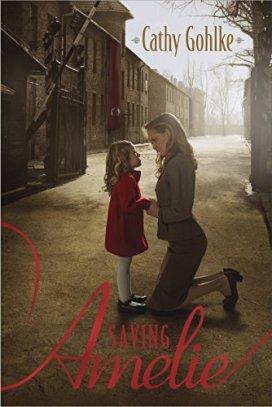 Saving Amelie by Cathy Gohlke. In this novel, Rachel Kramer’s father is a genetic scientist working with Hitler in the early days of the Reich. As she learns more about her father’s research, she’s horrified by the implications. An old friend is afraid for the life of her daughter, Amelie, who is deaf and thereby a blight on her husband’s Aryan bloodline. She asks Rachel to take her daughter away before harm comes to her. Rachel and the girl are blocked from leaving Germany and must find a place to hide. They’re helped by an American journalist, who knows more than the country will let him report.
There were so many good parts to this book. I had not read Cathy before, but I am definitely looking up more of her work.
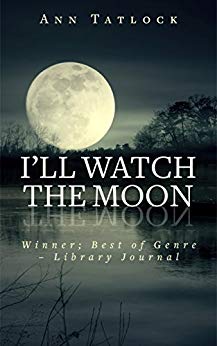 I’ll Watch the Moon by Ann Tatlock. Set in the years just after WWII, this novel focuses on 9-year-old Nova. She lives with her mother and brother in a boarding house. Her mother is beaten down by loss and hardship. The other boarding house residents form a patched-together family. One theme of the book is that every heart has its secrets sorrows, and some of these are revealed as the story progresses. And, as their stories come to light, and Nova goes through her own set of hard circumstances, another theme emerges: we often can’t explain why things happen the way they do. But we can trust God is with us. This book was so beautifully and tenderly written, I immediately went on to read everything else by Ann that I had collected in Kindle sales.
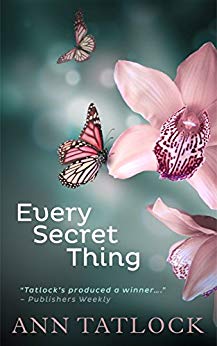 Every Secret Thing by Ann Tatlock. Elizabeth Gunnar becomes a teacher at the academy she had attended. One of her teachers, Mr. Dutton, had encouraged and nurtured her love of literature and inspired her to become an English teacher herself. Something terrible had happened to him that the school officials covered up, and the story comes out in bits and pieces. Elizabeth is still trying to come to terms with all that happened all these years later. Elizabeth speaks often of what she calls “moments of being.” She borrowed the phrase from Virginia Woolf, who described them as “a sudden shock, a welcome shock, in which she sensed something beyond the visible, or, as she wrote, the shock ‘is or will become a revelation of some order; it is a token of some real thing behind appearances.’” Elizabeth felt those moments were God manifesting Himself or trying to get our attention. A crisis with one of her students has ramifications for Elizabeth as well. I loved the era this was set in, close to my own high school days. Overall this is a beautiful, redemptive story and one of my favorites of Ann’s.
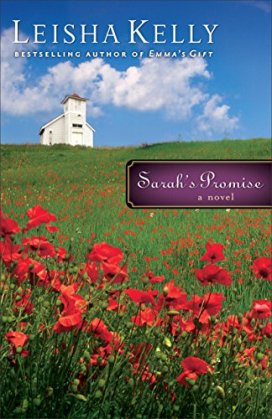 Sarah’s Promise by Leisha Kelly. Leisha’s series about the Wortham family during and after the Depression was a treasure. This book is the last in the series, as the characters who were children in the first books have grown up, and a couple of them are about to marry. Their faith has been tested by loss and heartache. They’ve had good examples in the Worthams, but now need to venture out on their own journey of faith. Sarah wants what’s safe and familiar, but Frank feels God pulling him in a new direction. Frank has suffered a lifetime of being “different,” and his father’s verbal abuse has undermined his confidence. But God brings along someone to minister to him at his lowest point.
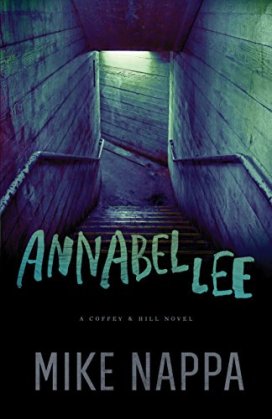 Annabel Lee by Mike Nappa. Mike is another new-to-me author, and this story had me on the edge of my seat all the way through. Annabel Lee lives with her uncle, called Truck, and his scary dog in small-town Alabama. Suddenly one day Truck takes Annabel to an underground bunker, leaves the dog with her, and tells her sternly not to open the door for anyone, including him, without the safe code. An old friend of Truck’s named Samuel and his ex-partner Trudi get involved. A mysterious “Dr. Smith” seeks Truck’s information and whereabouts. The Mute is an ex-military sniper friend of Truck’s who’s trying to find Annabel and rescue her. I loved the banter between Trudi and Samuel as well as the riveting story.

A Little Princess by Frances Hodgson Burnett. Somehow I had never read this. Seven-year-old Sara Crewe has grown up in India with her beloved father. Now the time has come for Sara to go to a boarding school in England. The school headmistress fawns over Sara because her father is rich, and many of the girls dislike her for those reasons. Sara herself seems unaffected by her wealth, She tries to act like a princess, not because of riches but because a princess would always do the right and honorable thing. When tragedy and misunderstanding occur, Sara is demoted to a servant, but still tries to act as a princess would. She’s not perfect: she struggles with her temper and pride. This is a sweet riches-to-rags-to-riches story, and I loved the theme that the way we act and treat others shouldn’t depend on how much money or status we or they have.
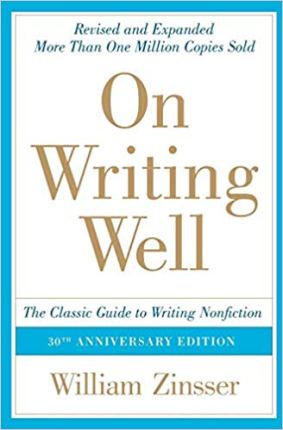 On Writing Well by William Zinsser is on just about every list of recommended books for writers I’ve ever seen. There’s not much I can say about it without quoting great chunks of it. If you want to write, especially nonfiction, this is a classic you should read.
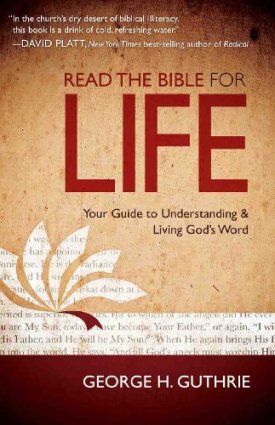 Read the Bible for Life: Your Guide to Understanding and Living God’s Word by George H. Guthrie. I got this book because I enjoyed the author’s blog. Most of the chapters are the result of interviews Guthrie conducted with experts in various fields of Bible study. he covers everything from “Foundational Issues,” like how to read it, reading it in context and for transformation. etc.; the various genres in the Old Testament: stories, laws, psalms and proverbs, and prophets; the different types of literature in the New Testament: stories, Jesus’ teachings, epistles (letters), and Revelation.
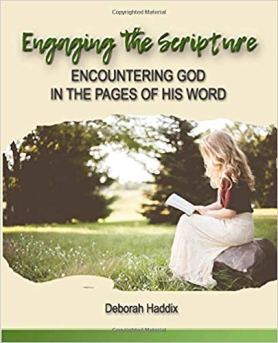 Engaging the Scripture: Encountering God in the Pages of His Word by Deborah Haddix covers the same subject matter as Guthrie’s book, but there are several differences. I don’t want to pit them against each other, as they are both good in their own ways. I love Deborah’s emphasis on engaging the Scripture—not just reading an assignment, not just searching for information, but deepening our relationship with God.
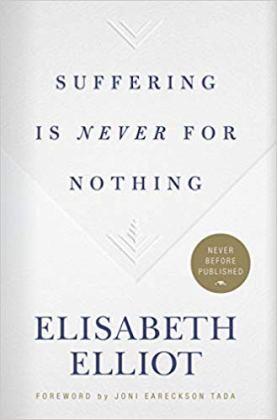 Suffering Is Never For Nothing by Elisabeth Elliot, released just this year, is “a very slight adaptation” of a series of talks Elisabeth gave at a conference years ago. Many years ago I read a different book by Elisabeth on this topic, A Path Through Suffering. At first I thought this was a republication of that book by a different name. It’s not, though. Some of the information probably overlaps, but they are two different books, both worthy to be read and extremely helpful.
That’s my top ten this year. What were some of your favorite books read in 2019?
(Sharing with Inspire Me Monday, Senior Salon, Sherry, Hearth and Soul,
Purposeful Faith, Happy Now, InstaEncouragement, Carole’s Books You Loved,
Anchored Abode, Worth Beyond Rubies, Booknificent, Grace and Truth)








 Stray Thoughts