Book Review: A Place Called Morning

In the novel A Place Called Morning by Ann Tatlock, Mae Demaray faces a grandparent’s worst nightmare. Her two-year-old grandson died while in her care, due to a moment of carelessness on her part.

Long after her daughter and son-in-law forgive her, Mae can’t forgive herself. She refuses to be alone with her other grandchildren, withdraws from the ministry she enjoyed for years at the children’s hospital, withdraws, in fact, from almost everything, including God. Mae’s daughter tries various ways to draw Mae out, but Mae resists.

The one activity she does keep up is her relationship with Roy, an old family friend. Roy is a few years older than her and has some kind of mental or learning disability. For as long as she can remember, her mother invited Roy from the orphanage for dinner and family get-togethers. Now her parents and her husband have all passed away, and Roy lives in a boarding house. Mae has Roy over for lunch a couple of times a week. He does odd jobs around the house and yard for her. The upkeep on her house, inherited from her parents, is too much for her, and the extra cash helps his fixed income.

Then another crushing family tragedy occurs, this one threatening her relationship with Roy. But in the aftermath, a long-buried family secret is revealed. Though it throws Mae for a loop at first, ultimately it opens her eyes and causes all her walls to come crashing down.

As a grandmother, the first part of this book was hard to read. I could really identify with Mae’s feelings in the loss of her grandson.

I loved the truths Ann brought out about relationships with family and with God. I loved where Mae ended up.

(Sharing with Carole’s Books You Loved and Booknificent)


What you miss when you turn your back on church

It happened again last week: I came across someone’s comment that they no longer attended church. This was not from an unbeliever or someone who had never been a churchgoer. This was from a professing Christian who had attended church regularly for years and then decided to forsake the practice. This commenter did not say why she no longer attended, but there seemed to be just a bit of vitriol in her response. Perhaps someone had offended her or something happened that she didn’t care for. People seem to be leaving the church in droves for such reasons.

I’m always grieved when I see this kind of thing. It’s necessary at times to leave a particular church, but you miss a lot if you give up church all together, such as:

1. God’s gifts to the church.And he gave the apostles, the prophets, the evangelists, the shepherds and teachers, to equip the saints for the work of ministry, for building up the body of Christ, until we all attain to the unity of the faith and of the knowledge of the Son of God” (Ephesians 4:11-13a, ESV). Yes, you can gain from hearing a good radio or Internet sermon. But that’s not the same as being personally pastored or shepherded by the man God has raised up to lead your congregation. Hebrews 13:7-17 gives more instruction about our reaction to church leaders: remembering, imitating, obeying.

2. Getting equipped. The purpose God gave those gifts mentioned in the first point was “to equip the saints for the work of ministry, for building up the body of Christ.”

3. Being fed. I Peter 3:1-4 instructs church leaders to “feed the flock.” Yes, we should feed ourselves in the Word during the week, but we shouldn’t neglect the “family dinner” available to us every week at church.

4. Being a part of what God is doing through the church. “So that through the church the manifold wisdom of God might now be made known to the rulers and authorities in the heavenly places” (Ephesians 3:10). That’s an amazing thought, that God teaches things about Himself to “rulers and authorities in the heavenly places” through His interactions with the church.

5. Your place in the body. In 1 Corinthians 12, Paul goes to great lengths to explain that the church is like a body. We’re not all eyes, else how would we hear or smell (verse 17 and following)? We each have different gifts and functions, designed to work together and minister to each other. When we remove ourselves from the body, we leave an empty place and we miss the function of the others.

6. The care of a church family. “God has so composed the body, giving greater honor to the part that lacked it, that there may be no division in the body, but that the members may have the same care for one another. If one member suffers, all suffer together; if one member is honored, all rejoice together.” Most church members could tell you stories about being ministered to and cared for my other members.

7. A place to use your gifts and be ministered to by others. This overlaps with #5 a bit. But the Bible lists several types of spiritual gifts that God distributes to His children, among them, teaching, administration, giving, mercy, helps, and others. We’re to use them to minister to each other. Sure, they’re not restricted to the four walls of the church: we use them at work, with neighbors, online, etc. But church is the primary outlet. You miss being ministered to by others and and you miss the people you’re to minister to. As our church read through the book of Acts over several weeks, I noted several times people strengthened people (14:22; 15:32, 41; 16:5; 18:23). And I thought, “Wait a minute: isn’t it Go who strengthens us?” Yes. But He often uses people to strengthen, to encourage (often paired with strengthen in Acts), to comfort.

8. Biblical one anothers. Again, these can be done outside the church, but the context of most of them is within the church.

Wash one another’s feet—John 13:14.
Love one another—John 13:3; 15:12, 17; Romans 13:8; I Peter 1:22; I John 3:11, 23; 4:7, 11.
In honor preferring one another—Romans 12:10.
Don’t judge one another—Romans 14:13.
Receive one another—Romans 15:7.
Salute one another—Romans 16:16.*
Greet one another—I Cor. 16:20, II Cor. 13:12, I Peter 5:14.
Serve one another—Gal. 5:13.
Don’t provoke one another or envy one another—Gal. 5:26.
Bear one another’s burdens—Gal. 6:2.
Forbear one another in love—Eph. 4:2, Col. 3:13.
Forgive one another—Eph. 4:32, Col. 3:13.
Teach and admonish one another with song—Col. 3:16.
Comfort one another—I Thess. 4:18.
Edify one another—I Thess. 5:11.
Exhort one another— Heb. 3:13; 10:25.
Consider one another to provoke unto love and good works—Heb. 10:24.

9. Biblical conflict resolution. In Matthew 18, Jesus gave instructions about how to handle when other people sin against you. If you just leave the church without settling these manners, you do a disservice to yourself and the other person. Some people go from church to church to church with a trail of unresolved conflicts in their wake, until they finally stop going all together.

10. Exercise in forbearance. No church is going to be perfect. How could it be, when each is made up of sinners who are not yet perfect? We all still struggle with our flesh and will til we get to heaven. Sometimes our fleshly natures irritate each other. Sometimes we need to confront each other, as in #9. But sometimes we need to depend on God’s grace to forbear each other. If we leave due to others’ irritating us, we miss out on this (difficult) grace. “I therefore, the prisoner of the Lord, beseech you that ye walk worthy of the vocation wherewith ye are called, with all lowliness and meekness, with longsuffering, forbearing one another in love; endeavouring to keep the unity of the Spirit in the bond of peace” (Ephesians 4:1-3, KJV). “Put on therefore, as the elect of God, holy and beloved, bowels of mercies, kindness, humbleness of mind, meekness, longsuffering; Forbearing one another, and forgiving one another, if any man have a quarrel against any: even as Christ forgave you, so also do ye. And above all these things put on charity, which is the bond of perfectness. And let the peace of God rule in your hearts, to the which also ye are called in one body; and be ye thankful” (Colossians 3:12-15, KJV).

11. Accountability. Jesus gave an illustration about the danger of judging by showing how ludicrous it was to try to help someone get a speck out of their eye if you’ve got a 2×4 in yours. Most people get the idea that we usually have bigger issues than the person we’re judging, and we need to take care of our own faults. But we overlook verse 5: “First take the log out of your own eye, and then you will see clearly to take the speck out of your brother’s eye.” We’re supposed to help each other with the things that cloud our vision.

12. Obedience. “And let us consider how to stir up one another to love and good works, not neglecting to meet together, as is the habit of some, but encouraging one another, and all the more as you see the Day drawing near” (Hebrews 10:24-25). I know some use these verses like a club, and they shouldn’t. But they are in the Bible.

Sure, there are times one can’t attend church: illness, exhaustion, travel, grief, etc. Some people can’t attend church due to long-term physical issues. We should still be the church to them and minister to them.

And, yes, some Biblical teaching about the church refers to what we call the church universal: everyone who has ever been and will be a believer. But most of the New Testament epistles were written to small local assemblies where these things were to be practiced.

And yes, attending church is not a guarantee that everything will go well with your life. But there are people there who can help when things do go wrong.

And going to church is not a substitute for a personal relationship with Christ. If we go to church all our lives and miss that, we’re in trouble. Not all churches teach the gospel or the Bible. It’s important to go to one that does. We don’t become righteous by attending church every time the doors are open: we need to repent of our sins and believe on the Lord Jesus Christ as our Savior. But a church made up of people who have done that can help each other along the way.

A few days ago I read in Seasons of the Heart:

How unhappy it is, my dear friend, that the little family of Christ should be so torn with internal animosities and feuds at a time when the state of the world seems to render it peculiarly necessary that all its members should be bound together in the unity of the Spirit an the bonds of peace. At no period in the history of the church can we discover so many and such powerful efforts of the prince of this world and his adherents to destroy its purity and its very existence as at the present time. (June 21 entry, Susan Huntington)

And that was in the early 1800s! Susan concludes:

But thanks be to God–He is showing us, by the effusions of His Spirit on various places, that He still remembers His church and will not suffer the gates of hell to prevail against it. And blessed be His name for the assurance that none shall be able to pluck His children out of the Savior’s hands or prevent His giving unto them eternal life! My friend, let us pray for each other. And may He, who is the believer’s hope, finally present us faultless before the presence of His glory with exceeding joy!

The church has always been full of problems. Most of the NT epistles were written to correct some of those problems. We’ll always have differences with each other, some due to personality, culture, stages of growth and maturity. Perhaps some differences exist to encourage us to thoughtfulness, understanding, seeing things from another’s viewpoint, grace. But some are due to blind spots. We can help each other with those blind spots if we’re open and humble (Matthew 7:1-5).

I’ve never read Phil Yancey, but I saw this quote attributed to him and it affected me so much. I’m not sure where or when he said it: “I rejected the church for a time because I found so little grace there. I returned because I found grace nowhere else.” I’m also not very familiar with Jackie Hill Perry, (though I want to read her book) but she once Tweeted, “Do you know who God used to heal me of my church hurt? The church.”

The church means a great deal to Christ, so how can we dismiss or ignore it? “Christ loved the church and gave himself up for her, that he might sanctify her, having cleansed her by the washing of water with the word, so that he might present the church to himself in splendor, without spot or wrinkle or any such thing, that she might be holy and without blemish” (Ephesians 5:25-27). If Christ loved the church and gave Himself for her, and we love Him, can we forsake the church He loves so much?

(Sharing with Inspire Me Monday, Literary Musing Monday,
Kingdom Bloggers, Tell His Story,
Purposeful Faith, Let’s Have Coffee,
Share a Link Wednesdays, Grace and Truth)


 

Ive-Been-Featured-at-LMMLinkup-300x300

End-of-June Musings

I was just telling my youngest son that summer doesn’t have the same feel as it did when the kids were young and in school. May was one of the busiest months with end-of-school-year programs, recitals, etc., so June was a welcome respite. Then summer’s more laid-back days were thoroughly enjoyed until near the end, when we decided we really did operate better with a little more structure to our days. But now, with no one in school, even with Jesse taking college classes online the last few years, there’s not that big sense of joy and relief when June comes.

Nevertheless, summer does mark a change of seasons, more time outdoors, lighter foods. Our June has more more temperate than usual so far, much to my delight.

And this month has been filled with mostly everyday activities: mowing (my dear husband), planting flowers (me), family get-togethers, reading. Oddly, I am on my second cold — or something — of the month, marked mainly by a sore throat.

One highlight of the month was Father’s Day.

My only card-making this month was for Father’s Day. This first one was for my step-father:

This was for Jim. I sometimes feel I am “cheating” a little bit when I use all stickers, but my laptop was having trouble connecting to my Cricut machine, and these all ‘fit” Jim. And they were 3-D, layered stickers, which seemed a little snazzier.

And this was for my son, Jason, from our generation encouraging the next :

During the month of June I’ve completed reading (each title is linked back to my review):

  • How to Understand and Apply the New Testament by Andrew David Naselli. A great resource, though a bit technical in places.
  • Promises to Keep by Ann Tatlock a novel set in the 1960s about a divorced mom fleeing an abusive husband making a new start. The older woman who used to own their home keeps escaping the nursing home and showing up, saying she had planned to stay there til she died. The family ends up “adopting” her.
  • The Returning by Ann Tatlock. A husband and father coming home from prison seeks to reintegrate into his family and society.
  • Close to Home by Deborah Raney. A family’s daughter-in-law has continued being close to the family after the death of their son. After five years, she starts thinking about dating but doesn’t want to lose her relationship with her in-laws.
  • Home at Last by Deborah Raney, the last of her Chicory Inn series. The family’s only remaining son is interested in a biracial girl, but she might not be willing to navigate all that they would need to in order to have a relationship.
  • Wuthering Heights by Emily Bronte. Not my favorite classic. 🙂
  • The Other Alcott by Elise Hooper, a fictional treatment of Louisa May Alcott’s youngest artist sister, May. A bit of a disappointment.
  • The Inheritance by Louisa May Alcott was her first novel, written when she was seventeen, but it was only recently discovered.
  • The Little Women Treasury by Carolyn Strom Collins and Christina Wyss Eriksson, an excellent resource for Little Women fans.
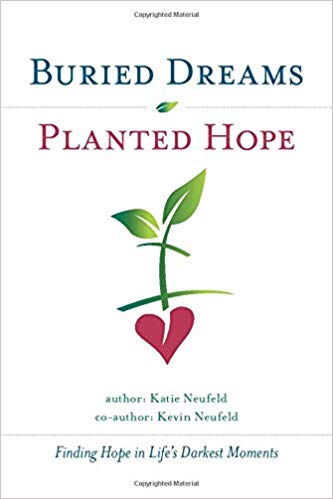
  • Buried Dreams, Planted Hope by Katie and Kevin Neufeld, a father-daughter team telling about navigating grief after Katie’s fiance is killed in an accident. Kevin was our former pastor when we lived in GA 20+ years ago.

I say “completed reading” because the first two were mostly read before this month and were just finished the first few days of June. I did get more reading in than usual, though, due to a couple of sick days and lack of much on TV in the evenings.

The Other AlcottThe Inheritance, and The Little Women Treasury were for Tarissa’s Louisa May Alcott Reading Challenge.

I’m currently reading:

  • Loving People: How to Love and Be Loved by John Townsend
  • Suffering Is Never for Nothing by Elisabeth Elliot with the True Woman Summer Book Club.
  • The Mill on the Floss by George Elliot
  • A Place Called Morning by Ann Tatlock
  • Rorey’s Secret by Leisha Kelly

Around the blog, besides the book reviews, Friday’s Fave Fives, and Laudable Linkage, I’ve posted:

  • While We Wait, thoughts from 1 Peter about how we can actively wait for Christ’s return.
  • Studying the Parts to Understand the Whole. Though it might seem tedious to break down a Bible passage in pieces and study it, as opposed to just reading, we learn, retain, and love a passage so much more when we’ve dug into it more. With some examples from classical music.
  • Bruised Reeds Are We All. God is so tender with us when we fall and fail, that should inspire us to be the same way with others.
  • The Lost Art of Forbearance. What the Bible says about “bearing with” each other.

Thanks so much to those of you who graciously answered my question last month about the value of these end-of-month wrap-ups. I enjoy them, but didn’t want to keep posting them if no one else did. I was pleased and encouraged to know you did get something from them and didn’t think they were just rehashes of previous posts.

I hope you enjoyed your June and are ready to turn the calendar page tomorrow!

(Sharing with Shannan, and Linda, and Literary Musing Monday)


Laudable Linkage

I have just a short list of noteworthy reads today, but thought I’d go ahead and share them. If I don’t, I’ll likely have an extra-long list next time.

Messy Church History. HT to Challies. I’ve been thinking about writing a post concerning our profound disappointment when someone we revere is found to have a fatal flaw as well as our tendency to write people off after finding skeletons in their closets. This says much that I would have. Church history, Biblical history, is messy because it involves sinners who aren’t totally perfect yet. Only God is perfect. It’s only by His grace that He uses any of us.

I’m Not a Mary or a Martha! Mary and Martha’s story wasn’t told in order to become fodder for social media personality quizzes. Julia points out ways that we infer more from the story that’s there and do Martha a disservice.

When You Are Refined by Family Conflict. “Conflict is simply two people viewing the same situation in two different ways.” If we take time to view things from the other person’s perspective, even though we might not agree, we’ll understand better, lose our defensiveness, and be able to look for bridges across the divide.

I shared this yesterday, and I think I may have even referenced it before, but I was so blessed by this post about Jim Elliot’s brother Bert, who was a missionary to Ecuador for over 50 years. Burt commented that “Jim and I both served Christ, but differently. Jim was a great meteor, streaking through the sky.” Randy Alcorn said yes, he was, but Burt was the faithful start that rose every night for years.

Finally, this baby copying the workout from the movie Rocky is SO cute! HT to Adam Blumer.

Happy Saturday!

Friday’s Fave Five

It’s Friday, time to look back over the blessings of the week
with Susanne and other friends at Living to Tell the Story .

It’s been another quiet week here in my neck of the woods. The last Friday of June already! Here are some of the best parts of the week:

1. Baptisms at church. Two adults were baptized at church last Sunday. Always a joy to hear people’s testimonies and see them take that step.

2. Finger food fellowship after the baptismal service. When we left, we were not quite full, but not really hungry enough for lunch. So we just scrounged around the refrigerator and heated up some leftovers — easy lunch, easy clean-up.

3. Pizza and movie night.Jason, Mittu, and Timothy came over and we watched Ralph Wrecked the Internet. I enjoyed that much more than I thought I would!

4. Chick-Fil-A brought in. I had gotten over my last cold but then got another one – very similar to the first one, staring out with a very sore throat. Timothy wanted to come over and play with some of the riding toys we have here. I let Jason and Mittu know I had another cold starting up, though I felt fine at that point, so they could decide if they wanted to risk coming over. They offered to bring Chick-Fil-A for dinner.

5. Updates on Steve Saint and Mincaye. Some of you know that I’ve loved and followed the story of the five missionaries who were killed in Ecuador in 1956, beginning with Elisabeth Elliot’s Through Gates of Splendor, then several other books of hers and some of the others in that story, up through Steve Saint’s book End of the Spear, and the documentary, Beyond the Gates of Splendor. I found a link to Randy Alcorn’s blog post about Mincaye, who was one of the men who killed the missionaries but later became a Christian and adopted Steve Saint’s family as his own. Mincaye is in his 90s now and in need of a wheelchair, and Joni Eareckson Tada’s organization sent him one. Randy’s post linked some some past posts with Steve and Mincaye, so I went on a rabbit trail reading some of those and watching the videos. I really enjoyed this one about Jim Elliot’s brother Bert, who was a missionary to Ecuador for over 50 years. Burt commented that “Jim and I both served Christ, but differently. Jim was a great meteor, streaking through the sky.” Randy said yes, he was, but Burt was the faithful start that rose every night for years. Then I also enjoyed the post and videos here, about Mincaye and his wife visiting Steve after his accident, and the Waodani telling Steve about “other foreigners” they saw the day the five missionaries were killed.

Happy Friday!

Book Review: Buried Dreams, Planted Hope

Katie Neufeld was the young daughter of our pastor when we lived in GA several years ago. In the intervening years she grew up, went to college, became a nurse, met the man of her dreams, and got engaged, following close to God each step of the way.

Then the unthinkable happened. A few months before the wedding, Katie and her fiance, Jerod, were in a horrific car accident, hit from behind and “pinballed” between two other cars. Jerod did not survive his injuries.

Katie shares her story in Buried Dreams, Planted Hope. She tells her background of how God worked in her life as she grew up, how she and Jerod met and fell in love, the accident, the raw grief afterward, and the many ways God ministered to her heart. Her father, Kevin, writes from his standpoint as a parent helping his daughter through such deep pain. At some point he realized he had suffered a loss of a friend and future son-in-law as well and had his own grief to deal with in addition to hers.

Part of their reason for writing is to share with others who might be going through their own season of grief the comfort and hope that they’ve found. Their joy is not the pasted-on, grin-and-bear-it, “everything is fine” when it’s not variety. It’s hard-won, through the pain and not bypassing it. There are still unanswered questions and mysteries about God’s will in all of this. But they’ve found, as Job and countless others have, that God shares Himself even when He doesn’t give satisfactory answers to our whys.

A few of the quotes I marked:

We made the conscious choice to be honest about our thoughts and feelings with those around us. Far too often Christians froth at the mouth with pious platitudes and paint an impossibly rosy picture (p. 3).

In all of these things, God is really taking me back to the basics and teaching me to trust. To believe that He will take care of me and provide for me in this drought. When I start to worry or dread, I am not trusting. As messy and ugly as the circumstances of my life are right now, I know my God, and I know I can count on Him (p. 113).

That last quote reminded me of something Spurgeon said about Hebrews 12:27, that God sometimes shakes up our world “that the things that cannot be shaken may remain.”

One of the lessons we learned was that it wasn’t our job to stop her tears. The Bible says to weep with those who weep. Oftentimes we attempt to stop the tears of others, but this, though well-intended, turns out to be more about our own discomfort with tears than the one who sheds them. In those initial days, there were many times where we would wrap our arms around Katie and cry with her (p. 142).

Taking every thought captive isn’t an easy or a one-time-fix-all task, but it’s a critical skill to learn and put into daily practice that will serve you well when those thoughts start to creep in that you know are not of God (p. 243).

When I reached my rock bottom, I found that Jesus was the Rock at the bottom, that sure and steady Rock that I could hold onto, the Rock that I realized was already holding on to me. And in those darkest and lowest moments, when He was all I felt I had left, I realized like no time ever before that He was all I’d ever needed (p. 245).

Suffering has this way of liberating us from the petty concerns and worries of everyday life. It clears the clutter and idols and helps us realize that Jesus really is all we need (p. 247).

Even though my story doesn’t have the cliche happy ending right now, there is still joy, although different from any I’d ever experienced in the past. A more pure form of joy (p. 252).

One of the ways God ministered to Katie was by unexpectedly bringing across her path people further along on the road of grief who could assure her that she wasn’t crazy, understand her feelings, and provide hope that things would get better. Katie and Kevin want “to comfort those who are in any affliction, with the comfort with which we ourselves are comforted by God” (2 Corinthians 1:4).

(Sharing with Literary Musing Monday, Carole’s Books You Loved, and Booknificent)

Book Review: The Inheritance

In 1996, two professors going through Louisa May Alcott’s letters and journals discovered a previously unknown and unpublished manuscript. The Inheritance was Louisa’s first novel, written when she was 17. Neither the professors nor anyone else could find any other information about the novel. There was no record of it having been submitted for publication and rejected. Maybe Louisa just wrote it for fun or for her family. After the novel’s discovery, it was published in 1997.

The heroine of the story is Edith Adelon. She was discovered as a poor orphan in Italy by Lord Hamilton, who took pity on her and brought her home. There she became a companion to Hamilton’s daughter, Amy.

As the story  opens, Edith is a young woman and Amy is a teenager. Edith teaches Amy “music, painting, and Italian, and better lessons still in patience, purity, and truth,” but she’s not exactly a governess. However, she is regarded by Lady Hamilton as “poor and lowborn,” and as such, she is not allowed to mingle with “noble” guests as an equal (p. 17). Lord Hamilton died years before. Amy’s older brother, Arthur, her mother, Lady Hamilton, and her mother’s niece, Lady Ida complete the household. A friend, Lord Percy, comes for an extended visit and the young siblings learn his background: he and his brother had loved the same woman, and once Percy found out, he stepped back for his brother’s happiness. “Careless of the wealth and honor that might be his, he prized far more the purity and worth of noble human hearts, little noting whether they beat in high or low.” He visited the “poor and suffering” and still kept a hope that he “might win a beautiful and noble wife to cheer life’s pilgrimage and bless him with her love” (p. 13).

Ida hopes to attract Percy’s attention for herself, but when she sees him favoring Edith, Ida’s latent jealousy comes to the surface. Between Ida’s verbal jousts, another visitor’s ignoble intentions, and a betrayal of her kindness, Edith has her hands full.

Yet there is a secret to Edith’s background that none of them knows. But will it be revealed or suppressed and forgotten?

The story is only 150 pages and has elements of both a Gothic novel and what were called sentimental novels. It’s a very sweet story, but a little overdone in places. Edith is too good to be true. Descriptions such as this one abound: “With an angel’s calm and almost holy beauty, Edith bore within as holy and pure a heart–gentle, true, and tender” (pp. 12-13). Likewise, Percy’s “calm, pale face and serious eyes are far more beautiful than mere comeliness and grace of form, for the pure, true heart withing shines clearly out and gives a quiet beauty to his face, such as few possess” (p. 5).

But even though Louisa’s writing is understandably not as mature as her later works, and the characters are a little two-dimensional, I thought it was very sweet and a good effort on Louisa’s part for her age then.

Several years ago I saw a film version of The Inheritance which I enjoyed immensely. It must have come out not long after the book was published. It’s been a while since I’ve seen it, but it kept to the main points of the book. A few exceptions: it has Lord Hamilton as still living for most of the film; shows Lady Hamilton as warm and friendly whereas she is described as cold and haughty in the book; and it has Edith loving and racing horses, which was not at all in the book. I’m looking forward to seeing the film again some time now that I’ve read the story.

Thankfully Tarissa, who hosts the Louisa May Alcott Reading Challenge, told me about the Internet Archive, which loans copies of books that have been photocopied page by page. It’s not quite the same as an e-book, but once I figured out how to make the page fit my iPad mini, I read it quite easily. I’m glad to know this service exists! The edition I read included a lengthy introduction by the two professors who discovered this manuscript, Joel Myerson and Daniel Shealy.

I’m counting this book as my Classic Novella (250 or fewer pages) for the Back to the Classics Challenge.

(Sharing with Carole’s Books You Loved and Booknificent)

The Lost Art of Forbearance

“Forbearance” isn’t a word we hear much these days, but it’s a needed one. It shows up throughout KJV New Testament passages meaning endurance. But two passages in particular bring out this meaning more fully.

Ephesians 4:1-3 says “I therefore, the prisoner of the Lord, beseech you that ye walk worthy of the vocation wherewith ye are called, with all lowliness and meekness, with longsuffering, forbearing one another in love; endeavouring to keep the unity of the Spirit in the bond of peace.”

Other translations say, instead of “forbearance”:

    • “bearing with one another in love” (several)
    • “making allowance for each other’s faults because of your love,” NLT
    • “showing tolerance for one another in love,” NASB
    • “patiently put up with each other and love each other,” CEB

A similar passage is in Colossians 3:12-15, with similar translations in other versions: Put on therefore, as the elect of God, holy and beloved, bowels of mercies, kindness, humbleness of mind, meekness, longsuffering; Forbearing one another, and forgiving one another, if any man have a quarrel against any: even as Christ forgave you, so also do ye. And above all these things put on charity, which is the bond of perfectness. And let the peace of God rule in your hearts, to the which also ye are called in one body; and be ye thankful.”

The Dictionary.com definition for “forbear” that most closely matches this context is “to be patient or self-controlled when subject to annoyance or provocation.

A former pastor’s definition matches most closely with the CEB: “good, old-fashioned putting up with each other.”

People don’t “put up with” much these days, do they? Or, I should say, do we? We want what we want, the way we want, and we want it now. Woe to the person who hinders any aspect of our getting what we want. Having multitudinous selections and the fastest cooking and delivery times in history have not made us more patient: we’re more impatient than ever. And if someone wrongs us in the slightest way or even makes a mistake that inconveniences, we feel obligated to let them have it and vent all over social media. And if someone holds a position we disagree with, well, then, they’re fair game for ridicule at the very least.

Granted, some things should not be tolerated: abuse, criminal activity, actions which hurt others all need to be dealt with. Wrongs need to be dealt with. Stands need to be taken.

But everyday faults and mistakes? Who doesn’t have those in abundance? How do we want others to treat us when we mess up?

Ephesians and Colossians pairs forbearance with:

  • humility (Where’d I get the idea everything is supposed to be my way?)
  • meekness
  • kindness
  • forgiveness: Colossians 3:13 gives the standard: “even as Christ forgave you, so also do ye.”
  • love
  • peace

Aren’t these the traits we long for in others’ interactions with us? Don’t we long for others to take time to hear and understand instead of just assuming, reacting, and blowing the situation out of proportion? Wouldn’t we rather someone talk to us privately when there’s been a misunderstanding instead of talking to everyone else? When we make a mistake, and we’re fearing the worst reaction, aren’t we blessed when someone says, “That’s all right — don’t worry about it. We all blow it sometimes.” Don’t we yearn for mercy and grace?

Then let’s take the initiative and exercise these traits toward each other.

Jesus said, “Come to me, all who labor and are heavy laden, and I will give you rest. Take my yoke upon you, and learn from me, for I am gentle and lowly in heart, and you will find rest for your souls” (Matthew 11:28-29, ESV).

(Sharing with Inspire Me Monday, Tell His Story, Let’s Have Coffee, Porch Stories, Share a Link Wednesdays, Faith on Fire, Grace and Truth, Kingdom Bloggers)


Laudable Linkage

Here are a few noteworthy reads discovered recently:

Is an Unborn Child a Parasite, Living off Another Person’s Body without Permission? HT to Challies.

Chinese Christians Memorize the Bible in Jail: “They Can’t Take What’s Hidden in Your Heart.

Ten Steps for Getting Started With Inductive Bible Study.

Understanding Narrative Passages of the Bible. Sometimes it’s easy to breeze through Biblical narratives, especially familiar ones (David and Goliath). This post has an excellent worksheet for getting more out of those passages.

Small vs. Insignificant. It isn’t the size of the task or the reach that’s most important.

7 Things You Should Never Say to Your Aging Parents.

Creativity for People Who Think They’ve Lost It. I used to think I wasn’t creative because I wasn’t “artsy.” But creativity involves much more than art.

Christianaudio is having a great sale on audiobooks.

Meet the Irishman Who Takes the World’s Best Animal Selfies, HT to Laura. These photos are so cute! Here’s a short video of his attempts to get some of the shots. He’s braver than I am!


Friday’s Fave Five

It’s Friday, time to look back over the blessings of the week
with Susanne and other friends at Living to Tell the Story .

It seems like it’s been a quiet week online: my Feedly account of others’ blog posts has been very light, as have comments here. Maybe everyone’s off doing summery things. 🙂 We’ve been mostly indoors due to a rain, but here are some of the five best parts of the week:

1. Father’s Day. Had a good day remembering my father and step-father and celebrating my husband and son with spaghetti and Mittu’s pineapple upside-down cake.

2. Finally getting a haircut. I tend not to get around to it until I can hardly stand it any more. When my hair gets to a certain length, it just goes limp. Nice to get that taken care of.

3. Finally getting flowers in my planters. I usually have these done way back in May. They look much better than they did.

4. Takeout on a sick day. I don’t get migraines often, but battled one this week. I feel for those who are prone to them. Thankfully there was nothing pressing that day, so I could lay low. I asked my husband if he could bring home McAlister’s Deli that night, and he did.

5. This adorable video which has been making the rounds is just SO cute. Denny’s even asked the father and son duo to do a sweet commercial.

Happy first day of summer!