Book Review: The Returning

In the novel The Returning by Ann Tatlock, Andrea has loved her husband John since they were teenagers. She knew he did not love her and only married her because he had to after she became pregnant. But she hoped that his heart might change someday.

Now John has just been released from prison, where he spent the last five years after accidentally killing a man while driving drunk. Andrea is not sure how everything will work after the adjustments of the last few years.

Their youngest daughter, Phoebe, was just a baby when John left, so she doesn’t remember her father and is afraid of him. Teenage daughter Rebekah is angry and rebellious. Only their oldest son with Down Syndrome, Billy, seems genuinely happy to have John home.

John knows he has a lot to overcome. His brother-in-law gave him a low-paying job, but he needs to find something better. He needs to rebuild his relationships with his family. And he needs to tell them what happened to him in prison when he committed his life to Christ. His biggest need, though, he doesn’t even realize yet: he needs to get grounded in his faith and grow. When he succumbs to temptation again and again, he begins to wonder if Rebekah is right in her accusation that his faith was just “jailhouse religion.”

A friend went through this scenario with a husband returning home after several years in prison, though the details were different. Even with all parties wanting to heal and put the family back together again, they faced difficulties. I thought Ann showed this struggle tenderly and realistically within the framework of the Sheldon family’s circumstances.

Ann says in her acknowledgements page that Billy’s character was inspired by Down Syndrome actor Chis Burke. Chris and his mother read Ann’s manuscript and offered feedback. She also talked with local parents and others who work with people with Down Syndrome.

My only difficulty with this story is that Rebekah is into some pagan-ish, New Age-y practices along with her best friend. I don’t have a problem with this being in the story, as people do turn to these things (and, spoiler alert, Rebekah finds they give her no peace or answers). But I’ve found I am sensitive to this kind of thing, so when Rebekah was performing her rituals, I had to skim through those pages.

But overall, I enjoyed the story very much. I ached along with each character in their difficulties and rejoiced with them in their victories.

(Sharing with Booknificent Thursday, Carole’s Books You Loved)


Book Review: Promises to Keep

In Ann Tatlock’s novel, Promises to Keep, eleven-year-old Roz Anthony has just moved with her mother, older half-brother, and younger sister to a small town in Illinois in the 1960s. Roz’s mother, Janis, was compelled to leave her abusive husband, and her father helped set her family up in a new home.

After just a few days, though, they found a stranger sitting on their porch, reading their newspaper. She was a rather large older woman named Tillie Monroe, and she said this was her house. She had helped build it with her own two hands along with her husband, and no matter what the paperwork said, it was her house. All she wanted was to die in her home, but she had fallen and broken her hip, and her kids whisked her away to a nursing home. But now she’s better, and she wants to live in her own home

About that time, Tillie’s son drives up, apologizes profusely, and takes his mother back to the nursing home.

But a few days later, Tillie is back on her . . . er, their porch. Janis invites her in for coffee. Another time Janis comes home to find Tillie cooking dinner for them.

This happens so often that Janis is relatively sure that Tillie is safe and invites her to stay. The relationship is mutually beneficial as Tillie watches the children and helps out around the house while Janis works.

While Roz adjusts well to all the changes and even provides a humorous narration, she misses her father. She tries to focus on the good memories, but the bad ones creep in. She feels if her father could just stay the good dad and leave off the Dr. Jekyll bad side, they could all be together again.

Meanwhile, Roz faces a new school with trepidation. But she finds a friend in a black girl named Mara. She soon learns that Mara has her own daddy issues, secrets, and dreams. They girls decide together to pray for their secret dreams.

Though the family was healing and readjusting after all they had been through, the first part of the book seemed lighthearted and fun as the family interacted with Tillie and as Roz observed and processed her world. One sub-plot line could have worked out for good or bad, and Ann reeled out the tension and information skillfully. The dramatic climax was a surprise to me — I was expecting something, but not what happened.

I’ve enjoyed all of Ann’s books that I’ve read so far, but this will be a favorite. Roz and Tillie are a couple of my favorite characters.

(Sharing with Booknificent Thursday, Carole’s Books You Loved)

Book Review: How to Understand and Apply the New Testament

I had several reasons for getting How to Understand and Apply the New Testament by Andrew David Naselli. I very much enjoyed his book about the conscience. We attended the same church (though several years apart) in SC (in fact, I’m pretty sure I knew his wife and her parents when she was a little girl). He has respect for two men from that church whose exposition I trust more than anyone else’s. And the book I am writing discusses understanding and applying the Bible, among other things, so I wanted to use this book as a reference.

As I perused the table of contents and flipped through several pages, however, I wondered if perhaps I was in over my head. But I gleaned much that was beneficial for this average suburban homemaker. Even when the author used terms unfamiliar to me, he explained them in a way that was easy to understand.

Naselli starts by explaining the difference between exegesis — drawing the meaning out of the text — and eisegesis — reading meaning into a text. And of course we want to do the former: we want to understand what God said and meant in His Word, not project our own thoughts onto it.

Naselli then details several ways to exegete a text. First you have to consider the genre. For example, poetry has different characteristics from the law and prophecy, etc. Then he advocates comparing the manuscripts or copies of the original text, studying Greek grammar, and comparing translations. He shows different ways to trace the process of thought through a passage. He advocates studying any passage both in its historical and cultural context as well as its literary context (how it fits within the particular book of the Bible). He recommends word studies to help understand words and phrases in the text more clearly. Then he considers different theological aspects: biblical theology, how the passage relates to the Bible and its progression as a whole; historical theology, how Bible scholars have understood the passage through history; systematic theology, how a passage fits into the teaching of the rest of the Bible; and practical theology, how to apply the text to ourselves and others. He devotes a chapter to each of these topics. He doesn’t check all of these off as a list each time he studies, but they each factor into his study to varying degrees.

Admittedly, some of this is beyond many of us. Most Christians don’t study Greek or know how to navigate textual criticism (although he explains textual criticism very well). We rely on a good study Bible to help us out with some of these categories. Nevertheless, there were good points to consider in every chapter. And Naselli ends every chapter with a list of resources for further study and commentary on each one, like which he considers the best, which is more scholarly and which is more accessible, etc. And, as he notes in the chapter about Greek grammar, “at the very least, this chapter can help you better appreciate grammatical issues that interpreters wrestle with” (p. 82). That applies to some of these others issues as well and should motivate us to pray for our pastors, and for ourselves, as we study.

Though I have myriad places marked, one of my biggest takeaways from this book was what he calls argument diagram: not an argument as in a fight, but as in a debate: discerning the line of thought in a passage. We tend to read isolated passages rather than tracing the flow all through a given book and within particular passages. As he says:

The New Testament is not a list of unrelated bullet points. It’s not pearls on a string. No, the New Testament authors argue. They assert truths and support those truths with reasons and evidence. They attempt to persuade others to share their views. Their arguments are always profound and sometimes complex. Connectives such as but, therefore, and because can be hugely important to understanding what an author is arguing. Tracing the argument is not dull. It makes your heart sing” (p. 123).

The last thought he pulls from a letter of C. S. Lewis, in which Lewis speaks of studying

. . . the general drift of whole epistles: short passages, treated devotionally, are of course another matter. And yet the distinction is not, for me, quite a happy one. Devotion is best raised when we intend something else. At least that is my experience. Sit down to meditate devotionally on a single verse, and nothing happens. Hammer your way through a continued argument, just as you would in a profane writer, and the heart will sometimes sing unbidden (p. 123, from The Collected Letters of C. S. Lewis).

Naselli then explains and provides examples of several ways of tracing an argument through a passage: arcing, bracketing, and phrasing. I had never heard of any of these, but they all look beneficial. Phrasing appeals to me the most.

A few quotes that stood out to me:

The Bible doesn’t contradict itself. So a sound principle is that we should interpret less clear passages in light of more clear passages. We shouldn’t zoom in on just one text and interpret it without reference to the rest of the Bible. That’s what heretics do (p. 16).

Don’t view English Bible translations as a competition–in which you choose one as the best and then look down on the rest as inferior in quality. Good Bible translations are incredibly helpful resources, and English readers should benefit from more than one of them. It’s both-and, not either-or (p. 60).

Grammar matters because God chose to reveal himself to us with grammar (p. 82).

Sometimes a New Testament author may write a command to prevent an error rather than to counteract a present error. When you see a command or prohibition in a text, you shouldn’t automatically assume that this reflects a present problem in the church that the author addressed (p. 172).

The beautiful thing about the Bible is that it never gets old. You can read it every day and make connections that you hadn’t made before (or remind yourself of details and connections you had forgotten!). It’s a special book–a book like no other, a book God himself wrote. And we have the pleasure of reading it at this time of salvation history: Jesus the Messiah has come, and he is coming back to consummate his rule. So read every part of the Bible in light of the whole (p. 239).

Christ-centered teaching and preaching is not eisegesis. It’s exegesis that requires biblical theology. It doesn’t creatively make stuff up to imaginatively get to Jesus. It follows themes and trajectories that are right there in the text if God gives you eyes to see them. And when you do see them, you worship God for his wisdom. He breathed out Scripture through individual men who didn’t always understand every nuance of typological trajectories to which they were contributing. And the entire finished product brilliantly coheres (p. 238).

I have no patience for suggestions that preachers need to dumb it down. Preachers need to be clear, and they need to be able to explain things in understandable ways. But human beings do not need the Bible to be dumbed down. If you think that, what you really think is that God the Holy Spirit did not know what He was doing when He inspired the Bible to be the way it is. Not only does the suggestion that the Bible is more than God’s people can handle blaspheme God’s wisdom; it also blasphemes His image bearers. People are made in the image of God. Human beings are endowed with brains and sensibilities of astonishing capacity (p. 258, from a quote from James M. Hamilton Jr.’s Text Driven Preaching: God’s Word at the Heart of Every Sermon).

As you can surmise, this is not a cozy, warm fuzzy type of book. It’s more of a “gird up the loins of your mind” book. But that’s exactly what the Bible tells us to do. And, as the author quotes B. B. Warfield as saying, “pitting doctrine against devotion is a false dichotomy because God intends them to go together” (p. 9). He quotes Warfield further from “Spiritual Culture in Theological Seminary”:

I have heard it said that some men love theology more than they love God. Do not let it be possible to say that of you. Love theology, of course: but love theology for no other reason than that it is THEOLOGY–the knowledge of God–and because it is your meat and drink to know God, to know him truly, and as far as it is given to mortals, to know him whole (p. 10).

(Sharing with Booknificent Thursday, Literary Musing Monday)

While we wait

No one enjoys waiting. Even if we’d prefer to put off something we’re not looking forward to, at some point we just want to get it over with. Sometimes waiting enhances the enjoyment of whatever we’re waiting for until it finally comes — cookies baking, marriage, an anticipated outing. Some waits are particular nerve-wracking and even traumatic: a response from a job application or a medical test. Waiting can make us feel impatient, unsettled, and strained.

Wait can be an active as well as a passive verb. A waiter serves others actively. One of the best ways to deal with waiting is to get busy about something else. If we’re serving others or accomplishing some task, we’re not only using our time profitably, but we’re also distracting our thoughts from our wait.

A couple of weeks ago I was reading in 1 Peter and was arrested by verse 7 in chapter 3: “The end of all things is at hand; therefore be self-controlled and sober-minded for the sake of your prayers.” I’m thankful that all my Christian life, I have been under teaching that emphasizes reading whole chapters and whole books of the Bible rather than isolated verses. I made a list that day of all the things Peter went on to tell people to do and think about until “the end of all things” actually comes. Then today, looking back through all of 1 Peter, I realized “the end of all things” hearkens back to the “living hope” we were born again to “through the resurrection of Jesus Christ from the dead, to an inheritance that is imperishable, undefiled, and unfading, kept in heaven for you, who by God’s power are being guarded through faith for a salvation ready to be revealed in the last time” (1:3-5).

Until that time, God has given us plenty to do – not just as a distraction, as busywork, but as that which must be done.

This isn’t a full exposition of 1 Peter, but here are some things I noticed we’re to do while we wait for that inheritance at the end of all things:

Remember:

Remember who you are in Christ if you are a believer: “You are a chosen race, a royal priesthood, a holy nation, a people for his own possession” (2:9).

Remember why you were called: “that you may proclaim the excellencies of him who called you out of darkness into his marvelous light” (2:9-10). “You yourselves like living stones are being built up as a spiritual house, to be a holy priesthood, to offer spiritual sacrifices acceptable to God through Jesus Christ” (2:5).

Remember your pilgrim status (1:17). 1 Peter 2:11 in the ESV calls us sojourners and exiles; the KJV says strangers and pilgrims.This world is not all there is. It’s not our final destination. We’re “just traveling through,” as the song says. We seek “a better country, that is, a heavenly one,” one God has prepared for them (Hebrews 11:16).

Adjust your thinking and actions:

Feed on God’s Word like babies take in milk (2:2-3). “The word of the Lord remains forever” though all else fails (1:24-25).

Endure tests and trials in a way that honors the Lord (1:6-9; 3:13-17; 4:1-2). He allows them to test and refine us or for other reasons. Remember how Christ suffered unjustly, without threatening, sinning, or reviling, “entrusting himself to him who judges justly” (2:19-25; 3:18). Don’t be surprised at suffering, but glorify God in it and rejoice. “Let those who suffer according to God’s will entrust their souls to a faithful Creator while doing good” (4:12-19). Know that you are not alone: others are suffering, too (5:9).And after you have suffered a little while, the God of all grace, who has called you to his eternal glory in Christ, will himself restore, confirm, strengthen, and establish you. To him be the dominion forever and ever. Amen” (5:10-11).

Be holy (1:14-16, 22; 3:10-12, 16-17; 4:3-5). Remember you were delivered from the “passions of your former ignorance” (1:14) and redeemed “with the precious blood of Christ (1:18-20, 23; 2:4-8). “Put away all malice and all deceit and hypocrisy and envy and all slander” (2:1). “As sojourners and exiles . . . abstain from the passions of the flesh, which wage war against your soul. Keep your conduct among the Gentiles honorable, so that when they speak against you as evildoers, they may see your good deeds and glorify God on the day of visitation” (2:11-12).

Be sober minded and alert (1:13, 17; 4:7; 5:8). That doesn’t mean you can never laugh or rest. But the tenor of our lives isn’t that of goof-offs. “Be sober-minded; be watchful. Your adversary the devil prowls around like a roaring lion, seeking someone to devour. Resist him, firm in your faith” (5:8-9a).

Hope (1:13). “Set your hope fully on the grace that will be brought to you at the revelation of Jesus Christ.” Biblical hope isn’t iffy: it’s a confident expectation.

Have a humble mind (3:8; 5:5-6).

Casting all your anxieties on him, because he cares for you. (5:7).

Rejoice in the inheritance waiting for you (1:6). “Though you have not seen him, you love him. Though you do not now see him, you believe in him and rejoice with joy that is inexpressible and filled with glory” (1:8).

Interact with others in these ways:

Love others above everything else, sincerely, earnestly, and continually, from a pure heart,  (1:22; 3:8-9; 4:8).

Submit to God-given authorities (2:13-18; 5:5) unless they tell you to violate the commands of God (Acts 4:18-20).

Honor each other in marriage, the wife submitting to her husband and working on “the hidden person of the heart with the imperishable beauty of a gentle and quiet spirit” rather that giving undue attention to outward beauty, the husband honoring and protecting his wife (3:1-7).

Don’t retaliate. “Do not repay evil for evil or reviling for reviling, but on the contrary, bless, for to this you were called, that you may obtain a blessing” (3:9; 2:19-25).

Be ready to answer. “In your hearts honor Christ the Lord as holy, always being prepared to make a defense to anyone who asks you for a reason for the hope that is in you; yet do it with gentleness and respect (3:15).

Show hospitality to one another without grumbling (4:7).

Use the gifts God gave you (4:10-11) “to serve one another, as good stewards of God’s varied grace,” by His strength, for His glory. Especially shepherds (5:1-5)

“This is the true grace of God. Stand firm in it” (1 Peter 5:12b).

All of this instruction is given to believers in Christ. Others passages warn unbelievers not to be so caught up with life’s pleasures and problems that they neglect to think about their need of a Savior now and in eternity and urge them to believe on Christ while there is still time. “For Christ also suffered once for sins, the righteous for the unrighteous, that he might bring us to God” (1 Peter 3:18). “You were ransomed from the futile ways inherited from your forefathers, not with perishable things such as silver or gold, but with the precious blood of Christ, like that of a lamb without blemish or spot. He was foreknown before the foundation of the world but was made manifest in the last times for the sake of you who through him are believers in God, who raised him from the dead and gave him glory, so that your faith and hope are in God” (1 Peter 1:18-21).

___

(Sharing with Inspire Me Monday, Literary Musing Monday,
Let’s Have Coffee, Share a Link Wednesday, Grace and Truth)

Laudable Linkage

IMG_0195

Here are some good reads I’ve discovered recently:

Why Study the Old Testament? “Since the NT speaks directly to believers today and since the OT speaks directly to Jewish people many years ago, is the OT now irrelevant and obsolete? The answer to this question is a resounding ‘no.’ But why?”

How Cancer Healed My Dad, HT to Challies. “He endured months of aggressive treatment that made him feel horrendous, only to be told after each scan that he hadn’t responded to it and the cancer had spread further. He developed infections and bowel obstructions which hospitalised him at times, and when he was at home he spent most of his days on the sofa. But curiously, he described it all as the best year of his life.”

Can We Finally Break the Silence Around Tamar? “When we tell Tamar’s story aloud, we dignify her grief. And we begin to become for our sisters the advocates Tamar should have had.”

How an Internet Mob Falsely Painted a Chipotle Employee as Racist, HT to Challies. This kind of thing has to stop. People shouldn’t automatically believe what they see on the Internet and then pass it on without confirming it.

You Never Know, HT to Maree. Speaking of misjudgment – this is one mom’s scenario of what was going on behind a situation where she could easily have been misjudged.

Karen Swallow Prior, author of Fierce Convictions about Hannah Moore, Booked: Literature in the Soul of Me (both linked to my reviews), and On Reading Well (on my To be Read stack) was hit by a bus a little over a year ago. She has shared some enlightening reflections on the accident and her recovery in a couple of places:

The Role of the Body in Healing After Trauma. This was especially helpful to me, as some of her experiences paralleled mine after Transverse Myelitis. Though TM was traumatic in itself at the time, I hadn’t considered that I needed to recover from the trauma as well as the illness.

Sin is Like Getting Hit By a Bus.

Friday’s Fave Five


It’s Friday, time to look back over the blessings of the week
with Susanne and other friends at Living to Tell the Story .

It’s hard to believe we’re at the end of May already! I love these weekly opportunities to stop for a few moments and reflect on the good happenings in the week. It makes enjoyment of them last a little bit longer instead of fading away so quickly.

1. A fun celebratory dinner. I mentioned earlier that Jesse, my youngest, didn’t want any hoopla when he got his degree online – he felt he’d had all that when he got his associate’s degree a few years ago. But we did celebrate with a nice dinner out at a Japanese hibachi restaurant, where the chefs cook food in an entertaining manner right at your table. It’s become something of an unofficial tradition that we celebrate graduations at such a restaurant. Timothy had never been to one and was old enough now to enjoy it as well. The food was delicious and our chef was great. The only negative was that Mittu’s gluten-free plate had absolutely no seasonings or sauces at all. She ended up taking it home for a stir-fry the next day.

2. A long weekend. It was nice to have an extra day off, and we’re thankful for the service and sacrifice of those who made such days possible.

3. Timothy’s first fishing trip. My husband took our grandson fishing for the first time on Memorial Day. I didn’t go – I had shopping and cooking to do for the cookout later in the day. But I enjoyed the stories, pictures, and videos later. Timothy caught on quickly and caught the only fish that day!

4. Jesse’s first job interview — not the first one ever, but the first professional one since getting his degree. Unfortunately they didn’t have immediate openings, but said they might in a few weeks. And a plus for this mom: it’s close by!

5. A new card file. I used to buy extra cards and keep them in an accordion file for when they were needed. Since I make many cards now as events come up, I didn’t need quite so much storage space. Plus, the last accordion file I got was bulky and hard to deal with. I was glad to find this compact and sturdy box, which works much better. The only thing that would make it even better is a handle. I passed the accordion file off to my husband, who uses that type for his paid bill storage system.

We’re probably laying low this weekend as Jesse and I both have colds – his much worse than mine. Hopefully time and rest will head them off.

Happy Friday!

End-of-May Musings

IMG_1555

Here in TN, May begins with spring and ends with summer. Even though summer doesn’t officially begin for a few weeks yet, we’ve had temperatures in the 90s, AC struggling to keep up, and sweat. And those temperatures will continue to climb, so for now I’ll appreciate that the mornings and evenings are still pleasant enough to sit outside for a while.

Family and events

We’ve had a couple of celebrations this month. Mother’s Day is fun as my family works together to make Sunday lunch. Then my youngest completed his Bachelor’s degree. When he got his associate’s degree a few years ago, he walked for commencement and we had a small party. He took classes online this time, didn’t want all the hoopla again, and didn’t want to drive to VA to walk. But once he had his actual degree in hand, we went out for a special dinner (more on that in tomorrow’s Friday Fave Fives.)

We also had a fun but all too short reunion with most of my extended family. One of my sisters in TX had to travel to SC for business, not too far from where two of my other sisters live. So she decided to rent a car and stay the weekend and visit them. We agreed to meet in Asheville, NC, for lunch one Saturday with all of mine except my oldest son. Then my stepfather, nephew, and youngest sister decided to fly over for a visit as well. It was such a fun time. Maybe next time we can get all six siblings together.

This May had some sad moments as well. Mother’s Day and my mother’s May birthday are tender moments since my mom’s passing 14 years ago. Though unexpected waves of grief don’t come quite as often as they did the first year, they still come. Mostly I have a few moments of quiet remembrance and appreciation on those days. This Mother’s Day, a lady I called my second mom or spiritual mom passed away. I knew she was declining, but I don’t think I realized her health was quite as poor as it was. She didn’t write much about her physical condition. So when I heard she was ailing, it came as quite a surprise to me. I had been thinking of writing her for the previous few of weeks, but kept putting it off since I always send a letter with her Mother’s Day card. But it was too late by then. I’m reminded again not to set those inclinations aside. And I am happy for good memories.

Making

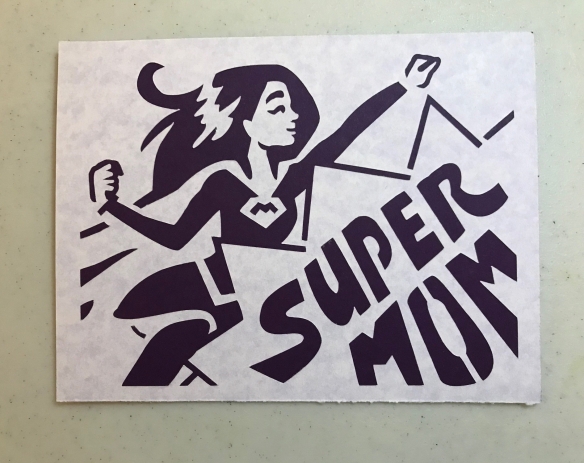
The only card I made this month was for my daughter-in-law for Mother’s Day from a Cricut design:

img_1529.jpg

Watching

My main other out-of-the-ordinary activity this month has been catching up on a few Marvel comics movies in order to see Avengers: Endgame. My youngest son watched Avengers: Infinity War and Spiderman: Homecoming with me at home, then we saw Captain Marvel and Endgame in theaters. So good, if you’re into that kind of thing! My only complaint was a bit more bad language than I remember the earlier movies having. Grr! This was also my first experience with our newly revamped theater, with recliners, menus, and waiters!

Most of what we watch on TV is off for the summer, but we usually enjoy America’s Got Talent, which began this week (although even with that you have to have the remote handy occasionally).

Writing

I finally got back into the book I am writing. I had mentioned before that I had completed the first draft, but needed to go back and do some heavy editing. The first chapter was going to be the biggest challenge, as I needed to reshape a lot there and wasn’t quite sure the best way to go about it. But I had a couple of good sessions with it this week, and I think (hope) I am over the hurdle of the worst part (of that chapter, at least). Editing seems harder for me than just typing whatever’s in my head or notes, but it’s rewarding to see it come together better.

Reading

As always, reading is a big part of every month. I’ve completed:

A Room of My Own by Ann Tatlock. A young girl’s coming of age during the Depression. Very good.

Travelers Rest, also by Ann Tatlock. A young man is paralyzed while in the military and wants to end his engagement, but his fiance still loves him. This didn’t end the way I thought it would, but it was quite good.

All the Way Home, again by Ann Tatlock. Are you seeing something of a pattern here? 🙂 I had enjoyed her I’ll Watch the Moon so much last month that I started reading all her books that I had collected through Kindle sales. This one involves two girls in the 1930s, one from a dysfunctional Irish family and one from a Japanese-American family, who become fast friends until the Japanese are sent to internment camps during WW2. Excellent.

The Pickwick Papers by Charles Dickens, the comic misadventures of members of a gentlemen’s club. While this is not my favorite of his books, I enjoyed it much more than I thought I would.

I just finished How to Understand and Apply the New Testament by Andrew David Naselli, so I’ll have a review up next week. I’m currently reading:

  • Close to Home by Deborah Raney
  • Wuthering Heights by Emily Bronte
  • The Returning by Ann Tatlock
  • Loving People: How to Love and Be Loved by John Townsend

Blogging

Around the blog, I share five favorite parts of each week on the Friday’s Fave Fives, and I share interesting links via Laudable Linkage on a few Saturdays a month – just however often I gather enough for a list. Elsewhere on the blog this month, I’ve shared thoughts on:

  • Trusting or Grasping. Even as I am ostensibly trusting God to meet my needs, sometimes I feel compelled to manipulate events to “help” Him out.
  • The Joys and Pains of Mother’s Day. I enjoy the holiday, but for some it is painful.
  • Recapture Your Wonder. Sometimes we can get into a rut with our Bible reading and prayer time and take God for granted. These thought help me get back to that awe that we should have towards God. This was one of my favorite posts to write, and I’m sure I’ll need to reread it many times in the future.
  • When the Lines Aren’t Clear. God is very specific about some things, but not others. How we handle those others reveals our heart.

A question for you

I started doing these monthly recaps because I enjoy reading others’ recaps and because Shannan and Linda invite us to link end-of-month posts and because I missed the What’s On Your Nightstand link-ups 5 Minutes for Books used to host. I really enjoy doing them, but I wonder how beneficial they are to you. Would you mind letting me know if you enjoy reading them or if you think they are too redundant? I’m not just fishing for comments – I’d really like to know if you like reading these or if you pass them by.

I hope you’ve had a good May. On to June!

(Sharing with Literary Musing Monday)

Book Review: All the Way Home

Home In the novel All the Way Home by Ann Tatlock, Augie O’Shaughnessy‘s father has died by his own hand in the 1930s. Her mother takes what money they have left and moves her family in with her reluctant brother and his family. But Augie’s mother checks out and seeks respite in alcohol. Augie’s uncle is short-tempered and harsh; her aunt is a little more caring, but busy and distracted. Augie is mostly left to herself.

One day Augie wanders down to a park and meets a Japanese girl named Sunny, who invites Augie home. Augie becomes close with the whole kind and loving Yamagata family, spending more time with them than her own family. She even comes to consider herself Japanese.

Then Japan bombs Pearl Harbor, and the Yamagatas are sent away to an internment camp.

And Augie’s brother comes home from a Japanese prisoner of war camp and is never the same.

Fast forward twenty years, and Augie is a journalist specializing in civil rights stories. She has been asked to travel to Carver, Mississippi, to find out why no Negros have registered to vote even though the law allows them to. She finds more surprises than she bargained for.

I’ve read many WW2 novels, but none of them have touched on the Japanese internment camps. I had not known many details about them. It was interesting, but sad, to learn what happened to them. The fear was understandable: many experienced a similar fear of Middle Eastern people after 9/11. Like young Augie has to wrestle out for herself, no race of people is all good or all bad.

I’d like to tell him that there is no such thing as “they” or “them.” That there are only individuals with layer upon layer of experience, ideas, hopes, dreams, beliefs. That there are some Japanese who are really Americans, some whites who are really Negroes, some Irish-German-Americans who are really Japanese at heart. And that in spite of what a person appears to be or not to be, it’s the heart and not the face that matters.

I could begin again to differentiate, to see the faces of individuals rather than the blur of one large group. The Yamagatas had the eyes but not the soul of the people who had destroyed my brother. And that was what made them different.

Some of the civil rights era stories were both brutal and sad as well. Ann captured the struggles of everyone in the story in a realistic and heartfelt way. Her writing shines as well in a couple of turns of phrases I particularly liked:

I was already well aware of a hollow place inside of me, like an air bubble caught in a pane of glass.

Her painted eyelids were two blue robin’s eggs in a nest of clotted mascara.

The music filled what we would otherwise not have recognized as our parched souls, helping us realize the beauty that we longed for only when we heard it.

This book was a Christy award winner, and I can see why. A very good read.

(Sharing with Literary Musing Monday, Carole’s Books You Loved, Booknificent Thursday)


When the lines aren’t clear

I’ve been trying to cut down on sweets, so I set a guideline that I’d only have them twice a week. I didn’t want to make it a hard and fast rule: I wanted to allow room for special occasions, unexpected gifts, etc. I had done this before with success and without incessant cravings until a family vacation threw me off course for a while. But while trying to get back on track this time, cravings were rampant.

One day last week I was planning to go grocery shopping and bring home Chick-Fil-A for lunch afterward.  My previous habit for that restaurant was to order one of their chocolate chip cookies, which would become warm and gooey from being placed on top of the sandwiches in the bag. I looked forward to that experience again . . . except for my nagging conscience. I was still within my two-sweet limit. But it was early enough in the week that having the second sweet now would make the rest of the week difficult. So the better part of wisdom would be to forego dessert this time. But my mind sought justification for indulging. “Eating a cookie isn’t a sin, after all. And this is a special occasion: it’s not like I go to Chick-Fil-A every day.”

For hours I justified myself but did not feel completely at ease. Finally something came up which caused me to put my grocery shopping off until later, sidestepping the problem. But the whole experience set off a cascade of thinking.

We’ve all known people with the attitude, “If you can’t show me chapter and verse why something is wrong, you can’t say it’s wrong.” And we’ve probably all thought that way at times. In sane moments we can set wise principles. In temptation or longing, we go beyond principle. We want a definite line in the sand, and we’ll even look for ways around that.

I’ve often wondered why God left some matters to conscience rather than spelling out His preferences. Exactly when does enjoying good food cross over into gluttony? What are the parameters of modesty? What constitutes “going too far” in a physical relationship before marriage? What is the defining line between acceptable and worldly music? What is and is not acceptable on the Lord’s Day?

Some of these and like matters allow for differences in stages of spiritual maturity. Maybe God left some things open for evaluation in order to give people room to grow. The more we grow in the Lord and in knowledge of His Word, the more we become like Him. Also, some standards change with the culture: no one imposes standards of modesty from the 1850s to the current day.

But I’ve often thought that these matters expose our hearts. What’s our basic motivation? Do we really want to please the Lord, or do we just want an excuse to do our own will? Can we follow the spirit of the law, or do we have to have the letter spelled out?

Or do we go to the opposite extreme of legalism? We don’t know where the lines are, so we draw our own. We set our standards high, feel self-righteous when we keep them, and then judge everyone who doesn’t measure up.

If God hasn’t spelled out specifics in some of these areas, and people on different sides of the issues still love God and want to please Him, then do these issues really matter? Well, yes they do. Romans 14 gives several guidelines. Do everything you do as unto the Lord (verses 5-8). We’ll give account to Him for all we do (verses 10-12). Don’t just follow what someone else does, but be fully convinced in your own mind (verses 5, 22-23). Don’t judge or despise someone who differs from you in these matters (verse 3). Don’t think just about yourself, but think also about the effect your actions might have on others (verses 14-21). Seek for what makes for peace and edifying (verse 19).

1 Corinthians helps as well:

“I have the right to do anything,” you say–but not everything is beneficial.
“I have the right to do anything”–but I will not be mastered by anything.
(6:12, NIV).
“I have the right to do anything”–but not everything is constructive.
(10:23b, NASB).

The freedom we have in Christ is not freedom to do anything we want: it’s the freedom to seek His grace to yield to Him and reign ourselves in for love of Him and others.

One of our former pastors used to say that if we truly kept the two greatest commandments, to love God with all our heart, soul, mind and strength and to love our neighbor as ourselves, we wouldn’t need the specifics laid out. Those two principles would guide everything we do. Yet, because of our penchant for seeking loopholes and exceptions and our own way, we have to have things spelled out for us. Because we don’t keep the spirit of the law, we get the letter.

But how do we make decisions for those things that are not specifically spelled out? Is our heart’s desire ultimately to to see how close we can get to the line of sin without going over — or to please God, glorify Him, and love others?

(Sharing with Inspire Me Monday, Tell His Story, Let’s Have Coffee,
Porch Stories, Share a Link Wednesday, Faith on Fire, Grace and Truth.

Links do not imply 100% endorsement of everything on others’ blogs)

Grace and Truth

Laudable Linkage

Here’s my latest roundup of good reads on the Web:

Worship Is Not a Reflection of How You Feel. HT to Christopher Yuan. “Worship is not a depiction of our feelings, but a declaration of our faith.”

Bad News Comes, But Good News Wins. “Every time I open my Bible, every time I recall a promise from these pages, good news wins. So let the bad news come—it will soon be buried with my bones anyway (whether in one year or fifty). But good news gains momentum.”

What I Pack in My Spiritual First Aid Kit.

A Tree Between Two Mountains, HT to Challies. “We must not fall into the trap of only seeing God on the mountain tops of life; falsely believing that if we soak enough of Him in in those moments it will sustain us until the next peak. God is in the valley also. God is in the dry and barren places. God meets us in the shadow of the Broom tree. There, as he does in all places, God sustains us with what is needed for the journey ahead.”

On Being the Church for the Weak, HT to Out of the Ordinary. “We have met some incredibly empathetic, high-capacity people, dedicated to serving the weakest. We have also been in organizations that are tone deaf to voices of lament, where the strong are honored and the weak are told to trust God.”

Most Abortion-minded Woman Aren’t Calculating Killers. They’re Afraid. HT to Challies. Compassion and consideration for the woman considering an abortion is too often forgotten in our rightful rhetoric against it. I’m so thankful for our local crisis pregnancy center, which goes beyond just trying to avoid abortions and seeks ways to counsel and support women who do choose to keep their pregnancies.

Don’t Forget the Good Book. “These stories that we love, about rabbits with swords and lizard-slaying siblings and worlds that a lion sings into existence, they are the sign-posts. They have a glorious purpose. But God forbid we get so absorbed with studying them alone that we never arrive at the destination toward which they point.”

Were the First Christians Socialists? HT to Challies.

The View from ‘Doralzuela’, HT to Challies. “When will those who hear socialism’s siren song ever learn? Maybe listening to Venezuelans recently arrived in Doral will help.”

How to Call Christians Out on Twitter, or reasons you might want to at least think about it first. HT to Challies.

To Be Found, HT to Challies. “‘I know you don’t know where you are, Grandma, but Jesus knows where you are – He’s found you; you’re found in Him.’ ‘Yes,’ she said. Her anxiousness was still there, but there was assurance mixed with it now.”

This video is a bit longer than I usually post here, but I found it fascinating. I was going to watch only a minute or so, but before I knew it, the video was nearly over. This is about a man who makes all kinds of paper props for TV and films, HT to Steve Laube. I didn’t realize just how many paper props there were until now!

Happy Saturday!