Book Review: Finding Christ in Christmas

Tozer ChristmasTozer wrote the words contained in Finding Christ in Christmas, but he didn’t actually write the book. Someone pulled together quotes relating to Christmas and the Advent season from Tozer’s other writings. Thus there’s no flow of logical thought from one entry to the next, (at least, I didn’t pick up on it if it was there). Each is taken out of context, and some leave the reader hanging a bit. Whoever compiled these did not note what writings each of the entries comes from, so there is not a way to look up the context of the entry unless you google a phrase and find a reference online.

Despite those failings, the book contains some nuggets worthy of consideration. I’ve never found Tozer to be a warm, cozy devotional speaker. Rather, he makes us think with his incisive rhetoric. And that, to me, is what gives this book value.

Here are just a few samples:

Thousands each year find their desire for salvation and holiness becoming too acute to bear, and turn to the One who was born in a manger to die on a cross. Then the fleeting beauty that is Christmas enters their hearts to dwell there forever. For who is it that imparts such beauty to the Christmas story? It is none other than Jesus, the Altogether Lovely.

He sacrificed many pure enjoyments to give Himself to the holy work of moral rescue…He pleased not Himself but lived for the emergency; and as He was so are we in this world.

The Law was given by Moses, but that was all that Moses could do. He could only “command” righteousness. In contrast, only Jesus Christ produces righteousness. All that Moses could do was to forbid us to sin. In contrast, Jesus Christ came to save us from sin. Moses could not save anyone, but Jesus Christ is both Savior and Lord.

[On Isaiah 53:2 portraying the Messiah being “a root out of dry ground] Had Israel been like a young woman at the peak of her reproductive powers, the rising of such a prodigy as Jesus from within her might have had some logic in it; but He was born of Israel when her powers had waned and her strength had withered. By no stretch of fancy could anyone who knew Israel in that day have visioned Jesus as her offspring. Israel was dry ground —politically, morally and spiritually effete.

The theology of Christmas too easily gets lost under the gay wrappings, yet apart from its theological meaning it really has none at all.

Though we are keenly aware of the abuses that have grown up around the holiday season, we are still not willing to surrender this ancient and loved Christmas Day to the enemy.

Man is lost but not abandoned. Had men not been lost, no Savior would have been required. Had they been abandoned no Savior would have come.

In our mad materialism we have turned beauty into ashes, prostituted every normal emotion and made merchandise of the holiest gift the world ever knew. Christ came to bring peace and we celebrate His coming by making peace impossible for six weeks of each year. Not peace but tension, fatigue and irritation rule the Christmas season. He came to free us of debt and many respond by going deep into debt each year to buy enervating luxuries for people who do not appreciate them. He came to help the poor and we heap gifts upon those who do not need them. The simple token given out of love has been displaced by expensive presents given because we have been caught in a squeeze and don’t know how to back out of it. Not the beauty of the Lord our God is found in such a situation, but the ugliness and deformity of human sin.

The editors ended the compilation with the last quote, which, though convicting, ends the book on a note of condemnation. I wish they had ended with a quote of hope.

There are readings for December 1 – 25, and each day’s reading ranges from just a paragraph to little more than a page. So the selections are easily readable.

Despite the frustrations I mentioned, I found the book highly beneficial.

(Sharing with Semicolon‘s Saturday Review of Books, and Carole’s Books You Loved)

Friday’s Fave Five

christmas FFF

It’s Friday, time to look back over the blessings of the week with Susanne at Living to Tell the Story and other friends.

I imagine this week is as busy for you as it has been for me, so I’ll make it short and sweet today. 🙂

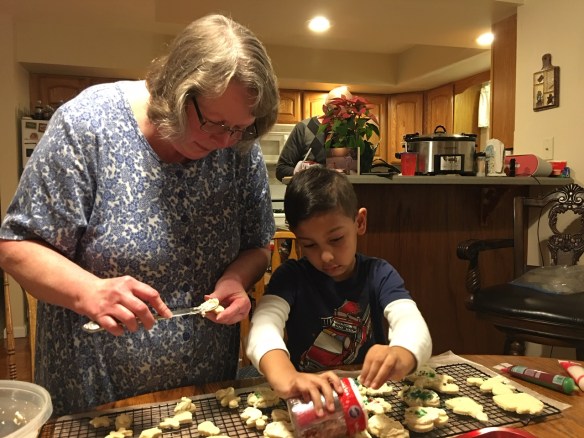
1. Making Christmas cookies with Timothy.

IMG_0005(4)

2. Good food and fellowship! Our church had a potluck dinner after services on Sunday, and then I had lunch out with a friend later in the week.

3. A text from my husband that he was making dinner. And not just any dinner! He had gotten some beef and chicken, marinated them, and cooked them in the sous vide cooker my oldest son had made for him. Not only was that helpful during a busy week, but it was really good!

4. A big answer to a small prayer. I’ll say more about it later, but I acknowledged while bringing it before God that my request was relatively minor in the grand scheme of things. I’d adjust if it wasn’t granted, but it would be a major blessing to me to have the answer I was seeking. To see God abundantly bless in response just touched my heart that He cares about all the concerns of His children.

5. Our 39th anniversary is today!

I hope your week is going well, and I wish you a wonderful Christmas!


Book Review: The Christmas Bride

Christmas Bride The Christmas Bride by Melanie Dobson is based on her own ancestors five generations back who were married by lot. That’s how things were done in the Moravian community, known then in the 1750s as the Unity of the Brethren under Count Nicolaus Zinzendorf. If a man wanted to marry, he went to the brethren with his request. They consulted the lot, which, for them, was a tube with three pieces of paper in it. One said “Yes,” one said “No,” and one was blank, indicating “Wait.” If the answer was yes, the woman still had the opportunity to accept or decline. Sometimes the couple knew each other beforehand and were in love: other times they did not know each other or didn’t really have a relationship, but the man needed to marry to participate in certain forms of ministry. Melanie writes in her afterword that many women were reluctant to marry in this way but accepted it as the will of God. Her own ancestors were married for fifty-eight years. The couple in her book were not based entirely on her ancestors, as she did not know much else about them, but she researched the Moravian customs at the time and represented them faithfully.

This story opens with the wedding of Susanna and Christian Boehler – and several couples in a group wedding. Susanna had seen Christian from afar and admired him, but she did not know him. She was excited about their upcoming ministry to Indians in Pennsylvania and willing to accept marriage as part of God’s will. She was understandably concerned about what her relationship with her husband would be like, but she was willing to be a good wife. Yet, at the end of the ceremony when Christian simply nodded to her and left the building, she was disappointed. What she didn’t know was that Christian had loved another, who was marrying someone else in the same ceremony.

Married couples in the Brethren did not live together at this time in Moravian history. The community was divided into “choirs” – not singers, but groups divided by gender and marital status. the single woman lived in one house, the married women in another, etc. Married couples had the opportunity for a one-hour private meeting once a week in a room for that purpose. Children live in the community nursery.

At first Christian and Susanna were married in name only and lived much as they has as singles. They’re awkward with each other, and Susanna is dismayed when she’s too ill to accompany Christian on his first mission. He’s gone for more than six months, but she finds ways to be useful. She befriends an Indian woman in the community, begins to learn the language, and enjoys visiting the children in the nursery.

Most of the Indians that the Moravians visit are not interested in their message. Some are friendly: others are openly hostile, not just due to a message about a different religion, but because of other issues with the French and British. The Moravians aren’t associated with the fighting and practices of the other white men, but it’s hard for the Indians to distinguish between them. But a few do believe – an individual or a handful here and there.

The rest of the book details the growing ministry to the Indians with its problems and blessings, Christian and Susanna’s getting to know each other amidst fits and starts, and a subplot with Susanna’s friend, Catherine, who comes from a more refined family and has trouble adjusting the the hardships of their life – and who, unbeknownst to Susanna at first, was the woman Christian originally loved.

Melanie’s afterword shares that the separation of families only lasted for about twenty years altogether. The purpose of that separation was so that people couple serve the Lord and community without the problems and distractions of family life. But, as Melanie shows, that separation strained family relationships, and some began to wonder at the wisdom of it.

I don’t know much about Zinzendorf. I heard bits and pieces from his life in a presentation on BBN Radio produced by Moody Bible Institute, but not enough to have a firm grasp of it. From what I understand, he preached and taught the gospel. But I would differ from him in many aspects, family living being a major one.

The physical side of the Boehler’s relationship is an issue in the story, because there was none at first. When they finally do come to love each other in that way,  there’s just a bit more description leading up to it than I care for, but nothing explicit.

This book was originally published under the title Love Finds you in Nazareth, Pennsylvania. Melanie graciously offered the Kindle version of it free under its new title to subscribers of her newsletter.

It was interesting to learn of this background of the Moravians, and I enjoyed the different plotlines. I especially enjoyed the way Christian and Susanna and Catherine grew in their faith through their circumstances.

Book Review: The Christmas Hirelings

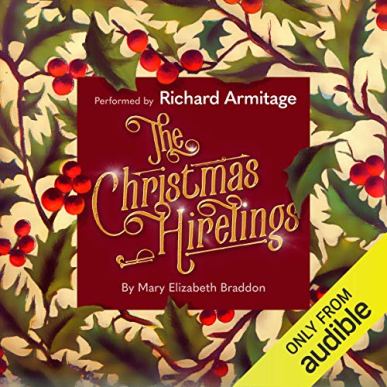
Christmas Hirelings I had never heard of The Christmas Hirelings, written in 1894 by Mary Elizabeth Braddon, but an audiobook of it was Audible‘s free Christmas gift to members, so I tried it out. I loved it! Braddon is known for more “sensational” writings: from what I understand, this is the only story of its kind that she wrote. But it hits all the right notes for a classic Victorian Christmas tale.

The story opens with Sir John Penlyon, his niece Adela, and his good friend Danby. As Sir John grouses about how boring Christmas is, Danby says “Nobody knows how to enjoy Christmas if he has no children to make happy. If one has no children of one’s own, one ought to hire some for the Christmas – week.” He then proposes to do just that, with Sir John’s permission. There’s much discussion about what kind of children should be brought, and Sir John finally tells Danby he can do anything he likes as long as he doesn’t bother Sir John about it.

Then the author switches to Sir John’s backstory and how he came to be a gruff old man alone in his mansion, and his story unexpectedly touched my heart. He was no Scrooge: he was generous and kind, unless crossed. But life’s circumstances had sapped all the joy from his life. At one point he said, “My life was barren, but peaceful. What more did I want?” Much later in the book, Danby said one reason he proposed this experiment was to prove to Sir John that he did indeed have a heart.

The children and Sir John get off on the wrong foot at first until the youngest, four-year-old Moppet, bravely attaches herself to him. One of my favorites of their exchanges:

Moppet: “Little girls sit on their fathers’ knees, don’t they ?”

Sir John: “Sometimes.”

“I mean good little girls. And that isn’t being forward, is it ?”

“No, Moppet, no. Fathers are made to be sat upon.”

The joy of having children around and doing for them enlivens the whole house and all its occupants, until tragedy strikes.

I had an idea where the story was going and who the children actually were by chapter three, but I still enjoyed seeing if I was right (I was) and how everything would play out (not like I expected!)

Oddly, there’s not a Kindle version, but the text is online here. The audiobook was superbly read by Richard Armitage (Thorin Oakenshield in Peter Jackson’s Hobbit movies). I nearly forgot at one point that one man was voicing all the characters. Here’s a bit of background for Audible’s recording with Armitage:

Another free audiobook is available from Librivox. Although the narration can’t compare to Armitage’s, it does have the advantage of a preface from Braddon telling how the book came to be and who Danby and Moppet are based on. The Librivox narration is also on YouTube here.

Thanks so much to Audible for introducing me to this lovely story.

(Sharing with Semicolon‘s Saturday Review of Books and Carole’s Books You Loved)

Christmas Grief, Christmas Hope, Christmas Joy

grave-at-christmas

December’s festivities are tempered with sorrow for some. My mother passed away December 10, my father December 12, and my grandmother Christmas Eve, each in different years. In more recent years a college friend and our only family dog died on December 21. My brother once commented that he just wanted to cancel the whole month.

The death of a loved any any time of year can shadow the whole Christmas season as we miss our normal interactions with that loved one. Grief begins as a flood but slowly transforms into a stream that occasionally overflows its banks. Even several years after a loss, it’s not abnormal to be caught off guard by a memory or a longing leading to a good crying jag.

I mentioned a couple of weeks ago that there is no one right way to celebrate Christmas. That’s true not only among different families or individuals, but even within the same hearts in different years.

When someone is grieving over the holidays, they may not want to participate in some of the “normal” happy pastimes. It’s not that they don’t ever laugh or enjoy gatherings. But as Sherry said, “I am enjoying the traditional holiday celebrations, and at the same time they move me to tears, sad tears for things that have been lost this year. I am singing the music, and yet I’m tired of the froth of jingling bells and pa-rumpumpum.” I remember almost wishing that we still observed periods of mourning with wearing black or some sign of “Grief in progress” — not to rain on anyone else’s good time, but just to let people know there was woundedness under the surface. Just as physical wounds need tenderness while healing, so do emotional ones.

Other events can cast a pall over Christmas: illness, job loss, a family estrangement, etc. One Christmas we were all sick as dogs, and my father-in-law had just had a major health crisis and wanted us to come up from SC to ID to visit. There was just no way we could drag ourselves onto a plane until antibiotics had kicked in. But a few days later we did go, and if I remember correctly, that was the last time any of us except my husband saw him alive. In retrospect we were glad we went, though it wasn’t the merriest of Christmases. A good friend grieved over “ruining” her family’s Christmas by being in the hospital with a severe kidney infection. Another wrote about visiting her husband in prison for Christmas. Quilly commented about being homeless one Christmas.

If you’re grieving this Christmas, don’t feel guilty if you’re not quite into the “froth” this year.  Give yourself time to heal. It’s ok to pull back and have a quieter Christmas. There may be times to go through with some holiday festivities for family’s sake — and, truly, those times can help keep you from the doldrums.

Perhaps a new tradition commemorating your loved one might help. My step-father and sisters who live near my mother’s grave go out together as a family to put up a little Christmas tree there. I’m too far away to join them, but every year on the anniversary of my mom’s death, I have a private little moment of remembrance. A family we used to know whose daughter was killed by a drunk driver requested that their church host a special service in December for those who have lost loved ones in that way. Some men from our former church participated in a biking event together in memory of our pastor who died of liver cancer.

On the other hand, don’t feel guilty for enjoying Christmas. Experiencing joy shows no disrespect to your loved one or your circumstances. Your loved one would want to be remembered but would also want you to be happy. Sherry shared how making a list of reasons to celebrate Christmas helped. Look for the good things to rejoice in. My two friends mentioned above, Lizzie and Quilly, mentioned reasons for rejoicing in the midst visiting prison and homelessness. E-mom left a valuable comment that we can treasure up the memories of good Christmases to tide us over the not so good ones, and then look forward to better things ahead.

As I mentioned before, the first Christmas was not all about the froth, either. It was messy, lonely, and painful, yet out of it was born the Savior of the world and the hope of mankind.

If it weren’t for the hope that Christmas represents, I wouldn’t be able to endure the losses. The Christmas carol “O Holy Night” shares “A thrill of hope, the weary world rejoices, For yonder breaks a new and glorious morn.” “Good Christian Men, Rejoice” comforts, “Now ye hear of endless bliss: Joy! Joy! Jesus Christ was born for this!…Now ye need not fear the grave: Peace! Peace! Jesus Christ was born to save.”

The baby in the manger didn’t stay a baby.  He was no ordinary child: the only begotten Son of the Father came to earth for a special mission. “Mild he lays his glory by, born that man no more may die, born to raise the sons of earth, born to give us second birth.” He taught, He healed, He lived as an example, but His main purpose in coming was to take sin away by bearing it Himself on the cross some 33 years after His birth, so that all who believe in Him could have their sins forgiven and live with Him in heaven some day. I have the hope of eternal life and the hope of seeing my loved ones again. Biblical hope isn’t tremulous: it’s a confident expectation.

But eternal life doesn’t begin at death: it begins the moment God’s gift of faith is received. We have hope not only for life after death, but for joy and peace in the midst of sorrow, for help, grace, strength, love in this life as well. “Thanks be unto God for His unspeakable gift.”

Rejoice in that hope and promise. Draw near to Him who has borne our griefs and carries our sorrows until grief and sorrow are done away forever.

(This post is a blending of a previous post from the archives and a newspaper article published in 2011.)

(Sharing with Inspire me Monday, Literary Musing Monday, Tell His Story, Let’s Have Coffee, Porch Stories, Faith on Fire)

Laudable Linkage

IMG_0195

Here’s my latest list of good reads found online recently:

America Is Intolerably Intolerant , HT to Challies, about public shaming and Internet mob rule regardless of facts. “I don’t think we can look at any of these things entirely in isolation. Instead, I see them as symptoms of a post-Christian America that has become intolerably intolerant. It is a society without grace. It’s a society that’s all too often devoid of mercy — or in which the merciful don’t have nearly the same cultural power as the merciless.”

Seven Lessons for Engaging with the Secular (Liberal) Academy, HT to Out of the Ordinary, from someone who went from liberalism to evangelicalism.

Every Sin / Every Temptation Not Taken, HT to Challies. What happens when we sin or resist sin.

The Story Behind Longfelllow’s “I Heard the Bells on Christmas Day.”

Someone’s list of the Top 10 Theology Stories of 2018, HT to Challies.

And, finally, this good thought from Challies:

Friday’s Fave Five

christmas FFF

It’s Friday, time to look back over the blessings of the week with Susanne at Living to Tell the Story and other friends.

The days keep ticking by, and here we are halfway through December already! Funny how time keep the same pace, yet seems faster or slower than it really is. Friday’s Fave Five provides a time to slow down and savor a bit. Here are some favorite parts of the last week:

1. Lunch with a friend – not the friend I have often mentioned meeting with. We’ve had each other’s families over for dinner, but this was our first lunch get-together – and I look forward to more!

2. A family outing. My son and daughter-in-law invited us to a Christmas craft fair near the downtown area last Saturday. The craft fair itself was kind of a bust – a lot of essential oils, bath bombs, and home maintenance stuff, like gutter guards. Very few actual handmaid crafts (except I guess the oils and bath stuff might have been handmade, but, still – not at all like the craft fairs I used to attend. And artificial scents give me a headache anyway.) But right near the end we found some nice handmade items and a few gifts. The outing was fun even though the fair itself didn’t live up to my expectations. Timothy got some free treats. 🙂 Then we went to lunch at a favorite downtown restaurant. I’m so glad Knoxville’s downtown area isn’t overwhelming like those of larger cities where we have lived. I brought this chocolate-covered peanut butter cookie home for later from the restaurant – sooo good!

IMG_1229

3. Ticking things off the ol’ Christmas to-do list. I finished the family newsletter and Christmas cards this week and got those sent out. I think I have most of the shopping done except for a few items I need to confer with my husband about. I’ve made a dent in the wrapping and have two packages to send out tomorrow (Friday – I am writing this Thursday). I make Christmas cards for the immediate family, so I need to start those – hopefully tomorrow. And somewhere in the next week I hope to get a haircut.

4. Free books. A few weeks back I won Adam’s quarterly mini-challenge for the TBR Pile Challenge, with the prize being the book of my choice from Book Depository (I chose 84, Charing Cross, one that has been on my to-read list for ages). I also won a copy of Karen Sebastian‘s book, The Power of Hope for Caregivers – I think as a result of a comment on her blog. An author whose newsletter I get offered a free Kindle copy of one of her books for subscribers, and Audible, as it does every December, offered its members a free gift. This year it’s The Christmas Hirelings by Mary Elizabeth Braddon. It’s quite good so far!

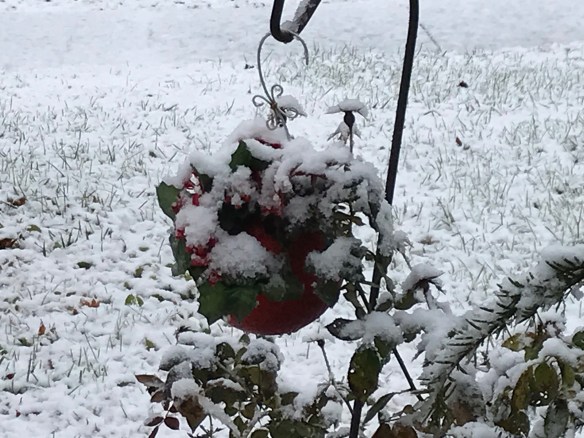
5. A snow day. I have to admit I don’t enjoy snow days as much as I did when the kids were young. Usually when it snows, my husband goes wherever he has to go anyway, and my mother-in-law’s caregivers or bath aides don’t come. But this time it snowed on Sunday. The caregiver did come and my husband didn’t have to be anywhere.

IMG_1231

As you can see, there’s not much snow at this point, but we did get more. Since the road situation was iffy, our church cancelled services. Though I missed meeting with everyone, it was nice to have an unexpected whole day of rest. Jason and Mittu sent us a video of Timothy enjoying the snow.

And that’s it for this week! Happy Friday!

Book Review: I’ll Be Home for Christmas

Home I’ll Be Home For Christmas: Four Inspirational Holiday Novellas by Lenora Worth, Belle Calhoune, Jill Kemerer, and Allie Pleiter contains, as the title suggests, four stories that involve coming “home” in some way.

In A Hope Valley Christmas by Belle Calhoune, Mallory Jefferson is visiting her family over the holidays. The one person she hopes she doesn’t run into is Colton James. She’d had a serious crush on him back in the day, and her youthful exuberance and infatuation had led to some pretty embarrassing attempts to get his attention and show him her feelings. Yet who should walk into her father’s mechanic shop, just when she’s helping out, disheveled, and greasy, but Colton. Her father suggests she give Colton a ride home. As Colton and Mallory talk, Colton tells her his grandfather isn’t doing well. His grandfather wants to see Colton happy and settled with someone he loves. To ease his grandfather’s mind, Colton told him he did have a girlfriend. Then Colton gets the bright idea that Mallory can stand-in as his pretend girlfriend at an upcoming family dinner. Reluctantly, Mallory agrees, and they get to know each other as they are now, and not as they were in their high school memories.

In Sugarplums and Second Chances by Jill Kemerer, Chase McGill is a former NFL star trying to recover from mistakes in his past. In a fit of vengeance he had assaulted his wife’s killer and served time. Now he’s trying to make up for lost time with his son as well as help out another young man. Courtney Trudesta is the widow of his former teammate and wrote him regularly to encourage him while he was in prison. Courtney stops by on her way to a new job to visit with Chase for a few days. As they try to help each other deal with their losses and find their purpose in life, they wonder if those purposes might include each other.

In A Brilliant Christmas by Allie Pleiter, Zoe Walters’ passion is the community arts center that she runs. She has mixed feelings about the new artist-in-residence for the next six weeks: Nigel Langdon, a famous animator who has fallen from Hollywood graces. Besides the fact that he’s not currently popular, his gruffness doesn’t promise good things for his time with “her kids.” His first session does get off to a rocky start. But Zoe begins to fathom the hurt and the heart underneath his crusty exterior, and her devotion to her kids and program opens his eyes.

Seashell Santa by Lenora Worth is a different kind of Christmas in Key West, Florida. Navy Seal Rick Houston‘s beloved grandfather, Pappy, has died and requested that Rick come to his old cabin at Christmas and disperse his ashes. Who else should show up at the cabin but Willa Kincaid, Rick’s ex-girlfriend, who had received the same request. Realizing Pappy’s trick, they decide to put aside their differences to honor his wishes. In the meantime, as their arguing gives way to further discussion, they each realize they didn’t know everything about the other’s motives for their previous actions.

I’m not a fan of romances in general, both because of the silliness of tingling sensations and such, descriptions of kisses, and the end-all of romances being the declaration of true love (when, in real life, that’s just the beginning.) However, I do like when the characters have to learn or overcome something in the process of coming into a relationship, and that happens in each of these stories. Some of the stories have more of a faith element than the others. A couple of them contain characters from the authors’ other series, but the stories were complete enough in themselves that I didn’t feel I was missing pieces.

My favorite was Allie Pleiter‘s Brilliant Christmas. Both the story itself and the writing were refreshingly different. I’ll be looking up more of her work in the future. My favorite line from the book came from her story:

Our job is to bring out whatever talent or self-expression is there. Help them see that picking up a paintbrush might just be more powerful than picking up a knife. Get their emotions out in ways that don’t involve sending each other to the emergency room.

My least favorite line in the book came from Lenora’s story, about a character who “put out feelers to the Big Guy in the sky.” Big Guy in the sky? Seriously?

This collection is not showing up on Amazon anymore, but Sugarplums and Second Chances and A Brilliant Christmas are available individually. I’ve not read any of these authors, but I used to follow a blog that Lenora contributed to, so that’s probably what prompted this purchase. All in all it was a nice Christmas read.

(Sharing with Semicolon‘s Saturday Review of Books, Literary Musing Monday, and Carole’s Books You Loved)
Two Reading Challenge Wrap-ups

I have been finished with these two challenges for months, but just have not written the wrap-up posts for them until now.

Karen at Books and Chocolate hosts the Back to the Classics Challenge for reading classics at least 50 years old.

I enjoy this challenge because I was not exposed to many classics as I grew up, and this challenge inspires me to expand my horizons and explore books I might not otherwise read. I’m happy to report that I have read all 12 classics on my list (I actually read 13, but no extra points for extra books. 🙂 ). The titles link back to my reviews:

  • A 19th century classic. Villette by Charlotte Bronte (1853)(Finished 6/30/18)
  • A 20th century classic (published before 1968). The Story of My Life by Helen Keller (1903)(Finished 3/31/18)
  • A classic by a woman author. Adam Bede by George Eliot (Mary Anne Evans)(1859)(Finished 5/19/18)
  • A classic in translation (Any book originally written published in a language other than your native language.) 20,000 Leagues Under the Sea by Jules Verne (1870)(Finished 1/26/18)
  • A children’s classic. The Secret Garden by Frances Hodgson Burnett (1911)(Finished 2/3/18)
  • A classic crime story, fiction or non-fiction, which she goes on to say can be a detective or spy novel. The Man Who Was Thursday by G. K. Chesterton. (1908)(Finished 1/18/18)
  • A classic travel or journey narrative, fiction or non-fiction. Journey to the Center of the Earth by Jules Verne (Finished 2/17/18)
  • A classic with a single-word title (no articles). Frankenstein by Mary Shelley (Finished 3/12/18)
  • A classic with a color in the title. Where the Red Fern Grows by Wilson Rawls (1961)(Finished 3/17/18)
  • A classic by an author that’s new to you. He Fell in Love With His Wife by Edward Payson Roe (1866)(Finished 4/8/18) and Invincible Louisa: The Story of the Author of Little Women by Cornelia Meigs (1933) (Finished 6/25/18)
  • A classic that scares you (due to its length or it intimidates you in some way). The Hunchback of Notre Dame by Victor Hugo. (1831)(Finished 8/4/18).
  • Re-read a favorite classic. Ben-Hur: A Tale of the Christ by Lew Wallace, (1880)(Finished 4/17/18)

Karen allows for three children’s classics, and I am counting Where the Red Fern Grows, The Secret Garden, and Journey to the Center of the Earth for those. I’m not counting 20,000 Leagues Under the Sea because nothing I read about it indicated it was written for children.

Karen likes for us to let her know how many entries we earned for her drawing: I earned three. She also requests an email here: mine is barbarah06 (at) gmail (dot) com.

I enjoyed all of these except Journey to the Center of the Earth, but I think my favorite is He Fell in Love With His Wife. Adam Bede would be a close second. Frankenstein was the biggest surprise.

2018tbrbutton
Adam at Roof Beam Reader hosts the TBR Pile Challenge to encourage us to get to those books on our shelves, Kindles, or TBR lists. For this one we had to name the books we were going to read, along with two alternates (in case we couldn’t get through a couple on our list). The books for this challenge had to have been published 2016 and earlier.

I read thirteen books altogether. Titles link back to my reviews.

  1. The Secret Garden by Frances Hodgson Burnett (Finished 2/3/18)
  2. The Man Who Was Thursday by G. K. Chesterton (Finished 1/18/18)
  3. Frankenstein by Mary Shelley (Finished 3/12/18)
  4. Where the Red Fern Grows by Wilson Rawls (Finished 3/17/18)
  5. Adam Bede by George Eliot (1859)(Finished 5/19/18)
  6. He Fell in Love With His Wife by Edward Payson Roe (1866, Finished 4/8/18)
  7. 20,000 Leagues Under the Sea by Jules Verne (1870, Finished 1/26/18)
  8. Journey to the Center of the Earth by Jules Verne (Finished 2/17/18)
  9. Ghost Boy: The Miraculous Escape of a Misdiagnosed Boy Trapped Inside His own Body by Martin Pistorious (2013, Finished 1/8/18)
  10. Going Like Sixty by Richard Armour. Set this one aside, disappointed in the content.
  11. Sins of the Past by Dee Henderson, Dani Pettrey, and Lynette Easton (2016, Finished 3/28/18)
  12. Another Way Home by Deborah Raney (2015, Finished 4/16/18)

Alternates: Anchor in the Storm by Sarah Sundin (2016, Finished 5/7/18) and Mozart’s Sister by Nancy Moser (2006)(Finished 1/28/18)

I enjoy both of these challenges and plan to participate in them again next year. Karen already has the 2019 Back to the Classics Challenge categories here.

I’m still working on the Mount TBR Challenge and the Literary Christmas Challenge.

Book Review: Twelve Days at Bleakly Manor

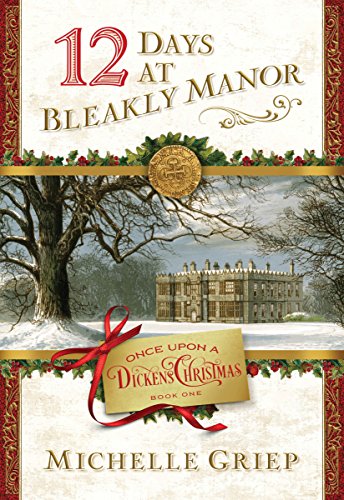
BleaklyTwelve Days at Bleakly Manor by Michelle Griep is the first in her Once Upon a Dickens Christmas series set in Victorian England.

Clara Chapman’s family has lost its fortune, and the person seemingly to blame was her former fiance, Benjamin Lane. Not only did Ben abscond with the family fortune, but he left her at the altar with no explanation. She’s been living with an aunt, trying to survive in reduced circumstances.

Out of the blue Clara receives an invitation from an unnamed host to Bleakly Manor. If Clara can stay the entire twelve days of Christmas, she’ll receive 500 pounds. At her aunt’s urging, Clara accepts the invitation.

Clara finds no host at Bleakly Manor, but she is surprised to see an assortment of people there who have all been promised various rewards if they will stay twelve days. A late and most startling arrival is none other than Ben!

As the participants get to know one another, personalities clash. The host remains absent. And odd occurrences begin happening: one person’s jewels go missing, strange foods are served at mealtimes, accidents happen that turn out not to be accidents. And then the group is informed that only one of them will win what they were promised.

This book started out as a cozy mystery, dragged just a bit in the middle for me, and then took a darker turn as the “accidents” increased in intensity.

I had to look up my review of Dickens’ Bleak House to remind myself of the characters there and see the parallels. This story is not meant to be a point-for-point retelling, but it does contain elements of the plot and some characters.

All in all an enjoyable Christmas read.

(Sharing with Semicolon‘s Saturday Review of Books, Literary Musing Monday, and Carole’s Books You Loved