Friday’s Fave Five

Friday's Fave Five

March has felt both long and short. Here we at at the last Friday and FFF of the month. I’m sharing with Susanne and friends at Living to Tell the Story.

1. Shared dinner. Timothy texted one day to ask if his family could bring dinner over. Sure! A few hours later, they brought Salsarita’s to share.

2. Blooming trees. It’s been so nice to see trees blossoming in the neighborhood and around town. Of course, that means pollen is in the air as well. As someone said, there’s a cloud behind every silver lining. 🙂 But I love seeing color come back into the landscape.

3. Back to church. I have not been in a couple of weeks due to the digestive effects of antibiotics. But things have settled down enough that I was able to go Sunday and Wednesday.

4. A different camper. My husband had been contemplating trading in our RV for a camper that is pulled behind a car. The RV is more expensive to maintain with insurance and a service plan (needed in case of a breakdown on the road). Plus, we don’t use it as much as we thought we might. He went to a few places to look and found one he liked, and was able to negotiate the trade pretty much the way he wanted.

4. A new-to-us car. Jim had thought he could have a trailer hitch installed on his car to pull the camper, but found his car wasn’t rated to pull that much weight. At first we thought that would nix the RV trade. But then we discussed trading in Jim’s car for one that would be able to pull the camper. He found a small truck on his first scouting trip to look at what was available. He has always wanted a truck. 🙂 Plus, the cash from trading in the RV, along with trading in his old car, is going to just about pay for the new car. I’m thankful for God’s provision and a husband with a head for handling these things well.

How is your last week of the month wrapping up?

March Reflections

March Reflections

Though we still have a few days left in March, this seemed like a good time for my monthly wrap-up.

Like many of you are experiencing, spring has come in fits and spurts. We’re still having some cold nights and mornings, but the trend is toward warmer weather. I love this in-between season of not being too hot or cold.

Much of March has been taken up with healing from cellulitis. Like the change of seasons, and growth of any kind, and so many other things, healing seems to be an up and down endeavor. My spirits have risen and fallen multiple times a day, depending on how my leg looked at any given moment. But I think we’ve turned a corner. The area is looking better rather than worse most of the time now.

Family activities

We celebrated Jim’s birthday early in the month, and then “Pi Day” on 3.14. He, Jason, and Timothy stayed up late to watch the lunar eclipse. Otherwise, it’s been a fairly quiet month.

Creating

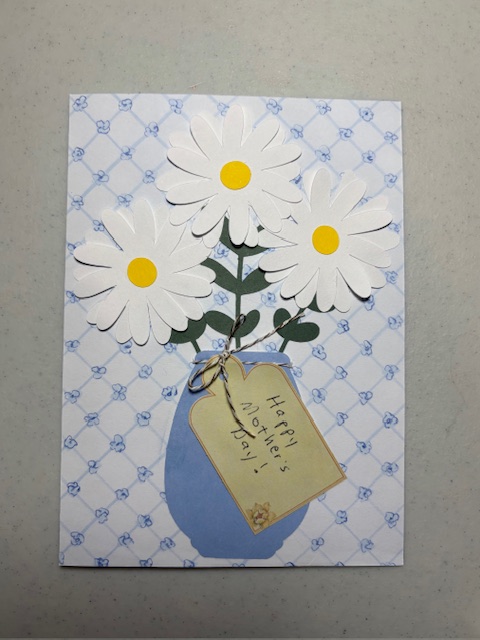
I just made one card this month, for Jim’s birthday.

Husband birthday card

This was done on the Cricut. It looks black, but it’s actually dark green card stock. That’s not quite Jim’s hair style. 🙂 I didn’t think to trim it. After I got this all done, I thought of ways I could have dressed it up a bit–but I didn’t have time to go back to it.

Watching

British period dramas are not Jim’s favorite viewing genre, but he’ll watch one with me occasionally. We both enjoyed North and South, based on Elizabeth Gaskell’s classic novel of the same title. A vicar has a crisis of conscience, causing him to step down from his ministry. A friend finds him a teaching position in a northern English town, which is an industrial area with a busy, dirty, harsher feel to it. His daughter, Margaret, has a negative run-in with the head of the local textile mill, Mr. Thornton. She also becomes friend with a girl whose lungs are diseased from working in the mill and her father, leader of the local labor union. There’s a bit of Pride and Prejudice vibe–not in balls and match-making mothers, but in the interactions and misunderstandings of the main characters. Jim had worked in textiles for much of his career, so the history of the textile industry was interesting to both of us. Watching the story has me wanting to read the book again.

Reagan was a 2024 movie about our 40th president, starring Dennis Quaid. Reagan was the first president I voted for and my favorite president of my lifetime, though of course he was not perfect. So much of this was history I lived through and remember. I especially loved the “Tear down this wall” scene before the Berlin wall. I thought Quaid portrayed him well. Oddly, the story is told from the viewpoint of a Soviet spy telling a younger spy how Reagan kept communism from spreading. The film may have leaned a little toward hero worship, but overall it was very good.

The Long Game was based on a book about a true story. In 1955 Texas, a group of Mexican-American young men worked as caddies at the local country club. They built their own golf course to play among themselves. A new principle, friends with a local golf pro (Dennis Quaid again), forms them into a high school team and struggles to get them accepted into tournaments. The prejudice they faced was maddening. I won’t spoil the ending, but it was very good. There are some mild language issues and some crude interactions, especially at the beginning.

House of David is a current series based on David of the Bible. There is a screen at the beginning of every episode saying the show creators are not attempting to be historically or biblically accurate, but have taken creative liberties for storytelling purposes. :/ I was dismayed that they portrayed David as an illegitimate son and showed Saul’s wife consorting with a witch or sorceress. Then Susanne told me about a video interview with the show’s creator and his reasoning. Evidently some Jewish people do believe David was illegitimate. I researched the reasoning for this, and I disagree with it. But I was glad to know the show’s creator wasn’t just inserting that idea for drama. I don’t usually watch Bible-based shows because they’re not always biblically accurate. I think when we say, “The Bible doesn’t say it happened this way, but it doesn’t say it didn’t,” we open ourselves up for just about anything. But keeping an eye open for inaccuracies, this has had some good features. I particularly liked the scene where David was anointed king by Samuel, and all the brothers looked at each other like, “What is going on?” Plus, I knew David was anointed long before he actually became king, but I don’t think I ever really caught the tension of being in Saul’s house as a musician, knowing David as been anointed as the next king but having to keep it a secret.

Do you have any good, clean, program recommendations?

Reading

Since last time, I finished (linked to my reviews):

I’m currently reading:

  • Hebrews for You by Michael Kruger with the ladies’ Bible study group
  • The Collected Letters of C.S. Lewis, Volume 3: Narnia, Cambridge, and Joy, 1950 – 1963, compiled by Walter Hooper.
  • The Return of the King by J. R. R. Tolkien
  • He Should Have Told the Bees by Amanda Cox
  • On the Edge of the Dark Sea of Darkness, Volume 1 of the Wingfeather Saga by Andrew Peterson.

Blogging

Besides the weekly Friday Fave Fives, Saturday Laudable Linkage, and book reviews, I’ve posted these since last time:

Writing

My latest chapter was up for critique this month with our writing group. As always, I received great advice from the other women in the group. I always leave those sessions energized and wishing I could do nothing else but write for a few days.

Next month, we have Timothy’s birthday and Easter to look forward to–as well as more consistent nice temperatures!

How was your March? Are you looking forward to anything in April?

Review: All the Lost Places

All the Lost Places

In All the Lost Places by Amanda Dykes, Daniel Goodman is a former thief in 1904 California who is trying to make restitution. He saves money from his lowly wages to repay those he robbed from. He has not seen his mother since he got out of prison: he feels he can’t face her until he has righted his wrongs.

When he hears that his mother may lose her home due to lack of finances, he looks for additional work. A seemingly chance encounter finds him interviewing with a man whose boss wants to make a “little Venice” in CA. At first Daniel applies just for physical labor. But upon finding out that someone is needed to translate one of Daniel’s favorite books and travel to Venice to sketch famous buildings, Daniel pushes hard for that role. His mother had come from Venice. She had sent him the book in question when he was in prison. He used to be able to draw–a head injury has left him unable to draw from memory any more, but he can draw something if he can see it.

The man is skeptical at first, but when Daniel draws a nearby building for him, the man agrees.

Daniel had kept himself pretty isolated after his prison confinement, so traveling and interacting with so many people is a strain on his nerves. He barely arrives in Venice when he literally runs into Vittoria, a bookseller. One of his tasks is to try to find the original copy of the book he’s supposed to translate, The Book of Waters. Daniel’s copy is one of only a few, which are all unfinished. It’s hoped that the original will have the closing chapters. He enlists Vittoria’s help to try to find the book.

As Daniel translates, he’s drawn into the story of Sebastien, who was put in a basket and floated toward an orphanage in Venice in 1807. Instead, a gondolier notices the basket, picks him up, and takes him to a guild of five artisans, who adopt him and train him in each of their skills. Though Sebastien loves his blended family, he wrestles all his life with his identity and purpose. One day, a woman washes up on the shore of the island Sebastien lives on, changing both their lives forever.

Sebastien’s story occurs when Napoleon had taken over Venice. Some Venetians planned that at some point, they would revolt and set up their Doge, or governor.

Sebastien and Daniel wrestle with some of the same questions. Though Daniel knows his origins, he can’t free himself from the guilt and losses of his past. Yet just as Venice was “the city that came from a swamp . . . a lost place that grew hope,” perhaps God can build something new and beautiful on the swampy places of a man’s life.

The Napoleonic era is one I know very little about, and I was glad to learn more of that time frame and Venice’s history. Amanda shares a lot of interesting details in in her end notes, including the fact that an Abbot Kinney really did build a “Venice of America” in CA in the early 1900s.

Some of the quotes that stood out to me:

Isn’t that the way of miracles? Something extraordinary because of the faithful ordinary (p. 53, Kindle version).

Found means someone was searching for you, running after you. You, the greatest treasure in all the world. That is what Trovato—Found—means. Sebastien Trovato, you are Found. Always and forever (p. 74).

Life had taught them hope was a dangerous and fragile thing . . . Faith sang a different song: hope was as necessary as breath, and so strong that it carried its own heartbeat (p. 115).

He dug instead for the tiniest slip of hope. And in doing so, hope became . . . purpose (p. 120).

Mosaic . . . it is the art of empty spaces. Broken things, harvested as treasure and pieced together into something entirely . . . different. Old, but new. Broken, but whole (p. 219).

“Do not be downcast, O your soul!’” He raised his face to the sun, reciting a psalm—or what sounded like one.
“Do you mean ‘O my soul’?”
“My soul is very happy in this moment. I mean your soul” (p. 249). 

Perhaps you are becoming a new tool for a new work. God is not bound by the way things used to be (p. 254).

She stood before him, inches and a universe away, all at once (p. 285).

Amanda’s writings always touch the heart. This book took a little longer for me to get into than some of her others, but I loved how all the threads came together in the end.

(I often link up with some of these bloggers.)

Review: Daniel for You

Daniel for You

The Biblical Daniel was a young man, probably a teenager, when he and others were taken captive and exiled to Babylon. He ended up spending his entire life in exile. The first six chapters of the book of Daniel show him and his friends living for God in an atmosphere that’s foreign to them and their beliefs. The last six chapters share visions and messages given to Daniel that reach far into the future, even to end times.

In Daniel for You, David Helm posits that, though God gave His people into the Babylonians’ hands as punishment for their disobedience and idolatry, He had additional purposes in mind.

This book shows that God intends to do more than merely judge an ungodly nation. Instead, he offers a saving word to those under his wrath—his deserved, settled anger. And for that, he will need his people dwelling there. They will need to be at home in Babylon, revealing God’s king and kingdom in ways that ultimately find their fulfillment in Christ (pp. 8-9).

Daniel and three of his friends were among those chosen to be educated, assimilated into Babylonian culture, and taken into the king’s service. They were given Babylonian names. One of their first challenges came with the food apportioned to them.

Daniel felt that eating the king’s food would be defiling to him. Helm shares different reasons that might be the case, among them the possibilities that the food violated Israel’s dietary laws, or possibly had been offered to Babylonian idols. But Daniel doesn’t rail against this requirement. He very respectfully asks the person in charge of them if they could eat vegetables and water for ten days and see how they fared. At the end of that time, Daniel and his three friends “were better in appearance and fatter in flesh than all the youths who ate the king’s food” (Daniel 1:15). So the steward let them eat what they wanted.

This set the tone for the rest of Daniel’s interactions. He never seemed hateful or bitter. He seemed to genuinely care about the king when he had bad news to deliver.

In addition, Daniel was faithful to God, praying three times a day toward Jerusalem, even when threatened with the lion’s den for doing so.

Besides the famous lion’s den story, Daniel contains the account of his three friends who were threatened with the fiery furnace for not bowing down to the king’s statue. Their famous words continue to encourage us in our day: “Our God whom we serve is able to deliver us from the burning fiery furnace, and he will deliver us out of your hand, O king. But if not, be it known to you, O king, that we will not serve your gods or worship the golden image that you have set up” (3:17-18).

And then there’s Nebuchadnezzar’s fall from pride to live like an animal for seven years, until he acknowledges God and is restored to sanity and to his kingdom.

To a mother, Daniel is an encouraging example that young people can live in an ungodly culture and not be taken in by it: they can be “in the world and not of it,” and even more, be a testimony to it.

Daniel is also a stellar example of standing faithful to God in a way that is not condescending or demeaning to those who don’t believe as he does.

The second half of Daniel’s book is what Helm calls apocalyptic literature, which he defines as “an unveiling–a pulling back of the curtain on the unseen transcendent world and its role in bringing this present world to an end (p. 127).

These chapters in Daniel contain some of the most argued-over passages of the Bible. But Helm encourages us not to get lost in numbers and predictions and to remember the purposes for which God gave these visions and dreams to Daniel. They show God’s sovereignty over world affairs, the fact that He has a timeline in mind, His care for His people, His remembrance and faithfulness to His covenant.

In fact, these themes are woven throughout Daniel. One section of Helm’s book that had the biggest impact on me was his pointing out the phrase “The Lord gave” in chapter 1.

  • “The Lord gave Jehoiakim king of Judah into [Nebuchadnezzar’s] hand” (verse 2).
  • “God gave Daniel favor and compassion in the sight of the chief of the eunuchs” in charge of their food (verse 9).
  • “As for these four youths, God gave them learning and skill in all literature and wisdom, and Daniel had understanding in all visions and dreams” (verse 17).

Even though I know looking for repeated words or phrases is a key factor in Bible study, somehow I never noticed these or put them together.

Helm also brings out how various parts of the book point to Christ.

Some of the other quotes that stood out to me:

What Daniel has to offer us is the same thing those first readers must have gleaned: a knowledge that God is still at work, and a confidence that as with those who came before us, it is possible to remain faithful to Christ in our own day and fruitful in our life work (p. 15).

The bulk of Daniel’s life (and ours) is orchestrated by God to be lived out in regulated and strikingly ordinary ways. If we are looking to be useful to him and his ever-expanding kingdom, we ought to be prepared to show up day after day, and decade after decade, simply playing our regular part in the melodic line he is orchestrating (p. 70). [This is said in the context that there are only nine events recorded over the seventy years of Daniel’s life. The rest of his days were “ordinary.”]

God is in the business of revealing himself to prominent, powerful people. He often uses a difficulty in life to get their attention, as well as an ordinary follower of Christ who is ready to speak into the situation (p. 84).

As followers of Christ, we don’t need to be happy about the humiliation of others. Remember, God intends to make a worshiper out of this king (p. 90).

I didn’t agree with every little point Helm made. But overall, this book was a great companion in reading Daniel.

(I often link up with some of these bloggers.)

Tending the Soil of Your Heart

Tending the Soil of Your Heart

In Mark 4, Jesus tells a story about different kinds of soil and how they each react to seed. Later, the disciples come to Him privately and ask what the story means.

Jesus said that the seed is the word of God. Some seed in the story fell on the hardened pathway, and birds came and ate the seed. This represents people for whom Satan immediately comes and takes the word from their minds.

Others are like rocky ground. The seed may sprout, but there’s no depth of soil, so the plant dies.

Others are like ground covered with thorns, which represent “the cares of the world and the deceitfulness of riches and the desires for other things.” These “choke” the word, so, again, plants can’t grow.

But the good soil is like people who hear the word, accept it, and bear fruit.

On first reading this parable, you might get to the end of it and think something like, “Well, that’s that. I feel bad for the people whose hearts didn’t receive the word, but what can you do?”

I don’t think that’s meant to be the end of the story, though. Surely, at the end of our lives when we stand before the Lord, we’ll be responsible for how we heard and received God’s word.

But right now, there’s still time to hear and respond.

The word “hear” is repeated eleven times in this chapter. Twice, Jesus says, “If anyone has ears to hear, let him hear.” Then “he said to them, ‘Pay attention to what you hear: with the measure you use, it will be measured to you, and still more will be added to you. For to the one who has, more will be given, and from the one who has not, even what he has will be taken away.'” When you listen and respond, you’ll hear more. But if you turn away, you can lose whatever you have heard.

So what do we do if our hearts seem unfruitful, rocky, shallow, or choked by distractions and concerns?

Pray, asking God to search us and change our hearts:

Search me, O God, and know my heart! Try me and know my thoughts! And see if there be any grievous way in me, and lead me in the way everlasting! (Psalm 139:23-24).

Incline my heart to your testimonies, and not to selfish gain! Turn my eyes from looking at worthless things; and give me life in your ways (Psalm 119:36-37).

Examine ourselves:

Let us test and examine our ways, and return to the Lord! Let us lift up our hearts and hands to God in heaven (Lamentations 3:40-41).

Break up our fallow ground:

Sow for yourselves righteousness; reap steadfast love; break up your fallow ground, for it is the time to seek the LORD, that he may come and rain righteousness upon you. (Hosea 10:12).

For thus says the LORD to the men of Judah and Jerusalem: “Break up your fallow ground, and sow not among thorns (Jeremiah 4:3).

Fallow ground is unplowed, uncultivated. It needs to be dug into, loosened, aerated, so seed can grow down deep. The Hosea passage goes on to talk about plowing iniquity and trusting in one’s own way. Jeremiah adds, “Circumcise yourselves to the Lord; remove the foreskin of your hearts.” We need to get rid of anything we know is standing between us and the Lord. 

Don’t harden your heart.

Today, if you hear his voice, do not harden your hearts as in the rebellion, on the day of testing in the wilderness, where your fathers put me to the test and saw my works for forty years (Hebrews 3:7-9; also verses 13 and 15 and 4:7; also Psalm 95:8).

Other passages associate hardened hearts with pride, unbelief, willfulness, and disobedience.

God would not have said “Don’t harden your hearts” if there was no hope. We can ask Him to soften us and help us to repent of our unbelief and pride. Hebrews 3:13 says, “Exhort one another every day, as long as it is called ‘today,’ that none of you may be hardened by the deceitfulness of sin.” If we haven’t been listening to that exhortation, it’s a good time to start.

Pull out the weeds.

“The cares of the world and the deceitfulness of riches and the desires for other things enter in and choke the word, and it proves unfruitful (Mark 4:19).

This reminds me of the man we call the “rich young ruler” in Mark 10. He came to Jesus asking what he could do to inherit eternal life, thinking he had a pretty good chance since he kept the commandments. But Jesus told him to sell all he had, give it to the poor, and follow Him. Jesus does not call everyone to do this, but he knew this man loved his possessions too much. The man went away sorrowing rather than obeying.

Jesus remarked how difficult it was for a wealthy person to be saved–more difficult than a camel going through the eye of a needle. Astonished, the disciples wondered who then could be saved. Jesus said it was impossible with man, but not with God. Because of what Jesus said here, and the man’s sorrowfulness, and the fact that the text says Jesus loved him, I have hope that this man eventually did repent and turn to God.

But riches and possessions aren’t the only “thorns” that can choke the word. The cares of this world can distract us as well, like John Bunyan’s muckraker in The Pilgrim’s Progress, who wouldn’t look up from his busyness to see the hand of mercy extended to him.

Jesus warned that the desire for other things can distract us from His word as well. Five seconds after we die, we’ll realize that whatever we were holding onto wasn’t worth it. “For what does it profit a man to gain the whole world and forfeit his soul? For what can a man give in return for his soul?” (Mark 8: 36-37).

Sometimes the rocks or weeds in our hearts are intellectual. A woman in one of our former churches had been a biology major, and her biggest obstacle to salvation was her belief in evolution. One doesn’t have to believe in creation rather than evolution to be saved, but evolution was a hindrance to this particular woman’s faith. When God opened her heart to believe in His creation, she was able to believe in Him for salvation as well.

Likewise, Lee Strobel (author of The Case for Christ) and Viggo Olsen (Daktar) didn’t believe in God because they didn’t believe in things like the Bible’s reliability or the resurrection of Christ. Both men set out to disprove Christianity. But each became believers when they researched the truth. What we call apologetics (“the study and practice of giving answers for the reasonableness and truth of the Christian faith,” as defined by Answers in Genesis), is not in itself the gospel, but it can pave the way for the gospel by removing intellectual obstacles.

Read the Bible.

The unfolding of your words gives light; it imparts understanding to the simple (Psalm 119:130).

So faith comes from hearing, and hearing through the word of Christ (Romans 10:17).

Even if you don’t believe the Bible yet, or you’re not sure, God can speak to you through scripture and open your heart to Him.

If you don’t know the Lord, I pray you’ll leave no stone unturned to come to Him, and that He’ll give you understanding, repentance, and faith. 

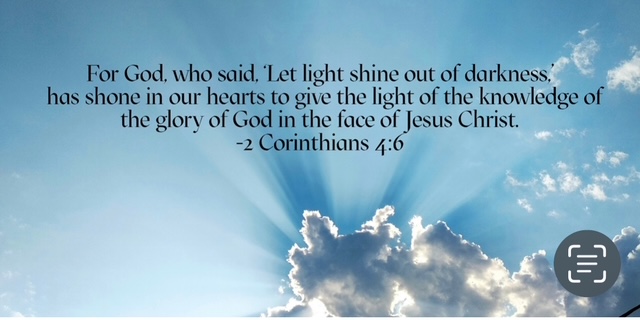
Jeremiah 24:7

(I often link up with some of these bloggers.)

Laudable Linkage

Laudable Linkage

Here are some of the good reads found this week:

I Feel an Imprecatory Prayer Comin’ On. “Growing up, I never heard anyone mention imprecatory prayers, which are mostly found in the Psalms. What are they? Imprecatory prayers are prayers in which you ask God to send calamity or hardship upon someone else.”

What Does the Bible Teach About Demons and Spiritual Warfare? HT to Challies. “I haven’t done this, but I suspect that polling our youth groups about whether or not the devil and demons are real would have troubling results. Perhaps a poll among youth pastors would fare similarly. It’s simply something we don’t talk about. And I get it. But it’s also a very important topic, and is far too dangerous to overlook.”

Why We Do What We Do. What the Bible teaches about our desires and the way they can change after we become believers.

I’d Never Do That!” I haven’t read the book mentioned, but I appreciate the application about offering help with humility.

Praying for Dreams to Come True, HT to Challies. “Dreams and desires are like butterflies in our hands. We cannot hold onto them too tightly or we will crush them. But if we hold them with open hands, at the right time, God will breathe the breath of his Spirit and they may launch and fly.”

How Marriage Vows Work, HT to Challies. “This distinction matters because marriage is sustained by more than warm feelings. When a couple faces challenges—as every couple will—they need the foundation of clear, mutual commitments rather than memories of how they once felt.”

How to Respect the Dignity of Loved Ones with Dementia, HT to Challies. “Contrary to what we might think, the gift of presence is perhaps most significant in the advanced stages of dementia. It is not infrequent at that time for loved ones to feel that their visits do not count for anything. They assume that they won’t be recognized or their visit remembered, which may be precisely the wrong conclusion.”

The Etiquette of Speech, HT to Challies. “There are three grave errors I think we can fall into when it comes to speech etiquette, and we should be wary of each of them.”

Wounds That Cannot Wholly Be Cured. “I’ve never known grief as strong or wounds as deep as I have been through this year. In January, my youngest brother died unexpectedly. It has been a season of loss and heartache that far surpasses anything that I have yet experienced.”

A. W. Tozer quote

The Bible is not an end in itself, but a means to bring men to an intimate and satisfying knowledge of God, that they may enter into Him, that they may delight in His Presence, may taste and know the inner sweetness of the very God Himself in the core and center of their hearts. A. W. Tozer, The Pursuit of God

Friday’s Fave Five

Friday's Fave Five

This has been an up and down kind of week. I was in atrial fibrillation for about fifteen hours one day. And I am on my third round of antibiotics for a stubborn case of cellulitis. :/ Today I am focusing on the good things with Susanne and friends at Living to Tell the Story.

1. Pi Day. 3/14–the number of pi–is as good a day as any to have pies. 🙂 We started the morning with a breakfast quiche Mittu has sent over with Jason and Timothy when they came to watch the lunar eclipse the night before. Then I made spaghetti pie (thanks to a link from Susan) and Brazi bites while Mittu made hamburger pie, vegetables, and chocolate pretzel pie.

Pi Day

At some point during the night, I heard Mittu say she was glad she married into a family of nerds. 🙂

2. Winning a gift card. Speaking of Susan, I won an Amazon gift card from a give-away she had.

3. Safety in storms. One night this week, our area was predicted to receive severe storms and possibly tornadoes. Thankfully, all we got was some rain. But at one point when we had the TV on, we saw the local news channel had preempted all scheduled programming to cover the storms. They said a possible tornado was heading to the town where my youngest son lives. We called him to let him know and discussed the best places in his house to stay if a tornado did come. He only got hail. None of us lost power. We were very thankful.

4. Snail mail. With digestive issues from the antibiotics I’ve been taking, I haven’t been to church in a few weeks. A couple of sweet ladies sent me cards. Then my friend Dianna and I both mentioned liking a particular author (Michele Phoenix), and Dianna asked if I’d like to have some of her books by that author. I got her package and a lovely note last Friday.

5. Friends who pray. I’m so thankful to have friends I can email or text with prayer requests.

Bonus: The first day of spring. I’ve been looking forward to this for weeks. 🙂 Even though it was overcast and cool, it’s a promise of better weather to come!

How was your week?

Review: The Silmarillion

The Silmarillion by J. R. R. Tolkien is a collection of stories and history which precedes The Hobbit and The Lord of the Rings in its setting. Wikipedia says a draft of it was written after The Hobbit’s success, but it was rejected by the publisher. Tolkien went on to write The Lord of the Rings trilogy. After his death in 1973, his son, Christopher, edited, arranged, and added material to publish this book in 1977.

My volume has a foreword by Christopher, in which he says the notes and stories in The Silmarillion, though it wasn’t called that at the time, date back half a century earlier and were added to by his father even in his last years. Christopher writes that his father came to view this book as seeming like a compendium from different (fictional) characters, added to through the years. That helps account for differences of style and tone through the book. It also contains a few separate works and a short summary of The Lord of the Rings at the end. One of these stories was “The Rings of Power,” which the recent series is based on. Taken all together, this provides the history of Tolkien’s mythology.

This edition also contains a very long letter from Tolkien to an editor friend “justifying and explaining” why he thought The Silmarillion and the Lord of the Rings should be published together (for what it’s worth, I think it was wise to separate them). Christopher said he thought this letter was “a brilliant conception of his conception of the earlier ages,” so he included it here are well.

Tolkien says here that he dislikes allegory and writes in the style of myth and fairy tales, though he acknowledges both of those genres use allegorical language. These stories have to do with “Fall, Mortality, and the Machine,” though also with “Art (and Sub-creation) and Primary Reality.” (p. 2, Kindle version). He writes “I believe that legends and myths are largely made of ‘truth’, and indeed present aspects of it can only be received in this mode” (p. 2). C. S. Lewis said something similar: after he had written directly about spiritual truth in Mere Christianity and other books, he wove some of the same truths in stories.

The Silmarillion covers the first two “ages” of Tolkien’s stories, beginning with the creation of the world by Eru, also called Ilúvatar. The angelic-type being he created, the Ainur, then created other things through music. But “it came into the heart of one of them, Melkor [also called Morgoth], to interweave matters of his own imagining that were not in accord with the theme of Ilúvatar; for he sought therein to increase the power and glory of the part assigned to himself” (p. 4).

Some of the Ainur went to live on the world their music created. Later came Elves, called the Firstborn, and later still Men, called Followers.

Much of the book is good vs. evil, the rise and fall of individuals and empires. Some of it is written as history, but a few stories are interwoven.

I thought these lines were particularly apt:

Reward on earth is more dangerous for men than punishment! (p. 2).

There are three phases in their fall from grace. First acquiescence, obedience that is free and willing, though without complete understanding. Then for long they obey unwillingly, murmuring more and more openly. Finally they rebel–and a rift appears between the King’s men and rebels, and the small minority of persecuted Faithful (pp. 2-3).

The title comes from three rings, called the Silmarils crafted with the light of the Two Trees of Valinor before Melkor destroyed them. Melkor stole them and put them in his crown, but battles are fought for them later on.

In the latter part of the book, Sauron, something of a disciple of Melkor, becomes the main villain. He creates the “one ring to rule them all” which figures into The Lord of the Rings.

The wizards and hobbits don’t come into the story until the last few pages. Gandalf shares a line which will become a theme in LOTR: “Help shall oft come from the hands of the weak when the Wise falter” (p. 307).

I listened to the audiobook, read well by Andy Serkis, who played Gollum/Smeagol in the Peter Jackson LOTR films several years ago. I also have the Kindle version, and I think it might have been better to read it than listen to it. Though I enjoyed the audiobook, I found my attention wavering in the historical parts. Plus I think seeing all the names would have helped cement them in my mind.

Many individuals and groups have more than one name, which makes for some confusion at first.

Christopher Tolkien added an index of names as well as “family trees” of some of the main characters in the back of the book.

I was inspired to read this book after seeing the first two seasons of The Rings of Power. I’ll never be an expert on Tolkien lore, but that wasn’t my aim. There are several sites online where we can look up particular people, groups, or events in his books. But reading this did give me a better understanding of events in the LOTR. Some things clicked into place, like Aragorn’s heritage, the buried shards of a sword which are found in the later books, the ancestor of the evil giant spider Shelob, who attacks Frodo, the giant eagles who come to various people’s rescue, etc.

So, though this book doesn’t flow as well as The Hobbit and The Lord of the Rings, I’m glad I finally read it.

(I often link up with some of these bloggers.)

Why Doesn’t God Heal Everyone?

Why doesn't God heal everyone?

One of the greatest mysteries we grapple with is why God heals some people, but not others. A friend and I were discussing this recently. As usual, my thoughts continued long after our conversation, so I decided to share them here.

A few years ago, our pastor announced in June that he had liver and pancreatic cancer. He was gone before the end of summer. He was in his prime, pastoring a church with a love for his people that I have rarely seen matched. Two of his daughters got married that summer, and he was able to walk them both down the aisle. But he would have been a terrific grandfather in the coming years. He seemed to have so many years of usefulness left, it was puzzling that God took him home.

Another former pastor’s grandson underwent an excruciating battle with leukemia, which he eventually lost despite hundreds of people’s prayers.

Others experience disabilities for the rest of their lives, either from birth or from an accident or illness.

We can never know all of God’s reasons for what He allows. But here are a few:

We live in a fallen world affected by sin, so there will be illnesses and death until God redeems the earth. Christians aren’t exempt from these effects of the fall.

None of us is guaranteed a long life. We need to be ready for eternity.

God’s perspective. A seemingly early death is not a tragedy to God: it’s a head start on heaven as He welcomes His loved one home.

God enables us to minister to others through what we suffer. Joni Eareckson Tada has been paralyzed since a diving accident fifty-seven years ago. I don’t know of anyone who has done more to help the disabled community, bring awareness of what disabled people suffer, and glorify God in the midst of suffering. Those things probably would not have happened without her accident. When she speaks, we listen, because we know she has proven what she’s speaking about. She’s not mouthing empty platitudes or theories.

God’s strength is displayed through our weakness. Paul famously prayed three times for God to remove an affliction from him. But God answered, “My grace is sufficient for you, for my power is made perfect in weakness” (2 Corinthians 12:7-10).

Healing was not Jesus’ primary purpose. Jesus healed multitudes of people during His time on earth. He demonstrated compassion and power as He did so. But He said His purpose was to preach the gospel (Mark 2:32-39).

God’s glory displayed. When the disciples asked whether a man’s sins or those of his parents caused his blindness, Jesus said, “It was not that this man sinned, or his parents, but that the works of God might be displayed in him” John 9:1-7). Similarly, when Jesus received the news that Lazarus was sick, he said, “It is for the glory of God, so that the Son of God may be glorified through it” (John 11:1-4).

Jesus wasn’t grandstanding. He wanted to show people who He was so they could believe.

Since Jesus is glorified through healing, it’s even more puzzling that He would not heal everyone. But sometimes He is glorified more by displaying His grace through His people’s trials, as He did in Joni and Paul’s lives.

Suffering strengthens and develops us. The apostle Paul wrote, “We rejoice in our sufferings, knowing that suffering produces endurance, and endurance produces character, and character produces hope, and hope does not put us to shame, because God’s love has been poured into our hearts through the Holy Spirit who has been given to us.”

Trials keep us dependent upon the Lord. We always are dependent on God, but sometimes we forget. Sometimes we need His help in areas other people never think about, but that continual dependence is a good reminder that our strength comes from Him. Paul said his “thorn in the flesh” was given so that he might not become conceited over the revelations that had been given to him.

Suffering prepares us for glory. Paul wrote to the Corinthians, “So we do not lose heart. Though our outer self is wasting away, our inner self is being renewed day by day. For this light momentary affliction is preparing for us an eternal weight of glory beyond all comparison, as we look not to the things that are seen but to the things that are unseen. For the things that are seen are transient, but the things that are unseen are eternal.” Paul is not being dismissive when he calls our afflictions “light.” He’s saying that they’ll seem light compared to the glory to come.

Though all of these factors help at times, they don’t satisfy at other times. I’ve been ministered to by what Amy Carmichael wrote in Rose From Brier (emphasis mine):

But, though, indeed, we know that pain nobly born strengthens the soul, knits hearts together, leads to unselfish sacrifice (and we could not spare from our lives the Christ of the Cross), yet, when the raw nerve in our own flesh is touched, we know, with a knowledge that penetrates to a place which these words cannot reach, that our question is not answered. It is only pushed farther back, for why should that be the way of strength, and why need hearts be knit together by such sharp knitting needles, and who would not willingly choose relief rather than the pity of the pitiful?

…What, then, is the answer? I do not know. I believe that it is one of the secret things of the Lord, which will not be opened to us till we see Him who endured the Cross, see the scars in His hands and feet and side, see Him, our Beloved, face to face. I believe that in that revelation of love, which is far past our understanding now, we shall “understand even as all along we have been understood.”

And till then? What does a child do whose mother or father allows something to be done which it cannot understand? There is only one way of peace. It is the child’s way. The loving child trusts.

I believe that we who know our God, and have proved Him good past telling, will find rest there. The faith of the child rests on the character it knows. So may ours, so shall ours. Our Father does not explain, nor does He assure us as we long to be assured… But we know our Father. We know His character. Somehow, somewhere, the wrong must be put right; how we do not know, only we know that, because He is what He is, anything else is inconceivable. For the word sent to the man whose soul was among lions and who was soon to be done to death, unsuccored, though the Lord of Daniel was so near, is fathomless: “And blessed is he whosoever shall not be offended in me.”

There is only one place we can receive, not an answer to our questions, but peace — that place is Calvary. An hour at the foot of the Cross steadies the soul as nothing else can. “O Christ beloved, Thy Calvary stills all our questions.” Love that loves like that can be trusted about this.

Perhaps we wouldn’t be able to understand even if God did explain why He allows such severe pain and loss. But the more we know Him, the better we can trust Him. Like the psalmists, we can pour out our anguish to Him, then remind ourselves of His love and mercy and care for us.

Psalm 46:1

(I often link up with some of these bloggers.)

Laudable Linkage

Laudable Linkage

I went from just a few shared reads last week to a longer list today. I hope you’ll find something of interest here, along with some time to read.

That’s Just Your Interpretation,” HT to Challies. “This is a common response when discussing Scripture, isn’t it? ‘That’s just your interpretation!’ No matter how clearly the Bible speaks, this objection seems to persist. But is it true? Can we really understand the Bible? This question takes us to the heart of the Christian faith and invites us into a discussion about the clarity and authority of God’s Word.”

Ten Truths to Empower Your Prayer Life. “My introduction to prayer came at the age of seven. I was spending the weekend with my grandmother and had slept beside her, snuggled deep into the covers. As the early morning light filtered through the curtains of her bedroom window, the sound of her whispered prayer broke through the fog of my fading sleep. . . . In the years since then, I’ve learned much about this sacred privilege. Today, I’d like to share ten truths I’ve sought to apply in my own prayer life.”

The Greatest Show: Is Your Faith Performance? “The desire to have a godly reputation isn’t wrong, but the danger comes when our focus shifts from genuine transformation in Christ to carefully crafted perception. It’s a tale as old as time and worth pausing to ask: do you care more about appearing faithful, gracious, and surrendered to Christ than actually walking in an authentic relationship with Jesus?”

Be Faithful Over Little: A Different Vision for a Life That Counts, HT to Redeeming Productivity. “But God hasn’t purposed for most people to be world-shapers. The vast majority of our faithfulness and work for the Lord will be exercised in the small, often boring, and monotonous rhythms of life.”

Between Two Worlds: Suffering, Safety, and the Cross, HT to Andrew Le Peau. “The predominant institutional approach to suffering is often one of avoidance—from institutional marketing that equates flourishing with the absence of suffering to personal postures that treat suffering as an unwelcome and harmful interruption in one’s development. Institutions can lessen burdens but not eliminate suffering. No mentor, policy, program, or system can insulate students from grief, disappointment, or hardship. A culture increasingly focused on removing discomfort does not necessarily make people stronger; it often leaves them more anxious and unprepared for suffering when it inevitably comes.”

A Denier Redirected: Living Out the Greatness. This discussion about living in a godly way in an ungodly society dovetails with my own reading about Daniel and how he did so.

This Vice Is One of the Key Predictors of Divorce: Yet, It Is Oddly Understudied. It’s a vice running rampant in society these days.

Coming of Age. “You could tell me that no matter what a mother loves her children, but it takes a story to show me how painful that could be and what it means. Or maybe you tell me that it’s good for my children to suffer losses and failures; that they’ll learn how to pick themselves up if they only get to experience life’s challenges. I’d say it makes sense but it takes a story for me to understand the real value behind it. I could learn as I go and fumble blindly along the way, or I could walk in the shoes of many mothers who’ve gone ahead of me and have a story to tell me of how to become the mom of adults.”

What Did We Gain and Lose by Livestreaming? HT to Challies. “What began as a temporary necessity has become an expected staple of the church’s ministry. As people began returning to worship, committees and the session debated whether livestreaming should continue. If so, for how long, and for what purpose?”

C. S. Lewis quote

Obedience is the key to all doors: feelings come (or don’t come) and go as God pleases. We can’t produce them at will and mustn’t try.–C. S. Lewis