Book Review: The Gift of the Magi and Other Christmas Stories

Gift of the MagiI picked up The Gift of the Magi and Other Christmas Stories when it was free or on sale for the Kindle (as of this writing it’s 99 cents). It contains four stories:
“The Gift of the Magi” by O. Henry
“The Heavenly Christmas Tree” by Fyodor Dostoevsky
“The Story of the Other Wise Man” by Henry Van Dyke
“Where Love Is, God Is” by Leo Tolstoy

“The Gift of the Magi”is well-known, about a young couple with not much money who give up their most precious possessions out of love to buy a Christmas present for the other. I have to confess that in earlier encounters with this story, I found it very frustrating. I know the point is that they loved each other so much they sacrificed their best, but it kind of seems like, “Give up your best and get….nothing.” πŸ™‚ I don’t remember if I had ever read the story in its entirety before, though I was very familiar with it, but it did help to do so. One of my favorite lines is when Della tried to fix what was left of her hair after selling it:

“She got out her curling irons and lighted the gas and went to work repairing the ravages made by generosity added to love. Which is always a tremendous task, dear friends–a mammoth task.”

I liked that she “had a habit for saying little silent prayer about the simplest everyday things.”

And I knew the title connected their giving with the Magi, but I didn’t quite realize it fully until this paragraph:

The magi, as you know, were wise men–wonderfully wise men–who brought gifts to the Babe in the manger. They invented the art of giving Christmas presents. Being wise, their gifts were no doubt wise ones…And here I have lamely related to you the uneventful chronicle of two foolish children in a flat who most unwisely sacrificed for each other the greatest treasures of their house. But in a last word to the wise of these days let it be said that of all who give gifts these two were the wisest. O all who give and receive gifts, such as they are wisest. Everywhere they are wisest. They are the magi.

So, reading the whole story in context, I enjoyed it more. Though it is still not my favorite Christmas story, there was a sweetness and winsomeness about it I hadn’t caught before.

“The Heavenly Christmas Tree” is pretty sad, about a poor, cold, hungry boy who is mistreated after his mother dies, and who then dies himself, but they are reunited around “Christ’s Christmas tree” along with all the other children and mothers who died. The mistreatment is a convicting reminder of how not to treat the poor, and the end is, of course, sweet.

I don’t think I have ever read “The Story of the Other Wise Man” before, but I was familiar with it: I may have seen it in a play or some other venue. As the title says, it is about a fourth wise man, Artaban, who was supposed to meet up with the others and take three precious jewels to the Christ Child, but missed the excursion and used one of his jewels to help an ill man. He decides to try to find the Child on his own over the next 30 years, but keeps missing Him, and uses up all his jewels helping other people in need. Thinking he has failed in his life’s quest, ultimately he finds that “Verily I say unto thee, inasmuch as thou hast done it unto one of the least of these my brethren, thou hast done it unto me” (Matthew 25:40).

That verse is the theme of “Where Love Is, God Is” as well. I have seen this as a play in my children’s school and heard it somewhere else with a different name for the main character and possibly a different title. It is the story of a cobbler who lost interest in life after his wife and son died, until a visitor urges him to live for God and read the Gospels to learn how. The cobbler does so, and his life changes. One day when he falls asleep while reading, he hears a voice saying, “Martin, Martin! Look out into the street to-morrow, for I shall come.” All day he looks for the Savior to come so he can welcome Him, but he only finds various other people who need help he is glad to give. In the end he finds that in welcoming them, he has welcomed Christ.

The latter two seem on the surface to equate doing good deeds with salvation rather than faith, but I think, reading between the lines, we can assume the good deeds came because of faith, not in place of it.

Though I am not likely to seek these out to reread for future Christmases, I did enjoy getting a fuller version of the stories than what I had remembered of them. And they have whetted my interest to read more Tolstoy in particular.

(This will also be linked toΒ Semicolonβ€˜s Saturday Review of Books.)

Friday’s Fave Five

It’s Friday, time to look back over the blessings of the week with Susanne at Living to Tell the Story and other friends.
It’s been kind of a whirlwind week! Here are the highlights:

1. Games with the family. My oldest son was here for Thanksgiving through Monday, and last weekend the whole family played some games together, one of my favorite things. He introduced us to a new one, Telestrations. It’s kind of a combination of the old “telephone” game (where one person whispers something into another person’s ear, and they whisper the same thing to the next person, etc., until you finally hear what the message is with the last person, usually something way different from how it started) and illustrations or Pictionary. It was absolutely hilarious. So much fun.

2. Decorating for Christmas. I love that we still do this together as a family. It would probably take me all week if I had to do it by myself. I wasn’t really in “the Christmas spirit” when we started – it just didn’t seem like it was time yet – but somehow Christmas decorations and music helped get me there. Plus my oldest took some snowflake ornaments and put them on light fixtures in other parts of the house without telling us, so it has been fun to discover those.

3. Time with friends. A new friend at church and I had been talking about wanting to get together for some months now, and had to reschedule actual plans a couple of times, but we finally met for lunch this week. I haven’t done anything like that in a very long time, and enjoyed it very much. Then I had been wanting to catch up with another friend that I hadn’t been able to talk to in weeks. I had e-mailed, but I wanted to talk to her in person. Our church isn’t that big, but sometimes there are people you just don’t cross paths with if you sit in different places. This last Sunday as I was getting ready to leave, I came across her in the lobby, and she wasn’t already talking to someone else, so we got to catch up. There have been some significant events in her life in the past few months, and I had heard through the grapevine of possible plans she was making, so it was good to talk to her directly.

4. A pleasant surprise. Since our pastor’s passing, we’ve had various people preaching at church – both of our assistant pastors, various men in the church, and guest speakers – while the search committee is doing the background work to try to find a new pastoral candidate. This last Sunday I found on the church bulletin the name of an old friend that we had attended church with for the first 14 years we were married. I had known him since before he was married, loved his mom (one of the merriest-hearted Christians I have ever known before Alzheimer’s came to visit her) and wife, he was one of our Sunday School teachers, and he has done some writing since then that has truly blessed me. Besides our former pastor of the same church, there is no one whose exposition of the Word of God I would trust more. It was such a joy to hear him speak again, and to touch base just a little.

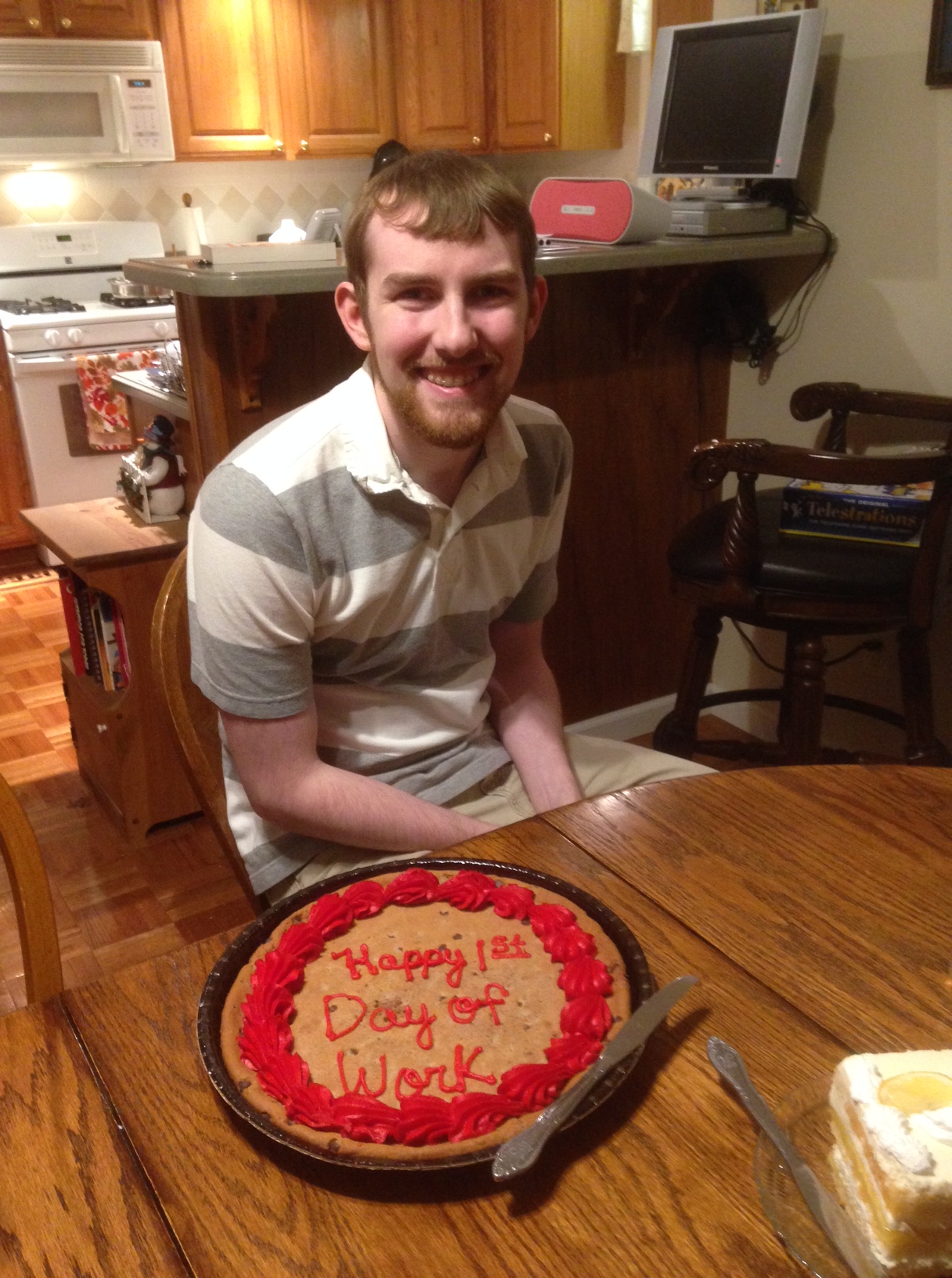
5. A new job. Some of you know that my youngest son has been looking for a job since receiving his Associate’s degree last May. He’s sent his resume in to various places and even had some interviews, but nothing had turned up yet. Jason’s company was hiring for Christmas, and he sent in Jesse’s resume – and he got hired and started yesterday! Even though it is not in his chosen field, it is still work. Since he doesn’t have any work experience except for yard work for a man at church, it will not only help his resume but will also help with various skills and experience needed in any type of job. And….the husband of the person interviewing him works at the same company where Jesse did some work for one of his classes, and he is looking for someone in Jesse’s field, so she said she would pass his interview on to him.

photo 1(2)

Happy Friday!

Book Review: The Weight of Glory

Weight of GloryThe Weight of Glory and Other Addresses by C. S. Lewis is a collection of his essays. Some were sermons, some were addressed to specific groups, a couple were published in other venues. Five of them were published together in a book during his lifetime and a few more were added in a 1980 revision. There is a lengthy introduction by Walter Hooper, in which he gives some of the background of the essays, where, when, and to whom they were given, as well as his connection to Lewis.

I probably have a higher percentage of pages tabbed in this book than any other. I’ll list the essays with a few words about each:

“The Weight of Glory” discusses out desire for heaven and what “glory” actually means. That seems like such a paltry summation, but thoughts from this essay stayed with me for days. An excellent outline of the chapter is here. In talking about whether the promise of heaven is a “bribe” and whether longing for it is right, Lewis remarks:

β€œIt would seem that Our Lord finds our desires not too strong, but too weak. We are half-hearted creatures, fooling about with drink and sex and ambition when infinite joy is offered us, like an ignorant child who wants to go on making mud pies in a slum because he cannot imagine what is meant by the offer of a holiday at the sea. We are far too easily pleased” (p. 26).

He speaks of the almost ineffable quality of longing we have for something we haven’t quite experienced yet:

β€œIn speaking of this desire for our own far off country, which we find in ourselves even now, I feel a certain shyness. I am almost committing an indecency. I am trying to rip open the inconsolable secret in each one of youβ€”the secret which hurts so much that you take your revenge on it by calling it names like Nostalgia and Romanticism and Adolescence; the secret also which pierces with such sweetness that when, in very intimate conversation, the mention of it becomes imminent, we grow awkward and affect to laugh at ourselves; the secret we cannot hide and cannot tell, though we desire to do both. We cannot tell it because it is a desire for something that has never actually appeared in our experience. We cannot hide it because our experience is constantly suggesting it, and we betray ourselves like lovers at the mention of a name. Our commonest expedient is to call it beauty and behave as if that had settled the matter. …The books or the music in which we thought the beauty was located will betray us if we trust to them; it was not in them, it only came through them, and what came through them was longing. These thingsβ€”the beauty, the memory of our own pastβ€”are good images of what we really desire; but if they are mistaken for the thing itself they turn into dumb idols, breaking the hearts of their worshipers. For they are not the thing itself; they are only the scent of a flower we have not found, the echo of a tune we have not heard, news from a country we have never yet visited” (pp. 30-31).

About the things we do not understand:

β€œIf our religion is something objective, then we must never avert our eyes from those elements in it which seem puzzling or repellent; for it will be precisely the puzzling or the repellent which conceals what we do not yet know and need to know” (p. 34).

The section on the glory of heaven is deeply thought-provoking. Just one quote from it:

“The sense that in this universe we are treated as strangers, the longing to be acknowledged, to meet with some response, to bridge some chasm that yawns between us and reality, is part of our inconsolable secret. And surely, from this point of view, the promise of glory, in the sense described, becomes highly relevant to our deep desire. For glory means good report with God, acceptance by God, response, acknowledgement, and welcome into the heart of things. The door on which we have been knocking all our lives will open at last.”

I’ll try to be a little more brief with the remaining ones.

“Learning in War Time” addresses students who wonder if they should be working toward their chosen professions while the war is on, whether doing so is “like fiddling while Rome burns.” Lewis brings this into the larger question of whether “creatures who are every moment advancing either to Heaven or hell” should “spend any fraction of the little time allowed them in this world on such comparable trivialities as literature or art, mathematics or biology” (pp. 48-49). His answer is yes, and he goes on to explain why.

“The work of a Beethoven and the work of a charwoman become spiritual on precisely the same condition, that of being offered to God, of being done humbly ‘as to the Lord'” (pp. 55-56).

“An appetite for [knowledge, beauty, the arts] exists in the human mind, and God makes no appetite in vain” (p. 56).

“Why I Am Not a Pacifist” was given to a pacifist society in 1940. Lewis explains that while “war is very disagreeable,” there are just causes for war (for instance, what would have happened if no one had stood up to Hitler?) and there are Biblical examples affirming war. He then goes on to explain why Jesus’s command, “”But I say to you, do not resist an evil person; but whoever slaps you on your right cheek, turn the other to him also” (Matthew 5:39) is not a justification for pacifism. Lewis says the text “means exactly what is says, but with an understood reservation in favour of those obviously exceptional cases which every hearer would naturally assume to be exceptions without being told” (p. 85). One example he proposes is when one witnesses and attempted murder, tries to help, and is knocked away by the assailant. No one would think this verse meant to stand back and let the murderer have his way. But in a case where “the only relevant factors…are an injury to me by my neighbor and a desire on my part to retaliate,” we’re to mortify that desire.

“Transposition” was probably the hardest for me to grasp. The basic theme is that it is hard to take something very complex and put it into simple forms: for example, a pencil drawing or even a painting of a landscape may be beautiful and give us an idea of the actual scene, but it is not the same. The actual scene has elements which can’t be expressed in limited resources. We face the same problem with trying to explain spiritual things when there is so much more to them, so much that we won’t even grasp until we’re transformed in heaven.

“Is Theology Poetry?” answers the question “Does Christian theology owe its attraction to its power of arousing and satisfying our imaginations? Are those who believe it mistaking aesthetic enjoyment for intellectual assent, or assenting because they enjoy?” While Lewis concedes that Christianity has some poetical or metaphorical aspects to it (indeed, one can hardly describe spiritual truths without some kind of metaphor), the metaphor is not to be mistaken for the reality. He also discusses that Christianity can make room for science and reason and makes some pretty good points against evolution.

“The Inner Ring” is about what we would call the inner circle in our day and the fact that nearly every group has one. It may not be bad in itself, but “our longing to enter them, our anguish when we are excluded, and the kind of pleasure we feel when we get in” (p. 149) canΒ  lead us into temptation. If you’ve read That Hideous Strength, the third in Lewsis’s space trilogy, this was exactly what drew Mark Studdock further and further into an evil organization, which he didn’t recognize as such because he was so blinded by his ambition to be included.

“Membership” deals with the idea that though we need solitude sometimes, we are created as part of the body of Christ. Religion seems to be “relegated to solitude,” or made a private affair, by a society which then keeps one so busy that there is little time for solitude, and the busy-ness of “the collective” takes the place of true spiritual friendship. As one who likes time alone, this sentence convicted me: “The sacrifice of selfish privacy which is daily demanded of us is daily repaid a hundredfold in the true growth of personality which the life of the Body encourages” (p. 167). He is not saying at all that one should never have privacy or solitude, nor is he saying that we lose our identity when we become a member of the Body of Christ, but rather that is where we find our true identity. The following paragraph stood out to me:

“The infinite value of each human soul is not a Christian doctrine. God did not die for man because of some value He perceived in him. The value of each human soul considered in itself, out of relation to God, is zero. As St. Paul writes, to have died for valuable men would have been not divine but merely heroic; but God died for sinners. He loved us not because we were lovable, but because He is love” (p. 170).

“On Forgiveness” begins with Lewis wondering why believing in the forgiveness of sins was put in the Creed of his church, when it seemed that would be obvious and go without saying or without need of reminder. But he discovered that believing in forgiveness is not so easy to do and does need frequent reminding. Too often when we come to God for forgiveness, what we really want is for Him to excuse us.

Forgiveness says, ‘Yes, you have done this thing, but I accept your apology; I will never hold it against you and everything between us two will be exactly as it was before.’ But excusing says ‘I see that you couldn’t help it or didn’t mean it; you weren’t really to blame.’ If one was not really to blame then there is nothing to forgive (pp. 178-179).

Too often we “go away imagining that we have repented and been forgiven when all that has really happened is that we have satisfied ourselves with our own excuses” (pp. 179-180).

And he reminds us that the same forgiveness we seek from God, He commands us to show to others. It is in this essay that his famous line comes from: “To be a Christian means to forgive the inexcusable, because God has forgiven the inexcusable in you” (p. 182).

On “A Slip of the Tongue,” Lewis shares that one day in his prayers he inadvertently mixed up the “temporal” and the “eternal.” Though it was just a slip of the tongue, he did realize that too often that is exactly what we do.

“I mean this sort of thing. I say my prayers, I read a book of devotion, I prepare for, or receive, the Sacrament. But while I do these things, there is, so to speak, a voice inside me that urges caution. It tells me to be careful, to keep my head, not to go too far, not to burn my boats. I come into the presence of God with a great fear lest anything should happen to me within that presence which will prove too intolerably inconvenient when I have come out again into my ‘ordinary’ life. I don’t want to be carried away into any resolution which I shall afterwards regret. For I know I shall be feeling quite different after breakfast; I don’t want anything to happen to me at the altar which will run up too big a bill to pay then…The root principle of all these precautions is the same: to guard the things temporal.”

“This is my endlessly recurrent temptation: to go down to that Sea (I think St. John of the Cross called God a sea) and there neither dive nor swim nor float, but only dabble and splash, careful not to get out of my depth and holding on to the lifeline which connects me with my things temporal” (p. 187).

“Our temptation is too look eagerly for the minimum that will be accepted. We are in fact very like honest but reluctant taxpayers” (p. 188).

“For it is not so much of our time and so much of our attention that God demands; it is not even all our time and all our attention; it is ourselves. For each of us the Baptist’s words are true: ‘He must increase and I decrease.’ He will be infinitely merciful to our repeated failures; I know no promise that He will accept a deliberate compromise. For He has, in the last resort, nothing to give us but Himself; and He can give that only insofar as our self-affirming will retires and makes room for Him in our souls. Let us make up our minds to it; there will be nothing ‘of our own’ left over to live on, no ‘ordinary’ life” (p. 189).

“What cannot be admittedβ€”what must exist only as an undefeated but daily resisted enemyβ€”is the idea of something that is ‘our own,’ some area in which we are to be β€œout of school,” on which God has no claim. For He claims all, because He is love and must bless. He cannot bless us unless He has us. When we try to keep within us an area that is our own, we try to keep an area of death. Therefore, in love, He claims all. There’s no bargaining with Him” (p. 190).

This is so convicting to me, because that is precisely my tendency, to keep some area of my will for my own, to fear what He might ask. Even after, as Lewis said, “daily or hourly repeated exercises of my own will in renouncing this attitude…it grows all over me like a new shell each night” (p. 192). Thankfully “failures will be forgiven; it is acquiescence that is fatal…We may never, this side of death, drive the invader out of our territory, but we must be in the Resistance” (p. 192).

One of the things I appreciate most about Lewis is that he β€œcould…swiftly cut through anything that even approached fuzzy thinking,” as Sheldon Vanauken wrote. Plus he so often hits the nail right on the head: in the last essay I had the feeling my innermost thoughts had been found out. I came across a blog post a few weeks ago where the blogger, whose views I would probably generally agree with, mentioned several areas where he differed with Lewis. So far I haven’t found the differences he mentioned. The only one that stood out to me in this book was that he would take some parts of the Bible as symbolic that I would take to be literal. But I think if we are regularly feasting on and meditating on God’s Word, we can read with discernment authors with whom we might not agree on every little point. Lewis has a way of writing that delineates the truth clearly and precisely (even though his intellect is so far above my own) in a manner that is easy to understand. And I can’t think of any writer whose work make me long for heaven more. This book will definitely be reread at intervals through the years, especially the first and last essays.

(This will also be linked toΒ Semicolonβ€˜s Saturday Review of Books.)

Book Review: The Wonderful Wizard of Oz

OzI hadn’t planned on reading The Wonderful Wizard of Oz any time soon. It was one of those “Maybe someday…” books to me. But when a great sale on an Audible version read by Anne Hathaway came through some time ago, I went ahead and bought it. And last month when I had several days between the end of my last audiobook and the availability of my next Audible credit at the beginning of the month and looked for a short book to fill the time, this seemed like a perfect choice.

The story is so well-known, I don’t think I need to go over the plot at all, but just in case someone is unfamiliar with it, the main character is Dorothy Gale, a little girl who lives with her Aunt Em and Uncle Henry in Kansas. Everything is pretty grey and cheerless, except Dorothy’s little dog, Toto. When a cyclone heads toward their house, Dorothy doesn’t quite make it to the storm cellar before the house is whisked away and ends up in the land of the Munchkins, right on top of the wicked witch of the East, for which the Munchkins are very grateful. Dorothy wants to get home to Kansas, but they don’t know how to help her: they can only advise that she go to see the great wizard, Oz, in the Emerald City. So she follows the yellow brick road that direction and along the way meets a Scarecrow who wishes he had brains, a Tin Woodman who wishes he had a heart, and a Cowardly Lion who wishes he had courage. They all decide to join her to see if Oz can help them. But Oz doesn’t quite respond the way they want, sending them on a mission to kill the Wicked Witch of the West. And eventually they find the wizard isn’t who they thought he was at all.

Of course, the book has its differences from the well-known movie. We only see 3 Munchkins rather than a townful, there is no “Lions and tigers and bears, oh my!” line, the shoes Dorothy is given from the dead witch are silver rather than ruby (probably due to the effect of which would look best in Technicolor). I enjoyed getting more back story of the characters, especially the Tin Woodman and how he came to be tin when he was originally human. The winged monkeys aren’t inherently evil – they’re mischievous, but they prove helpful in the end. There is an elephant-sized spider, a little town made of china people and buildings, and a race of people called Hammerheads who can shoot their necks out and butt people off the hill they’re guarding. Those are all interesting in themselves, but since they come between Dorothy’s leaving Oz (which is the end of the movie version) and her finally getting back home, they seem a little anticlimactic.

The book was written in 1899 and is considered the first American fairy tale. In the introduction, Baum says he wrote it just for the pleasure of children. He felt that “Modern education includes morality; therefore the modern child seeks only entertainment in its wonder-tales and gladly dispenses with all disagreeable incident.” I would say there is still plenty of “disagreeable incident” in the story, with some of the trials the troop has to undergo, but they are not of the “horrible and blood-curdling” variety he feels are “devised by their authors to point to a fearsome moral to each tale.” I don’t think morals and stories are antithetical, but I agree it’s fine toΒ  have a story just for fun. And though Baum wasn’t necessarily trying to dispense morality, I think an observant reader would glean good traits from the good characters (their kindness, thoughtfulness, bravery, hard work, persistence, etc.).

I found it interesting that in the book, the idea that “There’s no place like home” came from Dorothy herself: it wasn’t something she had to be told by Glinda.

The Scarecrow listened carefully, and said, “I cannot understand why you should wish to leave this beautiful country and go back to the dry, gray place you call Kansas.”

“That is because you have no brains” answered the girl. “No matter how dreary and gray our homes are, we people of flesh and blood would rather live there than in any other country, be it ever so beautiful. There is no place like home.”

When my children were very little, I had trouble with the idea of a “good witch” in the story, so I didn’t let them see the film for a long while. But I eventually came to terms with the idea that fairy tale witches are a completely different thing from real-life ones.

Apparently Baum did not want to write sequels, but the interest and demand was so great that he wrote thirteen of them.

I’m so glad I gave it a go. Anne Hathaway did a marvelous job narrating. I agree with C. S. Lewis’s quote to the effect that a good children’s book should be enjoyable by adults as well. It would be hard to say whether I like the book or the film better. I like them both. They each have their charms.

(This will also be linked toΒ Semicolonβ€˜s Saturday Review of Books.)

Friday’s Fave Five

FFF fall backgroundIt’s Friday, time to look back over the blessings of the week with Susanne at Living to Tell the Story and other friends.

I hope you all had a wonderful Thanksgiving! Here are some of my favorite parts of the last week:

1. Our first babysitting gig with Timothy. Jason’s company has their Christmas party way early before the crowded holiday schedule, so that was his and Mittu’s first outing of significant length since bringing Timothy home. I was a little concerned that Timothy might cry and I wouldn’t find a way to calm him down – so far at that point I give him back to his parents. πŸ™‚ But he did really well and we had a nice evening.

2. Jeremy is home! My oldest son flew in earlier this week.

3. Thanksgiving Day. Scrumptious food, lots of wonderful family togetherness, and much to be thankful for.

4. Help with clean-up. Jeremy and Jesse helped put things away and Jason, Mittu, and Jim cleaned up the kitchen while I had…

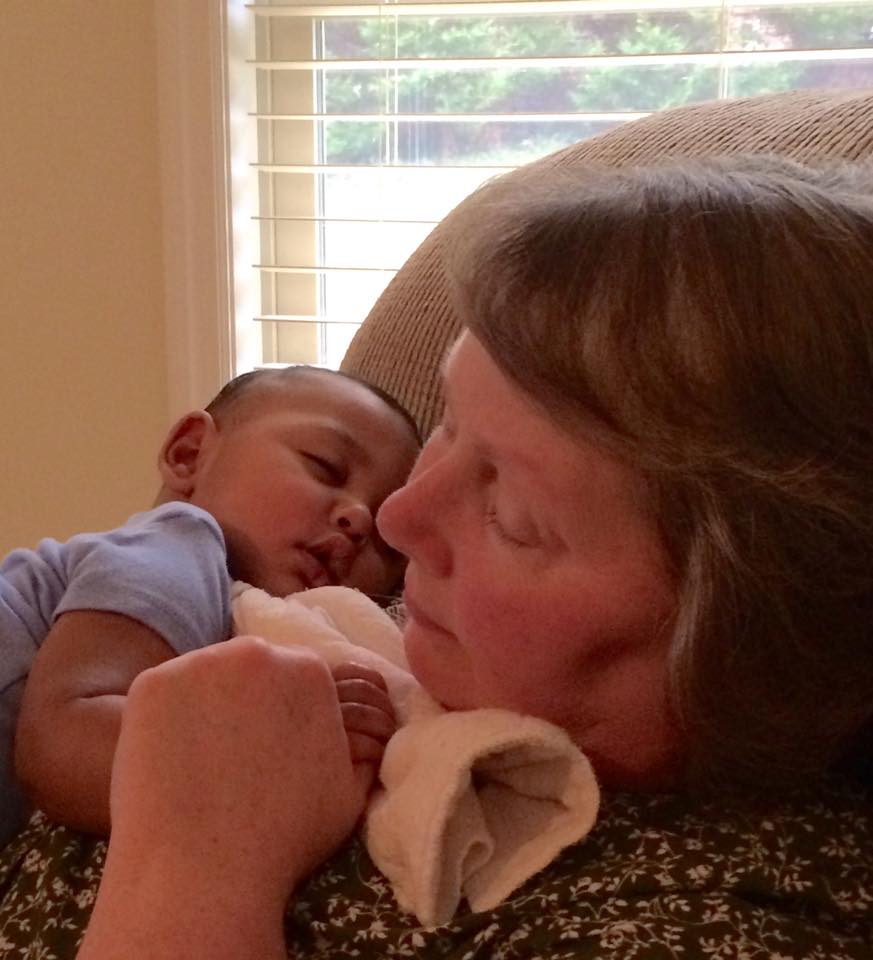
5. An after-dinner nap with my favorite little guy.

Tnap

It doesn’t seem like it should be quite Christmas time yet, despite the Christmas items in stores, but we’re supposed to go get our tree today, so maybe decorating will get me into the holiday spirit. πŸ™‚

Have a great weekend!

Happy Thanksgiving!

Give thanks

β€œSome people seem to think that if they set apart certain definite days for praise, it is enough. For example, they will be grateful for a whole day once in the yearβ€”thinking that this is the way God wants them to show their gratitude. But the annual Thanksgiving Day is not intended to gather into itself the thanksgiving for a whole year; rather it is intended to give the keynote for all the year’s life. Life’s true concert pitch, is praise. If we find that we are below the right pitch, we should take advantage of particular thanksgiving seasons to get keyed up. That is the way people do with their pianosβ€”they have them tuned now and then, when the strings get slack and the music begins to grow discordantβ€”and it is quite as important to keep our life in tune as our piano.” ~ J.R. Miller

I found this quote a few weeks ago and thought it seemed perfect for this season. Now that we’re “tuned up” by remembering the many things we have to be thankful for, and especially remembering the One to whom we owe thanks, may we make thanksgiving a lifestyle rather than a holiday.

I hope you and yours have a wonderful day with family and feasting!

O my God,
Thou fairest, greatest, first of all objects,
my heart admires, adores, loves thee,
for my little vessel is as full as it can be,
and I would pour out all that fullness before thee in ceaseless flow.
When I think upon and converse with thee
ten thousand delightful thoughts spring up,
ten thousand sources of pleasure are unsealed,
ten thousand refreshing joys spread over my heart,
crowding into every moment of happiness.
I bless thee for the soul thou hast created,
for adorning it, sanctifying it,
though it is fixed in barren soil;
for the body thou hast given me,
for preserving its strength and vigour,
for providing senses to enjoy delights,
for the ease and freedom of my limbs,
for hands, eyes, ears that do thy bidding;
for thy royal bounty providing my daily support,
for a full table and overflowing cup,
for appetite, taste, sweetness,
for social joys of relatives and friends,
for ability to serve others,
for a heart that feels sorrows and necessities,
for a mind to care for my fellow-men,
for opportunities of spreading happiness around,
for loved ones in the joys of heaven,
for my own expectation of seeing thee clearly,
I love thee above the powers of language to express,
for what thou art to thy creatures.
Increase my love, O my God, through time and eternity.

Β 

~ From The Valley of Vision

Happy Thanksgiving!


What’s On Your Nightstand: November 2014

Β What's On Your NightstandThe folks at 5 Minutes For Books host What’s On Your Nightstand? the fourth Tuesday of each month in which we can share about the books we have been reading and/or plan to read.

I don’t know where in the world November has gone. It doesn’t seem like I have gotten much reading in, but sometimes I surprise myself when I actually start listing it.

Since last time I have completed:

The Return of Sherlock Holmes by Arthur Conan Doyle, audiobook, reviewed here.

The Last Bride by Beverly Lewis, 5th in her Home to Hickory Hollow series, reviewed here.

Walking in the Spirit: A Study Through Galatians 5 by Steve Pettit, reviewed here.

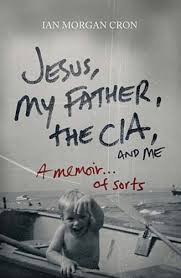
Jesus, My Father, the CIA, and Me: A Memoir of Sorts by Ian Morgan Cron, audiobook, reviewed here.

Nope, no surprises this time – only two actual (paper) books!

I’m currently reading:

Weight of Glory by C. S. Lewis

The Pound a Day Diet by Rocco DiSpirito

Number the Stars by Lois Lowrey forΒ for Carrie’sΒ  Reading to Know Classics Book Club for November

The Gift of the Magi and Other Christmas Stories by O. Henry, Fyodor Dostoevsky, Henry van Dyke, and Leo Tolstoy

Next up:

To Kill a Mockingbird for Carrie’sΒ  Reading to Know Classics Book Club for December

Other than that I am not sure. I got out my Christmas books (some fictional, some devotional) and was surprised to discover a couple I didn’t even know I had and one that I thought I had read but hadn’t. I like to do a little Christmas reading during December but haven’t decided which of these to attempt yet.

Speaking of Christmas books…I am giving some away here.

Some of you might be interested in a post I wrote this month about reasons to read fiction and Christian fiction. It’s one I have been wanting to write for ages, and I was glad to finally do so.

Happy reading!

Book Review: Jesus, My Father, the CIA, and Me

CronI have been wanting to read Jesus, My Father, the CIA, and Me: A Memoir of Sorts by Ian Morgan Cron ever since Lisa’s review of it.

Despite the mention of the CIA in the title, it’s not the primary focus of the book. Ian didn’t know his dad was involved with the CIA until his mid-teens. There had been odd “business trips” when he had thought his father was out of work, his mention of having met people (like President Ford) whom he would not likely have crossed paths with, etc., but the pieces didn’t come together until Cron’s teens.

Cron grew up in England until his father’s work took the family back to the States, where the family set down roots. Cron describes his Irish Catholic upbringing mostly humorously but with a few poignant moments as well. In fact, there is a humorous slant to much of Cron’s writing, but not in connection with his father’s alcoholism. The book focuses primarily on the effect Cron’s father’s alcoholism had on his life: the embarrassment, the anger, the missed concerts, the lack of good example and teaching, the bad example, the lack of relationship.

β€œ’Home is a place you grow up wanting to leave, and grow old wanting to get back to.’ That’s what John Edward Pearce said. But what if your childhood was a train wreck? What if your memories of home are more akin to The Shining than The Waltons? It doesn’t matter. Home is not just a place; it’s a knowing in the soul, a vague premonition of a far-off country that we know exists but haven’t seen yet. Home is where we start, and whether we like it or not, our life is a race against time to come to terms with what was or wasn’t” (p.3).

Ian went from trying to be a “good boy” to win his father’s approval, to trying to be a “bad boy” to get his attention. As happens all too often, he began following in his father’s footsteps with drinking, and then went further with drug experimentation.

But the story is also one of redemption. Though tenderhearted towards spiritual things as a child, Ian felt God had let him down by not answering his prayers concerning his father, and he was highly resistant to any kind of Christian influence. But God brought him to the end of himself. Coming to believe was one step, but overcoming his own alcoholism took much longer, and facing and dealing with the buried emotions and the psychological effects of his relationship with his father took longer still.

As the daughter of an alcoholic, I could identify with much that Ian wrote. Somehow I never had the thought that so many kids have that it must be all my fault. (I knew my dad’s problems were his own. I did learn to lay low and stay under the radar either when he was drinking or when he was angry, and to this day I have problems interacting when I think someone is angry. My first instinct is to retreat.)

Some of the quotes that stood out to me:

“Boys with fathers who, for whatever reason, keep their love undisclosed begin life without a center of gravity. They float like astronauts in space, hoping to find ballast and a patch of earth where they can plant their feet and make a life. Many of us who live without these gifts that only a father can bestow go through life banging from guardrail to guardrail, trying to determine why our fathers kept their love nameless, as if ashamed.”

“My father’s psychological and emotional problems so consumed his visual field that he had trouble seeing anyone but himself , much less a lost, father-hungry kid.”

The author definitely has a way with words, and the book is filled with many descriptive phrases. One disadvantage to listening to the audiobook rather than reading a paper or electronic version is that one can’t flip back through the pages, and I didn’t mark as many quotes as I should have (one can “bookmark” with an audiobook – but not while driving or cooking πŸ™‚ ). The writing seemed a little disjointed in some places, being more thematic than linear. But there is light humor as well as deep sadness, poignancy, beauty and grace. I think those of us who are more conservative need to be reminded that God sometimes uses seemingly unconventional ways and means to reach a person, and that we’re not all cookie cutter Christians.

At one point the author says that many of the Christians he knew, I think in his college years, were fans of John McDowell and C. S. Lewis, but he could never get into them, because he didn’t want to parse God, he wanted to experience Him ecstatically. While I do agree that our Christianity needs to be experiential and not just academic (and I think that’s what he was trying to convey), I have a couple of problems with this line of thinking. For one, voices in our heads aren’t always trustworthy. For another, those men are hardly “just” academic, and many are ministered to by their writings and by thinking through the issues they address. The Bible has a lot to say about knowledge and doctrine. I’ve referenced this here many times before, but Peter had one of the most wonderful experiences possible when he saw Jesus transfigured before his eyes, yet he calls the Scripture (a more sure word of prophecy” – more sure than even that experience (II Peter 1:16-21).

Although I think the book is a worthwhile read, I could not recommend it unreservedly. To me the humor slips into irreverence sometimes, there are a few instances of crudeness (jokes about men’s private parts), the theology was a little wonky in some places. I think this book would be especially good if you or someone within your sphere of influence has had an alcoholic parent or a strained relationship with one.

(This will also be linked toΒ Semicolonβ€˜s Saturday Review of Books.)

Friday’s Fave Five

FFF fall backgroundIt’s Friday, time to look back over the blessings of the week with Susanne at Living to Tell the Story and other friends.

I know we frequently talk about how fast time is flying – but it seems like November is going by with supersonic speed! I can’t believe there is only one week left, and then Christmas season starts – though I know some of you have started already. πŸ™‚

Here are some of my favorites of the last week:

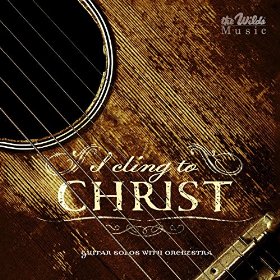
1. A new CD. I just got the Wilds Christian Camp‘s new CD, “I Cling to Christ,” a few days ago, and I have played it multiple times already. Some of the hymns are older, some are newer, a couple are unfamiliar to me, but they are all instrumental pieces with guitar and orchestra. The one word that comes to mind to describe it is soothing.

Wilds CD

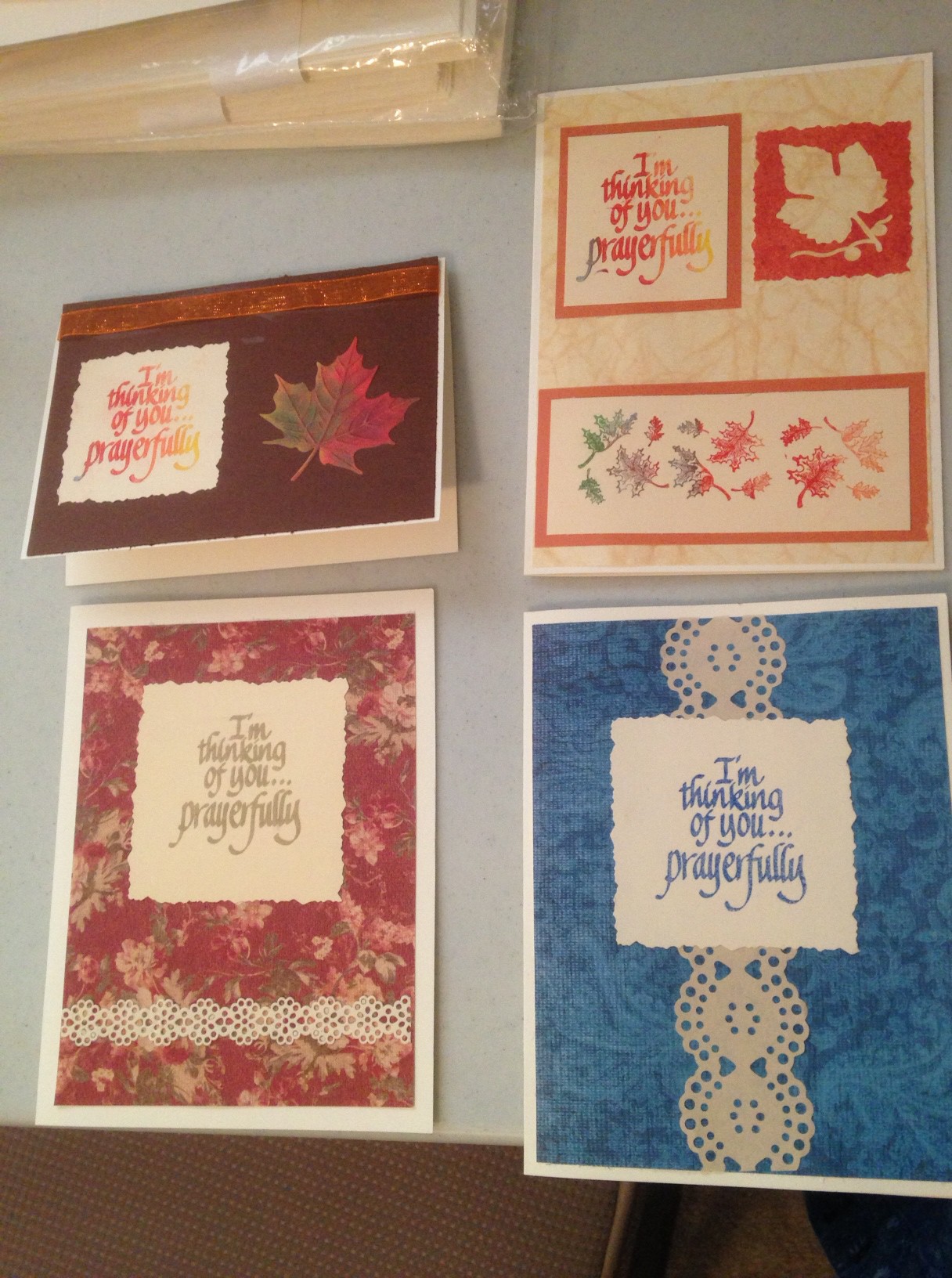
2. Getting a few cards made. Not as many as I hoped to in the time I had, but I’m glad to have a few of these on hand. I don’t even remember where I got this stamp ages ago, but the sentiment just “fits” so often.

photo(5)

3. Throw blankets. We have them draped on almost every chair and couch, and this is the time of year we use them the most, especially in the evenings. They are so just right – not too warm or heavy, but cozy.

4. Pizza delivery. We get take-out pizza from a variety of places, and one is just far enough away to justify paying a delivery fee rather than picking it up ourselves.

5. This post, Stop Waiting For a Zap, hit me right where and when I needed. It had me smiling, wincing, and tearing all at the same time. Her phrase “self-focused grump monster” was so accurate, and will stay with me a long time.

For those of you who live in the US, I wish you an early Happy Thanksgiving! We’re looking forward to our oldest son coming in and having a great time with all the family. I’ll have the monthly What’s On Your Nightstand post on Tuesday and hope to get one more book review up next week, but between visiting and cooking, I may be a little scarce (then again, maybe not – our whole family values some computer time. πŸ™‚ ) I’m sure it is much the same with many of you, so if I don’t “see” you again before then, I hope you have a wonderful time of eating, spending time with family and friends (virtually, if not in person), and thankfulness to the Giver of all gifts.

And…I am giving away some gently-used Christmas books here – stop by if you are interested.

Christmas Book Giveaway

I have accumulated a pile of Christmas books, and some of them I am not likely to read again. So I thought I’d offer them to you. πŸ™‚

I will list what I have with a link back to my review, if I have one for it. If you are interested in any, let me know in the comments on this post (not the posts of the book reviews). If you have one in particular you’d like, mention that title, and if you are the only one who wants it, you will get it. If two or more people want a book, I will use random.org to draw a winner. If you want to list a first, second, and third choice, that’s fine: if you don’t care which one you get, that’s fine, too.

I will draw names the Friday after Thanksgiving and will send them at the cheapest rate, but they should still get there in time for some Christmas reading. I’m sorry, but I will have to restrict these to US addresses due to shipping prices.

So here are your choices:

Wreath of Snow

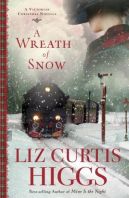
A Wreath of Snow by Liz Curtis Higgs

Christmas at Harringtonβ€˜s by Melody Carlson

Treasure of Christmas, a collection of three stories by Melody Carlson (The Christmas Bus, Gift of Christmas Present, and Angels in the Snow).

Snow Day by Billy Coffey. One reservation with this one, but otherwise it is good.

25 days

25 Ways, 26 Days to Make This Your Best Christmas Ever by Ace Collins.

If I have linked everything correctly, clicking on the title should take you to my review (some of them are grouped together in shorter reviews), and clicking on the book image will take you to Amazon if you’d like to learn a little more about the books.

The giveaway and comments are now closed. And the winners are……

A Wreath of Snow: Brenda

Β Christmas at Harrington’s: Kaycee

Treasure of Christmas: Abi

Snow Day: rcblibrary

26 Days: Michele

I am sending an email to notify each winner. If I do not hear back from them with their address by the end of the week, I will draw a new winner.

Thanks so much for entering!