Roof Beam Reader, who hosts the 2014 TBR Pile Challenge, has check-in points around the 15th of each month so we can summarize how we’re doing.
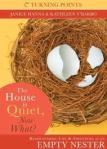
Of the 12 books I’ve listed here, since last month I’ve finished Made to Crave: Satisfying Your Deepest Desire with God, Not Food by Lisa TerKeurst, The House Is Quiet, Now What? Rediscovering Life and Adventure As a Empty Nester by Janice Hanna and Kathleen Y’Barbo, both linked to my reviews, and just this morning I finished Walking From East to West: God in the Shadows by Ravi Zacharias. Reviewing it is next on my agenda. Combined with the one I finished last time, Ida Scudder, I’ve completed 4 out of the 12, so I am pretty much on target for this point in the year. I’m more than halfway through Crowded to Christ, reading a chapter a day 4 or 5 days a week.
For the Back to the Classics Challenge, I’ve completed The Woman in Whiteand Farmer Boy. That brings to completion 3 of the 6 required categories and 2 of the 5 optional categories. I’m over halfway through Bleak House, so I’m feeling pretty good about this list as well.
Crowded to Christ is also part of the The Cloud of Witnesses Challenge. And Crowded to Christ, Made to Crave, Ida Scudder, The House Is Quiet, Now What? and Walking From East to West are all eligible for the Nonfiction Reading Challenge in which I am aiming to read 11-15 nonfiction books.
So I am pretty much on target all around, thankfully. Yay!
It’s Friday, time to look back over the blessings of the week with Susanne at Living to Tell the Story and other friends. I’m so sorry I missed last week – it was just a whirlwind kind of week with not as much time at the computer. But I am glad to be back this week! Here are some of my “faves” from the last week or so.
1. Celebrating my husband’s birthday.
2. Spring break. Even though my youngest is in college and I’m not as directly involved in his schooling, and even though he only has a couple of early mornings this semester anyway, the week of spring break still has more of a relaxed feel to it for me (as well as for him!)
3. Springlike weather. It turned cold again the last couple of days, but the weather was just glorious there for a while.
4. The first daffodils are popping up in the neighborhood. While they’re not my favorite flowers overall, I do love that they’re a sure sign that spring is indeed coming!
5. A game night with the family playing carrom, new to us since Mittu’s birthday, and Settlers of Catan.
Several days ago I was discussing with a friend the two half-sisters in The Woman in White by Wilkie Collins. Marian Halcombe is gracious, smart, strong, and capable, but ugly. Laura Fairlie is pretty and sweet, but somewhat weak and fragile. You can guess which one gets the guy. 🙂
That led to a discussion about the Victorian ideal woman and “damsel in distress” literature. I am not a feminist by any means, but I do like to see a female protagonist who does have some umph to her, who adds more to the story than a pretty face.
Being strong is not an unfeminine trait. In fact, Proverbs 31 says of the virtuous woman, “She girdeth her loins with strength, and strengtheneth her arms,” and “Strength and honour are her clothing.”
She is strong in character: excellent, or virtuous in some versions (verse 10), trustworthy (verse 11), does her husband good (verse 12), kind and compassionate (verses 20, 26), characterized by honor (or dignity in some versions) (verse 25), praiseworthy (28-31).
She is strong in industriousness and initiative: She “works with willing hands” (verse 13), she gets up early to start work and serve others (verse 15) – she’s not still in bed late in the morning waiting on someone to serve her (except maybe on special occasions 🙂 ), she weaves and knows her products are good (verse 18-19), she works into the evening (verse 18), she makes nice clothing (verse 21-22, 24), she makes products to sell (verse 24), she looks well to the ways of her household and is not idle (verse 27).
She is strong physically (verses 17, 25): she plants (verse 16),
She is strong mentally and intellectually: she seeks good products and prices (verses 13, 14, 16), she plans ahead for bad weather (verse 21), she is wise (verse 26).
She is strong spiritually: she fears the Lord (verse 30).
We can sometimes get discouraged looking at her, but as I like to say, she didn’t do all of that in a single day. 🙂 And I don’t think we have to take up weaving, plant a vineyard, or have a home business to become virtuous women. But taken as a whole, the tenor of her life is that of strength, industry, and honor. She is definitely not a “damsel in distress,” but she doesn’t need to assert her strength by challenging her husband or stepping into his role.
Admittedly there will be times of weakness, when she is sick, pregnant, or just tired and weary. And there is nothing wrong with a husband helping and serving his wife: if he loves as Christ loves the church, Christ helps and serves us in many ways. And admittedly there are times she needs “rescue.” I’ve so appreciated the times my husband has come to my rescue when I’ve gotten stuck or over my head in a project, behind in getting ready for company, overwhelmed with a ministry activity, etc. As a family we all pitch in and help wherever needed rather than standing back and saying, “That’s your responsibility, not mine.” But I did have to struggle in early marriage with wanting my husband to help me in every little thing and having to remember that I am supposed to be a help meet for him. We are supposed to depend on our husbands in many ways, but he needs us to be able to stand strong in the Lord’s strength in many ways as well.
Back to literary examples, I think of Dora, the first love of David Copperfield. She was pretty, sweet, and charming, but childish and totally inept as a household manager. She even told him to think of her as a “child wife.” Her husband had to just accept and love her as she was. But Agnes, his friend whom he later came to love, was steady, capable, strong, and mature, and they could support and help each other. Lucie Manette from A Tale of Two Cities came up in the aforementioned discussion as a weak Victorian ideal, but I disagreed: I think she had to be very strong to take in a father she thought had been dead and nurse him back to health in the mental state he was in after so many years locked up unjustly in the Bastille and then to go to France at the height of the French Revolution to find out what had happened to her husband when she feared he was in danger. Elinor Dashwood in Sense and Sensibility is another strong literary woman. She was steady, had to manage the household frugally even when the rest of the family complained, had to reign in her emotions to do the honorable thing, as opposed to her sister, Marianne, who gave free reign to her emotions and whims. Ma Ingalls is another: I honestly don’t know how she dealt with the sheer hard work of her life as well as the loneliness of being away from other people so much.
Besides literary examples, we have a plethora of strong women in the Bible. How could Mary, the mother of Jesus, endure all she did without His strength? There is Deborah, a judge who went to battle; Hannah, in grief over her barrenness, yet knowing to whom to turn; Priscilla, who helped her husband in business and in discipling; Mary and Martha, strong in different ways; Joanna and the other women who ministered to Jesus’s needs, and so many more.
We don’t usually step up to the brink of adulthood or marriage strong in all the ways we need to be. Strength of character has to be developed just as physical strength does. When you first start exercising physically, the first thing you notice is how weak and out of shape you really are, but starting to exercise even in weakness is the first step to developing strength. Often God develops strength in us by putting us in situations where we are totally weak. I could not have endured my husband’s many travels without learning to lean on the Lord for strength, but I was pretty much a basket case at first. I can remember the dismay of realizing as a young mother that I couldn’t just take to my bed when I was sick when I had little ones to take care of. I was probably overly dependent on my husband at first, but had to learn how to make decisions and take care of things while he was at work and out of reach.
It was while I had a large family of little children about me and mission work was pressing heavily upon me, while feeling burdened and that strength was insufficient, I sought to find in God’s Word whether there were any conditions to be fulfilled for the receiving of divine strength. The result of this study was a surprise and joy to me, and later a blessing and help to many to whom I passed it on, for every condition the weakest could fulfill!
The key is in Hebrew 11:32-34: “And what shall I more say? for the time would fail me to tell of Gedeon, and of Barak, and of Samson, and of Jephthae; of David also, and Samuel, and of the prophets: Who through faith subdued kingdoms, wrought righteousness, obtained promises, stopped the mouths of lions, Quenched the violence of fire, escaped the edge of the sword, out of weakness were made strong, waxed valiant in fight, turned to flight the armies of the aliens.”
Jesus said, “My grace is sufficient for thee: for my strength is made perfect in weakness” (II Cor. 12:9-10).
The song “I Could Not Do Without Thee” by Francis Ridley Havergal says it well:
I could not do without Thee, I cannot stand alone, I have no strength or goodness, No wisdom of my own; But Thou, beloved Savior, Art all in all to me, And weakness will be power If leaning hard on Thee.
May you “be strong in the Lord, and in the power of his might” (Ephesians 6:10) today.
I was listening to a video yesterday when one of the speakers mentioned a fear of “letting God down” by failing in the endeavor being discussed. The other speaker, a pastor, said, “You can’t let God down. You weren’t holding Him up in the first place.”
And I thought…..seriously? You’re going to use a cutesy catchy comeback to answer someone’s wrestling over whether they can be victorious in a path they’re walking before the Lord? Although what he said was true, it just seemed a flippant response that didn’t really address the person’s concern.
According to Dictionary.com, the verb phrase “let down” can mean “to disappoint; fail; to betray.”
Can we disappoint, fail, and betray God?
Of COURSE we can. And it is no surprise to Him: “As a father shows compassion to his children, so the Lord shows compassion to those who fear him. For he knows our frame;he remembers that we are dust” (Psalm 103:13-14).
What should we do if that happens?
If it involves sin, we can confess it to God. I John 1:9 says, “If we confess our sins, he is faithful and just to forgive us our sins and to cleanse us from all unrighteousness.”
We can ask for wisdom to know what to do and to learn from our mistakes. James 1:5 says, “If any of you lacks wisdom, let him ask God, who gives generously to all without reproach, and it will be given him.”
We can let it be a reminder of our weakness and our need for God’s strength. II Corinthians 12:9-10 say, “But he said to me, ‘My grace is sufficient for you, for my power is made perfect in weakness.’ Therefore I will boast all the more gladly of my weaknesses, so that the power of Christ may rest upon me. For the sake of Christ, then, I am content with weaknesses, insults, hardships, persecutions, and calamities. For when I am weak, then I am strong.”
We can “come boldly unto the throne of grace, that we may obtain mercy, and find grace to help in time of need.” Hebrews 4:16.
Romans 8:1 tells us “There is therefore now no condemnation for those who are in Christ Jesus.” Our faults and failures will never affect our standing with Christ or His love for us. When we become God’s children by repentance and believing on Jesus Christ as Lord and Savior, He will never cast us out or disown us or disinherit us or remove us from the family. Our standing with Him is based on Christ’s righteousness, not our own, and that will never fail. We can rest secure in His love.
Should we let a fear of failure choke any endeavors for God? No.
Don’t be afraid to fail. Don’t waste energy trying to cover up failure. Learn from your failures and go on to the next challenge. It’s OK. If you’re not failing, you’re not growing.-H. Stanley Judd
For what it’s worth, I haven’t been worried about that time: I have a lot of interests and won’t have any problem finding things to do with myself. The hardest part of the empty nest, I think, is just missing those people who have been an everyday part of your life for 20+ years. I had a taste of that when we first moved to TN 3 1/2 years ago. My oldest son was still living with us until then and decided it was time for him to step out on his own. My middle son was married and out of the house but lived close by, and we saw them often. They stayed behind in SC at first when we moved, so it felt like 2/3 of the kids left at once, and that was hard. The intensity does lessen over time – being able to keep in touch frequently via Facebook, texts, and Skype or Face Time has helped, as opposed to the time when I left home and we could only afford long distance phone calls once a month or so.
Plus I haven’t really mourned that that part of my life is almost over. Maybe it will hit when my youngest leaves. 🙂 There was a bit of that with menopause, but it was also mixed with relief (I had friends who had babies during middle age and didn’t think I was quite up for that, though I knew God would give grace if that’s what He allowed. So, there was some relief that I didn’t have to think about any surprise pregnancies any more). I actually thought about or dreaded the empty nest more when everyone was home. There were pangs when my middle son started packing up his room before his marriage (he had been away for summers working at a camp or for mission trips, but this packing-up was much more permanent!), when we left SC with only one son, when I made my last high school lunch, etc. But I was also looking a bit forward to a more relaxed schedule, more quiet, less housework, more free time to pursue interests that had been on the back burner.
So starting this book with that mindset, I found it to offer a little more hand-holding than I personally needed, but then again, some women do go through deep depression during that time, so I understand the author’s tone (and I may have appreciated it a bit more if I had read the book that first summer after my oldest two moved out.)
This book did make a lot of good helpful points: that there is a lot you can do, from traveling to taking lessons to starting a new career (they list several women’s achievements occurring after age 40); that God will help you; that you need to find balance so as not to be overcomitted, etc. There were some good thoughts about still being a mom to adult kids yet letting them be adults and make their own decisions (and when to advise if their decisions appear to be taking them in a wrong direction) as well as things to consider if the kids move back home or if you have to move in with them. The chapter that was probably the most helpful to me at this time was the one on the “sandwich generation,” when one has nearly grown kids and then has a parent who needs care. When the kids move out, we can look forward to having some “me time,” only to have a parent then move in. But the authors pointed out that there have always been “sandwich generations”: this is not a new phenomenon. And I have learned over and over that looking for and feeling I “deserve” “me time” only makes me feel contentious, but trusting God to provide it when He knows I need it allows me to go on and accomplish what He wants me to. This is my ministry for this time in my life, and if God wants me to do anything else, He will open up the way.
All in all I’d say it is a pretty useful book. There were definitely things about it that rubbed me the wrong way, but they were more a matter of personality rather than right vs. wrong. It was excessively perky and bubble (and I am not. 🙂 But I know that would appeal to some readers), and there was a lot of repetition. It was overly thematic. I like themes in decorating, parties, and even books, but one can go overboard. Calling the reader “Mama Bird” often and having a number of avian illustrations got irritating after a while. The chapters were divided up into sections titled “Bye-bye, Birdie,” which discussed the main subject matter of the chapter, “Flight Patterns” with stories of several women in relation to the chapter, “Spreading Your Wings,” a list of issues to consider, “Liftoff,” which discussed the list from “Spreading Your Wings” in more detail (which, in my opinion, rendered the list section unnecessary), and “Smooth Sailing,” which focused on a few Scripture verses connected with the chapter subject matter. The different sections not only overdid the bird theme, but they also incorporated some of the excess repetition. I think the book would have been more cohesive and provided a sharper focus without the cutesy theme, but, again, that may not bother anyone but me.
I was also a little surprised that with all of the things they suggested a woman with an empty nest could do, they only mentioned the one thing the Bible gives older women to do (Titus 2:3-5) in one poem (other than saying that she could get involved in and teach a Bible study).
Despite my nitpicking, I do think the book had a lot of good advice to offer and good food for thought.
Wow, last week was a crazy one. I feel like I’ve been pretty scarce around here even though I posted more than I thought I would.
First, Jim’s mom’s caregiver left before lunchtime on Monday due to some sleet and snow, so I had care of Grandma that afternoon. I think her caregiver has been pretty antsy about the weather since her accident during our big snowfall a few weeks ago, understandably. Then one day I just HAD to catch up on some neglected housecleaning and wasn’t on the computer much at all that day. Then Jim had to go out of town, and this was the first time since we’d brought Grandma home that he had been away overnight, so I slept in her room to turn her at intervals. I don’t know how he does that and still works the next day – I felt like I was in a zombie state until I got a nap in the afternoon. Then his birthday was Thursday, but since he was out of town we put off celebrating til Saturday, and there was shopping and ordering and cake-baking and present-wrapping to get ready for that. Not complaining about any of the above – that’s just life, which takes precedence over blogging. It was a good week though a busy one. But some days I didn’t get to the computer much or was too fuzzy-brained to write much.
So far I am not aware of anything “extra” on the calendar this week, so I hope to be able to sit down and think through some things. I seem to do that best when I’m writing – maybe there’s something about seeing words in black and white that makes them easier to process than when they’re swirling around intangibly. 🙂
As promised last week, today I am drawing a name from among the participants of the Laura Ingalls Wilder Reading Challenge to win a copy of The Little House Cookbook, compiled by Barbara M. Walker and illustrated by Garth Williams (the same illustrator for my set of Little House books). (If you already have this book, I can substitute a similarly-priced Laura book of your choice.) I used random.org to choose a name, and the winner is……Susan!
If you haven’t yet, I encourage you to visit the posts of those who participated (links are here): there is some interesting reading! I learned about two sets of books I hadn’t known about and read of one person’s grandfather’s similar history to the Ingalls’ and one person’s trip to Laura’s home.
Thanks to all who participated, and I hope you’ll join us again for next year’s challenge!
I posted this last year – but I really can’t improve on it, so I am sharing it again. 🙂
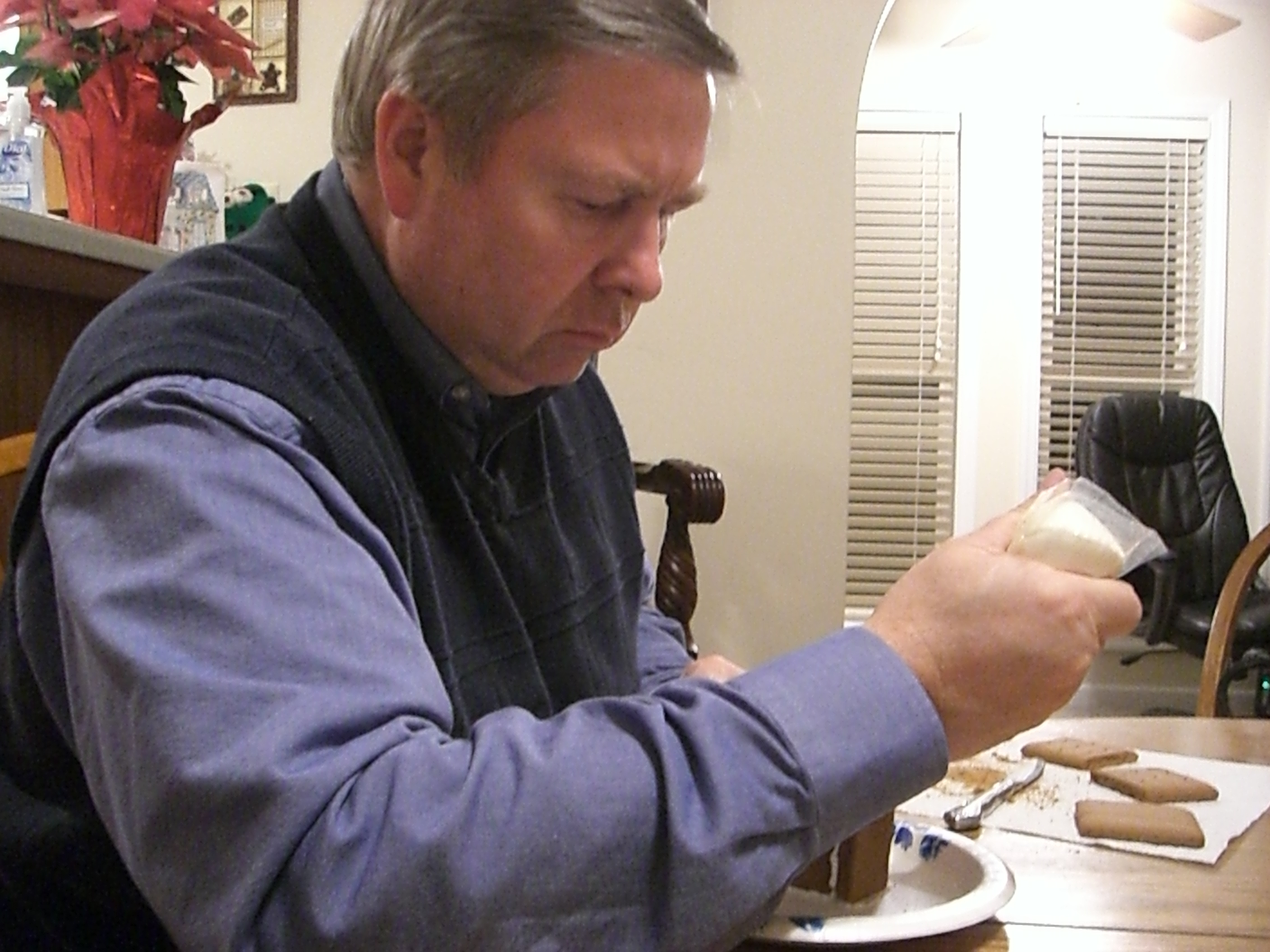
Happy Birthday to the man who…
…protects me from critters…
…takes me out to eat at nice places…
…gave me three great sons and heads up a wonderful family…
…concentrates on doing a good job no matter what he’s doing…
….knows how to be silly…
…makes great food…
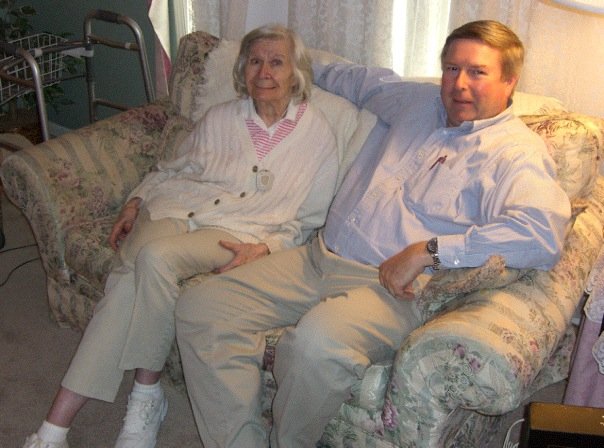
…takes care of his mom…
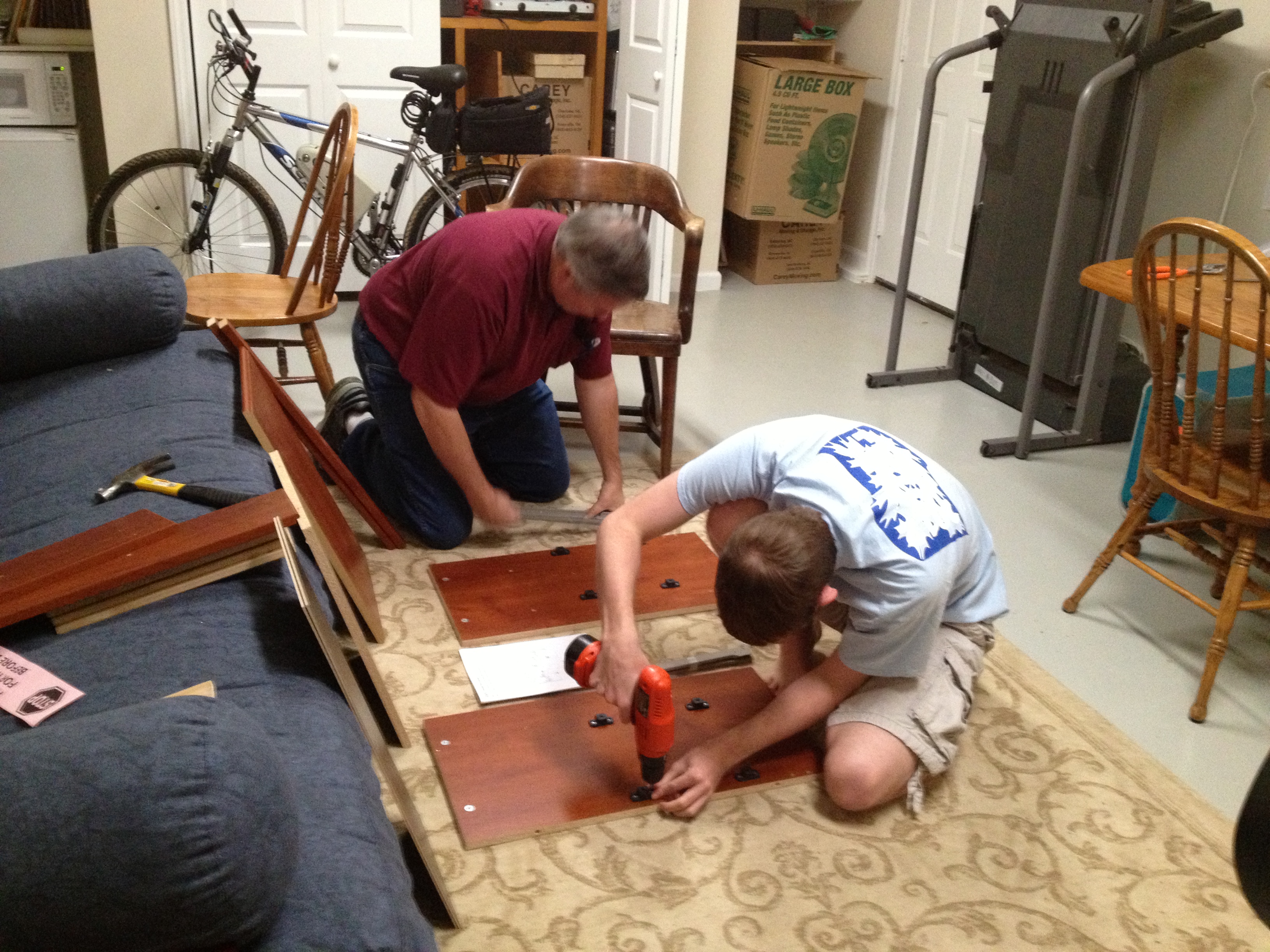
…builds stuff for me…
…and so much more.
Thank you for showing your love to me in countless ways every day! I so appreciate your character, your integrity, your work ethic, your kindness and compassion, and everything that makes you the wonderful man you are. I thank God for you and for His grace in our lives.
This past year has been a challenging one in many ways, with surgeries and bringing your mom home, but I’ve appreciated the way you have handled things with grace.
Booking Through Thursday is a weekly meme which poses a question or a thought for participants to discuss centering on the subject of books or reading.
I have not done one of these in over a year, though I do look at the questions every week. I have been pondering today’s question ever since looking at it earlier this morning, so I thought I’d jot some of those thoughts down here.
The question had to do with censorship of YA (young adult) literature: “Do you think it should vary depending on the impressionable age of the readers? Or is it always wrong? How about the difference between ‘official’ censorship by a government or a school system, as opposed to a parent saying No to a specific book for their child?”
It depends on what you mean by censorship. I would have a problem with the government banning certain books, except maybe pornography. (Has that kind of publication ever done anyone any good except to increase the finances of those involved in producing it?) But one problem with banning books is that no one would be able to agree on what should be banned. After all, even the Bible has been banned in certain times and places. And I do have a problem with turning government officials into thought police.
I don’t think I would agree with public libraries banning certain books, but I would like them to keep “mature” books away from children’s and teen’s areas. Those who are concerned about what their children read should not be letting them loose unsupervised in a public library anyway.
I do think school libraries have a right and even a responsibility to keep certain books out. Books with filthy language or illicit sexuality do not need to be in a school setting. And of course, ultimate responsibility rests with parents, who do indeed have a right to filter their children’s reading material.
The BTT site linked to an YA author’s blog post wondering why some of her own books were censored (“quietly” rather than officially). I am not linking to the author’s post because of the vulgar language in it, but after perusing it I have to ask, “Seriously?” When she writes like that, how can she wonder why some parents and teachers would object?
I do think filthy language is a reason to restrict some books. There are some books where it is minor and can be overlooked (for instance, the Dickens book I am listening to uses “Damn,” and Unbroken has a smattering of objectionable language in it, but it is understandable that there would be such in a prisoner of war camp). Though I’d rather not read those words, I can understand their being included in some cases. But there are some words that really don’t need to be in YA lit, if anywhere. Yes, some people do use them in real life, but that doesn’t justify a plethora of vulgarity in the name of intellectual freedom.
I don’t think explicit sexuality needs to be a part of YA lit, either (or any fiction, for that matter). Yes, even the Bible talks about adultery and other kinds of sexual sin and how it affects people, but not in a way that would cause arousal on the part of the reader.
Violence is harder to set parameters around. Obviously a book about war is going to have violent scenes, a book that discusses bullying is going to show instances of it, etc. Reality is one thing; gratuitousness is another.
When my kids were younger, I did censor books with New Age and certain other philosophies. I believe in talking about such things, but I didn’t want them presented in a positive and favorable way to an impressionable young mind before we’d had a chance to talk about it.
There are a few reasons for setting some restrictions in reading. Generally I don’t want to read bad language or sexual scenes or put them before my children because of the garbage in/garbage out principle. If we fill our minds with such things, they’re going to become part of our thoughts and may even come back out in our words and actions. There is a phrase going around now that once you see something, you can’t unsee it. Often it is said humorously, but it is true principle both in viewing and reading.
Even though YA stands for young adults, YA books are usually marketed to teens, and these objectionable elements don’t need to be placed in young, impressionable minds.
Despite everything I have said, I do not mean that I wanted my kids only to read things that reinforced our own views and that we agreed with 100%. I am working on a post about reasons for reading, but one major one is to experience other viewpoints and test one’s own thoughts against those of others. However, I did want to be careful with how those thoughts were presented while they were still young.
Sometimes when a controversial book is making the rounds of discussion, some people (even Christians) will say exasperatedly, “It’s just a book.” But books are powerful things. What we read affects how we think. Jesus told stories to illustrate spiritual truth, and I have often said that the best of Christian fiction is like an extended parable or illustration of truth. A principle I have read in a story takes root and stays with me much longer than when I read it in an instructional format. But the same power than can be used for good can also be used for evil. I regret to say that off-color things I read in an unsaved home as a young person have also stayed with me much longer than I would have liked, often popping into mind at the most inopportune times, like while trying to pray or listen to a sermon.
Most of what I have said so far is applicable to anyone, but as a Christian, my guidelines come from verses like these:
Philippians 4:8: Finally, brethren, whatsoever things are true, whatsoever things are honest, whatsoever things are just, whatsoever things are pure, whatsoever things are lovely, whatsoever things are of good report; if there be any virtue, and if there be any praise, think on these things.
I Corinthians 6:12: All things are lawful unto me, but all things are not expedient: all things are lawful for me, but I will not be brought under the power of any.
I Corinthians 10:23: All things are lawful for me, but all things are not expedient: all things are lawful for me, but all things edify not.
The Philippians passage focuses on the positive things we should be filling our minds with. The two verses from I Corinthians indicate that while all things are “lawful,” some things are not expedient (“tending to promote some proposed or desired object; fit or suitable for the purpose; proper under the circumstances” according to Dictionary.com), I shouldn’t allow things to exercise more power over me than they should, and some things are not edifying. Galatians 5:17 says, “For the flesh lusteth against the Spirit, and the Spirit against the flesh: and these are contrary the one to the other: so that ye cannot do the things that ye would” and chapters 6-8 go on to describe the battle between and spiritual and fleshly natures. It is going to be even more of a battle if we’re feeding our fleshly natures. II Corinthians 10:5 says, “Casting down imaginations, and every high thing that exalteth itself against the knowledge of God, and bringing into captivity every thought to the obedience of Christ.”
I don’t think that necessarily means we should read only Christian books. Truth and beauty can be illustrated even in secular works. And I don’t think it means everything we read should have a “Pollyanna” viewpoint. Even the Bible deals with sexuality, but not in a way that inspires lust. It also contains violent encounters, but David says in Psalm 11:5, “The LORD trieth the righteous: but the wicked and him that loveth violence his soul hateth” (emphasis mine) — gratuitous violence is different from a battle scene. It discusses different philosophies, but not in a way that leaves you confused about what’s right.
It is honestly hard to know exactly where to draw the lines sometimes, as I mentioned when I discussed To Kill a Mockingbird. There are books I might read for information that I would not endorse wholeheartedly. Wisdom and discernment are needed when reading Christian books as well as secular ones: not everything that calls itself Christian accurately reflects Biblical truth.
Of course, the world will not have the same standards in most instances, and we can’t fence off every area of temptation and evil influence. Ultimately what people need are hearts changed by the gospel. While we try to take some kind of stand lest explicit books become ever more blatant, we need to remember our main purpose as Christians is to share Christ both in our lifestyles and character as well as with our verbal testimony.

 Roof Beam Reader, who hosts the 2014 TBR Pile Challenge, has check-in points around the 15th of each month so we can summarize how we’re doing.
 For the Back to the Classics Challenge, I’ve completed The Woman in White and Farmer Boy. That brings to completion 3 of the 6 required categories and 2 of the 5 optional categories. I’m over halfway through Bleak House, so I’m feeling pretty good about this list as well.







 Stray Thoughts