Spurgeon on criticism

Someone posted this quote on Facebook recently:

“Brother, if any man thinks ill of you, do not be angry with him; for you are worse than he thinks you to be. If he charges you falsely on some point, yet be satisfied, for if he knew you better he might change the accusation, and you would be no gainer by the correction. If you have your moral portrait painted, and it is ugly, be satisfied; for it only needs a few blacker touches, and it would be still nearer the truth.” Spurgeon

The first sentence especially resonated with me. I was just discussing with my son yesterday that the first response to any criticism should be to examine it to see if there is any truth to it. I’m amazed at people who can’t take the merest suggestion that they might be doing something not quite right without becoming defensive and blowing up, or, in opposite fashion, becoming wounded and closing in on themselves.

Yet I have to admit, my first response to criticism isn’t, “Thank you: you’ve give me something to think about.” I might not say so out loud, but my first thoughts are likely to be something like, “You don’t understand,” or, “How DARE you!” or, “Oh yeah? Well take a look at yourself and deal with your own faults!” Not very pretty, is it? My first response should probably be, “Yes, and you don’t know the half of it!”

It should be no surprise to us that we’re not perfect, and no surprise that someone else notices that fact from time to time. Proverbs has much to say about hearing reproof:

For the commandment is a lamp; and the law is light; and reproofs of instruction are the way of life. Proverbs 6:23.

He is in the way of life that keepeth instruction: but he that refuseth reproof erreth. Proverbs 10:17.

Poverty and shame shall be to him that refuseth instruction: but he that regardeth reproof shall be honoured. Proverbs 13:18.

The ear that heareth the reproof of life abideth among the wise. Proverbs 15:31.

He that refuseth instruction despiseth his own soul: but he that heareth reproof getteth understanding. Proverbs 15:32.

A reproof entereth more into a wise man than an hundred stripes into a fool. Proverbs 17:10.

We can take comfort in the fact that God sees believers through His Son, Jesus Christ, and that once we savingly believe on Him, His righteousness is transferred to our account because He took our sinfulness on His. Because of His amazing grace, those who have believed on Christ for salvation become God’s children, and will have a home with Him in heaven. Our eternal life begins NOW, not when we die.

Yet until we get to heaven, we have a sin nature to contend with, and we’re instructed to “grow in grace, and in the knowledge of our Lord and Savior Jesus Christ” (II Peter 3:18). II Timothy 3:16-17 tell us: “All Scripture is breathed out by God and profitable for teaching, for reproof, for correction, and for training in righteousness, that the man of God may be complete, equipped for every good work” (ESV). Part of that growing, completion, equipping, is realizing those areas where we have a problem and then seeking God’s grace and relying on His Word to change us. So when we receive a criticism, instead of just brushing it off, we can see if God means to use it to show us something we need to know about ourselves.

There is only one perfect person in the universe, and as we behold Him, He changes us to be more like Himself:  But we all, with open face beholding as in a glass the glory of the Lord, are changed into the same image from glory to glory, even as by the Spirit of the Lord. II Corinthians 3:18.

Book Review: The Incorrigible Children of Ashton Place, Book 1: The Mysterious Howling

IncorrigibleI hadn’t planned on reading The Incorrigible Children of Ashton Place, Book 1: The Mysterious Howling by Maryrose Wood, but I had seen the title on different people’s book lists, and when I saw the audiobook was free (through today, June 12) via Sync, I decided to give it a try. I’m so glad I did.

The story involves a star graduate from Swanburne Academy for Poor Bright Females, Penelope Lumley, age fifteen, who is taking up her first assignment as a governess. Her charges are unusual: two boys and a girl with somewhat…canine tendencies, having been raised by wolves. Lord Ashton found them, but Lady Ashton is less than pleased.

Penelope is up for the challenge, which has its various ups and downs, along with several mysteries: How did the children come to be living alone in the woods? What happened to Penelope’s own parents? Why does Old Timothy, trusted servant and coachman, seem to be lurking about when Penelope is outside with the children?

The writing is a delight, with the quirky flavor of the Lemony Snicket and Mysterious Benedict Society books and an abundance of colorful similes, odd sayings of Swanburne’s founder (“If it were easy to resist, it would not be called chocolate cake”), amusing asides, and references to Dickens and Sherlock Holmes.

Katherine Kellgren’s reading brought the book wonderfully to life, with a variety of accents and tones for the different characters.

I’m hooked, even though it is technically a children’s book (but then, some of the best books adults love are children’s books, e.g, Narnia, Anne of Green Gables. etc). I already checked out the second book from the library.

(This will also be linked to Semicolon‘s Saturday Review of Books.)

And Carol‘s Books You Loved.

Books you loved 4

The Hidden Art of Homemaking: Chapter 8: Food

Chapter 8 of The Hidden Art of Homemaking by Edith Schaeffer, which we’re discussing a chapter at a time at  The Hidden Art of Homemaking Book Club hosted by Cindy at Ordo Amoris, is about food.

Once again Edith emphasizes that in this area as in all others, we have to balance time, money, energy, and priorities, and there will be times when food has to take a back seat to other things going on. But God has created a variety of foods that are both nutritious and beautiful to look at and has given us the taste buds, sense of smell, and eyes to enjoy them. She has some interesting observations on the manna that God provided the Israelites with during their travels in the wilderness, and notes that God could have made all food like that – nutritious compact packets – but that was just temporary “traveling food,” and for all the rest of time He’s allowed a great variety to enjoy.

Food is a major aspect of hospitality, and she emphasizes that the people Jesus said to include are not just old friends or people we’re trying to impress, but also “the least of these.”

I have to admit that I am relieved that this chapter is not what I thought it was going to be. I remember learning how to make radish roses in a high school Home Ec. class and thinking it was such a waste. She is not talking about providing extravagant meals or elaborate garnishes, but enjoying simple food prepared and offered with the simple artistry of a variety of colors, shapes, and textures. Although my husband appreciates the effort behind a nice meal, I think he would much rather have something simple and peaceful than something that takes hours and wears and stresses me out.

On the other hand, Edith describes a tramp coming to her door to ask for food, and instead of reluctantly thrusting whatever was at hand out the door at him, she made him a tasty and nice-looking sandwich and soup on a tray complete with flowers. Those little touches and efforts can convey, “You matter, and I care.”

Food cannot take care of spiritual, psychological and emotional problems, but the feeling of being loved and cared for, the actual comfort of the beauty and flavour of food, the increase of blood sugar and physical well-being, help one to go on during the next hours better equipped to meet the problems (p. 124).

One of the most well-known quotes about Edith herself, though I don’t know the source, is “As many people were brought to the Lord through Mrs. Schaeffer’s cinnamon buns as through Dr. Schaeffer’s sermons!”

I confessed some years ago that I don’t really like to cook a lot of the time, but I like to eat, and they sort of go together. 🙂 I recognize that it is a ministry to my family and part of my job description, and once I get going I’m ok with it. I just usually dislike having to stop whatever else I am involved in to go make dinner, but we all have to do things like that. I’m sure my husband doesn’t feel like going to work every day, either, but thankfully he does.

In discussing the last chapters, I’ve showed pictures of things I am pleased with: this time I am going to show you some of my epic fails, because I have had more of those in cooking than anything else. Enjoy. 🙂

Failure

One day I posted just this picture with the title “This is how my day has been going.” That was supposed to be for a ladies’ function at church the same night, so I had to come up with a plan B. I did dig the rest of the cake out of the pan, put it on the platter, covered it with glaze, and we enjoyed it as a family. It did taste good even if it didn’t look so good!

image01.jpg

These were supposed to be little Muppet-looking cupcakes, but the runny green icing made them look like baby swamp monsters.

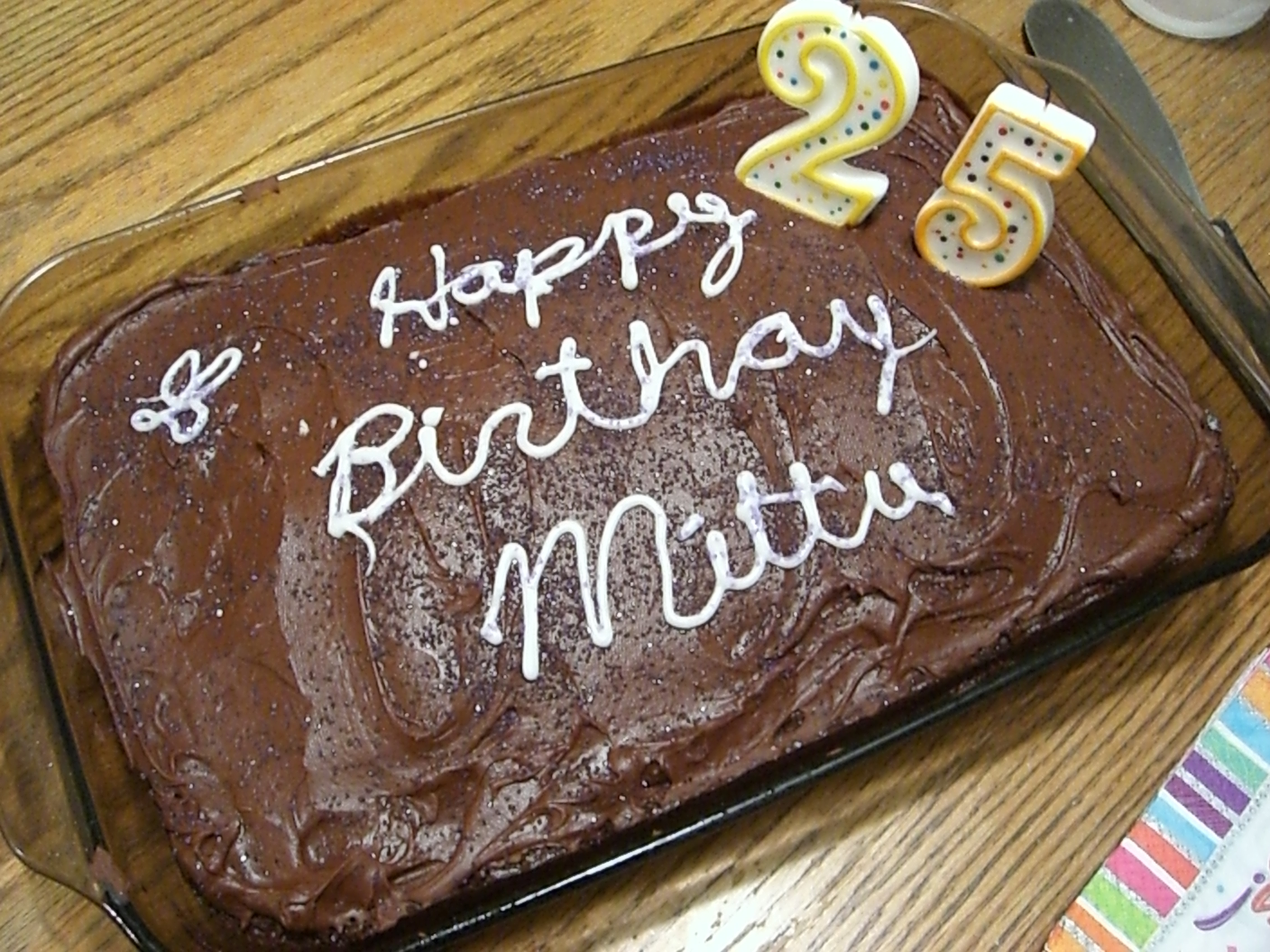
Cake decorating has never been my forte, but I used to be able to spell.

And then there was the green gravy. One day years ago I was trying to make gravy that wasn’t turning as brown as I wanted it to. I had heard somewhere that mixing red and green make brown, so I added a few drops of red and green food coloring into the gravy. It turned green, and no amount of added red food coloring drops would change it to any other color. That time, instead of crying into my gravy, I started laughing hysterically until my husband came to see what was going on. But I couldn’t eat it. The strange greenish color was revolting. (I rarely make gravy, but these days I eat it whatever color it ends up being.)

And then there was the time I reached for the cinnamon instead of the chili powder for chili mac. That turned out….interestingly. And the time I accidentally grabbed baking soda instead of corn starch for teriyaki – that made it foam like a science fair volcano. I scooped out the foam and tried to rectify it, but it was still so salty that we were drinking fluids all evening to counterbalance the extra sodium in our systems, and my husband can’t eat my teriyaki to this day.

Thankfully I’ve had more successes than failures, and though I’m not the best cook in the world, my family likes it enough to keep coming back for more, and we appear to be relatively healthy. 🙂

Some other cooking-related posts here that you might enjoy:
Cakes Are My Culinary Waterloo.
Cooking style.
Cooking experiences.
Food flashbacks.
Encouragement for Homemakers.

Book Review: The Merchant’s Daughter

Merchants daughterI picked up The Merchant’s Daughter by Melanie Dickerson on Lisa’s recommendation.

It’s the story of Annabel Chapman in the England of 1352, whose merchant father has died and whose proud family refuses the duty of every villager to work in the lord’s fields. As punishment, someone from her family is required to be his servant for three years, and Annabel offers herself for that position.

Lord Ranulf le Wyse is said to have a very short temper and to have some sort of deformity, making him repulsive to look upon and frightening to Annabel, but she soon discovers a different side to him.

Meanwhile, the bailiff, old enough to be her father and disgusting, has set his sights on her. Unfortunately, her duties at the lord’s house bring her into more contact with him, and even worse, her brother has given the man permission to pursue her.

Annabel feels the only way to both escape the bailiff and have access to the Bible she longs to read for herself is to escape to a nunnery as soon as her servitude is over, but when the opportunity arises, she questions that desire.

This story is based loosely on Beauty and the Beast, so of course I knew where it was ultimately going, but that was actually fun, to see how it corresponded to the fairy tale. It is a realistic retelling, though – no magic wands or spells – but I enjoyed that.

Probably my favorite parts involved Annabel being asked to read the Bible to Lord le Wyse since she is one of the few people in his household who can read Latin. Reading the Bible for herself (not everyone had one: even the local priest did not) has been one of her lifelong desires, and it’s a joy to watch her pore over it and discover its treasures for herself, stopping in her reading to ponder what it says.

This book was a pleasant companion on a recent “sick day,” and I thoroughly enjoyed it. I’m looking forward to checking out Melanie’s other books.

Here’s the book trailer for The Merchant’s Daughter:

Updated: I just discovered that the Kindle edition of this book is on sale for a limited time at $2.99. You don’t have to have a Kindle to get deals on Kindle books: they have apps for computer, tablets, and phones.

(This will also be linked to Semicolon‘s Saturday Review of Books.)

And Carol‘s Books You Loved.

Books you loved 4

Laudable Linkage

Here are just a few good reads from the last couple of weeks:

Examine Your Profession of Faith.

Speaking the Truth in Love. “Truth becomes hard if it is not softened by love; love becomes soft if it is not strengthened by truth.”

Idolizing Worship. “A true worshiper is not a consumer or a spectator. A true worshiper is one who is personally engaged with God in spirit and truth. The means of our worship is not Christ’s point of emphasis….In general we devote ourselves to building up the church, not simply pursuing an idealized experience that makes us feel as if we’ve worshiped.”

Slowing Down rather than rushing and hurrying children.

Sync Free Audiobooks. Sync is offering a couple of different audiobooks for free each week through the summer, several classics among them.

Why I Think You Should Break the Blogging Rules.

Hope you have a great weekend!

Friday’s Fave Five

FFF daisies

Welcome to Friday’s Fave Five, hosted by Susanne at Living to Tell the Story, in which we can share five of our favorite things from the last week,  wonderful exercise in looking for and appreciating the good things God blesses us with. Click on the button to learn more, then go to Susanne’s to read others’ faves and link up your own.

Another busy week — I thought things were supposed to slow down in the summertime! 🙂 Here are some favorites from the last week:

1. Getting a couple of projects done: curtains and a remade bulletin board for the sewing/craft room. I’ve had both in mind for a while, so it was nice to finally decide what to do and get it done.

CIMG5853

2. A rest day. I was not feeling well Sunday – nothing horrible, but just enough to stay home from church. I spent most of the day resting and reading – got a whole book read in a day! It felt so luxurious.

3. More light. I enjoy having more light in the evenings this time of year.

4. A visit from a friend. A good friend since early married days 30+ years ago and her daughter stopped by for an overnight visit on their way to visit another daughter. It’s always so good to catch up with them.

5. A husband who knows what to do. My friend’s car was leaking gas really badly. She had just gotten it back from the shop where they were supposed to have fixed the problem, but evidently the fix didn’t work, and she had another 8-hour drive scheduled today. Everyone was tired last night and decided to sleep on it, but then my husband came up with a plan of action that would take care of the car but still get her where she needed to go. So many times in our lives he has been able to come up with a practical plan of action when I’d still be in a muddle of not knowing what to do. I so appreciate that.

Bonus: It’s National Doughnut Day at Krispy Kreme, and they’re giving away one free doughnut per customer. We don’t have one right near us (which is good, because I’d be there much too often: their “Hot Doughnuts Now” sign is an irresistible magnet), but I may have to go looking for one. 🙂

Happy Friday!

Two projects done

I finally got a couple of projects done in the sewing/craft room I had been wanting to do for some time.

For a little background first, my original sewing room in our old house looked like this:

Old sewing room

It had been Jason’s room, so, he had chosen the wall color, and I loved the way my pink and white stuff looked against it. When we moved to our new house, all of the walls were beige. They were in fine condition (and we were tired!), so we didn’t want to paint, plus it was a much smaller room, and I thought darker colored walls would make it look even smaller and cave-like. But I liked the color combination of dark blue, pink, and white, and decided to try to incorporate them in the new sewing room.

Last year we got this futon, and I bought the throw somewhere online:

Photobucket

It hasn’t been easy finding that color combination, though, in fabrics.

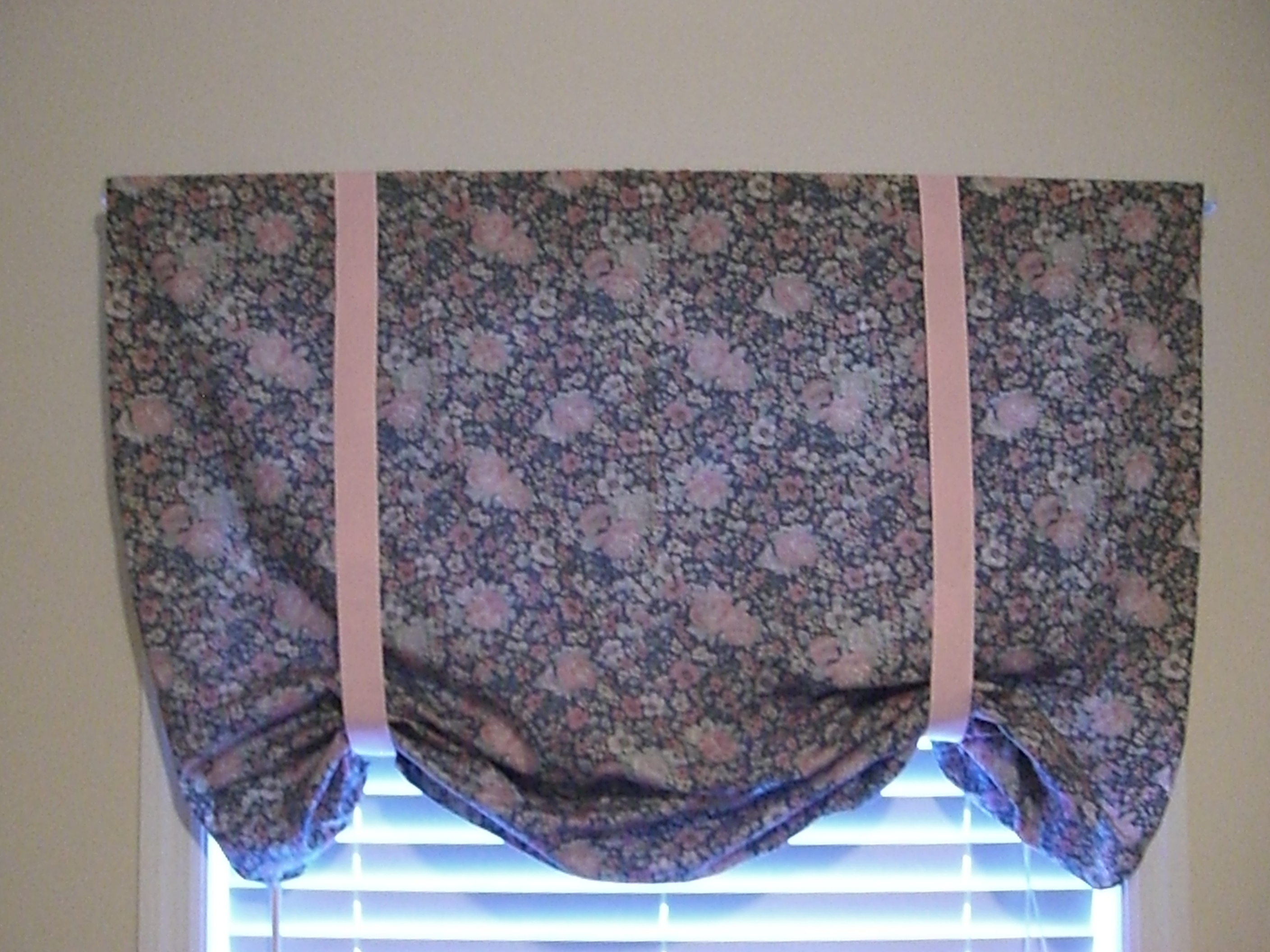
Pretty much from the first time I saw this idea on Pinterest of using a fitted sheet for a no-sew curtain, I was fairly sure that’s what I wanted to do. The hard thing was deciding on fabric. I couldn’t find any sheets I wanted to use for it, so I figured I’d just buy a length of fabric and put elastic at both ends (the elastic helps it pouf). At first I thought I’d go for something pink and rosy, but just couldn’t decide. Then I thought maybe I could mimic the futon, darker blue with a pink design. I looked for darker blue fabric with roses on it in multitudes of places – to no avail. One day after I finally decided on storage containers for the closet, I went out to the shed to retrieve some fabric I had stored there, and was thrilled to find a piece of blue with pink roses on it that I had forgotten about. The blue wasn’t quite as dark as what I’d had in mind, but when I laid the fabric on the futon, I saw the blues matched almost perfectly. The length wasn’t quite as long as a twin sheet, but it was long enough. I hemmed up each end and then threaded a length of elastic through it, and voila:

CIMG5853

I keep fidgeting with it, trying to decide if the ribbons are straight and evenly spaced, but overall I am pleased. I think it would look better on a rod-type curtain rod rather than the regular curved one. There is enough ribbon left for bows but I haven’t decided whether I want them – I don’t want it to look too “sweet” or juvenile.

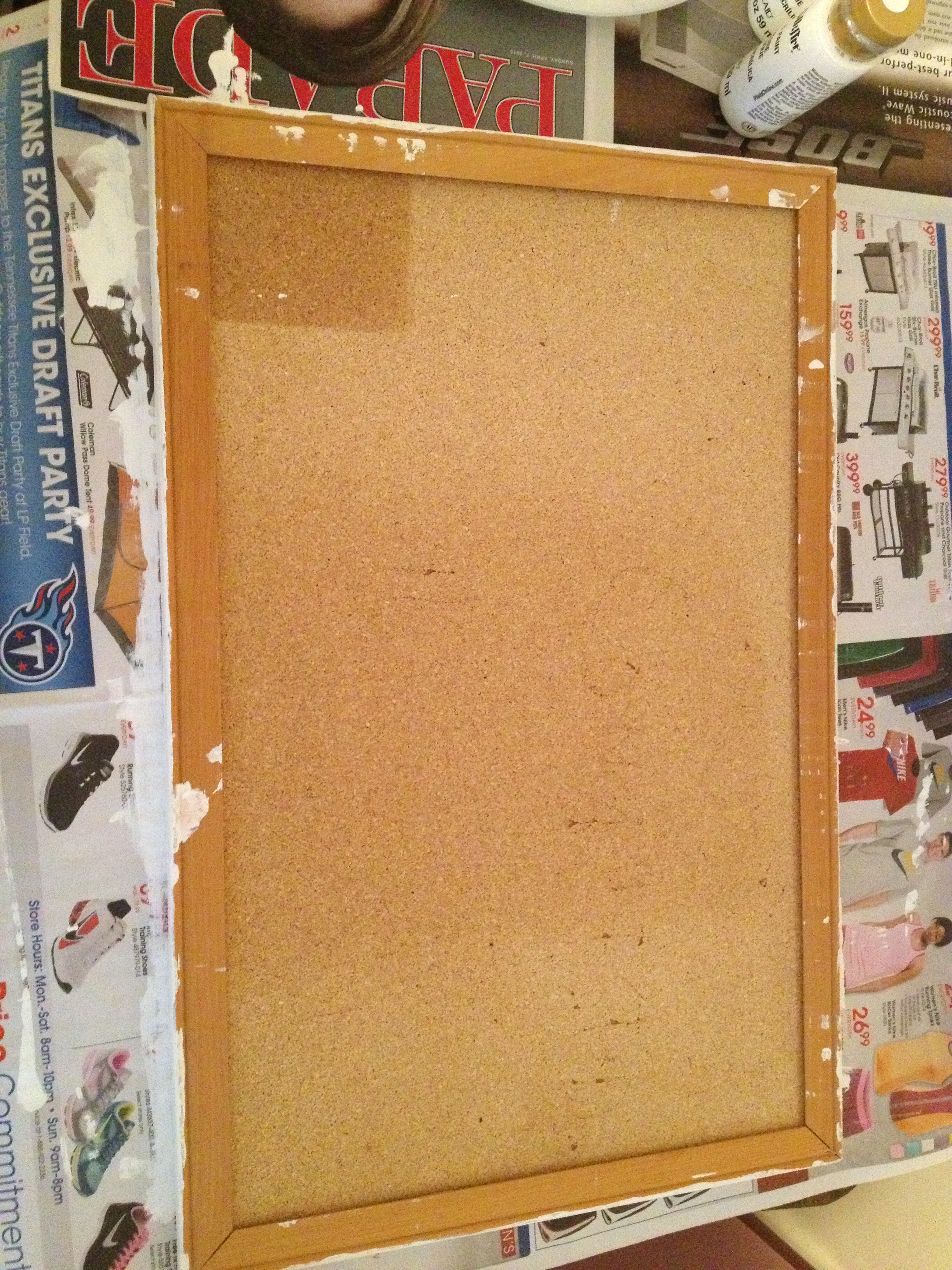
The other project was a bulletin board. We had had one in my mother-in-law’s room at one place, but during one move we just never got it back up, and at her current place there is no room for it. It was faded and scratched up, but I thought I could paint it and cover it with fabric.

Once again indecision was my biggest enemy in trying to decide whether to paint the wood pink or white and what kind of fabric to use. I finally decided on white for a frame, and after finding the fabric for the curtains, decided to go with dark blue with just a little bit of a pattern on it.

I forgot to take a “before” picture, but here is a “during” – I had painted the back and sides and was getting ready to start the front:

Barbara's Cell phone pics 148

I had seen an idea at Mary Beth’s for covering a bulletin board with fabric and using a butter knife to tuck it in around the edge. That worked great.

CIMG5850

I had originally wanted to criss-cross some ribbons over it (like this), but decided it was small enough and the fabric was tight enough across it that it should be ok. Unfortunately, that wasn’t the case – when I raised it up, the fabric started to move a bit. So it’s just pinned up there for now til I decide what to do. I know a thin layer of glue, like a glue stick, would probably keep it on, but I don’t know how it would work for pinning through. (I should have looked up Mary Beth’s tutorial again before I started – I see she used hot glue around the edges.)

I also found a rose applique that had been sitting in my sewing desk drawer for years and thought that would be a nice crowning touch, so I glued it on.

CIMG5851

So here is that corner of the room updated:

CIMG5854

I’m almost ready to show you the whole room – still have a few things to do. 🙂

One of my next projects needs to be a new sewing machine cover: the red here doesn’t go with the pink and blue, and it is stained and old-looking. New decisions to make….

Summer memories

Sherry at Semicolon had a list of summer memories from childhood, inspiring my own:

Fans at night and nap time (no AC).

Hearing mosquitoes buzzing in my ears at night.

Chasing fireflies.

Ice cream trucks.

Fudge pops.

Trips to the beach.

Visiting DQ afterward.

Thinking my aunt’s house with central AC was so luxurious.

Running through the sprinkler.

Drinking from the hose.

Families in the neighborhood bringing out lawn chairs to their front yards in the evenings and visiting back and forth while the kids played.

My dad taking the neighborhood kids on rides on his motor scooter.

Taking trips with my grandmother to visit my aunts and uncles and cousins.

Riding bikes everywhere.

Walking barefoot outside, being a real tenderfoot at the beginning of the summer and calloused by the end.

Stepping on the occasional cocklebur (or something like it – ours were flatter).

My birthday, sometimes celebrating it with three other cousins with birthdays in the same month.

Asking my mom what watermelon tasted like. She told me to try a piece if I wanted to find out. I finally did. We used to put salt on it.

Popsicles dribbling down our chins.

Going with friends to the pool.

Chinaberry fights (playful ones, not angry ones). We had enough chinaberry trees in the back yard for each kid to climb one, and we’d toss the berries at each other.

Vacation Bible School.

Playing tag, freeze tag, statue tag, Mother May I.

Sunburns.

Family reunions.

Taking glass bottle to turn in at the store for change.

Corn on the cob dripping with butter.

My dad barbecuing on the grill he made himself from a barrel.

Sleeping in.

Nehi Cola in grape, orange, and strawberry.

June bugs caught in the front screen door.

What are some of your summer memories?

barefoot_17240_md

The Hidden Art of Homemaking, Chapter 7: Flower Arrangements

It’s Week 7 of  The Hidden Art of Homemaking Book Club hosted by Cindy at Ordo Amoris where we’re discussing Edith Schaeffer’s book, The Hidden Art of Homemaking a chapter at a time.

Chapter 7 focuses on flower arrangements, and Edith reiterates that one need not become an “expert” or go to great expense or study to incorporate the principals she discusses. She mainly discusses centerpieces, arguing that at the table there “should be something to bring realization, a warmth of knowing that someone has taken thought and put some originality into preparing the place where food and conversation are going to be shared” (p. 100).

She argues that this should be done even when it is just the family at table or when one is alone, that it shouldn’t wait for “company.” “There is a ‘togetherness’ in sharing a prepared table that even very small children feel, although they cannot express it verbally. Instead of saying, ‘Oh, it doesn’t matter, it’s only the children,’ when you are alone with children for a meal, it is important to say the opposite to yourself. ‘I wonder what the children would enjoy most.'” (p. 104).

And centerpieces don’t even have to be flowers: she lists several suggestions using shells, mirror, candles, etc.

I have to admit that although I agree with what she says, we have never used centerpieces at the dining table. There just isn’t room. When passing food around at dinner, I think everyone here would rather be able to do so easily without having to work around something decorative in the middle. Our usual “centerpiece” is a cute napkin holder and the salt and pepper shakers. I do like to use nice tablecloths on holidays, but most of the time we use the table all through the day for other purposes, and I don’t want to have to keep moving a centerpiece in and out of the way.

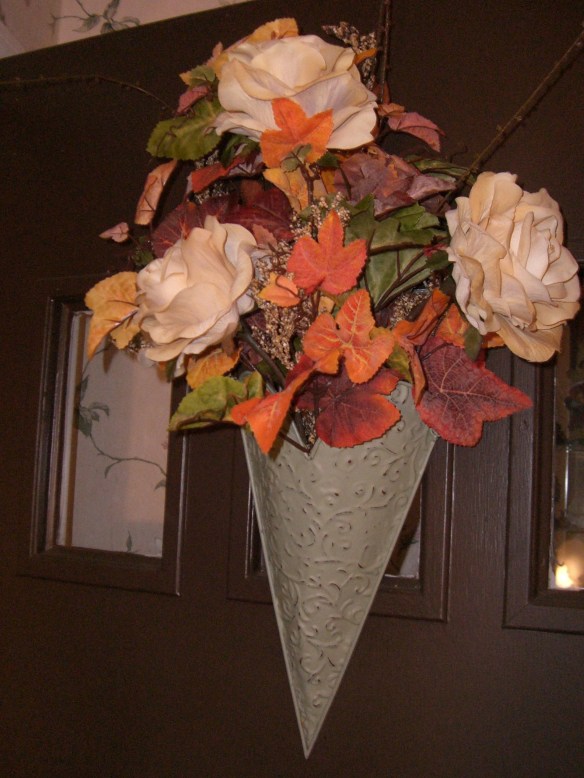
But I do have artificial flower arrangements in several rooms and think they are a great way to add color and brightness. I have a couple of “wall pockets” for the front door where I can toss in a few seasonal flowers.

CIMG3233

Roses and Hydrangea door ornament

And I like to get fresh flowers every now and then, especially in winter when there is nothing much growing and I long for some color and beauty. But even a few flowers from something outside in a vase on the windowsill is a nice touch.

Photo Sharing and Video Hosting at Photobucket

One good point she makes is that people tend to send an overabundance of flowers when a person is in the hospital, but then nothing during a long recuperation, so she suggests sending one simple flower or arrangement (not big expensive florist’s concoctions) each week or so to cheer the convalescent.

One of my favorite quotes so far in the book which could be a theme for the whole book is this:

“If you have been afraid that your love of beautiful flowers and the flickering flame of the candle is somehow less spiritual than living in starkness and ugliness, remember that He who created you to be creative gave you the things with which to make beauty and the sensitivity to appreciate and respond to His creation” (p. 109).

Although I don’t do centerpieces at home, I’ve enjoyed trying to come up with something unusual for our annual Ladies’ Luncheons for several years in our former church, and I thought you might enjoy seeing some of those. I looked for something unusual for two reasons: for one, I am not that skilled at flower arranging. Years ago a friend who had a florist shop in her home taught me how to do bud vases and corsages and hired me when she was super-busy, but I could never manage bigger arrangements. She could toss something together in 15 minutes that look gorgeous, and I could get the major flowers in ok, but agonized over filling it in. It took me forever and never looked right. The second reason was just that I liked to do something different each year rather than a water bowl with floating candles or flowers in it every single year. So, here are a few things we came up with:

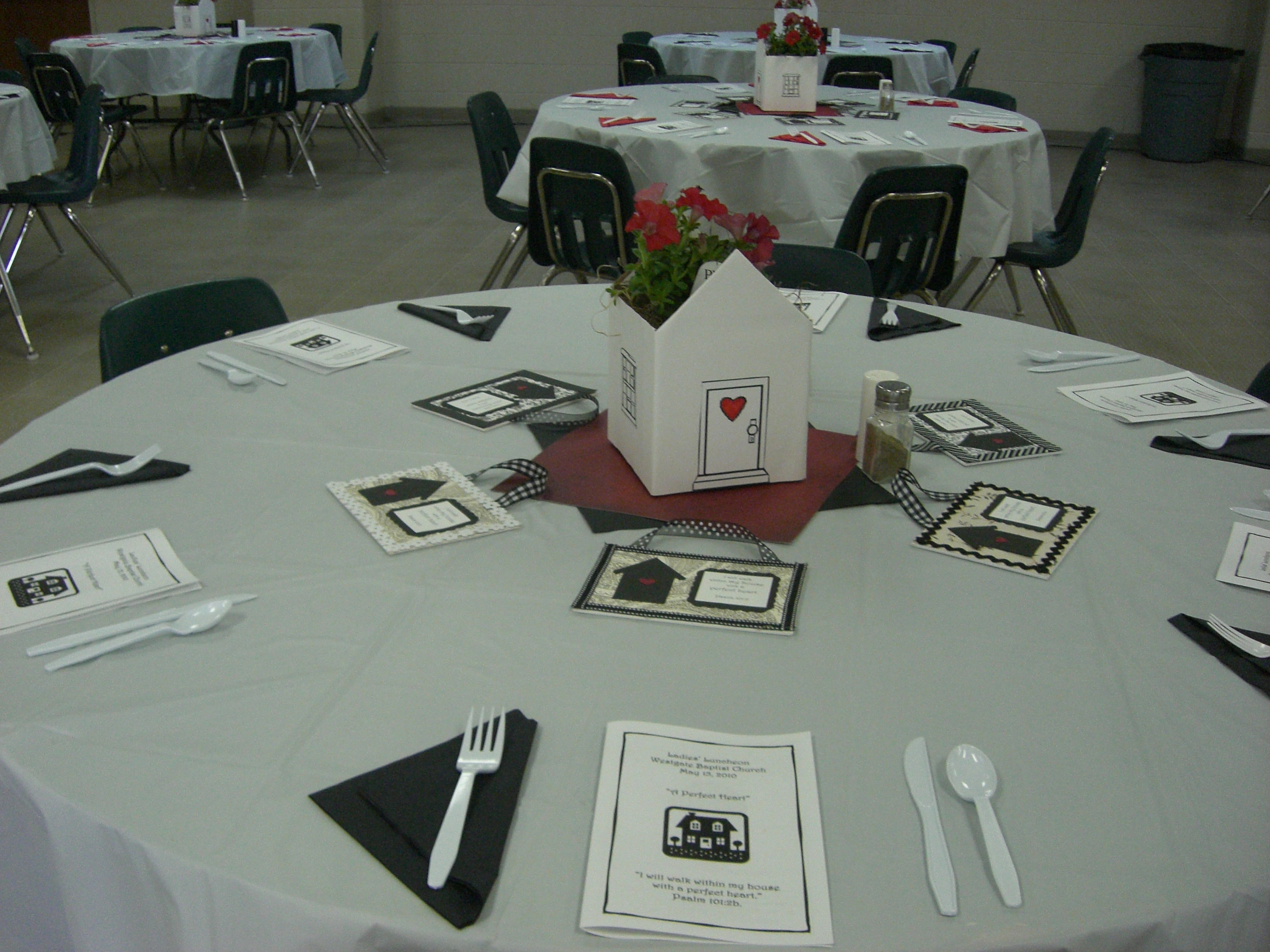
The theme of this one was “A Perfect Heart” from Psalm 101:2b: “I will walk within my house with a perfect heart.” The favors around the centerpiece had that verse as well as a little house with a heart on the front door, and the centerpiece was a covered cardboard box made to look like a house with a potted petunia in the center.

Ladies' Luncheon 09

I don’t remember the exact name for the theme for this one, but the program centered around a one-woman interpretation of one of my all-time favorite books, Evidence Not Seen by Darlene Deibler Rose. We chose the rose, of course, because the author’s last name is Rose, and gold because of the overarching theme of faith in her life (I Peter 1:7: “That the trial of your faith, being much more precious than of gold that perisheth, though it be tried with fire, might be found unto praise and honour and glory at the appearing of Jesus Christ.”) One of my favorite things about this one was the gold curlicues – they had been red and we spray painted them gold.

CIMG0751

cimg0748.jpg

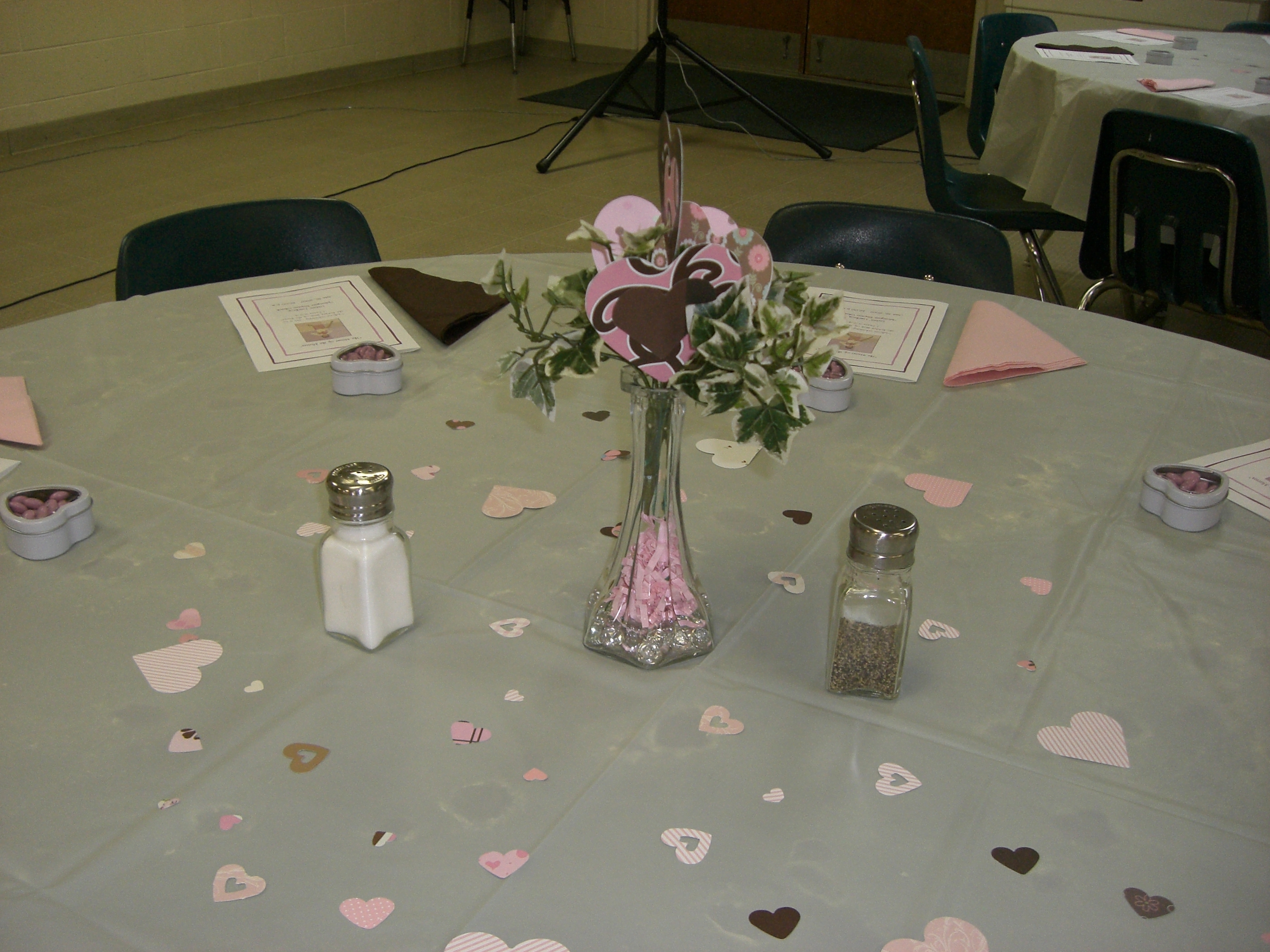
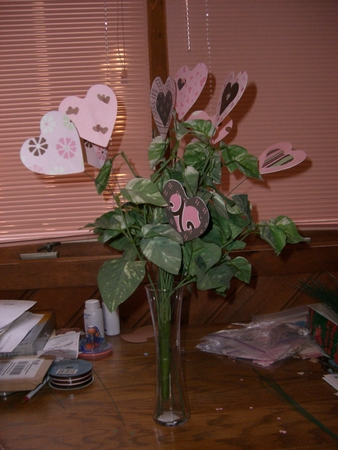
The theme of this one was ““The Heart of the Matter” from I Peter 3:3-4: “Whose adorning…let it be the hidden man of the heart.” The hearts were cut from scrapbooking paper: thankfully I had little punches for those shapes, so we didn’t have to cut them by hand.

Dresses

These were the centerpieces in progress for the theme “The Well-Dressed Woman from Ephesians 4:21-24: “If so be that ye have heard him, and have been taught by him, as the truth is in Jesus:  That ye put off concerning the former conversation the old man, which is corrupt according to the deceitful lusts; And be renewed in the spirit of your mind; And that ye put on the new man, which after God is created in righteousness and true holiness.” I did go back later and cover the Styrofoam with Spanish moss and little paper flowers.

Those are all the ones I have pictures of in the computer: the other photos are in shoeboxes I need to do something with some time. But one of my favorites was on the theme of patterns from Titus 2:7, “In all things shewing thyself a pattern of good works,” and on each table we had a different craft and patterns: a bowl of yarn balls and knitting needles with crochet and knitting patterns in one, a few dress patterns and piece of fabric on another, etc. For another, the theme was “A Woman’s Adornment,” from I Peter 3:3-4, and we borrowed vanity trays from the ladies at church and set them with sets of gloves (also borrowed), little buttons that looked like brooches (from Michael’s), and little bottles that were meant to look like perfume bottles (I had originally wanted perfume atomizers, but they were hard to find and expensive) and a single rose.

I almost didn’t include these since they are churchy and not homey, but thought they might be useful in sharing some ideas that aren’t always “traditional” centerpieces. One of my Pinterest boards is Table settings – I like the simplest ones best. I might add some of them in to the Hidden Art of Homemaking Board.

More discussions on this chapter can be found here.

Join Us Reading Through Gates of Splendor in June

Reading to Know - Book Club

Carrie’s Reading to Know Book Club has been featuring classics this year, trading off between adult and children’s classics. Carrie asked several blog friends to choose a book for each month. I was honored to be asked, but had a hard time deciding on which of multitudes of favorite books to choose. Finally I decided I wanted to include a missionary classic, which is one of my favorite genres, and Through Gates of Splendor by Elisabeth Elliot seemed recent enough and its story well-known enough that I felt it would be accessible to anyone who wanted to read it.

Through Gates of Splendor was, I believe, the first missionary book I ever read, sparking a lifetime of exploring other missionary books and Elisabeth Elliot’s writing. I’ve read it multiple times since. I listed it among the 98 Books That Have Enriched My Life and Books to Read Before You Die. It’s the story of how five men and their families came to minister together together among Indians in Ecuador, how they became interested in what was then known as the Auca tribe, fierce warriors who killed any outsiders (as well as their own tribesmen), how they determined to try to reach them, how they went about it, how they were killed, and how a wife of one man and sister of another were eventually given the opportunity to live with this tribe.

It’s not just fascinating for the sake of the story: it’s fascinating to read how each of these very different men and their wives came to know the Lord and then felt called to their particular field. These men didn’t know, when they went to the mission field, that they would be martyrs, though once they began to consider reaching the Aucas, they knew it was a possibility. But they each gave their lives to God to use in any way that He saw fit, and their faith and walk with Him is inspiring.

Some like to watch the films of books along with or after reading, so you might be interested to know there is a DVD called Through Gates of Splendor here (it seems to be also on YouTube here), narrated by Elisabeth Elliot, using footage that she, Nate Saint, and Life Magazine had taken. Also several years ago the film “End of the Spear” (linked to my thoughts) came out. The book is much deeper and fuller, and some have various problems with the film, as I discussed, but it’s okay if you want to see a general visualization. I would highly recommend Beyond the Gates of Splendor: it is a documentary made fifty years after the events of the book. Here is an excerpt:

At the wrap-up post at the end, I’ll have some other resources for those who might want to read more about those involved in this story which has been used by the Lord in remarkable ways.

If you’d like to join in the Carrie’s Book Club to read it, just leave a note at her place saying so, and at the end of the month she’ll have a post where all those who read it can post comments or links to their own blog post about it. That’s one of the most fun parts of this book club: discussing the book we’re reading with others.