Does anyone else…

…cringe at the thought of using book pages for crafts? Like these flowers or this Christmas tree? I like the way they look: I just hate the thought of tearing apart a book to make them. I suppose if the book is falling apart or I didn’t like it that would be one thing.

…react negatively to the word “must,” as in “must-see TV” or “You must see this” or “You simply must read this.” I guess it is part of my perverse nature that thinks, “No, I mustn’t!”

…wonder how people wear those bunchy scarves, like this? I think they look great and are a great way to add color and panache. But it seems like it would get in the way, and I know personally if I wore one, at the end of the day I’d be picking out the food I spilled into it.

Book Review: West From Home by Laura Ingalls Wilder.

West From HomeWest From Home is a compilation of letters Laura Ingalls Wilder wrote home to her husband, Almanzo, while she was in San Francisco visiting her daughter and the 1915 World’s Fair, also called the Panama-Pacific International Exposition in celebration of the completion of the Panama Canal, which opened trade with other countries. Her daughter, Rose Wilder Lane, had kept the letters in a box after her mother’s death, and they were among other possessions passed along to her heir, Roger Lea McBride. When he discovered them, he decided to publish them in a book for Laura fans.

Laura spent about two months with Rose and her husband. She was 48; Rose was 29. Besides all the sights and wonder of the Exposition, Laura got a glimpse of San Francisco, Rose’s work, different ways business was done, and the ocean. I love the description of Laura and Rose taking their shoes off and running in the water.

She visited to a cannery, and “her doubts about the cleanness of canned goods from a large plant are removed” (p. 54). She was intrigued by the different nationalities of people she saw. She was enthralled by the light show in the evenings. And she took in a great deal from the city and the Exposition and tried to describe it in great detail to Almanzo.

Though there are photos included in the book of some of the sights around the time she was there, they are not hers. I don’t know if they did not have a camera, or if it was just inconvenient or expensive to shoot many photos. But Laura tried to describe with as much detail as she could what she was seeing so Almanzo can experience it as much as possible, too.

Almanzo couldn’t leave the farm, and it is clear in several of the letters that Laura feels conflicted about leaving him with all the work herself. A number of things I read last year about her showed that she was an integral part of the farm work.

Her letters are quite practical, not romantic or even affectionate much at all. That may have been due to the era, but overall she was a very practically-minded person, so that may just be how she expressed herself.

In several places it is mentioned that Rose was trying to persuade her parents to move near her, and Laura (actually called Bessie by Almanzo because he had a sister named Laura and called Mama Bess by Rose) explored the costs and details involved in moving some of their ventures to CA. But ultimately she felt, “There is no place like the country to live and I have not heard of anything so far that would lead me to give up Rocky Ridge [their home] for any other place” (p. 89).

Laura was also writing her farm-paper columns at this time, and Rose had several writing assignments, but there was talk of wanting Rose to help her block out a story. I’m assuming these were some of the first efforts towards what would eventually become the Little House stories.

One of the reasons I especially wanted to read this book was for a glimpse into Laura’s relationship with Rose. I had read mixed reports about how well they got along. There is nothing in these letters to indicate they didn’t get along, and if they didn’t, it would seem Rose wouldn’t be so keen on wanting them to move near her. There are indications that Rose was more emotional and Laura more practical and down-to-earth, so I am sure that caused some misunderstandings sometimes. Of course, these cover just a short period in their lives, so they are not the whole story.

There are some family glimpses as well, in Laura’s concern about whether they’d get back $250 they had loaned to Rose and her husband, and Rose’s note to her father with concerns that Laura was getting too fat (!!!)

All in all it was a fairly quick (171 pages, if you count some recipes at the end) and enjoyable read. It wasn’t riveting, but it was an interesting peek into Laura’s real life.

Laura Ingalls Wilder Reading Challenge

The Laura Ingalls Wilder Reading Challenge 2013

Laura Ingalls Wilder Reading Challenge

Welcome to this year’s Laura Ingalls Wilder Reading Challenge! Since February is the month of her birth and her death, it seemed a good time to read anything related to her. Any of the Little House books are fine, but if you’d like to read something other than those, I listed a few books related to Laura Ingalls Wilder here, and of course I’m sure there are several biographies and such that I don’t know about.

Let us know in the comments below what you’re planning to read pertaining to Laura this month, and at the end of the month I’ll have another post where we can share how we’ve done and what we’ve thought about what we read. You can join in at any time during the month and you don’t have to have a blog to participate. And there just may be a prize of some kind for those participating.

If you do anything else Laura-related, we’d love to hear about that, too: last year Bekah tried some prairie-type crafts, foods, and activities, and a while back Annette hosted a Little House-themed birthday party for her daughter.

For myself, I plan to read:

West From Home, Laura’s letters back to Almanzo when she went to visit her daughter and the World’s Fair in San Francisco.

Let the Hurricane Roar by Rose Wilder Lane, Laura’s daughter, about her grandparents early years on the prairie, written before the Little House books.

Farmer Boy by Laura Ingalls Wilder.

If I have time before the end of the month, I may go on in the Little House books. But it’s a short month, so we’ll see!

I got the Little House cookbook last year, so I may try some dishes from that as well.

Happy reading!

Feel free to grab the button for the challenge to use in your post:

Laura Ingalls Wilder Reading Challenge
<div align="center"><a href="https://barbarah.wordpress.com/2013/01/02/announcing-the-second-annual-laura-ingalls-wilder-reading-challenge/" title="Laura Ingalls Wilder Reading Challenge"><img src="https://barbaraleeharper.com/wp-content/uploads/2011/11/liw.jpg"   alt="" width="144" height="184""" alt="Laura Ingalls Wilder Reading Challenge" style="border:none;" /></a></div>

Friday’s Fave Five

friday fave five 12

Welcome to Friday’s Fave Five, hosted by Susanne at Living to Tell the Story, in which we can share five of our favorite things from the last week,  wonderful exercise in looking for and appreciating the good things God blesses us with. Click on the button to learn more, then go to Susanne’s to read others’ faves and link up your own.

It’s been a wild and windy week outside: rain, high winds, flooding, and a bit of snow. I’m thankful it’s been warm and cozy inside. Here are a few faves from the week:

1. Not losing power, always a concern during storms of any kind around here.

2. Safety. Jesse had a couple of harrowing experiences in his car, hydroplaning for the first time.

3. A new nightstand. I have been wanting to get rid of the old one for ages. It was old and had problems even before we scavenged it from friends who were getting rid of it. It was intended for a living room end table and stuck out too far for a bedroom night stand, but it served that purpose well for a number of years. I had been saving up points from my Amazon credit card to buy something big with rather than piddling it away on smaller orders. It takes me ages to come to a decision about style and color, but I finally bought a new one. I had enough points to get two, but I wanted to wait and see how we liked this one first. Jim said I could buy a second one for his side — we will have matching nightstands for the first time in 33 years of marriage!

Old:
 photo BarbarasCellphonepics133.jpg

New:
 photo BarbarasCellphonepics135.jpg

4. A new Mexican food restaurant. I have to have a Mexican food place nearby! That or learn to make chicken chimichangas for myself. My husband was dissatisfied with the place we’ve been going, so we tried a new place and liked it.

5. God bringing things together. I was working on the ladies’ newsletter for church this week and had it all done except for one section someone else was writing. She e-mailed Wed. night to ask if she could wait and send it in next month, which was fine, but now I needed to figure out what to put in that blank space. Then something I read Thursday morning fit the bill perfectly, both in what it said and the length of it to fit in the needed space. Thank you, Lord!

Hope you have a good weekend! The rain has finally stopped here, though we still have lots of ponds throughout town formed by all the rainwater. We’re supposed to get snow this weekend, but they say it won’t be enough to cause any problems. Hope not!

Book Review: Emily of New Moon

L. M. Montgomery Reading Challenge Reading to Know - Book Club

I read Emily of New Moon by L. M. Montgomery for Carrie‘s Lucy Maud Montgomery Reading Challenge. and Reading to Know Book Club for the month of January.

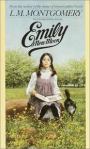
EmilyEmily is similar to LMM’s Anne of Green Gables in many ways: both are orphans and come to live with stern older women. Both are highly imaginative and high-strung. But Emily’s world is harsher, darker, at least at first, whereas Anne’s is more charming and optimistic.

Emily’s mother had died years ago, and Emily lives alone with her beloved father, who is dying of consumption. They had had no contact with her mother’s people, the proud Murrays of New Moon, because her mother had run away and eloped with her father, to the severe disapproval of the Murrays. But “Murray pride” insures they will do their duty by Emily, and the various family members draw lots to see who will take her. The lot falls to Aunt Elisabeth (who is much harsher than Anne’s Marilla, who, though she was not warm, was not unkind.) The blow is softened for Emily a bit by the fact that her Aunt Laura and Cousin Jimmy (who “may not be all there, but what is there is very nice” p. 209) also live with Elisabeth, and they both love Emily, though they don’t “cross” Elisabeth.

It was astounding to me that no one understood either Emily’s grief in the loss of her father nor the jolt it would have been to leave all she had known to live with strangers. But with the resilience of childhood she soon learns the ways of the household and soon learns to love much about New Moon. Starting school is another trial by fire, but she makes dear friends with a girl named Ilse, who has been allowed to run rather wild by her inattentive father, Teddy, a quiet classmate who draws exceptionally well but whose mother is somewhat disturbed, and Perry, who has never been to school but has sailed hither and yon with his father.

Emily’s outlet is writing. She loves “the magic…made when the right words are wedded” (p. 273). She has a vivid imagination and writes fanciful stories and poems and pours out her heart about her trials and tribulations in letters to her father.

I wasn’t sure how well I really liked this book until about the last third of it, when Emily and Aunt Elisabeth have their ‘breakthrough” (and I loved that everything wasn’t all “happily ever after” that, but their different personalities and views still caused them to clash sometimes.) And then the chapter “When the Curtain Lifted” was the best in the book, I think. I also enjoyed Emily’s growth through the book, both in her personalty, as she “learns to mingle serpent’s wisdom and dove’s harmlessness in practical proportions” (p. 314), and in her writing, as she begins to realize that much of her early work is fanciful trash but is encouraged by the glimmers of talent a few others see.

This book is said to be more autobiographical than Anne, with some of the events in Emily’s life taken from LMM’s. It was interesting that a poem someone sent to encourage Emily about the Alpine path was one that also encouraged LMM: her autobiography takes its title from the same poem.

There is also a television series based on Emily, but I have not seen it.

I had hoped to read all three Emily books, but I only got through the first one, so I’ll probably save the next two for next year’s LMM challenge. The book for February’s Reading to Know Book Club. (which is all classics this year: take a peek here and see if you’d like to join in for any of them) is The Scarlet Letter, which I’ll probably listen to via audiobook.

And if anyone is looking for another challenge for February, I invite you to check out the Laura Ingalls Wilder Reading Challenge which starts tomorrow!

Laura Ingalls Wilder Reading Challenge

My past readings for the LMM Reading Challenge are (all linked to my thoughts on them):

Anne of Green Gables
Anne of Avonlea
Anne of the Island
Anne of Windy Poplars
Anne’s House of Dreams
Anne of Ingleside
Rainbow Valley
Rilla of Ingleside
Looking for Anne of Green Gables: The Story of L. M. Montgomery and Her Literary Classic by Irene Gammel

(This will also be linked to Semicolon‘s Saturday Review of Books.)

The Tenth Plague: Book Review and Author Interview

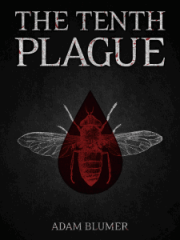
The-Tenth-PlagueIn The Tenth Plague by Adam Blumer, Marc and Jillian Thayer have just adopted a new baby boy, and a friend has invited them to  a Christian-themed resort for some rest and time together as a new family.

When they arrive, however, the retreat is in upheaval. A company planning a new Bible translation is having meetings at the resort, and a throng has arrived to protest. Someone rigged the water system to dispense what appears to be blood from the faucets. What seems an odd prank is soon discovered to be the first in a series of events based on the Biblical ten plagues of Egypt, some of them resulting in fatalities. Marc calls on a friend, a retired homicide detective, to help with the investigation as the plagues escalate.

Gillian, meanwhile, runs into someone who has hurt her deeply in the past. She thought she had put it all behind her, but the old anger and hurt rush back in like a flood,  and she wrestles with the need to extend forgiveness.

The Tenth Plague is a sequel to Fatal Illusions, Adam’s first book (which I reviewed here), but you don’t have to have read the first book to understand and enjoy the second. Both books are tremendously suspenseful and feature realistic, everyday Christian people trying to discern and apply God’s will in their circumstances. I enjoyed them both very much!

Here is an interview with Adam:

blumer_adam_portrait

What was your inspiration behind The Tenth Plague?

 One day I was reading the book of Revelation and came across 22:18–19. “I warn everyone who hears the words of the prophecy of this book: if anyone adds to them, God will add to him the plagues described in this book, and if anyone takes away from the words of the book of this prophecy, God will take away his share in the tree of life and in the holy city, which are described in this book” (ESV). My mind began playing the “what if” game. Would God really bring a biblical plague on someone who tampered with His Word? I chatted with a few theologian friends, and the plot emerged from there.

How does this novel compare with your first novel, Fatal Illusions?

Though the plot, of course, is different, the two novels share a number of similarities. Both are set in Michigan’s Upper Peninsula, where I live. I like to write about average folks like Marc and Gillian Thayer, a pastor and his wife who face unexpected, even threatening, events. Of course, there’s another really bad killer who wants to do them harm, and their retired homicide detective friend, Chuck Riley, once again comes out of retirement to help them. I also like to weave in a historical event that somehow relates to the present day. In Fatal Illusions, it was the killer’s obsession with Houdini; in The Tenth Plague, an old mine disaster plays an important role. The past always plays an important role in the present—a running theme in my novels. Overall, I like to write about redemption: how biblical truth offers the answers to the complicated issues of life. Stories, like parables, present some of the best ways to illustrate biblical truths.

 What was one of the most important lessons you learned during the writing of this novel?

The power of the collaborative process. I had a fairly strong first draft, but I was stuck. A novel editor provided a creative springboard and helped me see where my true story lay. Without her help, I doubt this story would have seen the light of day.

 What part of writing this novel took the most work?

 This novel required a ton of research. From an old mining tragedy to autism, from adoption law to anthrax, from pheromones to the Oklahoma City bombing, the research for this one required much more than I ever expected. I’m so thankful for technology and ease of access, thanks to the Internet. Without Google and so many resources at my fingertips, I’d probably still be researching this story.

 So far, what has been your favorite work experience in life?

 During one summer between years in high school, I worked at a library, a book lover’s paradise. Granted, a lot of the work involved stocking shelves, but being surrounded by so many fascinating books and interesting authors was pure heaven. I was born a die-hard book lover, and I’ll probably die one too.

Consider the qualities that make you unique. How do these qualities come out in your writing?

 I love suspense fiction and history, so a blending of the two always seems to come out in my writing. In high school, I won awards in calligraphy; Gillian Thayer, my female lead, is into calligraphy in a big way (it’s her job). I’ve always been intrigued with how one’s past impacts his or her present and future. This is a recurring theme in my novels because it’s part of who I am. Now that I think about it, what I write is inseparable to some degree from who I am.

 Introduce your plot summary and main characters. What is your favorite part of the story?

Water turns to blood. Flies and gnats attack the innocent. Marc and Gillian Thayer’s vacation resort becomes a grisly murder scene, with a killer using the ten plagues of Egypt as his playbook for revenge.

When their friend turns up dead, Marc and Gillian put their vacation on hold, enlist the help of a retired homicide detective, and take a closer look at the bizarre plagues as they escalate in intensity. Meanwhile, a stranger is after the Thayers’ newly adopted baby. Will they uncover the truth behind the bitter agenda before the tenth plague, the death of the firstborn son?

 My favorite part is when the firstborn son is revealed and the novel culminates in the tenth plague. This is the most suspenseful and action-packed part of the story, with several key characters in jeopardy. I had a blast writing it.

 One of the main themes of The Tenth Plague is confronting and dealing with your past. What can readers take away from this theme, especially in a novel that deals with religion and death?

 Both the villain and my heroine, Gillian Thayer, grapple with heartbreaking real-life issues from their past. But how they respond shows two very different paths. My hope is that readers will see the stark contrast in the context of biblical truth presented in the story. The bottom line is that God is enough, and He offers the solution to every problem of life. This is another repeated theme in my stories. Thank you for the opportunity to talk about my latest project.

Some content used by permission of Kirkdale Press

Tenth Plague Forgiveness

The Tenth Plague is available in e-book format only from Amazon and Vyrso. You can read an excerpt here.

Thanks to Adam for sending me a copy in exchange for my honest review.

(This will also be linked to Semicolon‘s Saturday Review of Books.)
Book Giveaways

Author Adam Blumer writes edge-of-your-seat suspense infused with Biblical principles. His new book, The Tenth Plague, will be released as an e-book on January 29. I’ll have more to say about it then, but meanwhile, if you’d like to have a chance to win a copy of The Tenth Plague or a physical copy of his first book, Fatal Illusions (linked to my review), go here or click on the graphic.

10th Plague Giveaway

Adam discusses the book here, and you can read an excerpt of The Tenth Plague here.

Friday’s Fave Five

Welcome to Friday’s Fave Five, hosted by Susanne at Living to Tell the Story, in which we can share five of our favorite things from the last week,  wonderful exercise in looking for and appreciating the good things God blesses us with. Click on the button to learn more, then go to Susanne’s to read others’ faves and link up your own.

It’s been a better week for us than the last couple of weeks have been, though we’re still heavy-hearted and concerned for a niece’s fiance who was discovered to have multiple tumors and is suffering through a heavy regime of chemotherapy this week and will be for weeks to come. The ultimate prognosis is good, the doctor says, but they’re going to have an awful time of it through treatment. Prayers are always appreciated!

The faves for this week are small ones, but they do lighten and encourage.

1. Thoughtfulness. My husband had to pick up Chick-Fil-A biscuits for a meeting at work, and time was tight between the time they opened and the time he had to be at work, but he still stopped by the house and dropped off chicken biscuits for Jesse and me.

2. Filters. When my oldest son was here he showed me how to set up filters for gmail. That has been a great help, especially for sales-related ones (coupons for the pizza place, fabric shop, etc.) I can set them to go into a folder without them cluttering up my e-mail and then look at them when I want to.

3. Hand-written notes, both sending and receiving them.

4. Downton Abbey. Yes, I’ve gotten on the bandwagon. 🙂 I was discouraged from doing so, thinking I’m 3 seasons behind and it would take ages to catch up, but then I saw each season was only 7-8 episodes long. I’ve seen some episodes through Netflix and some through the PBS site, but thanks to Lisa for sharing this link to stream the episodes (The “Behind the Drama” special was really good), and also for the warning that there is a pretty bad scene in the first episode, but thankfully nothing like that has come up again so far. I was disappointed that it seemed a little soap-operaish at first, but I liked the historical aspects, especially when WWI and the Spanish flu hit. But according to the author in the “Behind the Drama” special, what I thought was the most soap opera-like one of all about the Turk was actually based on a true story. Truth is stranger than fiction sometimes!

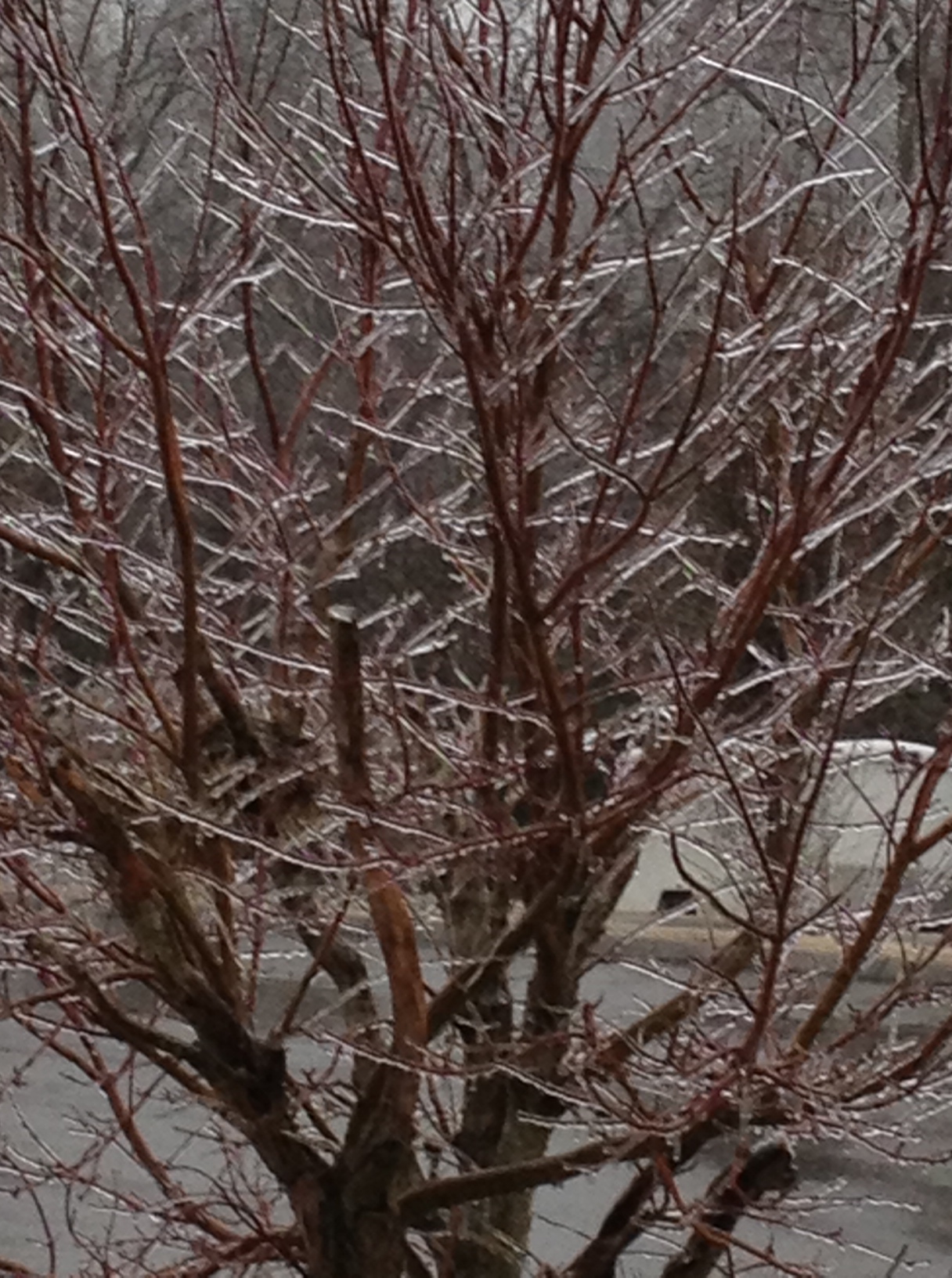
5. A cozy, warm shelter. Our area is being hit with an ice storm with predictions now of up to a 1/2″ of ice before it’s over. I’m thankful to have a safe place to stay and pray for those who don’t.

photo(7)

Hope you’re having a safe and warm weekend wherever you are.

Books related to Laura Ingalls Wilder

Laura Ingalls Wilder Reading Challenge

I was talking with a friend about the upcoming Laura Ingalls Wilder Reading Challenge hosted here in February (more information is here), and she mentioned that she wanted to participate but would like to read something other than the Little House books. So I thought I’d share some of those titles for anyone else seeking that kind of information as well.

As far as I know, the only books that Laura wrote as books are the nine Little House ones, as well as her first book titled Pioneer Girl,  (which is not the same thing as a biography of her by the same title)  which she and her daughter, Rose, later reworked into the Little House series. But there are a few books of her writings compiled and published after her death. Those are:

Little House in the Ozarks: the Rediscovered Writings of Laura Ingalls Wilder, compiled and edited by Stephen Hines, a collection of newspaper columns and magazine articles she wrote before starting the Little House books, reviewed here. Saving Graces: the Inspirational Writings of Laura Ingalls Wilder, reviewed here, is a collection of inspirational or faith-based columns pulled from this book. The same editor’s three books beginning with Writings to Young Women from Laura Ingalls Wilder appears to be the same type of thing: some of the columns from the first book sorted into different categories.

On the Way Home, a diary of her move with her husband and daughter in a covered wagon from South Dakota to Missouri.

West From Home, letters Laura wrote to Almonzo while visiting their daughter in San Francisco, where she visited the World’s Fair.

A Little House Traveler contains the above two books plus the previously unpublished The Road Back, about the first trip she and Almonzo took back to De Smet, where Laura grew up and where they met.

A Little House Sampler, stories and writings of Laura as well as of Rose Wilder Lane, compiled by William T. Anderson.

There may be some other “compilation” type books, but these are the ones I know of. I have only read the one compiled by Stephen Hines so far.

Laura’s daughter, Rose Wilder Lane, wrote Let the Hurricane Roar (also known as Young Pioneers) about her grandparents’ “prairie life,” I believe before the Little House books were written or planned. Laura didn’t start writing until in her 60s, if I remember correctly. Another of Rose’s prairie-based books is Free Land: I am not sure if that one was specifically based on her family’s story or not. I have not read either of these but I have Let the Hurricane Roar on hand and hope to read it next month. These books are written for adults, while Laura’s were written for children. Rose wrote a number of other books: she was more well-known as a writer than her mother until the Little House books caught on: then Laura’s fame surpassed hers. There is disagreement in scholarly circles as to how much of the Little House books was actually written by Rose. Rose insisted they were all her mother’s work, but it seems likely that Rose would have shaped and edited them to some degree. Those who have read more of Roses’s writing seem to feel that her style is so different from that of the Little House books that they can’t believe she would have been the main writer behind them. That’s what I like to think, but I suppose we’ll never know for sure.

Some years ago Roger Lea MacBride published a series of books based on Rose’s childhood. When I first saw them, I didn’t realize they were about Rose and I was miffed that someone was seeming to horn in on the Little House fame by trying to write similar books. I didn’t realize until last year that MacBride was something of an unofficial adopted son of Rose’s and her sole heir. I didn’t realize until today that he was the co-creator and co-producer of the Little House on the Prairie TV series and that he had the rights to them. So he was much more closely related to the Little House world than I thought. I’d like to read these books some time but I don’t think I’ll get to them this year. I will forewarn you, though, that Rose is a very very different person than her mother in many ways. Of course, the times in which she grew up were quite different as well.

A more modern and kind of fun, though irreverent, book relating to Laura is The Wilder Life: My Adventures in the Lost World of Little House on the Prairie by Wendy McClure, Laura fan extraordinaire, reviewed here. Wendy set about to try to recapture something of “Laura world” by trying different Laura experiences (churning butter. etc.) and visiting the different sites where her family lived.

Then there are any number of biographies about Laura. So far I have only read I Remember Laura by Stephen W. Hines, reviewed here, a collection or articles and interviews of people who actually knew Laura.

Then there is Laura’s Album: A Remembrance Scrapbook of Laura Ingalls Wilder by William Anderson, a Little House Cookbook (which I bought but have not delved into yet), a Little House Crafts Book, The Little House Guidebook about the different sites and museums associated with Laura.

Those are the Laura-related books I am familiar with. Do you know of any others?

Save

What’s On Your Nightstand: January 2013

What's On Your NightstandThe folks at 5 Minutes For Books host What’s On Your Nightstand? the fourth Tuesday of each month in which we can share about the books we have been reading and/or plan to read.

These fourth Tuesdays that aren’t the last Tuesdays of the month always throw me off — I would have forgotten about this if I hadn’t seen Carrie’s Nightstand post up early. (Thanks, Carrie!)

Since last time I completed:

Journey Into Christmas by Beth Streeter Aldrich.

100 Pound Loser: How I Ate What I Wanted, Had Four Babies, & Still Took Control Of My Weight – And You Can Too! by Jessica Heights, e-book.

Courting Cate by Leslie Gould, an Amish take on The Taming of the Shrew. (These first three were discussed briefly here.)

Quiet: The Power of Introverts in a World That Can’t Stop Talking by Susan Cain, reviewed here.

A Light in the Window by Jan Karon, audiobook, second of the Mitford series, reviewed here.

A Common Life, audiobook, Father Tim and Cynthia’s wedding story, not reviewed.

I am currently reading:

Emily of New Moon for Carrie’s Lucy Maud Montgomery Reading Challenge..

The Tenth Plague by Adam Blumer (you’ll be hearing more about this next week!)

Next up:

Introverts in the Church: Finding Our Place in an Extroverted Culture by Adam S. McHugh.

I may or may not read one of the next LMM Emily books for Carrie’s challenge, depending on when I get done with the current one.

I’m hosting the Laura Ingalls Wilder Reading Challenge in February, so I will be reading a couple of her books, and I invite you to join along! More information is here.

Laura Ingalls Wilder Reading Challenge