E-book winner

The winner of my contest for the e-book of 800 or so tips, That Works For Me is…

Ann!

Congratulations, and I’ll get the info. for downloading the book to you in just a moment.

If you’d like to buy your own copy, you can do so here, and you can save a dollar off the $8 price of the book by using the coupon code SAVE1.

Thanks for participating!

Of grace, law, commandments, rules, and effort

This is one of those posts where I am trying to work things out in my own mind. Some of these thoughts have been swirling around for years, and even now I’ve sat staring at the computer for a while wondering how to start. I guess I’ll do so by pulling out one strand at a time.

Much of the discussion on grace these days emphasizes that we’re not only saved by grace through faith plus nothing, but we’re kept “safe,” kept in Christ the same way. His love for us and our position with Him is not based on what we “do,” it’s based on His grace.

I agree with that.

But some go on to say that there is no room for any kind of law (spiritually speaking, not referring to the civil laws of the land like traffic lights and speed limits), commandments, or even effort in the Christian life, and anything related to such is labeled legalism.

What, then, do they do with passages such as these:

If ye love me, keep my commandments. John 14:15

He that hath my commandments, and keepeth them, he it is that loveth me: and he that loveth me shall be loved of my Father, and I will love him, and will manifest myself to him. John 14:21

If ye keep my commandments, ye shall abide in my love; even as I have kept my Father’s commandments, and abide in his love. John 15:10

Furthermore then we beseech you, brethren, and exhort you by the Lord Jesus, that as ye have received of us how ye ought to walk and to please God, so ye would abound more and more.  For ye know what commandments we gave you by the Lord Jesus. I Thessalonians 4:1-2

 And hereby we do know that we know him, if we keep his commandments.  He that saith, I know him, and keepeth not his commandments, is a liar, and the truth is not in him. I John 2:3-4

By this we know that we love the children of God, when we love God, and keep his commandments.  For this is the love of God, that we keep his commandments: and his commandments are not grievous. I John 5:2-3

And this is love, that we walk after his commandments. This is the commandment, That, as ye have heard from the beginning, ye should walk in it. II John 6

And these are from the grace-drenched New Testament.

Where some get it wrong is in thinking that we have to keep His commandments in order to be saved or in order to “earn” His love and favor, and that’s not correct. But where others get it wrong is in thinking that, since we’re saved and kept by God’s grace, there is nothing that should smack of commandments or rules in the Christian life, and that’s wrong as well.

As I understand them, these New Testament verses about God’s commands are saying that obeying God’s commands is an outflow of our relationship with God and love for Him, not a way to earn His love. The early part of John 15, for instance, talks about abiding in Christ, being a vine in His branch, not being able to do anything without Him, and then it goes on to say, “If ye keep my commandments, ye shall abide in my love; even as I have kept my Father’s commandments, and abide in his love” (v. 10). And far from chafing under His commands, “his commandments are not grievous” (I John 5:2-3), and we obey them out of love.

I think it’s something like my relationship with my own children. They were born my children. They didn’t do anything to earn that spot in the family. They’ll never have to do anything to earn that spot: it will always be theirs. I will always love them, no matter what they do. Even if they rebelled to an extreme extent and I had to ask them to leave my home, it would not nullify my love. But their actions do have an effect on whether that relationship is a happy one or a grieved one, and it reflects on their love and maturity. Sure, a child’s motivation for obedience in their early years is so that they don’t get into trouble, but as they mature, their motivated by wanting to respect and honor their parents.

Going on from commandments to rules, I’ve seen many totally eschew the idea of rules in the Christian life since we’re saved and kept by grace and not by rule-keeping. But not being saved by rules doesn’t mean there are no rules. For instance, I have a rule for myself that I attend church unless I am sick or something comes up (company suddenly coming in, bad weather, extreme tiredness, etc.). It’s not that I think God won’t love me if I miss church. It’s more an effort to apply Romans 13:13-14: “But put ye on the Lord Jesus Christ, and make not provision for the flesh, to fulfil the lusts thereof.” I should go to church out of love for God, a desire to learn more about Him, a desire to fellowship with others in the body of Christ, and ultimately I do. But we all know that even in our closest and most loving relationships, we don’t always “feel” like doing what we should. So sometimes we have to deliberately make an effort in spite of our feelings of the moment. And as one professor used to say, good feelings follow right actions: usually my feelings catch up after I do the right thing. This all doesn’t mean that I live a life of rules out of duty devoid of feeling: it means my actions are based on underlying love that’s deeper than my momentary fleeting feelings.

And that brings me to effort. I’ve read some who point to passages like John 15 and say that we’re vines abiding in the branch, and the branch doesn’t do anything to help itself grow, neither do we have to expend any effort. Similarly, the fruit of the Spirit is something wrought by the Spirit, not something we work to produce.

And I agree with that. On the other hand, the New Testament is filled with action verbs. Love. Obey. Yield. Put on. Put off. Abstain. Work. Walk in certain ways (circumspectly, or carefully, for one). Do not do certain things. Do certain things. Strive. “But be ye doers of the word, and not hearers only, deceiving your own selves” (James 1:22).

I liken it in some ways to the Old Testament battles. Sometimes God did something supernatural to deliver His people, like parting the Red Sea or having the sun stand still in response to Joshua or sending a noise to scare the Syrians into running away. But most of the time the people had to actually pick up their swords and fight. Yet even then they couldn’t win battles in their own efforts alone: if something was between them and the Lord, He did not help them and they lost.

In the same way, we can’t live the Christian life in our own strength. Yet God doesn’t always come in and just do away with whatever battles we face. But as we rely on Him, He enables us to do what He wants us to do.

Being saved and kept by grace doesn’t mean I’m just a happy little blob taking up space on earth until I go on to heaven. It doesn’t mean that since God loves me no matter what, then it doesn’t matter what I do. But it does mean that He will enable me to do whatever He wants me to.

Ephesians2:8-10 sums it up nicely:

For by grace are ye saved through faith; and that not of yourselves: it is the gift of God:  Not of works, lest any man should boast.  For we are his workmanship, created in Christ Jesus unto good works, which God hath before ordained that we should walk in them.

We’re not saved by good works, but we’re created unto good works.

And Romans 8:13 shows how our efforts work together with God’s enabling:

For if ye live after the flesh, ye shall die: but if ye through the Spirit do mortify the deeds of the body, ye shall live.

He doesn’t mortify it for us: there is a response expected from us. But we can’t do it on our own: we can only do it through the Spirit.


Book Review: North and South

I listened to North and South by Elizabeth Gaskell as an audiobook and loved it.

Margaret Hale has been living with her bright and beautiful cousin, Edith, until Edith’s marriage, then Margaret returns home to Halston in southern England. Shortly thereafter her father reveals that he has had a crisis of conscience and must step down from his position as a vicar. It’s not quite clear exactly what this crisis involved (one problem with an audiobook is not being able to flip through pages to reread parts where you might not have picked up on everything). He doesn’t abandon his belief in God entirely, and that is demonstrated later in the book, but he doesn’t feel he can continue as a vicar in his denomination. His close friend, Mr. Bell, has arranged for Mr. Hale to become a tutor in the northern mill town of Milton.

This throws the family into an upheaval in several ways: the loss of position, the reduction of an already small income, the move away from not only all that is dear and familiar, but also the move to a place radically different than where they have lived, chosen purposefully by Mr, Hale so as to hopefully lessen the sorrow of leaving a place he and his daughter loved.

As both Mr. and Mrs. Hale are distressed, it falls to Margaret to support them both and undertake the lion’s share of details involved in the move.

Milton is not only different because it is a busy, smoky mill town as opposed to the peaceful, quiet, rural setting the Hales came from, but the way of life and way of thinking in the North is totally different from that in the South, and thus the Hales’ interactions with people are rife with several misunderstandings on both sides. Their main contact is with a Mr. Thornton, a busy mill owner. In the course of daily life they also become acquainted with a Mr. Higgins, a common laborer, or hand, as they call the workers there, and his very ill daughter, Bessy. Through these two relationships and the tension building up to a strike, they see right and wrong on both sides of the labor issue and try their best to help the two men to understand the view of the other.

In the course of the story, two very different men seek Margaret’s hand in marriage. She is not at all interested in either of them for personal reasons and because her family depends on her so much. One is obvious at the beginning, and the other emerges as a love interest later in the story. I was actually dismayed at first, because the second one, though a decent fellow, wasn’t very likeable. The changes and growth of the characters, particularly Margaret, make the outcome of this aspect of the story a surprise until the ending.

The feel (I don’t know how else to describe it) of this book was very similar to Louisa May Alcott’s books, especially those in which the main characters undergo a reversal of fortune. Gaskell was 22 years older then Alcott, and Alcott was American while Gaskell was British, but their writing seemed very similar to me (and I regard that as a good thing!)

There are some similarities between North and South with Jane Austen’s Pride and Prejudice: I saw North and South described somewhere as “Pride and Prejudice with a social conscience.” There are no balls or dances or frantic mothers in North and South, but there is pride and prejudice on many sides that is slowly overcome as the characters interact and come to know each other. Austen lived before Gaskell (Gaskell was seven years old when Austen died). Austen’s writings have more witty barbs and comic moments, but otherwise there are similarities in their writings as well.

Gaskell was a master of conveying human nature in this book. The words, the thoughts, and even the expressions of some of the characters had me thinking, “Yes, I can see that, I understand that exactly.”

I would not call this a Christian book, and I would differ with Gaskell’s Unitarian beliefs, but there are Christian principles through the book, and Margaret in particular offers Biblical advice as well as words of Scripture in her counsel to others.

My only previous experience with Gaskell’s writing was with Cranford (linked to my thoughts) last year, and I had thought of Cranford as “not spell-binding, but pleasant.” North and South was much more than pleasant: it was quite poignant. I wouldn’t call it riveting in the same sense as a who-done-it, but I did carry my iPhone around much more often than usual to listen to it, and I actually said out loud as it ended, “No!!! I don’t want it to end!” That’s the only real complaint: the ending was rather abrupt, but the book was originally written as a serial for Dickens’ magazine Household Words, so I don’t know if that had anything to do with it.

Juliet Stevenson narrated the book and did a marvelous job with the various voices and accents. I don’t always “think in British” when I am reading a British novel, and Juliet’s reading greatly enhanced my enjoyment of the book.

There was a BBC production of North and South which I’ve not seen, but I want to now.

I had seen Gaskell’s Wives and Daughters on DVD some years ago and really enjoyed it: I’m thinking that might be my next audiobook.

(This review will also be linked to Semicolon‘s Saturday Review of Books.)

Friday’s Fave Five

Welcome to Friday’s Fave Five, hosted by Susanne at Living to Tell the Story, in which we can share five of our favorite things from the last week, a wonderful exercise in looking for and appreciating the good things God blesses us with. Click on the button to learn more, then go to Susanne’s to read others’ faves and link up your own.

Whew! It’s been a busy week! Here are some of the highlights:

1. Getting graduation announcements done. What I thought would take an afternoon took about three days, including running short by about ten, shopping a number of places for the kind you can run through the computer and not finding any I liked, making my own on the computer, having things that look perfectly aligned on screen come out off-center….so yes, I am very glad to have them all completed, addressed, stamped, and ready to mail now!

2. Scanners. Our printer is a scanner as well, and while I used it this week I was remembering the days of having to go to the library to copy things. It’s so nice to have one right here, both to copy things and to scan them into the computer. We’ve had it for a while, but my appreciation for it was renewed this week.

3. A pretty pen.

4. Sentimental notes. For Jesse’s upcoming Junior-Senior banquet, parents are supposed to write notes to their Seniors which are given to them at the banquet. I’m not sure how this custom began and would probably wait to write such a note for graduation and give it privately. But, at any rate, not wanting to buck tradition and leave him noteless at a time when everyone else is getting a note, I made a card and Jim and I wrote notes in it, sentimentally looking at how fast the last eighteen years have gone and hopes for the future, appreciation of him as our son, etc. I especially enjoyed reading Jim’s. Sniff, sniff

5. Not losing power. I know I’ve said that before when we’ve had severe weather, but we seemed to lose power a lot our first year here, so now every storm has that additional tension with it of the possibility of the electricity going out. In addition, yesterday’s thunder, lightening, driving rain, and hail occurred just between Jim’s and Jesse’s leaving, so neither of them had to drive in it. The rain had cleared to a drizzle by the time Jesse left for school.

I’m off for another busy day. Graduation isn’t for a few weeks yet, but activities leading to it are kicking in, plus a newspaper column and newsletter are due soon, company is coming next week, dessert needs to be made for a church dinner this weekend, we’re having dinner at someone’s home tonight for which I need to make a couple of things, I have been needing a haircut for weeks…and I need to do laundry some time soon!

Have a great weekend!

Psmith in the City

Reading to Know - Book ClubCarrie at Reading to Know has been coordinating a book club this year, hosted each month by a different blogger friend. Tim at Diary of an Autodidact) is this month’s host, and he chose any book by P. G. Wodehouse.

My only previous exposure to Wodehouse was Carry On, Jeeves (linked to my thoughts). I liked it quite a lot, but the chapters did seem variations on the same theme (Wooster or one of his friends gets in trouble and Jeeves gets them out), so I thought I’d try something from one of his other series.

I chose  Psmith in the City, this time, in which English gentlemen Psmith and his friend, Mike Jackson, are thrown into the world of Commerce by starting to work at a bank. Mike’s father has had some financial problems, so Mike has had to quit college to start working in the postal room of the New Asiatic Bank. Psmith’s main purpose seems to be to win over his boss, Mr. Bickersdyke, and failing that, to get the better of him.

Psmith added the silent P to his surname to distinguish himself from other Smiths. He’s tall, thin, wears a monocle, is very generous but not terribly industrious, and is what we’d probably call a charmer. He seems to be able to talk his way out of most anything. He’s also something of a Socialist, but I think even that is for comic effect, something to play off of, rather than a political statement.

In fact, I’m not sure if there is any higher purpose to Wodehouse’s work other than humor and cleverness, and that’s all right: sometimes that’s just what one’s brain needs.

This book started off a little slow for me: the first chapter was primarily about a cricket match, and I know nothing about cricket, although I did get the point that someone walked into his way and ruined his shot. But by the third chapter things had picked up considerably. This is one of Wodehouse’s earlier works, so his skills aren’t quite as developed as the later ones, but the humor is still very evident.

I also have Galahad at Blandings on hand from the library, a sample from yet another of Wodehouse’s series (though I understand Psmith ends up at Blandings Castle eventually), but I am obviously not going to get to it before the month is up. If I have time before it is due back I might give it a try, though.

(This review will also be linked to Semicolon‘s Saturday Review of Books.)

I’m featured in an e-book! And you can win a copy!

Some of you might be familiar with the Works For Me Wednesday blog carnival. It was started years ago by Shannon at Rocks in My Dryer, and then she gave it over to Kristen at We Are THAT family. Every Wednesday, scores of bloggers share a tip that they’ve found helpful in real life.

Kristen thought it would be useful to take some of the best tips shared over the years and compile them into an e-book, and she asked to use three of mine.

I have posted any tips in a while — my repertoire ran dry a while ago. But I’m glad that some folks can still see them and glean something helpful from them.

The e-book is titled That Works For Me. It contains some 800 tips divided up into 24 categories, from Babies and Blogging to Marriage to Time Management, Frugality, Decor, Cleaning, Pets — almost every category you can think of. Within each category is a list of submitted tips: a brief description and then a link to the original blog post they came from. Some are very practical, like Peanut Butter Dog Treats and iPhone Troubleshooting: some are more philosophical, like my Can Frugality Go Too Far?

There are two contests in connection with the book.

1. You can win a clean house — a $150 Visa card toward a local cleaning company — by submitting a tip here through the month of April. This contest is sponsored by the folks that compiled the e-book: if you want to enter that contest, please go there. Commenting here won’t help you win that one. 🙂

2. You can win a copy of the e-book That Works For Me! by commenting on this post.

You can earn an extra entry by “liking” the book’s Facebook page and leaving a comment here telling me you did.

You can earn and extra entry by following the book’s Pinterest page and leaving a comment here telling me you did.

You can earn an extra entry by following the book’s Twitter feed and leaving a comment telling me you did.

Also, if you want to buy the book and click through from my links here or the button at the top of the page, I get a percentage of the sale. (WordPress Police, I did get prior permission for this.) And if you’d like to save a dollar off the $8 price of the book, use the coupon code SAVE1.

I’ll draw a winner Wednsday morning, May 2, using random.org.

Have fun and enjoy the book!

(This review will also be linked to Semicolon‘s Saturday Review of Books.)

This contest is now closed. Congratulations to Ann!

What’s On Your Nightstand: April 2012

What's On Your NightstandThe folks at 5 Minutes For Books host What’s On Your Nightstand? the fourth Tuesday of each month in which we can share about the books we have been reading and/or plan to read.

Since last time I’ve completed:

Everyday Battles: Knowing God Through Our Daily Conflicts by Bob Schultz, with my youngest son, reviewed here.

In Every Heartbeat by Kim Vogel Sawyer about three friends from the same orphanage awarded a scholarship to college just before WWI, the different routes they go, temptations they face, etc., reviewed here (including some general thoughts on romance in Christian fiction). Very good.

Ivanhoe by Sir Walter Scott, a classic medieval knight’s tale (audiobook), reviewed here. Very enjoyable.

Loving by Karen Kingsbury, the last of the Bailey Flannigan series, not reviewed. A satisfying end to Bailey’s story, despite sentences like, “He squinted against the glare of his breaking heart” (p. 90) and “His tone was so sincere it was like she had a front row seat in the arena of his heart” (p. 249). Wince.

Wonderland Creek by Lynn Austin, not reviewed, about a girl excessively caught up in her novels (and more than a touch immature and self-centered) who loses her job as a librarian during the Depression. She takes some donated books to Kentucky, ends up having to stay there much longer than she had planned, learns and grows through the frustrating and sometimes dangerous situations she encounters. Enjoyable, except I did get quite perturbed that the two primary Christians in the book forced (at gunpoint in one instance), coerced, and even tricked her into doing what they wanted, which is not how Christians should usually operate.

Grace for the Good Girl: Letting Go of the Try-Hard Life by Emily P. Freeman, reviewed here. Excellent.

I’m currently reading/listening to:

North and South by Elizabeth Gaskell (audiobook). Enjoying it very much!

The Fiddler by Beverly Lewis.

Psmith in the City by P. D. Wodehouse for Carrie’s book club in April.

Next up:

I have Galahad at Blandings by Wodehouse on hand from the library for Carrie’s April book club, but will wait to see if I have time after I finish Psmith. There are not many days left in April!

Infinitely More by Alex Krutov, nonfiction about an abandoned orphan in Russia whom God brought to Himself.

It Is Not Death to Die: A New Biography of Hudson Taylor by Jim Cromarty.

When Crickets Cry by Charles Martin.

Raising Real Men: Surviving, Teaching, and Appreciating Boys by Hal and Melanie Young.

That should keep me busy for a while. What are you reading?

Book Review: Grace For the Good Girl

The premise of Grace for the Good Girl: Letting Go of the Try-Hard Life by Emily P. Freeman is that “Somewhere along the way I got the message that salvation is by faith alone but anything after that is faith plus my hard work and sweet disposition” (p. 14). Even though those of us who have embraced the gospel know better (or should), deep down somewhere we feel like we need to put up a good front of having it all together spiritually, and so we hide behind masks that Emily discusses in depth: good performance, good reputation, a “fake ‘fine,'” acts of service, spiritual disciplines, strength and responsibility, our comfort zones. Some of these are fine in themselves, but they are not meant to be masks. Spiritual disciplines, for instance, should be a part of our communication with Christ, not something we do for appearance’s sake.

I’ve marked multitudes of quotes that really hit home. Here are a few:

I constantly worried that my imperfect status would be discovered. I often experienced guilt but didn’t know why. I felt the heavy weight of impossible expectations and had the insatiable desire to explain every mistake (p. 13)

Instead of recognizing my own inadequacy as an opportunity to trust God, I hid those parts and adopted a bootstrap religion. I focused on the things I could handle, the things I excelled in, my disciplined life, and my unshakeable good mood (p. 13).

I taught the people around me I had no needs and was secretly angry with them for believing me (p. 13).

I have the expectation of myself to be a good girl, a good Christian, a good wife, and a good mom. Not such bad things, until you understand my own personal, twisted definition of “good.” Good means I never mess up. Good means I weigh the perfect amount. Good means I can handle everything. I don’t look like a fool, and I never lose my patience. Good means my husband will never be disappointed in me, my kids will always obey, and everyone basically likes me…If I fail to live up to my own standard of good, I label myself a failure (p. 25).

Feeling scared meant I needed more faith. Feeling anger meant I needed more control. Feeling confused meant I needed to get it together and figure things out. In theory, I knew I was supposed to cast my fear, anger, and confusion on the Lord. But after “trusting” him with my circumstances, I thought it was my responsibility to change the emotions and keep myself from experiencing them again (p. 55).

Since when does the awesomeness of my testimony depend on the extremity of my rebellion? (p. 100).

Where are you? God asks, not because he doesn’t know, but because he knows I have to come out of hiding in order to be found (p. 114).

Having a quiet time sometimes left me feeling as if I had accomplished something rather than related with a person. I equate it to working out: I don’t do it very often, but when I do I feel better about myself and slightly superior to those who may not have done the same that day (p. 151).

The mask-wearing good girl is all about herself. In her most secret place, she wants the glory. But it is only in him that we have been made complete (p. 157).

Part of the solution is:

It isn’t me doing work for God, but it is me trusting God to do the work in me (p. 63).

The story of redemption and healing is that Jesus came to exchange my not-good-enough with his better-than-I-could-ever-imagine (p. 137).

He still asks for our obedience, but it is no longer obedience to the law. Now we are called as believers to be obedient to the truth…This obedience to the truth doesn’t come naturally or automatically. There is laboring. There is striving. But this striving has the potential to be new and light and joyful (p. 135).

The work is not according to the mask we wear; it is according to his power that works within us. It isn’t an external attempt, to live up to the law; it occurs on the spirit level where we are united to Christ (p. 135).

These last two quotes, to me, set apart this book from a lot of what I hear and read about grace these days. Some take it so far as to deny that there is any kind of obedience or striving, and that makes me wary of any grace-based or grace-emphasized talk (not wary of the basis of grace, but how some apply it). But I think Emily struck the perfect balance.

I was also a little wary because I can’t endorse some of the people she quotes, but I think I pretty much agree with just about everything she said herself.

It’s so easy to fall into doing (or not doing) things because good Christian girls do (or don’t) rather then letting what we do or don’t do flow from love for Christ and His power that works in us. We need frequent reminders. In all honesty, I still struggle at times with what’s God’s part and what’s my part in dealing with certain besetting sins: I know I can’t defeat them on my own, yet He doesn’t just come in and remove them all at once: there is a process of growth and there has to be a measure of obedience, yet even that comes from His strength and not my own. I “know” these things in my head, yet I’m still working them out in daily life.

And if I can step away from the book for a moment, we need to have grace for other good girls as well (maybe that’s an idea for another book, Emily. 🙂 )  Often I’ve seen and experienced ways that Christians react when we show that we don’t have it all together that reinforces that performance-based lifestyle rather than coming alongside them in empathy and helping them regain Biblical perspective.

This is another difficult area because the Bible does tell us to provoke one another to love and to good works, to restore one another when we’ve sinned, to even rebuke each other when we’ve done wrong. But I don’t think that means that when one speaks of worrying over an issue, another says, “Well it’s a sin to worry, you know” or just pats them on the back and quotes Romans 8:28. Our pastor shared a perfect example of this recently. He said he was with someone when he received bad news, and at first there was a lot of what he called “spewing,” wondering what was going on, why had God let this happen, etc. As my pastor said, “It wasn’t a time for platitudes.” Later, when things calmed down, then he could help him gain perspective by reminding him of God’s presence and promises and power. And I think that should be our response as well.

Some years ago in a prayer meeting, someone said that so-and-so just found out he had cancer and his wife wasn’t handling the news very well. He didn’t elaborate, but I wondered what he meant by “not handling it well.” Fast forward several years to when I contracted transverse myelitis and was involved in an e-mail support group which contained many nonchristian people. I thought that to be a good Christian testimony I needed to always approach things in faith and victory with a smile. At some point a new lady came into the group who was also a Christian, but she had a different view: she felt it was more honest, more human, more empathetic to let people in on the struggles, to acknowledge when life hurt. And I think she’s right. How often I’ve been comforted by the Psalms  because they show a range of emotion and even anguish, yet they almost always end with resting in God.

Perhaps I should have saved some of the above for another blog post. This book has provoked thoughts in a number of areas, but I’d probably better stop before I quote half the book or make this any longer. I’m still processing some of it, but overall I’d recommend it.

(This review will also be linked to Semicolon‘s Saturday Review of Books.)

Laudable Linkage

Here are some interesting reads from the last couple of weeks:

Somewhere Forever, HT to Diane, I think.

Your children want YOU! 5 stars for this one, if I were in the habit of giving stars. 🙂

How to Love Your Enemies?

Do You Take Your Irritability Seriously? HT to Challies. Ouch.

From a Father’s Heart. Quote: “But even the best intervention will not insure a life without pain for any of our children. So, we fathers do well, not only to protect, but to prepare our sons and daughters to meet the inevitable heartbreak that weave their way into the tapestry of the lives of our offspring.”

Don’t Mistake Doing What You Love With Doing What’s Important.  Quote: “Someone has to lift up the value and significance of showing up every day, being responsible, doing your job and taking care of business. There’s something strong, solid, and respectable about it.”

The Illness Idol, HT to Chris Anderson. Quote: “Illness is an idol that can engulf all my waking time and attention.  It can breed self-absorption and suck up all of my limited strength, attention and energies…. It suffocates and would choke-out my interest and desire to serve God with my limited strength.” He offers a prayer in response.

You Make Me Feel So Guilty! Good thoughts on true guilt, false guilt, the error of comparing ourselves, and what to do about each.

How to Build (or Rebuild) Trust.

Making a book out of your blog posts.

How to make Polaroid-type frames.

A card with dress forms made from these patterns. Cute!

Exercise suggestions for those with limited mobility.

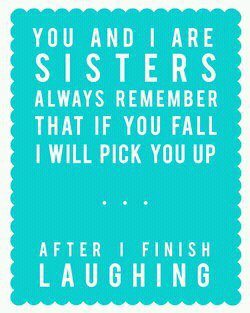
From one of my sisters:

😀

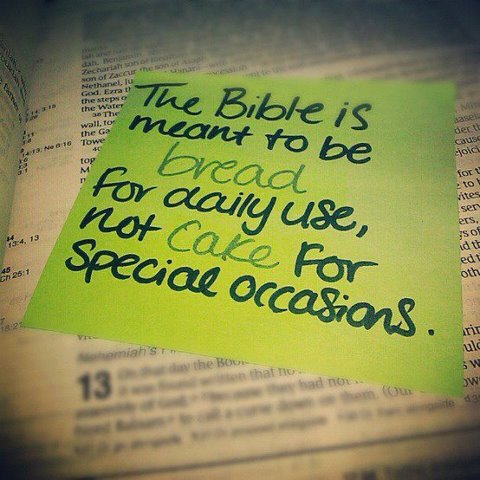
Seen around Facebook and/or Pinterest:

Heh heh heh...

Amen.

Have a good weekend!

Friday’s Fave Five

Welcome to Friday’s Fave Five, hosted by Susanne at Living to Tell the Story, in which we can share five of our favorite things from the last week, a wonderful exercise in looking for and appreciating the good things God blesses us with. Click on the button to learn more, then go to Susanne’s to read others’ faves and link up your own.

It’s actually been kind of a frustrating week for me: it seemed like every day unexpected interruptions came up and I didn’t accomplish much of wanted I wanted to this week. But it’s in those kinds of weeks that it’s most helpful to look for the good things. Here are a few from my week:

1. Getting the Internet back. It was only off for a few hours yesterday (right when I was in the middle of trying to write a post! So that one will have to wait for another day). But it amazed me how dependent on it I was! Even to the point of getting frustrated that I couldn’t look up the phone number for our provider online. 🙂 I don’t know what the trouble was, but I’m glad it is over.

2. Getting a drawer organized.

Before:

After:

I had been wanting to do that for ages and finally remembered to get the little trays to do so. It didn’t take too long: it was accomplished while I was cooking something.

3. Getting rid of some things. I don’t let go of things easily: I figure it will cost more to replace it if I change my mind, so if I have room, I’d rather keep it, even in a box somewhere. But sometimes even I have to go through and donate some excess, and it felt good to send a couple of bags and several boxes to the thrift store this week.

4. Christian music. I know I have mentioned that before in different capacities, but I especially appreciated it this week when I was very irritated over something, I don’t even remember what, and put a CD in while I started dinner. Before long my heart and thoughts and feelings were changed and the irritation had melted away.

5. Getting up later. The church that Jesse’s school is under had special meetings this week and pushed the school start time a half an hour later to help families who had been out to the meetings in the evenings. I could get used to a later wake-up time.

Bonus: I don’t know if I can honestly say this is a favorite or not — it’s exciting but also a little wistful: Jesse brought his cap and gown for graduation home this week.

And that reminds me of another favorite: going through his pictures from a babyhood through the present for a project for both the Junior-Senior Banquet and graduation. Such fun. Reminds me, though, that I wanted to have a scrapbook ready for graduation and need to get cracking on that…

So — though I wasn’t sure I was going to find five good things this week, I ended up with more than five, and I was reminded I did get some things accomplished even though it didn’t feel like it. It probably felt that way because I didn’t get the biggest thing done: Jesse’s graduation announcements. Maybe tomorrow!

Have a good weekend!