Laudable Linkage

Here are some notable reads from the last couple of weeks:

Pathway to Freedom — overcoming any addiction.

Introverted. Quote: “My challenge…is to keep introversion from enabling or excusing sin… I can excuse selfishness, self-centeredness, escapism, lack of hospitality, rudeness. I can stay away from people and excuse it as being just the way I am, as being who I am. I can be shy and quiet when the Lord calls me to be strong and bold.”

Some Thoughts on Guns and YouTube Scoldings as Parenting Tools.

10 Churchy Words We All Need to Know.

Why I Read Jane Austen — written by a young man. Austen is not just for girls!

10 Common Misconceptions of the Wannabe Novelist.

Five Publishing Hurdles and How to Clear Them.

Password Check. An amusing piece for anyone who has ever been frustrated with password verifications (and they do seem to be getting even more frustrating!)

A couple of things seen on Pinterest:

Scott Hamilton’s testimony:

Sweet version of Twinkle, Twinkle Little Star with time-lapsed views of overhead stars.

Friday’s Fave Five

Welcome to Friday’s Fave Five, hosted by Susanne at Living to Tell the Story, in which we can share five of our favorite things from the last week, a wonderful exercise in looking for and appreciating the good things God blesses us with. Click on the button to learn more, then go to Susanne’s to read others’ faves and link up your own.

Here are a few favorites from this past week:

1. Puff’s Plus tissues with lotion. These feel so soothing and help keep my nose from getting all red and chapped when I’ve got a cold (I’m thankfully feeling better now).

2. Fellowship. After not having much going on socially for quite a while, we had our “dinner for six” with our new group and a Sunday School party both this past weekend.

3. Valentine’s Day. One of my favorite holidays though it was a bit more low-key this year.

4. Lindt milk chocolate truffles from both my husband and son and daughter-in-law.

5. Encouraging e-mails from readers of my latest newspaper column, saying they had been or are currently taking care of elderly parents and could identify with and appreciate what I had to say. Once I send the column to the editor, then my mind thinks of several ways people could take something I’ve said the wrong way, so it is very encouraging to hear that someone has gotten something beneficial out of what I wrote.

Hope you have a great weekend!

Book Review: Little House in the Ozarks

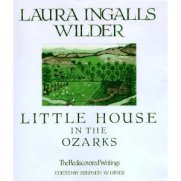
Little House in the Ozarks: the Rediscovered Writings of Laura Ingalls Wilder, edited by Stephen Hines, is a collection of newspaper columns and magazine articles Laura wrote between 1911 and 1925 before she wrote the Little House books. I have looked at bits and pieces of this but I’ve never read it all the way through, and I wanted to do so for the Laura Ingalls Wilder Reading Challenge this month.

There are over 140 articles or columns arranged by topic, and the topics range from WWI, women’s progress, and “the greatness and goodness of God,” but most are just observations drawn from everyday life.

Laura was very opinionated, especially in preferring farm or country life over town life. But in other ways she was very broad-minded. She was remarkably well read for having only two terms of high school: she quotes from several authors. She had a natural innate curiosity about the world around her and never wanted to stop learning about it. And for being a farmer’s wife tucked away in Mansfield, Missouri, she kept up on politics and current events quite well. There is even a section on fairies. But she valued a woman’s role in her home above all else.

She also reflected on her upbringing a lot and mentions several incidents that showed up in her later books.

One of my favorite columns is from January 1920, titled “The Man of the Place,” which was what Laura called Almanzo in these columns. She records their grumbling over the amount of work on their shoulders and the lack of time to get it all done, then they both recalled that their parents worked long into the night spinning, sewing, sorting their produce, while they themselves had club work and magazines to read in the evenings. They reminisced that their parents did enjoy their lives, though they were so busy. “If we expect to enjoy life, we will have to learn to be joyful in all of it, not just at stated intervals…or when we have nothing else to do” (p. 66). Then they concluded they weren’t really having such a hard time after all.

Another is titled “The Old Dash Churn.” Her husband had bought her a new butter churn that was supposed to make butter in three minutes. But it was supposed to connect to a motor, and they had none, so she had to hold it steady in a certain position with one hand and turn the handle with the other. Plus the blades were sharp and frequently cut her hands. She gave it a good try because her husband had bought it to please her and make her work easier, but it was making it more troublesome instead. She told him the problems she was having and asked him several times to bring back the old dash church, but he just said, “Oh, this one is so much better: you can churn in three minutes…” One day when the churn was being “particularly annoying” she picked up the whole thing and threw it as far as she could. When she told her husband, he said, “I wish I had known that you did not want to use it. I would like to have the wheels and shaft, but they’re ruined now.” I’m not telling it as she did, but it just struck me so funny because she HAD told him repeatedly. But she didn’t generally make a habit of throwing things when she was aggravated. 🙂

A few favorite quotes:

“Let’s be cheerful! We have no more right to steal the brightness out of the day for our own family than we have to steal the purse of a stranger. Let us be as careful that our homes are furnished with pleasant and happy thoughts as we are that the rugs are the right color and texture and the furniture comfortable and beautiful” (p. 37).

“I am beginning to learn that it is the sweet, simple things of life which are the real ones after all” (p. 52).

Quoting a friend who was “home schooling” and had a daughter who was not as academic as her brothers, preferring sewing to studying: “I know what her talent is, but she has to have her books, too: and she will sew all the better for having ‘book learning'” (p. 54).

“So much depends upon the homemakers. I sometimes wonder if they are so busy now with other things that they are forgetting the importance of this special work….Because of their importance, we must not neglect our homes in the rapid changes of the present day. For when tests of character come in later years, strength to the good will not come from the modern improvements or amusements few may have enjoyed but from the quiet moments and the ‘still small voices’ of the old home. Nothing ever can take the place of this early home influence; and as it does not depend upon externals, it may be the possession of the poor as well as of the rich” (p. 64).

“Now it isn’t enough in any garden to cut down the weeds….cultivating the garden plants is just as necessary. If we want vegetables, we must make them grow, not leave the ground barren where we have destroyed the weeds. Just so, we must give much of our attention to the improvements we want, not all to the abuses we would like to correct” (p. 94).

“We are coming, I think, to depend too much on being shown and told and taught instead of using our own eyes and brains and inventive faculties” (p. 122).

“It is a good idea sometimes to think of the importance and dignity of our everyday duties. It keeps them from being so tiresome; besides, others are apt to take us at our own valuation” (p. 130).

“Just as a little thread of gold, running through a fabric, brightens the whole garment, so women’s work at home, while only the doing of little things, is like the golden gleam of sunlight that runs through and brightens all the fabric of civilization” (p. 207).

“Here and there one sees a criticism of Christianity because of the things that have happened [during WWI]….’Christianity has not prevented these things, therefore it is a failure’ some say. But this is a calling of things by the wrong names. It is rather the lack of Christianity that has brought us where we are. Not a lack of churches or religious forms but of the real thing in our hearts” (p. 265).

In a column about how pies were invented, “Its originator was truly an artist, as though she had written a poem or painted a picture, for she had used her creative instinct and imagination with a fine technique” (p. 282).

I enjoyed so much getting to know Laura better through these columns.

The Laura Ingalls Wilder Reading Challenge

(This review will also be linked to Semicolon‘s Saturday Review of Books.)

Book Review: The Help

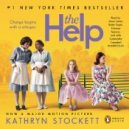
After I got my iPhone and got ready to find some audiobooks, I opened a trial account at Audible.com. Looking around for my first book to try, I happened upon The Help by Kathryn Stockett. I’d seen it mentioned and highly recommended, so I bought it.

For some reason it didn’t even occur to me that with this being modern secular fiction, there would likely be some bad language. I hadn’t recalled any of the bloggers I’d read mentioning it (for the record I do very much appreciate when reviewers mention these things so readers can take this into account.) By this reviewer’s count (which I hadn’t seen before listening to the book) there are about two dozen expletives, several of them taking the Lord’s name in vain.

Now, I am not naive. I grew up in an unsaved home and public schools, so I know people use such language. I really don’t hear it by and large in everyday life now, but my oldest son, who works with the general public (when they’re having computer problems and therefore upset) says he hears it all the time. But I don’t like to read or listen to it and fill my mind with it so that the next time I am frustrated, one of those words come flying into my thoughts. And I especially don’t like hearing the dearest name in the world brought down to such a level. Yet if I set out to purge every source of such words from my life I’d have to avoid some members of my extended family forever (as it is I have to delete about every other Facebook post from some of them). We live in a fallen world, so we’re going to encounter those things. Yet there is a difference between being unable to avoid it in some cases and voluntarily bringing it in for entertainment in others. I don’t think there is ever a case where it is really needed to make the story realistic. I don’t know if anyone ever gets to the end of a book and thinks, “You know, that was really good except it needed a few bad words.”

So…I wrestle with that. I really do. That’s one reason why I usually read Christian fiction and avoid modern secular work. In some cases the work itself supersedes these kinds of flaws, yet the flaws of such language may be enough to avoid it. I’m still working on that, but I wanted to put this at the forefront.

As for the rest of the book: it is excellent. The story is told from the viewpoint of three different women in Jackson, Mississippi in the 1960s:

Aibileen is a maid for Elizabeth Leefolt and looks after her daughter, Mae Mobley, who is the seventeenth white child Aibileen has helped raise. Mrs. Leefolt is considerably lacking in the maternal affection department, and Aibileen tries to make up for it by often telling Mae Mobley, “You is kind. You is smart. You is important.” Aibileen is the voice of calmness, common sense, and what spirituality is in the book, being noted for her prayer list.

Miss Skeeter is a friend of Elizabeth’s who often comes over to play bridge. Her family’s maid, whom she was closer to than her own mother, disappeared some time earlier, and Skeeter is hurt and mystified over where she went, why she left, and why no one will tell her anything. Skeeter, more than the other white ladies, seems to see and treat “the help” as real people. She’s finished college at Ole Miss and wants to be a writer.

Minnie is feisty, keeps losing jobs because of her tendency to mouth off, but is known for her exceptional cooking. There are only two people Minnie can’t face down: her drunken, abusive husband, and Hilly Holbrook.

Hilly is the self-appointed leader of her circle of friends and the president of the League. She decides to promote a bathroom initiative requiring every white household to build a separate bathroom for the colored help so that they don’t catch diseases from each other. Hilly is the ultimate control freak. Anyone dissenting from her viewpoint is not merely disagreeable. They must be crushed and ruined.

One other major character is Celia Foote, “white trash” who married up, pathetically trying to break into the community of white ladies and not understanding why none of them returns her calls.

Skeeter lands a job at the newspaper, writing a Miss Myrna column of housecleaning tips. She’s thrilled to have a writing job but has never cleaned anything in her life, so she asks Elizabeth if she can talk to Aibileen from time to time to ask her questions for her column. In the friendship that develops, Skeeter gets an idea: writing a book from the point of view of the help. I don’t recall if it was stated whether she just thinks this is a good angle for a book or if she is motivated in the beginning by any altruistic desire (one disadvantage of an audiobook is not being able to flip back through pages to try to find out), but it is not long before her eyes are opened and she sees this as more than just a project. She contacts an editor in New York who tells her to give it a try “before this civil rights thing blows over.”

It’s dangerous, both for Skeeter and Aibileen. Skeeter could be ruined socially and Aibileen could be harmed physically, as well as lose her job (and any job in the town). They meet secretly to work on the book. Then Skeeter’s editor tells her she needs to interview a dozen maids. No one else is willing to talk to her…until a tragedy in their midst convinces them they need to tell their stories. But another tragedy, the murder of Medgar Evers in the maids’ neighborhood, heightens the danger.

As the project continues, warmth and understanding unfolds on both sides — for there is prejudice on both sides (a colored doctor refusing to operate on a white boy’s hand when he loses his fingers is one example). There is even more to poor Celia than initially meets the eye.

The story was wonderfully told with both humor and pathos. The voices, the vernacular were right on.

The production values of the audiobook version were fantastic. Four actresses read the different sections, but at no point did I have the feeling someone was reading a book to me. At one point when I was recalling a particular scene, it was so vivid in my mind I had to remind myself I didn’t actually see it. It was enjoyable to hear the accents as well: one of my pet peeves is fake Southern accents, but for the most part these were genuine.

Overall, except for the instances of bad language and a couple of cases of vulgarity, I loved the book. I mentioned another review above: both it and the comments are very insightful.

(This review will also be linked to Semicolon‘s Saturday Review of Books.)

Book Review: Vicious Cycle

I got the audiobook version of Vicious Cycle by Terri Blackstock when someone posted on Facebook that it was free at GoBible.com for a limited time (it is no longer free at this time). I’ve enjoyed many of Terri’s books and hadn’t read anything by her in a while, so I snapped it up.

This is the second book in her Intervention series . The first book, also titled Intervention, was written several year’s after Terri’s own daughter was trapped in and then delivered from drug addiction. I had not read that one, but there were enough references in this book that I felt I had a basic enough understanding of the points of reference connecting the books.

In this book, Emily Covington is about to finish a year of treatment in a drug rehab facility. One of her friends there, Jordan, leaves the facility, goes home, unexpectedly goes into labor and gets high on meth to handle the pain. She doesn’t go to the hospital partially because she waited too late but partially because her own drug-crazed mother won’t take her. When Jordan wakes up and comes to her senses, she discovers her mother has plans to sell the baby. When Emily’s brother, Lance, comes to Jordan’s house to try to talk her into going back into treatment, Jordan desperately hides the baby in his car to get her away from her mother. Lance doesn’t realize she has done this until he leaves, then, he decides to take the baby home, thinking Jordan will come for her soon. But it is obvious something is wrong with the baby. Just as he decides to take the baby to the hospital, his car is surrounded by police and Lance is arrested for kidnapping.

Lance’s mother, Barbara, calls the detective who helped in her daughter’s case, Kent, and together they try to clear Lance, decide what’s best for the baby, and help Jordan to understand that though she has so many strikes available, a new life is possible with God’s help. When they discover evidence of a baby-trafficking ring, they realize that Jordan’s baby as well as others are in more serious danger than they had thought.

People who accuse Christian fiction of being too pristine to be realistic have not read Terri Blackstock. Somehow she portrays the gritty realism of drug addiction without making us feel we’ve been dragged through the gutter. There is enough there to be convincing without overdoing it.

My husband and I have had family members on both sides who have gotten involved with drugs, sadly, and we recognized the pattern of their behavior in Jordan and her mother. Emily, in the first book, had come from a good family. Jordan’s family is part of her problem rather than a solution or a support. Yet both girls had to realize where true help comes from and be willing to lay hold on it.

I very much enjoyed this book and am looking forward to the next one, Downfall, which, incidentally, can be pre-ordered in a e-book version for $4.99 before the end of February. I have my order in!

(This review will also be linked to Semicolon‘s Saturday Review of Books.)

Happy Valentine’s Day!

A Facebook friend recently commented that Valentine’s Day was invented by greeting card companies so they could get more money out of people. 🙄 I’m so glad I’m not married to someone who thinks like that. Maybe most holidays are over-commercialized, but so what? We can celebrate them any way we like, with lots of frills or just a simple card, store-bought or home-made, or whatever. Sure, we’re supposed to show love to our loved ones every day, but it’s nice to have a special day just for the occasion as well.

But I expounded on those thoughts in an earlier post on Spontaneity vs. Scheduling, so I won’t get into it all again now.

On the other hand, even though we like to celebrate around here, some occasions we go all-out more than others. Some years someone is sick or schedules are over-busy or we’re just not up to it for various reasons. Traditions are wonderful as long as they don’t become burdensome. But we do try to do at least a little something.

I haven’t anticipated Valentine’s Day quite as much as usual this year — maybe because of this silly cold. I’ve had worse colds as far as symptoms go, but for some reason this one just seems to be draining me of energy. But I’ve gotten cards and plan on making a Valentine-themed dinner and my usual heart-shaped cupcakes (amended plans: Jim offered to bring home take-out from our favorite Chinese place. ♥ )

Having absolutely nothing new to say about Valentine’s Day this year, I’ll point you to some previous posts related to the day if you’ve a mind to look at any. Hope you have a great day, whatever you do. 🙂

John 3:16 Valentine.
Your Divine Valentine.
Quotes about love for Valentine’s Day.
Christian quotes about love.
How to love our husbands: notes from a ladies’ meeting where we had a panel discussion on the subject. One of our best ladies’ meetings ever.
C. S. Lewis on love.
Corny Valentine Jokes.
Valentine’s favorites wherein I list some of my favorite romantic quotes, poems, and songs.
St. Valentine’s Day by Edgar Guest. An excerpt:

Romance is old, but it is lovely still.
Not he who shows his love deserves the jeer,
But he who speaks not what she longs to hear.
There is no shame in love’s devoted speech;
Man need not blush his tenderness to show.
‘Tis shame to love and never let her know.

Singleness.
Valentine’s Day single?
A Toast to the Best Valentine’s Day Yet.

Some Valentine’s Day decorations I’ve used in the past — though this year I haven’t put any of them out. (Though I did at least go and out my heart-shaped wreath out after writing that. 🙂 )

Some Valentine-themed treats I’ve made in the past:

Valentine treats

Sweetheart Jamwiches from Southern Living magazine.

Valentine treats

Peanut Butter Kiss cookies, only substituting chocolate hearts instead of Hershey’s kisses.

Heart-shaped cupcakes — just a regular cake mix and store-bought frosting and sprinkles.

Valentine casserole

Crescent Heart-Topped Lasagna Casserole.

Li’l Cheddar Meat Loaves shaped like hearts.

Have a good day!

The Week in Words

”"

Welcome to The Week In Words, where we share quotes from the last week’s reading. If something you read this past week  inspired you, caused you to laugh, cry, think, dream, or just resonated with you in some way, please share it with us, attributing it to its source, which can be a book, newspaper, blog, Facebook — anything that you read. More information is here.

Here are a few quotes that spoke to me this week:

From a friend’s Facebook:

If infinite wisdom, omnipotent power, and paternal love, are engaged for our present and eternal welfare–then our fears must be groundless, and our anxiety folly. ~ James Smith

From another friend’s Facebook:

A man should hear a little music, read a little poetry, and see a fine picture every day of his life, in order that worldly cares may not obliterate the sense of the beautiful which God has implanted in the human soul. ~ Johann Wolfgang von Goethe

Short and hopefully sweet today: I’m fighting off a cold and feeling blah. 🙂 But I look forward to seeing what you have to share.

You can share your family-friendly quotes in the comments below or write a post on your blog and then put the link to that post (not your general blog link) in Mr. Linky below.

I hope you’ll visit the other participants as well and glean some great thoughts to ponder. And I hope you’ll leave a comment here, even if you don’t have any quotes to share.

Friday’s Fave Five

Welcome to Friday’s Fave Five, hosted by Susanne at Living to Tell the Story, in which we can share five of our favorite things from the last week,  wonderful exercise in looking for and appreciating the good things God blesses us with. Click on the button to learn more, then go to Susanne’s to read others’ faves and link up your own.

Here are a few favorites from this past week.

1. Safety in an accident. We ran into the back of a truck on the way home Sunday afternoon. The truck was ok, but our van had hit their trailer hitch, which did a good bit of damage to our front bumper, grill, and radiator. But thankfully no one was hurt. We were especially concerned about Grandma, who was with us at the time, but she was fine.

2. Getting my van back after repairs from the accident.

3. Sunshine. It hasn’t been as cold or icy or snowy as last winter, but it has been rainy and overcast for a number of days. But this week has been very sunshiny. (I wrote this yesterday afternoon and it is overcast this morning…oh well, it was nice while it lasted. 🙂 )

4. Hearing Jesse’s school choir and an ensemble compete in a regional fine arts contest. They won and are going to the State competition!

5. Having an unexpected day off school. I knew this coming Monday was a day off due to a teacher work day, but Friday (today) is off, too, and it wasn’t on the original school calendar. I was so excited about getting to sleep in til I remembered I do have to be somewhere this morning. :-/ Oh well. But I think I can sleep a smidgen longer than usual.

Happy Friday!

Thoughts on Audiobooks

I’ve listened to one and a half audiobooks now and thought I’d pass along my thoughts on them. Several years ago we also listened to the Focus on the Family Radio Theater productions of Chronicles of Narnia and Les Miserables, but I think those were dramatizations rather than readings.

In general I would still prefer actual books. I just prefer reading that way and I like being able to mark specific passages, to linger over some spots or reread them, or trip a little more lightly through others. Plus I can read with other people around and still be available to them: with an audiobook, I either have ear buds in or am in another room, so I tend to listen to them when alone. That’s not really a problem unless it’s a really exciting part of the book and I’d love to listen to a few pages but can’t!

However, audiobooks have helped immensely with driving time. It’s about a 20-minute drive to my mother-in-law’s place and to a few other destinations, and I’m hardly aware of the time going by, whereas beforehand I was chafing at the time in the car not accomplishing anything except moving from one destination to another. I’ve also started listening to them while getting ready in the mornings and want to incorporate them while exercising or house-cleaning.

I don’t think I could listen to a non-fiction book that way that wasn’t in story form. Those kinds of books take a little more concentration, anyway, and I tend to mark passages, place sticky tabs all over to try to help me retain information from them. I could listen to them and glean something, I’m sure, but I just wouldn’t get the full benefit of them just by listening. That might be a good way to review a book I’ve already read, though, or preview one I plan to read.

I am more of a visual learner. A few times just when my attention has lagged or I’ve forgotten something in the audiobook that I can’t then go back and look up (without listening to significant portions again), I’ve wondered how difficult it must have been for people to retain Scripture when they primarily heard it, when they didn’t have written portions for everyone, when the Colossians got a letter from Paul that was read at their assembly. I don’t know how easy it would have been to make copies. They were probably more trained to really listen then than we are now, but I am still glad to have lived in an era of the written word.

But I find I am enjoying audiobooks immensely at times when I can’t get into a paper book.

I started a trial subscription on Audible.com that is $7-something a month for the first three months, and you’re able to get one credit (which usually gets you one book) each month. After that trial period it goes up to the regular $14-something a month, which seems pretty high to me. If I am going to pay that much I’d rather get the actual book. I’m not sure why they’re that expensive: I know the author needs to be paid royalties and the reader and producers need to be paid, but it seems if you’re making one file that multiples of people can download, that would be less expensive than making multiple copies of the actual book. So I may drop the Audible account after that, I’m not sure.

I have discovered some good resources in learnoutloud.com and http://gobible.com/. They’re regular prices seem expensive but they do have good sales or occasional free downloads.

How about you: do you know of any good resources for audiobooks? Do you enjoy them? What is your experience?

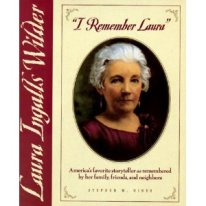
Book Review: I Remember Laura

Stephen W. Hines read the Little House books several times as a child and then introduced them to his wife after they were married. Upon finding that Laura had been a columnist for the Missouri Ruralist before she wrote her books, Hines published those columns together in a book, Little House in the Ozarks: the Rediscovered Writings of Laura Ingalls Wilder (I’m a little over halfway through with that one). He heard from many readers who loved and wanted to know more about Laura. He discovered no one had ever conducted interviews with the people who knew her at her last home in Mansfield, Missouri, so he decided to do so, publishing those and several articles by and about Laura in I Remember Laura. This book, then, is not so much a biography as it is a companion book to Laura’s other work or to biographies of her. At its publication (in 1994), Hines felt that there had not been a definitive biography of Laura written which included new papers and letters that had since come to light.

These articles and interviews are grouped into sections, the two biggest being reminiscences of her life in De Smet, South Dakota, where many of the Little House books took place, and then reminiscences of Mansfield, Missouri, where she spent most of her adult life. There are other sections on “Women in the 1920s” and “Laura and Rose,” her daughter. There is a bit of overlap with Hines’ book of her columns: he reprints a few of them here.

Laura was in her mid-60s when she began writing the Little House books. It seems they began as a way to preserve family memories. There is a bit of controversy over whether publication was her idea or her daughter Rose’s, and several people take credit for urging her to make a book out of them. But however they came to be, her town of 800 had thought she and her husband were retired, and then “took many years to become reconciled to Mrs. Wilder’s latter-day fame as a story-teller.” Many people the author talked to began by saying, “If I had only known that she would become famous, I would have paid more attention to what she said and did” (p. 61). It’s a little ironic that some of the people Hines interviewed said they hadn’t read her books until she either gave them a copy (they were expensive back then at $2.75 🙂 ) or until they got to know her a bit. It’s amusing, then, that in a piece on the Wilders for Mansfield’s centennial album, one writer says, “We know Laura was special. But there has to be something special about the town that provided the environment necessary for her talent to shine through” (p. 274).

Most remember the Wilders as fairly quiet people who kept to themselves, Almanzo especially, but many had memories of visiting with Laura or seeing her in town. She was generally regarded as friendly and industrious. At the dedication of the local library, it was noted she was “famous in her own community for her fine needlework, delicious gingerbread, and in general known as a good neighbor” (p. 269).

When asked why she didn’t write more books, one time she replied that the money she received from them cost her more in taxes. “She never found taxes on those who had labored their way to prosperity to be an incentive for even more labor” (p. 97). But another time she said that if she wrote more, she’d have to get into some of the sad times of her life (p. 122).

Her first years with Almanzo were pretty sad, marked by the loss of a baby, years of drought and crop failure, then his diptheria and a stroke which left him unable to work a full day. They arrived in Mansfield in that condition, with enough money to put a payment down on a rocky piece of land where they literally built an existence with their bare hands, cutting and selling wood until they could grow crops and build a house. That is truly amazing to me: I don’t know if most people these days would have either the knowledge or the spirit to do such a thing. “The Story of Rocky Ridge Farm” and “My Apple Orchard” tell in their own words how they started and then improved upon the grounds and land through the years.

A few other highlights I noted:

When a friend commented that life begins at forty, Laura replied, “No, dearie. It begins at eighty” (p. 134).

She told another friend how, after her sister Mary became blind, Laura “would make word pictures for Mary so she could ‘see'” (p. 136). Perhaps that was early training for the stories she would write later on.

It was especially interesting to me that, with all the opportunities opened to women as a result of their needing to work in a variety of places during WWI, she wasn’t against those opportunities, but she urged, “We must advance logically, in order, and all together if the ground gained is to be held. If what has hitherto been woman’s work, in the world, is simply left undone by them, there is no one else to take it up. If in their haste to do other, perhaps more showy things, their old and special work is neglected and only half done, there will be something seriously wrong with the world, for the commonplace, home work of women is they very foundation upon which everything else rests” (p. 170). She was at least one voice who didn’t dismiss that “home work” as drudgery or demeaning but rather as a meaningful contribution to home and society.

I hadn’t realized before that there was a bit of controversy over how much Laura’s daughter, Rose, contributed to the writing of the Little House books. Rose was a known writer and editor, and speculation runs from the thought that Rose only advised her mother and used her own connections to get the books published, to the other extreme that Laura’s writing only the bare bones of the books, and Rose arranged and ghost-wrote much of them. The truth is likely in-between.

There are a few photos of Laura throughout the book, and to me she seems one of those rare people who become prettier as they get older.

There are even a few recipes in the book. Hines and his family tried many of them. Most came out fine, but the results of a few left them wondering if what constituted a successful cake or dish then might be different from our preferences mow.

The book was a little dry in places: many of the interviews Hines conducted and published cover some of the same information, and perhaps that  could have been summarized and harmonized rather than recorded individually. But his affection for Laura shines through.

Overall this was an interesting book that gave a fuller picture of Laura in her adult years and helped separate fact from fiction.

On another note, I didn’t realize until last night that Februray 7 was Laura’s 145th birthday. I had originally chosen February as the month for the Laura Ingalls Wilder Reading Challenge specifically because her birth and death both occurred in February, but it didn’t even occur to me to have a “birthday party” or some kind of special remembrance of her on that day. I’ll have to keep that in mind for next year.

”"

(This review will also be linked to Semicolon‘s Saturday Review of Books.)