In Written on the Wind by Elizabeth Camden, Natalia Blackstone has an unusual position for a woman in 1900. Her father owns a major bank in New York. Natalia rose through the ranks until she became one of his main analysts. Because her mother was Russian and Natalia speaks Russian fluently, she heads the analysis and funding for the Trans-Siberian Railway project.
She has communicated so often with the man in charge of the project, Count Dimitri Sokolov, that the two have become friends. Their correspondence veers into music, literature, and a number of other interests.
Lately, however, Natalia hasn’t heard from Dimitri. When she inquires about him, she is only told that he is no longer on the project.
Unknown to Natalia, Dimitri had been ordered to take part in an appalling crime. When he refused, he was arrested, stripped of his title and lands, and exiled to a Siberian penal colony. His only hope is to escape and tell the truth about what happened. But the incident will reflect poorly on the czar, so Dimitri must tread carefully. Without cash and contacts, he plans an impossible journey to get to Natalia, the only trustworthy person able to help him.
I very much enjoyed that the plot, setting, and characters were all much different than anything I have read before.
The only other book I have read from this author, The Rose of Winslow Street, had characters from Romania. With that and this book having Russian characters, I wondered if the author had a Russian heritage or a special interest in that region. The audiobook had an end note with details about the Trans-Siberian Railway, but nothing about the author personally.
Unfortunately, the narrator of the audiobook had an annoying way of over-enunciating. Plus she emphasized minor words in sentences, like propositions. (“He navigated THROUGH mirrored hallways”; “AFTER arriving IN New York . . .,” etc.). She made a faint attempt at the accent of an Irish character but none with any of the Russians. I am going to avoid this narrator in the future.
I didn’t realize, when I started the book, that it was the middle volume in a series. But it read well as a stand-alone. I looked through my Kindle library and saw I had the first book in the series on hand, so I’ll look into that one some time.
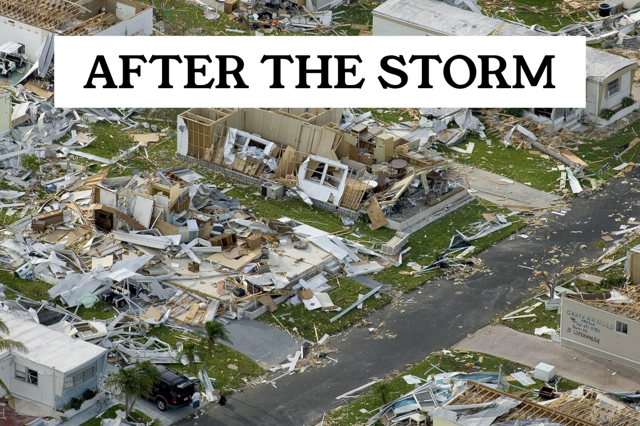
Now that Hurricane Helene has spent herself, it might seem like the worst is over. But some of her effects are long-lasting.
I have friends in SC who are still without power and have been told it likely won’t be restored until Friday, at the earliest. There is so much debris just to get to the power lines, and so much involved in repairing and replacing them, that it’s going to take a while.
I-40 is the main highway through the mountains. When we first moved to TN from SC, I-40 was closed due to a major rockslide that damaged the roads. There was a detour that added about an hour to our route. But with so many bridges and mountain passes damaged now, it’s hard, if not impossible, to get through.
I’ve seen photos of part of I-40 on the edge of a cliff that just washed away. I don’t know how they repair something like that. I don’t know if they cut deeper into the side of the mountain, or if they can somehow build a retaining wall underneath the road. Either way, it’s going to take a long time to repair.
Because trucks with supplies can’t get through, there are lines at gas stations. Stores are starting to run out of some supplies. Many businesses are operating on a cash-only basis because they are without internet service and can’t process credit cards. Of course, many people don’t have ready cash or can’t get to their banks.
Because businesses are closed, some people are not earning money right now. Many can’t afford the unpaid time off.
This is peak tourist season for the Blue Ridge area, as people usually come to see the fall leaf color in the mountains. But a lot of businesses, especially the smaller ones, are closed and under repair.
Besides supply chain and economic issues, many people are still missing. Some have lost loved ones in horrific circumstances.
And that’s just SC, NC, and parts of eastern TN. I imagine parts of FL are facing similar or worse circumstances.
I’ve heard a lot of encouraging news, too. Linemen from our area and others are traveling south to help repair the lines. People are raising funds to help. I even saw someone was taking his mules down to help remove heavy debris.
Please continue to pray for the physical, economic, emotional, mental, and spiritual needs of the people affected by Helene.
Updated to add: Unfortunately, tragedies like this bring out scam artists looking to capitalize on people’s sympathy and generosity. If you feel inclined to help or give in any way, please be careful and give or donate only to reputable places. Samaritan’s Purse is one such organization: another is Operation Renewed Hope. There are many more. A lot of churches. groups, and individuals are helping as well.
I know I often say that the week or the month passed by quickly. But, wow, September set a record for going by in a blur.
I’m thankful fall is officially here. It’s finally starting to feel like autumn.
We had a couple of quiet weeks, then attended a craft show, the Tennessee Valley Fair, and celebrated Grandparents Day all in one week. My youngest’s birthday was the following week.
Of course, this last weekend we dealt with the edges of Hurricane Helene. Thankfully, we didn’t lose power or suffer any damage except for some of our plants, which were nearing the end of their season anyway. We’ve heard of downed trees, roads closed, and bridges washed out as well as more serious damage between here and FL.
Creating
Can you tell what my youngest son’s interests are? 🙂
The background paper and game controller stickers were from a scrapbooking packet of boyish interests, though girls are gamers, too.
Martin Chuzzlewit by Charles Dickens, fiction, audiobook. Not my favorite of Dickens, but I am glad I finally read this novel exploring the many ways selfishness can manifest itself.
Hope Between the Pages by Pepper Basham, fiction. This will be one of my top ten books of the year. It’s a split-time novel, with one timeline taking place in the Biltmore house, particularly the library, in 1915, and the other in Asheville, NC, in modern times. To save the bookstore her grandmother established, a young woman must look into her grandmother’s past. One of my favorite places, a great story, and lots of bookish references.
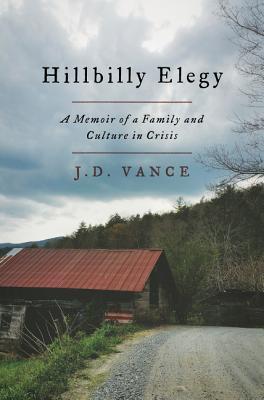
Hillbilly Elegyby J. D. Vance, memoir. Mixed emotions about this one.
Written on the Wind by Elizabeth Camden, fiction, audiobook. Just finished this and will review it later this week.
I’m currently reading:
Be Alert (2 Peter, 2 & 3 John, Jude): Beware of the Religious Impostors by Warren W. Wiersbe
2 Corinthians for You by Gary Millar with our ladies’ Bible study
Write a Must-Read: Craft a Book That Changes Lives—Including Your Own by A. J. Harper–still chipping away at this one.
What’s a Disorganized Person to Do? by Stacey Platt–just reading a small section at intervals
The Collected Letters of C.S. Lewis, Volume 3: Narnia, Cambridge, and Joy, 1950 – 1963, compiled by Walter Hooper. I’m taking this in small bits as well.
Tending Roses by Lisa Wingate, fiction
Mrs. Tim of the Regiment by D. E. Stevenson, audiobook
The Most Important Thing. Many distractions assail us, but the most important thing in life is knowing God and making Him known.
Freedom to Lament. We try to fix other people’s problems with pat answers, but sometimes we need to just sit and weep with those who weep.
God’s Grace for This Moment. We can feel overwhelmed with small and large concerns. But we only need grace for this moment, and God’s grace is sufficient.
Writing
I have not done much on this front but hope to next month.
Looking ahead, October is usually a quiet month for us, a nice rest between “birthday season” and Thanksgiving and Christmas. We do have a few more social occasions on the calendar than usual, but they are all things I’m looking forward to.
How was your September? Is there anything you’re looking forward to in October?
As we were preparing for bed one night last week, my husband shared a concern on his heart for our country, especially in regard to the next election.
I’m thankful for a husband who keeps informed and understands more about these things than I do. I’m afraid I am not nearly as interested in politics as my husband is. It’s not that I stick my head in the sand and ignore what’s going on. I believe in being informed, voting, and using our voice, especially since we have a voice and vote in this country. But sometimes it seems nearly impossible to know what’s really happening behind closed doors and what news services are trustworthy.
The country’s and the world’s problems are too big for me. There’s not much I can do about any of them besides pray. And though I acknowledge that praying is the main and best thing I can do, I get overwhelmed, frustrated, and burdened if I think too much about the needs of the world. I have enough to do with the things I have responsibility for.
As I continued my nightly routine, I began to think of some of those responsibilities closer to home. We had a few more events than usual on the calendar. At this stage of life, having a busy calendar stresses me even when I look forward to the events.
Before I go to bed, I like to read the evening selection fromDaily Light on the Daily Path. At that time of night, I don’t dive deep, pull out commentaries, or look up definitions like I might during my main Bible reading in the mornings. I mainly read a few verses of truth at night to settle my mind and close my day.
This night, however, I had trouble focusing even for those few minutes. It’s not that I was worried or stressed at the moment because of national or personal needs. But my thoughts pinballed at high speed between all the different concerns on my mind.
I told myself I needed to shut everything else down and just focus at this very moment on the words of truth before me. I think I prayed that, but I don’t remember for sure.
As God helped me concentrate, these are some of the verses I read:
My God shall supply all your need according to his riches in glory by Christ Jesus (Philippians 4:19).
God is able to make all grace abound toward you; that ye, always having all sufficiency in all things, may abound to every good work (2 Corinthians 9:8).
We have this treasure in earthen vessels, that the excellency of the power may be of God, and not of us (2 Corinthians 4:7).
Instantly, my mind, heart, and soul were at rest. All of these verses were familiar to me, but I needed them once again. Whatever is ahead, on a personal, national, or global level, God’s grace is sufficient.
Decades ago when we took a childbirth class during my first pregnancy, our instructor had a couple from one of her previous classes come back and share their experiences. I remember the new mom saying that during labor, if she thought, “How many hours will I have to do this?” she felt defeated and tired. But if she took each contraction as it came and used the techniques she had been taught, she coped better.
All we have to do is trust God and walk with Him in this very moment. That’s what a walk is, after all—a series of steps. We don’t have grace for what’s ahead, because we don’t need it yet. As we rely on Him step by step, He’ll carry us through whatever we have to face.
When life seems too much, just focus on this moment and rely on your heavenly Father. God’s grace is available every step.
Day by day, and with each passing moment, Strength I find to meet my trials here; Trusting in my Father’s wise bestowment, I’ve no cause for worry or for fear. He, whose heart is kind beyond all measure, Gives unto each day what He deems best, Lovingly, its part of pain and pleasure, Mingling toil with peace and rest.
Every day the Lord Himself is near me, With a special mercy for each hour; All my cares He fain would bear and cheer me, He whose name is Counsellor and Pow’r. The protection of His child and treasure Is a charge that on Himself He laid; “As thy days, thy strength shall be in measure,” This the pledge to me He made.
Help me then, in every tribulation, So to trust Thy promises, O Lord, That I lose not faith’s sweet consolation, Offered me within Thy holy Word. Help me, Lord, when toil and trouble meeting, E’er to take, as from a father’s hand, One by one, the days, the moments fleeting, Till I reach the promised land.
Updated to add: I wrote this a week ago without thought of Hurricane Helene. If anything would overwhelm, what I’ve seen and heard of Helene’s effects would. My heart goes out to those who are suffering in the hurricane’s wake, and I pray they find God’s presence, comfort, and provision sufficient for all their needs.
Living with Hope in Mental Illness, HT to Challies. “In this day and age, people are easily and haphazardly diagnosed with mental illnesses. There are times that sin (e.g. anxiety) is labeled as mental illness. But I believe that there are also times when mental illness proves to be real. Mental illness is a normal and natural part of the brokenness of this world.”
The Uncarnation of Christ? HT to Challies. “Doctrine is vital to the Christian life. I must state that upfront for the sake of everything else I’m about to say, lest I’m misread. We can never diminish or dilute the importance of sound doctrine. My concern is when our theology never rises above the ink set on the page. I want to warn us about doing theology in a way that depersonalizes our Lord. Any approach to doctrine that dehumanizes Jesus of Nazareth is deadly to our spirituality.”
Rome’s Seven Deadly Errors, HT to Challies. “Let me lay out again the reasons we should be seriously concerned with Roman Catholic teaching — and that, at numerous levels, its contradictory stance toward Scripture produces, I think, a kind of religion that I fear has led many people astray, even into destruction. And I do not mean that Roman Catholicism has a corner on that kind of misleading teaching. There are lots of brands of so-called ‘Christian’ tradition that have damaged people by the errors that they represent.”
Leading Children Into a Wider, Deeper Love of Jesus.”‘Jesus loves me, this I know.‘ What a sweet sound it is when words about Jesus flow by memory out of even the youngest child. Simple truths like these help kids start to see the beauty of the gospel. But a common pitfall is to stop there. When we teach our kids about Jesus only in simple, general terms, they may come to know Jesus only vaguely or even wrongly. The love of Christ is broad, long, high, and deep (Eph. 3:18). How can we help our children to know Him more fully? One way is to help them see Him in all of Scripture. Here are four questions to keep asking as you open the Bible with your family.”
The Calling of Motherhood, HT to Challies. “It had been a good day. A day of errands, laundry, reading books together, playing, and caring for my children. I tucked my 3 and 2-year-olds into bed, came downstairs and sat my tired body on the couch. I opened social media for a few minutes before cleaning up from the day. In a matter of moments, I felt my heart go from thankful and satisfied to longing for more and dissatisfied with what I hadn’t accomplished that day.”
Exposed to Hope: The Evangelism of Welcome, HT to Challies. “I have long admired bold and courageous people who aren’t afraid to share the gospel with strangers. But for many years, I felt ashamed that I would rather eat a hundred stuffed peppers than “evangelize.” What kind of a Christian wasn’t eager to share the Good News with others? I wondered. I never considered that evangelism could also be a way of living, rather than a frightening obligation.”
Slow and Costly in a World of Fast and Cheap, HT to Redeeming Productivity. “I’m worried about a world in which A.I. and algorithms are in control, and we’re reduced to passive consumers. There’s a solution. . . . ‘People are seeking things that are rare and valuable right now. In a world of cheap and fast, people desire slow and well-crafted.'”
When I looked at that person who had offended me through the “spiritual eye,” I saw in him one of God’s instruments to teach me, instead of one of the devil’s to torment me. I saw something more. I saw a person God loves, and whom He wants to love through me. — Elisabeth Elliot
After several dry weeks, we finally got a good, soaking rain. But now, with the hurricane coming in, we’ve had even more. High wind and flood warnings have been sounded, even as far inland as we are.
As we wait to see what happens with the weather, I’m pausing with Susanne and friends at Living to Tell the Story to reflect on the blessings of the week. One encouragement for God’s care in the future is remembrances of His care in the past.
1. Watching Timothy while his parents went on a date. He had a project in school to make a replica of a cell, so he and his granddad looked through the microscope at some slides of cells that Jim had on hand and then got water from a nearby pond to look at single-celled organisms through the microscope. (Timothy called Jim’s office the “science lab.” 🙂 ) Then his parents brought home Salsarita’s for dinner.
2. A new car battery. Sunday, we hopped in my car to go to church, and the car made a clicking sound. The screen over the steering wheel said “System check.” It’s never done that before. Jim tried it a few more times, then we gave up and climbed into his car. He thought my car’s problem was probably the battery. He had another one installed the next day, and now it’s working fine. I am thankful it happened at home and not while we were out somewhere and not while I was out alone. I am grateful, too, that we had a second car to use and that Jim took care of the battery for me.
3. Refrigerator issues fixed. Our refrigerator was not cooling well, so Jim investigated and found some water had collected in the panel between the freezer and refrigerator and frozen. He took everything out of the lower shelves and put it in a cooler, then turned the refrigerator off and used a hair dryer to melt the ice. I couldn’t be of much help, with there not being room for more than one person. But I washed out some of the refrigerator drawers and shelves while Jim was working on the rest of it. Thankfully, it’s all working like it’s supposed to again.
4. Another Connect Four lunch. I mentioned last month that our church had a Connect Four program, where ladies who sign up are divided into groups of four who then meet once a month over the next four months. This was our group’s second get-together. We met at the bakery of a lady who goes to our church. We enjoyed both the food and the fellowship.
5. Finally, a haircut and a coupon. I’d been putting my haircut off for several weeks and finally took care of it this week. I tried a new place since the prices of our old place had gone up. I had a coupon for almost half-off.
Bonus: Food poisoning is no fun! I got chicken strips and chicken noodle soup at Chick-Fil-A last night. We’ve never had a problem there, but thirty-forty minutes afterward, my body started reacting violently. Let’s just say I spent the next several hours in the bathroom. Jim had one of their sandwiches and wasn’t affected. I was thinking last night I should be thankful our bodies are created to expel harmful things. But I’m especially thankful that everything seems to be all right this morning, and this was a short-lived experience rather than a longer-lasting stomach bug. I hope this hasn’t ruined my taste for their soup–it’s one of my favorite fast-food items. But I don’t think I can eat it again for a while.
Jim read one prediction that our area might be without power three days or more with the hurricane coming in. I sure hope that doesn’t happen. I’m sure all in the path of Hurricane Helene would appreciate your prayers, especially those in Florida who will take the brunt of it.
I saw Hillbilly Elegy making the rounds a few years ago and almost read it then, but kept deciding on something else instead. The title stuck with me, the author’s name did not, so it was only recently that I realized the author, J. D. Vance, is the current Republican Vice-Presidential nominee. I decided to finally read this book to learn more about him.
I almost gave up reading it a number of times due to the language. At first, it was easy to compartmentalize that most of vulgarities came from Vance’s grandmother. But later in the book, Vance himself used these same words.
About halfway through, I had just about decided to abandon this book when I read Rebekah Matt’s testimony of how much this book helped her as she grew up in similar circumstances to Vance’s. I decided to keep reading because this story is a real account of what many go through. I’m sure the language goes with the other characteristics Vance described, but I think he could have demonstrated that factor without .giving so many examples.
Vance’s grandparents moved from the Appalachia region of Kentucky to Ohio to try to escape the poverty they grew up with. Vance didn’t think his tumultuous family situations were anything but normal, because everyone he knew had the same kinds of experiences: poverty, drug addiction, violent arguments, an absent father, and a mom cycling through one boyfriend after another.
Vance says in his introduction that he wasn’t extraordinary by escaping his roots, joining the Marines, going to college, then Yale, eventually becoming a Senator (and, after this book was written, the vice-presidential nominee). “I didn’t write this book because I’ve accomplished something extraordinary. I wrote this book because I’ve achieved something quite ordinary, which doesn’t happen to most kids who grew up like me” (p. 1, Kindle version).
I want people to know what it feels like to nearly give up on yourself and why you might do it. I want people to understand what happens in the lives of the poor and the psychological impact that spiritual and material poverty has on their children. I want people to understand the American Dream as my family and I encountered it. I want people to understand how upward mobility really feels. And I want people to understand something I learned only recently: that for those of us lucky enough to live the American Dream, the demons of the life we left behind continue to chase us (pp. 1-2).
Nobel-winning economists worry about the decline of the industrial Midwest and the hollowing out of the economic core of working whites. What they mean is that manufacturing jobs have gone overseas and middle-class jobs are harder to come by for people without college degrees. Fair enough—I worry about those things, too. But this book is about something else: what goes on in the lives of real people when the industrial economy goes south. It’s about reacting to bad circumstances in the worst way possible. It’s about a culture that increasingly encourages social decay instead of counteracting it (pp. 6-7).
One stabilizing influence in Vance’s life was his grandmother. Although she had what he called a quirky faith, she didn’t go to church, had a foul mouth, and was as likely as anyone else to get physically violent in an argument.
Another big factor in Vance’s journey were teachers, one in particular.
Vance doesn’t think the answer to the problems of people in the area he grew up in are political.
Public policy can help, but there is no government that can fix these problems for us. . . .I don’t know what the answer is, precisely, but I know it starts when we stop blaming Obama or Bush or faceless companies and ask ourselves what we can do to make things better (p. 255-256).
Powerful people sometimes do things to help people like me without really understanding people like me (p. 186).
To me, the fundamental question of our domestic politics over the next generation is how to continue to protect our society’s less fortunate while simultaneously enabling advancement and mobility for everyone. We can easily create a welfare state that accepts the fact of a permanent American underclass, one where family dysfunction, childhood trauma, cultural segregation, and hopelessness coexist with some basic measure of subsistence. Or we can do something considerably more difficult: reject the notion of a permanent American underclass. Yet . . . doing better requires that we acknowledged the role of culture (p. 261).
A couple of odd things in the book were his assertions that the nicknames “Mamaw: and “Papaw” were only used for hillbilly grandparents, and the phrase “too big for your britches” was a hillbilly saying. I grew up in southern Texas, and my grandparents on my mother’s side were Mamaw and Papaw. I’ve heard “too big for your britches” all my life.
Another oddity is that many referred to this as the “book that got Trump elected.” But there are only a couple of paragraphs that mention Trump, and Vance disagreed with him at the time.
Vance writes that he told his story the way he did because he thought “if people experienced these problems through the perspectives of real people, they might appreciate their complexity” (p. 269).
I think he succeeded in that goal. Although the family I grew up in was poor and dysfunctional to some degree until my teen years, when my parents divorced, I didn’t face all that Vance did. He helped me understand that poverty and dysfunction become mindsets that are hard to escape from. As he “made it” in terms of upward mobility, he called himself a “cultural emigrant” in trying to understand and adjust to people and institutions who were so fundamentally different from himself. Though he didn’t put it quite this way, he showed that just improving circumstances and economic well-being in themselves were not all that was needed.
Note: This post is about Vance’s book and not Vance as a political candidate. I will not approve comments that are personal or political rants.
Kristen Wetherell’s book, Help for the Hungry Soul: Eight Encouragements to Grow Your Appetite for God’s Word, is not about how to read or study the Bible. She goes further back than that to our appetite for God’s Word. We’re made to hunger for God. Satan tempted Adam and Eve to hunger for the wrong thing for the wrong reasons. Our spiritual appetites have been skewed ever since.
People often sense longing for something real, something beyond this life, but don’t know, or turn away, from where to find it. Even those of who know and love God’s Word can start filling our souls with other things, lessening our appetite for the Bible.
“The stirring up of our souls is something only God can do” (p. 18, Kindle version), but Kristen hopes this book will whet appetites to engage with God’s Word.
Kristen discusses different kinds of spiritual hunger, hindrances to Bible reading, the need to ask God to help us hunger for His Word and then position ourselves for Him to do so. She encourages us to remember to seek Jesus in our reading. She reminds us what a privilege it is to have the Bible: just five hundred years ago, it was not available on a wide scale to everyday people. She also reminds us that the church is vital in our taking in God’s Word. She tells us “There is no one ‘right’ way to meet with the Lord in Scripture” (p. 83), so we can try different methods and plans. But we need to “feed and not just read” what it says, taking time to meditate on it. She inspires us to trust the process when we don’t feel different or see “results” after reading. “When you engage with God’s Word, more is happening than you can see” (p. 87).
There are exercises at the end of most of the chapters to help apply what was said as well as testimonies from others concerning the aspect of the individual chapters.
Overall, I thought this was a very helpful, encouraging book. Probably my favorite chapter was the one about trusting God is nourishing us through His Word even when we don’t feel we’ve “gotten anything” out of it.
There was one place where I disagreed with the author, when she said, “Your main spiritual meal is to be enjoyed at church” (p. 72). She wrote that “quiet time” or “devotions” as we think of them today started with the Pietist Movement in the seventeenth century, when German Protestants encouraged people to read the Bible for themselves after years of being told they shouldn’t by the Catholic church. But there are examples in Scripture of people meditating on God’s Word alone (the psalmist on his bed at night; Daniel studying Jeremiah, and others). I agree that we heap a lot of false guilt on ourselves over devotions. Gathering with others to feast on the Word is as important as feeding on it alone, but I don’t see in Scripture that it is more important.
Here are some of the quotes that especially stood out to me:
Right there is the blessing of true Godward hunger: the more of God we come to know, the more of God we want to know. This doesn’t mean perfection, for all our yearnings in this life will be incomplete until we see Jesus; but it does mean we have endless potential to grow, as we seek more of God and receive the fullness of joy that only he can give (Ps. 16: 11)” (pp. 25-26).
Will we allow these discouragements to drive us to his word or away from it? (p. 28).
Do we recognize our helplessness, that even our very desires need to be changed by the Spirit’s transforming grace? Or do we approach Scripture pridefully, thinking we’ve “got this,” attempting to impress God, others, and even ourselves by our obedience? (p. 39).
For too many years, this was the way I approached Scripture, because I didn’t understand my neediness. I thought that by opening my Bible I was seeking something good and right to do, rather than primarily seeking someone to love (p. 39).
There is no magic bullet here, only a constant dependence on God’s supernatural help as we put ourselves in the position to receive from him (p. 53).
Obedience is evidence of true faith in Jesus. It demonstrates that we trust him enough to do what he says. It demonstrates that we love him and actually want to know him. It demonstrates that we acknowledge that, without him, we would be lost (p. 101).
God’s words are purposeful, nourishing, and invaluable. They are worth trusting, for God’s words come from God’s heart. We cling to them because God is the only trustworthy, unchanging rock upon which we can stand. And so we keep coming to God’s word, and we keep clinging to the promises we find there (p. 101).
The beautiful thing about the story of the Bible is its realism. Scripture does not provide an escape from reality, but enters right into it. If you feel like every day is a struggle, you’re right; it is. If you feel like your desires are messed up (even those related to the Bible) and that you can’t get your act together, you’re right; they are, and you can’t (p. 110).
Every hardship—whether obvious and acute suffering, or the daily, lingering futility we all feel—is readying us for Jesus. Every groan anticipates glory. Every hunger pang points us to heaven (p. 111).
What would you lose by turning away from Scripture? What would you gain by staying in the word? . . . What might others gain by your endurance in the word? (p. 116).
I don’t recommend starting with a BHAG (a “big hairy audacious goal”) but rather with a realistic goal. . . Small adjustments can bring meaningful change (p. 119).
I think this book is an excellent resource both for those just beginning to establish a habit of regularly reading God’s Word as well as those of us who have been reading for a while but need to be reminded of these truths. Thanks to Michele for alerting me to this book.
When we were taking care of my mother-in-law at home, nothing quite helped like talking to others who were doing or had done the same. They knew by experience what was involved. It’s not that we wanted to gripe about our situation, but there were difficulties and pressures these friends would understand. It’s not that other friends weren’t a help, but with these we felt a freedom to talk like we didn’t always feel with others.
That’s one reason Paul says in 2 Corinthians 2:3-4, “Blessed be the God and Father of our Lord Jesus Christ, the Father of mercies and God of all comfort, who comforts us in all our affliction, so that we may be able to comfort those who are in any affliction, with the comfort with which we ourselves are comforted by God.” God comforts us through His Word, His Spirit, and His people.
When this passage came up in our recent ladies’ Bible study, someone pointed out that we need to feel free to be vulnerable with each other, to share when we’re struggling.
I came to that realization some years ago after I contracted transverse myelitis. We got our first computer a few weeks later, and transverse myelitis was the first thing I looked up. In that era before Facebook and message boards, I found a subscriber group of TM patients and caregivers. They were a lifeline to me as I navigated a little-known disease.
I wanted to be a good testimony there. I knew that would mean not hijacking conversations to “preach,” which would not have been well-received. But I wanted to give God the glory for the help and grace He gave and point others to Him. I thought the best way to do that was to always be cheerful and positive.
Some years later, another woman came into the group who was also a Christian. She was very transparent about her frustrations and struggles with TM. She wasn’t complaining, but she was honest. She gave God glory, and it rang true because we saw how He helped her.
I realized we’re not much help to others if we come across as always having everything all together. We’re more authentic when we share our struggles and burdens.
The Sunday after the Bible study session where we discussed these things, our care group met for lunch after the Sunday morning service. Our pastor emeritus had given an excellent message that morning about God’s grace through suffering–in his case, months in the hospital in isolation with Covid, a lung transplant, a blood clot, and more. The host of our care group asked if anyone had anything to share in connection with the message.
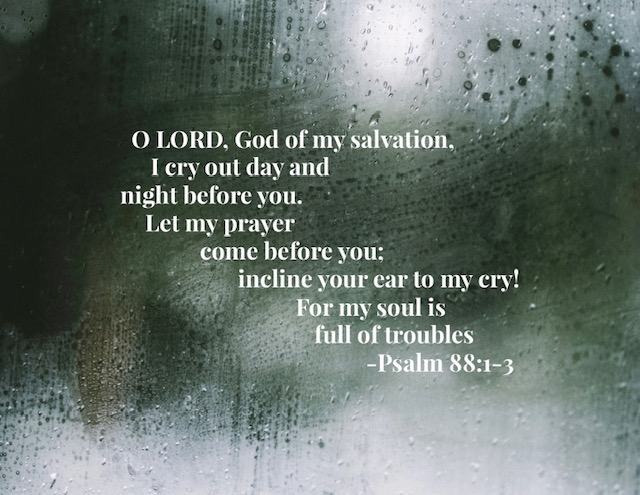
One woman shared how hard it was after her son committed suicide. When people asked her how she was doing, and she tried to tell them, she’d have to short-circuit what she wanted to say. She could see by their faces that they weren’t ready for what was on her heart. She pointed out that we need to allow for lament in the church such as the psalmists display. About a third of the psalms are laments, which are different from complaints. The writers conveyed a range of emotions based on their troubles. They eventually reminded themselves of God’s character and love, but they had to spend their grief and confusion first before they could receive it.
Granted, the psalmists did not have as much of the Word of God as we do now, which might have helped with some of their questions. But there are always mysteries as to why God allows certain painful things or doesn’t grant things that seem beneficial.
Paul was honest about his struggles as well:
. . . far greater labors, far more imprisonments, with countless beatings, and often near death.Five times I received at the hands of the Jews the forty lashes less one.Three times I was beaten with rods. Once I was stoned. Three times I was shipwrecked; a night and a day I was adrift at sea;on frequent journeys, in danger from rivers, danger from robbers, danger from my own people, danger from Gentiles, danger in the city, danger in the wilderness, danger at sea, danger from false brothers;in toil and hardship, through many a sleepless night, in hunger and thirst, often without food, in cold and exposure.And, apart from other things, there is the daily pressure on me of my anxiety for all the churches (2 Corinthians 11:23-38).
In Peter’s epistles, he was also quite frank about suffering believers experience.
When people are hurting, we want to fix their problems and make them better. But healing takes time. Sometimes pain drowns everything else out. We can’t help others when we apply Bible verses like band-aids over gaping wounds. There is a time to share Scripture. I’ve been greatly encouraged by a shared verse at just the right time. But first we need to listen and “weep with those who weep” (Romans 12:15). Sometimes the tender care and concern shared in the midst of someone’s pain will open their hearts to receive truth.
Someone has said that Job’s friends ministered to him much more when they sat with him in silence for a week than when they started talking.
Some years ago, in our early married life, someone at church shared a prayer request for a man who had just been diagnosed with cancer. The speaker went on to say that the wife wasn’t taking the news well.
I thought, “How does someone take that kind of news well?” Wrestling through pain, confusion, and grief doesn’t mean one doesn’t have faith. This woman needed someone to come alongside her, not judge for her initial reaction to devastating news.
There is no one formula for aiding people in their worst times. We need to ask God’s guidance for what to share when. But we need to give them space to grieve. We need to listen, empathize, support, and love without judgment and pat answers.
Will God Forgive My Worst Sin? “When I hear this question that’s so filled with self-recrimination and doubt and fear and guilt, I want very much to introduce this woman — I wish I knew her name, as I could call her by name — to what I have for many years called ‘gutsy guilt.”
How Do Spiritually Mature Christians Handle Suffering? “Much of our thinking about suffering is unbiblical. We tend to think that spiritual maturity somehow inoculates us against the pain of suffering. We falsely imagine that the more spiritually mature we are, the less emotional pain we will experience when we suffer.”
What If the Worst Happens? “I found myself growing fearful. Not a heart-stopping, all-encompassing fear, but the kind of constant gnawing that occurs when you look at the discouraging trends of the present and assume things will never change. When you think about the future and wonder, ‘What if the worst happens?'”
John Piper on Brokenhearted Boldness: A Christian Alternative to Outrage Culture. “Boldness can become brash, harsh, severe, cruel, angry, impatient, contentious, belligerent, coarse, crude, snarky, snide, loud, garish, obnoxious — all in the name of Christian courage. Or more subtly, boldness in the cause of truth can become, even if less brash and severe, more all-consuming. It can become such a fixation that all other beautiful affections and dispositions are eaten away from within.”
How to “Get Over It” When You Taught Poorly. “If you teach the Bible regularly, you know the experience of wishing you had done better — sometimes much better — immediately after you finished.” This is true for writing as well as speaking.
Is That Person Male or Female? “Is there a scientific and effective way to discern whether someone is male or female? The answer is yes. There have been established methods for a long time. It’s only with the recent rise of transgender ideology that there has been any substantial pushback to these methods. Here are three ways to determine whether someone is male or female.”
How to Have Better Conversations. “The problem is that if asked, most of us would have no plan for how to improve our conversation skills. We have goals for our weight and physical exercise but not for what occupies more time than anything else in our day. If you don’t have ideas on how you can improve your conversation skills, you won’t.” This is something I have struggled with over the years. Numbers 1 and 2 have been the most helpful to me.
In the past, I’ve included a phrase a phrase behind the links in these posts—a “HT” to another site. Occasionally someone will ask me what “HT” means. It refers to “hat tip,” a way of giving a nod to the place where I saw the link I’m sharing. I used to see this designation in many places, but it occurs to me that I don’t anymore. So I decided to take it out. Let me know if you have a preference for it to remain.
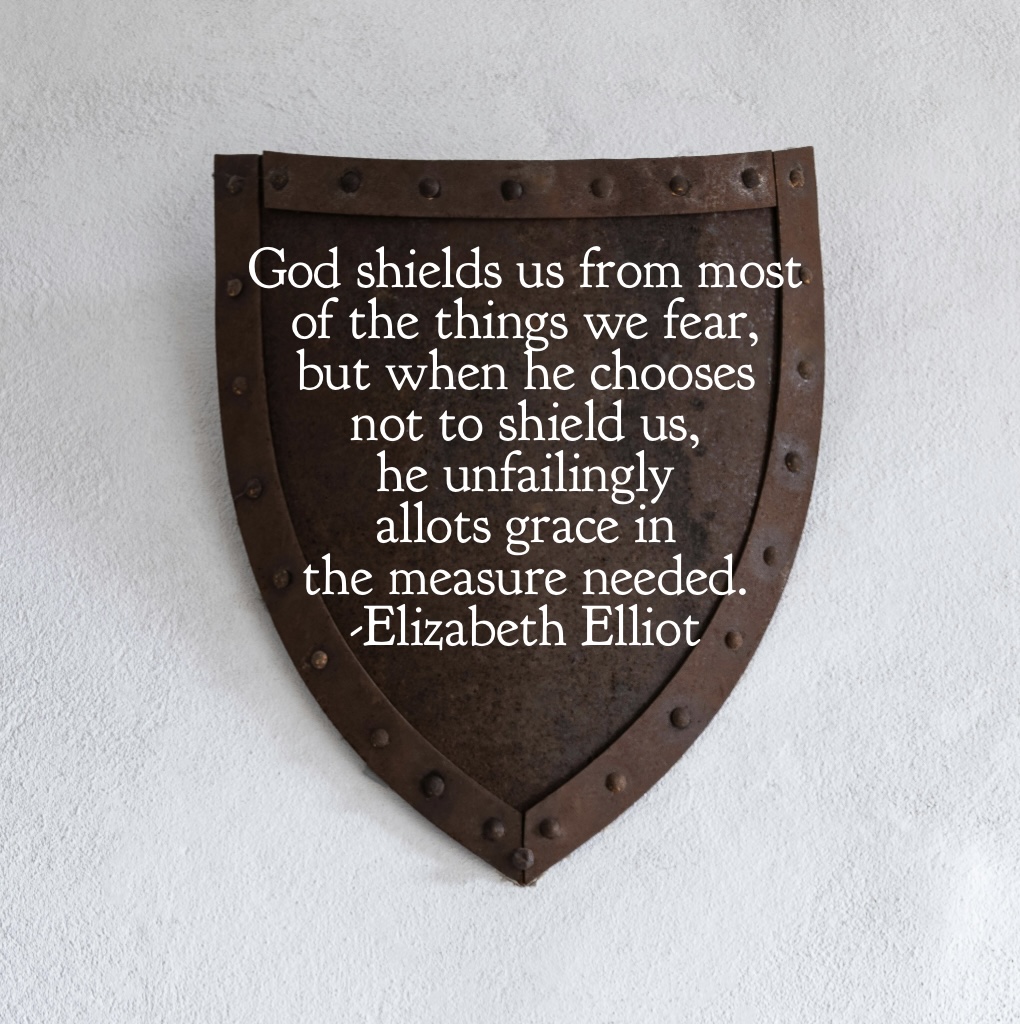
God shields us from most of the things we fear, but when he chooses not to shield us, he unfailingly allots grace in the measure needed. –Elisabeth Elliot, Secure in the Everlasting Arms





![2 Corinthians 9:8: And God is able to make all grace abound to you, so that having all sufficiency[a] in all things at all times, you may abound in every good work.](https://barbaraleeharper.com/wp-content/uploads/2024/09/img_2096.png)






 Stray Thoughts