Friday’s Fave Five

Welcome to Friday’s Fave Five, hosted by Susanne at Living to Tell the Story, in which we can share five of our favorite things from the last week,  wonderful exercise in looking for and appreciating the good things God blesses us with. Click on the button to learn more, then go to Susanne’s to read others’ faves and link up your own.

It’s been an…..interesting week. Jesse was sick earlier in the week, then his computer imploded. We moved my mother-in-law into a new assisted living place yesterday,  and Jesse (age 18) had a minor accident on the way over. Nothing makes one’s heart drop like answering the phone and hearing, “Mom, I hit someone.” But thankfully no one was hurt and both cars were drivable, though Jesse was pretty shaken. But God sprinkled blessings throughout the week as well. So my favorite parts of this week are:

1. Safety and appreciation that Jesse’s accident wasn’t worse. Thinking about “what might have been” isn’t productive, so I try not to go there, but I am so glad for God’s protection over what could have been much worse.

2. My mother-in-law’s move going well. We had decided to stop mentioning the move until it was actually time to go, because she kept forgetting and we’d have to go through all the whys and wherefores each time. She got a little restless during the morning here at home with Mittu and me, saying she was ready to go back to her room. 🙂 We’d tell her we needed to wait for Jim to get back. When it was finally time to take her over, I thought he’d sit her down and explain the situation again, but instead he just took her to the new place and said, “This is your new home, Mom.” That turned out to be the wiser course of action. She seemed to roll with it — she didn’t ask what was going on or ask to go back to the old place. She might in the next few days as she adjusts mentally to new surroundings and people, and it takes a while for staff to get used to the particulars of caring for a new person, so we’d appreciate continued prayer for her. But overall things went about as well as they could have during the move.

3. Family pulling together. We so appreciated everyone chipping in and pulling together to get Mom moved and settled.

4. Our church’s Ladies’ Christmas Party. Such fun, and one friend shared a wonderful, transparent testimony of God’s working in her life.

5. Another Dinner for Six with church folks, with a twist: this was the first time we’d had small children in our house for ages, and the first time we’d had someone in a wheelchair other than my mother-in-law. We knew the previous homeowner had been in a wheelchair, and though the whole house isn’t outfitted for a disabled person, the main doors are wider. Jim had built a ramp for his mom’s wheelchair. So we were pretty confident everything would work out ok, but it was nice when it actually did. 🙂 We had kept back and cleaned up a few toys for the children, and they enjoyed them and everything went ok on that front as well.This was actually from a previous week, but I had forgotten to mention it. 🙂

Bonus: Gingerbread Teddy Bears.

Looking forward this week to our church choir’s Christmas program Sunday and then Jeremy coming home Wednesday! And to our 32nd anniversary — haven’t decided just what to do yet, but we usually just go out to eat and enjoy a quiet evening together. And of course there’s lots to do for Christmas yet!

Have a good weekend!

It’s Moving Day….

No, not for us but for my mother-in-law. I mentioned a few months ago that her assisted living place had decided that her level of care was getting to be more than what they would provide, but my husband and her physical therapist convinced them that she was fine where she was.

But at the last fire drill Mom wasn’t able to vacate the building in the allotted time the fire code says she needs to, so the director called and said she needed to go. We had been thinking along those lines anyway, that it would be better to move her than to live with the constant possibility of it on our shoulders.

Jim took her to another assisted living place Monday for an interview. One of the specific questions he asked was whether she could stay there long term or whether we’d be facing all this again in another year as she declined. They said they would be able to take care of her through the end of life. It seems to be a lot better staffed. It is more expensive, but that’s due to a higher level of care. There is a nurse practitioner on staff, so that person can be her primary care person and she won’t have to be sent out to a dr. for basic needs: things like the emergency room visit she had a few weeks ago would be avoided because they can do basic testing there.

All in all it sounds like a positive move, but of course change is hard, especially at her age. We’d appreciate your prayers as she makes this transition. After visiting the place with Jim and having multiple discussions about not wanting to move and Jim explaining why she had to, when I went to see her yesterday she had no memory of any of it and I had to start from scratch explaining it all. I don’t know if she’ll remember it when Jim goes to pick her up this morning. I truly think once she gets settled she’ll be fine, and in some ways short term memory loss might be a blessing, but the first few days will be disconcerting for her.

The plan today is that Jim will go pick her up and bring her here to our house, where Mittu and I will stay with her so she’ll be out of the fray of packing up. Jim, Jason, and Jesse will go over to her place and pack her things up and then take them to the new place. Then when they’re done setting up, we’ll take her over. The staff there even suggested we have dinner there with her the first night to help with her transition.

So we’d appreciate your prayers for the stresses of this day and for her transition. Thanks so much!

Book Review: Created For Work

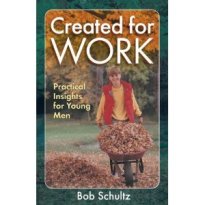
After enjoying Boyhood and Beyond: Practical Wisdom for Becoming a Man by Bob Schultz with my youngest son, we tried another of his books, Created for Work: Practical Insights for Young Men. The title attracted me because I think developing a strong work ethic in young people is becoming a lost art and because people generally have a negative view of work. It was a revelation to me years ago to realize that God created and ordained work before the fall of man into sin: it’s not part of the Curse, though it is harder because of the Curse.

I don’t recall that Schultz brought out that aspect of work, but he brought out many others, using his own work and experience as an independent contractor as a backdrop for many of his insights. He discusses things you’d expect concerning work, like diligence, initiative, working within the rules, finishing well, etc. But he brought out other things I would not have thought of: looking at things from a boss’s perspective, dealing with a loss of confidence, irritations between coworkers, admitting when you’re wrong and learning from it, the dangers of diligence (becoming self-satisfied and indulgent after success), and even the way the Lord brings you into contact with other people through your work to whom you can minister. Another valuable insight was that of balancing initiative: his example was a young man who saw a neighbor’s fallen tree and decided to cut it up into firewood for them, only to discover afterward they had planned to take it to the mill to be turned into lumber.

There were just a couple of places where I disagreed with the author a bit. In one chapter titled “Great Grandpa Cornelius,” Schultz is encouraging boys to be diligent workers even before they’re of age to work at an outside job, and I agree with that. But he makes the statement, “If someone provides your food, shelter, and education, you’re a liability” (p. 42). I wouldn’t say that to a boy in the home. He goes on to say that you had no choice as a baby to have others work for you, but as soon as you can you want to work to become an asset. And I agree with that as well. From the time our boys were little, though they had jobs in the home and allowances that were loosely tied to each other, the main reason for their jobs wasn’t to earn an allowance or even to “help” their parents, but to pull together as a family and contribute to the family and to get in the habit or working. So I agree with all of that in principle, I agree with teaching boys (and girls) to work for a variety of reasons, but I still wouldn’t call being provided for as a boy at home being a liability. When he gets to be 30 or so, well, that’s different. 🙂

In another chapter titled “My Instructor,” he describes a time when his boss wanted him to install trim with costly wood in a beauitful, expensive home. He was worried because he hadn’t had much experience with the particular type of work his boss wanted him to do, worried enough to lose sleep the night before the job. He felt God was telling him that since He created the world and told Solomon how to build the temple and Noah how to build the ark, He could tell him how to do this job. And He did, through a painter who came through and gave him an off-the-cuff tip. I can’t argue with his experience, and I’ve had the experience as well of being stuck in the middle of some task, praying for wisdom, and feeling that God gave me the idea of what to do about it. But I wouldn’t want someone to take this particular experience as a substitute for owning up that you don’t know how to do a particular job or seeking out instruction on how to do it beforehand.

And finally, in a chapter on unemployment compensation he writes that he feels that such is government aid and that instead of filing for unemployment, he should find other work he can do as unto the Lord and for His kingdom, such as yard work for a widowed neighbor, etc. My husband and I feel that unemployment compensation is a form of insurance rather than a “handout” and is a legitimate and responsible way to care for one’s family between jobs. I do agree with the other principles in the chapter, however, that ultimately we work for God, not for money, though He usually provides through a job, and that there are many useful things one can do during a jobless time, like work for others and get ones’ tools ready and prepared for the next opportunity.

The space and time to explain those few caveats makes it looks I disagree with more than I agree with, and that’s not the case: I think this is a valuable resource for boys and young men. If I’d had this when my boys were younger, I think I would have gone over it with them then as well as again as older teenagers about to leave home.

(This review will also be linked to Semicolon‘s Saturday Review of Books.)

Gingerbread Teddy Bears

I got this recipe way back in college when the Home Economics Department at my college was having a Christmas Open House. I don’t make them every year because all of that ball-rolling is a little tedious, especially if you’re doubling the recipe. But they’re fun to make and they taste great. Sometimes the kids would help: this time Mittu helped. I wasn’t a great fan of gingerbread cookies before these, but I like that these are soft and chewy rather than hard and crisp.

Gingerbread Teddy Bears

1 c. butter or margarine
2/3 c. packed brown sugar
2/3 c. dark corn syrup, light corn syrup, or molasses
4 c. all-purpose flour
1 1/2 tsp. ground cinnamon
1 tsp. ground ginger
3/4 tsp. baking soda
1/2 tsp. ground cloves
1 beaten egg
1 1/2 tsp. vanilla
Miniature semi-sweet chocolate pieces
Decorator icing (optional)

In a saucepan combine butter, brown sugar, and corn syrup. Cook and stir over medium heat til butter is melted and sugar is dissolved. Pour into a large mixing bowl and cool 5 minutes. Meanwhile, combine flour, cinnamon, ginger, soda, and cloves. Add egg and vanilla to butter mixture and mix well. Add the flour mixture and beat til well mixed. Divide the dough in half; cover and chill at least two hours or overnight.

To make each teddy bear, shape dough into about a 1-inch ball for the body, one 3/4-inch ball for the head, and six 1/2-inch balls for the arms, legs, and ears. On ungreased cookie sheet, place the 1-inch ball and flatten slightly. Place 3/4-inch ball next to (touching) the “body” for the head. then do the same for the arms and legs. Place two 1/2-inch balls above the head for ears. If desired you can pinch off just a teeny bit of dough for a nose, or use miniature chocolate chip. Use miniature chocolate chips for the eyes and either a navel on the belly or 3 “buttons”. Bake at 350^ for 8-10 minutes or until done. Carefully remove and cool.

If desired, pipe on smile, bow tie or vest or other decorations with decorator icing (1/2 c. sifted powder sugar and approximately 2 tsp. milk, blended to piping consistency, tinted with 1-2 drops food coloring). Makes 20-23.

This post will be also linked to “Works For Me Wednesday,” where you can find an abundance of helpful hints each week at We Are THAT family on Wednesdays, as well as  Women Living Well.

The Week in Words

”"

Welcome to The Week In Words, where we share quotes from the last week’s reading. If something you read this past week  inspired you, caused you to laugh, cry, think, dream, or just resonated with you in some way, please share it with us, attributing it to its source, which can be a book, newspaper, blog, Facebook — anything that you read. More information is here.

Here are a few thought-provoking quotes I came across this week:

From a friend’s Facebook:

“Circumstances may appear to wreck our lives and God’s plans, but God is not helpless among the ruins.” Eric Liddell, Olympian

We probably would not think of God as “helpless among the ruins,” but we sure can act as if we’re thinking that way. When we’re bowled over by circumstances, we can remember that He is not.

By the way, if you’ve never read a biography about Liddell, I’d highly recommend it.

Seen at Women Living Well:

“If you have been afraid that your love of beautiful flowers and the flickering flame of the candle is somehow less spiritual than living in starkness and ugliness, remember that He who created you to be creative gave you the things with which to make beauty and gave you the sensitivity to appreciate and respond to his creation. Creativity is his gift to you and the ‘raw materials’ to be put together in various ways are His gift to you as well.” ~ Edith Schaeffer, The Art of Homemaking.

I read that book years ago and want to do so again some time. I used to struggle with whether wanting things to be pretty and pleasing was somehow unspiritual, but the realization that God made the world beautiful and enjoyable rather than just functional and utilitarian helped. We have to balance that, of course, with the available time, funds, and other responsibilities, and Mrs. Schaeffer discusses this in her book.

In a similar vein, I saw this quote at my friend Mary Beth‘s some weeks ago:

“We have our own small square of life on this planet, and it’s our choice to do with it what we will. We can bring order and beauty to that place we have been given. We can touch the people who come within our sphere of influence with love and care and comfort.” ~ Claire Cloninger

On a different subject, this was quoted in the devotional book The Invitation by Derick Bingham commenting on John 21:3:

But what good can failure do? It may shut up a path which you were pursuing too eagerly. It may put you out of heart with things seen and temporal, and give you an appetite for things unseen and eternal. It may teach you your own helplessness, and turn you to trust more implicitly in the provision of Christ. It is clear that Christians have often to toil all night in vain, that Christ may have a background black and sombre enough to set forth all the glories of his interposition. ~ F. B. Meyer, Love to the Uttermost

One of the biggest struggles I had in college was not in failing per se — I wasn’t flunking, but I was failing in my usual good grades despite good efforts, and I felt like I was failing. One of the most poignant and timely messages I ever heard was one at college on failure. I can’t remember the details, but it was a lesson I have never forgotten that God has purposes in our failure or falling short.

You can share your family-friendly quotes in the comments below or write a post on your blog and then put the link to that post (not your general blog link) in Mr. Linky below.

I hope you’ll visit the other participants as well and glean some great thoughts to ponder. And don’t forget to leave a comment here, even if you don’t have any quotes to share. I usually try to visit everyone who comments, but often I forget to check Mr. Linky for those who participated but didn’t comment.

Infant Holy

This is my favorite Christmas hymn. I think I post it almost every year.

Infant holy, Infant lowly, for His bed a cattle stall;
Oxen lowing, little knowing, Christ the Babe is Lord of all.
Swift are winging angels singing, noels ringing, tidings bringing:
Christ the Babe is Lord of all.

Flocks were sleeping, shepherds keeping vigil till the morning new
Saw the glory, heard the story, tidings of a Gospel true.
Thus rejoicing, free from sorrow, praises voicing, greet the morrow:
Christ the Babe was born for you.

Tra­di­tion­al carol, trans­lat­ed from Po­lish to Eng­lish by Edith M. Reed, 1921.

Repost: Christmas Grief

This is the sixth anniversary of my Mom’s death, so, though I think of her and sorely miss her often, this day (as well as her birthday and Mother’s Day) are particularly poignant days for me. Grief seems to start out like a flood but then slowly recedes to a stream that occasionally overflows its banks. There are many fond and pleasant memories, but I don’t suppose some moments of intense missing her will ever go away until I see her again. This is what I wrote on this day last year:

_________________________________________

December could be a rather gloomy month for my family. My mother passed away Dec. 10 five years ago, my father Dec. 12 a few years earlier, and my grandmother Christmas Eve a few years prior to that, leading my brother to exclaim once that he just wanted to cancel the whole month.

The death of a loved any any time of year can shadow the whole Christmas season as we miss our normal interactions with that loved one, and several years later, though maybe the pangs aren’t quite as sharp, they’re still there, and it’s not abnormal to be caught off guard by a memory or a longing leading to a good crying jag.

When someone is grieving over the holidays, they may not want to participate in some of the “normal” happy pastimes. It’s not that they don’t ever laugh or enjoy gatherings. But as Sherry said yesterday, “I am enjoying the traditional holiday celebrations, and at the same time they move me to tears, sad tears for things that have been lost this year. I am singing the music, and yet I’m tired of the froth of jingling bells and pa-rumpumpum.” I remember almost wishing that we still observed periods of mourning with wearing black or some sign of “Grief in progress” — not to rain on anyone else’s good time, but just to let people know there was woundedness under the surface, and just as physical wounds need tenderness while healing, so do emotional ones. Normally I love baby and bridal showers and make it a point to attend, but for several months after my mom’s death I did not want to go to them. I rejoiced with those who rejoiced…but just did not want to rejoice in quite that way. I first heard the news of my mom’s death during our adult Sunday School Christmas party, and the next year I just did not want to attend. Even this year, when our ladies’ Christmas party was on the anniversary of my mom’s death, I was concerned that at some point during the evening I would have to find the restroom and lock myself in to release some tears (though thankfully that did not happen).

Other events can cast a pall over Christmas: illness, job loss, a family estrangement, etc. One Christmas we were all sick as dogs, and my father-in-law had just had a major health crisis and wanted us to come up from SC to ID to visit. There was just no way we could drag ourselves onto a plane until antibiotics had kicked in a few days later, but we did go, and if I remember correctly, that was the last time any of us except my husband saw him alive, so in retrospect we were glad we went, though it wasn’t the merriest of Christmases. A good friend grieved over “ruining” her family’s Christmas by being in the hospital with a severe kidney infection. Lizzie wrote about visiting her husband in prison for Christmas. Quilly commented yesterday about being homeless one Christmas. Yet both Lizzie and Quilly mentioned reasons for rejoicing in the midst of those circumstances.

If you’re grieving this Christmas, don’t feel guilty if you’re not quite into the “froth” this year.  One quote I shared on a Week In Words post earlier had to do with giving yourself time to heal. On the other hand, there may be times to go through with the holiday festivities for family’s sake — and, truly, those times can help keep you from the doldrums. Sherry shared how making a list of reasons to celebrate Christmas helped. Look for the good things to rejoice in. E-mom left a valuable comment yesterday that we can treasure up the memories of good Christmases to tide us over the not so good ones, and then look forward to better things ahead. And as I said yesterday, remember that the first Christmas was not all about the froth, either, but was messy, lonely, and painful, yet out of it was born the Savior of the world and the hope of mankind. Rejoice in that hope and promise. Draw near to Him who has borne our griefs and carries our sorrows until grief and sorrow are done away forever.

Friday’s Fave Five

Welcome to Friday’s Fave Five, hosted by Susanne at Living to Tell the Story, in which we can share five of our favorite things from the last week,  wonderful exercise in looking for and appreciating the good things God blesses us with. Click on the button to learn more, then go to Susanne’s to read others’ faves and link up your own.

Here are a few highlights from the past week:

1. The children’s Christmas program at church. Even though we don’t have little ones any more and I don’t know half of these little ones in our new church, it’s still so sweet to see all the miniature angels, shepherds, and wise men. They have the very littlest ones in animal costumes — so cute! I hope and pray the message they proclaim takes root in their hearts as well as the listeners.

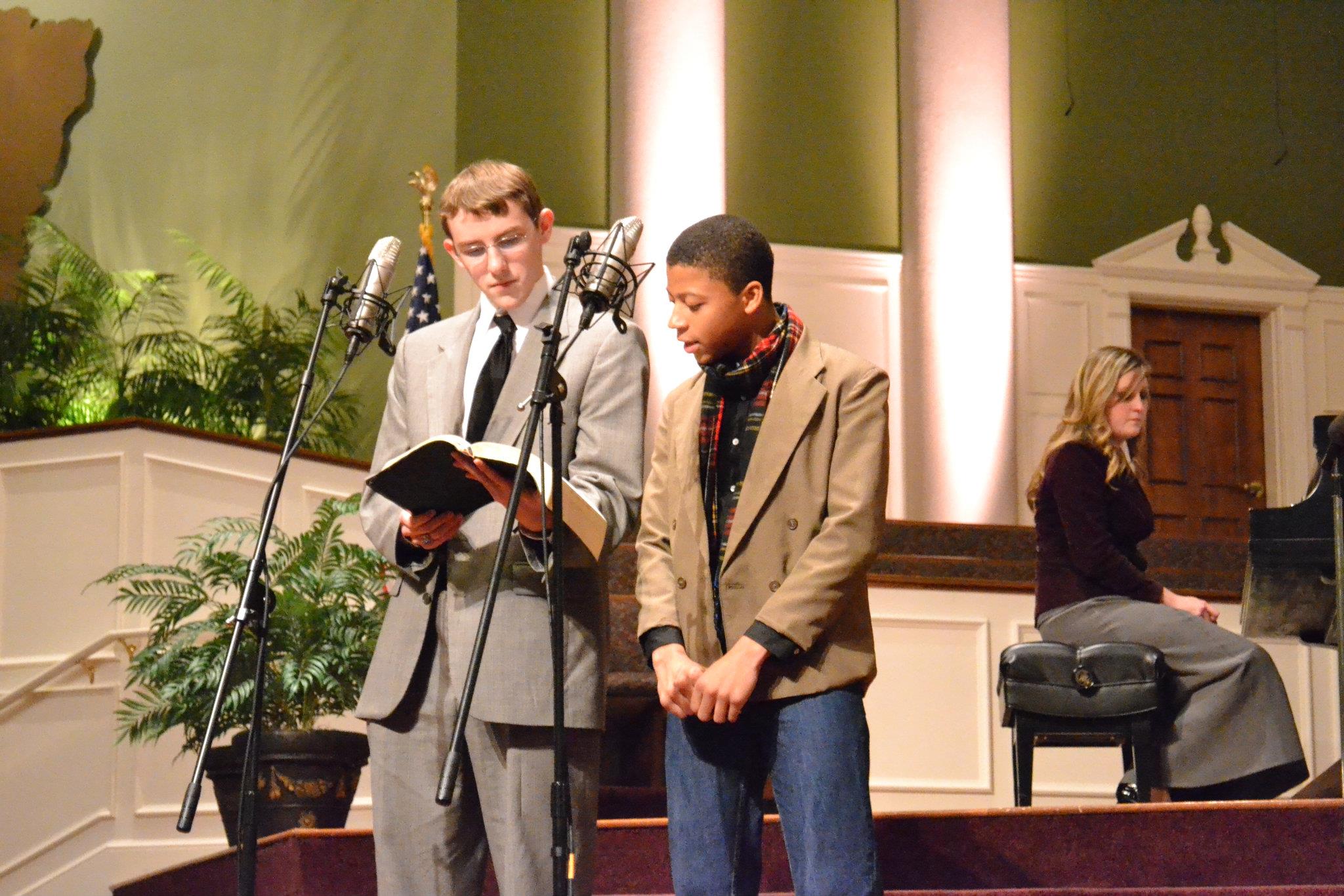
2. Jesse’s school Christmas program. The seniors do a “reader’s theater” type play and various other classes and groups sing. Jesse was the “mission preacher,” also known as “the man in the suit,” who was able to tell little “Jimmy” how to be saved. The guy who played Jimmy is one of his closest friends at school. The whole evening went very well, and he was so glad to get it over with — though he had a pretty small part, he was nervous about it. There were a few pangs for Mama in realizing this was the last Christmas program I would have a child in…

3. Pink poinsettias. I don’t usually buy poinsettias, but when I saw this pink one in the grocery store I had to get it.

4. Sunshine. The first part of this week was dreary, overcast, rainy, with several areas flooding (thankfully not affecting roads, but we have several spontaneous lakes and ponds in the area when there is a lot of rain). But the sun shone bright yesterday and today, and it was so welcome. Still cold, but the sunshine makes a lot of difference.

5. My garage. I’m pretty sure I have mentioned it before. But after spending twelve winters scraping frost off windshields and bringing groceries in through the rain, it is so nice to bring the car into a dry and relatively warm space! And I am thankful my husband and son are gallant and chivalrous enough to let me have that space even though they leave the house earlier and have to deal with the frost more on their cars.

I don’t know about you all, but for us most of the Christmas “events” have been sandwiched into this week. Besides the pageant and program already mentioned, our ladies’ Christmas party is tonight, Sunday School potluck is this Sunday, open house at my mother-in-law’s assisted living place Sat. night, and the adult Christmas program Sunday night (thankfully I am just an observer for that!) I’ve bought Christmas cards but haven’t addressed them or done hardly any shopping. It’s a busy but enjoyable time! Hope you have a great weekend.

Book Clubs and Bookish Questions

Reading to Know - Book ClubCarrie at Reading to Know is hosting a book club for the next year. You can read more about it here. There’s quite an eclectic list of titles to be covered.

I was honored to be asked to lead one of the discussions, so I’ll be reading Uncle Tom’s Cabin in October. Why Uncle Tom’s Cabin? Mainly because I have been wanting to reread it, and this seemed like  good time to do so. Discussing it with others who have read it is icing on the cake!

When I was growing up, I had heard of Uncle Tom, but had no interest in reading the book. I knew that slavery was wrong but didn’t want to read firsthand how awful it really was. I had heard how awful, in school, on various TV programs, etc., but a novel about it seemed like it would be morbid.

But one day when I was in my twenties or early thirties, my pastor mention in passing that Uncle Tom was the kind of Christian you’ve always wanted to be. Well, that piqued my interest, so I did read it some time thereafter and discovered he was right. I was saddened later to hear the name “Uncle Tom” used as an insult on one of the black comedies of the 80s, and I have heard it used that way since. In these day of standing up for one’s rights, meekness is not highly valued. Tom was meek, but he wasn’t weak and kowtowing.

So I’ll be looking forward to revisiting that story and seeing what my impressions are now a couple of decades later. I hope you’ll make plans to join me! And some of the other bloggers involved in the Book Club as well.

I’ve had a couple of questions or comments lately wondering how I find time to read and how I choose what to read. I answered those individuals, but thought I might answer those questions here as well.

How do I find time to read?

A few weeks ago I had this quoted from a comment on 5 Ways to Make More Time to Read on a The Week in Words post: Reading allows me to thrive.  If I don’t, then I feel stagnant. ~ Michael D. Perkins

I feel exactly the same way. If I don’t have some time to read every day, I feel mentally and intellectually dry and dull. I read more some days than others, but I do try to read (from books, not just the computer) every day. Here’s where I usually fit in in:

1. I hope this isn’t crass or TMI, but honestly, a great deal of my reading is done in the bathroom. 🙂 I used to have a link to a cute article on that, but apparently it has been taken down. In searching for it I did find Chamber Plots and Why Do Some People Read in the Bathroom amusing. It’s mainly a profitable way to spend the necessary time in there. More than one person referred to it as their Fortress of Solitude. 🙂

2. Any waiting time. If I am going to a doctor or dentist, a book is a must. Not only does it help pass the time in an edifying way, but it helps me combat nervousness by occupying my mind. Also, before the boys started driving on their own, I usually took a book with me when I picked them up from a youth activity or ball practice. That way if their event ran overtime, instead of stewing in impatience I looked on it as a few stolen moments to read.

3. Driving. Well, not while I’m driving. But if we’re going somewhere more than 20-30 minutes away, I bring something to read. I’m thankful I can do that: I know it makes some people carsick to read in the car.

4. Sunday nights. We’re not legalistic about it, but we try to make Sundays different and more restful than other days by not doing any work other than what it takes to get to and from church and meals on the table and then cleaned up. Sometimes we don’t really get to rest until after the evening services, but it’s nice to come home then and relax, knowing that I don’t have to toss some laundry in or whatever. Sometimes these days we’re Skyping with Jeremy or doing something with the kids or doing stuff on the computer on Sunday evenings, but otherwise, if there is time, I like to stretch out on the couch with a good book. Occasionally in the summertime I might do that in the evenings as well, if we’re up and there’s nothing on TV and everyone is otherwise occupied. But I rarely just sit down during the day with a book unless I’m in a part where I just can’t put it down or unless I am not feeling well.

5. Meals. Usually if I am home by myself, I am at the computer for breakfast and lunch. But sometimes when I have had enough of the computer, I’ll read a bit while eating.

6. In conjunction with devotions. If I am reading a Christian non-fiction book that is not a biography, this is when I’ll usually work it in. Just occasionally I will take a break from reading the Bible through and read a book like this in place of devotions, or I might read it after devotions. But it takes a different mindset for me to read non-fiction: I can’t just pick it up here and there and get as much out of it. I like to read it in chapters or at least in sections at a time.

And that’s about it, I think. I do manage to get through a number of books that way.

How do I choose what books to read?

Since starting to read blogs, I’ve kept a TBR (to be read) list on file so I can jot down recommendations from bloggers I’ve come to know and trust. Many of the blogs I read discuss books to some degree and provide more fodder for my list.

But even before using the Internet so much, my friends’ recommendations gave me lots to read. It just occurred to me while writing this that my friends in “real life” (not that you all aren’t real, of course 🙂 ) don’t really discuss books that much any more. I wonder if it is because we’re spending more time on the Internet or what?

Of course, once I find an author I like, I’m alert for when they have a new book out, and I might try to backtrack and read their older books.

I don’t do this as much any more since my TBR list has gotten so long, but sometimes I’d peruse the shelves of book stores or libraries and pick up something that looked good. (I miss bookstores in malls!) The Christian book store here keeps a regular clearance table year round (whereas my former one in SC just had a huge after-Christmas clearance sale once a year), so if I am in there and have time, I’ll scout out the clearance sales.

Sometimes if I see something interesting in a store, I might wait and check the reviews on Amazon.com or Christianbook.com before buying.

Sometimes I am inspired to read a book when I’ve seen a film based on it.

Every once in a great while. I’ll go to Christianbook.com and click on Fiction and see what’s new.

Usually I read Christian fiction, Christian non-fiction, biographies, and classics, in more or less that order. Occasionally I’ll delve into something modern and not Christian, but it’s getting harder to do so without running into objectionable content. I saw some good reasons for reading non-Christian books, and I agree with them, but it’s hard to find the right balance.

And that, I think, is probably much more than you wanted to know about my reading habits.

No Condemnation

This is going to be more of a thinking out loud or a processing-my-thoughts post rather than a wrapped-up conclusion, and therefore it won’t be very polished (not that my other posts are, either. 🙂 )

I joined Do Not Depart in memorizing Romans 8 after seeing Lisa mention it. I’m ashamed to say I haven’t memorized anything in ages and I am discovering just how rusty the ol’ brain cells have gotten. I’m a little behind since Thanksgiving week, but it’s coming along.

Of course, the first verse of Romans 8 is one of the most blessed to believers:

There is therefore now no condemnation to them which are in Christ Jesus,
who walk not after the flesh, but after the Spirit.

What an amazing blessing to know that God loved us enough to be willing to take our condemnation for us, paying the debt in full. When we believe on Jesus as our Savior, we know our sins are forgiven and we can look forward to seeing Him without dread.

But I’ve seen people use this concept lately in a different way, such as when they’re feeling guilty about mistakes in parenting or besetting sins. While it’s good to rejoice and comfort ourselves that God covers our everyday mistakes and sins with Jesus’ blood, and we can be forgiven on that basis, “no condemnation” doesn’t mean a number of things (please forgive the awkward grammar):

1. “No condemnation” doesn’t mean God will never deal with my sin any more.

Hebrews 12:5-13 tells us about God’s chastening of believers. Believers. Those who have already been forgiven and delivered. Chastening is a different thing from condemnation for sin, yet I have seen people confuse the two.

“For whom the Lord loveth he chasteneth,” verse 6.

“If ye endure chastening, God dealeth with you as with sons; for what son is he whom the father chasteneth not?”, verse 7.

“But if ye be without chastisement, whereof all are partakers, then are ye bastards, and not sons,” verse 8.

“Now no chastening for the present seemeth to be joyous, but grievous: nevertheless afterward it yieldeth the peaceable fruit of righteousness unto them which are exercised thereby,” verse 11.

I’ve been a little concerned with what I’ve been reading about grace-based parenting– I need to read one of the books going around to see what exactly is being taught. But the way I have seen some people apply it is to ditch everything Proverbs says about disciplining children in favor of grace, in the sense that as adults, when we sin, we confess it to God and whomever else is involved, and that’s it. That’s it as far as forgiveness goes, but sometimes God chastens us to help us learn how serious sin is, to help discipline us not to do it again. I think it goes back to the idea of progressive sanctification: our position in Christ is secure when we’re saved, but our everyday lives should be looking more and more like Him as we grow in Him. In fact, sometimes the more we grow, the more we’re saddened to learn just how pervasive our sin is and how much we need for Him to work on us.

There is an interesting passage in Leviticus 26:40- 42: “If they shall confess their iniquity, and the iniquity of their fathers, with their trespass which they trespassed against me, and that also they have walked contrary unto me;  And that I also have walked contrary unto them, and have brought them into the land of their enemies; if then their uncircumcised hearts be humbled, and they then accept of the punishment of their iniquity:  Then will I remember my covenant with Jacob, and also my covenant with Isaac, and also my covenant with Abraham will I remember; and I will remember the land.”

2. “No condemnation” doesn’t mean no one else can ever speak to me about sin in my life.

I’ve seen sometimes when one believer tries to speak to another about a glaring problem in his or her life, he or she will react by saying something like, “Why are you condemning me? The Bible says believers face no condemnation.” (Of course, there is a right way, attitude, demeanor, and time and place to confront someone and wrong ways, and sometimes that reaction is sparked by the way someone confronted rather than the confrontation itself.) But God uses believers to help deal with issues in each others lives, and that is not the same thing as condemnation for sin.

Proverbs 25:12 says, “As an earring of gold, and an ornament of fine gold, so is a wise reprover upon an obedient ear.”

Galatians 6:1 says, “Brethren, if a man be overtaken in a fault, ye which are spiritual, restore such an one in the spirit of meekness; considering thyself, lest thou also be tempted.”

Even Matthew 7:1-5, which warns us to take the beam out of our own eye before trying to remove a speck from our brother’s, isn’t saying no one should ever try to take anything out of anyone else’s eye, so to speak: it’s just warning us not to be hypocritical by dealing with other people’s issues when we have our own. Verse 5 says, “Thou hypocrite, first cast out the beam out of thine own eye; and then shalt thou see clearly to cast out the mote out of thy brother’s eye.”

Balance is always required: these passages don’t mean we’re to become nitpicky fault-finders. There’s plenty in the Bible warning against that. But when we are aware of a definite glaring sin in another’s life, we are supposed to meekly, gently, kindly, under the Holy Spirit’s guidance, confront her about it. That’s not condemning the person: that is trying to help her fully be all God wants her to be.

3. “No condemnation” doesn’t mean there aren’t consequences to our actions.

Consequences are sometimes a part of chastening, sometimes a natural outgrowth of sin. If we harm our bodies with smoking, drinking, drugs, or overeating, there will be natural consequences. If people get into a fight and destroy property or maim someone, grace doesn’t erase those consequences. It provides for forgiveness before God, but we still have to deal with the consequences.

4. “No condemnation” doesn’t mean that I won’t or shouldn’t experience guilt.

I think of guilt similarly to pain: they both indicate that something is wrong and needs attention. Guilt can be a good tool of conscience to prick us about a sin we’ve been excusing or ignoring.

If we still feel guilt after we have confessed and forsaken the sin, then going back to verses like I John 1:9 helps. We might still feel regret, even though a sin has been forgiven: I don’t think it is wrong to wish that a sin had never happened, even as we rejoice that we have been forgiven.

Of course, there is such a thing as false guilt, guilt over things that aren’t wrong in themselves that other people say are wrong, guilt over standards that the Bible doesn’t express. Conscience is a tool in God’s hand, but conscience itself isn’t infallible. A former pastor used to put it jokingly, “If I had been captured by cannibals and they were about to toss me in their cooking pot to stew, I wouldn’t say, ‘Let your conscience be your guide,'” because obviously they have no conscience about eating people. Conscience has to be trained according to the Word of God.

5. “No condemnation” doesn’t mean I can take sin lightly.

God doesn’t take sin lightly. Some of the ways He dealt with sin in the Old Testament and even in the New Testament in places like Acts seem rather harsh to us. But we need to remember that’s how He really feels about it. That’s how awful it is, that’s how much of an affront it is to Him. And if we multiply that offense by all the sin anyone has ever committed in all of history and realize the full weight of it was all borne by Christ on the cross…it’s incomprehensible and overwhelming to consider.

So when we realize that we are not condemned for our sins, our attitude shouldn’t be, “Whew! I got away with it.” We shouldn’t have a light regard for what seems like the easy grace of I John 1:9. It wasn’t easy at all. Salvation and grace are free to us because Someone else paid the price that we could not.

Our response to the truth that in Christ we face no condemnation should rather cause us to magnify, worship, thank, and love Him even more. It should have a sanctifying effect in our lives, helping us to have a hatred for sin and a desire for holiness.