Book Review: Thunder Dog: The True Story of a Blind Man, His Guide Dog, and the Triumph of Trust at Ground Zero

Thunder Dog: The True Story of a Blind Man, His Guide Dog, and the Triumph of Trust at Ground Zero tells of Michael Hingson’s ordeal on 9/11. He was working on the 78th floor of the north tower of the World Trade Center when he and his colleagues heard an explosion and felt the building tilt. Not knowing what had happened, they evacuated everyone and then tried to power down computers and such, but quickly decided they need to leave the building. The only way to do so was by 1,463 stairs.

There was just one problem. Michael has been blind almost since birth and had his guide dog, Roselle, with him.

But it’s not really a problem. Michael’s parents “mainstreamed” him before the concept became popular. During his childhood Michael’s parents calmly fielded neighbor’s concerned calls about their blind son zipping around the neighborhood on his bicycle.

Interspersed between details of 9/11 are flashbacks from Michael’s life: childhood, education, work life, acquisitions of guide dogs, marriage, and then how 9/11 impacted the rest of his life. Though I know that’s the style these days, I do miss the time when a book started at the beginning and told a story straight through to the end. But it’s not at all hard to follow, and both aspects of the story are quite interesting.

(This review will also be linked to Semicolon‘s Saturday Review of Books.)

What’s On Your Nightstand: October

What's On Your NightstandThe folks at 5 Minutes For Books host What’s On Your Nightstand? the fourth Tuesday of each month in which we can share about the books we have been reading and/or plan to read. You can learn more about it by clicking the link or the button.

Well, the end of this month didn’t catch me by surprise as the last few have. Here’s what I’ve been reading since last time.

I finished:

Worldliness: Resisting the Seduction of a Fallen World, edited by C. J. Mahaney, reviewed here. Excellent.

Boyhood and Beyond: Practical Wisdom for Becoming a Man by Bob Schultz, reviewed here, read with my son. Excellent as well.

By Searching: My Journey Through Doubt Into Faith and In the Arena by Isobel Kuhn, reviewed together here. Excellent, among my most often reread books. Isobel was a missionary to China and these books wonderfully detail things the Lord taught her both in coming to faith in God and then in living for Him.

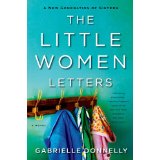
The Little Women Letters by Gabrielle Donnelly, reviewed here. Story of a descendent of the March family who discovers some of Jo’s letters. Loved the premise but was greatly disappointed in the book.

Abandoned: The Shop on Blossom Street by Debbie Macomber. I dropped it early on due to explicit sexual content (who knew such would be in a book about ladies getting to know one another over knitting?!)

I’m currently reading:

Coffee Shop Conversations: Making the Most of Spiritual Small Talk by Dale and Jonalyn Fincher, recommended by Lisa.

Thunder Dog: The True Story of a Blind Man, His Guide Dog, and the Triumph of Trust at Ground Zero by Michael Hingson.

With my son: Created for Work: Practical Insights for Young Men by Bob Schultz.

Next up:

Love’s Pursuit by Siri Mitchell.

The Mercy by Beverly Lewis, last of The Rose trilogy.

Cranford by Elizabeth Gaskell.

What have you been reading?

Book Review: The Little Women Letters

In The Little Women Letters by Gabrielle Donnelly, a descendant of Jo March discovers some of her letters the attic. The modern Atwater family has three sisters who are similar in some ways to the March sisters, and Lulu, the one most like Jo, is the one to discover the letters. She’s at a crossroads in her life but doesn’t know which way to go and is getting heartily tired of questions and advice about career paths she should take. Over time she finds comfort in the similarities between herself and her great-great grandmother Jo. Meanwhile older, sensible sister Emma is preparing to be married and younger, vivacious sister Sophie is trying various acting roles.

The Atwater family isn’t meant to be an exact modern representation of the March family, but there are similarities, and some plot lines that follow incidents in Alcott’s book.

But there are differences as well…

The March girls had their spats, but they were teens and younger and learned to handle their differences better as they matured. The Atwater girls are all grown and out of their childhood home yet fight constantly and are quick to take offense. They were relating to other other better by the end of the book, but I got so sick of their bickering. The March girls seemed normal; the Atwater girls excessive.

Then, there is a wholesomeness to Little Women, which is missing from this book. This one has a smattering of “damns,” “hells,” and God’s name thrown around as an expression of disgust and exasperation (which I hate). I knew to expect that in a secular novel (and I am sure it is tame compared to a lot of what is out there), but I don’t have to like it. There is a quite vulgar sentence from a drunk man in a section where Lulu is working in a pub: we didn’t need to have that in order to get the idea of what kind of man he was and what Lulu faced while working there.

The counterpart to wise Marmee is feminist Fee, a free spirit who was married barefoot on the beach by a shaman. In a scene that hearkens back to Meg’s spending more than she should have buying fabric that she then has to ask her more well-to-do friend to buy back from her, Emma falls in love with a pair of designer shoes that cost as much as the refrigerator she and her boyfriend have been saving for, and in a moment of weakness lets herself be talked into buying them for her wedding. When she tells her mother about it, Fee says that because “the woman works far harder around the home than the man does,” she entitled to treat herself now and then (pp. 120-121). 🙄

I think it also jarred me a little that the book was set in England. Not that I am prejudiced against the British, but Little Women was very much an American book, set in a staunch New England family. I would have felt just as jarred if the modern family was distinctly Southern or western, even though it’s perfectly plausible that the March descendants would be scattered far beyond New England. And I don’t usually have trouble “getting” either dramas or comedies set in England, but I wonder if the setting had to do with my not understanding some of the humor — though the father’s having an imaginary wife struck me as very odd rather than humorous.

There were aspects I did like to the author’s writing. A couple of times she skillfully led me along thinking the plot was going to go one way and then it surprised me. She conveyed Lulu’s feeling of not fitting in anywhere (much like Jo’s) very well. By the end of the book I was more sympathetic to the characters and I liked how the book ended.

But overall, though the premise was wonderful, I am afraid the book fell far short of my expectations.

(This review will also be linked to Semicolon‘s Saturday Review of Books.)

The Week In Words

”"

Welcome to The Week In Words, where we share quotes from the last week’s reading. If something you read this past week  inspired you, caused you to laugh, cry, think, dream, or just resonated with you in some way, please share it with us, attributing it to its source, which can be a book, newspaper, blog, Facebook — anything that you read. More information is here.

Here are a few that caught my attention this week:

From a friend’s Facebook:

“When a train goes through a tunnel and it gets dark, you don’t throw away the ticket and jump off. You sit still and trust the engineer.” ~ Corrie Ten Boom

From a friend’s Twitter:

Any person who only sticks with Christianity as long as things are going his or her way is a stranger to the cross. ~ Tim Keller

From Ann Voskamp quoting this sermon:

There is no greater mercy that I know of on earth than good health except it be sickness; and that has often been a greater mercy to me than health…

It is a good thing to be without a trouble; but it is a better thing to have a trouble, and know how to get grace enough to bear it.” ~Spurgeon

That goes along with this, seen in Boyhood and Beyond: Practical Wisdom for Becoming a Man by Bob Schultz:

Adversity toughens manhood, and the characteristic of the good or the great man, is not that he has been exempted from the evils of life, but that he has surmounted them. ~ Patrick Henry

This was also seen in Boyhood and Beyond: Practical Wisdom for Becoming a Man by Bob Schultz:

The Bible is the Word of life — it is a picture of the human heart displayed for all ages and all sorts of conditions of men. I am sorry for the men who do not read the Bible every day; I wonder why they deprive themselves of the strength and of the pleasure. ~ Woodrow Wilson

You can share your family-friendly quotes in the comments below or write a post on your blog and then put the link to that post (not your general blog link) in Mr. Linky below.

I hope you’ll visit some of the other participants as well and glean some great thoughts to ponder. And don’t forget to leave a comment here, even if you don’t have any quotes to share! 🙂

Be Strong!

I saw this in Boyhood and Beyond: Practical Wisdom for Becoming a Man by Bob Schultz and didn’t realize it was a hymn:

Be strong!
We are not here to play, to dream, to drift;
We have hard work to do and loads to lift;
Shun not the struggle, face it, ’tis God’s gift.
Be strong, be strong, be strong!

Be strong!
Say not the days are evil—who’s to blame?
And fold the hands and acquiesce—O shame!
Stand up, speak out, and bravely, in God’s Name.
Be strong, be strong, be strong!

Be strong!
It matters not how deep entrenched the wrong,
How hard the battle goes, the day, how long;
Faint not, fight on! Tomorrow comes the song.
Be strong, be strong, be strong!

~ Malt­bie D. Bab­cock, 1901

This book of the law shall not depart out of thy mouth; but thou shalt meditate therein day and night, that thou mayest observe to do according to all that is written therein: for then thou shalt make thy way prosperous, and then thou shalt have good success. Have not I commanded thee? Be strong and of a good courage; be not afraid, neither be thou dismayed: for the LORD thy God is with thee whithersoever thou goest. Joshua 1:8-9

Conditions for receiving strength.

Laudable Linkage and Funnies

I have just a few links to share of interesting reads from around the Web this week:

Watch, Read, and Imagine. Chris Anderson shares a video of a woman hearing for the first time and encourages us to imagine the reactions of healing in Biblical narratives and the joy in heaven when all disabilities are gone.

Couple Married 72 Years Dies Holding Hands. Sad but sweet.

The Teen Boy Eye-roll.

Middle-Age Temptations.

Beautiful Button Trees. I love buttons — I might have to try one of these.

Robin Lee Hatcher is offering free books just for the price of shipping via Paypal.

Dinner For Six. Carrie asked me to write up how our church’s Dinner For Six program works. If you’d like to know more about it than what I’ve already mentioned, you can find it there.

Ninjabread Men Cookie Cutters From ThinkGeek.

They just struck me funny. 🙂

The next few were seen around Facebook.

My husband would agree. 🙂

This cracked me up:

So did this, seen at ivman:

Very true! There is nothing like unexpectedly stepping on one of those.

And this is just sweet:

And I saw this at Challies. Pretty funny, especially the unexpected parts.

Well, I ended up with more there than I thought I had! Enjoy!

Friday’s Fave Five

Welcome to Friday’s Fave Five, hosted by Susanne at Living to Tell the Story, in which we can share five of our favorite things from the last week. This has been a wonderful exercise in looking for and appreciating the good things God blesses us with. Click on the button to learn more, then go to Susanne’s to read others’ faves and link up your own.

Another week flown by! Here are some of my favorite parts of it:

1. Organization. Not whole room make-overs, but just a drawer and a few shelves. I had bought some dividers for the drawer a while back but hadn’t put them in yet, and while doing that had an idea for what to do with the shelves. Just little things but very pleasing.

2. Sunday School potluck. For various reasons we hadn’t yet made it to any of our Sunday School’s activities — they usually have some kind of get-together outside of class about once a quarter. They had a potluck dinner last Sunday. I love potlucks — getting a chance to sample everyone’s best dishes. It was nice to have dinner done right after church, too — it usually takes a while for us by the time we get home, take care of Grandma, change clothes, and get started.

3. Texas Sheet Cake. My favorite cake, I think, and one of my contributions to the party. It makes a whole 15 x 10 pan full, so I can’t make it for just the three of us — I’d eat way too much of it. So it was nice to be able to make it for a group and still have some left to take home.

4. Pink products!

Didn’t notice til taking the picture that those were children’s hangers. Sigh. Will probably have to take them back as my clothes are considerably larger than a child’s.

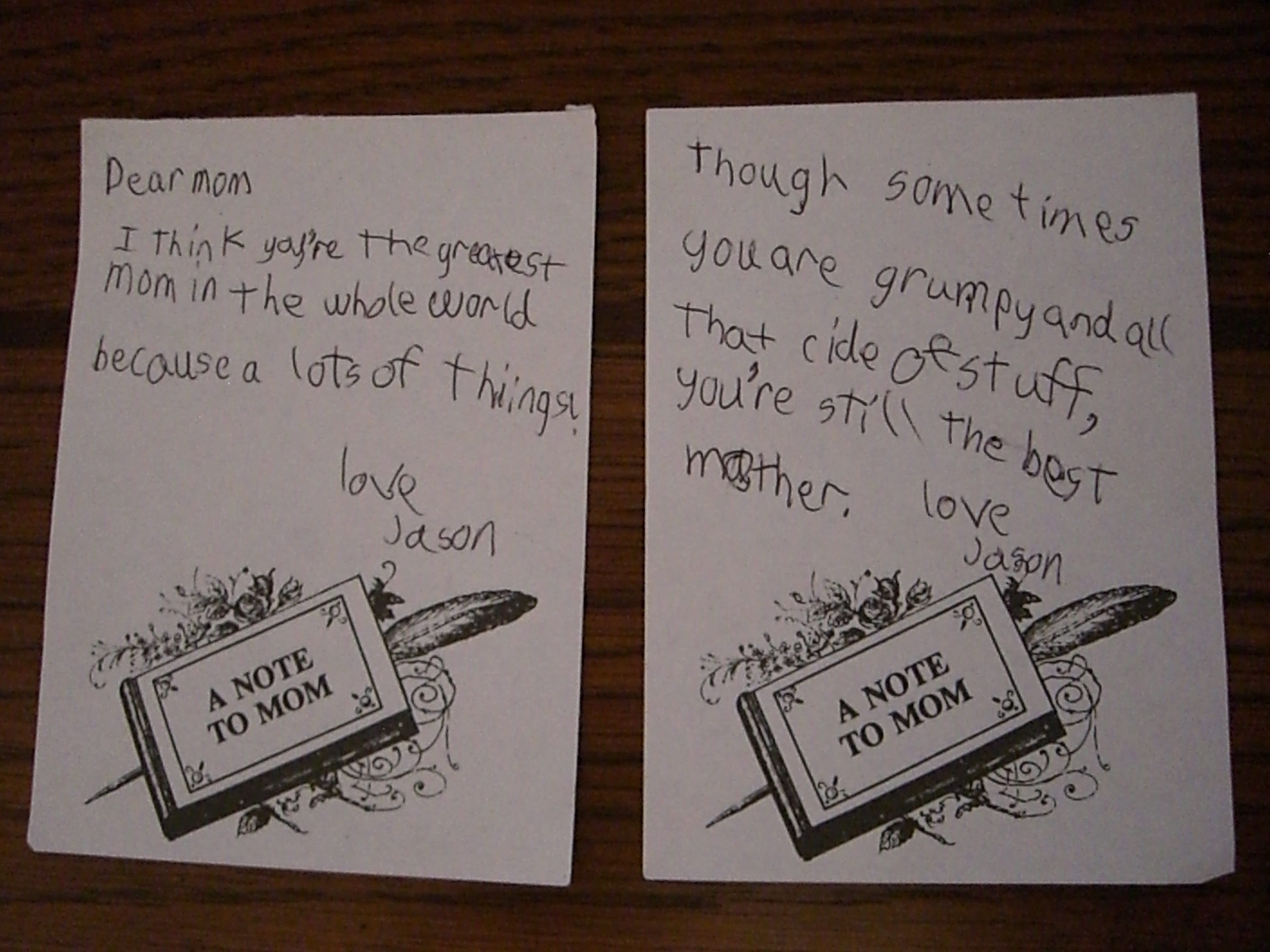
5. Finding old love notes, this one from one of my sons. 🙂

Have a great weekend!

Love notes….

I was going through a box of baby books and other keepsakes which had been put in the closet of the sewing room, intending to organize the items and put them in the cedar chest, when I came across this note from Jason from some years ago.

I’m glad my family loves me despite the grumpy cide (kind? side?) of stuff. 🙂

Book Reviews: By Searching: My Journey Through Doubt Into Faith and In the Arena

I first heard of Isobel Kuhn either in college or in the church where we were members when we first married, where there was an emphasis on reading missionary biographies. I’ve read her books By Searching: My Journey Through Doubt Into Faith and In the Arena (as well as her others) several times and know some parts of her story as well as my own. But I always enjoy reading them again, going over what’s familiar and being reminded of what I’d forgotten. Her name is well-known in some areas but not as well known, perhaps, as some of the house-hold names of classic missionary biographies, so I want to keep her story before people. She herself would probably be loathe to read that sentence, as she wouldn’t want her name to be promoted, but rather the God who worked in and through her. I feel the same, but by presenting her story I’m ultimately promoting His grace and work.
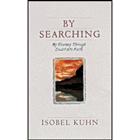
 In By Searching she shares how she came to know the Lord. She had been raised in a Christian home in Toronto, Canada, and when she went off to a secular college, her parents took care to drill her in arguments against modernism and other affronts to truth that she would encounter there. In one of her first classes, her professor asked if anyone believed in heaven and hell, in Genesis, etc. Only Isobel and one other student raised their hands. The professor didn’t present arguments against the Bible: he only said, “Oh, you just believe that because your papa and mama told you so.” On the way home from class, Isobel examined why she believed what she believed in light of what she was learning in her classes and concluded the professor was right: she only believed because of what her parents said. She determined to “accept no theories of life which [she] had not proved personally” (p. 7). She wouldn’t say there was no God, but rather that she didn’t know whether there was or not, and instead of seeking out the answer to such an important question, she determined that, since one can’t know, then it really didn’t matter what one did. So she gave up going to church so she could sleep in on Sunday to rest up after parties and dances through the week, she set aside Bible reading, and she gave herself to the activities she had always been taught were “worldly.”

At first everything was pleasant and fun, but she discovered before long that nothing satisfied. One night she was so low that she even contemplated taking her own life, but a groan from her father in his sleep in another room reminded her of the devastating effect that would have on her family. She prayed, “God, if there be a God, If You will prove to me that You are, and if You will give me peace, I will give you my whole life.”

The rest of the book tells how He answered that prayer. “To find that He is, this is the mere starting-point of our search. We are lured on to explore what He is, and that search is never finished, for it grows more thrilling the further one proceeds” (p. 94).
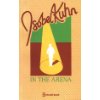
The title for In the Arena comes from the thought that God brings His children to various platforms, or arenas, to show Himself not only to them but to anyone observing. The book overlaps a bit at the beginning with parts of By Searching, but it’s done for the purpose of showing God in various arena experiences. One of the earliest was the staunch opposition of her mother to her going to the mission field, even though her mother was an earnest Christian and even a president of the Women’s Missionary Society. Her mother wanted her to marry well and move in “good society,” and the thought of her daughter depending on the charity of others was more than she could bear. I’ve always thought Isobel’s response to this was ideal, praying and seeking wise counsel rather than adamantly opposing her mother (though there might be times when a person has to obey God in opposition to a parent’s wishes, but when possible it should be handled gracefully.) God did turn her mother’s heart, and continued to manifest Himself to Isobel through Bible college, leading her to her husband, calling them to China, various problems, frustrations, losses, needs, rewarding work, up through facing cancer at the end of the book.

There is so much I’d love to share with you that the Lord spoke to me about in these books…but I’d end up copying most of them here if I shared everything. But here are a few of the most memorable.

On the ship on the way to China, a veteran missionary was meeting with the new girls going over, and one day she said, “Girls, when you get to China, all the scum of your nature will rise to the top.” Isobel “was shocked. Scum? Was that not a strong word? All of us were nice girls, were we not? Scum? A bit extravagant surely. And so I was totally unprepared for the revolt of the flesh which was waiting for me on China’s shores. The day was to come when on my knees in the Lord’s presence I had to say: ‘Lord, scum is the only word to describe me.'” (In the Arena, p. 37.) She then went on to explain some of those “revolts of the flesh” included, in going to a poor area, the realization that it costs to be clean, being unprepared for true poverty even though she had tried to prepare herself, fleas, lice, bedbugs and such, food that she couldn’t take at first, the tribespeople’s lack of understanding the “odd” desire for a bit of privacy sometimes, etc.

In By Searching, she tells how one by one God led her to give up various “worldly” practices, and I feel I should say here that a modern reader might disagree with whether some of them were worldly. But suffice it to say she felt led to lay them aside (“All things are lawful unto me, but all things are not expedient: all things are lawful for me, but I will not be brought under the power of any. All things are lawful for me, but all things are not expedient: all things are lawful for me, but all things edify not.’ I Corinthians 6:12; 10:23), and she didn’t miss any of them. The thing that most stood out to me was her calling them “extinguished tapers” in comparison to the “Rising Sun.” I’ve often thought the emphasis in combatting worldliness shouldn’t be so much in opposing some practices that people can argue over, but in emphasizing love for Him, for in that love lesser things will fall away in themselves.

In another vein, when I first started reading missionary biographies, I felt they were such godly Christians that I should do everything they did. You run into trouble after a while, though, as some of them might do different things! She mentions one of those extinguished tapers was voracious reading of romance novels, “not the modern sexy novels, but clean, exciting love stories” (By Searching, p. 47.) She had trouble putting them down and felt the untrue-to-life plots would make her discontent with everyday routine. One night after staying up until 1 a.m. reading an exciting novel, she then tried to read her Bible, and it seemed flat to her and the Lord seemed far away. She felt it was like filling up with candy and ice cream and spoiling her appetite for good nutrition. So for about fifteen years she gave up all fiction, but she came back to the classics when she had to spend a lot of time alone in China while her husband traveled, because they were wholesome and, since she had read them before, they didn’t have the grip on her that some other books might. I would say that it is right and noble to give up anything that you feel might hinder or hamper your love for the Lord, especially in light of the verses in Corinthians mentioned in the previous paragraph, and some people may feel led to give up some things that aren’t necessarily wrong in themselves but they feel the Lord would have them put aside for various reasons. But I obviously don’t feel the same way about fiction as she did, though I know some who do. I don’t think there was anything in the way of Christian fiction then (this would have been in the 1920s or 30s), and even ice cream and candy aren’t inherently sinful but rather need to be kept in moderation. There is some fiction, even Christian fiction, that I would avoid, and if I felt even the good kind was a hindrance in any way, I’d have to reexamine it, but I don’t feel led to toss it out as a genre.

Something that stood out to me in this reading that I hadn’t remembered from before was that for a time she suffered from stage fright in leading meetings with a group of working girls while waiting to go to China. She had had to give a speech at her college graduation and her mind went blank during it, and that seemed to set off a fear of being in front of people. At times while girls were setting up  for the meeting, she had to go to the bathroom for privacy and cry to the Lord for the nerve to do what she had to do. That touched me because I have done the same thing in bathrooms before meetings!

Another quote that stands out to me was in the context of seeking God’s guidance in whether to try to leave China when the Communists were taking over the area. A Bible verse on a calendar seemed to give direction one way, yet she knew not to take a verse at random out of context. She remarks “You only learn to discern His voice by experience. If you want to be able to hear it in the crises of life, you must first seek it in the common places of life” (In the Arena, p. 190).

I could go on, but suffice it to say that Isobel Kuhn’s life is an inspiration to me. She readily admits her flaws, but she steadfastly followed her Savior, and He worked mightily in and through her.

I have read all of her books, some of which tell more of the work in China. One, Green Leaf in Drought (linked to my review) tells of the last China Inland Missionaries to be released from China after the Communists took over. Another, Whom God Has Joined (also linked to my review), was originally titled One Vision Only and focuses on her marriage. It’s both poignant and humorous. One of my favorites is Second Mile People where she tells of some of the main people who influenced her life: I mentioned one in a previous post, A sense of Him. I want to read that one again soon. Also due to her writings I read two biographies of the man who influenced her for China, gave wise counsel in regard to her mother, and was her missions director in China, J. O. Fraser, in Mountain Rain by Eileen Crossman and Behind the Ranges by Geraldine Taylor. I’d love to read those again some time, too.

I hope you’ll explore some of her life and writings and will be as blessed by them as I have.

(This review will also be linked to Semicolon‘s Saturday Review of Books.)

Book Review: Boyhood and Beyond: Practical Wisdom for Becoming a Man

I’m not sure how long I’ve had Boyhood and Beyond: Practical Wisdom for Becoming a Man by Bob Schultz, but I rediscovered it while going through a box of books after our move. I just finished going through it with my 18 year-old-son. At first I thought it might be a little “young” for him, but it wasn’t. He seemed to get a lot out of it (I should have asked him his impressions before he left for school!) I would say the book would be useful for as young as older elementary-age boys through teens. The truths in it would be good for any young men.

At first I was a little miffed when Bob wrote in the introduction that he had never had sons but had been asked to write this book. I thought it would have been more effective coming from someone who had raised sons. But then I realized that even though I have never raised daughters, I do know a thing or two about being a woman. 🙂

I also wasn’t sure at first if it would work for our time together: Jesse and I usually go through some type of devotional book just before bedtime, and so I usually try to find things that are just a page or so long, because at that point in the night we don’t want to get out workbooks or study guides or wrestle through long, difficult chapters. I’m aiming more for just something to think about at bedtime. These chapters are about 5 pages long, but they don’t take long to read, and they are built around one thought or truth.

Bob covers a lot of ground: studying nature, admitting wrong, the Bible, industry versus sloth, leadership, forgiveness, “getting back up,” preparing for a wife and children, even “a time to kill” (the title of that one made me wary, but it was a good chapter). There are 31 chapters, each covering some direct aspect of manhood or relating some Bible truth to becoming a man. Each chapter begins with a quote and ends with a few questions.

I especially appreciated some of the thoughts in the chapter on authority. He had an aspect I had never heard put quite like this: “God does not give you authority so that you can force others to obey your wishes. Authority is the opportunity to use all your skill, all your resources, and all your wisdom to make those under you successful” (p. 26).

There were just a couple of places where I didn’t agree 100% at first. There is one section under Leadership where he describes a boy who doesn’t say thank you or hello whose parents make the excuse, “Joey is just being shy today.” Schultz goes on to say, “The truth is that Joey is just caught up in himself. Joey thinks too much of his own feelings and thoughts to consider someone else. Joey is simply selfish” (p. 111). It depends somewhat on age: I think this kind of reaction might be more natural in a toddler, though as parents we should work even then to teach them to say thank you, etc. There is a difference between rudeness and shyness, and I think a child does need to be taught to overcome his natural shyness to speak to people. At first reading I thought Schultz was equating shyness with selfishness, and my response, having battled painful shyness myself, was that it wasn’t sinful or selfish in itself, but it could easily be selfish if we constantly retreat from people or do let it hinder us from interacting like we should. But after going over the section again, I don’t think he is saying that shyness equals selfishness, but rather that it can cause us to react selfishly if we let it, and I’d agree with that. He goes on to illustrate how a selfish boy goes to a party thinking of himself (what’s to eat, will we do anything fun, will anyone talk to me) while a boy destined to be a leader will look for others who might need someone to talk to, ways to help, etc.

Another chapter on dealing with pain encourages that pain comes to everyone, but we don’t stop what we need to do over every little ache or twinge, whine about it or how hot it is, etc. Again, at first reading, I was a little afraid he was carrying it a bit too far into a macho disdain for doctors or issues that need attention or recuperation. I’ve known men and women who continued to come to work or church when staying home would have helped them get better sooner (and kept them from infecting others in some cases). But a closer look assures that he’s not advocating that kind of response.

Overall it is a good, balanced book with a lot of helpful advice and encouragement.

(This review will also be linked to Semicolon‘s Saturday Review of Books.)