Laudable Linkage

I’m finally caught up on my blog reading! For now. Here are some of the best posts discovered in the last week.

More Than Jumper Cable Christianity, HT to Challies. “We use jumper cables when our car’s battery is depleted, dead, and in need of a jump from another battery to get going. We connect jumper cables to another car, get some juice, and then go about our day and way. I fear far too many of us approach “abiding” in Christ this way. We do some Bible reading, read a devotional book, get some spiritual voltage and roll out.”

Feeding our Longing, HT to Challies. “Have you ever felt like there was more to life than this? Known some sense of longing for the future?”

How to Think About God Promoting His Own Glory, HT to Challies. “Many people misinterpret God’s character when looking at his demands and actions in history because they imagine what they would think of a fallen human being who did the things God has done, and they recoil. Failing to picture God as he is, they picture instead what they’re familiar with—a sinful, human tyrant imposing his preferred laws on people by force, destroying nations, or demanding worship.”

Units of Thought in Narrative Scripture. “One of the most important observations to make in a passage is the structure. And the way to observe structure is to first identify the parts of the passage (the units of thought) so that you can figure out how those parts relate to one another. In this post I’ll show you some of the ways to recognize the units of thought in a narrative.”

Flaunting Your Faithfulness: The Dangers of Conspicuous Christianity. “Conspicuous Christianity is the practice of seeking to appear more godly, not out of devotion to Christ or the love of others, but purely for the sake of winning the approval of other people. Conspicuous Christianity can come in many different forms, but it usually has some of the following characteristics . . .”

Keep Doing the Small Things, HT to Challies. “What if your greatest spiritual growth does not come through some cataclysmic event. What if the most important spiritual breakthroughs in your life are slow and methodical? Are you going to be OK with that?”

All My Not-Enoughness, HT to Challies. “I’m confronted with my not-enoughness a lot lately. As I get dressed, as I parent, as I’m faced with yet another important thing I’ve forgotten. When I try to write and the words won’t come. When I feel so tired that every inch of me longs to slink to the floor and crawl back into bed.”

The Hidden Super-Stars of Missions, HT to Challies. “I coach new missionaries as they prepare to go overseas. I’ve found I can often predict how quickly they’ll be able to raise support based on one crucial factor: whether they have an advocate who will come alongside them.”

Words That Lead, HT to Challies. Loved this post on the myths and responsibilities of writing.

On Reading Widely: Are You Stuck on One Shelf? “Root your thinking in the Word of God first, but be informed about the world around you. Resist being spoon fed by others. Do your own reading and research to form your own opinions.”

Friday’s Fave Five

Here we are at the start of a new month. The skies have been gloomy lately. Apparently we have six more weeks of winter coming, according to yesterday’s predictions. It would be easy to get in a funk. But counting our blessings is one way to help us see the good things we so easily overlook or forget. Some of us like to do this weekly with Susanne and friends at Living to Tell the Story. Please feel free to join in!

1. Pork loin on sale for $1.27 per pound. Jim cut it into managable pieces and cooked them in the sous vide cooker Jeremy made him, and then browned them to a nice finish. We tried to go back and buy more for the freezer, but the sale was only on for two days rather than the usual week. The loins were back up to $3.98 per pound. Next time, we’ll know to get more than one.

2. Family dinners. Since Jesse moved out, sometimes we see him or Jason’s family separately, but I love when we’re all together. It’s even better when Jeremy, my oldest, is in town. Since the pork tenderloin was a pretty big piece of meat, we invited the local ones over for dinner. Mittu made some amazing cinnamon rolls.

3. Cute *fluffy* dish towels. It’s hard to find fluffy dish towels these days. The flat ones get soaked with just a few uses. On one of my recent excursions, I found these (I think at Home Goods)–just right for this time of year!

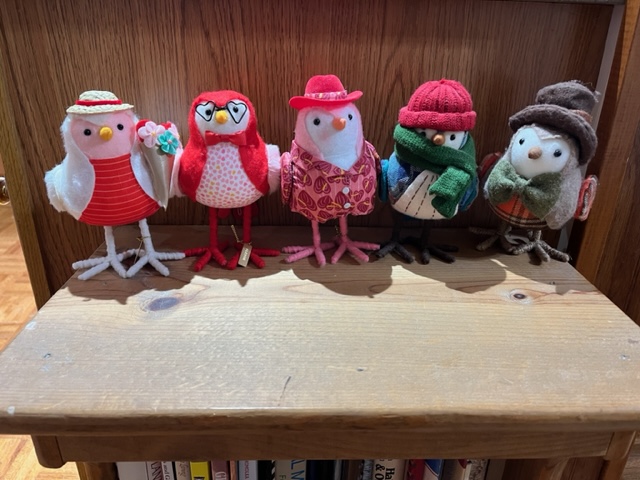
4. Adding to my bird collection. Some time ago, I bought one of these little birds at Target. I can’t remember which of the two on the right was my first. Then Timothy bought me the next two. I wanted to find one more to have two even pairs, but hadn’t seen any in a while. Then I recently saw a couple more. I couldn’t decide between the two on the left, so I got both. Now I am back to an uneven number, but that’s okay. I especially like the glasses on the one.

5. Family texts. we have a family group text not only for any important news, but also for fun things we want to share, pictures of home projects or dinner creations, Timothy’s sayings or activities or school work. I love that we can touch base throughout the week.

How was your week?

Writing for the Soul

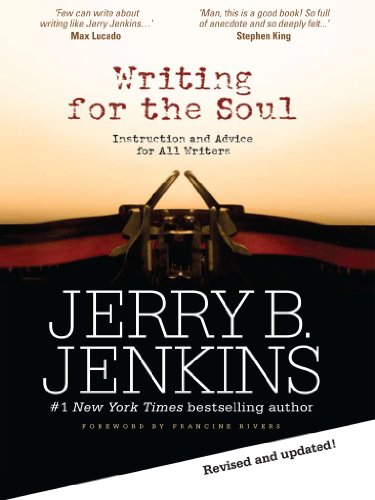
Writing for the Soul: Instruction and Advice from an Extraordinary Writing Life by Jerry B. Jenkins is part memoir as well as instruction, advice, and tips about writing. But even the biographical parts are written to share what he learned.

Jenkins started out working for a newspaper writing for the sports section while he was still in high school. His goal was to write for the Chicago Tribune until a message at camp about surrendering his all to the Lord led him to do just that. A job editing a Sunday School paper for Scripture Press under a tough editor caused him to hone his skills. An interview led to his first book, a biography. Many of his next books were biographies or “as told to” stories. Then he branched into fiction. Left Behind, the book for which he is probably most well known, was his 125th book.

In Writing for the Soul, Jenkins covers everything from his family policy, motives and tools for writing, discovering what to write and your audience, characters, plot, perspective, and much more. Some of the chapters end with a question and answer section. Interspersed through the chapters are smaller sections covering topics ranging from working with celebrities to the need for humility to internal dialogue of characters. In a paper book, these might have been sidebars: in the Kindle version I read, they were paragraphs withing the chapter but set off by dividing lines.

In-between chapters, Jenkins shares experiences with some of the people whose biographies he has written, from Meadowlark Lemon and other sports figures to musician B. J. Thomas to Billy Graham.

I especially appreciated the sections on making inspirational writing not sound “preachy.”

As you can imagine, I have myriads of quotations marked in this book. Just a few:

Know where your audience is coming from, imagine someone you know or know of who fits in that audience, and pretend you’re writing to that person alone (p. 5, Kindle version).

What’s your passion? Your strength? What field do you really know? Write about it. Fashion a short story, write a poem, interview a leader in the field, or work on a novel. Put yourself and your interests into it (p. 11).

Big doors turn on small hinges (p. 13).

The most attractive quality in a person is humility. Sometimes money and fame will come whether or not you expect or seek them. But if you become enamored with the trappings of success, they become your passion. You need to return to your first love . . . Don’t let success or pressure change you. If you become a success, stick with what got you there (p. 38).

Choice words in precise order bear power unmatched by amplified images and sound and technical magic (p. 54).

Don’t confuse inspiration with initiative. Initiative solves your procrastination problem and pulls you through writer’s block. Inspiration gives you something worth writing about (p. 57).

Variety still keeps the batteries fresh (p. 71).

The stuff that comes easy takes the most rewriting. And the stuff that comes hard reads the easiest (p. 194).

This book was first published in 2006, and my copy was updated in 2012. Just a couple of places seem a little out of date, like working with cassette tapes for interviews (unless people still do that. I’d assume most recording is done digitally now).

He also doesn’t have much esteem for self-published books, thinking the goal of self-publishing is to be picked up by a major publisher. But self-publishing has increased exponentially in the last few years and garners much more respect now than when the first self-published books came across as “homemade” and unprofessional. I wonder if his views have changed on that.

But the majority of his advice is timeless, and I gained much from it.

You can also find Jerry Jenkins’ advice at his web site and blog.

(This book would work for either the memoir or arts category of the Nonfiction Reader Challenge.)

January Reflections

I used to dislike January because all the excitement of Christmas was over, all the decorations and lights were taken down, the weather was cold, the skies were overcast. But in the last few years, I’ve appreciated January as a restful month after the busyness of December.

This January has not been as restful as usual. But keeping busy helps keep my mind off winter. One thing that encourages me the most is the knowledge that we’ve been getting a little more daylight every day since the winter equinox.

I shared on some Fridays Fave Five posts that we went with Jason, Mittu, and Timothy to a car show and then with Jesse to a Knoxville Symphony Orchestra performance of the music from Jurassic Park—while the movie played.

One not-as-fun outing was a visit to the dentist for a filling, only to discover that the damage to the tooth was more extensive than originally thought and will require more work. I had to take antibiotics for an infection in the tooth and still need to call the dentist back to discuss the next steps. As much as I don’t want to deal with this, it won’t go away until I do.

I’ve mentioned here and there that we’ve been visiting churches in search of a new church home. We loved the folks at our last church, but had a difference of opinion over a doctrinal distinction that we didn’t hold to. We still love them and wish them well, but just felt we were going a different direction.

It’s a little unsettling not to have a church home. Much of our conversation the last several months has been discussing and weighing the different places we’ve visited. One good thing, though, is finding small groups of believers here and there that love God.

I usually share the cards I’ve made each month, but there were none this time.

And I don’t have much worth mentioning in the watching/listening category except the new season of All Creatures Great and Small on PBS.

So, on to books and blog posts!

Reading

Since last time, I have finished (titles link to my reviews):

I’m currently reading:

  • Be Rich (Ephesians): Gaining the Things That Money Can’t Buy by Warren W. Wiersbe
  • Writing for the Soul: Instruction and Advice from an Extraordinary Writing Life by Jerry B. Jenkins
  • All That’s Good by Hannah Anderson
  • The Fence My Father Built by Linda S. Clare (audiobook). Not sure I’ll be able to recommend this as it seems to promote a syncretism between trusting “Jesus and all the angels” and one’s Native American ancestors. But I’ll see how it ends up.
  • The Space Between Words by Michele Phoenix

Blogging

Besides the weekly Friday Fave Fives, Saturday Laudable Linkage, and book reviews, I’ve posted these since last time:

  • Let Not Your Hearts Be Troubled, drawing on Jesus’ counsel to His disciples just before He was arrested.
  • Everyday Hallelujahs. “But worship isn’t just for Sundays or public gatherings. We don’t acknowledge God on Sundays and then go back to our regular work without giving Him any more thought. We can worship Him in everything we do because He is with us and has given us all we have.”
  • What Does God Want Us to Continue? We often start January with new goals. But some things we should continue from year to year.
  • Be Your Own Unique Style of Grandparent. We probably don’t compare ourselves to other grandparents as we did with other parents. Still, it’s good to know there are any number of ways to grandparent. But our main desire is that “through our love, our lives, our testimony, and our words, we can have a great influence on them for God.”
  • How Churches Can Help Visitors

Writing

I’ve finally made a dent in my hardest chapter! The problem is having more information than one chapter can contain and finding the best way to present it so the reader isn’t bogged down. I’m motivated because my turn to present to our critique group is coming up in March, and I’d really like to have made a good headway on this so I can get the group’s feedback.

Though January has been a pleasant month, I am happy for it to end. We look forward to Valentine’s Day, something we do up big with the family, and my daughter-in-law’s birthday next month. And as of this writing, we’re only 48 days away from spring!

How Churches Can Help Visitors

In our four decades of marriage, we’ve been a member of six different churches and visited several others. Most of the time, a change in church has been made necessary due to my husband’s job sending us to a new state. A couple of times, we left for other reasons, but we don’t take leaving a church lightly. We like to find a church home and stay there as long as possible.

It’s amazing how intimidating it is to visit a new church, even for seasoned church attenders. I’m not sure why. We don’t expect anyone to throw stones or tomatoes or snub us. Though church styles vary, we have an idea what to expect. If it’s so unnerving for us to visit a new church, unchurched people are probably even more uncomfortable.

We’re currently searching for a new church home. I wanted to share just a few “stray thoughts” about our church visiting experiences while they are fresh in my mind.

First of all, I feel a church website is absolutely essential. In our case, we attend Baptist churches. If you search online for Baptist churches in Knoxville, you’ll find multiple pages of listings. I found one directory listing 25, but there are more. They all have basically the same statement of faith, so we’d agree on the most important core beliefs, like Jesus being the Son of God, salvation by grace through faith, the inspiration of the Bible, etc.

But churches with the same doctrinal base can vary greatly in personality and in secondary issues, like the following:

Traditional vs. contemporary style of service and music
“King James Only” or other Bible versions
Casual or formal
Continuationist or cessationist (referring to certain gifts of the Holy Spirit)
Reformed or not
Age-segregated or family-integrated
Songleader and choir vs. worship team
Premillennial, post-millennial, amillennial (referring to “end times”)

No one’s salvation is going to be in question on either side of these secondary issues. And there are some categories that we would be fine with on either side, though we might have a preference for one or the other. But others we feel more strongly about. We can grant that other believers have freedom of conscience to do something differently than we would, but we would have a hard time worshiping in a place where we disagreed with a lot.

So if we were to try to visit each of the list of 25 churches just once, that would take us 25 weeks—almost half a year. Normally we like to visit more than once, unless there’s something glaringly obvious during the first visit that would make us shy away. So we could spend more than a year visiting around. We’d like to find a church home in much less time.

It’s pretty standard now to look up a church’s web site before visiting. It’s helpful if the church’s site can tell us as much about the church as possible.

One church’s site said something like, “We don’t like labels. We just like to talk about Jesus.”

My husband’s father worked in a grocery store. He was allowed to bring home canned goods that had lost their labels, because customers would not buy them. If my mother-in-law was looking for tomato sauce, she might open cans of peaches, green beans, or SpaghettiOs before finding what she needed.

So labels do help. We would assume most Christian churches like to talk about Jesus. Anything they can share about the distinctives of their church will help visitors know if they want to investigate further or not. As my husband said, they might as well tell us what they are, because we’re going to find out eventually anyway. Some people are going to be looking for certain particulars while others are trying to avoid them. It saves everyone time if some of these things are spelled out up front.

Besides the statement of faith on a church website, we like to see times of services, some information about the pastor(s), a place to access past sermons or full church services (audio or video), information about the various ministries of the church. Some church sites have a “What to expect” or “How to prepare for your visit” page that might include style of dress (though most of them say anything is fine within reason), which door to go to, etc.

If a church has a Facebook page, it helps if the page contains more than just location and times of services. Many churches will put their services on Facebook, which helps. Some will put announcements or reminders. Some will have photos from recent events. All of that helps give potential visitors a feel for the church. Some churches will have a public Facebook page for potential visitors and a separate private page for members where they can share prayer requests or information that is not for the general public.

Then, once people do actually come to your church, appropriate signage is helpful, especially if you have multiple buildings or doors. Barring signs—or maybe in addition to signs—it’s nice to have someone available to answer questions about where the nursery, bathrooms, etc., are.

When we’ve been members, greeting new people has been one of the hardest things to do. But it’s essential. Once I get started, I am usually fine.

I could tell you multiple stories of odd greeting situations in churches, but that would take too long. I’ll share just one. In one church, no one spoke to us or even looked at us until their designated hand-shaking time (what my daughter-in-law calls “howdy time”). And then it was like some weird science fiction show where everyone came alive and became friendly while the music played. Then when the music stopped, everyone closed up again, not looking at or talking with us any more.

Some churches have a designated greeter at the door. Though that’s nice, those people shouldn’t be the only ones greeting newcomers.

On the other extreme, I read of a church that stationed an official greeter every 25 feet. That’s going too far the other way, unless you have a humongous church building.

It’s best just to sincerely and warmly say hello to people you don’t recognize, maybe “We’re so glad to have you.” If there is time, you could ask whether they just moved to the area, where they moved from, etc.

In our most recent visits, almost every church has had an older lady who has greeted us in just such a way, going beyond the perfunctory and obligatory greeting. They’ve been so genuinely interested and kind that I have felt, “If we stay here, she’s one I want to get to know.” I wanted to say that to encourage older people in general that, even though you may not be able to do all you once did, this seemingly minor act carries great weight.

Most visitors do not want to be made a spectacle or have attention drawn to themselves. Some churches will have new people stand up—one had visitors stay seated while everyone else stood for the hand-shaking time. Both scenarios are uncomfortable.

Some churches have had gift bags for visitors. I appreciate the thought, but gifts are not really necessary. One church had plastic cups that had the church’s name on the side. Because this church was a little aggressive about handing out gift bags, we ended up with six of those—that none of us wanted. They tried to give us more the next week, and we had to gently but firmly say no, thank you. Another had mugs with the church name, but also filled them with candy. A lot of churches will have pens with their name on the side that they hand out along with visitor’s cards to full out. The pens are a nice small reminder of the church. The one gift bag I most appreciated was from a particularly large church and had brochures about their various church ministries–what they did, when and where they met, who to contact for more information. And they had a few miniature candy bars, a plus. 🙂

Then during the church service, it helps to have what is expected made very clear–when to stand, join in the singing, etc. No one wants to stand out by doing the wrong thing at the wrong time. One church we visited was the first I’d attended with a worship team on stage. They had a choir as well. Sometimes everyone on stage was singing, sometimes just the small team in front. But no one told the congregation when it was their turn. I tried to figure out when I was supposed to sing by watching what others in the congregation did, but some sang and some didn’t. So I still didn’t know what to do. I ended up singing along very softly so I wouldn’t be noticed either way.

Sometimes you are as friendly as you know how to be in church, you’ve extended yourself, you’ve bent over backwards to meet everyone’s needs and wants, the singing has been great, the message has been biblically based and Spirit-filled–and visitors still don’t return. Have all your efforts been for naught? Have you failed?

No. You’ve ministered to people as unto the Lord. That “counts,” whether they become part of your church or not. Sometimes when we have chosen one church over another, it hasn’t been because of anything wrong with the one we didn’t choose. Sometimes there’s something indefinable about why we feel inclined more toward one church. But we appreciate the ways people have ministered to us when we’ve visited, and we hope to extend the same grace when we find a church home.

What are your thoughts? Are there other ways to make church visitors feel welcome—or at least less intimidated?

(I often link up with some of these bloggers.)

Laudable Linkage

Though still not caught up with the blogs I usually read, I got to a lot of them this week—as you can tell by my long list of links to share. Perhaps one or two will be as thought-provoking to you as they were to me.

January’s for Reflecting, not Resolving, HT to Challies. “Maybe part of the reason why so many resolutions fail by February is that they were early. Maybe the resolutions weren’t wrong; they were just underdeveloped. Maybe, they needed an extra month or two in the oven.”

Holy Prayers from Rocking Chairs, HT to the Story Warren. A lovely poem about mothers’ middle of the night sessions.

A Legacy of Love: Passing Down the Gift of Spiritual Discipline to Your Children. “Because of the legacy my mom passed to me, I have a vision that goes beyond serenity and candles. I want my children to see a mother desperate for Jesus, willing to do whatever it takes to be at His feet.”

Make Christianity Hard Again, HT to Challies. “The way of Jesus is the way of the cross. So don’t talk about it like we just need to be nice people. Here are three commands that have challenged me, with practical trails we can follow.”

I Must Decrease” . . . But How? HT to Challies. “It’s pretty clear: the world’s loud, incessant voice tells me that in order to be happy, I need to spend more of my time, money, and attention on myself. You’ve probably heard the same message about your need for this, as well.”

Wasn’t My Body, but It Was My Baby, HT to Challies. “Abortion isn’t just about a mother’s choice. It’s also about a father’s responsibility. Perpetuating the lie that men need to stay out of the abortion debate isn’t just untrue—it’s catastrophic for the generations to come.”

Don’t Women Need Access to Abortion for Rape? “‘You don’t have the right to tell my fourteen-year-old daughter she has to carry her rapist’s baby.’ That’s what Joe Rogan, the most popular podcaster in the world, recently argued when he interviewed Seth Dillon, owner and CEO of the satire website The Babylon Bee. How would you respond to that argument? Here are three arguments to consider.”

The Murderer Who Crushed a Worm. “We get hard through the steps of an unperceived process.” This is a different kind of hardness from the article above.

C. S. Lewis an Mrs. Moore: Relationship of Sin or Sanctification? HT to Challies. “Every biographer of C. S. Lewis must face ‘the Mrs. Moore question’ and decide what to make of the relationship the beloved writer had with a woman more than 25 years his senior who remained a major part of his life from the time he returned from the trenches of the Great War until her death in 1951.” I especially like the concluding paragraphs of how God uses difficult people in our lives.

God Plans Your Stops, HT to Challies. “If God plans our steps, it means He plans our stops as well. And if you sit with it for a minute, there’s comfort in that.”

Unraveling the Riddle of Rejoicing Always, HT to Challies. “Several years ago, while meditating on Philippians 4:4, the Lord helped me glimpse why it makes sense to always rejoice—even in hard times—and how it is possible to give thanks in everything.”

A Family Vacation, a Broken Transmission, and a God Who Is With Us, HT to Challies. A neat story about God’s provision in a crisis.

Caregiving As a Calling and Ministry, HT to Challies. “At the time I didn’t see it as a ministry, and I didn’t understand that I had been called. I saw caregiving as a giant disruption to everything in my life and a burden that was forcing me to ‘step out of ministry’ to do this caregiving thing that I hadn’t signed up for. Over time, God has shown me  that caregiving wasn’t a disruption; it was God’s plan for me all along.”

How Should I Dispose of an Old Bible, HT to Challies. Though the sacredness of the Bible comes from what it says and Who gave it to us, not the pages and ink, we still want to treat it with respect. This has a good suggestion.

Friday’s Fave Five

Here we are at the last Friday of January. We’re 1/12 of the way through 2023! It’s nice to pause the swiftness of time passing by to reflect on God’s gifts and blessings of the week with Susanne and friends at Living to Tell the Story.

1. Lunch with Melanie is a highlight whenever we can meet to do so. I always enjoy our fellowship.

2. Cracker Barrel is one of my favorite restaurants, but my family isn’t crazy about it. Plus they have little to offer the gluten-free members, and I wouldn’t trust any of their food not to be cross-contaminated with gluten. But that’s where Melanie and I often meet. And as usual, I took home a slice of the Chocolate Coca-Cola Cake, which I divide over two days.

3. A long afternoon of errand-running was tiring and didn’t result in finding what I was looking for. But it was nice to push through and get everything done so I could stay home the rest of the week. And at least I can say I checked at various stores, so I can now eliminate them as places to look.

4. Perspective. We’ve been visiting churches, the most recent one just a few minutes from our house. I was hoping that this might be “the one” rather than another we visited that was almost 25 minutes away. Then I read the prayer letter of friends who minister in Papua New Guinea. They were rejoicing that a recent trip to a new area they are trying to reach for the Lord took “only about 1.5 hours of backpacking compared to the usual 4.5 hours” due to some “bush bridges” that the people had built.

5. Live-streaming of funeral services. I mentioned a few months ago that Debbie Talbert, who ministered with her husband in Alberta, had pancreatic cancer. She used to participate in FFF at a blog called Purple Grandma (which is no longer online). We knew Debbie and her husband in early married days as we attended the same church and went to the same college. We had lost touch over the years and then reconnected through our blogs. It was a blessing to be able to watch the funeral service online.

Bonus: My son and daughter-in-law had us over for dinner and games last Saturday, which we always enjoy.

How was your week?

The Pilgrim’s Regress

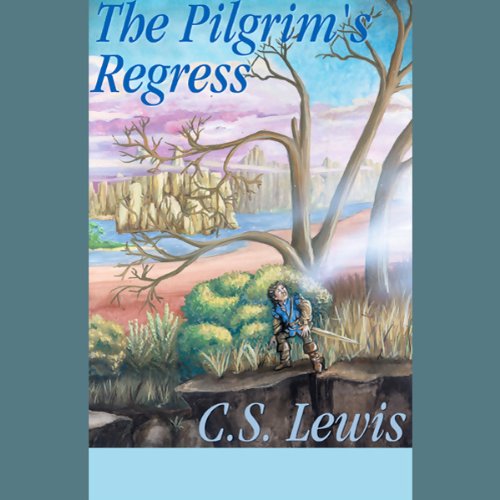
The Pilgrim’s Regress was the first fiction book written by C. S. Lewis after his conversion to Christianity. Lewis’ book is not a retelling of Bunyan’s Pilgrim’s Progress: Lewis just borrows the allegorical format.

The book’s protagonist is John, a young man from a land called Puritania. The country is ruled over by a Landlord who is reportedly very good and kind but who will throw anyone who disobeys him into a black hole.

One day John catches a glimpse of a beautiful island through a window. The sight, sounds, and smells raise an ineffable longing to see the island again and even visit it.

John journeys towards the island, but instead finds different philosophers and detractors. He meets a “brown girl,” who assures him she’s what he really wanted. But she represents lust, and John eventually finds he’s dissatisfied with her. (This article makes a good case that Lewis was neither racist or misogynistic by designating lust as a brown girl).

John continues on and meets Mr. Enlightenment, the Spirit of the Age, Mother Kirk, Mr. Sensible, Mr. Neo-Angluar, Mr. Humanist, History, Reason, and others. Some say his island is an illusion. Others offers various suggestions for how to get there. Some argue for or against the against the existence of the Landlord. History tells John the landlord sent truths about himself in the form of various pictures. But many interpreted the pictures the wrong way.

Finally John understands the way to the island. Wikipedia says, “The Regress portion of the title now comes into play as John journeys back home and now sees everything in a new light and sees how the road he took is a knife’s edge between Heaven and Hell.”

In a preface to the third edition of the book, written ten years after it was originally published, Lewis apologized for the book. Although he hadn’t intended the book to be strictly autobiographical, he hadn’t realized that not everyone’s journey was quite like his.

On the intellectual side my own progress had been from ‘popular realism’ to Philosophical Idealism; from Idealism to Pantheism; from Pantheism to Theism; and from Theism to Christianity. I still think this a very natural road, but I now know that it is a road very rarely trodden. In the early thirties I did not know this. If I had had any notion of my own isolation, I should either have kept silent about my journey or else endeavoured to describe it with more consideration for the reader’s difficulties.

He says that in the new edition (online here), he added headlines before the different sections. He apologizes for doing so, but the headlines would have been a great help if I had read rather than listened to the book.

I think I would have gotten more out of the book of I had read an annotated edition, which explained more about the different references and philosophies (one GoodReads reviewer recommended C. S. Lewis and Narnia for Dummies as an aide). But I got the gist of the story and understood most of the discussions between characters. To me, this book illustrates what Lewis said in Mere Christianity:

If I find in myself a desire which no experience in this world can satisfy, the most probable explanation is that I was made for another world. If none of my earthly pleasures satisfy it, that does not prove that the universe is a fraud. Probably earthly pleasures were never meant to satisfy it, but only to arouse it, to suggest the real thing.

Be Your Own Unique Style of Grandparent

Be Your Own Unique Style of Grandparent

I’ve only been a grandparent for eight and a half years, and I only have one grandchild. So I am not an expert. I’m still learning how best to navigate this phase of life.

But one piece of advice I read in a forgotten source has stayed with me. The writer had a granddaughter whose other, wealthier grandmother loved to take the child shopping.

The writer’s budget was a little tighter, and she couldn’t afford many shopping forays. So she faced a dilemma when her granddaughter wanted to be taken shopping. This writer’s solution was to say, “Your other grandmother is the shopping grandma. I’m the baking grandma.” She and her granddaughter spent fun time in the kitchen.

I thought that was such a neat idea. We don’t have to compete with the child’s other grandparents or even parents. We don’t have to follow Pinterest or Instagram influencers, though we can learn from them. We can grandparent in our own unique style and way.

And we don’t even need to specialize in one area. I had hoped to be the reading grandma, but my grandson isn’t particularly interested in reading when he is here. Though we can share our interests, it’s best not to push them. It’s better to share their interests.

We’ve done a few crafty things together, colored, played games, baked cookies. But mostly I just want to be available to him, to listen to him, to let him know that his grandfather and I love him very much.

I only had two grandparents growing up. My father’s father died before I was born. My mother’s mother passed away when I was four, so I have only hazy memories of her.

My mother’s father was a big tease and had a distinctive laugh. My mom would sometimes make us kids coffee–really just a lot of sugar and milk with just a little coffee. But we felt so grown up when we drank it. When my grandfather saw us drinking our special brew, he would tease, “If you drink coffee, hair will grow on your chest.” My grandfather had a lot of “If-then” predictions, and I knew he was teasing–but I still checked sometimes just to be sure.

We lived with him for a few years when I was young. For a while, he drove me to a friend’s house in the mornings so I could ride to school with them (I assume everyone else’s work schedules didn’t allow them to take me). It seemed like every time we were in the car together, two songs always came on the radio: “Mairzy Doats” and “Mr. Lonely.” I can’t think of those songs without thinking of my grandfather.

When we moved to another city, he would come to visit and always brought Dunkin Donuts. No matter when I woke up in the mornings, I could hear him and my mom talking in the kitchen over a cup of coffee.

He married again, and I don’t remember much about his second wife. Not long after they married, she developed dementia. She was very dependent on him. Friends urged him to place her in what we would now call respite care so that he could go hunting with them, an activity he loved. When he came back, the facility she was in had her tied down in a chair (I assume because she tried to wander off, looking for him. Restraints like this are not allowed now). He said, “Never again,” brought her home, and cared for her the rest of his life. When she died, he lamented to my mom that he didn’t know why the good Lord gave him two good women and then took them away.

He was also heavily involved in the Boy Scouts, and we used to visit their Jamboree every year and see him.

My father’s mother had kids in Texas, Louisiana, and Alabama, and she divided her time among them. The “Galloping Gourmet” was a thing then, and we called my grandmother the “galloping grandma” due to her many travels around the Gulf coast.

For a couple of summers, I got to travel with her to visit relatives. I enjoyed the time with her as well as getting to know aunts and uncles and cousins I didn’t see often otherwise.

When she lived nearby, she often had me over to spend the night. She loved to read, and one of my favorite memories is of us sitting up in separate twin beds in her room, reading before bedtime.

She loved to crochet. Almost any time she was sitting still, she was working on a crochet project. I especially liked the trim she crocheted around doilies and handkerchiefs. I never did learn crochet, but I like to think my love of crafts and needle arts was inspired by her. She and my aunt also made clothes for me in my childhood.

I don’t recall that she had a garden, but her sister, my aunt Jewel, had a large one. They loved fresh vegetables.

When my grandmother was away, she would write me letters. My first forays into writing consisted of composing letters to her. We wrote back and forth all her life.

She could be a little harsh in her discipline. But we knew that she loved us.

I don’t remember either of my grandparents giving me direct spiritual instruction. But I knew they both loved God in their own way. My grandfather and aunt took me to the Lutheran church in my earliest years, and I think he was responsible for my attending a Lutheran school in first and second grade. When I was with my grandmother, it was understood that we’d be attending her Baptist church. Their faith shaped their morals, values, and conversation.

I look forward to making memories with my grandson, Timothy. But most of all, I hope I can have the same influence as the biblical Timothy’s grandmother had on him. “I am reminded of your sincere faith, a faith that dwelt first in your grandmother Lois and your mother Eunice and now, I am sure, dwells in you as well” (2 Timothy 1:5). Later, Paul admonished Timothy to “continue in what you have learned and have firmly believed, knowing from whom you learned it and how from childhood you have been acquainted with the sacred writings, which are able to make you wise for salvation through faith in Christ Jesus” (2 Timothy 3:14-15).

God gives grandparents responsibility to pass his truth along to the next generation:

Only take care, and keep your soul diligently, lest you forget the things that your eyes have seen, and lest they depart from your heart all the days of your life. Make them known to your children and your children’s children (Deuteronomy 4:9).

One generation shall commend your works to another,
    and shall declare your mighty acts.
On the glorious splendor of your majesty,
    and on your wondrous works, I will meditate.
They shall speak of the might of your awesome deeds,
    and I will declare your greatness.
They shall pour forth the fame of your abundant goodness
    and shall sing aloud of your righteousness (Psalm 145:4-7).

They say that most of what we teach our children is “caught” rather than “taught.” I think that’s probably especially true of grandchildren. We won’t have as much directly instructive time with them as their parents do. But hopefully, through our love, our lives, our testimony, and our words, we can have a great influence on them for God. That’s my prayer.

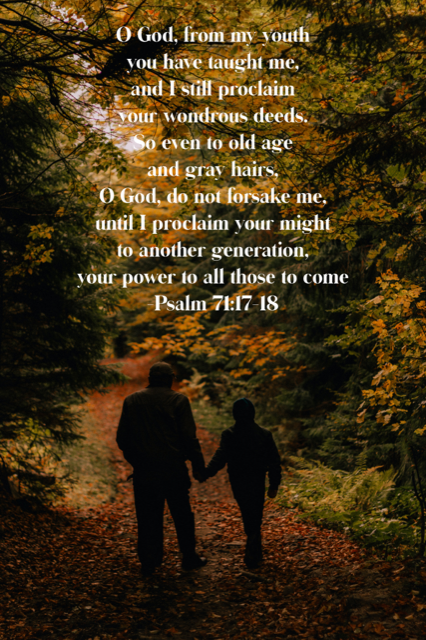
O God, from my youth you have taught me,
    and I still proclaim your wondrous deeds.
So even to old age and gray hairs,
    O God, do not forsake me,
until I proclaim your might to another generation,
    your power to all those to come (Psalm 71:17-18).

Psalm 71:17-18

(I often link up with some of these bloggers.)

Laudable Linkage

Hope you’re having a fine weekend! Here are some thought-provoking reads discovered this week.

What We Need More Than the Mountaintop Experience with God. “The apostle Peter heard a voice from heaven during his mountaintop experience. And he concluded that the spiritual formation of Christ-followers relies not on repeating such an experience but on something even more certain.”

Can Cancer Be God’s Servant? What I Saw in My Wife’s Last Four Years by Randy Alcorn, HT to Challies. “By saying sickness comes only from Satan and the fall, not from God, we disconnect Him from our suffering and His deeper purposes. God is sovereign. He never permits or uses evil arbitrarily; everything He does flows from His wisdom and ultimately serves both His holiness and love.”

The Crushing Obligation to Keep Doing More and More, HT to Challies. This is so good. “I think most Christians hear these urgent calls to do more (or feel them internally already) and learn to live with a low-level guilt that comes from not doing enough. We know we can always pray more and give more and evangelize more, so we get used to living in a state of mild disappointment with ourselves. That’s not how the apostle Paul lived.”

When Praying Hurts: How to Go to God in Suffering, HT to Challies. “My desire to pray when I’m suffering can swing wildly in a single day — and sometimes within the hour. Through the severe trials in my life — losing a child, having a debilitating disease, losing my marriage — prayer has been both arduous and exhilarating. Exhausting work and energizing delight.”

Rethink Female Bravery, HT to Challies. “Why is physical dominance our measure for brave women? Why is heroism reserved for the person in charge—or the person with the weapon? Why aren’t there more stories that honor daring in the ordinary?”

An Anchor For Our Tongues, HT to Challies. “Preachers and authors do it all the time. They quote the English definition of a word or refer to its linguistic roots as a way to ground their argument, to establish the meaning of a term or concept. Then they move on, seemingly convinced that they have offered up enough evidence for their audience to trust that they are indeed communicating the true sense of that term. What is not often realized is that, for the Christian, this kind of appeal to the dictionary or history is actually an inadequate grounding.”

In Praise of Stuff, HT to Samuel James, resonates with me. It doesn’t advocate for materialism, but argues that “Experiences matter more than things” is not always right. “There are people whose long-finished lives are only dimly known to me, but whom I meet and cherish every year in the physical memorabilia they handed down: great grandmother’s silver, pottery made by my grandfather’s sister. Even ridiculous kitsch can gain a new dignity this way. Each Thanksgiving I greet a grinning plastic monkey that was my great Aunt Gertrude’s. I would miss him greatly if he were ever gone.”

Six Questions You Should Ask at the Beginning of 2023, HT to Challies. I don’t think we’re too far into the new year to consider these. “What I started doing a couple of years ago was to abandon the idea of New Year’s resolutions and instead start thinking about what I wanted to focus on for the next year in early December. Then I started implementing changes that would make progress on my goals before the new year begins. What this allowed me to do was to get out of the habit of thinking the new year would magically change me into a new person.”

Start the Year Small: Wisdom for Setting New Goals, HT to Challies. “Our flesh keeps us on the couch, waiting for opportunities that appear to promise instant and immense impact. Those who constantly dream of the big victory often overlook the small decisions required to get there.”

The Pro-Life Cause Nobody Marches For. “Ultimately, I had to reckon with what it meant to believe that all people have inherent, God-given worth when everything we give value to is stripped away. It has been a long and painful process, and a sanctifying one—the kind that teaches you to view others who are struggling to understand the size and significance of human dignity through the eyes of tender compassion.”