A Book About Death and Dying That Is Not Morbid

Why would anyone read a book on dying if death is not imminent for oneself or loved ones?

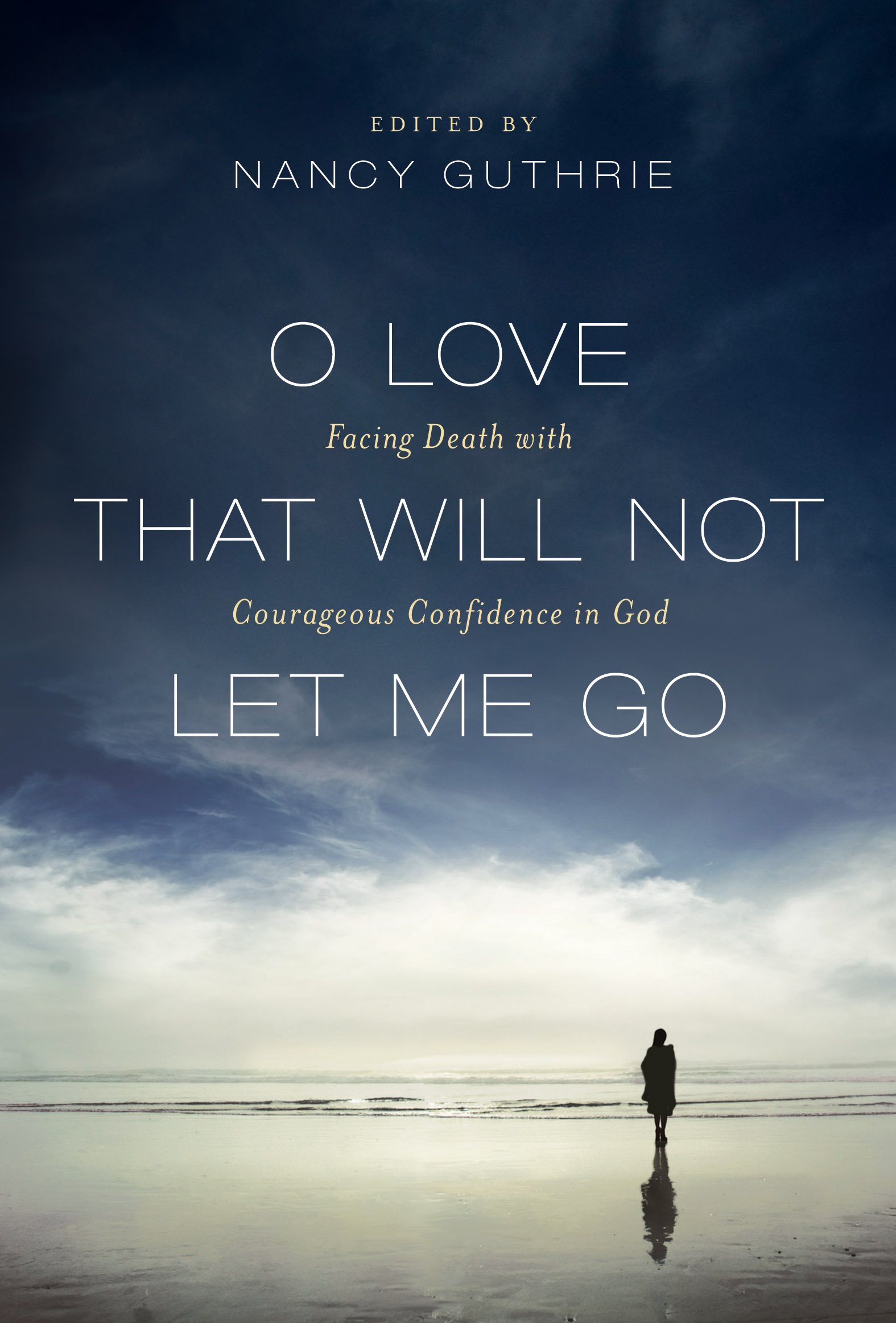
Well, in my case, I saw a few quotes that I liked from O Love That Will not Let Me Go: Facing Death with Courageous Confidence, complied by Nancy Guthrie, in Aging with Grace. I’ve read and enjoyed some of Nancy’s other compilations (Come Thou Long Expected Jesus about Christmas and Jesus, Keep Me Near the Cross about Good Friday and Easter). I had not known about this one, but when I did, I wanted to get it, too.

And then, I’ve always dreaded death, even as a Christian. I knew heaven was something to look forward to, with the presence of Jesus and the absence of sin, sickness, sorrow, and crying. I assumed that God would give me grace to die when the time came, and I just tried not to think about it much. So I thought this book might provide some help in that regard.

As with Nancy’s other compilations, this book is made up of excerpts from the writings or sermons of Christians as far back as the Puritans and as modern as Joni Eareckson Tada, John Piper, and Randy Alcorn.

The book is divided into four parts:

  • A Reality That Will Not Be Denied
  • An Aim That Keeps Me Pressing On
  • A Hope That Saves Me From Despair
  • A Future That Will Not Disappoint

Ecclesiastes reminds us, “It is better to go to the house of mourning than to go to the house of feasting, for this is the end of all mankind, and the living will lay it to heart. . . . The heart of the wise is in the house of mourning, but the heart of fools is in the house of mirth” (7:2, 4).

J. I Packer writes:

In every century until our own, Christians saw this life as preparation for eternity. Medievals, Puritans, and later evangelicals thought and wrote much about the art of dying well, and they urged that all of life should be seen as preparation for leaving it behind. This was not otiose morbidity, but realistic wisdom, since death really is the one certain fact of life. Acting the ostrich with regard to it is folly in the highest degree (pp. 15-16).

John Owen says in “Hope Is a Glorious Grace” that we’re like travelers. Some are so busy about other things, they don’t give much thought to the place they are going. Others learn as much as they can about their destination so that they are better prepared and know what they are looking forward to through the discomforts of the journey.

Thomas Boston says, “The less you think on death, the thoughts of it will be the more frightful– make it familiar to you by frequent meditations upon it, and you may thereby quiet your fears. Look at the white and bright side of the cloud– take faith’s view of the city that has foundations; so shall you see hope in your death. Be duly affected with the body of sin and death, the frequent interruptions of your communion with God, and with the glory which dwells on the other side of death– this will contribute much to remove slavish fear” (p. 115).

Several themes came up in many of the selections: Jesus has taken away the sting of death by His own death for us and His resurrection (1 Corinthians 15:53-56). Death is “the last enemy” (1 Corinthians 15:26), but it is a defeated enemy. This world is our temporary home: we’re just strangers and pilgrims here (1 Peter 2:11). God is preparing us for “a better country, that is, a heavenly” (Hebrews 11:16). God will accompany us through the pangs of death and usher us into His presence. Keeping this end in mind should affect how we live here.

One of the best chapters is “Comfort against Fears in the Dying Hour” by Thomas Boston. It’s excerpted from a longer sermon here. The part in this book starts near the end where he talks about different “cases” and gives help for them—fear of leaving loved ones and friends behind, of the sad state of one’s spiritual condition, of dying too soon, of pain or losing one’s senses at the end

I have multitudes of quotes marked, much more that I can share here. But I’ll try to leave you with some I found most helpful.

Death’s sting has been removed, but its bite remains. It does not have the last word for believers, but it remains the believer’s antagonist until the resurrection of the body. The good news is never that one has died, but that death has ultimately been conquered by the Lord of Life (Michael Horton, pp. 23-24).

“And we all, with unveiled face, beholding the glory of the Lord, are being transformed into the same image from one degree of glory to another” (2 Corinthians 3:18). You become like what you choose to behold. Behold Christ, you become Christlike. Gaze upon superficiality and immorality, and it’s equally predictable what you’ll become. Who you become will be the cumulative result of the daily choices you make (Randy Alcorn, pp. 55-56).

Our witness for Jesus is frequently manifested in our absolute weakest moments rather than when we are at full strength (John Eaves, p. 71).

We forget that throughout biblical history, trials, hardship, and death are equally a part of our witness to an unbelieving world as are healing and deliverance and divine blessing (John Eaves, p. 73).

In sickness the soul begins to dress herself for immortality. . . The soul, by the help of sickness, knocks off the fetters of pride and vainer complacencies (Jeremy Taylor, p. 79).

Richard Baxter says God uses sickness “to wean us from the world, and make us willing to be gone” (p. 97).

What more should God do to persuade you to accept death willingly and not to dread but to overcome it? In Christ he offers you the image of life, of grace, and of salvation so that you may not be horrified by the images of sin, death, and hell. Furthermore, he lays your sin, your death, and your hell on his dearest Son, vanquishes them, and renders them harmless for you. In addition, he lets the trials of sin, death, and hell that come to you also assail his Son and teaches you how to preserve yourself in the midst of these and how to make them harmless and bearable (Martin Luther, p. 108).

You say that you cannot abide the thought of death. Then you greatly need it. Your shrinking from it proves that you are not in a right state of mind, or else you would take it into due consideration without reluctance (C. H. Spurgeon, p. 148).

O Lord, when the hour comes for me to go to bed, I know that thou wilt take me there, and speak lovingly into my ear; therefore I cannot fear, but will even look forward to that hour of thy manifested love. You had not thought of that, had you? You have been afraid of death: but you cannot be so any longer if your Lord will bring you there in his arms of love. Dismiss all fear, and calmly proceed on your way, though the shades thicken around you; for the Lord is thy light and thy salvation (C. H. Spurgeon, p. 152).

I appreciated that a couple of writers put words to something I had not been able to express: dread of the “strangeness to the other world” (Owen, p. 100). It’s always a little nerve-racking to go to a new place, but it seems silly to feel that way about heaven. But I’m glad I am not the first person who has. Thomas Boston reminds, “Your best friend is Lord of that other world” (p. 113).

This book was a great blessing to me many mornings as I read it. I’m sure I’ll read it again in the future. I heartily recommend it.

(I often link up with some of these bloggers.)

The Stranger

In Melanie Dobson’s novel, The Stranger, banker Jacob Hirsch lost his job in 1894 Chicago. His wife had died the year before. He decides to scrape together the cash he can and take his four-year-old daughter, Cassie, to Washington, where he heard work was available.

But Cassie falls ill on the train. Jacob gets off in Iowa, desperate to find help, though he has little money. A woman approaches him, speaking German. She takes Jacob and Cassie to the nearby doctor, who diagnoses Cassie with diphtheria and quarantines them. Liesel, the German woman, insists on staying to help nurse Cassie since Jacob is injured as well.

Jacob learns that the community he’s in is called the Amana Colonies. Its founders immigrated from Germany in the 1830s and the group lived a communal life style. The families lived in individual homes, but each member was assigned a job in the community. They were a charitable group, providing meals and help to those in need. But they were suspicious of outsiders and preferred that they move along as soon as possible.

Liesel works in the gardens, though she wants to work with children. It was arranged that she would marry Emil some day, a baker who wants to be a carpenter. She doesn’t really know him, but she assumes they’ll grow to love each other eventually. She finds it strange, though, that he hasn’t sent word to her or checked on her since she has been quarantined.

In close quarantined quarters, Jacob and Liesel find much to admire about each other. After quarantine is over, Jacob is asked if he will help out in the community while Cassie continues to recover. Liesel offers to take care of Cassie while Jacob works.

The Amana elders commend Liesel for her help but warn her about becoming too close to Jacob. Her father is more adamant than most, with his suspicion of outsiders heightened by his own wife’s leaving him and Liesel and the colonies.

But as Jacob and Liesel’s feelings grow, their dilemma does as well. Would Jacob be willing to stay? Would the elders even let him? Would Liesel be willing to leave the only community she has known for Jacob?

And, unbeknownst to either of them, unexpected trouble is brewing for Jacob back in Chicago.

I had heard of the Amana colonies briefly before. Some might confuse them with the Amish or Mennonites, but there are differences. Neither of those groups lives communally, but they all value hard work and simplicity. The Amana group was known as the Community of True Inspiration, and its followers were called Inspirationalists. They believed that God spoke through certain “instruments” in their time just as He did in Bible days, and they placed their books on Inspirationalist sayings on an equal plane with the Bible. Some of their sayings (sprinkled between chapters in this book) sound Christian-ish, but others are a little off. Like “Whosoever sincerely seeks the treasure within their heart must seek with diligence, abandoning all else. You must search deeply until you reach the unfathomable, wherein you shall be absorbed,” Johann Friedrich Rock, 1717 (p. 118)—whatever that means. So I would call this historical fiction, but not Christian fiction.

But I enjoyed learning more about the Amana colonies, and I enjoyed the story.

Amana members disbanded the commune in 1932, but the society is till there. Amana appliances came from this area, and that business was later bought by Whirlpool. Now the colonies offer tours and sell wares.

Lady Almina and the Real Downton Abbey

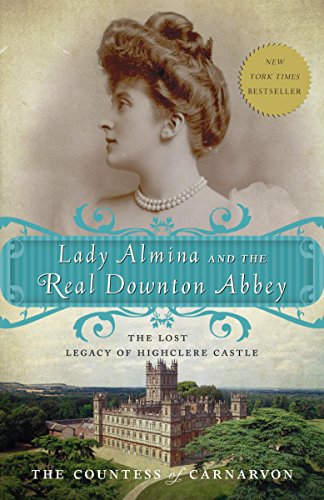
You don’t have to be a fan of Downton Abbey to enjoy Lady Almina and the Real Downton Abbey: The Lost Legacy of Highclere Castle. If you enjoy British manor houses and history, especially the Edwardian era, you’ll like the book whether you’ve seen the series or not. But if you are a Downton Abbey aficionado, you’ll probably enjoy some of the behind-the-scenes information about the setting for the series.

The fictional Downton Abbey is set in a real castle called Highclere, home to the current eighth Earl of Carnarvon and his wife, the author of this book, the Countess of Carnarvon.

An able historian, the Countess draws from diaries, letters, and other information to tell of one of her predecessors, Lady Almina, who married the fifth Earl of Carnavon in 1895.

Almina was the illegitimate daughter of Alfred de Rothschild, a wealthy banker. Though she had been presented at court, “she had not been invited to the highly exclusive, carefully policed social occasions that followed. Almina’s paternity was the subject of a great deal of rumour, and no amount of fine clothes or immaculate manners could gain her access to the salons of the grand ladies who quietly ruled Society. So Almina had not attended all the crucial balls of her debut season, occasions that were designed to allow a young lady to attract the attentions of an eligible gentleman” (p. 4). But somehow she drew the attention of George Edward Stanhope Molyneux Herbert. Apparently her beauty and large dowry overcame the circumstances of her birth. But from all accounts, Almina and George were fortunate to have a genuine marriage where they truly loved each other.

One of Almina’s main functions was to plan and host dinners and gatherings, even for the Prince of Wales, her husband’s friend. She was a master of organization and a charming hostess.

Unlike many women, she traveled with her husband, a man of many and varying interests.

But life changed during WWI. Almina had found a knack for nursing during one of her husband’s illnesses. During the war, she converted part of the castle into a hospital. She wanted the soldiers to feel like guests at a country estate. She knew they needed respite for the mind and soul as well as the body. But she wasn’t just a distant financier: she donned a nurse’s uniform, made rounds with the doctor every morning, and helped in various ways, even bathing gangrenous feet.

After the war, when travel could resume again, Almina and George traveled to Egypt. George had been to Egypt many times, because of his love for travel and the area, but also for his heath. The damp winters of England were unhealthy for him, so he often spent winters in Egypt. He had financed several excavations over the years without finding much for his efforts. He was going to give up, but then his partner in the work, Howard Carter, wanted to go one more time. George agreed, and this time, to their amazement, they found the tomb of Tutankhamun (not a spoiler as this is mentioned early in the book).

Between these major events, the book tells various details about George and Almina’s family, upstairs vs. downstairs life, the progression of the war and its aftermath, details around the Earl’s discovery of King Tut’s tomb, and Almina’s long-term legacy.

Almina grasped early on “that she was only one part of a machine that would long survive her. Part of her initial task on arrival was to understand the history and community that she was becoming a part of” (p. 15). “Everyone at Highclere, whether they worked above or below stairs, on the farm or in the kitchen, had a role to fulfil, and Almina was no different,” (p. 11).

In shows and films about this era, we often see lords of the manor not doing much besides hosting lavish dinner parties and going hunting. But, in fact, they had a lot of responsibility. Before the war, the Earl had an idea where things were going, and took a large sum of money out of the bank. “Considering that he was morally responsible for the welfare of the entire household, as well as the tenants, he refused the offer [of selling some of his land to the government] and set about adding to his flocks and herds. He also bought one and a half tons of cheese and an immense amount of tea. . . Once he had deposited the gold in his bank in Newbury, he was in a position to provide 243 men women and children with all essentials for at least three months” (pp. 125-126).

The current countess adds in the epilogue that even now, “The challenge for Highclere is to ensure that the Castle and its estate businesses remain strong enough to preserve their rich heritage. It is the same need to balance business and conservation that confronted Almina” (p. 292). “It was the economic fallout of the Second World War, combined with new tax structures, that made it impossible to maintain the opulence of previous generations at Highclere Castle,” (p. 301). When Almina’s son became the sixth earl, he had a reduced staff. WWII took a further toll on the whole country in many ways. The current earl and countess live at the castle part of the time and in a cottage at other times. They offer the house for various gatherings and other purposes (like settings for films) not only as a means of upkeep, but to preserve the house’s legacy.

The countess says in the prologue this book “is not a history, although it is set against the exuberance of the Edwardian period, the sombre gravity of the Great War and the early years of recovery after the conflict. It is neither a biography nor a work of fiction, but places characters in historical settings, as identified from letters, diaries, visitor books and household accounts written at the time.”

It took me a little while to get into this book. The first part was largely informational. But by the time the book got to the war and the castle becoming a hospital, my attention was more engaged. Overall, I really enjoyed it.

I got the Kindle version of this book a while back during a sale, but got the audiobook recently during another sale. Wanda McCaddon is a wonderful narrator for the book: I had previously heard her narration of several other classics.

There is a sequel to this book which I don’t have yet but would like to read some day: Lady Catherine, the Earl, and the Real Downton Abbey. Lady Catherine was Almina’s daughter-in-law, an American who was not an heiress and wasn’t raised in anything like the society she married into. Her husband inherited the estate at a fairly young age, so they were both thrust into big responsibilities sooner than expected. Then they had to manage during WWII and the subsequent changes to the country and their lives.

If you’re interested in the castle, the countess has an Instagram account for it here: https://www.instagram.com/highclere_castle/. She shares some of the hidden nooks and crannies as well as the gatherings they currently host and other interesting details.

This book could fit in the Celebrity category of the the Nonfiction Reader Challenge. George and Almina were celebrities in their day, Downton Abbey has brought a new celebrity to the castle, and the current The Earl and Countess are celebrities now.

The London House

In Katherine Reay’s novel, The London House, Caroline Payne was working through an ordinary day until she received a phone call from an old college friend, Mat. He wanted to meet with her about her aunt, of all people. Caroline had been named for great aunt, the twin sister of her grandmother. But the older Caroline had died of polio when she was a child. What could Mat possibly want to know about her?

Mat was working on an article where he inadvertently uncovered information claiming that Caroline’s great aunt had been a Nazi collaborator who ran off with her German lover. As Caroline refutes Mat’s claim, Mat brings up evidence that looks genuine.

Caroline asks for time to research the issue on her own. She flies to London to the home of her late grandmother, now occupied by her mother. They find letters between the twins and diaries of Caroline’s grandmother, Margaret. As Caroline wades through them, she is taken back to the 40s and the twins’ coming of age in a life of privilege before war hit. But life-threatening illness and family tension separated them. Some of that tension remained to the current day in the distanced relationship Caroline has with her own parents. Will Caroline’s discoveries heal old wounds or make them worse?

I don’t know if this would be classified as a time-slip novel, but with some of the letters and diaries, we’re transported back to the setting and activities of the twins’ earlier days. In that sense, it’s also partly an epistolary novel. Katherine has a note at the end of the book sharing what elements were true or fictional.

I enjoyed the uncovering of clues in the older Caroline’s letters and the dynamics that brought healing to the younger Caroline’s family. Although WWII seems to be the setting of more novels than any other era, I do enjoy them even while I sometimes long for glimpses of other time frames.

It’s funny how certain themes seem to go around at the same time. For instance, I had never heard of the Monuments Men (who recovered art stolen by the Nazis) until the movie made about them a few years ago. But just this year I’ve read a book about them and seen them mentioned in others. Now there seems to be a theme of dressmakers involved in WWII, with The Paris Dressmaker by Kristy Cambron and this one and others. I hadn’t realized this book was going to involve haute couture and dressmaking until I got into it.

All of Katherine’s other books that I have read have been Christian fiction to some degree. I didn’t know that this one was not until I saw a review on Goodreads noting that this book was published under the new Harper Muse imprint and not Christian fiction. That’s not a problem in itself. Christian authors have many reasons for writing stories that aren’t blatantly Christian. Katherine does mention C. S. Lewis’s radio talks of the time which were later transformed into Mere Christianity.

But I was disturbed by a couple of elements in the book. One of the older Caroline’s letters describes her first sexual encounter. Thankfully, it stops before it gets too explicit. But the younger Caroline suspects her grandmother tore the rest of the description out of the letter because she was a “prude.” Then, the older Caroline was employed by Elsa Schiaparelli, a rival to Coco Chanel. She mentions the sexual innuendoes of some of the designer’s work, especially those in collaboration with Salvador Dali—and then proceeds to bring one beyond innuendo and spells out the sexual connotation of it. I could have done without that.

So, I have mixed emotions about the book. The story overall was good, but I was disappointed the sexual elements. Even though they probably would be considered tame by most other modern secular fiction, they were still too much for me.

I listened to the audiobook nicely read by Madeleine Maby, but then also caught the Kindle version on sale and read parts in it as well.

Something Good

The tagline for Vanessa Miller’s novel, Something Good, is “Three Women. Two Mistakes. One Surprising Friendship That Changes Everything.”

Alexis Marshall seemingly has it all: a good husband, family, home, and a generous source of income. She appreciates her husband’s rescuing her from an unstable home life. But it’s a strain living up to his standard of perfectionism.

Then the unthinkable happens. While fumbling to respond to a text while driving, Alexis loses control. The resulting accident leaves a young man paralyzed.

Alexis is consumed with guilt and wants to do something to help the young man. But her husband is about to make a lucrative deal selling the tech company he built. If it becomes public that Alexis caused an accident, the sale would be in jeopardy.

Marquita Lewis is a mouthy teenager who doesn’t understand why she can’t keep a job. She’s determined not to live in shelters as her mom did. She wants better for her baby son. When she loses her latest job, she decides maybe it’s time to confront the baby’s father.

Trish Robinson’s life was turned upside-down when her son, Jon-Jon, was paralyzed. He was in college on a football scholarship with a good chance of going pro. But that potential bright future is gone now. He is so depressed, he’s not even trying in his physical therapy sessions.

Trish’s husband, Dwayne, is enraged at the woman who caused the accident and feels she should be doing more. Trish thinks they should forgive and forget and move on. She’s doing all she can to help Jon-Jon, and now Dwayne is pressuring her to get a job. But how can she leave Jon-Jon alone when he can’t take care of himself?

Trish prays for something good to come from all their trials. But the answer comes in a surprising way.

It was enjoyable to read of friendships that crossed so many differences–race, economic status, personality. etc. It was difficult and took time, but the characters learned and grew through their interactions.

And it was especially refreshing to see a Christian fiction book that was all-out Christian. I know some stories call for subtlety, but some are so subtle that it’s not clear who the characters have faith in or what kind of faith they have. I’m thankful Vanessa created her characters to express their faith in natural and believable ways. Even though the faith element is clear, it’s not heavy-handed.

A couple of sub-plots deal with mental illness in a couple of the families.

My favorite quote from the book: “Sometimes our greatest tragedies become the greatest gifts we can give back to the world” (p. 298, Kindle version).

I had not heard of Vanessa Miller before seeing this book on a Kindle sale, but I am glad I did. I enjoyed this book quite a lot.

Where I End

Katherine Clark was visiting her son’s school, playing tag with some children on the playground. One boy climbed up on the jungle gym and jumped off onto Kate’s head. They both fell to the ground. The boy’s arm was fractured, but Kate’s neck was broken, and she was instantly paralyzed from the neck down.

Kate tells her story in Where I End: A Story of Tragedy, Truth, and Rebellious Hope. She writes, “Strictly speaking, this is not an autobiography, nor is it a piece of journalism about a particular event. Rather, it is a series of reflections—broadly but not strictly chronological—in the wake of an event that has shaped my story as well as the stories of those who love me” (p. 10).

I appreciate that she says her story does not have a fairly-tale ending and she’s not a fairy-tale heroine. “It’s a tale penned in grief and sorrow. But is also a story abounding in hope, beauty, and the miraculous. It is at times humiliating” (p. 13).

Kate intersperses the details of what happened to her on that fateful day and the aftermath of surgery and physical therapy with reflections of the effects of her injury on her children, the inevitable “why” question, coming to terms with the label “quadriplegic,” wrestling with God’s will and His mysteries, and so on.

Her doctors had said she would never walk again. But as her healing surpassed what was expected, she felt almost guilty that she was progressing while so many others she had met in the hospital were not. When someone urges her to tell her story in a small group, often the next person will say something like, “Well, I don’t have anything to follow that,” as if testimonies were a contest. Kate writes, “I hate when the story severs discussion. I hate when the story culminates in a comparison of cross bearing, and as a result, a chasm between us” (p. 198). Kate didn’t want to draw attention to herself, yet her injury and partial recovery were part of her story, her life now. Her history was divided between before and after the accident. As one friend told Kate’s husband, “The only faithful response to living this story is to tell it’ (p. 9).

When one suffers an injury such as Kate’s, the big question is whether the patient will walk again. If that milestone is reached, the patient is thought to be healed. But the patient can still experience life-altering symptoms. In one chapter, Kate details the symptoms she still experiences and the things she still can’t do. She had been in good shape before the accident, a runner, and could no longer count on the body she was once so sure of.

It wasn’t until this chapter that I realized some parallels between my situation and Kate’s. When I had transverse myelitis, I could walk again after a few months of physical therapy and a lot of prayer. But I still have balance issues and numbness in both lower legs and my left hand. I knew exactly what she was talking about when she mentioned her hands feel like she has gloves on all the time, making fine motor skill difficult (though in my case it’s just my left hand, which is not my dominant one, thankfully).

Kate writes also of the mix of feelings she experiences: joy for the amount of healing she has recovered, yet lament for the loss. “I live in the midst of this tension—gratitude and grief—every day” (p. 212).

Though grief remains a part of us, we should not need nor should we desire to be continually affirmed in our sadness. That doesn’t mean we won’t sometimes speak of our sorrow or that we won’t continue to grieve. Some wounds we bear until heaven. It merely means that grief takes its proper place in our stories, and its role is never that of the star, nor does it play the part of the savior.

We live in the shadow, dear reader, but the darkness cannot overcome the light (p. 127).

God shined His light through His Word and His people as they came alongside to help in various ways and to share truth.

I so appreciated Kate’s testimony of God’s grace in hard circumstances.

This book fits the Medical Memoir category of the Nonfiction Reader Challenge.

Be Courageous (Luke 14-24)

The gospel of Luke is so full of good things that Warren Wiesrabe divided his commentary on Luke into two books. I mentioned the first, Be Compassionate (Luke 1-13): Let the World Know Jesus Cares, earlier in the month. Its companion is Be Courageous (Luke 14-24): Take Heart From Christ’s Example.

Luke 14 drops us right in the middle of Jesus’ ministry, with His healing of a man and then teaching through several parables. The next several chapters continue in much the same way. In addition to parables, Jesus teaches His disciples about the need to take up their cross and follow Him. In chapter 21, Jesus prophesies about the future.

Up to this point, the Pharisees, scribes, etc., have been keeping a close eye on Jesus, trying to trip Him up with questions, challenging His actions. In Chapter 22, things escalate with Judas offering to betray Jesus.

The narrative slows down in the next few chapters to focus on the events leading up to Jesus’ death. He celebrates the Passover with His disciples, institutes the Lord’s supper, is arrested, tried, and is found innocent, yet He is still given over to be crucified. Chapter 23 tells of His crucifixion and burial, and chapter 24 tells of His resurrection, appearance to the disciples, and ascension back to heaven..

There’s a lot in each of those chapters. In our discussion of five chapters at a time at church, we could only hit a few highlights in each one.

Luke’s books were written to his friend, Theophilus, to provide “an orderly account . . . that you may have certainty concerning the things you have been taught” (Luke 1:3-4).

Wiersbe ably explains things along the way, shares insights, and harmonizes Luke’s account with that of the other gospel writers. Some of his comments:

Our modern world is very competitive, and it is easy for God’s people to become more concerned about profit and loss than they are about sacrifice and service. “What will I get out of it?” may easily become life’s most important question (Matt. 19: 27ff.). We must strive to maintain the unselfish attitude that Jesus had and share what we have with others (pp. 21-22, Kindle version).

What does it mean to “carry the cross”? It means daily identification with Christ in shame, suffering, and surrender to God’s will. It means death to self, to our own plans and ambitions, and a willingness to serve Him as He directs (John 12: 23–28). A “cross” is something we willingly accept from God as part of His will for our lives (p. 26).

This chapter makes it clear that there is one message of salvation: God welcomes and forgives repentant sinners. But these parables also reveal that there are two aspects to this salvation. There is God’s part: The shepherd seeks the lost sheep, and the woman searches for the lost coin. But there is also man’s part in salvation, for the wayward son willingly repented and returned home. To emphasize but one aspect is to give a false view of salvation, for both the sovereignty of God and the responsibility of man must be considered (see John 6: 37; 2 Thess. 2: 13–14) (pp. 31-21).

Sin promises freedom, but it only brings slavery (John 8: 34); it promises success, but brings failure; it promises life, but “the wages of sin is death” (Rom. 6: 23). The boy thought he would “find himself,” but he only lost himself! When God is left out of our lives, enjoyment becomes enslavement (p. 36).

Peter’s self-confident boasting is a warning to us that none of us really knows his own heart (Jer. 17: 9) and that we can fail in the point of our greatest strength (p. 129).

I never noticed this before, but both the ESV Study Bible and Wiersbe point out that Luke begins and ends in the temple. In the first chapter, the birth of John the Baptist, the forerunner of Christ, is announced to his stunned father, Zechariah. In the last, Jesus’ followers “worshiped him and returned to Jerusalem with great joy, and were continually in the temple blessing God.

May we follow in their footsteps, joyfully worshiping and blessing Him.

Aging with Grace

In Aging with Grace: Flourishing in an Anti-Aging Culture, Sharon Betters and Susan Hunt “want readers to ask, ‘What if aging, though challenging, is not a season of purposelessness, but rather an opportunity to discover our true identity in a way we couldn’t in the first half of life? What if we purposefully prepare for the afternoon of life while we are in the first half of life?'” (p. 18, Kindle version). The book is helpful for those already in their later years as well as those wanting to prepare for them adequately.

Susan writes, “The world tells us aging is our enemy, and we should fight it; the Bible says it’s our friend: ‘Wisdom is with the aged, and understanding in length of days'” (Job 12: 12)” (p. 27).

God promises the righteous “still bear fruit in old age; they are ever full of sap and green” (Psalm 92:14). Susan acknowledges that, with the physical problems that often accompany getting older, we don’t always feel fruitful, full of sap, and green. But “this promise of growth does not mock my physical reality; it transcends it” (p. 28).

The gospel imperative to “grow in the grace and knowledge of our Lord and Savior Jesus Christ” (2 Pet. 3: 18) does not have an age limit. The same grace that gives us new life in Christ empowers that life to develop, mature, and flourish. We never finish growing. There is always more grace to experience and more to know of Christ’s love. This growth is gradual. We don’t produce it, but as we trust and obey God’s word, we can anticipate it (p. 28).

Susan and Sharon alternate chapters. Some chapters delve into the Bible’s teaching about getting older, particularly Psalm 92 and 71. The chapters in-between take a closer look at some of the older women in the Bible: Anna, The “matriarchs of the exile,” Elizabeth, and Naomi.

Anna was the older widow who came up when Mary and Joseph brought baby Jesus to the temple in Luke 2. At first the elderly Simeon rejoiced that he had lived to see “the Lord’s Christ” and prophesied about Him. Part of that prophesy was to Mary, that “a sword will pierce through your own soul also” (Luke 2:35). I hadn’t thought about it this way before, and the Bible doesn’t specifically say that Anna spoke to Mary, but Sharon proposes that Anna’s coming right at that moment helped comfort Mary.

Simeon told Mary the hard reality that a sword would pierce her soul. Can you sense Mary holding her baby boy a little tighter, her throat constricting and tears welling up? This young mother needed a tangible touch of God’s tender love. At this intense moment we meet eighty-four-year-old Anna. God providentially met Mary’s need through an old woman who hoped in God. At exactly the right moment, Anna shows up (p. 48).

The exile Sharon refers to occurred after Israel had repeatedly rejected God and turned to idols. God had sent prophets and sometimes delivered his people into the hands of their enemies. But even if they repented for a while, they eventually turned away from God again. So God allowed Nebuchadnezzar to remove them from their land and take most of them to Babylon for 70 years. God tells the people as a whole in Jeremiah 29 to settle down, plant, build, marry, and pray for the land of their exile. The older people would have realized they would die in exile and never see their country again. Again, I don’t think the Bible specifically mentions the older women in this scenario, but Sharon posits what they might have done.

Though the elderly women might not be able to physically build houses, their status in the family gave them a key opportunity to influence the attitudes and stability of their households. They could be life-givers or life-takers. They could choose to joyfully embrace God’s call to cultivate a godly, peaceful community or they could choose bitterness, whining, and complaining, and so can we (p. 84).

A few of the other quotes that stood out to me:

There are many things we can no longer do as we age, but age does not keep us from fulfilling our purpose to glorify and enjoy God. An ever-growing knowledge of God’s undeserved love—his grace—changes our motivation: “The love of Christ controls us” (2 Cor. 5: 14)” (p. 39).

Repenting women who find rest in Jesus become life-giving women who flourish as gatherers. When our heart is Christ’s home, we can become homey places for troubled hearts to find refuge,” (p. 70).

The world equates flourishing with activity and productivity. A biblical perspective does not mean we do more; it means we become more like Christ. We mature in faith, hope, and love” (p. 98).

As counterintuitive as it sounds, flourishing is a slow and progressive death that brings abundant life. Our new heart has new desires. Even as our physical bodies grow old, God causes our new desires to flourish as they are fertilized by his word and Spirit, and we die to self-centered desires, dreams, and demands (p. 99).

As life slows down, we can become controlling and critical, or we can reflect on God’s sovereign love that chose and planted us in his house. The more we live in the light of the reality of his presence, the more we flourish as his Spirit fills us with sap to nurture and encourage others to flourish (p. 105).

One joy of aging is a stillness of soul that helps us see the small moments as sacred moments when we can reflect God’s glory to someone else (p. 145).

The plot of dirt where we die [to self] is also the place where we flourish (p. 146).

To me, flourishing means gratefully accepting the past and present trials God gives me, and looking for opportunities to use what I have learned to help others. . . Whatever situations we find ourselves in as we age, there are nuggets of gold in our past that we can pass on to others. God never wastes a trial, a grief, or a wilderness wandering. We flourish when we give to others the lessons God has taught us (p. 151).

Naomi did not know her ordinary little family would become an extraordinary link to the coming Messiah. In fact, she died without knowing how her seemingly insignificant life fit into God’s magnificent eternal tapestry (p. 154).

At the end of each chapter, the authors include testimonies from older women in various circumstances who share how they found God’s grace to flourish. 

I very much enjoyed this book and it’s encouragement that we can keep growing and flourishing at any age. I’m pretty sure I’ll be reading it again in years to come to keep reminding me of its truths.

Updated to add: I forgot to mention that I’ve been reading this book in conjunction with InstaEncouragements. They’ve been going through the book and summarizing chapters each Tuesday the last few weeks. The comments have been enlightening as well. This book was on my to-read list anyway, and when I saw they were going through it, I jumped in. Reading with a group helps reinforce what I learn plus draws out things I missed. So, if you read this book, you might want to check out those posts as well.

Shadows In the Mind’s Eye

In Janyre Tromp’s novel, Shadows in the Mind’s Eye, Sam Mattas is on his way home from WWII. He’s changed and scarred physically and mentally by what he has experienced, seen, and had to do. He jumps at loud sounds. He’s not always sure what’s real and what’s imagined.

But he’s going home. Back to his dear wife, Annie, and Rosie, the daughter he’s looking forward to getting to know. Good, hard, familiar work on the farm and peace and quiet will set him right soon. He hopes.

Annie has dealt with trauma of her own even before her marriage. Her abusive father was a corrupt judge. When she was a girl, she found her dead mother in a lake. But Sam rescued her from all that. Life was hard while he was away. She had to scrabble for supplies, do all the farm work herself, and take in her mother-in-law.

But Sam is on his way home. She knows, from what her mother-in-law told her about her husband’s return from war, that it might take a while for things to return to normal. But everything will be all right.

Except everything is not all right.

Much has changed, and their wounds run deep. They have to learn new rhythms and ways of relating.

Then Sam starts seeing things. Lights in the woods, men in the shadows. Sam is convinced that something nefarious is happening out there, and he must protect his family. However, his delusions only put them in harm’s way.

But what if he is not actually hallucinating?

The chapters switch back and forth between Sam’s and Annie’s points of view. Their mistakes and learning how to deal with each other is interwoven with the suspense of what’s actually happening behind their house, not knowing whom to trust, and everything not seeming as it appears.

I had not heard of Janyre Tromp until Anita interviewed her about this book on a podcast, Working Through Trauma in Literature and Real Life. Janyre’s experience with caregiver trauma and her grandfather’s experiences after the war led her to study PTSD. Her book was not out yet at that time, but I pre-ordered it then.

Some of the quotes that stood out to me:

Happily ever after don’t happen lessen each person in marriage works. It’s like a team of horses, They both have to carry their own load (p. 155).

Once you let yourself start feeling, it all breaks loose (p.147).

I stood quiet, soaking in her peace. Every motion was calm, sure, She knew where she belonged, and that sent her roots deep into the ground, able to weather whatever life threw at her (p. 122).

You’d think holding joy right up against sadness would shatter a body. But it don’t. Joy…it sneaks in all around where things is broke, sticks it all together and finds a way to make you whole. It’s where things is broke that joy shows through.

My one criticism is that characters say “Lord Almighty” and such. In my book, taking the name of the Lord of glory and using it as an expression is taking His Name in vain. If something is done in vain, it’s useless; it hasn’t accomplished the purpose for which it was meant. God’s name in meant to be reverenced, used in prayer, in worship, or in talking about Him.

Other than that, I really enjoyed the book. Parts near the end were quite suspenseful. I liked the realistic way Sam and Annie reached out to each other yet made mistakes as well.

The Paris Dressmaker

The Paris Dressmaker by Kristi Cambron is a tale of two women in WWII Paris.

Lila de Laurent is a dressmaker and budding designer for Chanel. But the salon closed its doors as Nazis took over Paris. Working odd jobs for a while, Lila is surprised by a call from an old friend from Chanel who has become a collaborator with the Germans. She needs a gown for a party and knows Lila’s style. At first Lila is repulsed, but then decides this opportunity affords her the chance to pick up information for La Resistance.

As Lila flees from danger one night, she runs into the man she once loved, whom she thought was dead. But whose side is he on now? Can she trust him with her secrets?

Sandrine Paquet’s husband is a French soldier, and she lives with her son and mother-in-law. The place where she works is taken over by the Nazis, who demand that the employees catalog and crate art work the Nazis have stolen from French Jews. The German captain, von Hiller, has taken an interest in her. To refuse his attention outright would be fatal, but she takes pains to be cooperative while keeping him at a distance so things don’t get too personal. Neighbors misunderstand, however, and accuse her of being a collaborator. What they don’t know is that she and her boss are working for La Resistance as well, right under the Nazi’s noses. Though their shop doesn’t deal with textiles, one of the items that came to them was a beautiful blush Chanel gown. In a few moments alone, Sandrine searches the gown and finds a cryptic note initialed LDL sewn in the hemline.

Kristy Cambron is one of the best storytellers around. She weaves historic and personal details into the lives of these two women with suspense, pathos, and a touch of humor. The faith element is subtle but vital.

I miss the days of linear stories that start at the beginning and unfold until the end. But that’s not the fashion these days. The scenes alternate between the two women at different times in their lives, before and during the war. It was a little hard to keep up with at first until I learned to pay attention to the dates at the beginning of each chapter.

The author’s afterword shares which elements were historical and which were fiction, something I love to see in historical novels.

The Kindle version of this book is free with Amazon prime membership at the moment, and I got the audiobook at a 2-books-for-one-credit sale. With the Whispersync function, it was nice to delve into whichever one worked best for me in a given situation and pick up where I left off in the other.

Kristy has written another winner, in my opinion.