Shadowed by Grace: A Story of Monuments Men

In the novel Shadowed by Grace: A Story of Monuments Men by Cara Putman, Captain Rachel Justice is a photojournalist during WWII. Her mother is dying of tuberculosis, and Rachel takes an overseas assignment to Italy to try to find the father she never knew to see if he can help provide for her mother’s treatment. All Rachel has to go on is a sketchbook given by her father to her mother with the initials RMA on some of the pages. Her mother refuses to say any more about her father and does not want Rachel to find him.

Lieutenant Scott Lindstrom is an officer with the Monuments, Fine Arts, and Archives Division, and stationed in Naples. He had arts degrees from Harvard and was a curator of a museum in Philadelphia. But he felt he could use his expertise to do something meaningful, to save history, to salvage beauty and meaning to sustain people after the war. He says, “We are defined by what we love and respect” (p. 28, Kindle version).

The problem was, his superiors and many soldiers didn’t take his job seriously. When lives were at stake, what did art matter to them? He had trouble getting the men and resources he needed.

When he did get a chance to talk to local people who might know where art was hidden, they didn’t trust him. The Germans had said they’d protect art, too—but they stole or destroyed much of it.

And now he was assigned to babysit a woman photojournalist who shouldn’t be so close to the danger.

So Scott and Rachel get off to a rocky start. But as they get to know each other, they appreciate each other’s mission and characters.

When Rachel shows Scott the sketchbook, hoping his knowledge of art and Italy may help her identify the artist, she doesn’t say the artist is her father. Scott thinks he recognizes the early work of an artist friend and mentor in the sketches, but he’s suspicious about why Rachel would have such a prize.

Scott is a Christian. Rachel isn’t sure she believes or trusts God. Her own father’s disinterest in her colors her view of God.

There is historical fiction that contains a romance, and romances that occur in a historical setting. I prefer the former, but this story is the latter. Still, the peek into the Monuments Men work, art history, photojournalism, the problems women in the military faced, the refugee situations in Europe all made for an interesting story.

One thing that jarred me just a bit was a major betrayal in the story that seemed to blow over much more quickly and easily than I would have expected.

But all in all, this was an enjoyable book.

Cara shares some of the influences that went into the book in an afterword and in the video below.

Were you familiar with the “Monuments Men” and their work?

Mary Barton

19th-century writer Elizabeth Gaskell is known these days for Wives and Daughters and North and South (linked to my reviews).

But her very first book was Mary Barton. Elizabeth began writing at the urging of her husband after the loss of their son. But she was also motivated by “a deep sympathy with the care-worn men, who looked as if doomed to struggle through their lives in strange alternations between work and want; tossed to and fro by circumstances . . . Whether the bitter complaints made by them, of the neglect which they experienced from the prosperous—especially from the masters whose fortunes they had helped to build up—were well-founded or no, it is not for me to judge. It is enough to say, that this belief of the injustice and unkindness which they endure from their fellow-creatures, taints what might be resignation to God’s will, and turns it to revenge in too many of the poor uneducated factory-workers of Manchester (from the preface to Mary Barton).

Mary’s father is a mill worker who is critical of the rich in general and the “masters” (mill owners) in particular. He feels it’s unfair that the working class puts in so much effort with so little in return. The rich unfairly (it seems to him) not only have more, by seemingly little or no merit of their own, but they don’t help the poor in their need. The death of John’s wife and son fuels his views and his anger. He’s left to raise his daughter alone.

The story fast-fowards several years. Mary is now a teenager working in a dress shop. Jem, the son of family friends, has loved her since they were children. But she thinks of him as a brother. Henry Carson, the mill owner’s son, has noticed Mary and flirts with her on her breaks and after work. Mary is flattered by Henry’s attentions. She knows her father’s feelings about rich people. But she feels that once she marries Henry and her father experiences the benefit of his riches, he’ll be all right with her marriage.

Several issues between the mill owners and workers come to a head, with the workers threatening to strike. Some of the owners feel they need to concede to some of the workers’ demands. However, most of the owners, including Henry Carson, feel they need to stand firm; if they relent on any of these issues, the workers will just strike whenever they want something.

When the workers’ appeals fail, a group of them decides more drastic measures are needed.

Meanwhile, Jem comes to Mary to plead his case for her hand. She decisively tells him there is no hope. She could never love him. Not long after he leaves, however, she realizes she does love him. She agonizes over how to let him know and decides that it wouldn’t be right to go after him. She’ll just have to convey to him in more quiet manners her change of heart when they see each other. She tries to break things off with Henry, who doesn’t take no for an answer.

But Jem, taking her at her word, arranges to be away from home when Mary comes to visit his mother.

Then, suddenly, Henry is shot.

Jem is accused of the crime because his gun was found at the scene and because he was heard threatening Henry over Mary a few days earlier.

But Mary is sure she knows who the real killer is. How can she help Jem without betraying someone else?

Besides the industrial and romantic plot lines, Mary’s friend, Margaret, lives with her wise and level-headed grandfather, Job Legh. Margaret has a beautiful singing voice and but is going blind. Alice Wilson is an older lady who is everyone’s friend and the go-to helper when someone is sick, until she falls ill herself. Esther is Mary’s aunt, who disappeared from the family early on but shows up again. Jem’s mother, Jane, lose her twins and then her husband.

Elizabeth tries to help both sides of the industrial concerns to see the other truthfully. She definitely thinks the masters can be more compassionate and do more, and she spends more time on their shortcomings than the workers’. But she cautions that they have their troubles, too. In one scene, John Barton is going to a druggist’s for a friend.

It is a pretty sight to walk through a street with lighted shops; the gas is so brilliant, the display of goods so much more vividly shown than by day, and of all shops a druggist’s looks the most like the tales of our childhood, from Aladdin’s garden of enchanted fruits to the charming Rosamond with her purple jar. No such associations had Barton; yet he felt the contrast between the well-filled, well-lighted shops and the dim gloomy cellar, and it made him moody that such contrasts should exist. They are the mysterious problem of life to more than him. He wondered if any in all the hurrying crowd had come from such a house of mourning. He thought they all looked joyous, and he was angry with them. But he could not, you cannot, read the lot of those who daily pass you by in the street. How do you know the wild romances of their lives; the trials, the temptations they are even now enduring, resisting, sinking under? You may be elbowed one instant by the girl desperate in her abandonment, laughing in mad merriment with her outward gesture, while her soul is longing for the rest of the dead, and bringing itself to think of the cold-flowing river as the only mercy of God remaining to her here. You may pass the criminal, meditating crimes at which you will to-morrow shudder with horror as you read them. You may push against one, humble and unnoticed, the last upon earth, who in Heaven will for ever be in the immediate light of God’s countenance. Errands of mercy—errands of sin—did you ever think where all the thousands of people you daily meet are bound? Barton’s was an errand of mercy; but the thoughts of his heart were touched by sin, by bitter hatred of the happy, whom he, for the time, confounded with the selfish.

Just occasionally, the narrator (possibly Gaskell herself) might come across as a little preachy by today’s standards. But I think in her time, she wasn’t trying to “preach” as much as to open people’s eyes to the plight of others.

Though Wives and Daughters and North and South are still my favorite Gaskell books, I did enjoy Mary Barton very much, especially the last half.

I listened to the audiobook, which was included as part of my Audible subscription. Juliet Stevenson did a superb job with the narration and different dialects. But I also got the free Kindle version to read parts there. the novel is also only via Project Gutenberg here.

Have you read Mary Barton? What did you think?

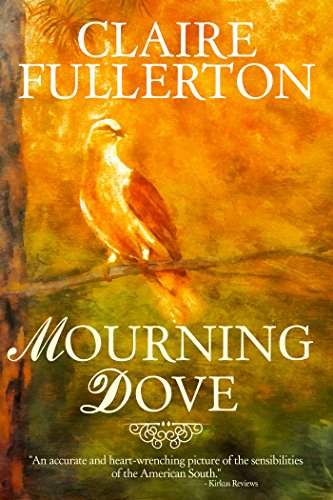
Mourning Dove

Millie Crossan is the narrator of Claire Fullerton’s Mourning Dove. When Millie was in her teens, her mother moved the family from Minnesota back to her native Memphis after her divorce.

Millie’s older brother and hero is Finley, eighteen months her senior. She looks up to him, follows him, feels secure in his care. “His presence was one part security blanket, one part safety net, and two parts old familiar coat conformed to fit my size after years of wear.”

They loved their father, who was much more involved with them than their mother. But he was an alcoholic who had trouble giving up his addiction. His death, as well as his addiction, had a profound influence on both children.

When the family arrived in Memphis, Millie’s mother, Posey, melted right back into her role. But Millie and Finley felt like outsiders until they got the hang of the culture of keeping up appearances at all costs.

Part of the novel is a coming-of-age story. Part of it is historical Southern fiction set in the seventies and eighties. Part of it is a nature-or-nurture question exploring how two close siblings can come to such different ends.

We learn early on that Finley is no longer with the family. As the story unfolds, we see his unraveling, leading to a tragic end.

I rarely have trouble “getting” the point of a book. But I did with this one. I searched for interviews with the author to try to gain a little more insight. She says here that the book started as a poem and then was transformed into narrative nonfiction before she turned it into a fictional saga. Since Claire, like Millie, moved from MN to Memphis and was raised by “the last of the great Southern belles,” I wonder if she had a “Finley” in her life. She shares in this interview what she wants readers to take away from the book, “That it’s not what we’re handed in life that matters, it’s how we handle the circumstances in which we find ourselves.”

This review helped me understand Finley a little more, especially this line: “When a child with intelligence and sensitivity is reared in an emotionally unstable household marred by tragedy, he may direct his intelligence toward destructive habits and pursuits.” Millie, by contrast (though she was not unintelligent or insensitive), keeps her feelings to herself. Her mother and her culture don’t encourage heartfelt openness. But Millie’s other relationships are somewhat stunted.

I was also a little confused because I had thought this was Christian fiction. But it’s not. Posey’s spirituality is only the socially acceptable kind, Millie has no use for God, and Finley goes the opposite direction, becoming a cult leader.

The ending left me a little flat at first, because it seemed there was nothing redemptive, nothing hopeful. Of course, in real life, tragedy doesn’t seem redemptive or hopeful at the time. And even if we can see ways God used it, after time has passed, it still hurts. But in books, usually there’s something to be gleaned from the events rather than just the fact that tragedy happened. I reread the beginning and the ending, and was caught by this sentence: “Every chord their father ever played in this room went out into the universe to ring forever, because music never dies, and they were born with it inside them.” A loved one’s influence lives on after them.

Have you read this novel? If so, I’d love to hear your thoughts.

Be Responsible (1 Kings)

Warren Wiersbe helps us glean understanding in Be Responsible (1 Kings): Being Good Stewards of God’s Gifts.

The book of 1 Kings begins with the death of David, Israel’s greatest king, and ends with the death of Ahab, one of Israel’s worst kings.

In-between those two kings, the temple was built, but then the kingdom of Israel split in two. The southern kingdom, Judah, was ruled by David’s line. The northern kingdom with the rest of the tribes was ruled by various people.

A few of the kings were good to some degree, but most were bad and led Israel in their besetting sin, idolatry.

God raised up prophets to warn the kings and the people about the danger they were in due to their disobedience. This book had Elijah’s famous showdown with the prophets of Baal and Elisha taking up Elijah’s mantle. But there were many unnamed prophets faithfully doing God’s will.

Here are some of the quotes that stood out to me from Wiersbe’s writing:

The two books of Kings record about four hundred years of the history of Israel and Judah, while the two books of Chronicles see the history of the united kingdom and then the kingdom of Judah from the priestly point of view. Besides recording history, these books teach theology, especially the faithfulness of God in keeping His covenant, the sovereignty of God in directing the destinies of all nations, and the holiness of God in opposing idolatry (p. 13).

Integrity is one of the vital foundations of society, but integrity involves taking responsibility and facing accountability. This includes leadership in the home and church as well as in the halls of academe and the political chambers. It’s one thing to make promises at the church altar or to take an oath of office, but it’s quite another to assume responsibility and act with courage and honesty and seek to please God (p. 11).

God took the consequences of David’s two worst sins—a piece of property and a son—and built a temple! “But where sin abounded, grace abounded much more” (Rom. 5: 20 NKJV). This isn’t an encouragement for us to sin, because David paid dearly for both of those transgressions, but it is an encouragement to us to go on serving God after we’ve repented and confessed our sins. Satan wants us to think that all is lost, but the God of all grace is still at work (1 Peter 5: 10) (p. 53).

“Because of our proneness to look at the bucket and forget the fountain,” wrote Watchman Nee, “God has frequently to change His means of supply to keep our eyes fixed on the source” (p. 160).

Responsibility means our response to His ability (p. 214).

I appreciate Dr. Wiersbe’s help in getting more from 1 Kings.

The Girl in the Painting

In The Girl in the Painting by Australian author Tea Cooper, Michael and Elizabeth Quinn are orphaned siblings who immigrated from England to Australia in 1862. Their parents had gone on ahead to take advantage of free passage for married couples and left them with an aunt. But the aunt died before the children left and they had to go to a workhouse until time for departure. Then they found, upon arrival, that their mother had died, and the father passed away, too, before long.

The father had established himself in an area of gold seekers. But he didn’t mine gold for himself: he started a business servicing the miners, especially hauling their things around. Michael, a teenager by this time, took over the business and built it up, leaving Elizabeth in the care of a woman they’d met on the ship until he could establish a home for them..

By 1906, the Quinns were wealthy business people and philanthropists in Maitland Town. One of their outreaches was to the local orphanage, in memory of their own time as orphans. One of the orphans, Jane, has an exceptional aptitude for math. The Quinns offer to take Jane in and pay for her education in exchange for her working for their company. She eventually becomes their bookkeeper as well as taking over many of Michael’s duties.

One day Jane and Elizabeth visit a one of their buildings where they’ve invited an artist to hold an exhibition. Suddenly the ultra self-controlled Elizabeth is on the floor, shaking in terror, hat off, mumbling unintelligible words.

After a while, Elizabeth seems back to normal and insists everything is fine. But she’s not back to normal, and everything’s not fine. Odd snatches of memory and terror keep coming back to her mind.

Jane makes it her mission to find out what caused Elizabeth’s episode and discovers some unexpected long-held secrets.

This was an enjoyable book, especially in trying to figure out the mystery behind Elizabeth’s reaction to a painting. It was nice to read something set in a different time and place than a lot of historical fiction (so much of which centers around WWII). We get a picture of what immigrants were up against in those times, not only the English, but also the Chinese who were treated mainly as servants and the lowest workmen.

I loved the cover.

My only minor complaint is that the change between happy and adjusted Michael and Elizabeth and unraveling Elizabeth and brooding Michael seemed rather sudden. I guess that’s an indication that the past was a well-kept secret. But it just seems that, in a literary sense, there would have been more hints throughout the book that everything was not as we thought. I only caught one, and that was only after finishing the book and going back to reread the siblings entry onto the ship taking them to Australia. But, again, it’s a minor complaint and can be explained by the reaction to the painting that set off that aspect of the story.

I had thought this was a Christian fiction book because I bought it from a Christian site. But it wasn’t in any real sense of the word. That’s fine—I don’t restrict myself to Christian fiction. It just meant the book wasn’t what I expected at first. The orphanage Jane comes from is Catholic. Some of the Chinese religious practices are explained when Elizabeth befriends the Chinese man who works for them. But there’s not much other religious content. I would disagree with one statement that it doesn’t matter what gods people prayed to and one person’s thought that a dead relative was looking out for them from heaven.

The book is remarkably clean for modern secular fiction. Michael took the Lord’s name in vain a couple of times and a couple people said “what the hell.”

But, overall, I enjoyed the story.

Ten Time Management Choices

My husband has no idea how much he owes Sandra Felton.

I did not come to marriage very organized in either my time or my stuff. In college, I wasn’t lazy, but I was always running behind. Many of my grades suffered from late deductions. And I can’t tell you how many times I got frustrated over not being able to find an item or paper I needed.

Sometime during early marriage, I came across Sandra Felton’s book, The Messies Manual. Then I subscribed to her newsletter for years until I knew by heart what each one was going to say.

I put a lot of Sandra’s principles into practice. I can’t say I became a paragon of organizational virtue, but I definitely improved from where I was.

But I learned something else about organization on my own. We can’t make up a workable schedule and put everything in its rightful place and then be done organizing. We have to maintain our systems and adapt them to new demands on our time and new items in our home.

So I have decided organization is not a destination. It’s a journey. And, therefore, I continue to occasionally reads books or articles about organization.

When I saw that Sandra had coauthored a fairly new book with Marsha Sims, and it was on sale for the Kindle app, I got it. That book is titled Ten Time Management Choices that Can Change Your Life.

The authors state that “One of the goals of this book is to help you accomplish easily and quickly those necessary but uninspiring activities that comprise much of our daily lives so you can turn your attention to the significant things you want to do” (p. 9).

They point out how the advent of modern technology eased life in some ways but created a lot more things to do, some necessary and some distracting.

They say some authors “downplay organizing systems and indicate that if you have enough focus and self-control, you’ll be okay. Not so. You need good skills as well” (p 21.) So they point out overarching principles but also offer practical tips.

They remind us often that “time management is not the art of getting everything done. It is the art of getting the most important things done. To put it another way, it is priority management.” (p. 63).

The authors offer a variety of ways to determine priorities, make schedules, etc. I love that. Some time management books promote a very rigid system. I don’t usually like everything about other people’s systems, so I appreciate the variety of methods to experiment with to find one that works best.

They also tackle multitasking, interruptions, procrastinating, delegation, time wasters, schedules, developing good habits.

They apply principles to home and business.

Each chapter has several vignettes of people with organizing problems and the solutions they found.

The end of each chapter and the end of the book contain questions and activities to help implement the principles. The sessions at the end of the book could be done alone or with a group.

Here are a few more quotes that stood out to me:

Creative people have more ideas and interests than any one person can do in a lifetime, and we accumulate the paraphernalia to prove it. (p. 54.)

A word of explanation is necessary to those who fear setting up a schedule because it feels rigid and stifling. Scheduling is not an inflexible list that is written in stone. It is a statement of what regular tasks are important to accomplish each day and when you plan to do them during the day. As you become experienced in using and tweaking your schedule, you will find it meets your needs more and more successfully and will become your friend. (pp. 163-164).

When you create a schedule for routine tasks, you open a tap through which good time management can flow. A schedule is absolutely necessary because 1. It keeps you from forgetting what needs to be done. 2. It protects you from the unsuccessful “What do I feel like doing today?” approach (p. 164).

Although I would not classify this as a Christian book overall, the authors do employ some biblical principles.

There was only one place I strongly disagreed with the authors.

Organized people work dispassionately. That frees them from a lot of stress. Disorganized people wear themselves out by investing emotion in the things they have to do. They work while saying, “I hate making the bed every day” or “Unloading the dishwasher is such a drag.” The way to take the emotion out of doing what you need to do regularly is to make the activity into a habit (p. 196).

I can’t say that making activities into habits takes the emotion out of them. I still chafe at a lot of things that have to be done. However, making them a habit gets them over with rather than pushing them to the background. And I look forward to the satisfaction of getting them done.

I don’t think I learned much that was totally new to me from the book. But many of the principles I had formerly learned were applied in new ways, and all of the book was a much-needed reminder.

If you need to organize your time better or need to brush up on organizing principles, this book would benefit you.

(I often link up with some of these bloggers.)

The Winnie-the-Pooh Books

Winnie-the-Pooh is a creation of A. A. Milne based on the teddy bear of his son, Christopher Robin. Milne had written many other genres: plays, magazine articles, books for adults. But these days he is best known for Pooh and Christopher Robin and their friends.

My kids grew up with the Disney version of Winnie the Pooh and company. There were four individual videos at the time: Winnie the Pooh and the Honey Tree, Winnie the Pooh and the Blustery Day, Winnie the Pooh and Tigger Too, and Winnie the Pooh and a Day for Eeyore. The first three videos have since been combined into The Many Adventures of Winnie the Pooh. Then there was a Saturday morning cartoon called The New Adventures of Winnie the Pooh which we watched regularly for many years. We had stuffed Poohs (and Tiggers and Piglets) and Pooh picture books. If there were Pooh sheets or jammies, we would have had them.

But somehow, I never read the original Pooh books by A. A. Milne to my kids, and I have always regretted that. I’m not sure why I never read them. I had not read them in my own growing-up years: perhaps if I had, I would have made it a point to read them to my children just as I searched out some of the Little Golden Book titles that I’d had as a child. I dipped into one of the volumes at some point, but I don’t remember which one or if I completed it.

When I read Christopher Robin Milne’s autobiographies recently, I was reminded that I had never read the original Pooh books. So I set out to correct that lack.

There are four books that specially deal with Pooh.

When We Were Very Young is a book of children’s poems. Christopher Robin’s bear there is named Edward. Some time after that, he renamed his toy bear Winnie-the-Pooh (with hyphens when his whole name is written, though he is often called just Pooh or Pooh Bear. The Disney version dropped the hyphens). “Pooh” was after a swan that Christopher had previously given that name to, and Winnie after a bear by that name in a zoo. Some of the poems feature Christopher, but all of them were probably inspired by him. One of the most famous is “Vespers” about Christopher saying his prayers.

Winnie-the-Pooh is a collection of short stories about Christopher Robin and Pooh and the other animals/toys. The House at Pooh Corner, another collection of stories, was published next, and finally there was another collection of poems, Now We Are Six. “Forgiven” is one of my favorite poems from this volume.

One of the things I had liked about the videos and TV series was that they were quiet. There were conflicts and predicaments and misunderstandings, yes. But the shows weren’t full of noise and razzle-dazzle like other kid’s shows were (that was something I liked about Mister Rogers as well).

The books are the same way. The characters are endearing. Pooh is “a bear of very little brain,” but he is kind, thoughtful, and a faithful friend. He likes to make up rhymes and take time for “smackerel” of “a little something—usually “hunny.” Christopher Robin is the one everyone looks up to and the one who rescues the others when they get in trouble over their heads. Piglet is small and timid, but also kind and thoughtful. Rabbit is bossy, but has everyone’s best interests at heart. Eeyore is gloomy (actually, he’s a little harsher in the books). Owl is wise (he can even spell Tuesday!), Kanga is motherly, Roo is spunky.

One of my favorite quotes is from Pooh in The House at Pooh Corner about how poems come to him: “But it isn’t easy,’ said Pooh. ‘Because Poetry and Hums aren’t things which you get, they’re things which get you. And all you can do is to go where they can find you.” Another is this: “Sometimes,’ said Pooh, ‘the smallest things take up the most room in your heart.” And these:

Some people care too much. I think it’s called love.

People say nothing is impossible, but I do nothing every day.

It is more fun to talk with someone who doesn’t use long, difficult words but rather short, easy words like “What about lunch?”

“What day is it?” asked Pooh.
“It’s today,” squeaked Piglet.
“My favorite day,” said Pooh.
 
Piglet noticed that even though he had a Very Small Heart, it could hold a rather large amount of Gratitude.

I love how Kanga is described as carrying her family in her pocket (something Rabbit thinks strange at first).

And I dearly love this exchange between Eeyore and Pooh, read in Eeyore’s deadpan voice, when Eeyore thinks everyone has forgotten his birthday:

“Good morning, Pooh Bear, if it is a good morning. Which I doubt.”

“Why, what is the matter”

“Nothing, Pooh Bear, nothing. We can’t all, and some of us don’t, and that’s all there is to it.”

“Can’t all what?” said Pooh, rubbing his nose.

“Gaiety. Song and dance. Here we go round the mulberry bush.”

I was very glad to see that the films and videos, for the most part, told the stories almost completely as the books did. The series went on to develop their own stories based on the characters, but kept the same tone.

Milne captures childhood innocence and ways of thinking well with playfulness and gentleness. I was very sad to learn that Christopher came to resent the books about him as he became an adult, perhaps due to teasing from others when he went to boarding school. Christopher said in his own books that his father wasn’t very expressive in person: his inner thoughts came out in his writing. But his father’s obvious delight in his son and how he thought shines through in these stories and poems. I think Christopher must have come to terms with that at some point since he provided a favorable introduction to the audiobook of When We Were Very Young, saying family friend Peter Dennis’ narration presents Pooh “as he [Christopher] knew him.”

All four volumes of the books were available as part of my Audible subscription. I listened to the stories via audiobook, but read the poetry collections via Kindle (which included, thankfully, E. H. Shephard’s original illustrations).

One thing I didn’t like about the audiobooks was the long musical interludes between chapters.

But otherwise it was a sweet experience to visit these characters their original settings.

The Back to the Classics Challenge allows us three children’s classics. So I am going to count Winnie-the-Pooh as one for the “Classic that’s been on your TBR list the longest.”

“Don’t Call Me Spry”

It’s a shock to the system when you realize someone thinks of you as “old.”

For me, it happened when a fast-food cashier rang up my order with a senior discount—and I was only 50.

For Win Couchman, it happened when she ran into an old friend who commented, “You’re so spry!” “Spry” was a “compliment reserved for exclusively for old people.”

As the shock of this well-meant statement brought Win to tears, she began to consider aging.

I am at the young end of old: junior-high old. Youth is gone and now, also, middle age. My life at sixty-four is rich, adventurous, blessed, and full of joy (p. 2).

I am not only wrinkling. I am growing. And while I am forgetting some things, I am learning much that is new. This season of my life is as fearsome and exciting as turning fourteen. Nobody told me it would be this way (p. 3).

She decided to investigate “what it means to grow old” from the Bible, culture, the examples of older people in her life (“Not everything I learned from Grandmother about aging was glamorous, but all of it was valuable” [p.84]). She wanted to “notice and enjoy the perks that come with old age” (p. 4).

The results of her study and contemplation is “Don’t Call Me Spry”: Creative Possibilities for Later Life.

Win noted, “The halves of my life each merit my attention. The tension between the material and spiritual aspects of reality are normal. The struggle is to keep a balance: to live in light of the unseen while resetting the washer from ‘permanent press’ to ‘delicate fabrics.’ In order to live for God’s glory and not lose heart, I have the perspective of the eternal as a gift” (p. 4).

In their fifties, Win and her husband, Bob, began to pray and consider what to do when he retired. For many years, they had hosted a ministry called Forever Family which combined hospitality, mentoring, counseling, and teaching. But they were sensing maybe the time had come to do something different.

Through a series of events and contacts, the door eventually opened for them to minister in a variety of other countries eight months out of the year. They enjoyed the novelty and the opportunities to minister, resulting in some never-to-be forgotten experiences.

But they also experienced stresses with travel and continual adjustments, and they handled them differently. She liked to talk things out when stressed or anxious; he withdrew and became quiet. I’m sure those tendencies were always a part of their personalities, but these new experiences brought them to the forefront and required them to meet each other half-way.

Bob’s retirement brought other stresses and adjustments, like sharing space that she had previously had to herself.

Then new stresses arose when Win developed a heart issue which brought not only their international travel to a close, but their full-time active ministry as well. She had to rethink what she could do within her new reality. “It grieved me to give up thinking I could do anything anyone even a generation or two younger than I can do” (p. 45).

It saddened me to give up the illusion that I could always push myself a bit more if I needed to, that pushing was the thing to do. I could no longer be casual about getting too tired. I was newly aware of another true separation between me and those who are younger (p. 46).

She tells how God led her to other types of ministry, mainly mentoring, prayer, being involved with her grandchildren. She still taught and spoke on a limited basis.

One of my favorite chapters is “The Downside,” dealing with some of the negative aspects of aging. “When you ask me how I am, sometimes it is a little hard to know how to answer” (p. 107).

But even though Win describes herself as a pessimist, overall the book is hopeful and positive. The Bible assures that God’s care and love and grace will always be with us. In addition:

As I have looked repeatedly into the mirror of these verses, I have not only been provided with new assurance of God’s caring for me, but I have a greatly enhanced concept of the possibility of lifelong usefulness (p. 136).

While searching for more information about Win, I came across this video of her.

I had not heard of Win before until I read a chapter by her in The Wonder Years: 40 Women over 40 on Aging, Faith, Beauty, and Strength compiled by Leslie Leyland Fields. I didn’t discover until recently that her chapter, “The Grace to Be Diminished,” originally came from a magazine here. Then I found her poignant article, “The Beds I Have Known,” about living separately from her husband of 72 years when she could no longer care for him. I saw somewhere that she had written this book, so I searched for it. It’s out of print, but I found a used copy in good condition for $5 at Amazon.

I am glad to have found and read it. It gave me much encouragement as I look ahead.

The Story of Doctor Dolittle

Hugh Lofting first created the character of Doctor Dolittle in letters home to his children while he was in WWI. The first book in the series is The Story of Doctor Dolittle: Being the History of His Peculiar Life at Home and Astonishing Adventures in Foreign Parts Never Before Printed.

Dr. Dolittle is a medical doctor, but he has a lot of pets. He begins to lose patients when they are scared by the number and kinds of pets he keeps. Someone suggests he become an animal doctor. His talking parrot tells him all animals have languages and teaches the doctor several of them. The doctor’s fame spreads far and wide since he can now diagnose and treat animals for the exact ailments they tell him about.

There’s only one problem. Animals aren’t paying customers. As much as the doctor dislikes money and wishes he didn’t have to bother with it, a certain amount is necessary to live.

So he and the animals devise ways to economize plus make some money.

Then birds bring word that monkeys in Africa are very sick, with many of them dying. They’ve heard of Doctor Doolittle and wonder if he can help them.

So after making arrangements for his house and the animals who will stay home, and finding a boat and supplies, the good doctor sets off along with several of his animal companions. They experience several misadventures during their travels and their time in Africa.

I had not realized that there were a number of books with Doctor Doliitle as the main character until I set out to read about him. I had thought that there was one main chapter book. This book is the first written, but others tell of time periods before this book. So some sets of the Doolittle books are arranged in the chronology of the settings rather than publication order. I prefer publication order of any series because that’s how the story would have originally unfolded. Sometimes we don’t care much about the back story until we come to know and care about the characters and their world. I listed to the audiobook very nicely read by James Langton. But it was put together in setting order, so I had to search through several beginnings of chapters in The Voyages of Doctor Dolittle, which had been placed first, before finding this story (the beginning of the different books wasn’t marked).

Also, I didn’t realize the set I listened to was “fully updated for the modern listener.” I would much rather read and listen to books in their original words. One new illustrated edition has taken the liberty of adding an “updated magical twist.” So if you prefer original classics, check for these things before choosing a volume.

Some editions say they have removed “ethnically insensitive” parts of the story. I assume this one did since it’s “revised for modern readers.” Generally, I’d rather leave stories as they were and explain why certain things are no longer done or said. I don’t know what things were removed from these books. Perhaps, especially in the versions designed for children to read themselves, it is better to adapt them without those offensive elements.

I hadn’t intended to read Doctor Dolittle until this set came up in a “2 books for one credit” sale on Audible. I’m glad to be more familiar with it now, but I don’t think I liked it well enough to read the other two books in this set.

I have not seen any of the film versions.

I’m counting this book for 20th century classic for the Back to the Classics Reading Challenge.

To Sir, With Love

To Sir, With Love is an autobiographical novel by E. R. Braithwaite. Braithwaite was born in Guyana, well-educated, and a pilot in the Royal Air Force during WWII. He says in the book that his color was not a factor during his military service, not even in dating, and he had almost forgotten that his color could be a factor. But after his military service, he spent almost eighteen months unsuccessfully looking for a job. He’d have promising leads until he went for an in-person interview. He began to grow bitter. A chance meeting with a stranger on a park bench put the possibility of teaching in his mind.

He found an opening at a school in the East End of London called Greenslade in the book. The headmaster said they didn’t practice punishment at the school. The students came from disadvantaged backgrounds and needed encouragement and building up. But Braithwaite wasn’t given any advice or tools to help him manage his students. When he asked fellow teachers, advice ranged from “Show them who’s boss” to “Don’t be too hard on them.”

Braithwaite found his students, for the most part, not very literate, crude, vulgar, unwashed, and uncaring about gaining knowledge or much of anything. Their reactions to him varied from ignoring him to disdain to hostility.

Finally, he hit on an approach that seemed to work. I won’t spoil the story by saying what, as for me, that was the part I was most anticipating.

Even then, the relationships between student and teacher and the students’ growth was up and down through various circumstances.

Alongside the story of Braithwaite’s journey with his students is his observations and experiences as a Black man in the later 1940s and 50s. From a white woman who refused to sit next to him on a bus, to those who refused to hire him once they saw him, to refusal of his renting a room, to a colleague making little digs by calling him “the black sheep” and “our sunburned friend,” to a waiter ignoring him, then spilling his soup and not offering to clean it up, Braithwaite experienced various degrees of racism. When asked by someone why he didn’t “stand up for himself,” he seemed to feel it just wasn’t worth it and would cause more problems than it solved. He had lived in the US for a few years and felt racism was more overt there at that time, whereas in Britain it was more subtle.

As the headmaster began to tell Braithwaite of the kinds of homes and situations the children came from, the latter thought, “I was becoming increasingly irritated by his recital of the children’s difficulties. My own experiences the last two years invaded my thoughts, reminding me that these children were white. Hungry or filled, naked or clothed, they were white. And as far as I was concerned, that fact alone made the only difference between the haves and have nots. I wanted this job badly, and would do it to the best of my ability. But it would be a job, not a labor of love.”

But, as you can surmise from the title, he does come to love the students. He felt his colleagues, except one, “accepted him unconditionally” and wanted him to do well.

A few other quotes that stood out to me from the book:

A man who is strong and tough never needs to show it in his dress or the way he cuts his hair. Toughness is a quality of the mind, like bravery or honesty or ambition; it has nothing whatever to do with muscles.

I sought to relate each lesson to themselves, showing them that the whole purpose of their education was the development of their own thinking and reasoning.

Mind? Oh yes, I do mind. But I am learning how to mind and still live. At first it was terrible, but gradually I am learning what it means to live with dignity inside my black skin.

It is not necessary for them to do anything special for a Negro or Indian or any other person, but simply to behave to them as to a stranger Briton, without favor or malevolence,but with courtesy and gentleness which every human being should give to and expect from every otherr.

I listened to the audiobook, nicely read by Ben Onwukwe. As usual, there was no back matter in the audiobook; I don’t know if there was in the print book. These days, stories based on true events often have a back section where they tell to some extent what situations were true and what were made up. According to Wikipedia, Braithwaite’s upbringing, education, military service, and teaching career were as portrayed in the book. But I would guess the students in the story were an amalgam of his real-life students. It seems like many events, as well as the progression of the story, might have been condensed somewhat from real life.

There are a number of instances of “damn,” “hell,” and the “b word” by Braithwaite as well as other adults and students. He notices and mentions students’ and women’s breasts several times. I almost didn’t get past the first chapter because of these elements.

But I enjoyed the story and felt I learned from Braithwaite’s experiences.

I don’t think I ever saw the film by the same name starring Sidney Poitier, though I want to some time. For some reason, the setting of the film was changed to the 1960s. The song from the film was popular as I was growing up.

I’m counting this book for the Classic by a Person of Color category for the Back to the Classics Reading Challenge.