Book Review: Before We Were Yours

Truth is stranger than fiction, the saying goes. It is also more heartbreaking. One of the saddest and strangest situations in history is the story of Georgia Tann and the Tennessee Children’s Home Society she operated. Georgia would abduct poor children by various illegal means: outright kidnapping, taking children born to unwed mothers for “medical care” and then telling the mothers their babies died; tricking parents into signing their children over to the home, and others. Policemen, family court judges, a crime boss, and others were a part of Tann’s network. The children they obtained would be adopted out to unsuspecting couples or sometimes sold to high-profile, wealthy families. Records were often destroyed or falsified. Even though Tann thought the children would be better off in their new situations, ultimately her enterprise was a money-making scheme. Tann died while she and the home were investigated, but before she could be brought to justice.

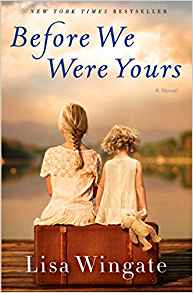
Before we were yoursLisa Wingate sets her novel Before We Were Yours in these circumstances.

Avery Stafford is a senator’s daughter being groomed to take his place. On a trip with her father to a nursing home, a resident pauses before Avery, seems to recognize her, and calls her “Fern.” An aide hustles the woman away, chalking the incident up to dementia. But the woman made off with Avery’s heirloom bracelet, and when Avery goes back to the woman’s room to retrieve it, she sees a framed photograph of a woman who looks remarkably like Avery’s grandmother. Conversations with the resident, May, lead Avery to look into her grandmother’s journals. Every scrap of information uncovered produces more questions. Avery isn’t sure what she will ultimately find or what the consequences will be, but she feels compelled to know the truth. And the process causes Avery to question whether she is living a “role” in life set out for her by others.

May’s story is told in flashbacks. She was born Rill Foss, the oldest of five children who lived with their parents on a houseboat. When Rill’s mother goes into hard labor, the midwife insists that she be taken to the hospital. While Rill’s parents are gone, a policeman comes to pick up the children, saying he will take them to see their parents. Instead, he takes them to a woman waiting in a nearby car, who whisks them away to a children’s home.

Children in the home are neglected, not well fed, and abused. But when potential adoptive parents come, the children are dressed up and threatened to be on their best behavior. One by one Rill’s siblings disappear, but when she protests or tries to thwart their removal, she is punished and her remaining siblings threatened.

Even though May’s history is heart-rending, ultimately the book ends redemptively and hopefully.

Lisa’s scenes on the river are so real, I could almost see and smell and feel the surroundings. I ached with May through her story and the ultimate hard choice she had to make, and rejoiced at how things wrapped up for her. And I enjoyed Avery’s story as well.

A very well-written, excellent book.

(Sharing with Semicolon‘s Saturday Review of Books, Literary Musing Monday, Carole’s Books You Loved)

Book Review: Reshaping It All

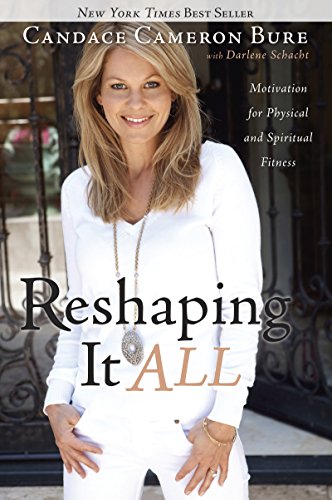
ReshapingSome of you may remember Candace Cameron Bure as oldest daughter D. J. Tanner in the TV series Full House several years ago. I have not really kept up with her career since then, but somehow I was aware that she’d had some eating issues, had lost weight, and was an outspoken Christian like her brother Kirk Cameron. So when her book, Reshaping It All: Motivation for Physical and Spiritual Fitness came up on a Kindle sale, I got it.

Although the book is not a full-fledged memoir, Candace gives glimpses of her growing-up years, family, time on Full House, marriage, and motherhood.

Her family seems remarkably grounded: even though Cameron and her brother were making all kinds of money, their father still made them work (at other jobs: he didn’t consider acting “work”) when they wanted something.

He could see that hard work was not only a prerequisite for success but that it was also a prerequisite for strong character. Struggling for the things we get teaches us the all-important lesson of self-disciple while it strengthens our body and spirit. It wasn’t enough for us to achieve a certain level of success in this world: our parents wanted us to reach our full potential as people who are strong in spirit and mind.

But Candace received mixed signals about food. He father provided “cardboard-tasting ‘health’ food” while her mother brought in doughnuts and such. Various other factors came into play, resulting in Cameron’s being about 25 pounds overweight and suffering from bulimia in her early twenties.

What I didn’t realize at the time is that my heart was longing for the things of this world. I ran to comfort food instead of running to God. I discovered my sin, but I hadn’t discovered that my heart was in the wrong place. I sought moral reformation instead of spiritual transformation. I had known who He was, but I still hadn’t grasped who I was in His sight.

She tells how she changed her approach to food and fitness. She didn’t follow a specific diet plan, and she believed everything was allowable in moderation, but she had a few principles she went by.

Transforming our bodies must begin by the renewing of our minds. Our bodies aren’t making these detrimental choices for us; they are simply animated by a mind that needs a mental makeover.

One such principle was HALT. “When you feel like reaching for food, ask yourself first if you are hungry, angry, lonely, or tired. If you’re hungry, then proceed, but it you are reaching for food in response to emotion, then halt your behavior immediately.”

And even though the book is primarily about her journey towards fitness, she applies some of the same principle to style, clutter, marriage, and other facets of life.

Candace became a Christian at age 12, and the life principles she espouses are based squarely on Scripture. She writes in a conversational, level-headed, encouraging, easy to read style.

Standing face-to-face with a mountain can be overwhelming, especially when your perspective is that of looking up from the bottom. But if we decide to take one step and then another, looking only at the ground set before us, we realize the potential we have.

The only negative for me was the fan letters. At the end of every chapter, Cameron includes a fan letter asking her a question related to the chapter before. That was fine, but each letter also contains a certain amount of fannish praise that I felt awkward reading.

This book was written back in 2011, before her co-hosting stint on The View and other pursuits. She has written a few more books since that time, too.

I enjoyed the book very much and took away a few nuggets to help me in my own journey.

(Sharing with Semicolon‘s Saturday Review of Books, Literary Musing Monday, Carole’s Books You Loved)

Laudable Linkage

IMG_0195

I’ve been mostly absent from the blog this week. It’s rare for me not to do a Friday’s Fave Five, even if I don’t post anything else. But it has been a busy week: card-making and present-shopping and wrapping for a baby shower and my oldest son’s upcoming birthday, house-cleaning for my son’s visit from out of state, buying tons of food for family get-togethers, etc, etc. It’s amazing what you can done when you’re not blogging! 🙂 I am not sure how much I will be online the next week. My oldest son is here, my husband is off, we’ll have more time with the whole family. But, in the past when I have thought I would not be posting much, I have been surprised. Our whole family likes our computer time, so we’ll see.

Meanwhile, I have collected in odd moments online the last week some thought-provoking, helpful reads I wanted to share with you.

Poor Interpretation Lets Us “Believe” the Bible While Denying What It Actually Say, HT to Challies. “Historically, theological liberals denied Scripture, and everyone knew where they stood. But today many so-called evangelicals affirm their belief in Scripture, while attributing meanings to biblical texts that in fact deny what Scripture really says. Hence they ‘believe every word of the Bible’ while actually embracing (and teaching) beliefs that utterly contradict it.”

Grace Comes With Refills.

Love Is Not a Feeling.

Praying the Words of Jesus for Your Teen.

Pants on Fire. The folly of the “I don’t know whether this is true or not; but I just wanted to get it out there” type of post.

Are We All “Harmless Torturers” Now? HT to Challies. “When we think of the savagery of social media, we often think of awful individual behavior…Harmless Torturers never go that far; we just like, retweet and add the occasional clever remark. But there are millions of us, and we’re all turning the dial.”

Why Getting Lost in a Book is So Good for You, HT to Linda.

Finally, you might be blessed by this video even if you don’t know Ron and Shelly Hamilton (of Majesty Music, aka Patch the Pirate and Sissy Seagull) and Shelly’s parents, Frank and Flora Jean Garlock. I had no idea the Garlocks were in this situation or that Ron had been diagnosed with dementia. This is not only an update of how they are doing, but a sweet testimony of a man caring for his wife.

Laudable Linkage

I have just a short list today, but I thought it best to go ahead and share it rather than have an overly lengthy one next time.

The Greatest Thing You Can Do With Your Life.

Know the Neighborhood, HT to True Woman. “Because many Christians have not ‘walked the streets’ of our Bibles, we are overly susceptible to the views of others, right or wrong. Like would-be travelers or gullible sightseers we take as fact the opinions of the ‘experts’ about the 66 cities we have rarely or never been to visit.”

Why Women Should Be Readers of Good Books, HT to Out of the Ordinary.

The “At Least” Among Us, HT to True Woman. “The thing about saying ‘At least’ to someone—particularly someone who’s confessing their own anger, fear, grief, or sadness at the circumstances of their life, is it negates their wrestle and it naturally elevates our own.”

Five Dangers of Reading Christian Biographies, HT to True Woman. You know I love Christian biographies, but there are some potential stumbling blocks in reading them.

And finally, HT to Laura, this fun real estate listing showed a guest using the various facilities on the property.

Happy Friday!

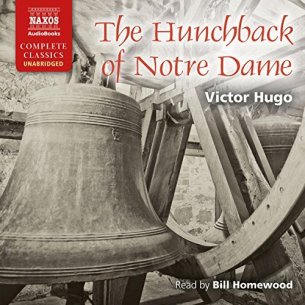
Book Review: The Hunchback of Notre Dame

The Hunchback of Notre Dame by Victor Hugo was published in 1831 but set in the Paris of 1482.

Quasimodo was a deformed child left at a place where foundlings were deposited for anyone who might want to take them in. He had so many physical issues that one of the gossipy women observing him declared it “must be a sin to look at such a thing.” A priest came by, saw the child, and adopted him.

The priest, Claude Frollo, had been a promising scholar when his own parents died. In compassion he took in his younger brother, Jehan, and raised him, and thoughts of what would have happened to Jehan if Claude had not been available compelled Claude to take in Quasimodo.

But several years later, Jehan became dissolute, preferring drinking and carousing to studying. Quasimodo, “From his very first steps among men…had felt himself, later on he had seen himself, spewed out, blasted, rejected. Human words were, for him, always a raillery or a malediction. As he grew up, he had found nothing but hatred around him. He had caught the general malevolence. He had picked up the weapon with which he had been wounded.” Quasimodo became the bell ringer for Notre Dame and loved the bells as he did no one else except Claude, but the bells made Quasimodo deaf. He was unable to benefit from the study Claude longed to impart. Thus, “Claude, saddened and discouraged in his human affections, by all this, had flung himself eagerly into the arms of learning, that sister which, at least does not laugh in your face, and which always pays you, though in money that is sometimes a little hollow, for the attention which you have paid to her. Hence, he became more and more learned, and, at the same time, as a natural consequence, more and more rigid as a priest, more and more sad as a man.” His insatiable thirst for knowledge led him to delve “further, lower, beneath all that finished, material, limited knowledge; he had, perhaps, risked his soul, and had seated himself in the cavern at that mysterious table of the alchemists, of the astrologers, of the hermetics.”

Further drawing Claude away from anything good and right was his lust for a gypsy girl named Esmeralda, who used to dance in the streets with her tambourine and have her goat perform tricks to earn money. Claude deemed that his unhealthy obsession for Esmeralda must be due to some sorcery on her part.

When Quasimodo was publicly punished for a crime that Claude put him up to, Esmeralda was the only person who took pity on him and offered him water. That act of kindness caused Quasimodo to love her, though he knew his love would never be returned.

Claude’s jealousy led to an assault for which Esmeralda was blamed. Quasimodo rescued her and hid her in the cathedral. But massive misunderstandings all around led to multiple tragedies.

My thoughts:

I have not seen any of the film versions of this book, but from what I understand, many of them twist the ending to be more upbeat. There is no happy ending in this book, except maybe for the playwright and the goat. In fact, it’s so dark and seemingly hopeless, I pondered for a long while what it was all for.

Some have said, due to the fact that the Hugo’s original title was Notre-Dame de Paris, and most of the action in the novel takes place in and around the cathedral, that it is the main character. One reason Hugo wrote this book was to call attention to the value of the Gothic architecture in the city and to rouse support for preserving it. Many of Paris’s buildings had been damaged over the centuries and new construction or repairs were not always in keeping with the Gothic style. One chapter in the book talks about how literature will “kill” architecture as a means of expression.

But on another level, this novel depicts a very human story. I can’t believe that it is all about the cathedral.

It could be about the destructive power of lust. Most of the tragedies that came raining down on almost everyone stem from Claude’s obsession with Esmeralda. Some of the others came or were exacerbated by a lust for power. Early in the novel, a playwright wanders into the wrong part of town and is put on “trial” by the riffraff of the city. Later, two different trials by the proper magistrates show themselves to be no more just than the underground kangaroo court. Even one scene involving the king shows his misplaced priorities.

It could be about the mistake of judging by appearances. Quasimodo, of course, was obviously misjudged from day one, which had an effect on his character. A captain, Phoebus is misjudged, but on the other end of the scale: because he is so handsome, people think he is good, when in reality he is a cad. Esmeralda is misjudged for her beauty but also for her ethnicity: gypsies were not respected, and she is constantly accused of sorcery or other crimes just because she is a gypsy. One of my favorite parts is a song Quasimodo sings outside Esmeralda’s window, translated by Project Gutenberg as follows:

Look not at the face, young girl, look at the heart. The heart of a handsome young man is often deformed. There are hearts in which love does not keep. Young girl, the pine is not beautiful; it is not beautiful like the poplar, but it keeps its foliage in winter. Alas! What is the use of saying that? That which is not beautiful has no right to exist; beauty loves only beauty; April turns her back on January. Beauty is perfect, beauty can do all things, beauty is the only thing which does not exist by halves. The raven flies only by day, the owl flies only by night, the swan flies by day and by night.

It could be about the nature of real love. Claude thinks he loves Esmeralda but his affection is dark, destructive, and self-centered. Esmeralda thinks she loves the captain, but her warm feelings are based on his looks and an act of kindness he rendered toward her. She’s totally blind to his real nature. Quasimodo, though not a good character, shines in his love for the bells and the cathedral – some say he is the soul of the cathedral, and without him, the building “seems deserted, inanimate, dead…like a skull which still has holes for the eyes, but no longer sight.” He loved Claude, but it was a love based on “gratitude carried to its extreme limit.” But his love for Esmeralda causes him to extend himself and sacrifice for her benefit. When he rescues her from the gallows, for the first time the mob sees him as “really beautiful,” at least for a time. Personally I like this view the best.

It could be about fate. In Hugo’s introduction, he describes “rummaging about” Notre Dame coming across the word “ANNAKE” inscribed on one of the walls. Later someone in the book defines the inscription to mean “Fate.” That did not make much sense to me, as the troubles in the book came often from wrong choices rather than outside forces. But Wikipedia defines the word as “a personification of inevitability, compulsion and necessity.” That makes more sense considering who inscribed it and why. The Wikipedia article also quotes Hugo in a collection of his poems, Toute la Lyre:

Religion, society, nature; these are the three struggles of man. These three conflicts are, at the same time, his three needs: it is necessary for him to believe, hence the temple; it is necessary for him to create, hence the city; it is necessary for him to live, hence the plow and the ship. But these three solutions contain three conflicts. The mysterious difficulty of life springs from all three. Man has to deal with obstacles under the form of superstition, under the form of prejudice, and under the form of the elements. A triple “ananke” (necessity) weighs upon us, the “ananke” of dogmas, the “ananke” of laws, and the “ananke” of things. In Notre Dame de Paris the author has denounced the first; in Les Misérables he has pointed out the second; in this book (Toilers of the Sea) he indicates the third. With these three fatalities which envelop man is mingled the interior fatality, that supreme ananke, the human heart.

I’m still sifting through what that means.

I chose The Hunchback of Notre Dame for the “classic that intimidates you” category of the Back to the Classics Challenge. It intimidated me due to its length, due to the fact that the subject matter didn’t naturally draw me, and due to Hugo’s penchant for rabbit trails. I have come close to reading it many times and then backed away, but Tarissa’s review encouraged me toward trying it.

There were fewer side discussions here than there were in Les Miserables, one of my top three favorite novels, and this book is not as long as Les Mis. But Les Mis ends triumphantly and beautifully even though it ends sadly. And even though darkness pervades Les Mis, light shines through. There’s little light in Hunchback. I was stunned to find much more sensuality in Hunchback, even though a major character in Les Mis is a prostitute. I thought Les Mis was fairly discreet, but Hunchback goes into much more detail in Frollo’s thoughts and in the captain’s nearly successful seduction scene. On the other hand, sometimes it sounds worse than it is: Esmeralda is described as “half naked” when she is taken to the gallows, but she is in a shift (something like a slip) with her legs uncovered: that hardly constitutes being “half naked” in our day, but it would have been indecent then.

So, I have mixed emotions about the book. I am glad to have read it, but it will never go down as a favorite. But I did enjoy the way Hugo developed the characters and their psychology. And, as most classics do, this book had me pondering different aspects of it for days after finishing it.

Forgive the lack of page numbers for the quotes: I listened to the audio version marvelously narrated by Bill Homewood. I got a paperback copy from the library to go over some parts, but it was a modernized translation. So I ended up using the Gutenberg version online to look up certain sections.

(Sharing with Semicolon‘s Saturday Review of Books, Carole’s Books You Loved)

Book Review: Back Home Again

Back HomeIn Back Home Again: Tales from the Grace Chapel Inn by Melody Carlson, Alice Howard is a middle-aged single woman who has lived with her father in the old family home for years. Now her father has passed away, and her sisters have come home for the funeral. The house has been left to the three of them equally, and as they discuss what to do with it, they hit upon the idea of converting it to a bed-and-breakfast.

Their first obstacle is a meddling aunt and small-town resistance to anything new. Then, the three sisters are so different, and two of them in particular disagree over every little aspect. Alice tries to be a peacemaker between her two sisters and her family and the town.

The sisters, their aunt, and the town learn to come together, forgive, and give each other the benefit of the doubt.

This is the first book in a series of over thirty, authored by various writers. A light, pleasant read.

(Sharing with Semicolon‘s Saturday Review of Books, Literary Musing Monday, Carole’s Books You Loved)

Book Review: The Pattern Artist

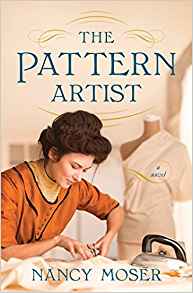
Pattern ArtistIn The Pattern Artist by Nancy Moser, Annie Wood left her dysfunctional family to go into service as a housemaid in England in 1911. She had a knack for sewing and alteration and hoped those skills would pave her way towards becoming a lady’s maid. She accompanied the family on a visit to America, and a number of factors worked together to compel her to run away with a couple of friends to see what life had to offer in this country.

Their first few days are rough, but then Annie lands a job at Macy’s Department Store in the sewing department. Her suggestions for her customers are noticed favorably by her managers, but negatively by a jealous coworker. A Butterick pattern salesman sees her potential and recruits her to join his company as a pattern designer.

Annie’s path is not always smooth, though. A number of obstacles, dangers, and a tragedy block her way. But she hopes, with hard work, determination, and a faith just beginning to bud, that she might find her own American dream. She learns “Humble beginnings are a badge of honor. It’s not where you begin, but where you end up” (p. 187).

This book caught my eye because I have enjoyed many of Nancy’s books, plus I used to do a lot of sewing and worked in a fabric shop for years. It was fun to read of how all of that worked in the early 1900s.I had not heard before of the Reform Dress Movement, an effort “started in the 1840s, rejecting the unhealthy confinement of the female form, and promoting practical clothing” (p. 189), but I am glad it helped get rid of corsets and ridiculous fashions like the hobble skirt.The movement plays a part in Annie’s career.

I enjoyed the author’s explanations in the afterword about how she came to include some of the various historic details. And somehow I totally missed the double meaning of the title until I read it in that afterward, but it should have been plain to me. Realizing that made me enjoy the story all the more.

It dawned on me at some point that the family Annie first worked for was in Nancy’s Summerfield (Manor House) series. I have only read the first book in that series so far, but it was fun to make that connection.

Overall quite an enjoyable read!

(Sharing with Semicolon‘s Saturday Review of Books, Literary Musing Monday, Carole’s Books You Loved)

Book Review: 30 Days of Hope When Caring for Aging Parents

Hope in caregiving30 Days of Hope When Caring for Aging Parents  by Kathy Howard caught my eye both because of our own caregiving journey and because Kathy used to write for Do Not Depart, a group blog I follow.

Kathy opens with a brief introduction sharing caregiving experiences of her husband’s parents and her own. Then each of the 30 chapters begins with a Scripture passage, progresses through two pages of content relating the passage to caregiving, and ends with a short prayer.

Topics include how to still honor your parents when you’ve switched roles, “ugly emotions,” “losing them before they’re gone,” keeping peace with family members in the midst of differing opinions, forgiveness, perseverance, guilt, God’s grace in our weakness, and many others.

One point Kathy made that impacted me was that when we experience regret (over anger, impatience, or whatever), after we confess it to the Lord and receive forgiveness, we can release feelings of guilt and shame. God’s goal for those feeling is “repentance, restoration, and renewed usefulness (2 Corinthians 7:8-11). God never uses our past mistakes as a weapon against us. Instead, He desires to use them as a catalyst for our personal growth and change” (p. 65).

Another point I wish I had thought of was helping our parents deal with what they’re going through: loss of independence, failing bodies, upheaval in their living situation, death of plans and dreams, inability to participate in activities that have always brought them pleasure before, adjustments to new situations. By sharing God’s Word and truth with them, in a sympathetic rather than a preachy way, we can encourage their faith and help them renew their hope. There are aspects of this I just didn’t consider, and Jim’s mom was not one to complain or even say, “You know, I am really struggling with such and such.”

The format of this book is not an exhaustive treatise, but rather a friend sharing help, support, and information.

When you’re in the midst of caregiving, there is nothing quite like talking to or hearing from another caregiver who understands by experience all that’s involved. Kathy’s book provides that fellowship and encouragement and always points to the God of grace.

(Sharing with Semicolon‘s Saturday Review of Books, Literary Musing Monday, Carole’s Books You Loved)


What’s On Your Nightstand: July 2018

Nightstand82The folks at 5 Minutes For Books host What’s On Your Nightstand the last Tuesday of each month in which we can share about the books we have been reading and/or plan to read.

I enjoy this monthly opportunity to share what we’re reading. And I love when it falls on the actual last day of the month!

Since last time I have completed:

Invincible Louisa by Cornelia Meigs, a biography of Louisa May Alcott, reviewed here. Very good.

More Than These: A Woman’s Love for God by June Kimmel, reviewed here. Good encouragement to make and keep God our first love.

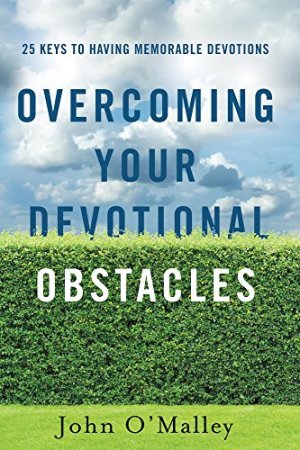
Overcoming Your Devotional Obstacles: 25 Keys to Having Memorable Devotions by John O’Malley, reviewed here. Good, practical book.

Villette by Charlotte Bronte, reviewed here. A semi-autobiographical novel of a young Englishwoman all alone in the world who ventures forth to a teaching job in France.

My Father’s House by Rose Chandler Johnson, reviewed here. Good Southern fiction about a woman rediscovering her roots and her faith after fleeing from a dangerous husband.

The Song of Sadie Sparrow by Kitty Foth-Regner, reviewed here. Good story of adjustments, growth and faith in nursing home residents and their families, with a little mystery on the side.

When the Morning Glory Blooms by Cynthia Ruchti, reviewed here. Very good, about unplanned pregnancies in three different timelines which all end up tying in together.

Looking Into You by Chris Fabry, reviewed here. Very good: a woman who placed her baby for adoption twenty years ago rediscovers her first in a TV documentary and then as a student in her classroom.

A Small Book About a Big Problem: Meditations on Anger, Patience, and Peace by Edward T. Welch was finished last time but not yet reviewed. That review is here. Excellent.

That looks like a lot, but it covers all of July and the last few days of June, a little more than the usual nightstand post.

I’m currently reading:

The Hunchback of Notre Dame by Victor Hugo

30 Days of Hope When Caring for Aging Parents  by Kathy Howard

Full Assurance by Harry A. Ironside

The Pattern Artist by Nancy Moser

Back Home Again: Tales from the Grace Chapel Inn by Melody Carlson

Up Next:

Christian Publishing 101 by Ann Byle. I keep listing this one and not getting to it. But I will one day!

The Guernsey Literary and Potato Peel Society By Mary Ann Shaffer and Annie Barrows. Finally! I think I may be one of the last people on the planet who have not read this yet, but I wanted to before the movie came out.

Before We Were Yours by Lisa Wingate

The Incorrigible Children of Ashton Place: Book VI: The Long-Lost Home by Maryrose Wood. I’ve been waiting for this last book in the series for ages and just discovered yesterday that it’s out. I’m going to need something light-hearted after I get done with Hunchback.

How about you? Anything interesting reading on your nightstand?

Book Review: Overcoming Your Devotional Obstacles

If you’ve ever tried to develop a habit of Bible reading and prayer time (often called devotions or quiet time), you know it doesn’t take very long at all to run into some obstacles. The first one is usually making time: busy schedules crowd out quiet time or urgent needs come up in the midst of it. Then when we do get a few minutes, we’re easily distracted. If we can rein in our attention and focus, we don’t always understand what we read or know how to apply it to our everyday lives. And if we do understand, we forget what we’ve read within minutes. We see cozy Instagram photos of people with their open Bibles and steaming mugs of coffee and wonder why our devotional time seems to far so fall below the picture-perfect time others experience.

Devotional ObstaclesJohn O’Malley tackles these issues in Overcoming Your Devotional Obstacles: 25 Keys to Having Memorable Devotions. I appreciate that he deliberately chose a positive, encouraging title rather one with a negative cast, like Seven Reasons I Fail in My Devotions. His purpose, he writes, is not assigning fault or blame, but rather “putting tools in your hand to help you go from defeated to victorious in your time alone with God.”

The author emphasizes that our relationship with God is based on grace, not performance. Our devotional time is not meant to try to impress Him (or anyone else). Devotions are not a work to gain favor with God; they’re a means of communicating with Him. But there are ways to improve our understanding of His communication to us.

Our Quiet Time with Him is more about discovering His presence than finding the perfect Bible reading plan or study method. If we complete a Bible reading plan and did not discover His presence, we may have checked off the box for the day on our daily Bible reading plan, but we missed Him.

When we do not spend time with God, we deplete ourselves. We deplete our peace, joy, and strength. When limiting our access to time with God, we tend to lean on our own understanding; we are filled with doubts, and we consult our own heart instead of the mind of God (Proverbs 3: 5-6).

Jesus said that His sheep know, hear, and follow His voice. Your time with the Lord is about listening. God’s Word is the answer to every human need. Read not to accomplish book or chapter count. Read and listen.

If it takes you five years to read through the Bible, you are not less of a Christian. Read it at a pace that you can comprehend it and receive something from it.

The author discusses each of the obstacles mentioned above: finding time for devotions, battling distractions, improving comprehension, discerning how to apply what we read, understanding cultural differences, and retaining what we read.

I loved the author’s description of application as “the intersection of Bible learning and Bible living.”

I particularly liked his illustration about understanding and learning from the different culture that the Bible was written in. He likens it to taking a friend to a family reunion. The friend won’t know the histories, background stories, and quirks of all the family members, so you’ll likely have to explain some references along the way. “Culture is the system of beliefs, values, and ideas of a people in a certain time period.” However, “God and His Word are transcultural.” The author suggests some resources for finding out more about the cultural aspects, but above all other resources, he reminds that the Holy Spirit indwells believers and teaches us from God’s Word.

I also appreciated the tips for retaining what we read, something I don’t remember seeing in other books about devotions. One tip was to write down on a 3×5 card three key points from the verses read and then read and think about the verse and those points several times throughout the day.

The author advocates a lot of 3×5 cards, however. I counted at least four that he recommended filling out: one for a verse to meditate on; one for recording the time spent and main truth learned; one for writing down several statements about why we read the Bible; and one to write down your expectations for what God will do through His Word. He notes that one can use a journal, electronic device, etc.

The author includes some Bible study plans, lists of resources, and work sheets.

My only point of disagreement in the book was with the author’s statement that “Applying Scripture to your life is what brings the Word of God to life.” I know what he means: we don’t benefit and really learn it unless we apply it. But I always wince when I see someone speak of “making the Bible come alive.” God’s Word IS alive (“For the word of God is living and active, sharper than any two-edged sword, piercing to the division of soul and of spirit, of joints and of marrow, and discerning the thoughts and intentions of the heart” – Hebrews 4:12, ESV; “The words that I have spoken to you are spirit and life” – John 6:63b, ESV). We’re the ones who need to be brought to life. But I know the author believes these truths, so the disagreement was with the wording.

This book is immensely practical and to the point with little to no fluff. It is an excellent resource for anyone who is trying to establish a devotional time or who has run into any of these obstacles in their own quiet time.

(Sharing with Semicolon‘s Saturday Review of Books, Literary Musing Monday, Carole’s Books You Loved)