Book Review: Overcoming Your Devotional Obstacles

If you’ve ever tried to develop a habit of Bible reading and prayer time (often called devotions or quiet time), you know it doesn’t take very long at all to run into some obstacles. The first one is usually making time: busy schedules crowd out quiet time or urgent needs come up in the midst of it. Then when we do get a few minutes, we’re easily distracted. If we can rein in our attention and focus, we don’t always understand what we read or know how to apply it to our everyday lives. And if we do understand, we forget what we’ve read within minutes. We see cozy Instagram photos of people with their open Bibles and steaming mugs of coffee and wonder why our devotional time seems to far so fall below the picture-perfect time others experience.

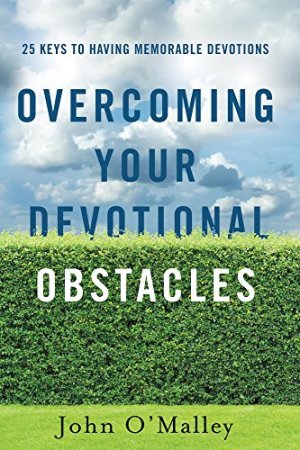
Devotional ObstaclesJohn O’Malley tackles these issues in Overcoming Your Devotional Obstacles: 25 Keys to Having Memorable Devotions. I appreciate that he deliberately chose a positive, encouraging title rather one with a negative cast, like Seven Reasons I Fail in My Devotions. His purpose, he writes, is not assigning fault or blame, but rather “putting tools in your hand to help you go from defeated to victorious in your time alone with God.”

The author emphasizes that our relationship with God is based on grace, not performance. Our devotional time is not meant to try to impress Him (or anyone else). Devotions are not a work to gain favor with God; they’re a means of communicating with Him. But there are ways to improve our understanding of His communication to us.

Our Quiet Time with Him is more about discovering His presence than finding the perfect Bible reading plan or study method. If we complete a Bible reading plan and did not discover His presence, we may have checked off the box for the day on our daily Bible reading plan, but we missed Him.

When we do not spend time with God, we deplete ourselves. We deplete our peace, joy, and strength. When limiting our access to time with God, we tend to lean on our own understanding; we are filled with doubts, and we consult our own heart instead of the mind of God (Proverbs 3: 5-6).

Jesus said that His sheep know, hear, and follow His voice. Your time with the Lord is about listening. God’s Word is the answer to every human need. Read not to accomplish book or chapter count. Read and listen.

If it takes you five years to read through the Bible, you are not less of a Christian. Read it at a pace that you can comprehend it and receive something from it.

The author discusses each of the obstacles mentioned above: finding time for devotions, battling distractions, improving comprehension, discerning how to apply what we read, understanding cultural differences, and retaining what we read.

I loved the author’s description of application as “the intersection of Bible learning and Bible living.”

I particularly liked his illustration about understanding and learning from the different culture that the Bible was written in. He likens it to taking a friend to a family reunion. The friend won’t know the histories, background stories, and quirks of all the family members, so you’ll likely have to explain some references along the way. “Culture is the system of beliefs, values, and ideas of a people in a certain time period.” However, “God and His Word are transcultural.” The author suggests some resources for finding out more about the cultural aspects, but above all other resources, he reminds that the Holy Spirit indwells believers and teaches us from God’s Word.

I also appreciated the tips for retaining what we read, something I don’t remember seeing in other books about devotions. One tip was to write down on a 3×5 card three key points from the verses read and then read and think about the verse and those points several times throughout the day.

The author advocates a lot of 3×5 cards, however. I counted at least four that he recommended filling out: one for a verse to meditate on; one for recording the time spent and main truth learned; one for writing down several statements about why we read the Bible; and one to write down your expectations for what God will do through His Word. He notes that one can use a journal, electronic device, etc.

The author includes some Bible study plans, lists of resources, and work sheets.

My only point of disagreement in the book was with the author’s statement that “Applying Scripture to your life is what brings the Word of God to life.” I know what he means: we don’t benefit and really learn it unless we apply it. But I always wince when I see someone speak of “making the Bible come alive.” God’s Word IS alive (“For the word of God is living and active, sharper than any two-edged sword, piercing to the division of soul and of spirit, of joints and of marrow, and discerning the thoughts and intentions of the heart” – Hebrews 4:12, ESV; “The words that I have spoken to you are spirit and life” – John 6:63b, ESV). We’re the ones who need to be brought to life. But I know the author believes these truths, so the disagreement was with the wording.

This book is immensely practical and to the point with little to no fluff. It is an excellent resource for anyone who is trying to establish a devotional time or who has run into any of these obstacles in their own quiet time.

(Sharing with Semicolon‘s Saturday Review of Books, Literary Musing Monday, Carole’s Books You Loved)

Book Review: When the Morning Glory Blooms

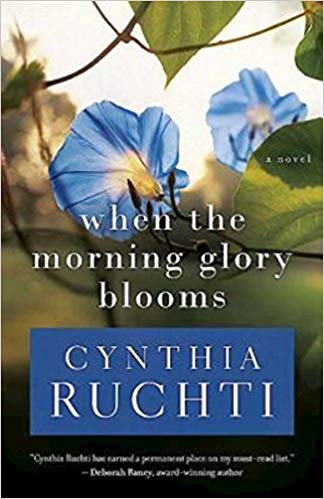
Morning Glory When the Morning Glory Blooms by Cynthia Ruchti explores three different, but related, timelines.

The first one, in modern times, involves Becky, whose teenage daughter had a baby out of wedlock. Becky takes care of her grandson so her daughter can finish high school, but she struggles with how much she’s helping and how much she’s enabling her daughter’s lack of sense of responsibility.

In 1951, Ivy just saw her boyfriend off to the Korean War. Then she found out she was pregnant. Now she’s afraid to tell him. She doesn’t want to put him in danger by distracting him, but she’s also afraid he’ll reject her. Ivy works in a nursing home, and one of her patients is Anna. Anna wants Ivy to help write down her story, and at first Ivy acquiesces just to please Anna. But she realizes that Anna is perfectly clear and not at all the dementia patient Ivy had thought. And Anna’s story is not only remarkable in itself, but it touches her own in many ways.

In the 1890s, Anna inherited some property. Her dream: to turn the old home into a haven for unwed mothers. She had little resource except faith. Her plan was not well-received by the community – except for her pastor and his wife, who helped to bring others on board.

As you can see, each of the stories involves unplanned pregnancies. Even though they were handled in different ways in different eras, they still brought complicated and painful consequences. Yet in each story line, those involved found some measure of grace and some maturity and growth through their circumstances.

The three are also connected by morning glories – but I’ll let you discover what that means.

A few quotes:

Your baby’s name is not Regret.

Wouldn’t one think that the forgiven would be quickest to forgive others? That the redeemed would fall over one another in their rush to carry the song of deliverance to those who had yet to hear its calming melody? That those who had found refuge would do everything in their power to light the way for others?

When young women lived with me, they worked beside me both because their help was needed and because work is both healing and character building.

I thought I’d have trouble keeping up with three different threads of story, but Cynthia wove them together well while keeping each distinctive enough to avoid confusion. I enjoyed the humor especially in Becky’s narrative. There were a few surprises: some of the connections between the women turn out to be different from what I had thought they would be. I enjoyed the unfolding of each woman’s story, and the need to extend and receive grace displayed in each one.

(Sharing with Semicolon‘s Saturday Review of Books, Literary Musing Monday, Carole’s Books You Loved)

Back to the Classics Challenge Mid-year Check-in

Karen at Books and Chocolate hosts the Back to the Classics Challenge for reading classics at least 50 years old. She’s holding a mid-year check-in for the challenge – and a giveaway!

I enjoy this challenge because I was not exposed to many classics as I grew up, and this challenge inspires me to expand my horizons and explore books I might not otherwise read. I’m happy to report that I have read 11 of the 12 classics on my list, and I am now reading (or listening to) the 12th. Here’s what I’ve read so far:

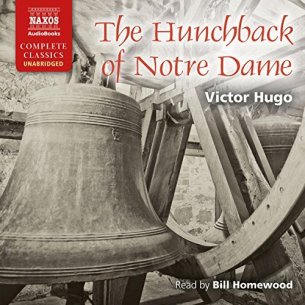
My unfinished one is a classic that scares you (due to its length or it intimidates you in some way), and for that I chose The Hunchback of Notre Dame by Victor Hugo. I’m working on it now.

Karen allows for three children’s classics, and I am counting Where the Red Fern Grows, The Secret Garden, and Journey to the Center of the Earth for those. I’m not counting 20,000 Leagues Under the Sea because nothing I read about it indicated it was written for children.

I enjoyed all of these except Journey to the Center of the Earth, but I think my favorite is He Fell in Love With His Wife. Adam Bede would be a close second. Frankenstein was the biggest surprise.

Have you read any classics lately?

Book Review: More Than These

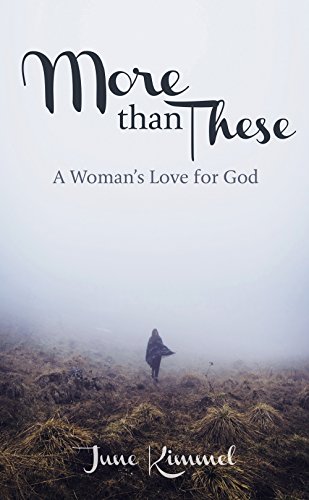
More Than TheseWhen I saw More Than These: A Woman’s Love for God by June Kimmel featured at By the Book, my interest was piqued for three reasons: JustRead Publicity Tours was sponsoring a giveaway of the ebook; I had used some of June Kimmel’s Bible studies before; June’s son-in-law was our youth and music pastor at the church we attended when we first moved to Tennessee, and he and his wife are some of the dearest people on the planet. Fortunately, I won a copy of the book!

The premise of the book is that we have multiple facets of our lives that vie for first place in our hearts, crowding out our first love for God. Some of these are God’s good gifts, like family, friends, and ministry. But when they take His place, we’re not loving either Him or them in the best way. Others are sinful aspects that we need to put to death. So June examines several of these issues, couching them in a time when she and her husband felt led of the Lord to move from South Carolina, where they were near all of their grown children and grandchildren and had jobs and ministries they loved, to Wisconsin for a new ministry opportunity.

A few quotes from the book that stood out to me:

Without love, our good efforts are empty and hollow. We are useless and unprofitable if our service, however noble, is done without supreme love for God.

We must be in the Word to know God’s promises. Sometimes people expect God to do what he never promised to do.

May we see beyond the circumstances of the moment and praise God continually. May our fear never exceed our love for God.

Do you have goals for tomorrow? Did that ambition begin at the feet of the Lord Jesus? Our plans may be exactly what God has for us, but is it the dream we long for or the Master?

We all have positive and negative experiences to recall, but God doesn’t want us living in the past or focusing on it instead of Him. God simply wants to use our past as a tool to shape us into His image.

Unless we surrender our fearfulness to the Lord, it will draw our focus off the Savior by consuming our thoughts. The circumstances intended to draw us closer to the Master will attempt to capture the throne of our heart.

June encourages us to “diligently study His Word and endeavor to take the truths we learn and turn them into daily actions that demonstrate the goodness of our God.” The more we get to know Him, the more our love for Him grows.

I would have preferred the study questions at the end of each chapter rather than all together at the end of the book, but that’s just a matter of personal preference.

Thanks to June, By the Book, JustRead Publicity Tours, and Ambassador International for the giveaway and for sending me a copy of the book!

(Sharing with Semicolon‘s Saturday Review of Books, Literary Musing Monday, Carole’s Books You Loved)

Book Review: My Father’s House

My Father's House My Father’s House by Rose Chandler Johnson begins with the idyllic childhood of Lily Rose Cates in Georgia. Then her father died when she was sixteen, turning her world upside down. Her mother had been not entirely mentally present for some time, a situation made worse by the death of Lily’s father. A lady who took care of their home, Annie Ruth, became a second mother and the main stabilizing influence in Lily’s life.

Milestones pass – high school graduation, friendships, college. Lily has a couple of part-time jobs she likes, but life is pretty tame. She is invited to visit a cousin’s place in New York City and is absolutely mesmerized by all there is to see and do. One highlight is an encounter with a handsome and charming waiter who asks for her number.

To her joy and surprise, the waiter, Manny, does call – only he’s not a waiter. The restaurant was his family’s, and he was just helping out for a while. He’s actually a driven, high-powered lawyer in Detroit. A telephone romance leads to a proposal and a move for Lily Rose. Some incidents and reactions from Manny make Lily uncomfortable, but she’s in love and her courtship is such a whirlwind, she lets them go.

Their first few days are bliss until Manny has to go back to work, leaving Lily lonely trying to get accustomed not only to a new city, but a new situation, style of home and life, everything. Before long, Manny’s dark side comes out bit by bit. Lily realizes that she can no longer brush off or overlook his actions. Manny has become unpredictable and dangerous, and Lily decides to leave with the help of a friend.

Lily goes back to Georgia to a home of her father’s that she had inherited but had not told Manny about.  She knows Manny will come looking for her, but for a while she has time to heal, stabilize, and rediscover her roots and her faith.

This was a wonderfully told story with a strong sense of place. The description of the Southern setting makes one want to settle in a rocking chair on the porch with a glass of sweet iced tea. I was drawn right in and looked forward to each new chapter, sorrowing with Lily over the loss of her father and her marriage, rejoicing as she grew.

There were a few too many references to Lily and Manny’s intimacy for my tastes, but none of that was explicit, and what was said did make sense in context. Then in the second half of the book, there are a number of instances of an unmarried man and woman staying overnight in a cabin and home. None of the other characters seems to have a problem with that: I would have loved for at least one of them to object. The author prevents anything from happening between them. And there’s an odd incident where Lilly almost seems to be saying she visited her father in heaven in a dream.

But other than those caveats, I thought this was a lovely story.

(Sharing with Semicolon‘s Saturday Review of Books, Carole’s Books You Loved)
Book Review: Looking Into You

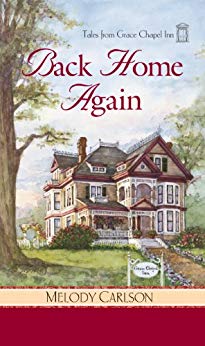
Looking Into YouIn Looking Into You by Chris Fabry, Paige Redwine is an English professor at a college in Nashville. Only her parents know her secret: some twenty years before, she became pregnant and placed her baby for adoption at the insistence of her parents. Told that the father of her baby died, Paige had no choice but to go on with her life. But she feels stuck: she’s supposed to be finishing her dissertation on a mother’s love in literature, but she can’t seem to make progress. She also feels stuck in a relationship with a nice man who wants to be more than friends, but she can’t seem to move forward.

Then one day a coworker tells her about a documentary she saw about a nursing home’s residents and workers (told in Every Waking Moment). Among the nursing home staff was a girl in her twenties who had been placed for adoption but ended up being passed through the system. The girl had nystagmus, which caused her eyes to move rapidly, and when overwhelmed she made a typing motion with her hands. She wasn’t very expressive, but she had an unusual way with the residents, especially those who couldn’t or didn’t communicate. Paige is jolted when she learns the girl’s name: Treha, the unusual name she had purposefully given the baby she had placed for adoption.

Shaken, Paige finds and watches the documentary. But even now, knowing where her daughter is and what she has been through, Paige is hesitant to reach out. But then, “indecision made the decision” for her: suddenly Treha shows up as a student in one of Paige’s classes, unaware that Paige is her mother.

The point of view switches back and forth between Paige and Treha, and also occasionally to Miriam, Treha’s boss at the nursing home. I enjoyed seeing both sides as mother and daughter learn to overcome their fears to reach out and have a crash course in mother-daughter relationships. I’m glad Fabry didn’t paint this too rosy: every relationship has its rough spots, and both women had a lot to learn in relating to one another. “Grace allows you to see yourself in light of the past, not in the shadow of it.”

This book drew me in right away, and the ordeals of both women touched my heart. I think this book could be read as a stand-alone – I had forgotten much of Every Waking Moment when I started this book. But I’d recommend them both.

(Sharing with Semicolon‘s Saturday Review of Books,  Literary Musing Monday, Carole’s Books You Loved)

Book Review: The Song of Sadie Sparrow

In The Song of Sadie Sparrow by Kitty Foth-Regner, Sadie’s assisted living facility could no longer meet her needs, so her daughter found a lovely new nursing home. Sadie feels sad and neglected by her daughter, but soon she makes friends with the other residents and staff and gets involved in the activities.

Meg Vogel is in her fifties and ready for a new start in life. Her husband recently passed away from cancer, and she closed down the freelance copywriting business she’d had to neglect during her business. She’s hired at Sadie’s nursing home to assist the activities director, her special project being the use of her writing and interview skills to compile biographies of the residents.

Elise Chapelle is the daughter of one of the residents, Charles. She had quit her job as a teacher to take care of her father, but now that he is in a nursing home, she wonders what to do with her life. She takes a writing class that involves setting up a web site.

These three women from different generations form a friendship though Elise is a Christian and Meg is an atheist. Meg is particularly antagonistic towards Christians because her husband became one near the end of his life, and she felt his new religion and views took him further away from her. She’s fairly sarcastic in any kind of religious conversation, but she genuinely likes the other ladies.

I enjoyed a view of life from inside a nursing home. My own mother-in-law’s experiences in a nursing home not nearly as nice as this one were mostly negative, but her early assisted living experiences sound like they could have fit in with this book. One common theme in all of these places is the neglect of many of the residents by their too-busy families.

But this is not just a story about a nursing home: it’s a story of faith.

Kitty’s experiences inform the book as she was once an atheist (her story is told in Heaven Without Her) and she spent much time in a nursing home first visiting her mother and then volunteering. Her web site, Everlasting Place, hosts two blogs: Eternal Eyes: A Blog About Forever and Golden Years: A Blog About the Elderly. A neat interview with the author about this book is here.

Special thanks to the author for sending me a copy of her book.

(Sharing with Semicolon‘s Saturday Review of Books, Literary Musing Monday, Carole’s Books You Loved)

Book Review: Villette

Villette was the last book written by Charlotte Bronte (another was published posthumously but was actually her first book). I had only recently heard of Villette, but since Charlotte penned one of my top three novels, Jane Eyre, I thought I’d give it a try.

Villette is a semi-autobiographical novel based on parts of Charlotte’s life. She and her sister, Emily, had taught for a time in a boarding school in Brussels, Belgium. They both went back to England when their aunt died, and Charlotte returned to the boarding house alone. Villette is a fictional town in France, but based upon Brussels. By the time Charlotte started writing this novel, she was the only remaining sibling of the original five in her family, and she well captures that feeling of being all alone in the world.

The story’s heroine is Lucy Snowe. After some unexplained tragedy in her family, Lucy was left totally alone and needing to make her own way in the world. She heard that some French families hired English-speaking governesses for their children, so she took what money she had and went to France though she knew almost no French and no one in the country. She met a young English girl, Ginevra, on the ship, who went to a French boarding school. After getting lost in Villette, Lucy found herself on the doorstep of the same boarding school run by a Madame Beck. Lucy begged for a job doing anything at the school. She was hired to take care of Madame Beck’s children, but eventually she was asked to teach English at the school.

Lucy on the outside seemed like a quiet, almost mousy person (someone called her a shadow), but inside her feelings ran deep. Charlotte named her Snowe on purpose (she was originally going to go with Frost) to portray how she seemed to other people.

In addition to the ups and downs at the school and encounters with the spoiled Ginevra, Lucy came across her godmother and his son in town, who, unknown to her, had moved to Villette. The son was a teenager at the beginning of the book but became a doctor. Later Lucy encountered a father and daughter she had also met at the beginning, and had several run-ins with an abrasive fellow teacher, M. Paul Emanuel.

One article I read said “Everyone loves Paul Emanuel.” I did not. He constantly criticized Lucy and tended to dominate, not letting her leave for lunch when he wanted to talk to her, locking her up in the attic to learn lines for a school play he was directing. Later he is shown to have several redeeming qualities, but I never got over the initial dislike.

Since France was primarily a Catholic country Lucy stood out as one of the few Protestants. M. Emanuel and a priest took it upon themselves to try to convert her, but Lucy stood firm. Lucy had no use for Catholicism (” the CHURCH strove to bring up her children robust in body, feeble in soul, fat, ruddy, hale, joyous, ignorant, unthinking, unquestioning”), but came to believe that “there are good Romanists.” She and M. Emanuel eventually came to an understanding that they both trusted in “God, be merciful to me, a sinner,” and they left each other’s religious affiliations alone after that. The priest, however, thwarted some of her interests later.

Though there are several aspects to the story, it’s primarily a psychological drama of sorts with Lucy’s highs and lows, known mostly just to herself. There are comic moments in Lucy’s asides to herself, especially in her conversations with Ginevra. But Lucy gets so low at one point, when she is left alone at the school during a long break with a mentally disabled student and then falls ill, that she has a breakdown. One passage that’s characteristic is Lucy’s encouraging of herself:

Courage, Lucy Snowe! With self-denial and economy now, and steady exertion by-and-by, an object in life need not fail you. Venture not to complain that such an object is too selfish, too limited, and lacks interest; be content to labour for independence until you have proved, by winning that prize, your right to look higher. But afterwards, is there nothing more for me in life—no true home—nothing to be dearer to me than myself, and by its paramount preciousness, to draw from me better things than I care to culture for myself only? Nothing, at whose feet I can willingly lay down the whole burden of human egotism, and gloriously take up the nobler charge of labouring and living for others? I suppose, Lucy Snowe, the orb of your life is not to be so rounded: for you, the crescent-phase must suffice. Very good. I see a huge mass of my fellow-creatures in no better circumstances. I see that a great many men, and more women, hold their span of life on conditions of denial and privation. I find no reason why I should be of the few favoured. I believe in some blending of hope and sunshine sweetening the worst lots. I believe that this life is not all; neither the beginning nor the end. I believe while I tremble; I trust while I weep.

Some article I read herald the novel’s “feminism” and Lucy’s independence, but here she shows a longing for a “true home,” someone “dearer to me than myself.” I read that she wanted to write a sad and unfulfilled ending, but her father (and I think perhaps others) urged a conventional happier one. The ending is a little ambiguous, so readers can interpret it whichever way they like.

There are several parallels between Villette and Jane Eyre. Both protagonists are women alone; neither would be considered beautiful; each has a rather unconventional romance with an unlikely suitor. There is even a bit of gothic mystery in both: Jane’s Mr. Rochester is found to have a mad wife locked up in an unused part of the house; Villette’s boarding school has a legend of a dead nun who haunts the place, which Lucy encounters a couple of times (though later a logical explanation is found for the appearances).

One downside to Villette is that much of the conversation is written in French with no translation. That posed a problem for me to listen to the audiobook since I know almost no French. Thankfully I found an annotated copy of the novel at the library with translations and other notes, but it was disjointing to have to look up passages later after reading them.

I listened to the audiobook wonderfully read by Davina Porter. Though I enjoyed the novel, Jane Eyre is still my favorite Bronte work.

(Sharing with Carole’s Books You Loved, Semicolon‘s Saturday Review of Books, Literary Musing Monday)


Louisa May Alcott Challenge Wrap-up

LMA-button2018

The Louisa May Alcott Reading Challenge hosted by Tarissa at In the Bookcase hosts this month has ended. I read two books for the challenge:

I watched the recent Masterpiece Theatre remake of Little Women and enjoyed it quite a bit – I think it aired last month. But I enjoyed watching several of the behind-the-scenes videos of the show. I didn’t know the Alcott home, Orchard House, was still preserved today with many of its originals furnishings, Louisa’s desk, and even May’s (Amy’s counterpart) sketchings on the walls. I learned, also, that one of May’s art students sculpted the sitting Lincoln Memorial.

I also listened to several of the podcasts Tarissa linked to for us.

It was fun to spend so much time reading and thinking about Alcott this month. I already have at least one book planned for next year’s challenge.

Thank you for hosting, Tarissa! It was fun!

Book Review: A Small Book About a Big Problem

Anger“Anger lodges in us. It comes home, kicks off its shoes, plants itself in front of the TV, and expects to stay. It doesn’t even look at you when you tell it to leave. But it can be moved. It just takes more than a day” (p. 35).

You wouldn’t think I was an angry person if you observed me much. I don’t generally yell or scream. I might occasionally throw something if I am alone. I tend to seethe rather than explode. Part of that is my upbringing; my father was the only one allowed to express anger. But quiet anger is still anger and still destructive. I experience it enough that when I saw A Small Book About a Big Problem: Meditations on Anger, Patience, and Peace by Edward T. Welch, I got it as soon as possible. Ed’s book, Running Scared: Fear, Worry, and the God of Rest, was a big help to me with anxiety, so I trusted this book would be just as helpful concerning anger. And it was.

It is indeed a small book. It’s only about four by six inches and 185 pages. It’s divided into 50 chapters, but they average about three pages each. Ed advises reading just one chapter a day and meditating on its main point rather than rushing through the book without absorbing it. And that’s a wise strategy. I confess I did sometimes read two at a time, if one was short or a expressed a truth that was already a part of my thinking. But I tried to move slowly. I went back through the book after finishing it and made a list of main points and quotes from each chapter. That overview over about three days helped bring out some of the recurring themes and connections.

The first need is to acknowledge that anger is a problem.

“To be angry is to destroy…In its commonness we can overlook our anger’s volatile and destructive disposition” (p. 1).

“Anger is known to take a toll on our bodies. It is not healthy” (p. 2).

“Jesus…enlarged the boundary of murder so that it includes all kinds of anger. In order to do this, He links them at the level of the heart, where they share the same lineage of selfish desire. We want something–peace, money, respect–and we aren’t getting it. The only difference is in our choice of weapons” (p. 18).

Sometimes we’re “deaf to [our] anger” because it sounds like what we grew up with; it seems normal (p. 117). Prov. 22:24-25: “Make no friendship with a man given to anger, nor go with a wrathful man, lest you learn his ways and entangle yourself in a snare.”

Wisdom–learning what God says about anger–and humility are our best aids to diffuse anger.

“Humility might sound like your worst nightmare because it seems to destine you for mistreatment. People can now treat you any way they like, or so you think. In response, you can only meekly turn the other cheek. Humility, however, is not necessarily silent, and it is certainly not passive. Instead, it is the foundation for all wisdom. It has the flexibility to rebuke, overlook offenses, invite, or get help” (pp. 25-26).

“One of your desires is “I WANT AN EASY LIFE. When this is thwarted, you will likely pounce on the offender” (p. 157).

It’s not the incident that made us angry: anger was lurking in the form of desires (James 4:1). Some desires are legitimate, but we elevate them from a desire to a need, and then get angry when they are thwarted.

Anger may not seem to relate to God, but when we don’t get a desire we have deemed important, that “says something very significant about our relationship with God” (p. 43). James 4:4. “We are not thinking about God. We simply want something or someone else, at least temporarily. Our selfishness blinds us to the betrayal. We want what we want, and we don’t want Him” (p. 44).

James 4:13-16 talks about taking the Lord’s will into account in our planning. This is hardest for me in the “little” areas of life, like traffic jams keeping me from getting somewhere on time. But “If we learn this, we no longer live as if we are slaves to the circumstances of life” (p. 108).

The passage in James reminds us our life is but a mist. “We are mere mortals who will die. What makes us so important that life must go according to our plans?” (p. 108) (emphasis mine).

Anger can seem powerful, gives an illusion of control, gets results. But “A man without self-control  is like a city broken into and left without walls” (Proverbs 25). “Whoever is slow to anger is better than the mighty, and he who rules his spirit than he who takes a city.” (Proverbs 16:32). “Real strength and real power, however, never lash out. Those who are truly strong are composed, while others are not. Real strength is used to rule our spirit rather than rule others” (p. 92).

Other chapters discuss covert forms of anger (grumbling, which reveals our displeasure that God isn’t doing things our way, sarcasm, coldness, and even indifference), the need for forgiveness, taking care of the “log” in our eye before dealing with the “speck” in someone else’s (Matthew 7:1-5). Anger can feel like fear, threat, being misunderstood, fatigue, injustice, depression, guilt, shame. Some even use anger as a shield for their own pain and vulnerability, like a hurt animal. We need to recognize these in ourselves but show mercy and patience when we recognize them in others.

The author looks at anger as shown by God the Father and Jesus and how their anger differs from ours.

“When other people’s welfare was at stake, Jesus was angry. Here is how He is unlike us: He was never angry when He was personally violated” (p. 53). 1 Peter 2:23 – when He was reviled, reviled not again.

“Does this leave you deaf, bind, and mute in the face of personal injustices? No, it leaves you so that you are not mastered by the injustices of others. Anger might feel powerful, but it is not. It renders you a servant of the one who hurt you. The way of Jesus is the way of Spirit-given power. In this power you have a clear mind to consider how and when to act” (p. 54).

“Jesus was confident that His Father was in control; there would be justice in the end” (p. 54).

“Jesus served by blessing His enemies (Luke 6:27-31), which is a good thing, because we ourselves have been His enemies” (p. 54-55).

“When the only one who has a right to be angry chooses love and service, when He considers the interests of others more important than His own and chooses humility–He changes everything” (p. 55).

And he encourages us that God loves us and wants to forgive us and help us change.

“When we see our anger clearly, we would expect God to forget about us. Instead, He pursues us with even more zeal, and He gives us even more power to stay faithful to Him” (p. 70).

“He doesn’t forgive us because of our resolve to never be angry again. He forgives us because of His resolve to forgive those who come to Him” (p. 47).

Hebrews 4:15-16 – our high priest (Jesus) sympathizes with our weakness, has been tempted like we are. Draw near to throne of grace for grace to help in time of need.

One chapter that brought me to tears was “Day 22: You Have Been Anger’s Victim.” And later, for those of us who grew up with anger:

“Retrain your ears as you listen” for anger. “Decide that the culture of anger will stop with your generation” (p. 118).

“As a protest against the anger around us, who will you bless with your words today?” (p. 119).

Our example of how to respond when wrong, is of course, Jesus, who “when He was reviled, reviled not again” (1 Peter 2:23). And when we remember how much we have been forgiven, we realize we have no right to withhold forgiveness from others (Matthew 18:27-35). Remember the love and cost to our forgiveness, freely offered (Eph. 1:7-8; 2:4-5). But even beyond forgiveness, God wants us to love and bless those who wrong us.

Forgive me for such a long, quote-heavy post. But there is so much that was so helpful in this book, and I have only shared maybe half of it. Needless to say, I highly recommend it.

(Sharing with Semicolon‘s Saturday Review of Books, Literary Musing Monday, Colletta’s Book Club, and Carole’s Books You Loved)