Book Review: Emma’s Gift

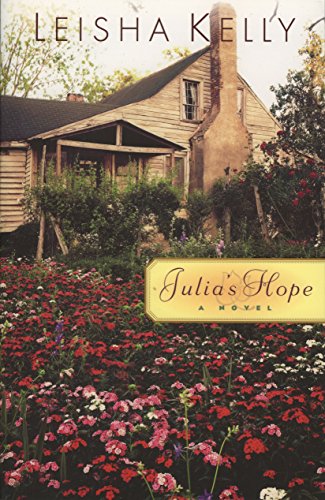
Emma's gift Emma’s Gift is the sequel to Julia’s Hope by Leisha Kelly. I think you could read and understand the second book without the first one, but you’d get much more out of the story with both of them. Plus, since Julia’s Hope will probably be one of my favorite books read this year, I encourage you to read it, too.

In Julia’s Hope, Julia and her husband, Samuel Wortham, and their two children lost everything during the Depression. They were hitchhiking east to get a job with Samuel’s cousin when they got word that the job fell through. Totally alone and with no hopes, they find shelter in an abandoned farmhouse. Then Julia gets the idea that perhaps the owner would let them stay in return for fixing up the place. They find the owner, Emma, who is an elderly amputee who can no longer live alone. She agrees to the arrangement, much to the consternation of some of her friends who think the Worthams are taking advantage of her. Before long the Worthams suggest that Emma come back to the farmhouse and stay with them, which she agrees to do, and they become something of an adopted family for each other.

Emma’s Gift picks up the story several months later. Emma was not in good health in the last book and knew her time was soon coming to an end. She passes away near the beginning of this story. It’s not unexpected, yet it’s still a blow to the family. But then their neighbor, a mother of ten children, passes away the same night, totally unexpectedly. The Worthams take in the children while the woman’s husband, George, deals with his grief. While glad to help, and, really, having no choice, an addition of ten children, one a newborn, weighs heavily. Helping the children through their grief while dealing with their own is a challenge.

Uncertainty also weighs on both families as their houses and land were owned by Emma. Emma had tried to give the Worthams the deed to the house they were in, but Samuel refused at the time. George has been unable to make any payments for months, if not years, and Emma wanted to forgive the debt. But now her affairs are in the hands of her nephew, so everyone has to wait to see whether he’ll abide by Emma’s wishes or take the property as his own.

Some of the townspeople bring food out and stay to help with the children, which helps Julia to feel that they are finally accepted. Some of the men help Samuel deal with George, who is on the verge of doing something stupid.

Even though the first part of the book is heavy with grief, please don’t let that deter you. The light does break through in the end, and it’s heartwarming to see the progression.

The point of view switches back and forth between Julia and Samuel. Two themes emerged for me: that everyone has something to give to help others no matter how much or little they have, and when you’re weighed down almost to the breaking point, God’s grace sufficient.

A few favorite quotes:

It made me feel good inside to love her right over top all the rough edges.

Kissing cheeks, passing plates, even listening to George pour out his woes one more time over a late cup of root coffee—it was all the work of God. Because people need each other. And sometimes we don’t realize how much we have to give until we’ve started giving it.

It doesn’t take away the pain of this world. But just knowing the outcome can stop the ache that comes in the middle of some lonely night, or can give you words to make a crying child smile again. God is faithful. Our shelter in the time of trouble. Our refuge in the time of storm. We don’t always know what he’s given us. When we’re deep in the hurt of some awful moment, we don’t always know what good things God has prepared for the days ahead. But we do know so much of himself has been given to our hands. To cherish. To rest in. And especially to share.

These two books are all I have, but there is another sequel, and then another three-book series with some of the same characters as well as a Christmas story. I’d like to get to the rest of them some day. In looking up Leisha Kelly after reading the last book, I was sad to discover that she and her teenage son had died in a car accident some years ago. But I am glad she left this legacy behind.

(Sharing with Carole’s Books You Loved, Semicolon‘s Saturday Review of Books, Literary Musing Monday)

Book Review: Julia’s Hope

JuliaIn Julia’s Hope by Leisha Kelly,  Samuel Wortham is out of a job, like so many others in the early 1930s. Not only did his business close, but the investment he financed with money from his wife’s inheritance failed. The family has just a few dollars. Sam’s cousin says there’s work for Sam in Illinois, so the family is going to hitchhike from Pennsylvania.

Julia, Sam’s wife, is understandably angry with Sam over the lost investment, but she tries to keep a brave face for the children and make the trip an adventure.

It occurred to me then that I ought to pray for help in getting over the anger I felt towards Sam. But I didn’t do it. I guess it was easier to think that I’d forgiven him already and was just entitled to my feelings beyond that.

A few days into the trip, with money gone and the family eating in soup kitchens and sleeping wherever they can, Sam calls his cousin to tell him where they are. He’s told the job fell through and the cousin himself is looking for work.

But when Samuel stepped out of that office, looking like a stormy wind had dashed him against a wall of stone, the clouds descended over me and I turned away. I knew by his face. Dewey wouldn’t be coming. Dewey couldn’t carry all the hopes we’d pinned on him. We were alone.

One day, caught by a sudden downpour, the family takes refuge in an abandoned farm house. Something about it appeals to Julia and the children, so she proposes they find the owner and see if they might be allowed to stay in return for working on the place. Sam thinks the idea is crazy, but Julia is so set, he humors her.

They discover the homeowner is an elderly lady named Emma. She loves the house, but due to a heart condition and the loss of  leg, she can’t live there alone any more, so she has been living in a boarding house in town. Though what the Worthams propose is unconventional, she agrees to let them stay at her house so that it doesn’t deteriorate further.

The Worthams feel like they are taking unfair advantage, though. So within a few days they propose a new situation: that Emma come out and live with them at the house. She agrees.

Emma and Julia both know how to live off the land – what greens are good for food or tea, how to plant seeds and cultivate vegetables etc. But Sam is totally out of his element. He has never farmed and he’s worried about Emma’s care. But there doesn’t seem to be anything else he can do, so he puts forth his best effort.

Emma is a town treasure, so many of her friends check on her and the Worthams. Some of her friends, however, suspect the Worthams have “sweet-talked” her and are out to milk her out of her property, and they make no end of trouble despite Emma’s assurances. One in particular “was a difficult sort, one who was pleased to be displeased.”

My thoughts:

I loved this story. Its main appeal to me is how clearly Leisha communicates the character’s feelings. I ached along with Sam in his financial predicament, his guilty feelings, and his loss of self-respect. I understood Julia’s struggle to put aside her anger,  forgive, and attend to her children in a way that kept them hopeful, rather than afraid. I felt Emma’s joy at being home again.

But I also enjoyed reading about this time era, not one that I can remember seeing much in fiction. I enjoyed the gelling of a new family group. And I appreciate the way the people in the community helped each other though most of them didn’t have a lot themselves.

We all need each other, and that’s how the good Lord intended things to be.

“You think when that boy come bringin’ the Lord bread and fish, that the Lord shoulda just sat an’ ate it all his own self?”

“Well, no, he couldn’t. He fed the five thousand.”

“That’s right,” she said with a smile. “Didn’t look like it, but God’s got plenty for ever’body. So it don’t hurt me none to share.”

The point of view switches between Sam, Julia, and Emma, so we see their different perspectives. The faith element is woven in naturally.

This is the first book in a long time that I stayed up too late to read and had a hard time putting down. I immediately started reading the sequel, and I am looking forward to more with the Wortham family.

(Sharing With Literary Musing Monday, Carole’s Books You Loved, Semicolon‘s Saturday Review of Books)

Book Review: Tea With Emma

 Tea With Emma by Diane Moody is a story within a story.

The outer story has writer Lucy Alexander with writer’s block ever since her beloved aunt died. When Lucy’s father sends her the teacup collection that her aunt had willed to her, Lucy is reminded of their special times together and of the Jane Austen book her aunt had bought for her.

Then Lucy is inspired: she can write a series of stories based on each of the cups. The first one is loosely based on Jane Austen’s Emma.

Next comes the first story, Tea With Emma.

Two lifelong friends, Maddie and Lanie, are just returning from a trip to England. Maddie is inspired to open an English tea shop, and Lanie has agreed to help her. Their giggling and carrying on in the plane annoys the seatmate in front of them, an English professor. In a comedy or errors, the girls and the professor keep running into each other, with near-disastrous results.

When Maddie goes home to her grandmother in Texas, whom she has taken care of since the latter had a stroke, she lays out her plans for the tea room and gets her grandmother’s blessing. She soon discovers that the grumpy professor lives across the street. She tries to befriend him, but he rejects her efforts.

Inspired by Jane Austen’s Emma, but evidently missing what Emma had learned by the end, Maddie feels God’s mission for her life is to be a matchmaker. She encourages Lanie towards the contractor and away from an online computer geek. It does not go well.

Meanwhile the professor has to come to grips with the issues in his life which have made him so cranky.

My thoughts:

I thought the premise would make for a fun, touching story, but I just didn’t connect any of the characters, except maybe the grandmother and the computer guy. Maddie and Lanie seemed juvenile, Maddie seemed pushy, and the professor was just a grouch, at least until he got his heart right. And the transformation from irritation with Maddie to falling in love with her just seemed too quick and unrealistic. Of course, this is a novella, so things had to happen a little faster than they would have in a longer novel.

I enjoyed the theme of letting God have control and following His direction. Both Maddie and the professor became more likeable by the end of the story. I know Jane Austen’s Emma goes through a similar learning curve, but I always found Emma sophisticated and likeable even while I disliked her actions and motivations at the beginning.

Reviews on Amazon were mixed, with some people loving the story and others not, so it may just be a matter of personalities not appealing to everyone. It’s a sweet, clean story. So don’t let me discourage you from trying the book, especially as it’s free for the Kindle at the moment.  I’d love to hear what you thought of it.

(Sharing with Semicolon‘s Saturday Review of Books, Literary Musing Monday)


Book Review: Back Home Again

Back HomeIn Back Home Again: Tales from the Grace Chapel Inn by Melody Carlson, Alice Howard is a middle-aged single woman who has lived with her father in the old family home for years. Now her father has passed away, and her sisters have come home for the funeral. The house has been left to the three of them equally, and as they discuss what to do with it, they hit upon the idea of converting it to a bed-and-breakfast.

Their first obstacle is a meddling aunt and small-town resistance to anything new. Then, the three sisters are so different, and two of them in particular disagree over every little aspect. Alice tries to be a peacemaker between her two sisters and her family and the town.

The sisters, their aunt, and the town learn to come together, forgive, and give each other the benefit of the doubt.

This is the first book in a series of over thirty, authored by various writers. A light, pleasant read.

(Sharing with Semicolon‘s Saturday Review of Books, Literary Musing Monday, Carole’s Books You Loved)
Book Review: The Pattern Artist

Pattern ArtistIn The Pattern Artist by Nancy Moser, Annie Wood left her dysfunctional family to go into service as a housemaid in England in 1911. She had a knack for sewing and alteration and hoped those skills would pave her way towards becoming a lady’s maid. She accompanied the family on a visit to America, and a number of factors worked together to compel her to run away with a couple of friends to see what life had to offer in this country.

Their first few days are rough, but then Annie lands a job at Macy’s Department Store in the sewing department. Her suggestions for her customers are noticed favorably by her managers, but negatively by a jealous coworker. A Butterick pattern salesman sees her potential and recruits her to join his company as a pattern designer.

Annie’s path is not always smooth, though. A number of obstacles, dangers, and a tragedy block her way. But she hopes, with hard work, determination, and a faith just beginning to bud, that she might find her own American dream. She learns “Humble beginnings are a badge of honor. It’s not where you begin, but where you end up” (p. 187).

This book caught my eye because I have enjoyed many of Nancy’s books, plus I used to do a lot of sewing and worked in a fabric shop for years. It was fun to read of how all of that worked in the early 1900s.I had not heard before of the Reform Dress Movement, an effort “started in the 1840s, rejecting the unhealthy confinement of the female form, and promoting practical clothing” (p. 189), but I am glad it helped get rid of corsets and ridiculous fashions like the hobble skirt.The movement plays a part in Annie’s career.

I enjoyed the author’s explanations in the afterword about how she came to include some of the various historic details. And somehow I totally missed the double meaning of the title until I read it in that afterward, but it should have been plain to me. Realizing that made me enjoy the story all the more.

It dawned on me at some point that the family Annie first worked for was in Nancy’s Summerfield (Manor House) series. I have only read the first book in that series so far, but it was fun to make that connection.

Overall quite an enjoyable read!

(Sharing with Semicolon‘s Saturday Review of Books, Literary Musing Monday, Carole’s Books You Loved)

Book Review: When the Morning Glory Blooms

Morning Glory When the Morning Glory Blooms by Cynthia Ruchti explores three different, but related, timelines.

The first one, in modern times, involves Becky, whose teenage daughter had a baby out of wedlock. Becky takes care of her grandson so her daughter can finish high school, but she struggles with how much she’s helping and how much she’s enabling her daughter’s lack of sense of responsibility.

In 1951, Ivy just saw her boyfriend off to the Korean War. Then she found out she was pregnant. Now she’s afraid to tell him. She doesn’t want to put him in danger by distracting him, but she’s also afraid he’ll reject her. Ivy works in a nursing home, and one of her patients is Anna. Anna wants Ivy to help write down her story, and at first Ivy acquiesces just to please Anna. But she realizes that Anna is perfectly clear and not at all the dementia patient Ivy had thought. And Anna’s story is not only remarkable in itself, but it touches her own in many ways.

In the 1890s, Anna inherited some property. Her dream: to turn the old home into a haven for unwed mothers. She had little resource except faith. Her plan was not well-received by the community – except for her pastor and his wife, who helped to bring others on board.

As you can see, each of the stories involves unplanned pregnancies. Even though they were handled in different ways in different eras, they still brought complicated and painful consequences. Yet in each story line, those involved found some measure of grace and some maturity and growth through their circumstances.

The three are also connected by morning glories – but I’ll let you discover what that means.

A few quotes:

Your baby’s name is not Regret.

Wouldn’t one think that the forgiven would be quickest to forgive others? That the redeemed would fall over one another in their rush to carry the song of deliverance to those who had yet to hear its calming melody? That those who had found refuge would do everything in their power to light the way for others?

When young women lived with me, they worked beside me both because their help was needed and because work is both healing and character building.

I thought I’d have trouble keeping up with three different threads of story, but Cynthia wove them together well while keeping each distinctive enough to avoid confusion. I enjoyed the humor especially in Becky’s narrative. There were a few surprises: some of the connections between the women turn out to be different from what I had thought they would be. I enjoyed the unfolding of each woman’s story, and the need to extend and receive grace displayed in each one.

(Sharing with Semicolon‘s Saturday Review of Books, Literary Musing Monday, Carole’s Books You Loved)

Book Review: My Father’s House

My Father's House My Father’s House by Rose Chandler Johnson begins with the idyllic childhood of Lily Rose Cates in Georgia. Then her father died when she was sixteen, turning her world upside down. Her mother had been not entirely mentally present for some time, a situation made worse by the death of Lily’s father. A lady who took care of their home, Annie Ruth, became a second mother and the main stabilizing influence in Lily’s life.

Milestones pass – high school graduation, friendships, college. Lily has a couple of part-time jobs she likes, but life is pretty tame. She is invited to visit a cousin’s place in New York City and is absolutely mesmerized by all there is to see and do. One highlight is an encounter with a handsome and charming waiter who asks for her number.

To her joy and surprise, the waiter, Manny, does call – only he’s not a waiter. The restaurant was his family’s, and he was just helping out for a while. He’s actually a driven, high-powered lawyer in Detroit. A telephone romance leads to a proposal and a move for Lily Rose. Some incidents and reactions from Manny make Lily uncomfortable, but she’s in love and her courtship is such a whirlwind, she lets them go.

Their first few days are bliss until Manny has to go back to work, leaving Lily lonely trying to get accustomed not only to a new city, but a new situation, style of home and life, everything. Before long, Manny’s dark side comes out bit by bit. Lily realizes that she can no longer brush off or overlook his actions. Manny has become unpredictable and dangerous, and Lily decides to leave with the help of a friend.

Lily goes back to Georgia to a home of her father’s that she had inherited but had not told Manny about.  She knows Manny will come looking for her, but for a while she has time to heal, stabilize, and rediscover her roots and her faith.

This was a wonderfully told story with a strong sense of place. The description of the Southern setting makes one want to settle in a rocking chair on the porch with a glass of sweet iced tea. I was drawn right in and looked forward to each new chapter, sorrowing with Lily over the loss of her father and her marriage, rejoicing as she grew.

There were a few too many references to Lily and Manny’s intimacy for my tastes, but none of that was explicit, and what was said did make sense in context. Then in the second half of the book, there are a number of instances of an unmarried man and woman staying overnight in a cabin and home. None of the other characters seems to have a problem with that: I would have loved for at least one of them to object. The author prevents anything from happening between them. And there’s an odd incident where Lilly almost seems to be saying she visited her father in heaven in a dream.

But other than those caveats, I thought this was a lovely story.

(Sharing with Semicolon‘s Saturday Review of Books, Carole’s Books You Loved)

Book Review: Looking Into You

Looking Into YouIn Looking Into You by Chris Fabry, Paige Redwine is an English professor at a college in Nashville. Only her parents know her secret: some twenty years before, she became pregnant and placed her baby for adoption at the insistence of her parents. Told that the father of her baby died, Paige had no choice but to go on with her life. But she feels stuck: she’s supposed to be finishing her dissertation on a mother’s love in literature, but she can’t seem to make progress. She also feels stuck in a relationship with a nice man who wants to be more than friends, but she can’t seem to move forward.

Then one day a coworker tells her about a documentary she saw about a nursing home’s residents and workers (told in Every Waking Moment). Among the nursing home staff was a girl in her twenties who had been placed for adoption but ended up being passed through the system. The girl had nystagmus, which caused her eyes to move rapidly, and when overwhelmed she made a typing motion with her hands. She wasn’t very expressive, but she had an unusual way with the residents, especially those who couldn’t or didn’t communicate. Paige is jolted when she learns the girl’s name: Treha, the unusual name she had purposefully given the baby she had placed for adoption.

Shaken, Paige finds and watches the documentary. But even now, knowing where her daughter is and what she has been through, Paige is hesitant to reach out. But then, “indecision made the decision” for her: suddenly Treha shows up as a student in one of Paige’s classes, unaware that Paige is her mother.

The point of view switches back and forth between Paige and Treha, and also occasionally to Miriam, Treha’s boss at the nursing home. I enjoyed seeing both sides as mother and daughter learn to overcome their fears to reach out and have a crash course in mother-daughter relationships. I’m glad Fabry didn’t paint this too rosy: every relationship has its rough spots, and both women had a lot to learn in relating to one another. “Grace allows you to see yourself in light of the past, not in the shadow of it.”

This book drew me in right away, and the ordeals of both women touched my heart. I think this book could be read as a stand-alone – I had forgotten much of Every Waking Moment when I started this book. But I’d recommend them both.

(Sharing with Semicolon‘s Saturday Review of Books,  Literary Musing Monday, Carole’s Books You Loved)

Book Review: The Illusionist’s Apprentice

Illusionist On New Year’s Eve in 1926, a medium in Massachusetts advertises that he will raise a man from the dead.  Though someone does rise from the newly unearthed coffin, he immediately falls down dead. The FBI treat the case as a homicide, and their investigation takes them to other vaudevillian performers, particularly Wren Lockhart. Wren is an illusionist who apprenticed under Harry Houdini. But interest in her goes beyond her stage work: the dead man had the name of Jennifer Charles in his vest pocket, Wren’s real name which she has tried to keep buried. FBI agent Elliot Matthews works with Wren to gain more information helpful to the case, but Wren reveals as little as possible, wary of bringing her past to light.

When Wren and Agent Matthews are chased and shot at in a car, the case expands from the one magic trick gone wrong on New Year’s Eve. Is someone after Wren to gain Houdini’s secrets? Or is someone wreaking revenge for the part Houdini and Wren played in debunking a medium’s claims? Or has someone uncovered Wren’s carefully buried secrets?

The Illusionist’s Apprentice by Kristy Cambron kept me on the edge of my seat with multiple twists and turns and the revelation of new information along the way. Wren’s history is told in flashbacks which jumped around to different parts of her life. They could have been confusing, but I made it a point to look at the date beginning every chapter to try to keep on track.

Besides the mystery and suspense elements, I loved Wren’s development through the story as she slowly learns to trust Matthews. I also enjoyed that there were several layers to the story. The faith element first shows up in Wren’s insistence that only one man ever raised anyone from the dead and that her profession wasn’t magic but illusion. After that her faith is more undercurrent than overt, but its expression becomes more vivid near the end.

One of my favorite quotes from the book:

There cannot be dark without the light that will overcome it. Whatever darkness there is, God’s light shines brighter. It has to. He’s the Hero in every story–especially this one.

Kristy’s first two books were set during WWII, the third one took place in a circus, and now this one centers around illusionists and vaudeville. Though I also enjoy authors who write in particular time eras or niches, I love that Kristy’s subject matter is unexpected and often largely unexplored until now.

(Sharing with Semicolon‘s Saturday Review of Books, Literary Musing Monday, Carole’s Books You Loved)


Book Review: Anchor in the Storm

AnchorIn Anchor in the Storm by Sarah Sundin, Lillian Avery looks forward to her first job as a professional pharmacist in Boston in 1941. Her new boss had not wanted to hire a woman, but a male pharmacist wasn’t available. He’s also aggravated about employing a “cripple,” though Lillian’s wooden leg doesn’t hinder her work in the least.

While Lillian sets out to prove her value at work, she fends off attention from her brother’s best friend, Arch Vandenberg. Arch is rich and good-looking, but Lillian feels these attributes are hindrances rather than attractions. Besides, for reasons of her own, she doesn’t trust any man and will never allow herself to be weak.

Arch is an Ensign recently assigned to a destroyer along with Jim Avery, Lillian’s brother. Jim and Arch had survived an attack on their previous destroyer, but Arch has been battling flashbacks, shaking hands, and a fear of being trapped below decks. He can’t tell anyone, though, both because he is an officer, and because he might be ejected from the Navy.

Arch hates his family’s wealth and plans to give his inheritance away when he gets it. He’s tired of girls who only show interest because of his family’s money. Lillian seems different, but they get off to a wrong start. Arch decides to just befriend her with the hopes that eventually she’ll be open to him as more than a friend.

While Lillian notices some odd prescriptions at the pharmacy, Arch notices odd behavior on the ship: men acting groggy, almost drunk, and not performing their duties well. Lillian tries to alert a detective to her suspicions, but he doesn’t believe she has enough evidence. Lillian and Arch decide to investigate together and compare notes. But their findings might be just as dangerous as the war.

My thoughts:

I don’t like to read romance just for the sake of romance, especially giddy, silly romances.  Sarah’s stories have much more to them, and I love that. They are neither silly nor giddy. Lillian and Arch have much to work through, mentally as well as spiritually, and the plot line involves more than their romance. I always love the way Sarah includes a lot of historical data about WWII but without becoming stuffy or didactic. The mystery plot line was well-done and the faith element was natural and realistic. I enjoyed the book very much.

This book is the second in the Waves of Freedom series, the first being Through Waters Deep. Though some characters from the first book appear in the second, and it’s enjoyable to read both, the second can be understood well as a stand-alone book.

(Sharing with Semicolon‘s Saturday Review of Books, Literary Musing Monday, Carole’s Books You Loved)