Laudable Linkage

Here are some thought-provoking reads from the last week or so:

How to Beat That Bad Mood.

Middle-agers Need Older Women Too.

Raise a Man.

Salvation in a Dementia Ward, HT to Challies.

Motherhood or Singleness: Which Is More Sanctifying? Short answer: whichever one you’re called to.

8 Things Not to Say to Your Aging Parents.

How to Write a Book in Your Spare Time.

7 Reasons Why I Stop Reading a Novel by author Jody Hedlund, whom I have not yet read except on this blog.

Getting Upset About the Wrong Things in Disney Movies and The Cold That Bothers Us both give thoughtful insights into Disney’s movie Frozen.

Finally, I couldn’t resist sharing with you something we noticed during Sunday breakfast. Apparently one of the biscuits was grumpy, or woke up on the wrong side of the pan or something. 🙂

Grumpy biscuit

Happy Saturday!

Laudable Linkage

I’m here again today with my almost weekly round-up of interesting reads from the last week or so:

Gospel-Centered Reduction: Slighting the Spirit. There has been something bothering me about the term “gospel-centered” being used as an adjective on just about everything in Christianity in recent years, but I couldn’t quite articulate why. This article touches on some of the reasons.

Coffee With Facepalm Jesus Calling, HT to Bobbi. The various problems with portraying Jesus as saying things He wouldn’t say, from memes to cartoons to Jesus Calling.

Fred Phelps and the Anti-Gospel of Hate.

9 Things We Should Get Rid of to Help Our Kids.

31 Days of Purity: The Throne of Grace. I especially appreciated the paragraph by Lambert in the middle about the difference between condemning self-talk and confession.

This Mother Tore Off labels and Nurtured Her Son’s Hidden Genius.

Soldier Finds Lifeline in Letter Exchange With Vermont Author, HT to Sherry. I have never read either of these authors but want to now. I espcially liked this: “I needed that reminder that there was still hope and still beauty in the world. At that time in my life there was none. There was nothing except guns and fear. I was really not at all sure that I was ever going to get out of that place. This book gave me a little bit of beauty at that time, and I needed it. Not the way I need a new app for my iPad. I needed it to keep my soul alive.”

Threads: Loved this: “Every great story tells in some part The Great Story. Each truth revealed helps us make sense of our world. And through each tragedy, comedy, and fairy tale, the Truth is woven through the fabric of our being.” I don’t know that I’d say that about every story – I’ve read some awful ones with little redeeming value – but overall, yes, truth even in fiction points us to the ultimate Author of truth.

Happy Saturday!

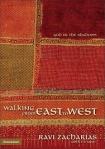
Book Review: Walking From East to West: God in the Shadows

Walking From East to WestWalking From East to West: God in the Shadows by Ravi Zacharias first came to my attention when Sherry recommended it to me. I had heard Ravi speak on the radio several times and appreciated his ministry and his way of thinking, and I generally like biographies and memoirs, so I was glad to pick this up.

The book came about when his publishers asked him to write his memoirs “in the simplest terms, with your heart on your sleeve.” In the beginning of the book, Ravi shares these lines from James Russell Lowell’s “The Present Crisis“:

Truth forever on the scaffold, Wrong forever on the throne,—
Yet that scaffold sways the future, and, behind the dim unknown,
Standeth God within the shadow, keeping watch above his own.

Ravi shapes his story by pointing out God “in the shadows,” God at work throughout his life even when he did not perceive Him.

Ravi’s story begins in the East, in Chennai (formerly Madras) in India. His earliest religious associations were bound by fear but also by the rich heritage of the cultural stories, myths, and celebrations. His mother was spiritual but also superstitious. They even had an astrologist do readings of the family once, revealing a “cultural mix of religion, superstition, and ‘cover all bases’ mentality with regard to the supernatural.” A couple of Jehovah’s Witnesses were allowed to teach the children to read, especially the Bible, and the children were awed until they got to their teaching that only 144,000 were going to make it to Paradise. When Ravi realized that there were more than 144,000 Jehovah’s Witnesses worldwide, so that not even all of their people were going to make it, much less the people they were teaching, he rejected their study as well as Christianity. He didn’t know then that there were differences between different sects, and between sects and cults.

His father had a powerful position in the government, and his siblings all seemed to have leadership personalities. Being successful professionally and influentially was one of the highest values of his culture. For various reasons, Ravi’s father did not seem to have the same esteem for him that he did his other children. He had names of endearment for the others, but not for Ravi, and Ravi was “consistently on the receiving end of his rather violent temper.” This, of course, made him even more hesitant around his father than he already was naturally, and made his father react against him further. His father told Ravi he was a failure and repeatedly told him in so many words that he would never amount to anything. Ravi felt the same way: even the astrologer mentioned gave him a disappointing reading. He felt an intense loneliness and inferiority even with friends, because they were all “either rich or brilliant, and I was neither. While they were always at the top of the class, I never did well in studies.” They always had money to spend, and he didn’t: he could only participate in what they did if they paid his way. No one “bared their heartaches or inner struggles” in his culture, so he kept it all inside.

He found something of an escape in sports, where he did excel, especially in cricket, though his father never came to any of his matches. He thought about playing professionally, but even the professional cricket players could not make a living at it and worked at other jobs. Ravi had been so poor at his studies that by his teens, when he was supposed to be finding his way in life, he had no idea what to do, and his father’s consistent belittling and his increasing sense of loneliness were all coming to a head.

About this time his sister started attending Youth For Christ rallies and invited him along. He was bored at first but came again when his sister was singing with a group that night. Then he heard a message on John 3:16 that spoke to his heart, and he responded to the invitation and prayed to receive Christ. Things were still vague and fuzzy for him for a long while.

Ravi went on to college but fell into his old habits of not studying and began to fail. His lack of purpose and sense of shame and failure finally led him to attempt to take his own life. As he recovered in the hospital over several days, a Youth For Christ leader brought his mother a Bible with a passage marked for Ravi. This leader had not known of the suicide attempt (no one did), but the passage he marked was John 14:19: “Because I live, you will also live.” When Ravi was well enough to receive it, “the words hit [him] like a ton of bricks.” He grasped at the hope in it and prayed that if God would get him well, he “would leave no stone unturned in [his] pursuit of truth.”

God continued to work in his heart, and he began to attend Youth For Christ functions more  often. He had never been a reader, but now he began to devour Christian biographies and Bible commentaries. “For the first time, I felt my mind being stretched – and I loved it. I realized that thinking could be fun, and with that simple realization I was sent headlong into the lifelong discipline of reading.”

A friend of his father’s was a hotel manager and great chef, and Ravi admired him and decided he wanted to follow in his footsteps. His father pulled some strings to get him into the Institute of Hotel Management. He excelled and now felt he had a purpose, both life and in a profession.

As he continued to grow spiritually, reading, attending Youth For Christ and a new church, eventually he went with a team to a Youth Congress, part of which was a preaching contest. His friend who was designated to preach could not due to a conflict, so Ravi was asked to fill in with only three hours notice. Some of the men in that assembly recognized God’s hand on him and encouraged him. He still didn’t think that was what God was calling him to do, but he went on more preaching ministries and teams with Youth For Christ.

His family moved to Canada after his father’s retirement, and God continued to lead Ravi to people, churches, and organizations that helped him grow, and where he met his future wife. He continued studying and working in hotel management, but began to sense that “[his] priorities and [his] ‘heartbeat’ were changing toward other things.”

One thing that stood out to me was the encouragement from older Christians that God used in his life. He writes, “I don’t think older Christians can ever fully know what an important role they play in the affirmation of younger believers. When you’re just a youth, it means so much to have someone who’s farther along the road say to you, ‘I see something in you, and I want you to be encouraged in it.'”
As he continued preaching as opportunities came, many people told him they felt he was gifted with evangelism. He was encouraged but didn’t know the difference then between being an evangelist and “just preaching.” But he knew that “a special sensation rose up in me as I preached. I had an intense urge to persuade….I knew I wanted to preach to people who were on a quest, people whose minds were challenging what they saw around them, who were hurting on the inside, and who needed someone to speak to those issues.”

Eventually God led him to become a full-time preacher, to overseas opportunities to preach, and eventually into apologetics. Of the last, he said that people talk about truth having to get from the head to the heart for one to be converted, and that was true, but after he was converted, the truth traveled from his heart back to his head again, and he developed a “hunger to know the great depths of truth behind my faith.” He wanted to understand all the whys and wherefores of the faith, and his reading and study helped him find answers. “Most of the preaching in evangelism was geared to the ‘unhappy pagan.’ What about the ‘happy pagan, I thought, ‘the one who has no qualms about his life?’ Life was about to change for me in my heartfelt desire to preach to the skeptic” and intellectuals.

Eventually God led him (and provided in a miraculous way!) to form “a ministry that would communicate the gospel effectively within the context of the prevailing skepticism. It would seek to reach the thinker and to clear all obstacles in his path so that he or she could see the cross, clearly and unhindered…I wanted to address those struggling people – the Thomases of the world –  who saw life as not making sense. If the church didn’t place a value on a person’s questioning, then we were effectively absolving ourselves of any responsibility to that person. At the same time, if the skeptic’s questions weren’t honest, we had to address them in ways that exposed his or her dishonesty. Apologetics had to be about much more than answering questions – it had to focus on questioning the questions and clarifying truth claims.” “It is up to the thinking Christian to train the mind, take seriously the questioner, and respond with intelligence and relevance.”

I know some people demean apologetics, since it’s not the gospel, which is the power of God unto salvation (Romans 1:16), but I’ve always agreed with Ravi’s thought here that it can help prepare the way for the gospel plus it can help clarify truth for the believer as well.

The ministry borne out of all this was Ravi Zacharias International Ministries (RZIM). Ravi had another name in mind, but the others involved felt the ministry should have his name and “stand up behind your integrity, or fall with the lack of it,” a scary proposition indeed.

Regarding some of the dangers that came about in his ministry (including death threats), he says, “You have to learn that you cannot claim a path just because it is less intimidating. You must keep in mind that God does have an appointment with you, that there is a cost to serving Him. At the same time, you have to be wise and not careless. To deny the reality that there are some places where you cannot go is to play the fool. More important, if you have not learned to pay the smaller prices of following Christ in your daily life, you will not be prepared to pay the ultimate price in God’s calling.”

A few more quotes that stood out:

“Successes are hollow if you do not know the author of life and His purpose.”

After telling the United Nations that there are four absolutes that we all agree to, love, justice, evil, and forgiveness: “Only on the cross of Jesus do love, justice, evil, and forgiveness converge. Evil, in the heart of man, shown in the crucifixion; love, in the heart of God who gave His Son; forgiveness, because of the grace of Christ; and justice, because of the law of God revealed.”

“There are some wonderful things from your painful past, things with a beauty you may not have realized at the time.”

“Caution laced with wisdom and commitment must always be the key to the onward step.”

“Jesus wasn’t just the best option to me; He was the only option. He provided the skin of reason to the flesh and bones of reality. His answers to life’s questions were both unique and true. No one else answered the deepest questions of the soul the way He did.”

“Sometimes in the shadows of one’s self lie the problems, and in the shadows of one’s shaping lie the answers.”

A lot of the explanation behind the differences in Eastern vs. Western thinking was quite interesting.  There is a plethora of fascinating information here, including various testimonies of God at work (including Ravi’s own father’s salvation) and how we led in Ravi’s personal life, family, and ministry.

I know some of my readers would wonder, so I’ll have to say here that, no, I wouldn’t endorse every single person and ministry mentioned in the book, but there is no denying the hand of God in the life and ministry of Ravi Zacharias. I loved reading this book and highly recommend it to you.

(This will also be linked to Semicolon‘s Saturday Review of Books.)

Can We Let God Down?

I was listening to a video yesterday when one of the speakers mentioned a fear of “letting God down” by failing in the endeavor being discussed. The other speaker, a pastor, said, “You can’t let God down. You weren’t holding Him up in the first place.”

And I thought…..seriously? You’re going to use a cutesy catchy comeback to answer someone’s wrestling over whether they can be victorious in a path they’re walking before the Lord? Although what he said was true, it just seemed a flippant response that didn’t really address the person’s concern.

According to Dictionary.com, the verb phrase “let down” can mean “to disappoint; fail; to betray.”

Can we disappoint, fail, and betray God?

Of COURSE we can. And it is no surprise to Him: “As a father shows compassion to his children, so the Lord shows compassion to those who fear him. For he knows our frame;he remembers that we are dust” (Psalm 103:13-14).

What should we do if that happens?

If it involves sin, we can confess it to God. I John 1:9 says, “If we confess our sins, he is faithful and just to forgive us our sins and to cleanse us from all unrighteousness.”

We can ask for wisdom to know what to do and to learn from our mistakes. James 1:5 says, “If any of you lacks wisdom, let him ask God, who gives generously to all without reproach, and it will be given him.”

We can let it be a reminder of our weakness and our need for God’s strength. II Corinthians 12:9-10 say, “But he said to me, ‘My grace is sufficient for you, for my power is made perfect in weakness.’ Therefore I will boast all the more gladly of my weaknesses, so that the power of Christ may rest upon me. For the sake of Christ, then, I am content with weaknesses, insults, hardships, persecutions, and calamities. For when I am weak, then I am strong.”

We can “come boldly unto the throne of grace, that we may obtain mercy, and find grace to help in time of need.” Hebrews 4:16.

Romans 8:1 tells us “There is therefore now no condemnation for those who are in Christ Jesus.” Our faults and failures will never affect our standing with Christ or His love for us. When we become God’s children by repentance and believing on Jesus Christ as Lord and Savior, He will never cast us out or disown us or disinherit us or remove us from the family. Our standing with Him is based on Christ’s righteousness, not our own, and that will never fail. We can rest secure in His love.

But there will be times when we fail, and He has to bring chastening as any loving parent would. This isn’t punishment but rather discipline which leads to holiness.

Should we let a fear of failure choke any endeavors for God? No.

Don’t be afraid to fail. Don’t waste energy trying to cover up failure. Learn from your failures and go on to the next challenge. It’s OK. If you’re not failing, you’re not growing.-H. Stanley Judd

God does tell us to “walk circumspectly” (carefully) and to “work out your own salvation with fear and trembling,” but that doesn’t mean He wants us cowering in a corner, afraid to take any step lest it be a wrong one or lest we fail somewhere along the way. He promises “grace to help in time of need.” Without Him we can do nothing, but through Him we can do all things.

Be strong and of a good courage; be not afraid, neither be thou dismayed: for the Lord thy God is with thee whithersoever thou goest. Joshua 1:9

Book Review: Made to Crave

Made to CraveMade to Crave by Lysa TerKeurst caught my eye a couple of years ago when a numbers of bloggers spoke highly of it. I was interested, but I thought from the title that it probably focused more on the emotional side of eating, like another book I read. I knew that was one factor in my problem with weight, but it wasn’t the only factor. I forgot about it until the e-reader version showed up either free or just a couple of dollars for the Kindle app last year. I got it then, but still didn’t crack it open. Then I saw on one of my friend Kim‘s posts that the Proverbs 31 Ministries, was hosting a six-week Bible study using Made to Crave, so I thought this would be an ideal time to read the book. The study just concluded last week. I’ve been jotting chapter notes here.

The book chronicles Lysa’s journey from being almost 200 lbs. down to a healthier weight. She discovered along the way that losing weight is not just a physical issue, but also a spiritual and mental one. The subtitle of the book is Satisfying Your Deepest Desire with God, Not Food. She explains that the Greek word translated “seek” in Matthew 6:33 is the word for “crave.” She says of the rich young ruler, who wanted to follow Jesus until Jesus asked him to sell his possessions and give to the poor. “Jesus didn’t mean this as a sweeping command for everyone who has a lot of money. Jesus meant this for any of us who wallow in whatever abundance we have. I imagine Jesus looked straight into this young man’s soul and said, ‘I want you to give up the one thing you crave more than me. Then come, follow me.'”

“When Jesus says, ‘Follow me,’ it’s not an invitation to drag our divided heart alongside us as we attempt to follow hard after God. When Jesus wants us to follow Him – really follow Him – it’s serious business. Here’s how Jesus describes it: ‘If anyone would come after me, he must deny himself and take up his cross and follow me’ (Mark 8:34).”

“God never intended us to want anything more than we want Him. Just the slightest glimpse into His Word proves that, Look at what the Bible says about God’s chosen people, the Israelites, when they wanted food more than they wanted God: ‘They willfully put God to the test by demanding the food they craved’ (Psalm 78:18). Yikes” (p. 28K). Those who did so never made it to the Promised Land, but wandered in the wilderness the rest of their lives.

There are multitudes of spiritual principles discussed throughout the book, but there are physical ones as well, such as the fact (proven through research) that junk foods are addicting and do make one feel less full. Some people seem to be able to eat them with no problems – some people seem to be able to eat an abundance of foods with no problem – and we struggle with that feeling unfair, but we can’t compare ourselves to others and think, “If they can eat it, I should be able to as well.” If “they” don’t have issues with food, they have issues with something.

She gives mental tips, too (which overlap somewhat with the spiritual), such as have go-to scripts for certain situations to change the mental processes we’re used to and concentrating on what we’re gaining while going through this process rather than what we’re giving up.

Something that really stood out to me from the first chapter was the observation that Eve fell while surrounded by plenty: Jesus stood strong while in a deprived state of having fasted 40 days and nights. When I feel “deprived,” that’s no excuse to give way to temptation. “He quoted God’s Word. And so can we. When we feel deprived and frustrated and consumed with wanting unhealthy choices, we too can rely on God’s Word to help us.”

Another standout (among many) was the application of I Corinthians 10:12-13: “Wherefore let him that thinketh he standeth take heed lest he fall. There hath no temptation taken you but such as is common to man: but God is faithful, who will not suffer you to be tempted above that ye are able; but will with the temptation also make a way to escape, that ye may be able to bear it.” The “way out” the Lord provided for Lysa, she says, was deciding in advance what she will and won’t have that day. I have to admit, when I think of the “way out,” I think more of God coming to my rescue with supernatural strength and reminders of His truth rather than this kind of thing, but He does also say “Casting down imaginations, and every high thing that exalteth itself against the knowledge of God, and bringing into captivity every thought to the obedience of Christ” (I Corinthians 10:5), and planning is part of doing that. In Israel’s battles, sometimes God supernaturally intervened, and sometimes they had to take up their swords and fight in reliance on Him. When God gives me that “sword” with His promise of help and grace, I’m to use it while relying on His grace and strength, not wait for Him to do the battle for me.

I didn’t quite agree with every little application or illustration (the most serious disagreement was when she was asked how to grow close to God and she replied, “By making the choice to deny ourselves something that is permissible but not beneficial. And making this intentional sacrifice for the sole purpose of growing closer to God. After all, Jesus Himself said, “If anyone would come after me, he must deny himself and take up his cross daily and follow me’ (Luke 9:23).” I don’t think that’s what I would answer if someone asked me how to draw close to God. I think I would have encouraged being in the Word and praying as well as dealing with any sin in the life and yielding our wills to His. I can see people taking this premise of denying something permissible and running with it beyond anything God intended). But overall I benefited greatly from the book and would highly recommend it to anyone.

This will also be linked to Semicolon‘s Saturday Review of Books.)

Laudable Linkage

Here are some noteworthy reads from the last couple of weeks:

An Invitation. “I don’t want to be grouchy and discontented. I don’t want to become angry with my kids, short-tempered with my husband, or aloof with my friends. It is my desire to be more. To be patient, kind, and others-centered.”

Dear Lonely Mom of Older Kids.

Why Miscarriage Matters If You’re Pro-Life.

Don’t Be Original.

There are two helpful posts concerning the issue of Christians not wanting to give business to situations that would violate their consciences and whether or not that is hypocritical: Against Christian Hypocrisy and On Weddings and Conscience: Are Christians Hypocrites?

The Heartbreak of Foster Care. “We don’t do it because we aren’t afraid of heartbreak, but because we are afraid of what would happen to them without us.”

Trailer for “Unbroken” Movie. I loved the book about Louis Zamperini, Olympic runner who became a POW in WWII. The trailer looks good: I hope the movie does it justice.

Teddy Roosevelt’s Rules For Reading. I especially like the idea that there is no list of the 100 best books that will fit everyone.

Infographic: Top Ten Reasons for Choosing a Paper Book Over an E-Book. I do read e-books – can’t pass up the free or deeply discounted chance to get books, plus they’re convenient to carry around – but I do still prefer paper books. This graphic shows the top reasons other people prefer them, too.

Why Some Kids Can’t Spell and Why Spelling Tests Won’t Help.

And a couple of fun things:

Tiny Lego Photographer. Really neat photos.

The Man Who Built the Settlers of Catan game.

20 People Who Tried Things on Pinterest and Totally Nailed It. This is hilarious. I’ve written before of some of my cake disasters: these look like something I would do.

I saw this going around Facebook: a math teacher whose students never suspected his secret softer side:

Laudable Linkage

Here is my Saturday collection of some great reads discovered in the last week or so:

When God Does the Miracle We Didn’t Ask For.

15 Reasons I Stayed in the Church.

O Zion, Haste. How missionary work offers not only help for eternity, but also for the here and now, and some reasons why that is.

My Take: DIY, Pinterest, and the Rise of the New Domesticity. This and the two links directly above are all from the same blog. Someone put a link to one on Facebook and I really enjoyed looking at some of the other posts as well.

Use Your Words to witness as well as your life.

5 Things Modesty Never Taught Me.

25 Ways to Communicate Respect to Your Husband.

Five Lies About Your Body.

Sometimes Valentine’s Day Is About the Moldy Drywall. Loved this.

Tips for Possible Power Outages. Glad we didn’t have to use these during the last storm, but it’s good to review them occasionally.

Happy Saturday, or as my son said, “Happy Discount Love Candy Day to all! ” 🙂

Laudable Linkage

Here are some noteworthy reads discovered over the last few weeks:

Has ‘Authenticity’ Trumped Holiness?

Authenticity, Honesty, and the Stay-at-Home Mother.

Would That Be Okay? “What if your kid never really does all that great in sports?…never really gets it when it comes to reading?…isn’t wired for college?”

3 Questions You Must Ask Before Reacting.

How Will I Compare?

Don’t Give My Husband Romance Lessons, Thank You.

Before You Were Mommy.

I Feel Like a Mean Mom

When Mothering Is Hard and No One Sees.

Valentine’s Day Single? No Problem…Seriously.

The Historical Reality of Adam.

The Beginnings of a Dark-Tinted, Truth-Filled Reading List

Selling Hope: How Christian Fiction Makes a Difference.

Hope you have a great weekend!

Laudable Linkage and Videos

Here are some good reads from the last couple of weeks:

Christmas Is For Those Who Hate It Most.

God May Not Have a Wonderful Plan for Your Life. He does, in the sense that He made it possible for us to go to heaven when we repent and believe He sent His Son to take our sins on the cross, and He has promised to be with us in this life, but some things in life are hard. The Bible said they would be, and we can give people the wrong picture of Christianity and rub salt in an open wound sometimes by spouting phrases like this.

God’s Heavenly, Glorious Melting Power. Ways to keep devotions from becoming mechanical.

Scowling at the Angel. “There in my brokenness I had so little to give. But grace, she never left. She met me in all my frailty, raw and wrathful, as exposed and defenseless as the day I was born.”

The Needs of Three Women. Being ministered to while ministering to the homeless.

3 Marks of Righteous Anger.

Daily Scriptures to Help Tame the Tongue.

The Story of Gwen and Marlene. This is a theme I have mentioned often, that women’s ministry is not always in specific programs. It’s mostly a matter of being available and interested in others.

Inhospitable Hospitality.

Our Love-Hate Relationship With Christian Art. “Christian art? Are you kidding me? Christianity has produced the greatest art of all time.”

A Letter to an “Expectant” Adoptive Mom. Great advice from one who has gone through the process not only of adopting, but adopting internationally.

How to Get People to Read the Bible Without Making Them Feel Dumb.

Union With Christ in Marriage. “Paul doesn’t give us commands to extract from the other spouse. Instead, Paul instructs us in the graces to give!”

What Foster Parents Wish Other People Knew.

It Takes a Pirate to Raise a Child, HT to Bobbi. Loved this – about how children’s stories shape their ideas of right and wrong, e.g., telling the author’s son that he was acting like Edmund in The Lion, the Witch, and the Wardrobe  helped him understand his behavior towards his siblings was wrong when explaining and exhorting wasn’t getting through.

Merry Literary Christmas. 🙂

A couple of fun videos:

An two year old with amazing basketball skills:

Captain Picard and crew sing a Christmas song:

And a nice summary of The Paradox of Christmas:

Happy Saturday!

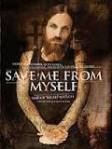
Book Review: Save Me From Myself: How I Found God, Quit Korn, Kicked Drugs, and Lived to Tell My Story

save me Save Me From Myself: How I Found God, Quit Korn, Kicked Drugs, and Lived to Tell My Story by Brian Welch wasn’t on my radar. I had heard of Korn, but I was never into metal music, never heard them, and did not know any of the band members’ names. But this book caught my eye when it was on sale for a low price for both the Kindle and audiobooks versions, so I thought I’d check it out. I was wary at first about how explicit he might have been about his former life, but Amazon reviews assured that he wasn’t graphic about it.

Brian grew up as an ordinary kid in Bakersfield, CA, who had a passion for music and was a part of several bands before Korn came together and exploded onto the music scene. He first tried drugs at the age of eight with a friend but didn’t get into them heavily until later on. By young adulthood he drank heavily, was addicted to meth, and sometimes tried other drugs. He says that meth was considered a “dirty’ drug but Xanax and prescription drugs were more respectable. He describes an ER doctor bringing drugs to the band, getting high with them all night, and then getting ready to go back to work at the ER the next morning (I would have hated to have been that guy’s patient).

Though he attained his childhood dream of becoming a rock star and loved performing, he found he was unsatisfied. There was an undercurrent of anger in his life beginning with his father’s “Mr. Hyde” moments and his own insecurities from being bullied as child. That was an aspect that caught me by surprise: I think we sometimes think of drug addicts as into it for pleasure and partying and don’t realize that they want the same things everyone else does: a home, a family, someone to love. When relationships fail and when life’s problems surface, it hurts them as deeply as anyone else, and they try to deal with the pain by anesthetizing it with drugs. But the drugs wear off, leaving them depressed, and they know they should stop, but they’re hooked. I also hadn’t realized that meth could leave a user severely depressed as they came off of it, perpetuating a vicious cycle of taking the drug again to numb the pain.

Brian quit several times, but after a time would try it again “just once,” and then “once in a while,” and before long he would be using regularly again. And before we scowl at that, we need to remember how often we’ve decided we need to “cut down” on sweets or TV or social media or whatever, only to pick it all back up again at the slightest provocation. It’s hard enough to break any habit, but when a drug is tailor-made to be physically and mentally addicting, getting off of it for good seems hopeless.

When Brian heard his five year old daughter singing around the house one of Korn’s songs about being addicted to sex, he felt something had to change, but he was so foggy from drug use that he couldn’t think clearly. He was suicidal much of the time that he wasn’t on drugs and felt that the drugs would do him in at some point, but he felt powerless to change anything.

Then God created a perfect storm to draw him to Himself: a real estate business partner who was a Christian shared a Scripture verse with him that spoke to his heart (Matthew 11:28: “Come to me, all who labor and are heavy laden, and I will give you rest”), he began to run into old friends who had become Christians, he attended a church service with a friend, and he gradually came to a point of believing for himself on the Lord Jesus Christ for salvation. I was almost in tears at this part of the book.

Around the same time he felt he should quit Korn to focus on raising his daughter, and the rest of the book tells of his early “baby steps” as a Christian, his growth, trips to Israel and India, and working on new music.

Sometimes when a celebrity professes faith, we can be wary because we don’t know exactly what they’ve heard or why they’re responding, but as far as I can tell, Brian’s faith is the real deal. Do I agree with every little thing he wrote and has done since? No. 🙂 Some things he wrote caused me to think, “Wow, that’s some good insight,” but then a few paragraphs later I’d wince a bit. He had only been a believer for a couple of years or so when he wrote this, so I pray he will continue to grow in the Lord.

I know some of you would want to be forewarned that there is a bit of bad language scattered through the book. Most of you who have read here long know that the “f word” is usually a deal-breaker for me in books and films, particularly when it is thrown in gratuitously. It’s not just that I don’t like it (though I don’t: I loathe it), but I don’t want words like that floating around in my brain that can then come to the forefront at an inopportune moment, and the more I read them, the more likely it is that they’ll do just that. On the other hand, I have relatives who use such words, and I have to delete about every other post of theirs on Facebook because I don’t want that language on my screen and in my mind, but I can’t unfriend them, because they’re family, after all. I don’t want to be aloof from them and make them feel like they have to clean up their act before I’ll interact with them: that is the complete opposite of the grace of Jesus Christ. Sometimes we have to take people where they are. Brian did say at some point in the book that God was working on him about cussing, and hopefully as he grows in the Lord, God will speak to him about the language of Christians.

There is another issue I wanted to comment on mainly because I feel a responsibility when I mention a book here, because sometimes people have bought books on my recommendation, and I don’t want anyone to get the mistaken idea that I am promoting something in a book that I’m not. That issue in this book is speaking in tongues. The pastor and church Brian was initially under were not charismatic, but later he came under some charismatic teaching and followed it. I know there are good people on both sides of this issue: some of our relatives that we are closest to in other doctrinal issues we would differ from in this. I don’t doubt anyone’s salvation or sincerity if they speak in tongues (though we have had people doubt ours because we don’t), but I personally believe there is a good case for believing that some of the miraculous “sign” gifts like tongues, prophecies, etc., ceased once the Bible was completed. I wrestled with this a lot in my early Christian days after reading The Cross and the Switchblade and being exposed to some charismatic television. I even called in to the TV show one day, and I don’t remember if the person on the line asked me if I was saved or believed in the Lord: they asked me if I had spoken in tongues. They tried to get me to come out with a few syllables to get things going. Alone in my room I prayed that if this was something God had for me, that He would allow it to happen, and I was disappointed when nothing happened. It took me a while to realize He answered my prayer, and that He didn’t have that for me. I don’t think that the modern charismatic movement is much like the tongues-speaking in the book of Acts: there was no trying to work it up by mouthing a few syllables there, and according to Acts 2, the tongues were actual languages that the speaker didn’t know but the hearer did. I do agree with Brian when he writes that God is not going to love you more if you do or don’t speak in tongues.

I would also say to him, if I could, that though I understand his frustration over factions of Christians fighting over doctrinal issues, that doesn’t mean they’re not important and that we can chuck them overboard. The Bible has much to say about sound doctrine, and the apostles spent a lot of time correcting false doctrine. We are all at different stages of our understanding level and maturity level, so there are going to be differences of opinion. I’ve mentioned ere before that years ago when I read 50 People Every Christian Should Know by Warren Wiersbe, I was struck by the fact that many of the people he mentioned were on opposites sides of the fence on some issues, yet God mightily used all of them. That doesn’t mean those issues aren’t important: each of us is responsible to study them out before the Lord. But people can differ on some side issues and still be friends and love God and be greatly used by Him.

Brian’s style of writing is conversational and easy to read. I was immensely blessed by hearing how God brought Brian to Himself. I was a little dismayed to read that in recent years he has gone back to playing with Korn, in that the lifestyle as well as the lyrics of their old songs (at least what little I know of them from what he says of them) do not seem conducive to Christian life and growth. I hope he’s not setting himself up for a fall. Yes, as he said in an interview, Jesus did hang out with sinners, but the Bible also tells us there are some things to flee and some things to follow. But I do pray he continues to grow in the Lord and to shine for Him, and I wish him all the best.

(This will also be linked to Semicolon‘s Saturday Review of Books.)