Laudable Linkage

Laudable Linkage

I found several noteworthy blog posts this week:

The Good We Cannot See, HT to Challies. “I wanted to see the purpose of the suffering; at least a small glimpse. I wanted to understand even a small piece of why God allowed it. I wanted to see the man that Ezra would become because of the pain he endured. I wanted to see a piece of redemption. I wanted to experience the tangible comfort of knowing that God intended the suffering for good with good defined by me. Therein lies the trouble.”

All the Books I’ll Never Read, HT to Linda. This resonated with me so much! “Not only will I never read all the books I wish I could, but I’ll never be all the things that I want to be, or do all the things that I want to do. When this realization first hit me, I have to confess I did not roll with it well.”

What We Miss When We Skip the Prophets. “The prophetic books of the Old Testament make up 250 of the Bible’s 1189 chapters. That’s about 21% of the Bible! And I think those books are sorely neglected.”

Big Heads or Big Hearts, HT to Knowable Word. “Truth and love ought not be thought of as if they are opposites — as if the pursuit of one will automatically detract from the pursuit of the other. Even in specific situations, we shouldn’t think that we need to decide between standing for the truth and loving. We can always do both!”

Beware Toxic Servant Leadership, HT to Challies. “Sometimes, what people mean by servant leadership is not leadership at all. If I only understand leadership as deferring to others and not stepping on people’s toes, then I’m at risk of ignoring what God has called me to do. We have become so allergic to authority that anytime someone expresses any authority at all we immediately recoil. This is not good.”

Why Does John Mention That He Outran Peter to Jesus’ Tomb? HT to Challies. I don’t remember if I ever wondered about this, but I appreciate this answer.

The 15-Minute Block, HT to Redeeming Productivity. “I am obsessed with this idea of the 15-minute block. Anything and everything becomes possible when you break it down into a manageable chunk.”

Should We Capitalize Divine Pronouns? I’ve been taught all my life that capitalizing pronouns referring to God was a sign of respect to Him. But lately I’ve found several sources saying that capitalizing divine pronouns is not necessary–partly because they are not capitalized in the original languages nor in many Bible translations. I’m glad Tim categorizes this as a conscience issue. Author and editor Lori Hatcher discusses the same question in To Capitalize or not to Capitalize: Exploring the Deity Pronoun Question.

Dead Man Talking. Bob Roberts is frequent camp speaker and the founder of Kids4Truth Clubs. We attended the same church for several years. Bob had cancer a few years ago, which went into remission. But now it’s back in his liver, and the prognosis is not good. While undergoing some experimental treatments as a last effort, Bob didn’t want to “waste” his cancer. So he began a podcast with five men who have been his friends for 30+ years to discuss what God is doing in his life. The one I linked to is the third, where he discusses the first half of his “bucket list.” The first one was more general; the second one discussed friendship and the impact of the group potentially losing one member. These are available wherever one listens to podcasts and on YouTube.

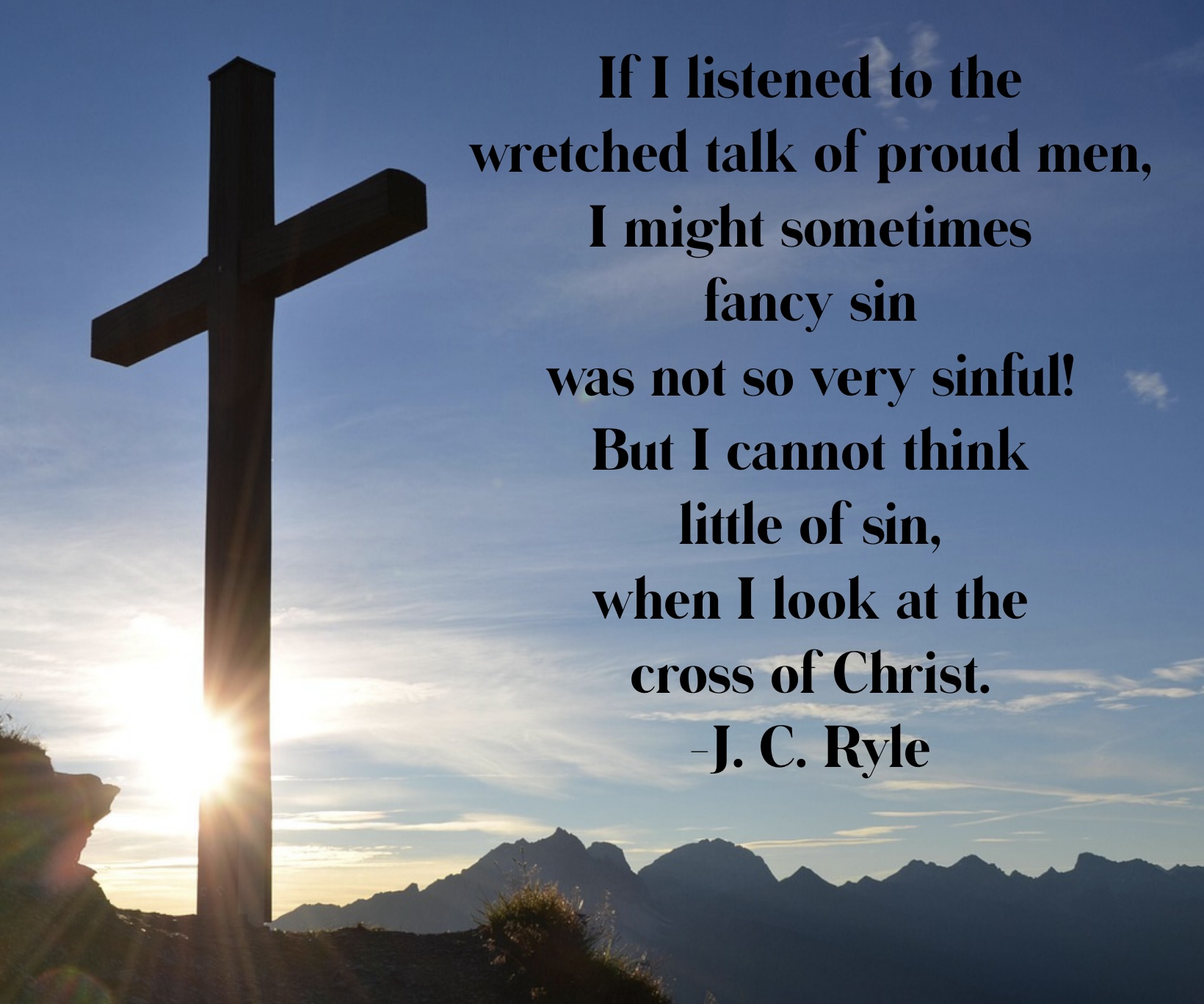
If I listened to the wretched talk of proud men, I might sometimes fancy sin was not so very sinful! But I cannot think little of sin, when I look at the cross of Christ. — J. C. Ryle

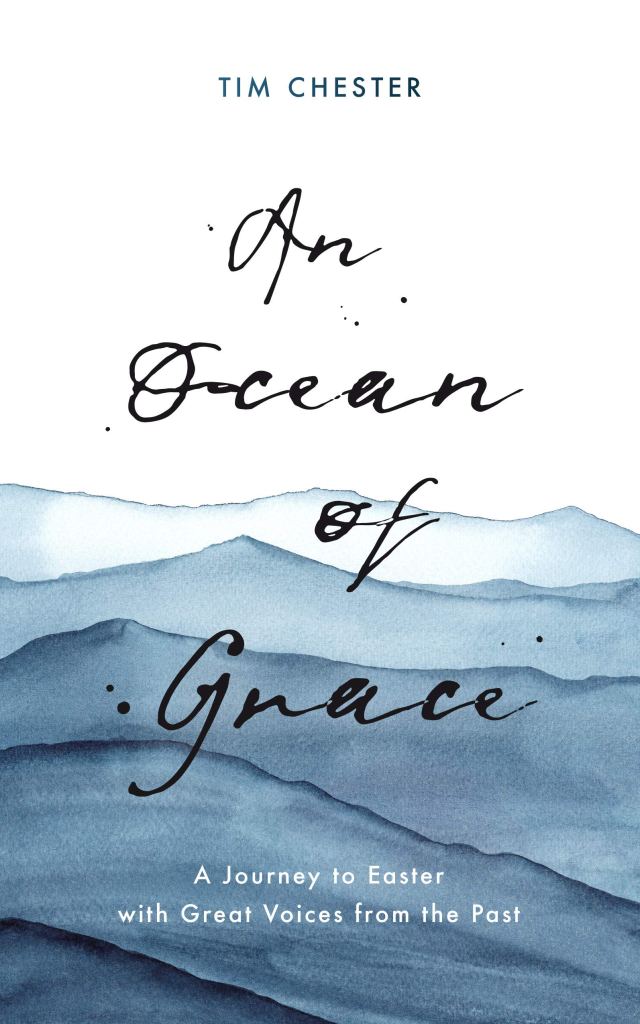
Review: An Ocean of Grace

Ocean of Grace

Tim Chester collected collected thoughtful writings about Christ’s death and resurrection and edited them into An Ocean of Grace: A Journey to Easter with Great Voices of the Past.

Some of the selections are from familiar pens: Augustine, Martin Luther, and Charles Spurgeon. Others are more obscure: Cyril of Alexander from the fifth century, Gregory of Myssa from the fourth, Cyprian of the third, and many others. I was delighted to see a piece by Anne Steele, an eighteenth-century female hymn writer. And I was surprised to see a selection from Catherine Parr, Henry VIII’s last wife, leading me to read a little more about her online. I think Spurgeon is the most recent of the authors included.

These selections are divided into daily readings from Ash Wednesday to Easter. They are grouped into themes for each week: The Light of Love, The Welcome of Grace, The Exchange of Places; The Assurance of Faith, The Gift of Christ, and The Victory of God.

In his introduction, Chester says he removed archaic language except for poetry and hymns while trying to retain the “voice” of the original authors. He also says many “descriptions have been turned into a prayer addressed to God or an exhortation addressed to our own souls.” He doesn’t say why, but he also turned what I think were prose selections into a free-verse style of poetry. I wish he had kept the selections closer to the originals–but then maybe I wouldn’t think so if I read the originals.

I began reading this book late in the season due to finishing a previous study. Because of that, and because the selections were fairly short, I read two or three a day. I think that may have lessened the impact of them. If I read this book again, I’ll plan to read one a day as the author intended.

Nevertheless, I did receive much food for thought and warmth for heart by reading this book. I have many places marked, but I will try not to overwhelm you with quotes.

In an excerpt from Catherine Parr’s The Lamentations of a Sinner, she spends several lines listing her sins and Christ’s merits. She concludes:

Shall I fall in desperation?
No, I will call upon Christ,
 the Light of the world,
  the Fountain of life,
   the relief of all careful consciences,
    the Peacemaker between God and man,
     and the only health and comfort of all true repentant sinners.

By his almighty power he can save me
and deliver me out of this miserable state.
For this is the life everlasting, O Lord,
 to believe you to be the true God,
 and him whom you sent, Jesus Christ.
By this faith I am assured,
and by this assurance I feel the forgiveness of my sins:
 this is what gives me confidence,
 this is what comforts me,
 this is what quenches all despair (p. 10).

This line of Puritan Stephen Charnock’s “A Discourse of the Knowledge of Christ Crucified” stood out to me: “May all the charms of sin be overcome by this ravishing love” (p. 27). He goes on to say:

How can we, with thoughts of the cross alive in our hearts, sin against so much tenderness, compassion and grace, and all the other perfections of you, our God, which sound so loud in our ears from the cross of Jesus? Shall we consider him hanging there to deliver us from hell and stain, and retain any desire to walk in the way which led him there? Can we take any pleasure in that which caused so much pain for our best friend? Can we love that which brought a curse better than him who bore the curse for us?” (pp. 26-27. I put this in paragraph form just to save time formatting).

This from Isaac Ambrose also stood out to me: “Surely his death is more satisfactory to God than all your sins can possibly be displeasing to God” (p. 94).

This was from Thomas Watson: “We cannot lift up Christ higher in heaven, but we may lift up him in our hearts. So let us believe him, adore him and love him, and exalt him in our lives, for all the doxologies and prayers in the world do not exalt Christ as much as a holy life” (p. 132).

I loved this closing poem from Henry Vaughan titled “Easter Hymn”:

Death, and darkness get you packing,
Nothing now to man is lacking,
All your triumphs now are ended,
And what Adam marred, is mended;
Graves are beds now for the weary,
Death a nap, to wake more merry;
Youth now, full of pious duty,
Seeks in thee for perfect beauty;
The weak and aged tired, with length
Of days, from thee look for new strength;
And infants with thy pangs contest
As pleasant, as if with the breast.
Then, unto him, who thus hath thrown
Even to contempt thy kingdom down,
And by his blood did us advance
Unto his own inheritance,
To him be glory, power, praise,
From this, unto the last of days! (p. 154).

I had a couple of formatting complaints in the book. Chester writes verse references as, for example, Isaiah 61 v 10 rather than Isaiah 61:10. The latter has been used for centuries. I have never seen the former except in Chester’s books. I wondered if perhaps it’s done that way in the UK, but I have read several books from authors from various countries without having seen this way of writing Bible references. I Googled “how to write Bible verse references” just to see if this is a new style, and I didn’t see it mentioned in any source I looked at. It’s not a big deal in the grand scheme of things. It’s more a commentary on my heart to say it irritated me. But I tried to overlook it

The other complaint is not unique to Mr. Chester, but is to all the books I have from The Good Book Company. They put the table of contents in the back of the book rather than in the front after the title page. That doesn’t make sense to me. I use the Table of Contents to look at where a book is going, not where it has been. When I am considering a new book, I look at the front cover, the back cover, the description, the table of contents, and the first few paragraphs or pages. If I look at a sample on Amazon, they usually only include the first several pages. If the Table of Contents is in the back, I am not able to see it in the sample.

I also wish Chester had listed the titles of all the readings in the Table of Contents rather than just the main section headings.

Again, these are minor issues compared to the content of the book.

There were just two or three places where I put a question mark or didn’t quite agree with how something was worded. But overall, I enjoyed this book and plan to use it again for Lenten reading in the future.

(I often link up with some of these bloggers.)

Hebrews for You

Hebrews for You

Most New Testament epistles begin with who wrote the letter and who the audience is. The author of Hebrews does neither. He appears to be someone familiar with the apostles’ teaching. He might even have been an apostle himself. He references the Old Testament. and seems to assume his audience would be familiar with it. Thus we believe he’s writing primarily to Jewish Christians. Many were undergoing persecution for their belief in Jesus and the prophesied Messiah. Some felt maybe they should go back to the Jewish traditions they had been taught.

The main theme of the book is that Jesus is better: better than angels, better than Moses, better than God’s previous revelations. His priesthood, according to the line of Melchizedek Psalm 110:4), is better because it’s eternal. His sacrifice is better because He only had to offer it once; He didn’t have to offer sacrifices for His own sin because He didn’t have any sin.

There are stern warnings at the end of each section–warnings against apostasy, against failing to enter God’s rest.

Probably most people who know anything about Hebrews are familiar with the “hall of faith” in Hebrews 11: the detailed list of people in the Bible who did follow Jesus in faith. They weren’t perfect; some on the list are a surprise. They are an encouragement to us to keep following.

This chapter also tells us, “And without faith it is impossible to please him, for whoever would draw near to God must believe that he exists and that he rewards those who seek him” (verse 6).

Chapter 12 urges readers to endure God’s discipline as a loving father and reminds us of the coming kingdom that cannot be shaken. Chapter 13 ends with practical instructions and applications.

One of my favorite verses in the book comes near the end in chapter 13, verses 20-21: “Now may the God of peace who brought again from the dead our Lord Jesus, the great shepherd of the sheep, by the blood of the eternal covenant, equip you with everything good that you may do his will, working in us that which is pleasing in his sight, through Jesus Christ, to whom be glory forever and ever. Amen.” What a magnificent prayer that we can pray today.

Even though the first audience was Jewish, we Gentiles benefit from reading the book today. The truth it contains is applicable to all. We’re spiritual children of Abraham by faith (Galatians 3:7-9) and we’ve been grafted in (Romans 11). We don’t replace Israel. But we’re part of God’s family. So all this truth pertains to us, too.

If you’ve read through the first five books of the Bible, especially if you’ve gotten lost in Leviticus, reading Hebrews will really help in understanding.

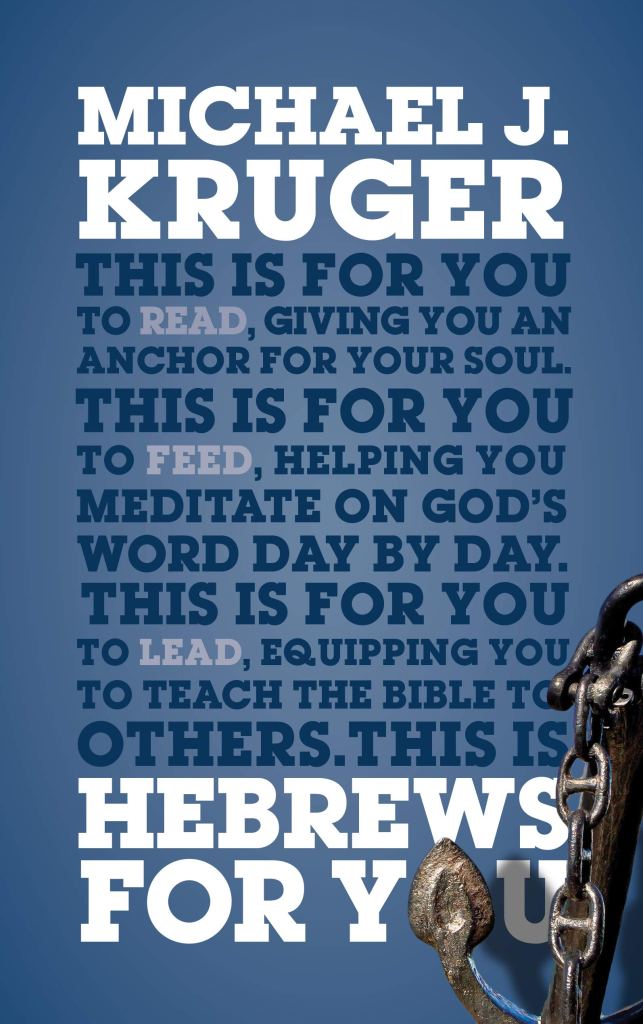
Our ladies’ Bible study has been reading Hebrews this semester using Michael Kruger’s book, Hebrews for You: Giving You an Anchor for Your Soul as an aid. I appreciated the author’s thoughtful insights as he went verse by verse through the book.

Some of the quotes I marked:

The old covenant was not false or wrong. But it was provisional and partial. “The law has but a shadow of the good things to come instead of the true form of these realities [Hebrews 10:1]” (p. 136).

Since God’s word is empowered by the Holy Spirit, when we encounter the word, we encounter God. It is through God’s word that we meet him, learn from him, and have fellowship with him (p. 61).

The word of God is not just a way to get to know God but also a way to get to know yourself. When you read the Bible and let it penetrate your heart, you will see things about yourself that you never saw before. You will see your real intentions, your real motives, and your real character. This is a good thing because there is rot and mildew built up in our hearts which need to be exposed (p. 65).

People in our world today sometimes embrace doubt and uncertainty as things worth striving for in themselves; Christians, by contrast, believe that there are certainties, even though we may find it difficult to hold on to them. So, when we have those struggles with doubt, we fight them. We look for reassurance from God (p. 164).

God does not promise that if we follow him we will have health and wealth—becoming successful or rich. There is a sad trend in evangelicalism today of teachers claiming that if you follow God it will make your life better in earthly ways. Of course, it is better to follow Jesus; but that does not mean bigger bank accounts or more popularity. This is not your best life now (p. 190).

Hebrews has some difficult passages, but Kruger’s commentary helped shed light on them.

I’m happy to recommend this book.

(I often link up with some of these bloggers.)

Review: Daniel for You

Daniel for You

The Biblical Daniel was a young man, probably a teenager, when he and others were taken captive and exiled to Babylon. He ended up spending his entire life in exile. The first six chapters of the book of Daniel show him and his friends living for God in an atmosphere that’s foreign to them and their beliefs. The last six chapters share visions and messages given to Daniel that reach far into the future, even to end times.

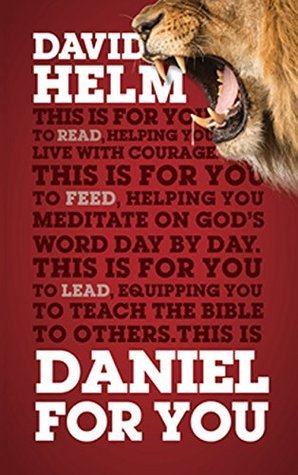
In Daniel for You, David Helm posits that, though God gave His people into the Babylonians’ hands as punishment for their disobedience and idolatry, He had additional purposes in mind.

This book shows that God intends to do more than merely judge an ungodly nation. Instead, he offers a saving word to those under his wrath—his deserved, settled anger. And for that, he will need his people dwelling there. They will need to be at home in Babylon, revealing God’s king and kingdom in ways that ultimately find their fulfillment in Christ (pp. 8-9).

Daniel and three of his friends were among those chosen to be educated, assimilated into Babylonian culture, and taken into the king’s service. They were given Babylonian names. One of their first challenges came with the food apportioned to them.

Daniel felt that eating the king’s food would be defiling to him. Helm shares different reasons that might be the case, among them the possibilities that the food violated Israel’s dietary laws, or possibly had been offered to Babylonian idols. But Daniel doesn’t rail against this requirement. He very respectfully asks the person in charge of them if they could eat vegetables and water for ten days and see how they fared. At the end of that time, Daniel and his three friends “were better in appearance and fatter in flesh than all the youths who ate the king’s food” (Daniel 1:15). So the steward let them eat what they wanted.

This set the tone for the rest of Daniel’s interactions. He never seemed hateful or bitter. He seemed to genuinely care about the king when he had bad news to deliver.

In addition, Daniel was faithful to God, praying three times a day toward Jerusalem, even when threatened with the lion’s den for doing so.

Besides the famous lion’s den story, Daniel contains the account of his three friends who were threatened with the fiery furnace for not bowing down to the king’s statue. Their famous words continue to encourage us in our day: “Our God whom we serve is able to deliver us from the burning fiery furnace, and he will deliver us out of your hand, O king. But if not, be it known to you, O king, that we will not serve your gods or worship the golden image that you have set up” (3:17-18).

And then there’s Nebuchadnezzar’s fall from pride to live like an animal for seven years, until he acknowledges God and is restored to sanity and to his kingdom.

To a mother, Daniel is an encouraging example that young people can live in an ungodly culture and not be taken in by it: they can be “in the world and not of it,” and even more, be a testimony to it.

Daniel is also a stellar example of standing faithful to God in a way that is not condescending or demeaning to those who don’t believe as he does.

The second half of Daniel’s book is what Helm calls apocalyptic literature, which he defines as “an unveiling–a pulling back of the curtain on the unseen transcendent world and its role in bringing this present world to an end (p. 127).

These chapters in Daniel contain some of the most argued-over passages of the Bible. But Helm encourages us not to get lost in numbers and predictions and to remember the purposes for which God gave these visions and dreams to Daniel. They show God’s sovereignty over world affairs, the fact that He has a timeline in mind, His care for His people, His remembrance and faithfulness to His covenant.

In fact, these themes are woven throughout Daniel. One section of Helm’s book that had the biggest impact on me was his pointing out the phrase “The Lord gave” in chapter 1.

  • “The Lord gave Jehoiakim king of Judah into [Nebuchadnezzar’s] hand” (verse 2).
  • “God gave Daniel favor and compassion in the sight of the chief of the eunuchs” in charge of their food (verse 9).
  • “As for these four youths, God gave them learning and skill in all literature and wisdom, and Daniel had understanding in all visions and dreams” (verse 17).

Even though I know looking for repeated words or phrases is a key factor in Bible study, somehow I never noticed these or put them together.

Helm also brings out how various parts of the book point to Christ.

Some of the other quotes that stood out to me:

What Daniel has to offer us is the same thing those first readers must have gleaned: a knowledge that God is still at work, and a confidence that as with those who came before us, it is possible to remain faithful to Christ in our own day and fruitful in our life work (p. 15).

The bulk of Daniel’s life (and ours) is orchestrated by God to be lived out in regulated and strikingly ordinary ways. If we are looking to be useful to him and his ever-expanding kingdom, we ought to be prepared to show up day after day, and decade after decade, simply playing our regular part in the melodic line he is orchestrating (p. 70). [This is said in the context that there are only nine events recorded over the seventy years of Daniel’s life. The rest of his days were “ordinary.”]

God is in the business of revealing himself to prominent, powerful people. He often uses a difficulty in life to get their attention, as well as an ordinary follower of Christ who is ready to speak into the situation (p. 84).

As followers of Christ, we don’t need to be happy about the humiliation of others. Remember, God intends to make a worshiper out of this king (p. 90).

I didn’t agree with every little point Helm made. But overall, this book was a great companion in reading Daniel.

(I often link up with some of these bloggers.)

Laudable Linkage

Laudable Linkage

I went from just a few shared reads last week to a longer list today. I hope you’ll find something of interest here, along with some time to read.

That’s Just Your Interpretation,” HT to Challies. “This is a common response when discussing Scripture, isn’t it? ‘That’s just your interpretation!’ No matter how clearly the Bible speaks, this objection seems to persist. But is it true? Can we really understand the Bible? This question takes us to the heart of the Christian faith and invites us into a discussion about the clarity and authority of God’s Word.”

Ten Truths to Empower Your Prayer Life. “My introduction to prayer came at the age of seven. I was spending the weekend with my grandmother and had slept beside her, snuggled deep into the covers. As the early morning light filtered through the curtains of her bedroom window, the sound of her whispered prayer broke through the fog of my fading sleep. . . . In the years since then, I’ve learned much about this sacred privilege. Today, I’d like to share ten truths I’ve sought to apply in my own prayer life.”

The Greatest Show: Is Your Faith Performance? “The desire to have a godly reputation isn’t wrong, but the danger comes when our focus shifts from genuine transformation in Christ to carefully crafted perception. It’s a tale as old as time and worth pausing to ask: do you care more about appearing faithful, gracious, and surrendered to Christ than actually walking in an authentic relationship with Jesus?”

Be Faithful Over Little: A Different Vision for a Life That Counts, HT to Redeeming Productivity. “But God hasn’t purposed for most people to be world-shapers. The vast majority of our faithfulness and work for the Lord will be exercised in the small, often boring, and monotonous rhythms of life.”

Between Two Worlds: Suffering, Safety, and the Cross, HT to Andrew Le Peau. “The predominant institutional approach to suffering is often one of avoidance—from institutional marketing that equates flourishing with the absence of suffering to personal postures that treat suffering as an unwelcome and harmful interruption in one’s development. Institutions can lessen burdens but not eliminate suffering. No mentor, policy, program, or system can insulate students from grief, disappointment, or hardship. A culture increasingly focused on removing discomfort does not necessarily make people stronger; it often leaves them more anxious and unprepared for suffering when it inevitably comes.”

A Denier Redirected: Living Out the Greatness. This discussion about living in a godly way in an ungodly society dovetails with my own reading about Daniel and how he did so.

This Vice Is One of the Key Predictors of Divorce: Yet, It Is Oddly Understudied. It’s a vice running rampant in society these days.

Coming of Age. “You could tell me that no matter what a mother loves her children, but it takes a story to show me how painful that could be and what it means. Or maybe you tell me that it’s good for my children to suffer losses and failures; that they’ll learn how to pick themselves up if they only get to experience life’s challenges. I’d say it makes sense but it takes a story for me to understand the real value behind it. I could learn as I go and fumble blindly along the way, or I could walk in the shoes of many mothers who’ve gone ahead of me and have a story to tell me of how to become the mom of adults.”

What Did We Gain and Lose by Livestreaming? HT to Challies. “What began as a temporary necessity has become an expected staple of the church’s ministry. As people began returning to worship, committees and the session debated whether livestreaming should continue. If so, for how long, and for what purpose?”

C. S. Lewis quote

Obedience is the key to all doors: feelings come (or don’t come) and go as God pleases. We can’t produce them at will and mustn’t try.–C. S. Lewis

Laudable Linkage

Laudable Linkage

I haven’t had a lot of extra time at the computer, so I have just a short list of recommended reading:

How Honest Can I Be with God in Prayer? “Do you ever wonder how honest you can be with God in prayer? On the surface, this question probably seems silly. After all, God knows everything. How could we hide anything from the God who knows our hearts and can read our minds? Yet sometimes, we hold back in prayer. As if our thoughts, emotions, or words don’t really exist if we don’t speak them. Or perhaps that we won’t be held accountable for them if we don’t admit our thoughts.”

2 Reading Strategies to Get Wisdom From the Word. “The Bible won’t tell you who to date, which car to buy, where to go to college, or whether to accept the job offer on the West Coast. It does, however, offer principles to live by, guard rails to keep readers on the path of wisdom.”

Finding Joy in Bible Reading, HT to Knowable Word. “It will help if we consider what we are doing when we read the Bible. It is not like a textbook we have to wade through in order to pass an exam. It is not something we have to do out of expectation or duty. It is something we get to do; a privilege, a blessing. Countless people through history would have loved to have the access to God’s word that we enjoy today.”

Improving Our Listening to Sermons. “Sermons are not lectures; they are intended to persuade you of something. They should lead to action, not only to increased knowledge. We should always ask what to do in response to what we have heard.”

Thank You Gracious Church Members, HT to Challies. “A pastor’s heart is not his congregants’ responsibility. But there is an invitation to be a congregant who steps into church life with a heart of submission and care for your leaders.”

The Church’s Opportunity when “Gentle Parenting” Crashes, HT to Challies. Although “gentle parenting” seems attractive and has some good points, it doesn’t deal accurately with sin. “Diagnosing sin in our kids’ hearts doesn’t strip them of dignity. On the contrary, it dignifies and deepens them. We treat children as moral agents, respect them enough to discipline them in love, and then forgive and restore them.”

The Vibe Shift: What Does It Mean for the Gospel? HT to Challies. Though the “vibe shift” in America since the election and especially since the inauguration has been a welcome change more in line with Christian values, we’re reminded that the “vibe” is not the gospel and people still need the Lord.

Fragile

If you wake up feeling fragile, remember that God is not,
and trust Him to be everything you need today. –C. S. Lewis

Ezekiel: The God of Glory

Ezekiel: The God of Glory

Ezekiel can seem like an intimating book of the Bible at first, with his many visions, odd heavenly creatures, acted-out sermons, and prophecies.

There’s much going on in Ezekiel’s 48 chapters. The basic idea of the book is that Israel has sinned, worshiping other gods and not living the way God told them to. They thought they were okay because they had the temple. After repeated warnings from various prophets, Israel is conquered and exiled by Babylon. Eventually Babylon destroys the temple in Jerusalem. Ezekiel was taken in the first wave of exiles and given the task of preaching to hard-hearted people who don’t listen to him. Some form of the phrase “You will know that I am the LORD” is used around seventy times in the book.

Eventually, God promises “I will give you a new heart, and a new spirit I will put within you. And I will remove the heart of stone from your flesh and give you a heart of flesh. And I will put my Spirit within you, and cause you to walk in my statutes and be careful to obey my rules. You shall dwell in the land that I gave to your fathers, and you shall be my people, and I will be your God. And I will deliver you from all your uncleannesses (Ezekiel 36:26-29). The famous vision in chapter 37 of the valley of dry bones that comes to life is a dramatic picture of what God is going to do in their hearts.

God also promises a coming shepherd-king, the Messiah, and a new temple (with much debate over the years whether this temple is literal or symbolic).

During my last reading of Ezekiel, I used Warren Wiersbe’s Be Reverent (Ezekiel): Bowing Before Our Awesome God as an aide while reading the book in my ESV Study Bible with its notes. Last year, I finished the last of Warren Wiersbe’s 50 “Be” commentaries on different books of the Bible. So I wanted to use a different source this time.

I had enjoyed our ladies’ Bible study’s use of the Good Book Company’s Isaiah for You by Tim Chester and 2 Corinthians for You by Gary Millar so I checked to see if there was a “For You” book for Ezekiel. There wasn’t, but while looking I found Ezekiel: The God of Glory by Tim Chester. It’s a six-week, 63-page study guide providing what the publisher called a “whistle-stop tour” through Ezekiel’s 48 chapters.

Unfortunately, I don’t think this format worked for Ezekiel. Perhaps it’s just too big a book to be covered in six chapters. I’m sure Chester had good reasons or highlighting the chapters he did, but they seemed random. There were several key passages I was surprised weren’t covered in the study.

In Isaiah for You, even though Chester only spent thirteen chapters on Isaiah’s 66 books, he summarized the chapters that came between the ones he covered. That helped orient the passages we did study into the book as a whole. Of course, in a smaller study like the one on Ezekiel, there was not space to do that, but it would have helped.

Each chapter’s study seemed fragmented to me. In fact, I was not getting much out of the study at all and thought perhaps I should get the leader’s guide it referred to, only to discover the guide was included in the back of the book. That helped some.

There were individual nuggets throughout the study that ministered to me and brought out truths from Ezekiel, but I was disappointed in the study as a whole. I don’t think the problem is with Chester’s writing since he did such a good job with Isaiah. I just don’t think this format worked well for Ezekiel. It might do better for some of the Bible’s smaller books.

On a side note, I’d heard about The Bible Project’s videos giving animated summaries of different books of the Bible, but had not seen one until it was used in our ladies’ Bible study as an introduction to Hebrews. I looked up their videos on Ezekiel and found them both fascinating and helpful. Part 1 is here and part 2 is here.

(Sharing with Bookish Bliss Quarterly Link-Up)

Time Alone with God

Time Alone With God

One of my college roommates didn’t seem to be able to study alone. Often, when I came back to my dorm room after dinner, I’d find a group of girls studying (and talking and laughing) with my roommate. A roommate’s study group in my room meant I had to find another quiet place to study. I’m the type that can’t concentrate when there is noise and commotion in the room.

I knew students who couldn’t seem to go to lunch or the bookstore or much of anywhere without a companion.

Of course, the opposite is true of some. I liked to go many places (other than lunch) alone because it was more efficient. If you have three or four girls running errands together, it’s going to take three or four times as long to get done. But sometimes the fellowship is worth the extra time. We need a balance of time alone and time with others.

The same is true in the church. The last several years, I have seen an emphasis on community among believers, along with reminders that we’re not “lone rangers.”

While that emphasis is needed, I feel some take it too far. Some say we were never meant to read God’s Word alone, but in community. It’s true that for many years, people didn’t have their own copies of the Scriptures. All they had was what was shared and discussed when they gathered together. But that doesn’t mean no one should ever read the Bible alone now.

One writer said the preaching time at church is our main spiritual meal. I’m not sure what she based that conclusion on. It’s a vital part of our Christian life, but meeting God alone is vital as well. In fact, though I learn a lot and have been convicted during church and Bible studies, I think the main time I do serious business with God is home alone when I can process what I have heard.

Those who believe in the Lord Jesus Christ as Savior are part of God’s family. Yet we don’t relate to Him only as “one of the kids.”

God knew us individually before we were born. “Before I formed you in the womb I knew you, and before you were born I consecrated you” (Jeremiah 1:5; see also Psalm 139:13-16).

God knows us by name. “The sheep hear his voice, and he calls his own sheep by name and leads them out” (John 10:3).

God knows our thoughts. “O Lord, you have searched me and known me! You know when I sit down and when I rise up; you discern my thoughts from afar. You search out my path and my lying down and are acquainted with all my ways. Even before a word is on my tongue, behold, O Lord, you know it altogether” (Psalm 139:1-4).

God knows our ways. “I the Lord search the heart and test the mind, to give every man according to his ways, according to the fruit of his deeds” (Jeremiah 17:10).

Even the number of our hairs is known by Him. “Are not five sparrows sold for two pennies? And not one of them is forgotten before God. Why, even the hairs of your head are all numbered. Fear not; you are of more value than many sparrows” Luke 12:6-7).

We’ll each give account of ourselves personally to God. “For we must all appear before the judgment seat of Christ, so that each one may receive what is due for what he has done in the body, whether good or evil” (2 Corinthians 5:10).

The psalms in the Bible are songs which were sung by the children of Israel. Some of them have plural pronouns, but many have personal pronouns. That means even though the congregation is singing about the truths of the passage together, the passage was written by someone’s experience with the Lord alone. Those singing can take those truths into their own individual relationship with the Lord.

I sought the LORD, and he answered me and delivered me from all my fears (Psalm 34:4).

He drew me up from the pit of destruction, out of the miry bog, and set my feet upon a rock, making my steps secure. (Psalm 40:2).

My soul will be satisfied as with fat and rich food, and my mouth will praise you with joyful lips, when I remember you upon my bed, and meditate on you in the watches of the night; for you have been my help, and in the shadow of your wings I will sing for joy. My soul clings to you; your right hand upholds me (Psalm 63:5-8).

I rise before dawn and cry for help; I hope in your words. My eyes are awake before the watches of the night, that I may meditate on your promise (Psalm 119:147-148).

God spoke to individuals as well as groups. Many New Testament letters were written to individuals (Luke, Acts, Titus, Philemon, 1 and 2 Timothy) as well as churches.

Saints of old had some of their most meaningful encounters with God alone.

Moses met with God alone many times.

David “encouraged himself in the Lord” (1 Samuel 30:6) when the men of Israel were ready to stone him.

Joseph spent years as the only apparent believer in the one true God when he was a slave in Egypt. His witness spread to others. But he had to remind himself of God’s truth on his own.

Two turning-point meetings with God in Jacob’s life happened when he was alone.

Daniel had friends of the same faith, but he faced the lion’s den alone, received visions alone, and prayed alone.

Paul ministered with companions but sometimes was alone.

Jesus dealt with crowds of people yet sought His Father alone.

In Revelation 2:17, God says, “He who has an ear, let him hear what the Spirit says to the churches. To the one who conquers I will give some of the hidden manna, and I will give him a white stone, with a new name written on the stone that no one knows except the one who receives it.”

Spurgeon wrote in the October 12 reading from Morning and Evening, “There are times when solitude is better than society, and silence is wiser than speech. We should be better Christians if we were more alone, waiting upon God, and gathering through meditation on His Word spiritual strength for labour in His service. We ought to muse upon the things of God, because we thus get the real nutriment out of them.

Elisabeth Elliot wrote in On Asking God Why, “Few people know what to do with solitude when it is forced upon them; even fewer arrange for solitude regularly. This is not to suggest that we should neglect meeting with other believers for prayer (Hebrews 10:25), but the foundation of our devotional life is our own private relationship with God. . . . Christians may (and ought to) pray anytime and anywhere, but we cannot well do without a special time and place to be alone with God.”

We’re to meet together frequently (Hebrews 10:25), “stir one another up to love and good works” (Hebrews 10:24), learn from the incredible gifts God gave to the church in pastors and teachers (Ephesians 4:11-13), sing worshipful, Scripture-based songs together (Colossians 3:16).

Time with other believers learning God’s Word is vital and wonderful. I learn much from the observations of others. But we only meet together once or twice a week. The Bible is our spiritual food, and we need to eat more than that.

Our time alone with God should feed into our time with others, and our time in the Word together should edify our inner souls and equip us in our daily walk.

We often tell unbelievers that Christianity is not a religion, but a personal relationship with God. Relationships are developed with communication and interaction. God loves and cares about us individually as well as a body of believers. We don’t have to pit time alone with God against time with Him as a group. We need both.

Psalm 59:10a

(After I wrote a portion of this post, I searched my blog and saw I had written on this topic a couple of times before. So I pulled excerpts from both of those posts into this one.)

(I often link up with some of these bloggers.)

When Habits Hinder Rather Than Help

When habits hinder

Someone has said that if you don’t make a plan, all you have is a wish. When we want to establish spiritual disciplines or meet a need at church, we set up routines or programs.

But then sometimes those routines themselves can get in the way of meeting needs.

I see this on several levels:

We follow routine and forget purpose.

To try to be more self-disciplined, we establish habits to aid in godliness, like regular times of reading the Bible or prayer, church attendance, etc. And that’s a good thing. But we all know what it is to have days when we’re just going through the motions, when our eyes are dragging across the page. We check “Have devotions” off our list of things to do but haven’t really engaged with the text or been affected spiritually. Or we “feel spiritual” if we’ve crossed that duty off or don’t “feel spiritual” if we haven’t.

Sometimes we feel we can’t stop and ponder a passage of Scripture because we need to get through our planned reading for the day.

One book I read on Bible study strongly emphasized application. That’s good: Jesus said to be doers, not just hearers. This author recommended specific, measurable results. For instance, instead of saying “I need to pray more,” he advocated praying for a certain number of minutes, and then slowly increasing the time.

That may be a good beginning. But it seems to me that the more natural approach would be to list things to pray about–usually once we get started, the list increases. Another idea would be to study prayers of the Bible, like Colossians 1:9-14.

Likewise, if we read about loving our neighbor, we might take them a plate of cookies or shovel snow from their sidewalk and think, “There! I’ve loved my neighbor today.” But then we forget about the need to love our neighbor when he forgets to return a tool or plays loud music at midnight.

It’s not that measurable results are wrong, but they are only one aspect of applying Scripture. Sometimes measurable responses can lead to outward actions without accompanying inward change. Sometimes we need to carry the truth we learned, like loving our neighbor, with us all through the day and pray for grace to implement it when it’s difficult.

We seek formulas rather than truth.

We’ve all seen clickbait titles like How to Be a Better Wife in Three Easy Steps or Follow These Steps to Curb Your Temper. Many raised children according to the plan of the day and were surprised to find their children did not respond in the expected way.

I saw a post sharing a routine for visiting the sick. But every sick person might not have the same needs. And if they sense we’re just going through a script, they are not going to feel ministered to.

I’ve sometimes gotten good results (or so I thought) by praying a certain way in a particular situation, only to have that prayer not “work” the next time that situation arose. I finally learned God doesn’t work by formulas, because then we trust in formulas and not Him. He wants our hearts.

Our routine hinders our purpose.

One church we visited had a greeting time during the service. No one interacted with us or even looked at us until the greeting time. Then, while someone played the piano, everyone smiled, shook hands, and spoke to visitors. But as soon as the music stopped, it was like someone flipped a switch, and everyone closed up again.

Other examples: we feel like our obligation to witness is fulfilled when we go to our church’s visitation night. Or, because our church has official greeters at the door, we feel no one else needs to greet visitors. Or we don’t pick up trash on the floor because someone is paid to do that.

Once when we were visiting my husband’s parents, a couple of women from church came by to see my mother-in-law. They brought a plant and card and conversed for a few minutes. When my mother-in-law thanked them profusely, one of the women said, “Well, you were on our list today.” My mother-in-law never discussed the comment, but I felt it deflated any good feelings about the visit since it seemed to be only motivated by a list.

We try to force results.

Bible study leaders naturally want people to participate. But we had a pair of leaders who felt everyone had to say something every time. If you didn’t speak up, they were going to make you! So instead of interaction and conversation happening naturally, the quieter people felt nervous, on edge, or put on the spot.

Small group leaders want people to “go deep” in their conversations and relationships, so some have “turn to your neighbor and bare your heart on command” sessions instead of letting those opportunities arise in a more natural way.

Or would-be mentors feel they need to work through an artificial list of probing questions instead of developing a personal relationship with their mentee.

We don’t think we can change what we do.

For years, I followed the same Bible reading plan because it was what I was taught. It took years to realize that there are many ways to engage with the Bible, and changing things up helped me stay engaged and see new things in the Word.

For many years, churches in my area had Sunday evening services at 7 o’clock. Then one church changed their service time to 6. It was amazing how many conversations there were about whether that change was right or wise. Eventually, other churches did the same. These days, I am happy to see a variety of services in churches, like small groups in the afternoon or lunch together after the morning service and a short time together before everyone goes home. But forty years ago, those solutions would have been unheard of.

Some programs are useful for a while, but fizzle out after a time. It’s vain to keep them just because “that’s what we’ve always done.”

Routines have a purpose.

It’s true, sometimes we need systems and routines because we don’t always “feel like” doing what we need to. A former pastor once said that one of his best times of prayer occurred when he had to start by confessing to the Lord that he didn’t feel like praying. Sometimes just doing what we should whether we feel like it or not is the first step to feeling like it.

But we should seek God’s grace to serve not just out of duty, and not to check off all the designated boxes, but with a right heart. The mechanics of ministry and spiritual disciplines are tools, but not the main focus, not the end-all of our efforts.

Our ministry isn’t boxed into a particular time, place, or group of people. Our programs don’t take care of all of our obligations. There is a sense in which we should always be “on,” always ready to serve. Even if there are official greeters at church, we can greet people when we see them or help a confused visitor find the right class. Even if there is someone designated to send cards to sick Sunday School class members, we can send one, too. If God has placed on our hearts that we need to help someone else in the church, we need to pray about how to do that rather than just dismissing it because our church has a benevolence committee to take care of those things.

On the other hand, sometimes we can perfectly follow all of our routines, and our programs can seem to be going swimmingly, but we’re unaware that we’re missing something vital. The Pharisees were famous for this. All through the Bible, God reminds His people not to serve Him only with outward performance, but with their hearts.

A. W. Tozer said this in The Pursuit of God:

The simplicity which is in Christ is rarely found among us. In its stead are programs, methods, organizations and a world of nervous activities which occupy time and attention but can never satisfy the longing of the heart. The shallowness of our inner experience, the hollowness of our worship and that servile imitation of the world which marks our promotional methods all testify that we, in this day, know God only imperfectly, and the peace of God scarcely at all. If we would find God amid all the religious externals, we must first determine to find Him, and then proceed in the way of simplicity.

Routines, habits, and programs can be a great help. But they are an avenue of ministry, not an end in themselves. May God give us grace to keep our hearts engaged and our focus on others’ needs and His glory.

Ephesians 6:6

(Revised from the archives)

(I often link up with some of these bloggers.)

Laudable Linkage

Laudable Linkage

I hope you are warm and snug this cold winter morning (if you’re in the northern hemisphere–if it’s summer where you are, stay cool!) Here are some good reads found this week:

Reading the Bible to Meet God, HT to Challies. “In my book Help My Unbelief: Why Doubt is Not the Enemy of Faith I wrote about how important it is to read the Bible to meet God, to read it relationally and as sustenance for the soul. Often we simply read it for information, to follow a rule, or as an academic pursuit. Reading to meet God sounds like a great idea and the ideal for a Christian, but how do we actually do it”

Life Beyond the Spiritual Shallows. “There is a depth to God’s character that cannot be assessed with quick glances and fleeting thoughts. We will never become the kind of women who face the lion’s den without a deep understanding of God’s character. We will never know that depth if we cannot find ways to circumnavigate our brain’s wiring and study God’s Word for longer than eight second bursts.”

Preparing for the Storm, HT to Challies. “We don’t acknowledge the likelihood of impending trials, so we don’t prepare for them. It’s only after the trial has passed, when we’re left trying to pick up the shards of hope and put our lives back together, that we realize we need to stockpile emergency supplies for the next time Sorrow comes knocking at our door. Having lived through one storm, we realize we’ll need a reservoir for the next one.”

Why Pray for Protection When Suffering Keeps Coming? John Piper answers a difficult question from a listener about praying for protection when it seems pointless, when God let bad things happen in the past.

Are You Your Spouse’s Biggest Cheerleader? HT to Challies. “It works both ways. Wives need their husbands to encourage and affirm and cheer for them as well. In healthy, thriving marriages, husbands and wives are cheerleaders for one another. Smart husbands and smart wives know that the Bible is right on target when it says, ‘Death and life are in the power of the tongue’ (Proverbs 18:21). Spoken words can destroy or empower.”

Little People with Big Emotions: 5 Strategies for Emotionally Healthy Kids. This is excellent, something I wish I’d had when mine were young. “I wish I had been better equipped to help my kids when they experienced big emotions. How can we help our children manage their feelings without stuffing them down, prettying them up, or feeling like there’s no room for them?”

Four Reasons Acts 2:38-39 Does Not Imply Infant Baptism. “Though this passage mentions both children and baptism, Acts 2:38–39 leaves no room for infant baptism. Here are four reasons why.”

Sin and repentance

Sin brings brief pleasures and lasting sorrow.
Repentance brings brief pain and eternal joy.
Nancy DeMoss Wolgemuth