Review: Read This First

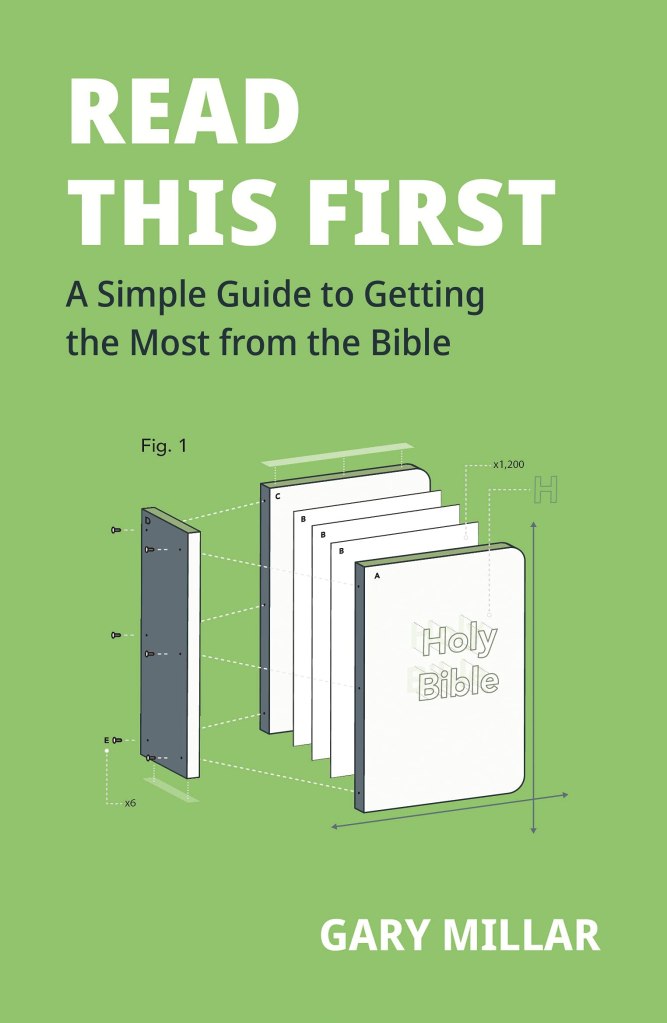
Gary Millar wrote Read This First: A Simple Guide to Getting the Most from the Bible to “help people who would like to read the Bible but don’t really know where to start or how to go about it” (p. 2, Kindle version). Whether one is a new Christian or has never really gotten into regular reading, Millar hopes you will “read this first and go back to the Bible with the skills and confidence to truly enjoy it (p. 3).

First, Gary deals with the question, “Why bother with the Bible?” and lists reasons people don’t.

But he says, “I’ve written this book to help you meet a person—a living, loving, being like no other—through the pages of a book like no other. . . He made us, he loves us, he knows us inside out, and he speaks to us. And he does that through the Bible. That’s why reading the Bible matters so much—because when we read it, we meet the one and only God ” ( p. 10).

Millar assures that “the Bible was written to be understood by ordinary people like us. It doesn’t need insider knowledge or a special code to make sense of it. It’s not written for experts and professionals. It’s written for people like you and me (pp. 17-18).

Millar then gives tips on how to read, to pick up what he calls the “vibe” of a given passage, to understand different genres within the Bible, to discern meaning, and to apply what we’ve learned.

Every chapter ends with a couple of examples of Scripture to work through using the skills detailed in that chapter.

The appendix, titled “What Is the Bible?” gives a little background such as the difference between the two testaments, how we got the chapter and verse references that weren’t in the original manuscripts, and more.

Gary writes in a warm and simple style, so this book would be accessible to almost anyone.

This would be an excellent resource for someone new to reading the Bible or to anyone who feels they need a refresher course in how to do so.

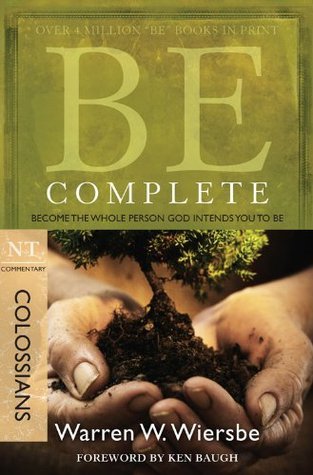
Review: Be Complete (Colossians)

Be Complete (Colossians): Become the Whole Person God Intends You to Be by Warren Woersbe

I think most of Warren Wiersbe’s “Be” commentaries are about the same size. So a commentary on Isaiah, which has sixty-six chapters, discusses large portions at a time.

The book of Colossians just has four chapters. So Be Complete (Colossians): Become the Whole Person God Intends You to Be covers just a few verses of Colossians in each of its twelve chapters.

Since Colossians is so densely packed, and the ESV Study Bible had a lot of notes on it as well, plus Wiersbe’s book had more detail, I decided to slow down my usual pace of reading and take time to soak in what was written.

Wiersbe calls Colossians “one of the most profound letters Paul ever wrote.”

The church in Colossae was not one that Paul started; in fact, he had never been to that city. But Paul had been in nearby Ephesus for three years, from which the Bible says “‘all they which dwelt in Asia heard the word of the Lord Jesus, both Jews and Greeks'” ‘ (Acts 19:10). This would include people in Colossae, Laodicea, and Hierapolis.” A Colossian named Epaphras seems to have heard Paul preach in Ephesus and then brought the gospel back to Colossae.

At the time Colossians was written, Paul was in prison. Epaphras was with him and evidently shared that a dangerous teaching was making the rounds in Colossae. So Paul wrote to help these believers. Wiersbe believed the false teaching was Gnosticism; the ESV Study Bible notes say that “an improved understanding of Gnosticism” due to more information having been discovered about it has led scholars to think Gnosticism was not the problem, but they don’t know exactly what false teaching was being promoted. Nevertheless, there’s much we can learn from Colossians even without knowing exactly what teaching was being combated.

Paul begins the book with greetings and thankfulness for the Colossians faith. Then he shares what he prays for them, one of my favorite prayers in the Bible:

And so, from the day we heard, we have not ceased to pray for you, asking that you may be filled with the knowledge of his will in all spiritual wisdom and understanding, so as to walk in a manner worthy of the Lord, fully pleasing to him: bearing fruit in every good work and increasing in the knowledge of God; being strengthened with all power, according to his glorious might, for all endurance and patience with joy; giving thanks to the Father, who has qualified you to share in the inheritance of the saints in light. He has delivered us from the domain of darkness and transferred us to the kingdom of his beloved Son, in whom we have redemption, the forgiveness of sins.

I have prayed this often for myself and loved ones.

Paul then writes about the preeminence of Christ, “the image of the invisible God,” the one who created everything and holds it all together, the head of the church. “In him all the fullness of God was pleased to dwell, and through him to reconcile to himself all things, whether on earth or in heaven, making peace by the blood of his cross” (1:19-20).

And, amazingly, “you, who once were alienated and hostile in mind, doing evil deeds, he has now reconciled in his body of flesh by his death, in order to present you holy and blameless and above reproach before him” (1:21-22).

Paul says his stewardship was “to make the word of God fully known, the mystery hidden for ages and generations but now revealed to his saints. To them God chose to make known how great among the Gentiles are the riches of the glory of this mystery, which is Christ in you, the hope of glory. Him we proclaim, warning everyone and teaching everyone with all wisdom, that we may present everyone mature in Christ. For this I toil, struggling with all his energy that he powerfully works within me” (1:25-29). In the Bible, a mystery wasn’t something to figure out from clues: it was something that was not previously revealed but now is.

Paul warns them to “See to it that no one takes you captive by philosophy and empty deceit” or “delude(s) you with plausible arguments” (2:8, 4).

Paul goes on to exalt Christ as the one “in whom are hidden all the treasures of wisdom and knowledge” (Colossians 2:3). As we received Him, we’re to “walk in him, rooted and built up in him and established in the faith, just as you were taught, abounding in thanksgiving (2:6-7).

After sharing the gospel, Paul gives practical instruction for how the gospel affects our lives, families, and workplaces. There are certain behaviors we’re to put off, others we’re to put on. We’re to “seek the things that are above, where Christ is, seated at the right hand of God. Set your minds on things that are above, not on things that are on earth” (3:1-2).

Paul wraps up his teaching by encouraging believers to pray, give thanks, and “Walk in wisdom toward outsiders, making the best use of the time. Let your speech always be gracious, seasoned with salt, so that you may know how you ought to answer each person” (4:5-6).

I can get so caught up in the affairs of this life, I need the reminder to “set my mind on things above” and exalt Christ above all.

A few more quotes from the book that stood out to me:

The gospel message does not center in a philosophy, a doctrine, or a religious system. It centers in Jesus Christ, the Son of God (p. 30, Kindle version).

Uniformity is the result of compulsion from the outside; unity is the result of compassion from the inside (p. 37).

Satan is so deceptive! He likes to borrow Christian vocabulary, but he does not use the Christian dictionary (p. 43).

The false teachers in Colossae, like the false teachers of our own day, would not deny the importance of Jesus Christ. They would simply dethrone Him, giving Him prominence but not preeminence. In their philosophy, Jesus Christ was but one of many “emanations” that proceeded from God and through which men could reach God. It was this claim that Paul refuted in this section (p. 57).

In the New Testament, saints are not dead people who during their lives performed miracles and never sinned. New Testament saints were living people who had trusted Jesus Christ. Paul wrote this letter to living saints (Col. 1:2), (p. 73).

Prayer is not our trying to change God’s mind. It is learning what is the mind of God and asking accordingly (1 John 5:14-15) (p. 81).

It does little good if Christians declare and defend the truth, but fail to demonstrate it in their lives (p. 113).

Paul did not ask for the prison doors to be opened, but that doors of ministry might be opened (1 Cor. 16: 9; Acts 14: 27). It was more important to Paul that he be a faithful minister than a free man. It is worth noting that in all of Paul’s prison prayers, his concern was not for personal safety or material help, but for spiritual character and blessing (p. 154).

I like how Wiersbe closed his commentary on Colossians:

As we come to the close of our study of this remarkable letter, we must remind ourselves that we are complete in Jesus Christ. We should beware of any teaching that claims to give us “something more” than we already have in Christ. All of God’s fullness is in Him, and He has perfectly equipped us for the life that God wants us to live. We do not live and grow by addition, but by appropriation (p. 173).

Two Books on Isaiah

Isaiah is the OT book most quoted in the NT and foretells Christ’s first and second comings as well as His death for our sins.

Isaiah has some of the most well-known Bible passages:

For to us a child is born, to us a son is given; and the government shall be upon his shoulder, and his name shall be called  Wonderful Counselor, Mighty God, Everlasting Father, Prince of Peace (Isaiah 9:6).

But he was pierced for our transgressions; he was crushed for our iniquities;
upon him was the chastisement that brought us peace, and with his wounds we are healed. All we like sheep have gone astray; we have turned—every one—to his own way;
and the Lord has laid on him the iniquity of us all (Isaiah 53:5-6).

Isaiah contains some of my own personal favorite verses, in addition to those above (just to name a couple):

Fear not, for I am with you; be not dismayed, for I am your God; I will strengthen you, I will help you, I will uphold you with my righteous right hand (Isaiah 41:10).

For thus said the Lord God, the Holy One of Israel, “In returning and rest you shall be saved; in quietness and in trust shall be your strength” (Isaiah 30:15).

But Isaiah is not the easiest book in the Bible to read. It shares prophecies and histories that are a little hard to decipher. An understanding of the historical context is needed to fully comprehend some of the book.

Our Wednesday night Bible studies went just through Isaiah using Tim Chester’s Isaiah for You. I’ve been using Warren Weirsbe’s “Be” commentaries on my current trek through the Bible, but I thought it might be too much to use two sources along with the ESV Study Bible notes. However, the two worked well together.

Isaiah is a long book of 66 chapters. A detailed commentary on every verse would be quite a tome. I’m sure there are some out there. Wiersbe provided short commentary on each chapter. Chester wrote detailed commentary on some of the pivotal passages but briefly summarized the chapters in-between.

Be Comforted, Wiersbe commentary on Isaiah

Wiersbe’ book is Be Comforted (Isaiah): Feeling Secure in the Arms of God. He draws his title from Isaiah 40:1: “Comfort, comfort my people, says your God.”

The English word comfort comes from two Latin words that together mean “with strength.” When Isaiah says to us, “Be comforted!” it is not a word of pity but of power. God’s comfort does not weaken us; it strengthens us. God is not indulging us but empowering us. “In quietness and confidence shall be your strength” (p. 11, Kindle version).

The need for comfort arises from the bad news of the first several chapters. Israel has sinned in turning to idols, in worshiping ritually rather than from the heart, and in looking to pagan nations for help instead of God. Because of their unrepentant sin, God had to judge them, and He did so in various ways.

But God’s judgment is meant to be restorative, not just punitive.

The name Isaiah means “salvation of the Lord,” and salvation (deliverance) is the key theme of his book. He wrote concerning five different acts of deliverance that God would perform: (1) the deliverance of Judah from Assyrian invasion (chaps. 36—37); (2) the deliverance of the nation from Babylonian captivity (chap. 40); (3) the future deliverance of the Jews from worldwide dispersion among the Gentiles (chaps. 11—12); (4) the deliverance of lost sinners from judgment (chap. 53); and (5) the final deliverance of creation from the bondage of sin when the kingdom is established (chaps. 60; 66: 17ff.) (p. 25).

Isaiah didn’t preach God’s judgment with glee. “Isaiah was a man who loved his nation. The phrase ‘my people’ is used at least twenty-six times in his book” (p. 16). He also “interspersed messages of hope with words of judgment” (p. 19).

Isaiah for You by Tim Chester

Of course, Chester makes many of the same points and observations that Wiersbe does in Isaiah for You: Enlarging Your Vision of Who God Is. He sees Isaiah as something of “a bridge between the Old Testament and the New Testament” (Location 38).

Before, when I’ve read Isaiah, I’ve gotten a lot out of key passages like chapters 9 and 40 and 53, but I’ve gotten a little lost in some of the details in-between. I found Chester’s short chapter summaries to be very helpful in keeping the narrative and timeline of Isaiah in view.

Chester perhaps emphasizes application a little more than Wiersbe does, though Wiersbe brought out a lot of application as well. One point Chester brings out repeatedly is how these truths in Isaiah should inspire evangelism. God’s ministry with Israel was meant to be a light to other nations as well as their own, and the coming kingdom is one that will include every nation, tribe, and tongue.

They were to live under God’s rule expressed in the law in such a way that the nations would see that it is good to know God (Deuteronomy 4: 5-8). Isaiah himself uses this kind of language in Isaiah 2: 2-5: “Come, descendants of Jacob, let us walk in the light of the Lord.” Why? So that “many peoples will come and say, ‘Come, let us go up to the mountain of the Lord’”. The people of Israel were to attract the nations to God (Location 2321).

Chester also brings many parallels that I hadn’t previously seen before between the exodus of Israel from Egypt and our salvation. He includes Israel’s release from Babylonian captivity as another kind of exodus.

Isaiah doesn’t just deal with Israel’s problems current at the time. He tells them some of what’s coming in their future as well as ours.

And Isaiah lifts us out of the cares of this life to point us towards God and His glory.

And here is a glory that we do not have to earn or create or build. It is the glory of God, and he shares it with us. All we need to do is look! We simply contemplate God’s glory, and, as we contemplate it, we are glorified. So where do we look? God’s word continues: “For God, who said, ‘Let light shine out of darkness,’ made his light shine in our hearts to give us the light of the knowledge of God’s glory displayed in the face of Christ” (2 Corinthians 4: 6). We look into the face of Christ. That is where you will see the glory of God, and that is the look that will transform you (Location 1001).

There’s so much more that could be shared, both from Isaiah and these two books. Let me encourage you not to be afraid of reading Isaiah. It provides a rich study, and both of these resources help us understand it.

Laudable Linkage

Laudable Linkage

Here’s my weekly list of good reads:

Jesus Was No Victim. “It was physically dark, as the very sun refused to shine on the crucifixion of its Maker (Matthew 27:45). And it was morally dark, as a collection of bitter rivals joined to commit history’s most grotesque crime, the murder of the Son of God. Scripture holds Jesus’ murderers guilty for their crime (Acts 2:24, 36; 3:13-15; 4:10, 27). And yet, it would be wrong for us to see Jesus as the victim.”

The Silence of the Lamb. Adrian Rogers discusses why Jesus did not explain or defend Himself during His trials before crucifixion. One of my favorite parts of this: “If Jesus had risen up in his own defense during his trials, I believe that he would have been so powerful and irrefutable in making his defense that no governor, high priest, or other legal authority on earth could have stood against him! In other words, if Jesus had taken up his own defense with the intention of refuting his accusers and proving his innocence, he would have won! But we would have lost, and we would be lost for all eternity.”

How to Protect Your Kids from Sexual Abuse, HT to Challies. “Parents, educators, caring adults, and the church have grown more alert to the need to teach kids tangible ways to stay safe from abuse. Since concerned adults like you and me can’t always be with children, we must educate them in concrete, child-appropriate safety skills.”

Jesus Loves Me, This I Know, HT to the Story Warren. A mother reflects on what her son has taught her about Jesus’ love on World Down Syndrome Day.

On Whales, Menopause, and Thanks to God, HT to Challies. “In God’s good design, we humans share this somewhat rare life stage with only six other species on earth. Humans, however, are the only creatures who are able to reflect upon the experience of menopause, and even (stay with me here) thank God for it.”

Talk to God About What Hurts, HT to Challies. “When life is painful, God invites us to talk to Him about it. He wants us to cry out to him in humility–to talk to him about what hurts–that we might grow in our childlike trust in Him and His Word.”

Just Checking In: How’s Your Bible Reading Plan Going? HT to Challies. “I want to give a little encouragement for those who are trying to read through the Bible this year.”

Does God Care How You Cook Your Goat? The verses in the Old Testament about not boiling a baby goat in its mother’s milk are puzzling, both from the standpoint of why it was a law at the time and how it applies to us today. Tim Challies shares a couple of interpretations and applications.

Our Lord has written the promise of resurrection,
not in books alone but in every leaf of springtime.
Martin Luther

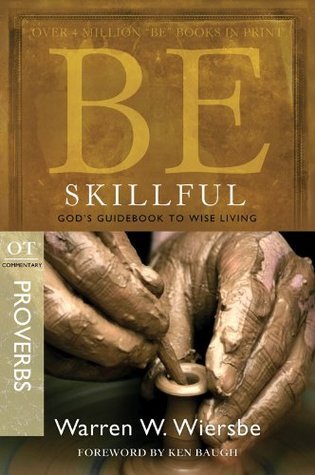
Review: Be Skillful (Proverbs)

Be Skillful: Wiersbe Commentary on Proverbs.

In Be Skillful (Proverbs): God’s Guidebook to Wise Living, pastor and Bible teacher Warren Wiersbe notes, “We are living in the information age, but we certainly are not living in the age of wisdom” (p. 11, Kindle version).

The book of Proverbs is one of the Bible’s wisdom books. Of course, we can gain wisdom all through the Bible, but Job, Psalms, Proverbs, Ecclesiastes, and the Song of Solomon, are grouped together as wisdom books.

Wiersbe goes on to say, “It isn’t enough simply to be educated and have knowledge, as important as education is. We also need wisdom, which is the ability to use knowledge. Wise men and women have the competence to grasp the meaning of a situation and understand what to do and how to do it in the right way at the right time” (p. 16).

“Biblical wisdom has little if any relationship to a person’s IQ or education, because it is a matter of moral and spiritual understanding. It has to do with character and values; it means looking at the world through the grid of God’s truth” (p. 17).

“Biblical wisdom begins with a right relationship with the Lord. The wise person believes that there is a God, that He is the Creator and Ruler of all things, and that He has put within His creation a divine order that, if obeyed, leads ultimately to success” (p. 17).

“The first essential for an effective study of Proverbs is faith in Jesus Christ so that you can honestly call God your Father. You can’t make a life until you first have life, and this life comes through faith in Jesus Christ (John 3: 16, 36)” (p. 26).

The bulk of Proverbs is made up of individual sayings. “Proverbs are pithy statements that summarize in a few choice words practical truths relating to some aspect of everyday life. The Spanish novelist Cervantes defined a proverb as ‘a short sentence based on long experience'” (p. 20). But these proverbs are not just clever sayings: they are God’s inspired Word and profitable for doctrine, correction, reproof, and instruction just like the rest of the Bible (2 Timothy 3:16-17).

Normally, Dr. Wiersbe’s comments follow the chapters of the book of the Bible he is discussing. In this commentary, however, he groups his remarks as to the categories in Proverbs: the contrast between wisdom and foolishness, diligence and laziness, the virtuous woman and the “strange” woman, etc., and characters like the drunkard, glutton, the simple, scoffer, fool, king, parents and children, and so on.

As to why God directed the writers of Proverbs to lay out the book this way, Wiersbe has a couple of suggestions. Most people didn’t have their own copies of the Scriptures. Short, pictorial statements would have been easier to remember that a lecture. Plus, “Just as the Bible itself isn’t arranged like a systematic theology, neither is Proverbs. What Solomon wrote is more like a kaleidoscope than a stained-glass window: We never know what the next pattern will be” (p. 22). Some make a practice of reading a chapter of Proverbs each day of the month. They receive wisdom on a variety of topics to carry with them throughout the day.

It had been a while since I had read Proverbs. I enjoyed thinking through it again along with Dr. Wiersbe’s insights.

(I often link up with some of these bloggers.)

Laudable Linkage

Laudable Linkage

Here are some of the good posts found this week. The list is a little longer since I’ve had a chance to catch up on blog reading.

When You Don’t Want to Read the Word. “Remember when you couldn’t get enough of the Bible? Lately though, you make your coffee and start your morning; you’ve missed a few days of devotional reading. It’s not that you don’t love God’s Word—it’s just that in the busyness of life it doesn’t seem to have the same hold on you it once did. The craving isn’t there. The desire has dried up.”

Tunawa Leah. “Friends, another year has passed, and my heart remains burdened for this precious child of God. I first shared Leah Sharibu’s story of faith in the face of extreme persecution with you in January 2020. This year marks the sixth anniversary of this young lady’s captivity and enslavement at hands of ISIS-WA (aka Boko Haram) in Nigeria.”

4 Lesser-Known Women of the Bible {And What They Can Teach Us Today} “Sometimes in our day-to-day lives, in the struggles, we can feel unseen and underappreciated. More like those in the Bible who are not as well-known. Today I’d like to look at several of those lesser-known women in the Bible: Jehosheba, Abigail, Lois, and Eunice. You may not even recognize their names right off, which makes them perfect to discuss today.”

The Evangelist on the Titanic. “While the story of the Titanic is one of disaster, it is also a story of great heroism and of great faith. Numbered among those who drowned in the tragedy was a Scottish Baptist evangelist named John Harper.”

Worse Than Any Affliction: Why I Refuse to Grumble, HT to Challies. “My flesh is wasting away, and who would blame me if I complained? Certainly not the world — it’s natural for them to expect an old lady in a wheelchair to grumble over her losses. But followers of Jesus Christ should expect more from me. Much more.”

When the Walk Becomes a Crawl, HT to Challies. “The key to getting a long view of sanctification is to understand direction. What matters most is not the distance you’ve covered. It’s not the speed you’re going. It’s not how long you’ve been a Christian. It’s the direction you’re heading.”

Jesus Didn’t Diss the Poor: Making Sense of Matthew 26:11, HT to Challies. “In perhaps one of the oddest moments of the passion narrative, Jesus seemingly sets himself at odds with his disciples’ concern for the poor. Breaking ranks with the twelve, Jesus did not think Mary should have ‘given to the poor’ the money that she had used to purchase the oil needed to anoint Jesus’s feet.”

Westminster Abbey and the Danger of Inhospitality, HT to Challies. “Biblical hospitality forefronts our neighbor, not ourselves. Hospitality is about making someone else feel honored, loved, and comfortable.”

Applying Paul’s Great Commission Lifestyle Principles. “As we observe Paul’s life and teachings, especially 1 Corinthians 9, we see that he willingly laid aside ‘rights’ to his preferred lifestyle to be a more effective servant of Christ.” The context here is cross-cultural missions, but this is how we should be thinking and praying in all our interactions.

Why We Always Need More Books on Every Subject, HT to Challies. “‘Because we already have several good books on subject X, we do not need more books on subject X,’ the logic goes. I will push back on this logic for the following reasons below. You may not agree with all my reasons, but hopefully, they will deeper your appreciation for books.”

The Neurodivergent Believer, HT to Challies. “As believers, we acknowledge that God created each brain uniquely. The Apostle Paul describes this diversity within the body of Christ, emphasizing that each member has a distinct role (1 Cor. 12:12–27). Despite this diversity, being neurodivergent in a predominately neurotypical world can present unique challenges.”

Elisabeth Elliot The Secret is Christ in Me

The secret is Christ in me, not me in a different set of circumstances.
–Elisabeth Elliot

Laudable Linkage

Here are some of the good posts seen this week:

How Do I Find the Main Point of a Psalm (or a larger passage of Scripture), HT to Knowable Word. John Piper likens understanding larger passages of Scripture to working a jigsaw puzzle. Great illustration.

How to Prepare for a Great Morning Routine. “I’ve had the unique privilege of helping thousands of Christians refine their own Christ-honoring morning routines. And there are certain patterns that show up again and again with those who are struggling to stick with a routine like this. They all boil down to one thing: Lack of preparation.”

Be a Woman Hidden in the Church. “We live in a culture captivated by the idea of ‘making a name for yourself.’ From pop culture celebrities to Christian influencers, the world around us seems to say that in order to make any real difference you first need to have a large sphere of influence and a certain number of followers. And your name on the cover of a book doesn’t hurt. This is not the path to significance that Jesus taught.”

What to Do When You Long for Encouragement. “When it comes to my own reactions to perceived slights, I’m inclined to bypass the Golden Rule and proceed straight to feeling sorry for myself.

Why We Cannot Cast Them Aside. “As I’ve watched my precious mom deteriorate from the devastating effects of early onset Alzheimer’s, I’ve also had to face our world’s deeply entrenched beliefs about what gives people value.

Repairing Old Books by Deconstructing Them, HT to Steve Laube. This is a ten-minute video about a woman who restores old books by taking them apart, repairing them, and putting them back together. I worked at the university library while in college. One lady there did book repair, but not as extensive as this. I found it fascinating.

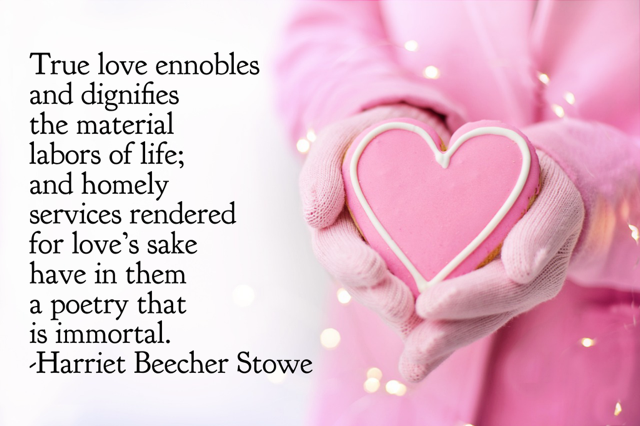
True love

True love ennobles and dignifies the material labors of life; and homely services rendered for love’s sake have in them a poetry that is immortal. ~ Harriet Beecher Stowe

Recommended Christmas Devotional Books

Recommended Christmas or Advent Devotional Books

One of the main things that helps me keep a good perspective through December is reading a Christmas or Advent devotional book.

Some years I’ve followed reading plans for Scripture that specifically deal with the coming of Christ, including the prophecies of His birth. I don’t have one on hand, but I’m sure there are plenty online.

Most years, though, I read an Advent devotional book usually in addition to, sometimes instead of, my usual devotional time. So I thought I’d share some of the ones I’ve enjoyed with you. I’ll link the titles back to my reviews.

Heaven and Nature Sing advent devotional.

Heaven and Nature Sing: 25 Advent Reflections to Bring Joy to the World by Hannah Anderson is the newest I’ve read, just published last year. It’s also one of my favorites. Reading this book set me to reading many of Hannah’s other books this year. The title comes from a phrase in Isaac Watt’s “Joy to the World.” Hannah took inspiration from this phrase and wrote twenty-five Advent devotions based on various aspects of nature connected with the birth of Christ. Each devotion is about five pages long and written in an easily readable style.

Sample quote: “Yes, the manger signals something about this baby, but it is not simply his poverty. By being placed in the manger, he is revealed as both the rightful son of Adam charged with caring for his creation and also the eternal Son of God who created them and who provides for them. So instead of filling the manger with hay or corn, he fills it with himself.”

A Christmas Longing by Joni Eareckson Tada

A Christmas Longing by Joni Eareckson Tada is a gorgeous book filled with her art work, drawn by mouth due to her paralysis. It’s made up of 31 readings for each day in December centered on the theme of joy.

Sample quote:”Lives hinge and eternal destinies hang in the balance when men and women come face to face with Jesus the Christ. It isn’t always peaceful. It isn’t always painless. It isn’t always easy. But bowing the knee to Jesus Christ is always right. No matter what.”

The Women of Christmas by Liz Curtis Higgs

The Women of Christmas: Experience the Season Afresh with Elizabeth, Mary, and Anna by Liz Curtis Higgs. The eight chapters here are longer, around twenty pages or more. So it might not work as a devotional unless you divided the chapters up. But I thoroughly enjoyed this one. Liz did tons of research and study, but the book is warm rather than technical and stiff.

Sample quote: “When I hear women rail that the Bible is misogynistic, I wonder if we’re reading the same book. God loves women, redeems women, empowers women – then and now. On the day we call Christmas, he could simply have arrived on earth, yet he chose to enter through a virgin’s womb. On the day we call Easter, he could have appeared first to his beloved disciple John, yet he chose as his first witness a woman set free from seven demons.”

Gospel Meditations for Christmas by Church Works Media

Gospel Meditations for Christmas by Chris Anderson, Joe Tyrpak, and Michael Barrett is divided into 31 pages, one a day through the month of December (or any time, really, since these truths are eternal). Each page lists a Bible passage to read and then delves into some facet of the passage for a handful of paragraphs. The primary focus of the book is various aspects of the Incarnation

Sample quote: “Matthew begins his account of the good news with a record of Jesus’ ancestry. This isn’t some boring list of personal details that Matthew came across in research and decided to include as space-filler. No, this genealogy is Matthew’s attention-grabbing introduction, and it’s jam-packed with significance.”

Expecting Christmas advent devotional

Expecting Christmas is a 40-day devotional by multiple authors. I wished this one was 25 or 31 days so it would fit neatly in December. I didn’t know any of the author names except one (Jennifer Dukes Lee). The selections are short, which is appreciated in a month like December. Each began with a verse or two of Scripture, a page and a half to two pages (at least in the Kindle version) of text, then three questions for refection.

The readings cover a variety of Christmas topics, though several deal with light.

Sample quote: “Mary’s response was one of quiet introspection as she treasured the good news of the gospel in her heart. The shepherds, on the other hand, left young Jesus, glorifying God and praising Him with outward enthusiasm and passion. People celebrate the gospel in different ways.”

Advent readings by C. H. Spurgeon

Joy to the World: Daily Readings for Advent is made up of excerpts from C. H. Spurgeon’s Christmas sermons. I had read a few books like this with lengthier portions from his sermons (like Good Tidings of Great Joy: A Collection of Christmas Sermons), but they were a little too much for morning devotionals. This one, however, had daily readings of just two to three pages on an iPad mini Kindle app.

Sample quote: “The tabernacle of old was not full of truth, but full of image, and shadow, and symbol, and picture; but Christ is full of substance. He is not the picture, but the reality; he is not the shadow, but the substance. O believer, rejoice with joy unspeakable for you come to Christ, the real tabernacle of God.”

Finding Christ in Christmas, advent devotional by A. W. Tozer

Finding Christ in Christmas: An Advent Devotional by From the Writings of A. W. Tozer has readings for December 1 – 25, ranging from just a paragraph to little more than a page. So the selections are easily readable. I felt the selections were a little haphazard, taken out of context, and some left the reader hanging a bit. But the book contained several great nuggets. Tozer’s writing is not warm and cozy, but it makes one think.

Sample quote: “The Law was given by Moses, but that was all that Moses could do. He could only ‘command’ righteousness. In contrast, only Jesus Christ produces righteousness. All that Moses could do was to forbid us to sin. In contrast, Jesus Christ came to save us from sin. Moses could not save anyone, but Jesus Christ is both Savior and Lord.”

From Heaven, an Advent devotional by A. W. Tozer

From Heaven: A 28-Day Advent Devotional by A. W. Tozer is similar to the book above and overlaps it a bit, but has some different excerpts.

Sample quote: “Even though you may still be unconverted and going your own way, you have received much out of the ocean of His fullness. You have received the pulsing life that beats in your bosom. You have received the brilliant mind and brain within the protective covering of your skull. You have received a memory that strings the events you cherish and love as a jeweler strings pearls into a necklace and keeps them for you as long as you live and beyond. All that you have is out of His grace. Jesus Christ, the eternal Word, who became flesh and dwelt among us, is the open channel through which God moves to provide.”

Come Thou Long Expected Jesus:Experiencing the Peace and Promise of Christmas, compiled by Nancy Guthrie, is one I have enjoyed several times. It contains 22 selections on various aspects of Advent, from Mary to conception by the Holy Ghost to Joseph to the shepherds to Jesus’s humility and others, from such teachers and preachers as Charles Spurgeon, Augustine, Martyn Lloyd-Jones to Tim Keller, John MacArthur, J. I. Packer, and Ray Ortland. I don’t know all of the authors, so I wouldn’t endorse everyone 100%, but I don’t think I read anything in this particular volume that I had a problem with.

Sample quote from J. I. Packer: “The Christmas message is that there is hope for a ruined humanity–hope of pardon, hope of peace with God, hope of glory–because at the Father’s will Jesus Christ became poor and was born in a stable so that thirty years later he might hang on a cross. It is the most wonderful message that the world has ever heard, or will hear.”

Let Every Heart Prepare Him Room, a family Advent devotional by Nancy Guthrie

Let Every Heart Prepare Him Room: Daily Family Devotions for Advent by Nancy Guthrie is another I’ve read several times. It designed for families to read together, but works well read by individuals, too. There are 31 readings, each ending with a prayer, some discussion questions, and a few more Scriptures on the topic of the chapter.

Sample quote: “Sometimes we are given a gift that we think is not really useful to us, and therefore we never take it out of the box. We stash it away in a closet or on a shelf somewhere in case we need it someday. Sadly, that’s what some people do in regard to Jesus. They want to keep him handy for when something comes along that they can’t handle on their own, but for now they have no interest in making him part of their day-to-day lives, and so they put him on the shelf. They simply don’t believe he is as good as the Bible says he is, and so they have no real or lasting joy in having received this great gift.”

Those are all the ones I can remember reading or find mention of on the blog.

Do you have any favorite Christmas or Advent devotionals? I’d love to hear your recommendations.

(I often link up with some of these bloggers.)

Review: Be Exultant

Be Exultant: Wiersbe commentary on Psalms

In my current trek through the Bible, I’ve just finished the book of Psalms. I had not planned to end the book right before Thanksgiving, but I was glad it worked out that way.

Once again, I used Warren Wiersbe’s short “Be” commentary as a companion, along with the ESV Study Bible notes.

Since Psalms is the longest book of the Bible at 150 chapters, Wiersbe divided his commentary on the book into two parts. I reviewed the first one here: Be Worshipful (Psalms 1-89): Glorifying God for Who He Is. The second is Be Exultant (Psalms 90-150): Praising God for His Mighty Works.

As I said in the earlier review, the book of Psalms is Israel’s songbook. The passages cover Israel’s history from creation to the latest happenings of the day, their return after being exiled in Babylon for seventy years.

Though David wrote a majority of the psalms, various other authors contributed as well.

The writers composed in caves, in hiding, in their rooms, under persecution, in celebration.

Many of the psalms are deeply personal, yet benefit the whole congregation.

The psalms are deeply doctrinal, some prophesying of the Messiah to come, many quoted in the New Testament.

But many people value the psalms most for their wide range of emotion, from the highest praise and exaltation to the lowest depths of misery. The psalms give us many examples of someone pouring out their heart to God in confusion, sorrow, pain, or guilt, then reminding themselves of what they know to be true about God.

Here are some of the quotes from Wiersbe’s book that most stood out to me:

Life is brief, so Moses prayed, “Teach us.” Life is difficult, and he prayed, “Satisfy us.” His work at times seemed futile, so he prayed, “Establish the work of our hands.” God answered those prayers for Moses, and He will answer them for us. The future is your friend when Jesus is your Savior and Lord (p. 25, Kindle version).

It is better to suffer in the will of God than to invite trouble by disobeying God’s will (1 Peter 2: 18–25) (p. 26).

This hidden life of worship and communion makes possible the public life of obedience and service (p. 26).

To rely on our faith is to put faith in faith, but to rely on God’s faithfulness is to put faith in the Lord. Our assurance is in the Word of God and the God of the Word (p. 102).

The Word of God performs many wonderful ministries in the life of the devoted believer. It keeps us clean (v. 9), gives us joy (vv. 14, 111, 162), guides us (vv. 24, 33–35, 105), and establishes our values (vv. 11, 37, 72, 103, 127, 148, 162). The Word helps us to pray effectively (v. 58) and gives us hope (v. 49) and peace (v. 165) and freedom (vv. 45, 133) (p. 110).

What a precious treasure is the Word of God (vv. 14, 72, 127, 162; 61: 5)! It is like a deep mine filled with gold, silver, and precious gems, and we must take time to “dig” for these treasures (Prov. 2: 1–9; 3: 13–15; 8: 10–11; 1 Cor. 3: 9–23). A mere surface reading of Scripture will not put spiritual treasure into our hearts. Mining treasure is hard work, but it is joyful work when we “mine” the Bible, as the Spirit guides us into truth. Then, the Spirit helps us to “mint” the treasure so we can invest it in our lives (obedience) and in the lives of others (witness) (p. 131).

Wrong ideas about God will ultimately lead to wrong ideas about who we are and what we should do, and this leads to a wrong life on the wrong path toward the wrong destiny
(p. 193).

I’m thankful once again for Dr. Wiersbe’s insights.

Laudable Linkage

Laudable Linkage

Here are some of the posts that resonated with me this week:

Don’t Forget the Gospel During Bible Study. “We tend to hear this exhortation about remembering the gospel and think immediately of our moral behaviors—our successes or failures in the realms of pride, anger, lust, jealousy, and the like. But we need reminders about God’s love, Jesus’s work, and our new identities throughout our lives, and we need to connect these truths to our every endeavor, including studying the Bible.”

The Unexpected Blessing of a Rural Church, HT to Challies. “Though the preaching of the Word changed my heart, the people drew me in to hear it. The love of these Christians made this outcast feel welcome and enabled me to let my guard down and Christ in.”

Scripture Over Systems. “While these various systems can be helpful, I would suggest that adherents to them should not be so anchored to their system that they ignore or misrepresent Scripture that seems to challenge or contradict their systematic understanding. They must be wrestled with and humbly acknowledged.”

Avoiding Quick Repairs in Counseling, HT to Challies. “We all wrestle with the challenge of wanting to fix anything and everything. That’s true not just in terms of our broken ‘stuff’ but also in our broken lives and relationships. If we are honest with ourselves, we can probably admit to times when we have crudely applied spiritual duct tape to situations that needed more skill, love, patience, and grace.” Though this was written to professional counselors, we can all benefit from it.

Merciless in the Name of Mercy, HT to Challies. “It’s a mark of the church to embody a fierce commitment to welcoming sinners and exalting the Father who lavishes grace on the prodigal. But what form should mercy take? What does mercy look like? What does it require?”

Dare to Be a Daniel, HT to Challies. “Maybe you’ve been exposed to the kind of teaching from the Old Testament that uses its stories to highlight moral examples. Is that kind of teaching bad? Should we do such a thing? Should it be avoided for the sake of christological interpretation?”

Ambitious for the Quiet Life. “I find myself thinking a lot about 1 Thessalonians 4:11, ‘make it your ambition to lead a quiet life: You should mind your own business and work with your hands, just as we told you.’ I love the juxtaposition of ‘ambition’ with ‘quiet life’ in how the NIV renders it. It almost feels oxymoronic. How can you be ambitious for a quiet life? But notice that it doesn’t say to be ambitious for a lazy life, though; just a quiet one.”

When You Feel Cast Aside. I love this account of Gideon’s army from the viewpoint of a rejected soldier.

Christ is the way to Holiness. Spurgeon quote

Holiness is not the way to Christ;
Christ is the way to holiness.
– C. H. Spurgeon