This is a hard one, but the last few lines help put it into perspective:
Sometimes our prayers are for deliverance from conditions which are morally indispensable–that is, conditions which are absolutely necessary to our redemption. God does not grant us those requests. He will not because He loves us with a pure and implacable purpose: that Christ be formed in us. If Christ is to live in my heart, if his life is to be lived in me, I will not be able to contain Him. The self, small and hard and resisting as a nut, will have to be ruptured. My own purposes and desires and hopes will have to at times be exploded. The rupture of the self is death, but out of death comes life. The acorn must rupture if an oak tree is to grow.
It will help us to remember, when we do not receive the answer we hoped for, that it is morally necessary, morally indispensable, that some of our prayers be denied, “that the life of Jesus may be plainly seen in these bodies of ours” (2 Cor 4:11 JBP). Then think of this: the agonized prayer of Jesus in the garden went unanswered, too. Why? In order that life–our life–might spring forth from death–his death.
~ Elisabeth Elliot, A Lamp For My Feet
Verily, verily, I say unto you, Except a corn of wheat fall into the ground and die, it abideth alone: but if it die, it bringeth forth much fruit.
John 12:24
To see all the posts in this series, see the bottom of this post.
This is another of Elisabeth’s quotes that comes back to me often, especially the last line, especially when my careful plans get disrupted:
I am a list-maker. Every day I make a list of what I must do. I have an engagement calendar and an engagement book. I have a grocery list on the wall beside the refrigerator, last year’s Christmas list in this year’s engagement book (so I won’t duplicate gifts), a master list for packing my suitcase (so I won’t forget anything), a prayer list (a daily one and a special one for each day of the week), and several others.
Recently a wholly unexpected minor operation badly interrupted my list of things to be done that week. But because God is my sovereign Lord, I was not worried. He manages perfectly, day and night, year in and year out, the movements of the stars, the wheeling of the planets, the staggering coordination of events that goes on on the molecular level in order to hold things together. There is no doubt that he can manage the timing of my days and weeks. So I can pray in confidence, Thy list, not mine, be done.
From A Lamp For My Feet
To see all the posts in this series, see the bottom of this post.
Today’s quote is short but quite convicting. Yet is is also reassuring as a reminder that God truly does work all things together for our good – little irritations as well as great trials. Elisabeth speaks of other people, but I like to expand this to apply to any kind of irritant or annoyance. As I have written before, I tend to get tripped up by those more often than the big things.
How can this person who so annoys or offends me be God’s messenger? Is God so unkind as to send that sort across my path? Insofar as his treatment of me requires more kindness than I can find in my own heart, demands love of a quality I do not possess, asks of me patience which only the Spirit of God can produce in me, he is God’s messenger. God sends him in order that he may send me running to God for help.
From A Lamp For My Feet
To see all the posts in this series, see the bottom of this post.
It might seem odd to start off this series with this quote, but it is one that has ministered to me often. We are all under limitations of some kind: season of life, physical abilities, obligations, etc. And it seems whatever situation we are in, we find ourselves wishing we could do something that we can’t. Sometimes God does reveal His power and grace by overriding whatever the limitations are, or seem to be, as was the case with Moses telling God that he couldn’t speak, so it is important to pray and consider whether the issue is really a limitation or an obstacle God wants to remove. But other times the limitations are from His hand for His purposes.
The following is from Elisabeth’s book A Lamp For My Feet:
Yesterday as I was reading my brother Tom’s book, The Achievement of C.S. Lewis, I was admiring again the scope of his knowledge, his ability to comprehend another’s genius, and his wonderful command of English. By contrast my own limitations seemed severe indeed. They are of many kinds–analytical, critical, articulatory, not to mention educational. But my limitations, placing me in a different category from Tom Howard’s or anyone else’s, become, in the sovereignty of God, gifts. For it is with the equipment that I have been given that I am to glorify God. It is this job, not that one, that He gave me.
For some, the limitations are not intellectual but physical. The same truth applies. Within the context of their suffering, with whatever strength they have, be it ever so small, they are to glorify God. The apostle Paul actually claimed that he “gloried” in infirmities, because it was there that the power of Christ was made known to him.
If we regard each limitation which we are conscious of today as a gift–that is, as one of the terms of our particular service to the Master–we won’t complain or pity or excuse ourselves. We will rather offer up those gifts as a sacrifice, with thanksgiving.
And this is from a section titled “Apportioned Limitations” from the same book:
The God who determined the measurements of the foundations of the earth sets limitations to the scope of our work. It is always tempting to measure ourselves by one another, but this easily leads to boasting or despair. It is our business to find the sphere of service allotted to us, and do all that He has appointed us to do within that sphere, not “commending ourselves.”
Paul said, “We will keep to the limits God has apportioned us” (2 Cor. 10:13 RSV). Jesus did that–willing to become a helpless, newborn baby, to be a growing child, an adolescent, a man, each stage bounded by its peculiar strictures, yet each offering adequate scope in which to glorify his Father.
Lord, glorify yourself through me and in the place You’ve set me. Let me not covet another’s place or work or glory.
I have thought often in regard to dealing with the after-effects of transverse myelitis, “Lord, I could serve you so much better without this.” But it’s as if He were saying, “No, this is what I am using to shape your service for Me.” Most people who have gone through any type of trial or affliction in life would say that, although they didn’t welcome the trial itself, they were drawn closer to the Lord, and the lessons learned were invaluable.
Our current circumstances may be temporary or permanent. We need not lament what we can’t do. We can seek God’s will for what to do now. As long as the Lord has left us here on earth, He has some way for us to bless others, perhaps by prayer, perhaps by being willing for others to minister to us. Sometimes we can be dismayed by our limitations, but as Elisabeth said, limitations just define our ministry: “For it is with the equipment that I have been given that I am to glorify God. It is this job, not that one, that He gave me.”
“God hath chosen the weak things of the world to confound the things which are mighty” (I Cor. 1:27) and to showcase His strength (II Cor. 12:8-10).
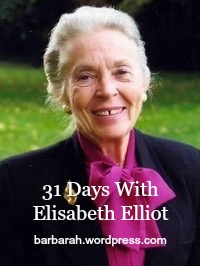
For the past two years I have participated in 31 Days, a blog challenge wherein a blogger can choose a topic to write about every day in October. Last year I shared 31 Days of Inspirational Biography, and the year before 31 Days of Missionary Stories. I enjoyed them very much, but they did take up a great deal of time, even though many of them were pre-written for a ladies’ newsletter. I wasn’t sure if I would participate this year or not, but as I pondered what topic I would write about if I did do it, the only thing that came to mind (until today) was to share quotes from Elisabeth Elliot. She has probably had the most profound influence on my life of anyone I have known or read, in the areas of walking with and serving the Lord in general as well as being a Christian woman, wife, and mother. She was a true Titus 2 woman to me though I never knew her personally. I appreciate the way she didn’t pull any punches, so to speak, about what it costs to follow the Lord, but she always pointed us back to His love, wisdom, care, and sufficiency. She just passed away this past June, and I believe it’s imperative that her voice continues to live on and share with women for generations to come.
I wondered if someone else might choose her writings for a topic this month, but finally decided it doesn’t matter. If someone else does, we will probably share different things and with a different audience, and even if we overlap, that’s okay.
If you’d like to learn more about 31 Days and see what the different categories are, you can go here. There is a Facebook group for participants here and a Pinterest group here. I’m excited to see some of the topics already! I enjoyed some good reading there last year.
If you’d like to read this series, you can either subscribe to my blog (see a couple of different ways to do so on the sidebar) or bookmark this post. I’ll share a list with a link to each post from the month here.
I’m Grateful That Lady Forced a Bible On Me, HT to Challies. “We have this idea that doing something significant for God requires huge planning, red letters in the sky, a parting of the sea, signs and wonders. But the truth is, He’s working through us in ways we could never arrange on our own.”
No Disappointment in Jesus? HT to Story Warren. “It’s in life, in the real world, down here where things do and do not pan out, that the just are supposed to live by faith. When we are honestly disappointed in the way the God we trusted has handled things, when what has happened was not at all what we wanted—then statements like “Not my will but thine be done” have powerful meaning. What a sinewy kind of trust old John the Baptist had as he lay in chains—captive, doomed, lonely, blessed, and not offended.”
Melanie shared this recently – a real-life illustration of the sheep knowing their shepherd’s voice:
I don’t know how many of you are familiar with Ron Hamilton, aka “Patch the Pirate.” He’s fairly well known in the Southeast. I love this arrangement of his song. Ben Everson is a master at these mutli-harmony things:
Menkaye was one of several Waorani (then known as Auca) men responsible for spearing to death Jim Elliot, Nate Saint, Roger Youderian, Pete Fleming, and Ed McCully, five missionaries who had come to try to reach them with the gospel, in what was known as Operation Auca. Gentle Savage Still Seeking the End of the Spear: The Autobiography of a Killer and the Oral History of the Waorani by Menkaye Aenkaedi with Kemo and Dyowe is Menkaye’s effort to tell his story in his own words – at least, as close to his own words as possible. He cannot write, so he shared his story verbally with someone who spoke his language as well as Spanish, and then it was translated from Spanish to English.
Menkaye begins with what could be called “the Moipa years.” Moipa was a highly skilled Waorani hunter who, out of fear of reprisals for the people he had killed, began killing almost everyone who crossed him or who might someday: men, women, children (who might grow up to take revenge), grandparents, anyone. The people lived in constant fear of him, and many attempts on his life did not succeed. When he finally did die, killing at the slightest provocation, for any real, perceived, or potential threat or wrong had become a way of life. That included any outsiders. Their encounters with non-Waorani had not gone well, and what could they want anyway except to encroach on their territory or to steal from them or hurt them? Better to kill them off before they struck first, they reasoned.
The missionaries had known that the Waorani, or Aucas, as they knew them, were violent, but they had learned some Waorani words from Dayuma, a woman who had escaped the tribe some years before, had flown Nate Saint’s plane over them a number of times, shouting out Auca/Waorani phrases, had dropped gifts to them and received some in return, so they thought the people were receptive to meeting them. They set up camp in their territory, and a man and two women from the tribe came to visit them, the man even going up for a ride. Everything seemed to be going well. But then a group of Waorani came at them and speared them and tore the fabric off the plane.
Years later, when Elisabeth Elliot had come to know them and asked them why they had speared the men, they replied, “For no purpose.” In Olive Fleming Liefeld’s book, Unfolding Destinies, when she went back to visit and asked the same question, they told her they had not understood the photos the men had shown them. They thought the photos of Dayuma meant that she had died, supposedly at the men’s hands. Later still, Steve Saint related in End of the Spear that when he went back to live and work with the Waorani for a time, he was told there was a disagreement between them about one’s man’s wanting to marry one of the women. Some who were involved got angry, and to divert their turning on each other, someone turned their attention to the missionaries, starting a raid. Menkaye relates that all of these are true. One of the men involved in the argument they were having about marriage began to say that the photos meant that the men were cannibals, and they should spear them before the men killed and ate them.
This event that shook the world is given relatively few pages in Menkaye’s book. With all the people they had killed, these men were just a blip on their radar, another threat averted. But some time later, Dayuma came back to the tribe and told them they had made God angry and they needed to stop killing. Amazingly, they were willing to lay down their spears and hear more. Rachel Saint (Nate’s sister) and Elisabeth and Valerie Elliot (Jim’s wife and young daughter) were invited to come and teach them. Though I had read in Through Gates of Splendor and other books that over time several of the Waorani had come to believe on the Lord Jesus Christ as their Savior, it was touching and beautiful to hear this experience described in more detail by Menkaye and to hear him, Kemo, and Dyowe tell of the joy and freedom in their hearts. Dyowe told Rachel:
I want you to know…that I was one of the men…who killed your brother Nathanael when he was on the beach with the others. I know that God wants to forgive me. But I want to tell you too to forgive me for the things that I have done. I didn’t understand anything back then, and I didn’t know who they were. But I will say that I truly know God has forgiven me today. I want to give myself to Him. It was not only your brother who died. Many, many people died besides him at the point of my spear. But today is the last of my own spear for me. I have found a new spear to pierce the hearts of many people (p. 231).
Almost immediately they became concerned for other branches of the tribe that had broken off to live in new areas, and they tried to reach them with the gospel. Some were martyred in the attempt, and most of these other branches are still not believers, thus the second part of Menkaye’s rather bulky title about still seeking the end of the spear. In fact, one of the end notes relates that while the book was in progress, another raid had taken place against oil company employees.
The next part of Menkaye’s book tells of changes that have taken place in the Waoranis, and the last few chapters, some of the most valuable for anyone seeking to work with tribal people, are his vision for his people. He and other Waorani are not opposed to progress and to changes. They see them as inevitable. Menkaye’s own son attended aviation school in Michigan in the US. They don’t want their young people to lose their Waorani skills and heritage completely, though, and they want any future work within the tribe to be handled differently than it has been. In the past, people were sent in who pretty much took over instead of coming under the tribal leadership – even Rachel and Dayuma. Rachel wanted to set Dayuma in charge, but either Dayuma wasn’t quite cut out for it or the authority went to her head or she backslid or something – Menkaye details a number of problems with her leadership. To be generous, this was something Rachel and Dayuma had not been trained for, and mistakes were made. Menkaye and the others are not bitter and they appreciated everything done for them, especially helping them to understand the gospel, but they did want to point out some of the issues and correct them.
The ones who should be choosing the leaders are the Waorani themselves, based upon what we ourselves see in those candidates, young or old, who have demonstrated maturity from a Biblical perspective, and have carefully studied the Bible in order to know the principles in depth that will be taught and lived out. Never should it be a random choice based on a superficial view of any person., especially someone from the Outside (p. 323).
Reading this makes me appreciate even more the emphasis among missionaries our churches have supported in leading rather than driving the people and in training up leaders from within the people group they are ministering to rather than continuing to bring in leadership from the outside.
I’m sure another difficulty in working with tribal people is how to navigate changes. One doesn’t want to unduly influence their culture, but one doesn’t want to hold them back, either. That is all I can figure was going on when the people began to ask Rachel for clothes and boots, and she said they had done fine without them before and didn’t need them now, according to Menkaye. But they had always lived and worked in the jungle before, where it was shady, and Rachel had them out in the open under the hot sun clearing space for an airstrip and didn’t seem to understand they wanted protection from the sun beating on their backs. I think either she was trying not to change them in that way, or she was trying to squelch their looking for handouts, but evidently this is one area where she and Elisabeth disagreed: Elisabeth thought they should have clothes and arranged for them. (They kept wearing clothes but had mixed emotions about shoes. They found that boots protected them from “thorns, ants, and vipers,” but the weight of them felt odd to them, and “when we were climbing the steep mountain ridges, they made us slip in the mud and slide downward” [p. 227].)
I’ve mentioned before in other missionary book reviews (particularly here) that some people think of these primitive tribal communities as simple people frolicking in the sun who shouldn’t be disturbed by missionaries and businesses. Dr. Jim Yost says in the forward, “The tendency to idealize or romanticize ‘primitive’ culture falls to crushing blows here as the reality of life in the upper Amazon rainforest plays out in gruesome details often too explicit or vivid for the cushioned Western mind.” (p. v). How many of us would have wanted our culture to remain as it was hundreds of years ago just to preserve it? Progress has its problems but also its opportunities.
Menkaye and other Waorani are willing to embrace these opportunities while still maintaining the Waorani culture and autonomy. He has great ideas for them to integrate with the “World of the City,” to help his people explore endeavors in which they can make their own money, and to help their young people have the best opportunities for a changing future.
I do not intend to offend the churches of The Outside World who perceive their role as one of coming in to show us how to do things, but in reality, we can learn equally from each other. Is that not true? Do we not have many things to teach each other and to learn from each other? (p. 329).
If you bring us a new idea, we will welcome that, too. But we will always weigh and balance the influences and outcomes of every new component, and determine together what projects are useful and valuable, and which ones may be harmful in some way (p. 338).
The Waorani are storytellers, but their way of sharing stories is different from ours. There is much more detail than I would personally care to know about some issues, much less than I wanted to know about others, and the stories are laid out differently than we would be used to. There is an appendix of Waorani myths and legends at the end: some seem odd, some are gruesome. But then, they would probably think the same way about our fairly tales and Mother Goose rhymes.
I think this book is incredibly valuable to anyone interested in the heritage of the ministries of the Saints, Elliots, and others who initiated “Operation Auca,” and to anyone with an interest in missions, particularly in ministry to tribal peoples. I hope Menkaye lives a long time to carry out his vision and that others take it up as well.
(This review will also be linked to Semicolon‘s Saturday Review of Books.)
I can’t not mention Jim and Elisabeth Elliot in a series like this. The first missionary book I can recall reading is Through Gates of Splendor, about Jim and four other men who were killed by the Indians they were trying to reach with the gospel, and the subsequent opening Elisabeth and Rachel Saint, sister to one of the other men, had with the same tribe. That touched off reading almost everything Elisabeth ever wrote plus many another missionary biography. Elisabeth, as many of you know, remarried after Jim died, lost that husband to cancer, and then remarried Lars Gren, but she kept Elisabeth Elliot as her pen name. She put out a newsletter for several years, and some excerpts from that and from some of her books were used in a daily e-mail devotional that used to be sent out by Back to the Bible. You can see those devotionals now on her website here. Lars posts updates every now and then here.
Incidentally, I just discovered that Jim and Elisabeth’s daughter, Valerie Elliot Shepard, wrote a children’s book about her childhood in the jungle titled Pilipinto’s Happiness. It is definitely going on my To Be Read list!
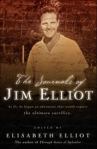
Since I just reread and reviewed Through Gates of Splendor here at the end of June and included a lot of links and resources, I won’t repost that information, but I thought I’d include a few excerpts from Jim’s journals, as quoted by Elisabeth a a chapter titled “Not One Thing Has Failed” in her book Love Has a Price Tag. She edited and published the bulk of them in The Journals of Jim Elliot and included some excerpts and letters in her biography of him, Shadow of the Almighty, but here are just a few snippets. She explains:
Jim started his journal as a means of self-discipline. He began to get up early in the morning during his junior year in college to read the Bible and pray before classes. He was realistic enough to recognize the slim chances of fitting in any serious study and prayer later in the day. If it had priority on his list of things that mattered, it had to have chronological priority. To see that he did not waste the dearly-bought time, he began to note down on paper specific things he learned from the Word and specific things he asked for in prayer.
He recorded:
It is not written as a diary of my experiences or feelings, but as a ‘book of remembrance’ to enable me to ask definitely by forcing myself to put yearnings into words. All I have asked has not been given and the Father’s withholding has served to intensify my desires…. He promises water to the thirsty, satiation to the unsatisfied (I do not say dissatisfied), filling to the famished for righteousness. So has His concealing of Himself given me longings that can only be slaked when Psalm 17:15 [‘As for me I shall behold thy face in righteousness; when I awake I shall be satisfied with beholding thy form’] is realized.
Elisabeth writes:
“All I have asked has not been given.” Not, that is, in the way or at the time he might have predicted. Jim beheld the longed-for Face much sooner than he expected. It is startling to see, from the perspective of nearly thirty years, how much of what he asked was given, and given beyond his dreaming.
When Jim prayed for revival he was instructed by reading in David Brainerd’s diary how a revival came when Brainerd was sick, discouraged, and cast down, “little expecting that God had chosen the hour of his weakness,” Jim wrote, “for manifestation of His strength.”
“I visited Indians at Crossweeksung,” Brainerd records, “Apprehending that it was my indispensable duty…. I cannot say I had any hopes of success. I do not know that my hopes respecting the conversion of the Indians were ever reduced to so low an ebb . . . yet this was the very season that God saw fittest to begin His glorious work in! And thus He ordained strength out of weakness . . . whence I learn that it is good to follow the path of duty, though in the midst of darkness and discouragement.”
Jim saw, in reading Brainerd, the value of his own journals. He also “was much encouraged to think of a life of godliness in the light of an early death…. Christianity has been analyzed, decried, refused by some; coolly eyed, submitted to, and its forms followed by others who call themselves Christians. But alas, what emptiness in both!
“I have prayed for new men, fiery, reckless men, possessed of uncontrollably youthful passion–these lit by the Spirit of God. I have prayed for new words, explosive, direct, simple words. I have prayed for new miracles. Explaining old miracles will not do. If God is to be known as the God who does wonders in heaven and earth, then God must produce for this generation. Lord, fill preachers and preaching with Thy power. How long dare we go on without tears, without moral passions, hatred and love? Not long, I pray, Lord Jesus, not long.” I read these prayers now with awe–new men, new words, new miracles all granted as a result of this young man’s death.
He wrote in 1953 of watching an Indian die in a jungle house. “And so it will come to me one day, I kept thinking. I wonder if that little phrase I used to use in preaching was something of a prophecy: ‘Are you willing to lie in some native hut to die of a disease American doctors never heard of?’ I am still willing, Lord God. Whatever You say shall stand at my end time. But oh, I want to live to teach Your word. Lord, let me live ‘until I have declared Thy works to this generation.”‘
Elisabeth concludes this chapter by marveling at how God answered Jim’s prayer “‘exceeding abundantly above all‘ that he had asked or thought” in so many who have been touched and spurred to consecrate themselves to God by the testimony of “the record of his young man-hood–the days which seemed so sterile, so useless, so devoid of any feelings of holiness, when God was at work shaping the character of a man who was to be his witness; the prayers which seemed to go unheard at the time, kept–as all the prayers of all his children are kept, incense for God–and answered after what would have seemed to Jim a long delay.”
And, behold, this day I am going the way of all the earth: and ye know in all your hearts and in all your souls, that not one thing hath failed of all the good things which the Lord your God spake concerning you; all are come to pass unto you, and not one thing hath failed thereof.
Joshua 23:14
Here are a few other isolated quotes Jim Elliot is known for:
“I seek not a long life, but a full one, like you Lord Jesus.”
“He is no fool who gives what he cannot keep to gain that which he cannot lose.”
“Wherever you are, be all there! Live to the hilt every situation you believe to be the will of God.”
“Let not our longing slay the appetite of our living.”
“When it comes time to die, make sure that all you have to do is die.”
To those who thought he could be better used as a preacher at home, he wrote: “I dare not stay home while the Quichuas perish. What if the well-filled church in the homeland needs stirring? They have the scriptures, Moses, and the prophets and a whole lot more. Their condemnation is written on their bankbooks and in the dust on their Bible covers.”
“[He makes] His ministers a flame of fire. Am I ignitable? God deliver me from the dread asbestos of ‘other things.’ Saturate me with the oil of the Spirit that I may be aflame. But flame is transient, often short-lived. Canst thou bear this my soul—short life? In me there dwells the spirit of the Great Short-Lived, whose zeal for God’s house consumed Him.”
Five missionaries working in different outposts in Ecuador in the early to mid-1950s became burdened for a tribe of killers known then as the Aucas. Early encounters with the white man had not gone well when the rubber hunters came to harvest while also “plundering and burning the Indian homes, raping, torturing, and enslaving the people” (p. 14). But the Aucas killed not only white men, but any outsiders and even their own people. “Could Christian love wipe out the memories of past treachery and brutality?” (p. 14). The missionaries hoped so and longed to be a part of reaching this tribe with the love and gospel of Christ. Upheld by the truth that “Thou wast slain, and hast redeemed us to God by thy blood out of every kindred, and tongue, and people, and nation” (Revelation 5:9b), they began to plan and strategize as to how best to reach these hostile people.
Through Gates of Splendorby Elisabeth Elliot is the story of how these five men came to the Lord, came to be called to the mission field, their marriages, and how each was led to become part of “Operation Auca.” It’s no spoiler to say the operation ended in the death of the five, because that fact was known long before the book came to be and was probably a great impetus in it’s writing. But then it is not right, either, to say that is how Operation Auca ended, because God used it in the lives of the Aucas themselves as well as of people all over the world in the decades since. But knowing how the story “ends” lends a poignancy to the men’s lives and words.
The five men were:
Nate Saint, a brilliant pilot whose dreams of flying the big planes was cut short by an illness, but who went on to become a pilot for Missionary Aviation Fellowship, bringing much-needed supplies, human contact, and medical help to missionaries in outpost stations. He had an ingenious engineer’s mind which he used to great effect solving problems and improving life, and a healthy balance between doing everything in his power to ensure success and safety yet trusting God for the outcome.
Jim Elliot, from Portland, OR, intense and passionate, had a burning desire to share Christ with those who had never heard of Him, yet also had a humorous side and felt with George MacDonald that “It is the heart that is not yet sure of its God that is afraid to laugh in His presence” (p. 17).
Pete Fleming, from Seattle, WA, quiet, studious, would probably have been a college professor if he had not felt called to the mission field.
Roger Youderian, of Louistown, MT, severely affected by polio as a child, was called to the missionary field while serving in the military.
Ed McCully, from Milwaukee, WI, was planning to go to law school when a Bible study led him to abandon all to follow Christ wherever he might lead.
Even before Operation Auca was even remotely thought about, most of the men were willing to give themselves even unto death. Jim wrote in his journal:
“‘He makes His ministers a flame of fire.’ Am I ignitible? God deliver me from the dread asbestos of ‘other things.’ Saturate me with the oil of the Spirit that I may be a flame. But flame is transient, often short-lived. Canst thou bear this my soul – short life? In me there dwells the Spirit of the Great Short-Lived, whose zeal for God’s house consumed Him. ‘Make me Thy fuel, Flame of God.'” (p. 17).
Nate Saint, likewise, considered himself “expendable,” saying, “Every time I take off, I am ready to deliver up the life I owe to God” (p. 58), and Pete later wrote:
“I am longing now to reach the Aucas if God gives me the honor of proclaiming the Name among them…I would gladly give my life for that tribe if only to see an assembly of those proud, clever, smart people gathering around the table to honor the Son – gladly, gladly, gladly! What more could be given to a life?” (p. 26).
All of the wives, as well, were willing to live in “primitive” conditions and to be used in God’s service in whatever way He saw fit.
But they were not careless. Every step of Operation Auca was steeped in thought, discussion, sometimes disagreement, and prayer for the best outcome for all involved. And every step looked like it was going well.
What then led the Aucas then to kill the five men? When God opened the tribe to visits later, at first they said it was because they thought the men might be cannibals. In a later book I believe someone was told that the photographs the missionaries had scared them: they thought somehow it involved the soul of the person in the photograph. In Steve Saint’s more recent book, End of the Spear, he was told that an argument had broken out among the Auca men involving a woman, and one man wanted to prevent the bloodshed amongst the tribe and turned their anger towards the white men. It is possible that all of these factors played a part, or that as the Aucas (now known by their own name of Waodani [going by Steve’s spelling of it since he has worked with them for years, but I have also seen it as Huaorani or Waorani]) got to know white people and their language better, they may have felt more of a freedom of expression in later years that they did at first.
I first read this book in college, and the lives of these men and their wives and their dedication and love for the Lord touched me greatly. I have read it many times since, and it never fails to speak to me. The version I read this time is the same one I read in college, a brown around the edges 1977 fifth printing: the first printing was in 1956. It was interesting to see what I had underlined in previous readings and what stood out to me this time. It also touched off a lifetime of reading missionary biographies, reading just about everything Elisabeth Elliot has written and reading several other books about Operation Auca and the lives of those involved.
If you’d like to read more about any of these, I recommend the following:
The Dayuma Story by Rachel Saint, sister of pilot Nate Saint. Dayuma was the Auca girl who had escaped the tribe years earlier, taught the men Auca phrases, and later went back to share the gospel with her tribe.
The Savage My Kinsman by Elisabeth Elliot about her years of working with the Aucas after Jim’s death.
Unfolding Destinies by Olive Fleming Liefeld, widow of Pete Fleming.
End of the Spear by Steve Saint, Nate’s son. If you don’t read any others, I’d recommend this one as it is a more recent book and a fuller account of the events then and since, plus it is just plain good reading.
I’m sure there are other books and biographies out there (I have one of Nate Saint on my bookshelf that I’ve not read yet). but these are the ones I have read. In addition, Elisabeth Elliot touches on the experiences of her time in the Ecuadorian jungle in several of her other books. One of my favorites is in The Savage My Kinsman when she quotes William Cullen Bryant’s poem, “To a Waterfowl,” and applies it to herself, especially the last line: “He, who, from zone to zone, Guides through the boundless sky thy certain flight, In the long way that I must tread alone, Will lead my steps aright.”
There are also several films and film clips of interest:
Through Gates of Splendor, narrated by Elisabeth Elliot, using footage that she, Nate Saint, and Life Magazine had taken.
A “This Is Your Life” feature of Rachel Saint, part 1 and 2.
Beyond the Gates of Splendor, a documentary made 50 years after the events. This is one I would recommend above all the others if you only have time for one. It is in four parts on Vimeo (Part 1, 2, 3, and 4), but I found the audio a bit hard to hear.
I wanted to say just a word, too, to those who criticize missionary efforts and who believe that primitive tribes should be left as they are. By the Waodani’s own admission, the tribe probably would have become extinct now if someone had not come to tell them of a better way of life. Why would anyone want to deny them that? In Spirit of the Rainforest (different people and field, but also a primitive tribe) this rather lengthy quote explains some of their feelings (I started just to link to it, but I feel it is so important that I copied it here):
“The naba wants to know why you want to change the way you live out here in the jungle,” Keleewa said to Hairy after Doesn’t-Miss talked.
Hairy was surprised at the question. “Because we’re miserable out here. We are miserable all the time. The people from Honey [predominantly Christian village] came here and made peace with us many seasons ago and their village keeps getting better. We want that for us. If it means throwing spirits away and getting new ones, we will do it. [This is not something said lightly. Many were under the impression that they would be killed if they tried to get rid of their spirits.] But we need someone to teach us these new ways.”
Hairy didn’t have spirits because he was not a shaman. But he followed everything the spirits told his shaman. I knew my spirits would be very irritated if Hairy quit following the spirits. No one who has killed as often and as long s Hairy could ever stop it…
Doesn’t Miss talked with Keleewa for a while. Keleewa paused and thought how to say what the naba said. Then he told Hairy, “He says there are many people in his land that don’t think that he, or any of us, should be here helping you at all. They say that you’re happy here and that we should leave you alone. He wants to know what an experienced killer like you would say to them.”
Hairy grew even more serious. “I say to you, please don’t listen to the people who say that. We need help so bad. We are so miserable here and out misery never stops. Night and day it goes on. Do those people think we don’t suffer when bugs bite us? If they think this is such a happy place out here in the jungle, why aren’t they moving here to enjoy this beautiful life with us?”
Doesn’t-Miss was quiet. Then he got out of his hammock and walked down the trail…When he was too far away to hear, Hairy said to Keleewa, “Is he stupid? Doesn’t he have eyes? Can’t he see these lean-tos we call houses? Can’t he see us roam the jungle every day, searching for food that isn’t here, so we can starve slower? Can’t he see that our village is almost gone, that this move we are making now is our last hope to stay alive?”
Keleewa was slow to answer. He knew Hairy wouldn’t understand what he was about to say. “Most nabas think just like him,” Keleewa told Hairy, and shook his head because he knew he couldn’t explain why.
“Nobody’s that stupid,” Hairy snapped. “They must hate us. They think we’re animals” (pp. 180-183).
Why would even any non-Christian want to see a whole people group extinguished due to infighting or disease? Especially these days when we clamor to save the spotted owl and other endangered species? Shouldn’t endangered people be at least equally as important as endangered animals?
Would anyone in their right minds really want such practices as burying a widow along with her husband or killing twins or deformed babies to continue? So many primitive tribes practice these kinds of things.
Why deny these people the choice of hearing that there are other ways? Why not allow them to hear the gospel and let them make their own choice? So many who bask in the multitudes of freedoms we have here in the US would rather keep people like this in darkness in the name of preserving their culture. Most missionaries I know of these days consciously and conscientiously try not to “Americanize” the native churches but rather try to respect their culture and form churches within that culture while introducing healthier ways of living and civil practices. Who could possibly have a problem with that?
Thank you, Carrie, for allowing me to choose this book for the Reading to Know Book Club in a year of featuring classics. It truly is a Christian and a missionary classic, and I am glad folks are revisiting it or discovering it for the first time.
I’ll leave you with the song the men sang the night before they launched “Operation Auca,” and from which the title of the book is taken (words and thoughts are here.)
(This will also be linked to Semicolon‘s Saturday Review of Books.)
Carrie’s Reading to Know Book Club has been featuring classics this year, trading off between adult and children’s classics. Carrie asked several blog friends to choose a book for each month. I was honored to be asked, but had a hard time deciding on which of multitudes of favorite books to choose. Finally I decided I wanted to include a missionary classic, which is one of my favorite genres, and Through Gates of Splendor by Elisabeth Elliot seemed recent enough and its story well-known enough that I felt it would be accessible to anyone who wanted to read it.
Through Gates of Splendor was, I believe, the first missionary book I ever read, sparking a lifetime of exploring other missionary books and Elisabeth Elliot’s writing. I’ve read it multiple times since. I listed it among the 98 Books That Have Enriched My Life and Books to Read Before You Die. It’s the story of how five men and their families came to minister together together among Indians in Ecuador, how they became interested in what was then known as the Auca tribe, fierce warriors who killed any outsiders (as well as their own tribesmen), how they determined to try to reach them, how they went about it, how they were killed, and how a wife of one man and sister of another were eventually given the opportunity to live with this tribe.
It’s not just fascinating for the sake of the story: it’s fascinating to read how each of these very different men and their wives came to know the Lord and then felt called to their particular field. These men didn’t know, when they went to the mission field, that they would be martyrs, though once they began to consider reaching the Aucas, they knew it was a possibility. But they each gave their lives to God to use in any way that He saw fit, and their faith and walk with Him is inspiring.
Some like to watch the films of books along with or after reading, so you might be interested to know there is a DVD called Through Gates of Splendor here (it seems to be also on YouTube here), narrated by Elisabeth Elliot, using footage that she, Nate Saint, and Life Magazine had taken. Also several years ago the film “End of the Spear” (linked to my thoughts) came out. The book is much deeper and fuller, and some have various problems with the film, as I discussed, but it’s okay if you want to see a general visualization. I would highly recommend Beyond the Gates of Splendor: it is a documentary made fifty years after the events of the book. Here is an excerpt:
At the wrap-up post at the end, I’ll have some other resources for those who might want to read more about those involved in this story which has been used by the Lord in remarkable ways.
If you’d like to join in the Carrie’s Book Club to read it, just leave a note at her place saying so, and at the end of the month she’ll have a post where all those who read it can post comments or links to their own blog post about it. That’s one of the most fun parts of this book club: discussing the book we’re reading with others.

 This is a hard one, but the last few lines help put it into perspective:






 Stray Thoughts