

Laudable Linkage

Laudable Linkage

I went from just a few shared reads last week to a longer list today. I hope you’ll find something of interest here, along with some time to read.

That’s Just Your Interpretation,” HT to Challies. “This is a common response when discussing Scripture, isn’t it? ‘That’s just your interpretation!’ No matter how clearly the Bible speaks, this objection seems to persist. But is it true? Can we really understand the Bible? This question takes us to the heart of the Christian faith and invites us into a discussion about the clarity and authority of God’s Word.”

Ten Truths to Empower Your Prayer Life. “My introduction to prayer came at the age of seven. I was spending the weekend with my grandmother and had slept beside her, snuggled deep into the covers. As the early morning light filtered through the curtains of her bedroom window, the sound of her whispered prayer broke through the fog of my fading sleep. . . . In the years since then, I’ve learned much about this sacred privilege. Today, I’d like to share ten truths I’ve sought to apply in my own prayer life.”

The Greatest Show: Is Your Faith Performance? “The desire to have a godly reputation isn’t wrong, but the danger comes when our focus shifts from genuine transformation in Christ to carefully crafted perception. It’s a tale as old as time and worth pausing to ask: do you care more about appearing faithful, gracious, and surrendered to Christ than actually walking in an authentic relationship with Jesus?”

Be Faithful Over Little: A Different Vision for a Life That Counts, HT to Redeeming Productivity. “But God hasn’t purposed for most people to be world-shapers. The vast majority of our faithfulness and work for the Lord will be exercised in the small, often boring, and monotonous rhythms of life.”

Between Two Worlds: Suffering, Safety, and the Cross, HT to Andrew Le Peau. “The predominant institutional approach to suffering is often one of avoidance—from institutional marketing that equates flourishing with the absence of suffering to personal postures that treat suffering as an unwelcome and harmful interruption in one’s development. Institutions can lessen burdens but not eliminate suffering. No mentor, policy, program, or system can insulate students from grief, disappointment, or hardship. A culture increasingly focused on removing discomfort does not necessarily make people stronger; it often leaves them more anxious and unprepared for suffering when it inevitably comes.”

A Denier Redirected: Living Out the Greatness. This discussion about living in a godly way in an ungodly society dovetails with my own reading about Daniel and how he did so.

This Vice Is One of the Key Predictors of Divorce: Yet, It Is Oddly Understudied. It’s a vice running rampant in society these days.

Coming of Age. “You could tell me that no matter what a mother loves her children, but it takes a story to show me how painful that could be and what it means. Or maybe you tell me that it’s good for my children to suffer losses and failures; that they’ll learn how to pick themselves up if they only get to experience life’s challenges. I’d say it makes sense but it takes a story for me to understand the real value behind it. I could learn as I go and fumble blindly along the way, or I could walk in the shoes of many mothers who’ve gone ahead of me and have a story to tell me of how to become the mom of adults.”

What Did We Gain and Lose by Livestreaming? HT to Challies. “What began as a temporary necessity has become an expected staple of the church’s ministry. As people began returning to worship, committees and the session debated whether livestreaming should continue. If so, for how long, and for what purpose?”
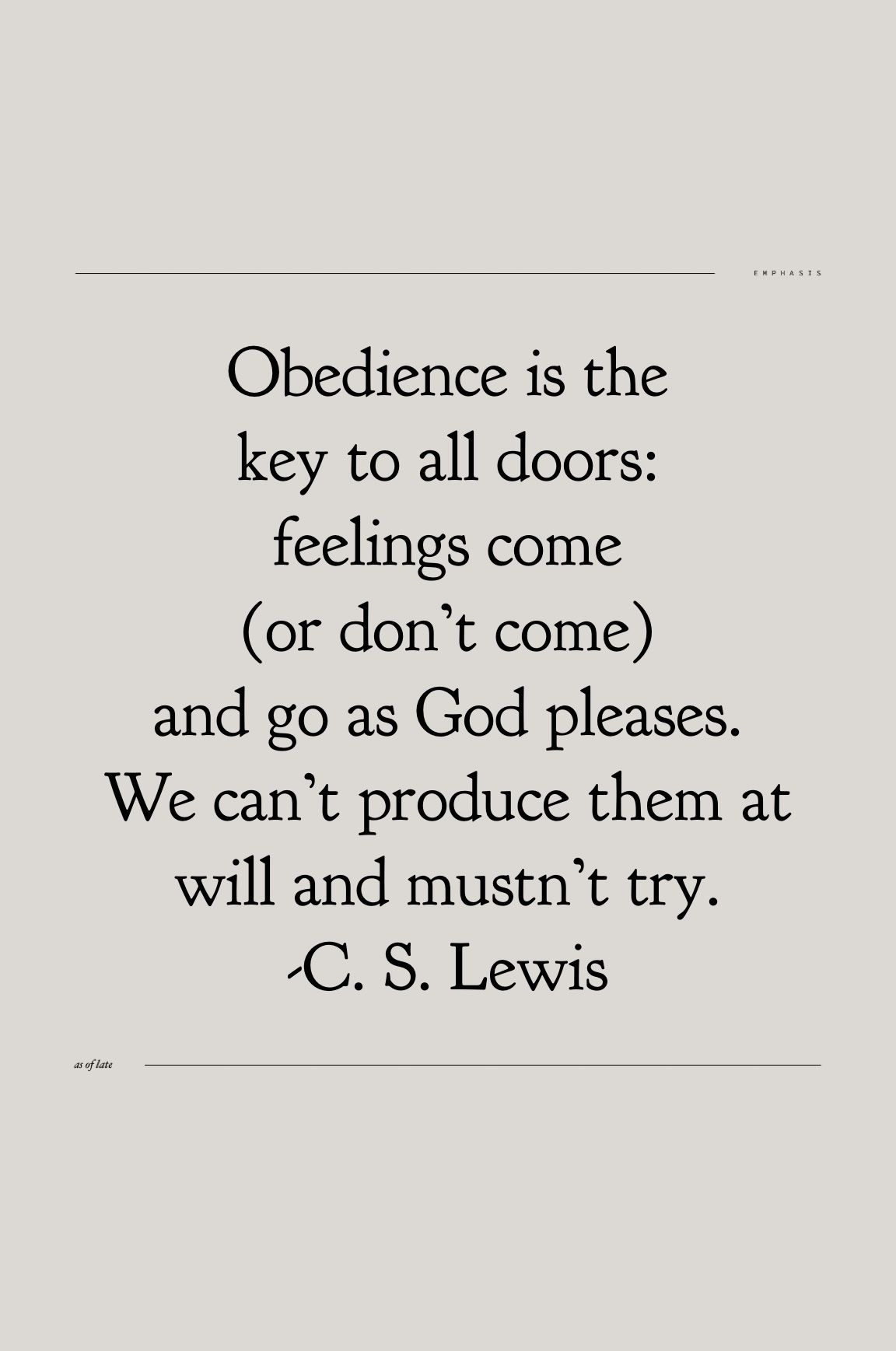
C. S. Lewis quote

Obedience is the key to all doors: feelings come (or don’t come) and go as God pleases. We can’t produce them at will and mustn’t try.–C. S. Lewis

Faithful in Obscurity

Suppose you’re playing Jeopardy!, and you see this clue in the People in the Bible category:

Bartholomew, James the son of Alphaeus,
Thaddaeus, and Simon the Zealot

Would you know the right question?

“Who are some of Jesus’ disciples?”

If I were the host, I’d count that correct. But, more precisely, you could ask, “Who are the lesser-known disciples of Jesus?”

The names are a little different in the various lists of disciples (people often went by more than one name then.) But these usually appear near the bottom of the lists, right before Judas Iscariot. We don’t know much about them besides their names. We don’t have their words or actions recorded in the Bible other than in what the disciples did as a group.

Several years ago, our pastor at that time shared a series of messages about the disciples. Peter, as you can imagine, was the subject of more than one sermon. I think Judas may have gotten two; John, Phillip, and some of the others may have had one message devoted to each of them.

Our pastor grouped these last virtual unkowns all together. What can we possibly learn from them?

My pastor suggested the main thing they teach us is faithfulness in obscurity.

The lack of detail about them doesn’t mean they were inactive or lesser disciples. For His own reasons, God chose to emphasize certain aspects of other disciples in the Bible.

They heard the same messages as the others and ministered alongside them. There were people they preached to and helped and healed. I’m sure they made a difference in the lives they encountered. God probably used them in ways He could not have used Peter and John.

When they give an account before God, they’re not going to get a participation ribbon or an “I was one of twelve” tee shirt. If they served God faithfully, they’ll hear His “Well done.”

So will you. You may be a busy mom of little ones, a secretary stationed at her desk, a cashier at a counter, a caregiver tucked away in a lonely room, or in any number of occupations where you feel unnoticed. Don’t be concerned if you don’t get as much attention or response as other people. Don’t fret over whether your work seems “important.” Faithfully do what God has called you to do, for His honor and glory.

Sometimes obscurity is just for a time. Jesus was on earth a little over 33 years, with only the last three spent in active ministry. What was He doing those first thirty years? The Bible doesn’t tell us much except that after Mary and Joseph thought they’d lost Him and then found Him in a discussion in the temple, “he went down with them and came to Nazareth and was submissive to them. And his mother treasured up all these things in her heart. And Jesus increased in wisdom and in stature and in favor with God and man” (Luke 2:51-52). We can assume He learned carpentry alongside his stepfather and did all the things a normal Jewish family would do in those times. He probably engaged in acts of kindness and quiet ministry to others.

If we were arranging things, we might have Him manifest Himself as the Son of God much sooner. But that was not God’s way. Yet that quiet time in the background, walking righteously in everyday life, was just as much a part of His life as the rest. Just before His death, Jesus prayed, “I glorified you on earth, having accomplished the work that you gave me to do” (John 17:4).

That can be our purpose as well, whatever work we’re called to.

God may call people to the spotlight for a short time or for much of their lives. But many of us will live as 1 Thessalonians 4:11 says: “to aspire to live quietly, and to mind your own affairs, and to work with your hands, as we instructed you.” We can serve Him in ordinary, everyday ways, hardly noticed by the rest of the world. Yet doing that ordinary service in love as unto Him, filled with His Spirit, makes all the difference.

(I often link up with some of these bloggers)