Laudable Linkage

Laudable Linkage

Here are some of the good reads found this week:

The Resurrection and the Rest of Your Life. “Encountering Jesus—walking with Him through both suffering and resurrection—changes you. When you trace His steps all the way to the cross and begin to grasp the weight of His love, when you witness His power over death and realize what He has already overcome—you don’t walk away the same.”

The Most Radical Thing You Can Bring to Easter Dinner, HT to Challies. “You look at the calendar and begin counting down the days to Easter—not with anticipation, but with angst. What should be a grateful celebration of the greatest event in history, Christ’s resurrection, is instead a time of stress as you think about getting together again with troublesome friends or family members.” Thankfully, none of the people we’re having for Easter is troublesome. But these reminders are good for any time of year.

The Dragon and the Rooster, HT to Challies. A father and daughter at odds and the power of forgiveness.

When Scripture Gets Stale, HT to Challies. “If you’re getting mired down in your reading, I want to give you some tips to help you refresh your mindset. If reading the Bible began to feel stale to me, here are five things I would do.”

When a Good Thing Turns Deadly, HT to Challies. Good and harmless things can become deadly if overindulged.

How to Publicly Thank God After a Work Win, HT to Redeeming Productivity. “Over the years, we’ve watched as the occasional actor or athlete directs thanks to God during an award show acceptance speech or after a big game. While most of us will never celebrate a win on national network television, gone are the days of a simple in-office announcement or a quiet dinner with family to celebrate a work promotion. Now, we update our LinkedIn profiles with a carefully crafted announcement that reaches beyond the intimate circles of our workplace or kitchen table. It’s wise to be discerning about how (and to whom) our gratitude is directed when we share good news.”

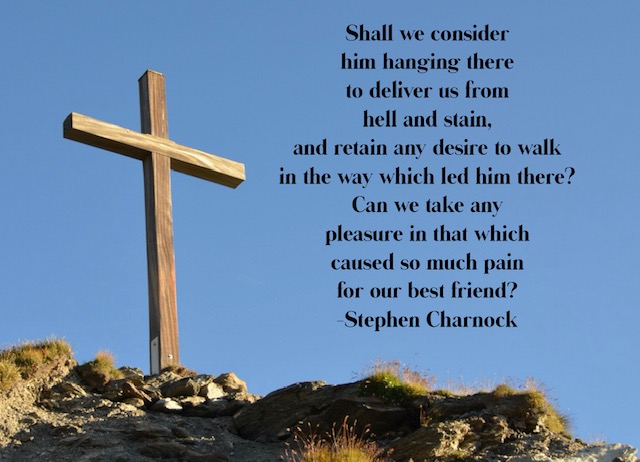
Shall we consider him hanging there to deliver us from hell and stain, and retain any desire to walk in the way which led him there? Can we take any pleasure in that which caused so much pain or our best friend? Stephen Charnock

Laudable Linkage

Laudable Linkage

This is a good time for my occasional reminder that links here do not imply 100% endorsement of everything on a site I’ve linked to or from.

Why Don’t We Read the Bible More? Three Common Misunderstandings, HT to Challies. “That we should read the Bible is rarely questioned. Why we should read it is also fairly well-established. What we rarely do is examine why we, as confessing Christians, don’t read the Bible despite saying that we should. In my years of lay and vocational ministry, I’ve known the acceptable answers to this question and what we perceive to be ‘unacceptable’ answers.”

To (Almost) Die Is Gain, HT to Challies. A young wife and mom contemplates the gains she experienced after a dangerous brain surgery.

Biblical Theology Is for Nerds, HT to Challies. “When Marvel fans piece together the interconnected stories of the MCU across multiple films, they’re exercising the same muscles needed to trace biblical themes from Genesis to Revelation. The skills that make someone an expert in Star Wars lore or DC Comics continuity might be preparing him or her for something far more profound: biblical theology.”

What Does “Love Your Enemies” Not Mean? HT to Challies. “I recently preached on Jesus’s most revolutionary ethical teaching––love your enemies (Matt. 5:44). It stands as a Mount Everest among ethical instructions that both Christians and non-Christians respect. Yet, because we have a certain modern definition of love, it is easy to misunderstand Jesus’s teaching. What did Jesus actually mean by enemy love and how do we integrate it with Old Testament texts that seem to contradict it?”

The Sweet Honey of Forgiveness. “I’m thinking we make forgiveness way harder than it needs to be. It seems cumbersome, impossible … and somehow so wrong.”

How Are Children a Gift From the Lord? HT to the Story Warren. “If kids are a blessing and having a house full of them is a gift, we are going to have to structure our lives a little differently than the cultural norm.”

Our Answer to “Imagine.”Just before I stepped up to speak at the funeral of a professing believer, I had to endure the playing of John Lennon’s ‘Imagine.’ The opening words are ‘Imagine there’s no heaven!’ . . . I began to pray that the Lord would give me wisdom about what to say about this choice of music for a funeral.”

How to Pray for a Cancer Survivor. Much of what’s written here can be applied to other kinds of major illnesses as well. Sometimes the mental, emotional, or spiritual healing from trauma takes longer than the physical.

The Darkness of Winter, HT to Challies, subtitled, “It’s Not the Villain I Once Pegged it For: How the Lord uses Winter to Grow my Faith.” I share the author’s aversion to winter, though her winters are harder to deal with than mine. But she shares how God uses them.

When Everyone Else Is Getting the Blessings You Want. It’s easy to focus on the one thing we want that we don’t have. But God has poured out many blessings on all of us. Lois shares several.

Food (Allergies) and Fellowship. “Food plays an important part in corporate worship and the fellowship of God’s people. It did in Scripture, and it does so today. So, one of the issues we should perhaps consider is the challenge of food allergies. While food allergies may seem simply like a personal health issue for individuals, it can also impact that individual’s fellowship with other believers in a local assembly.” I can “amen” all of this as we have family members with gluten, dairy, nut, and other food issues. I’d especially highlight being careful of cross-contamination–sometimes people who mean well don’t realize this is a problem, too.

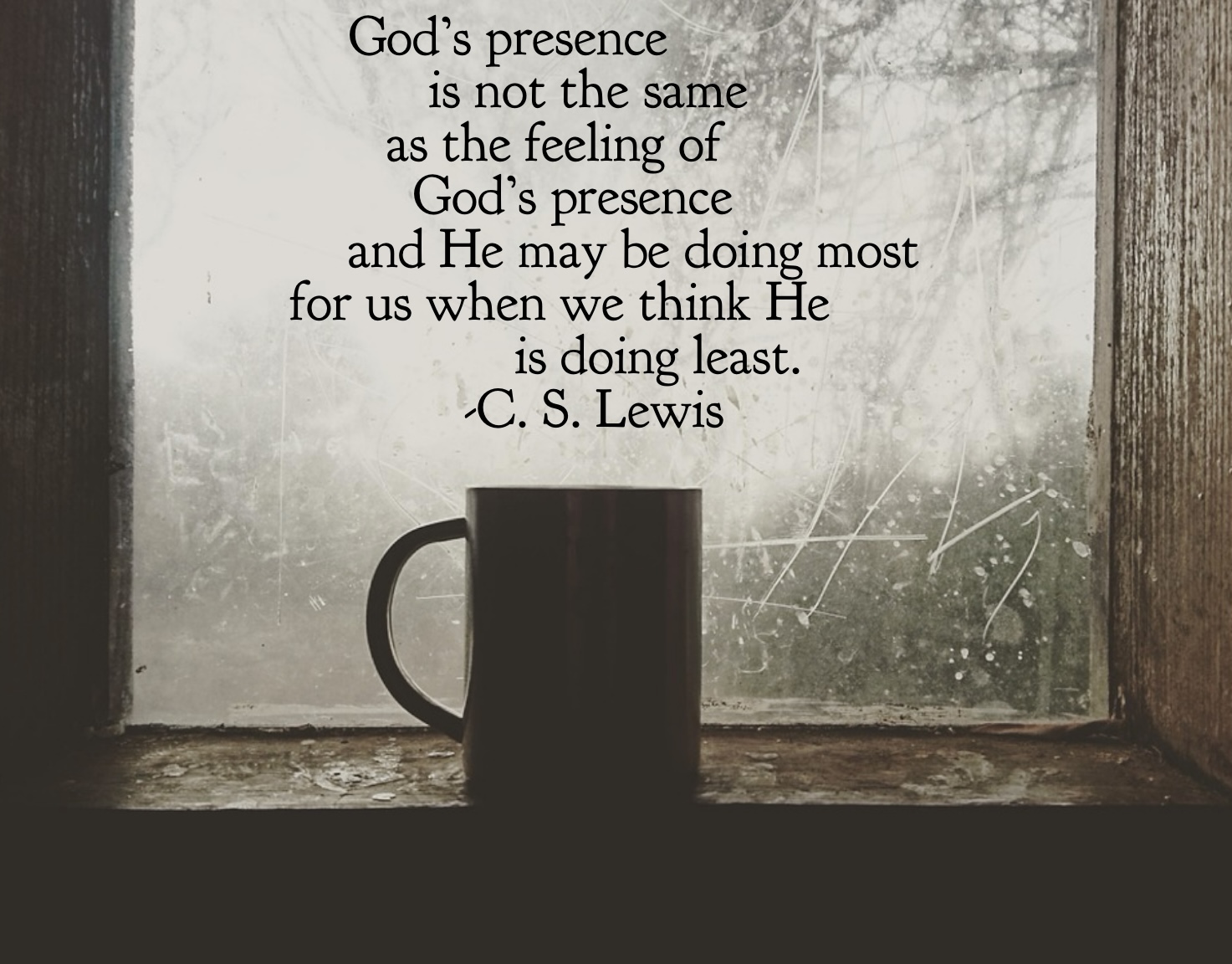
C. S. Lewis quote

God’s presence is not the same as the feeling of God’s presence
and He may be doing most for us when we think He is doing least.
–C. S. Lewis

Laudable Linkage

Laudable Linkage

Here’s some of the thoughtful blogging found this week:

The Blessings That Come With Forgiveness, HT to Challies. “Birds fly. Fish swim. Christians forgive.’ My husband made this statement in a sermon on forgiveness a few weeks ago and it resonated with me. With all the authority and confidence that could only be rooted in Scripture, he proceeded to explain how forgiveness is as necessary to the Christian as breathing.”

When You Long to Know the “Why” Behind Your Sorrow. “It is the question that has spurred a world of exploration, invention, and innovation. Why? It is no surprise, then, that when we encounter troubles, when we experience tragedies, and when we find ourselves in situations that grieve us, we ask why.”

Are You Worried that Your Past Might Cancel Your Future? “The past you wish you could hide from the world may be the very thing God will use to qualify you for serving the world he loves.”

Places I Can’t Go, HT to Challies. “I am grateful that the kids grew up and were able to leave home and fly; they are capable and thriving, and I feel excitement and joy for them in each new adventure. But sometimes, when I say goodbye before a long separation, I have a fleeting but powerful yearning for them to be back under my roof.”

Closing the Gap Between Work and Worship. “Too often, we think of work and worship as entirely disconnected spheres of life. But I will argue that more than anything else, your work is your primary opportunity for worshipping God. And the more we can close the gap between work and worship in our minds, the more fulfilling we will find our work, and the better we will worship God through it.”

On Using Your 20s Well, HT to Challies. “It seems like my friend had bought into a common myth: the idea that once you’ve finished college, you should be a fully-formed adult who understands yourself fully, knows exactly what you’re going to do for the rest of your life, and walks confidently into that future with full assurance.”

Five Blessings of Marking Up Your Bible, HT to Knowable Word. I don’t do this as much as I used to, but when I do, it’s usually for the first reason listed. The list of what kinds of things you might want to mark is useful.

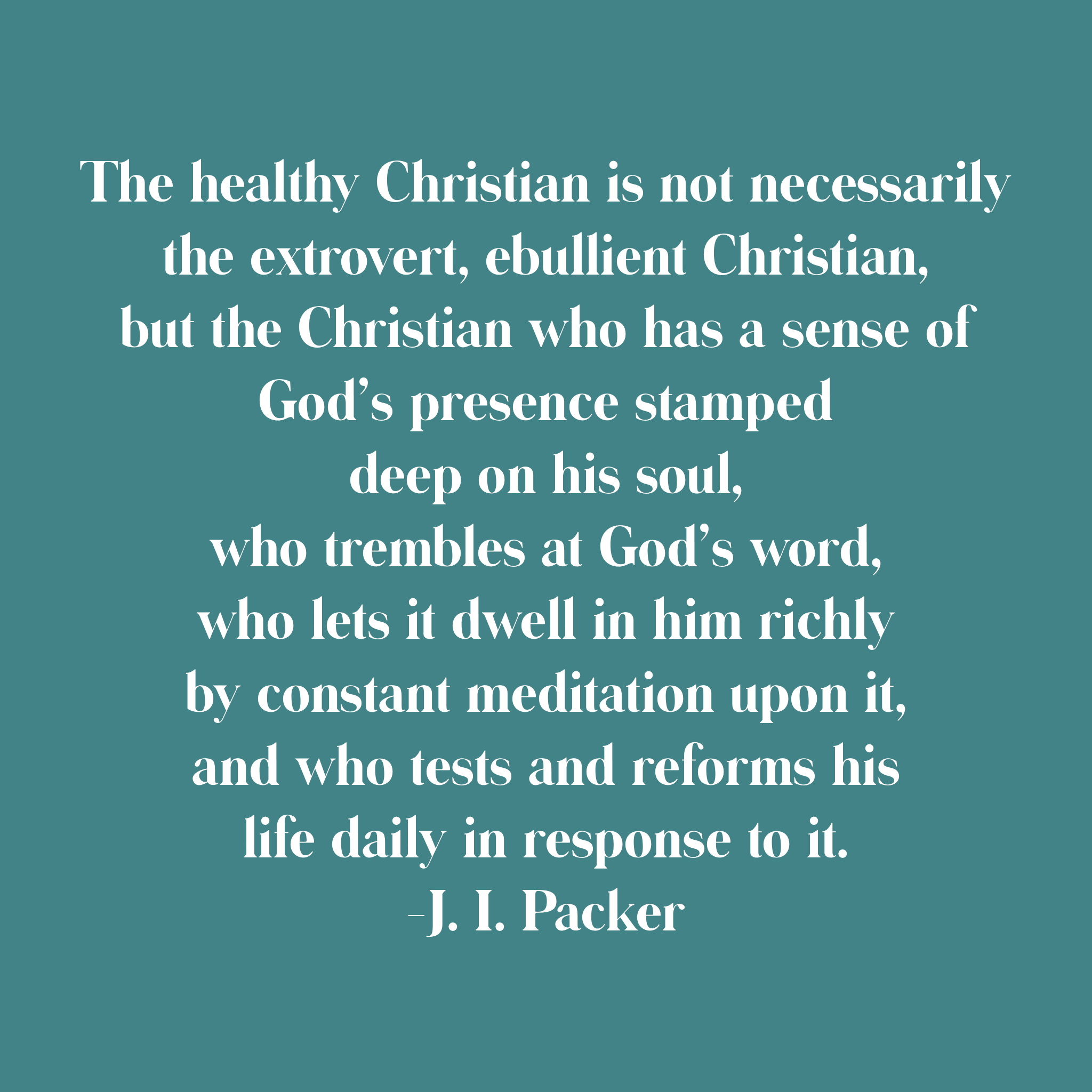
J. I. Packer quote

Do You Want to Be Free?

I did not start going to church regularly until my mid-teens. It seems like we sang a lot of songs then about being free from sin.

One our youth choir sang was called “Set Me Free.” That’s the only place I ever heard this particular song. I haven’t been able to remember enough of the words to look it up.

One we sang often in my early married years was “Free From the Law.”

Then there was, “Power in the Blood“:

Would you be free from the burden of sin?
There’s pow’r in the blood, pow’r in the blood;
Would you o’er evil a victory win?
There’s wonderful pow’r in the blood.

Would you be free from your passion and pride?
There’s pow’r in the blood, pow’r in the blood;
Come for a cleansing to Calvary’s tide–
There’s wonderful pow’r in the blood.

There is pow’r, pow’r, wonder-working pow’r
In the blood of the Lamb;
There is pow’r, pow’r, wonder-working pow’r
In the precious blood of the Lamb.
– Lewis E. Jones

And “I Will Sing the Wondrous Story“:

I was bruised, but Jesus healed me;
Faint was I from many a fall;
Sight was gone, and fears possessed me,
But He freed me from them all.
– Francis H. Rowley

There are a couple I haven’t heard in church, like “For Freedom, Christ Has Set Us Free” and “Glorious Freedom.”

It occurred to me that I don’t hear these kinds of songs, or the theme of freedom from sin in Christ, much any more.

Jesus once said “if the Son sets you free, you will be free indeed” (John 8:36). I wonder if the world doesn’t appreciate the impact of that statement because they don’t understand that they’re not free.

They think they are.

2 Peter warns of false prophets and teachers who use false words to entice people. They appeal to greed and lust to deceive. “They promise them freedom, but they themselves are slaves of corruption. For whatever overcomes a person, to that he is enslaved” (verse 19).

Their chains are so pleasurable, they don’t realize they are bound. They’re so comfortable and having such fun, they don’t want to be free.

But the pleasures of sin, Hebrews 11:25 says, are only for a short season.

Jesus also said that He is the light of the world. We need to pray that He will shine in people’s hearts and show them their need of Him and His love for them.

Jesus said He is the bread of life. He invites, “If anyone thirsts, let him come to me and drink” (John 7:37). We need to pray God would create in hearts hunger and thirst for Him greater than what the world has to offer.

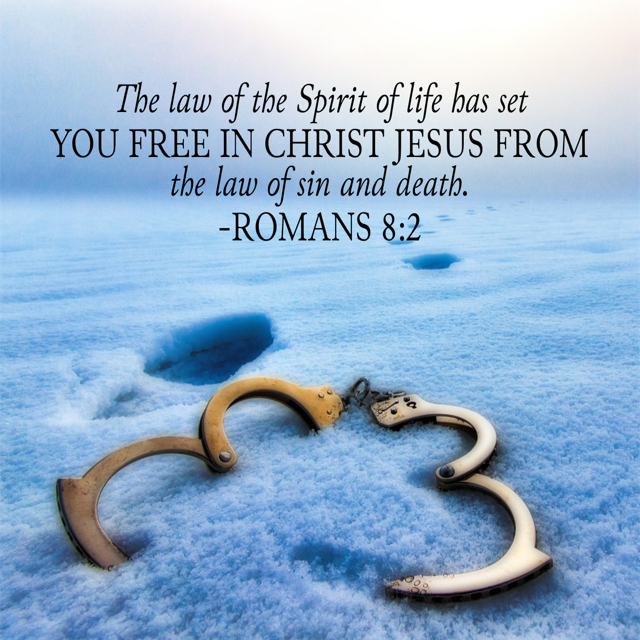
And we need to tell them about Him. May they find that “the law of the Spirit of life has set you free in Christ Jesus from the law of sin and death” (Romans 8:2).

The whole world was lost in the darkness of sin,
The Light of the world is Jesus!
Like sunshine at noonday, His glory shone in;
The Light of the world is Jesus!

No darkness have we who in Jesus abide;
The Light of the world is Jesus!
We walk in the light when we follow our Guide!
The Light of the world is Jesus!

Ye dwellers in darkness with sin-blinded eyes,
The Light of the world is Jesus!
Go, wash at His bidding, and light will arise;
The Light of the world is Jesus!

Come to the light, ’tis shining for thee;
Sweetly the light has dawned upon me;
Once I was blind, but now I can see:
The Light of the world is Jesus!
– P. P. Bliss

(I often link up with some of these bloggers.)

Laudable Linkage

Blog reading was hit-or-miss over the holidays while family was here. I’ve been catching up this week and almost have my Feedly account worked down. But this week’s list of noteworthy links might be a little longer than usual. Perhaps you’ll find an item of two of interest to you.

A Real Christmas, HT to Challies. I don’t think we’re too far from Christmas to contemplate this. “We gloss over the harsh, cruel parts of the story because they don’t fit the narrative we want. But aren’t those parts the point of it all? Jesus came because we needed him – need him still, as evil rages around the globe and even in our own backyards.”

End of the Year Journaling Prompts. There are some for the new year as well. Some would work as blog post ideas.

You Don’t Have to Read the Whole Bible This Year. “Reading the Bible is a glorious privilege; it is entirely worthwhile; it is revealing and convicting and strengthening and encouraging in ways we can barely imagine beforehand. But in the Bible itself we do not find any prescription for the amount we must read each day or year.”

We Should Trust God—But for What? HT to Challies. “I cannot trust God to answer every prayer exactly how I want them answered. I cannot trust him to orchestrate my life so there is no suffering, toil, or disappointment. I cannot trust him to give me everything I want. I cannot trust him to stick to the timeline I had planned for my life.”

How Are We to Live in What Feels Like Unprecedented Times? “Yet all these likely end-of-the-world scenarios have come and gone. G. K. Chesterton wrote, ‘With every step of our lives we enter into the middle of some story which we are certain to misunderstand.’ Our perspective is limited. We’re not God, we don’t hold the universe in the palm of our hands, and we just don’t know what lies ahead of us.”

Did the Pandemic Wreck the Church? Good news here.

Father In Every Way but One, HT to Challies. Beautiful writing here.

Let Us Rediscover the Power of Forgiveness, HT to Challies. “Is this Jesus so dangerous that a young woman finds in Him the power to want good for her father’s killer? Even that she might one day be able to tell him about Jesus?”

In the Darkest Night: Draw Near, Hold Fast, Consider Others, HT to Challies. “In the darkest season of my life, I was lifted decisively out of the pit by a passage in the book of Hebrews. The three simple commands embedded in it made all the difference.”

A Tale of Two Dogs, HT to Challies. This illustrates an excellent point.

Old Spiritual Journals—Keep or Destroy? HT to Linda. This article also shares another side of the issue: Why I Burned 90 Journals . . . And Still Journal Daily. The short answer: it partly depends on why you’re writing in the first place.

This is courtesy of Denny Burk’s Top Ten You Tube video list for 2021, HT to Challies. What a testimony—to play that song in the aftermath of such a storm.

Happy Saturday!

Laudable Linkage

IMG_0195

I’m way behind on blog reading, but here are some good ones I’ve come across the last couple of weeks:

So You Want to Be Relevant? “What does the Bible say about itself that will convince the reluctant and indifferent reader to dig in and spend time in the Word, to begin seeing biblical fidelity as the key to remaining relevant in every phase of life?”

Finding Repeated Words and Phrases in Bible reading. “Authors didn’t have bold and italics back then, so a common way to emphasize a point was to repeat it multiple times. It’s like saying, ‘Hey, don’t miss this!’”

Where’s the Lie, HT to Knowable Word. “Con artists don’t look shady. If a lie were obviously false, it wouldn’t be dangerous. Christians know that ‘the heart is deceitful above all things, and desperately sick’ (Jeremiah 17:9), and yet we regularly overestimate our ability to spot error. We need a consistent standard by which to compare every suggestion we hear. Because of God’s gracious provision, we have such a standard. The words God has already spoken are completely and always reliable.”

When It’s Time to Leave a Church, HT to Challies.

Bucking the Trans Trend, HT to Challies. I’ve been astounded at how far this trend has gotten with so little known about the effects. Thankfully, at least in England, it’s being questioned.

How Forgiveness Displays the Gospel to Our Kids, HT to The Story Warren. “And then it hit me. Only minutes before, I’d shown such little grace to my own daughter, but here I was showing mercy to myself for the very same mistake.”

Finally, I came across this quote this morning. Many of us don’t like change, and not all change is good. But much is necessary.

Have a great weekend!

Laudable Linkage

A collection of good reading online

I had some ideas for a blog post about the results of Jesus’ resurrection. But when I began to research it, I found several posts that already did a better job than I could have:

Here are a few more good reads discovered this week:

It Is Finished. An imaginative account of what the betrayal, trial, and crucifixion of Jesus might have looked like from Satan’s point of view.

React vs. Respond. This was a helpful distinction.

A Few Short Truths regarding how teaching Biblical sexuality is not hate and does not incite to murder.

When America Put the Bible on Trial, HT to Challies. A look at the Scopes trial and its effects 100 years later. “Liberalism believes that you can hold on to cultural influence by compromising your convictions. And in so being and doing, it is a fool’s errand. For one, the world or culture is not interested in compromise. Nothing short of wholesale endorsement will suffice. Second, compromising the Bible’s truthfulness and trustworthiness destroys the foundation and the superstructure of Christianity itself. The church does not stand over God’s word. Culture or ‘progress’ does not have the final word on matters.”

Losing Forgiveness, HT to Challies. “It is apparently fine to be concerned about a deceased horse, while being part of a baying crowd that seeks to destroy a man. In our rush to virtue signal, or to vindicate our own omniscient appraisal of a situation, we lose perspective—we lose sight of the person.”

While I Was Still a Marxist Christ Rescued Me, HT to Challies. Wonderful account of the conversion of Marvin Olasky, editor in chief of World Magazine.

Leading in Prayer, HT to Challies. This is some good advice for when you’re asked to lead in public prayer. Though it’s for a particular slot in a particular church’s service, it has some good general principles for any gathering. I especially like the part about not making political points or preaching mini-sermons during prayer.

The Louvre Just Put Its Entire Art Collection Online, HT to The Story Warren.

I hope you have a wonderful weekend remembering the death, burial, and resurrection of Jesus Christ for you.

Laudable Linkage

IMG_0195

Here are some of the noteworthy reads found this week:

An Executive Order Marginalizing Women and Girls, HT to Challies. “President Joe Biden’s directive subjects the liberties of women to the preferences of biological men.”

Strange Authority Speakers. HT to Challies. I am glad someone addressed this. Much of his applies to writers and bloggers, too.

Forgive: 7 Important Steps in Loving Well. “We think we have all the time in the world . . . until we don’t. Somehow, we believe we have time to make amends later, when we’re done holding onto hurts.”

Learn the Lesson of Aaron’s Oily Beard. I’ve often read those verses in Psalm 133 about unity among brethren being like the anointing oil that flowed from the priest’s head downward. I got that unity was good but had no idea what the oil had to do with it. This blog post was a light bulb moment.

Is There a Pattern to the Bible’s Miracles? “There are very significant characters in the Bible who seem to have passed their lives without experiencing a single recorded miracle . . . even the most extraordinary moments unfold in the fabric of normal life and providence.”

Somehow I recently discovered a series of poems read by actors. I found When You Are Old by William Butler Yeats touching. I had never read it before. I also enjoyed “The Road Not Taken” by Robert Frost and Rudyard Kipling’s “If” read by Michael Caine.

Happy Saturday!

Laudable Linkage

Here’s my latest collection of thought-provoking posts:

Do Christians, Jews, and Muslims Worship the Same God? HT to Challies.

When You’re Tempted to Hate People, Part 10. Aspects of God’s forgiveness that we don’t often think about: He knows whether our repentance is sincere and He knows we’re going to fall again in the same way, yet still forgives.

For Childhood Fears, Bible Memory is Not Enough. “Did you notice how God doesn’t just speak to the mind, but also to the imagination?”

Exactly Where I Need to be When I Need to Be There. “Recently the Lord took a frustrating situation that tested my patience and reminded me my timing and priorities are different than His and that He often places me exactly where I need to be when I need to be there.”

The Importance Of Doing What Anyone Could Do, HT to Challies. “It’s a good thing for all of us that people have developed these skills. It’s also true that the world is always in need of the non-specialised abilities that all of us are capable of using: Love. Friendship. Shared time. A listening ear. A hard day’s work. Loyalty. Respect.”

Embodying Masculinity in a World that Rejects It.

A Writer’s Evening Prayer.

Getting Your Digital Accounts Ready in Case of Death, HT to Challies.

101 Fun Fall Activities for Kids, HT to the Story Warren.

Finally, someone posted this on Facebook. I couldn’t figure out who originally made it to give them credit, but it made me smile.

Happy Saturday!

Bruised Reeds Are We All

One of my children has a friend who, after graduating from a Christian college and working in Christian camps, went home, got involved with a guy who landed in prison, and ended up pregnant and unmarried. Her church was very supportive of her and helped her through her pregnancy and single motherhood. But within a couple of years, the same thing happened again, with the same guy. This time the church was kind to her children, but held themselves aloof from her. Their attitude seemed to be “To make one mistake is forgivable, but to repeat it — she must not have been very sincere in her repentance.”

Yet who among us hasn’t sinned at least twice in more than one category?

And while I’m tempted to quick judgment of these church people, I am convicted by by own tendency to hold grudges. I was thoroughly startled one day to realize that a grudge is just continual unforgiveness.

Jesus takes forgiveness seriously. He died to obtain it for us. The prayer He taught contains the line, “And forgive us our debts, as we forgive our debtors.” (Matthew 6:9-13). As we forgive our debtors. He goes on to say, “For if ye forgive men their trespasses, your heavenly Father will also forgive you: But if ye forgive not men their trespasses, neither will your Father forgive your trespasses” (verses 14-15). That’s a scary thought.

I used to have trouble with forgiveness when I felt the other person didn’t “deserve” it. But what finally changed my heart was the parable Jesus told in Matthew 18:21-35. Jesus had just talked about lost sheep and the process of church discipline. Then Peter asked, “Lord, how often will my brother sin against me, and I forgive him? As many as seven times?” He probably thought that was pretty generous. Jesus said it’s more like but seventy times seven. Then He told a story about a man who owed a massive debt that he could not pay to a king. When the king made plans to sell the man, his family, and all he had, the man fell to his knees and begged the king for patience, promising he would pay everything he owed. The king took pity on him and forgave the debt completely.

But when the forgiven man left, he ran into someone who owed him a much smaller amount and demanded repayment. This debtor made the same plea the forgiven man had made the king. But instead of responding in kind, the forgiven man refused to forgive and sent his debtor to prison.

Word got back to the king about this man’s behavior. The king summoned him, rebuked him, and threw him in prison til his debt should be paid. Jesus concluded, “So also my heavenly Father will do to every one of you, if you do not forgive your brother from your heart.”

I realized that I had been forgiven an immense debt when Jesus saved me. No one could sin against me to the extent I sinned against Him. So how could I hold a smaller transgression against anyone else when I had been forgiven so much? As C. S. Lewis said, “To be a Christian means to forgive the inexcusable because God has forgiven the inexcusable in you.” Yet I still have to remind myself of this often.

The beginning of Matthew 18 (as well as many other places in Scripture) shows that Jesus does not take sin lightly. It’s serious business, and forgiveness doesn’t mean just blowing it off like it doesn’t matter. We acknowledge that there has been a debt, an infraction, which caused pain. But, by God’s grace, we forgive it. We may not feel very forgiving, but forgiveness is not a feeling: it is a decision.

Forgiveness also doesn’t necessarily mean there aren’t consequences. In the same passage, Jesus described how people should go about handling an unrepentant sin against them to the point of church discipline. In cases where abuse or other crimes have been committed, the perpetrator still needs to be arrested. There’s a difference between enabling and helping, and it’s not always easy to know the difference when someone is addicted to something. We can’t be naive, and we need to pray for wisdom. Forgiveness also may not mean that now you’re best buds with the other person. Some relationships are toxic. There may be any number of good reasons why the relationship should not be restored. However, that doesn’t mean that treat everyone that way for every infraction.

There are times to separate from someone who persists in wrong doctrine or wrongdoing, but that’s only if they professing Christians who are unrepentant and if everything else has been tried to bring them around. Even that extreme measure is done with the hope that they might return, like the man in 1 Corinthians 5 who repented by 2 Corinthians 2. First Paul had to admonish the Corinthians to deal with the sin in 1 Corinthians. But when the man did repent Paul had to encourage the Corinthians to “forgive and comfort him, or he may be overwhelmed by excessive sorrow. So I beg you to reaffirm your love for him” (2 Corinthians 2:7-8).

Sometimes someone with a besetting sin needs counsel rather than aloofness. In a book I recently read, a man kept falling into the same sin, even after he was saved. There was a difference afterward, in that now he loathed his sin, whereas before he didn’t care. But he still felt like he just had to try to “do better.” What he really needed was to learn how to depend on the Lord and not his own strength.

In another book I read this year, a fictional story based on a real one, the female protagonist also had trouble with with sexual relationships. Though she made steady progress in her faith, she had trouble overcoming in this one area. I wondered how many people would dislike the book or would have distanced themselves from her in real life instead of helping her. She reminded me very much of the woman at the well, who had five different husbands and a current live-in boyfriend. She came to draw water from the well alone, not at the time when all the other women in the village came. Was it because she felt ashamed? Or had she suffered their condescending looks and comments before and wanted to avoid them? Either way, Jesus made a special point to be there when she was and to tell her about the water of life available through the Messiah — Himself. A multitude believed through the testimony of one “fallen woman.”

We tend to look down on certain types of sin more than others. But what did Jesus say the greatest commandments are? To love God with all our heart, soul, and mind and to love our neighbor as ourselves. Doesn’t it follow that if these are the greatest commandments, disobeying them is the greatest sin? And don’t we fall short of them every day of our lives? How then can we look down on any other sinner?

I’ve wondered, in this social media era, about the widespread tendency towards Internet outrage at people. Careers, reputations, and even lives have been ruined because someone started a tangent on Twitter without knowing half what they were talking about, and it spread like wildfire. Or someone did do wrong, but instead of extending grace and hoping they learn from their mistake, we right them off forever. How is this treating others as we would want to be treated?

There is a beautiful passage in Isaiah foretelling the coming Savior. Isaiah had just foretold in Chapter 41 about Cyrus, a conqueror who “tramples kings underfoot; he makes them like dust with his sword, like driven stubble with his bow” and “shall trample on rulers as on mortar, as the potter treads clay (verses 2, 25). By contrast, the Savior:

Behold my servant, whom I uphold,
    my chosen, in whom my soul delights;
I have put my Spirit upon him;
    he will bring forth justice to the nations.
He will not cry aloud or lift up his voice,
    or make it heard in the street;
a bruised reed he will not break,
    and a faintly burning wick he will not quench;
    he will faithfully bring forth justice. (Isaiah 42:1-3, ESV)

This passage is quoted again of Jesus in Matthew 12:15-21, ending with the line, “and in his name the Gentiles will hope.” He’s like the man in the parable he told who stood up for a fruitless fig tree and gave it another chance, working with it to help it bear fruit.

Henry F. Lyte draws on several passages of Scripture to form this stanza in his 1834 hymn, “Praise, My Soul, the King of Heaven“:

Fatherlike He tends and spares us;
Well our feeble frame He knows.
In His hands He gently bears us,
Rescues us from all our foes.
Alleluia! Alleluia!
Widely as His mercy flows!

Instead of an atmosphere of haughtiness or superiority, let’s show the same welcome,  mercy, gentleness, and grace we have received.

(Sharing with Inspire Me Monday, Tell His Story, Let’s Have Coffee,
Worth Beyond Rubies, Share a Link Wednesdays, Faith on Fire, Grace and Truth)