Laudable Linkage

Laudable Linkage

I have just a few good reads to share this week:

God is SO Good! “It is a vice—not a virtue—to add to Scripture’s rules our own ascetic prohibitions: “Do not handle, Do not taste, Do not touch,” and “Do not marry” (Colossians 2:21; 1 Timothy 4:3). Such rules may appear to be ‘super holy,’ but they are an offense to God, substituting legalism for the simplicity of the gospel. They deny the very pleasures God created us to enjoy.”

We Are Standing on Holy Ground. “It’s so sweet to walk into a church and know that God’s people are gathered for worship. Of course He is near. A holy moment. But isn’t it a holy moment, too, when you are sitting in a doctor’s office, holding hands with your faithful wife, enduring the bad news with faith? As believers we tread on holy ground in every school building, nursing home, leafy forest floor, and in every possible scenario we could dream up. Isn’t it just so thrilling to know that when we praise Him He is near, and when we walk through the valley of the shadow of death, there too, there especially, He is wrapping us up in His presence. Carrying us. Seeing us through. Never leaving, never forsaking.”

Who Can Understand Sin? Deep Mercy for our Dark Insanity, HT to Challies. “As Christians, we have all looked at ourselves and felt sorrow over sin. But have we ever deeply considered why we do it in the first place? Why do we sin?”

God Will Give Us More Than We Can Handle—But Not More Than He Can, , HT to Challies. “The sufferer may object, head shaking and hands up. But you insist, ‘Look, seriously, the Bible promises God won’t ever give you more in life than you can handle.’ There it is—conventional wisdom masquerading as biblical truth. You’ve promised what the Bible never does.”

Our Skewed View of Wealth, HT to Challies. “These case studies show how money is a litmus test of our true character and our spiritual life. If this is true of all people in all ages, doesn’t it have a special application to us who live in a time and nation of unparalleled affluence where the ‘poverty level’ exceeds the average standard of living of nearly every other society in human history, past or present?” This was especially poignant to me since I just read a novel discussing wealth, All My Secrets by Lynn Austin.

Bad Therapy, HT to Challies. “To become a lover of pleasure is to prioritise ‘feel good’ throughout life. We want to feel good, and we want others to feel good too. This is the ethic. We abandon a moral view of reality in which there is a good and right way, outside ourselves, to which we should train ourselves and our children to live up to. All that matters is feeling okay. This is therapy culture.” This has devastating effects on child discipline, as the author shows.

When You’re at Your Wit’s End. “When he was at his wits’ end, he was not at his faith’s end.”
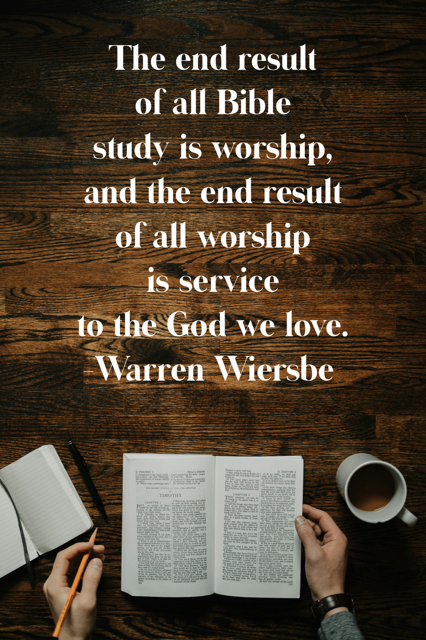
The end result of all Bible study is worship--Warren Wiersbe

“The end result of all Bible study is worship,
and the end result of all worship is service to the God we love.”
–Warren Wiersbe,
With the Word

Laudable Linkage

IMG_0195

I don’t want to “laud” my own writing, but I wanted to let you know The Perennial Gen published a piece I wrote titled “Limitations Don’t Limit Your Ministry.”

Here are some great reads discovered this week:

How to Study Your Bible in 2020.

How a “You do You” Culture Has Made Us Vulnerable to the Coronavirus, HT to Challies. “We can only stop the virus by doing what is best for others not just for ourselves.”

A Life That Points Others to Christ. “My most earnest prayer is that when someone hears my testimony, they would be compelled to go find Jesus and His Word for themselves.”

God Is Always Good. “We evaluate God’s character based on our circumstances, when we should evaluate our circumstances based on God’s unchanging character.”

Safe, HT to Challies. A poem by Paul Tripp.

‘Progressive’ Christianity: Even Shallower Than the Evangelical Faith I Left, HT to Challies. “I’ve walked in both shoes: the shoes of those who deserted and the shoes of Peter who couldn’t leave, no matter how hard it seemed to stay. I was an #exvangelical who left the faith of my youth for ‘progressive Christianity.’ Then I returned. Here’s my #revangelical story.”

Was Jesus Married to Mary Magdalene? Revisiting a Stubborn Conspiracy Theory, HT to Challies. In a word, no. This post debunks some of the false claims.

Surrendering Control When Facing Coronavirus, or any other situation where we don’t have control. “I’ve found it helpful, when facing out-of-control situations that cause me anxiety, to sort my concerns into two categories: 1. What I Can Control; 2. What I Cannot Control.”

3 Ways of Confronting the Problem of Diminishing Attention Spans Through the Great Books, HT to Challies. Good reasons to read the classics.

Guides for Kids and Middle-Schoolers to Take Notes During the Sermon, HT to Challies.

The Story Warren has a round-up of “awesome good-priced, free, discounted, livestreamed, giveaway, etc., stuff” being offered online during our “sheltering at home.”

Finally this video shows How Soap Kills the Coronavirus, HT to Challies.

Have a good Saturday, and stay safe.

Knowing God, Chapters 15 and 16: God’s Wrath, Goodness, and Severity

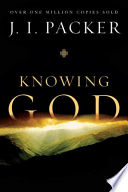
Knowing GodWe’re continuing to read Knowing God by J. I. Packer along with Tim Challies’ Reading Classics Together Series. This week we are in chapters 15 and 16.

Chapter 16 deals with “The Wrath of God,” not the most popular subject today. As mentioned from a previous chapter, people like to think of God as grandfatherly and benign. But the Bible presents wrath as a part of God’s character, so it is wise to see what it has to say about it.

Packer defines terms and then sketches out some of the Biblical references, noting that there are more verses about God’s “anger, fury, and wrath than there are about His love and tenderness” (p. 149). “The Bible labors the point that just as God is good to those who trust Him, so He is terrible to those who do not” (p. 149).

Some object to God as displaying wrath because it seems “unworthy” of Him, or like a loss of control. But His wrath is not like human wrath. “God’s wrath in the Bible is never the capricious, self-indulgent, irritable, morally ignoble thing that human anger so often is. It is, instead, a right and necessary reaction to objective moral evil. God is only angry when anger is called for…Would a God who took as much pleasure in evil as He did in good be a good God? Would a God who did not react adversely to evil in His world be morally perfect?” (p. 151).

“God’s wrath in the Bible is always judicial–that is, it is the wrath of the Judge, administering justice” (p. 151). It isn’t arbitrary or capricious. It’s also “something which people choose for themselves. Before hell is an experience inflicted by God, it is a state for which a person opts by retreating from the light which God shines in his heart to lead him to Himself…(John 3:18-19)” (p. 152).

Packer then traces the wrath of God through the book of Romans, discussing the meaning and revelation of it as well as deliverance from it. Thankfully God has made provision for us to be delivered from His wrath by repenting of our sins and trusting in Christ, who took our sins on Himself at the cross, for salvation. “Much more then, being now justified by his blood, we shall be saved from wrath through him” (Romans 5:9).

The title of Chapter 16 comes from Romans 11:22a: “Behold therefore the goodness and severity of God.” Packer begins by discussing how some of the “muddle-headedness” about God and what it means to have faith in Him have come about: people follow their own ideas instead of seeking what God reveals in His Word; people think all religions are equal and “draw their ideas about God from pagan as well as Christian sources” (p. 159); personal sinfulness has been downplayed, so people don’t see the need and aren’t open to correction; and, as has been mentioned on the chapters dealing with God’s justice and wrath, people “disassociate the thought of God’s goodness from that of His severity” (p. 159).

Packer then does one of the things I believe he is best at: presenting in distilled form an overview of of both God’s goodness and severity, which I could not begin to reproduce here without quoting half the chapter. But he says God’s severity “denotes God’s decisive withdrawal of His goodness from those who have spurned it (p. 163). “But God is not impatient in His severity; just the reverse. He is ‘slow to anger’… and ‘longsuffering'” patient and forbearing (p. 165). And he has done everything possible to bring people to Himself: “The Bible shows you a Savior who suffered and died in order that we sinners might be reconciled to God; Calvary is the measure of the goodness of God” (p. 165).