Why Doesn’t God Heal Everyone?

Why doesn't God heal everyone?

One of the greatest mysteries we grapple with is why God heals some people, but not others. A friend and I were discussing this recently. As usual, my thoughts continued long after our conversation, so I decided to share them here.

A few years ago, our pastor announced in June that he had liver and pancreatic cancer. He was gone before the end of summer. He was in his prime, pastoring a church with a love for his people that I have rarely seen matched. Two of his daughters got married that summer, and he was able to walk them both down the aisle. But he would have been a terrific grandfather in the coming years. He seemed to have so many years of usefulness left, it was puzzling that God took him home.

Another former pastor’s grandson underwent an excruciating battle with leukemia, which he eventually lost despite hundreds of people’s prayers.

Others experience disabilities for the rest of their lives, either from birth or from an accident or illness.

We can never know all of God’s reasons for what He allows. But here are a few:

We live in a fallen world affected by sin, so there will be illnesses and death until God redeems the earth. Christians aren’t exempt from these effects of the fall.

None of us is guaranteed a long life. We need to be ready for eternity.

God’s perspective. A seemingly early death is not a tragedy to God: it’s a head start on heaven as He welcomes His loved one home.

God enables us to minister to others through what we suffer. Joni Eareckson Tada has been paralyzed since a diving accident fifty-seven years ago. I don’t know of anyone who has done more to help the disabled community, bring awareness of what disabled people suffer, and glorify God in the midst of suffering. Those things probably would not have happened without her accident. When she speaks, we listen, because we know she has proven what she’s speaking about. She’s not mouthing empty platitudes or theories.

God’s strength is displayed through our weakness. Paul famously prayed three times for God to remove an affliction from him. But God answered, “My grace is sufficient for you, for my power is made perfect in weakness” (2 Corinthians 12:7-10).

Healing was not Jesus’ primary purpose. Jesus healed multitudes of people during His time on earth. He demonstrated compassion and power as He did so. But He said His purpose was to preach the gospel (Mark 2:32-39).

God’s glory displayed. When the disciples asked whether a man’s sins or those of his parents caused his blindness, Jesus said, “It was not that this man sinned, or his parents, but that the works of God might be displayed in him” John 9:1-7). Similarly, when Jesus received the news that Lazarus was sick, he said, “It is for the glory of God, so that the Son of God may be glorified through it” (John 11:1-4).

Jesus wasn’t grandstanding. He wanted to show people who He was so they could believe.

Since Jesus is glorified through healing, it’s even more puzzling that He would not heal everyone. But sometimes He is glorified more by displaying His grace through His people’s trials, as He did in Joni and Paul’s lives.

Suffering strengthens and develops us. The apostle Paul wrote, “We rejoice in our sufferings, knowing that suffering produces endurance, and endurance produces character, and character produces hope, and hope does not put us to shame, because God’s love has been poured into our hearts through the Holy Spirit who has been given to us.”

Trials keep us dependent upon the Lord. We always are dependent on God, but sometimes we forget. Sometimes we need His help in areas other people never think about, but that continual dependence is a good reminder that our strength comes from Him. Paul said his “thorn in the flesh” was given so that he might not become conceited over the revelations that had been given to him.

Suffering prepares us for glory. Paul wrote to the Corinthians, “So we do not lose heart. Though our outer self is wasting away, our inner self is being renewed day by day. For this light momentary affliction is preparing for us an eternal weight of glory beyond all comparison, as we look not to the things that are seen but to the things that are unseen. For the things that are seen are transient, but the things that are unseen are eternal.” Paul is not being dismissive when he calls our afflictions “light.” He’s saying that they’ll seem light compared to the glory to come.

Though all of these factors help at times, they don’t satisfy at other times. I’ve been ministered to by what Amy Carmichael wrote in Rose From Brier (emphasis mine):

But, though, indeed, we know that pain nobly born strengthens the soul, knits hearts together, leads to unselfish sacrifice (and we could not spare from our lives the Christ of the Cross), yet, when the raw nerve in our own flesh is touched, we know, with a knowledge that penetrates to a place which these words cannot reach, that our question is not answered. It is only pushed farther back, for why should that be the way of strength, and why need hearts be knit together by such sharp knitting needles, and who would not willingly choose relief rather than the pity of the pitiful?

…What, then, is the answer? I do not know. I believe that it is one of the secret things of the Lord, which will not be opened to us till we see Him who endured the Cross, see the scars in His hands and feet and side, see Him, our Beloved, face to face. I believe that in that revelation of love, which is far past our understanding now, we shall “understand even as all along we have been understood.”

And till then? What does a child do whose mother or father allows something to be done which it cannot understand? There is only one way of peace. It is the child’s way. The loving child trusts.

I believe that we who know our God, and have proved Him good past telling, will find rest there. The faith of the child rests on the character it knows. So may ours, so shall ours. Our Father does not explain, nor does He assure us as we long to be assured… But we know our Father. We know His character. Somehow, somewhere, the wrong must be put right; how we do not know, only we know that, because He is what He is, anything else is inconceivable. For the word sent to the man whose soul was among lions and who was soon to be done to death, unsuccored, though the Lord of Daniel was so near, is fathomless: “And blessed is he whosoever shall not be offended in me.”

There is only one place we can receive, not an answer to our questions, but peace — that place is Calvary. An hour at the foot of the Cross steadies the soul as nothing else can. “O Christ beloved, Thy Calvary stills all our questions.” Love that loves like that can be trusted about this.

Perhaps we wouldn’t be able to understand even if God did explain why He allows such severe pain and loss. But the more we know Him, the better we can trust Him. Like the psalmists, we can pour out our anguish to Him, then remind ourselves of His love and mercy and care for us.
Psalm 46:1

(I often link up with some of these bloggers.)
Unseen Hurts

Though many illnesses and injuries are unseen, we often have a clue when someone is hurt physically. A big bandage or cast. Crutches. A cane. Paleness. Lack of their usual vigor or energy.

But when someone is wounded in spirit, we often can’t tell. Some are quite vocal about what’s going on in their hearts, but others are not.

And even if we are aware that someone is in spiritual, emotional, or mental pain, we forget that it takes time to heal, just like a physical wound does.

These thoughts led me to some other parallels between wounds of the flesh and spirit.

Cleansing. One of the first things we do with a physical wound is clean it out. If someone’s leg was gashed open by an animal or branch, stitching the tear without cleaning is an invitation for infection to set in. Disinfecting can be more painful than the original wound, but it saves pain in the long run.

When we’re wounded in spirit, it’s easy for infection to set in as well in the form of hatred, revenge, bitterness, or unforgiveness. Though everything in us might want to lash out, we need to apply God’s truth to our situation. Holding onto those negative reactions will only cause us more pain. We can look to our Savior, who, “When he was reviled, he did not revile in return; when he suffered, he did not threaten, but continued entrusting himself to him who judges justly” (1 Peter 2:23).

Medicate. The next step in treating an open wound is to apply an antibiotic and pain reliever to kill germs and aid healing.

We can aid our spiritual healing by soaking ourselves in God’s Word. We can pour out our hearts with the psalmists, who experienced multitudes of inner pain: betrayal, friends turned to enemies, loneliness, guilt, and so much more. Through their anguish, they reminded themselves of God’s loving care and restored their peace.

Protect. A wound needs to be protected from dirt and germs, but also from being bumped. I broke and dislocated my little toe several years ago. Not only was it gently taped, but I had a big medical “boot” to support and protect it. Even with that protection, though, I walked slowly and gave doorways and corners a wide berth the first couple of weeks.

When people’s hearts are wounded, we often forget this step. We encourage them to forgive and trust God, but we forget that they need to be protected. Sometimes people in the church concentrate on restoration of the offender, which they should—but they need to help the wounded heal and protect them as well.

Time. It takes time to heal. There’s just no way to get around it or hurry it. God made our bodies marvelous in their ability to recover. But the process is not instant. While a person heals, they usually need extra rest and a cessation of some of their usual activities.

We forget that emotional and spiritual wounds take time to heal, too. Scripture is absolutely essential to healing, but we don’t apply it like a Band-aid and expect instant results.

So far I’ve been thinking in terms of wounds inflicted by others. But even grief from the loss of a loved one will require rest time and often a lightening of activities, depending on the individual. For more than a year after my mother passed away, I couldn’t endure loud, frothy gatherings. It’s not that I was morose and never laughed. My aunt said something that made us all laugh during my mother’s viewing before guests came, and that helped so much. I didn’t closet myself away from others. But I didn’t go to as many gatherings as I might have otherwise. I remember almost wishing we still had formal seasons of mourning, so “normal” activity would not be expected.

Negative responses. A wounded animal will often snarl and nip at the hand trying to help it, not understanding the intention. Illness isn’t an excuse to blow up at others, but when we’re wounded physically, we might find ourselves struggling to respond patiently to others. I tend to get weepy if I am sick or in pain for very long.

Wounded hearts may also struggle in their responses. They may not understand their need for help. They may not be able to sort out the emotional or mental issues and just think they’re having spiritual problems and need to “get right.” Or they may sense they need help, but others, like Job’s friends, treat their needs as spiritual problems to be fixed rather than emotional wounds which need healing.

Help. When we’re physically hurt, we need help from others. Sometimes we need the aid of a crutch or wheelchair for a while. Sometimes we need others to help us get around, bathe, go to the doctor. I’ve been abundantly blessed when ill by people who provided meals, watched my children, took them to the park for an outing, or cleaned my bathroom floors.

We need help from others when we’re wounded inwardly as well. We may just need someone to listen, cry with us, pray with us. Or we may need professional counseling. There’s no shame in needing help to cope. We should be available and willing to support each other.

Scars. Sometimes physical wounds leave a scar. Some say their healed broken bones ache when bad weather is coming. Some illnesses, like a heart attack or stroke, leave changes in our ability to function even when the original illness has been treated and healed. Nerves that have been affected may cause numbing or shooting pain or odd sensations.

Inward wounds can leave lasting results as well. Some areas of our hearts may remain a sensitive.

Post-traumatic stress. I read the account of a woman who had been hit by a bus while crossing a street. She said even a year later, some traffic situations caused anxiety. After I recovered from transverse myelitis, loud, busy places would set my nerves on edge. Since my illness started with my left hand feeling numb, like I had slept on it wrong, that feeling in any part of my body would cause panic. It’s not so much of a problem now, twenty-eight years later: I know those weird sensations come and go and don’t mean another attack is imminent.

Those with wounded spirits experience triggers as well. A woman who has been attacked may shy away from dark lonely places and may panic at feeling pinned down. Someone who has suffered a home invasion may start at any weird noise.

Some post-traumatic responses may fade over time. Some may not.

Results. Suffering a wound or illness can make us more compassionate to other wounded people. Some who have suffered at the hands of others have championed causes to help battle the offense, like Mothers Against Drunk Driving.

Suffering spiritually or emotionally can help us be more compassionate as well, more sensitive to those in need. The “God of all comfort . . . comforts us in all our affliction, so that we may be able to comfort those who are in any affliction, with the comfort with which we ourselves are comforted by God” (2 Corinthians 1:3b-4).

Grace. Whatever God has allowed to happen to us, inwardly or outwardly, He doesn’t leave us alone to flounder. Many people who undergo trials will say that while they would never have chosen them, they’d never want to trade what God taught them during that time or the closeness they felt to Him.

We need His grace not only to heal, to get through the inconveniences and irritations of treatments and recuperation, but also for the aftermath as well. Some illnesses leave us a “new normal” or with new limitations. But He wants us to depend on Him. God’s grace is sufficient for all. “God is able to make all grace abound to you, so that having all sufficiency in all things at all times, you may abound in every good work) (2 Corinthians 9:8). He promises His strength in our weakness (2 Corinthians 12:9-10).

This is a larger topic than one blog post can cover. A few weeks ago I wrote about ways to heal from past hurts. There are many reasons God allows suffering and many aspects of healing and ministering to each other.

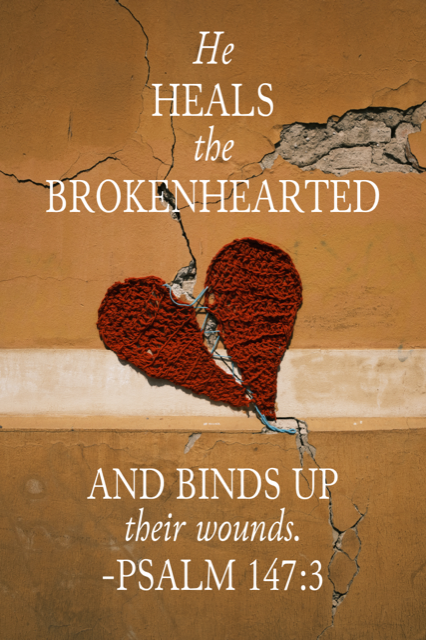
But we can seek God’s grace to be tender, patient, kind, and sensitive to each other’s needs. We can ask His wisdom for the best way to help and to point others to the One who “heals the brokenhearted and binds up their wounds” (Psalm 147:3).

(I often link up with some of these bloggers.)
Laudable Linkage

Here are a handful of thought-provoking reads found this week:

A Life-Giving Brain Cancer, HT to Challies. “In July of 2022, I was diagnosed with a tumour in the left frontal lobe of my brain; what doctors termed the eloquent, dominant brain. … Six months later, I am glad to have completed active treatment, and excited for a second future. In fact, I’ve never been happier or felt more blessed than I do right now, and I’m eager to share with you why.”

Is It God’s Will to Always Heal Us? “Instead of assuming God wants us healthy, we need to realize that He may accomplish higher purposes through our sickness rather than our health.”

Not at Odds: Revival and Routine Faithfulness. “A true revival therefore will never diminish the necessity of routine faithfulness. Sadly, many Christians unintentionally pit revival fruitfulness against ordinary faithfulness. We celebrate one and downplay the other. Revival and routine, however, are not mutually exclusive. We should pursue and value both.”

Revival and Bad Theology, HT to Challies. “I would expect revival to be a bit of a mess because it will be a place under tremendous spiritual warfare. If God is moving, so is the enemy, but this is not my point. My point is that I would never expect a place where revival or reformation is breaking out to have all their theology perfect. Theological maturity comes in time through the study of the Scripture.”

Rethinking the Value of Potential. “I’ve noticed that a common pro-life talking point needs reforming. Often we’ll hear Christians say things like, ‘We probably aborted the person who would have found the cure for cancer’ or ‘You don’t know–you could be aborting the next great world leader’ or ‘the next great artist/musician/preacher.’ You get the point. Theologically, there are a couple of issues with this type of talk, but I’m going to focus in on what these statements say about the value of life.”

The Lost Art of Handing Out Gospel Tracts, HT to Challies. “I still get scared. It’s still awkward almost every time. And yet, I continue to feel compelled, even privileged, to do this uncomfortable, scary work of handing out tracts. If you’ve been terrified to share the gospel or have hesitated to use tracts to do so, here are a few reasons that may cause you to reconsider.”

Laudable Linkage

IMG_0195

I found a lot of good reads the last week or so:

On Blind Faith and God.

Why You Desperately Need the Holy Spirit , HT to Challies.

The Power of De-Conversion Stories: How Jen Hatmaker is Trying to Change Minds About the Bible, HT to Challies.

Who Is the God of Mormonism?, HT to Challies.“One thing you’ll discover as you’re talking with your Mormon (LDS) friends is that though we use the same terms, we often mean very different things. Mormons have different definitions of Gospel, repentance, salvation, grace, Hell, and nearly every term you’ll be using in your conversation.”

5 Things That People Who Are Dying Want You to Know, by Kerry Egan, HT to Lisa.

How to Choose Worship Songs. Yes, to all the points mentioned here.

My Son, Withhold Judgment, HT to Challies.There are some times we need to act quickly; there are other times to realize we don’t know all the facts and need to wait.

How Do I Fight Pride When Competing in School, Business, and Sports? HT to True Woman.  “If we are better in some subject than someone else, God made us better. And his reasons for doing so are not pride and boasting and elitism. His reason for doing so is that we might use our competencies for the good of others.”

If God Doesn’t Heal You, HT to True Woman. “Although God can heal us, we must never presume that he must.”

The Why of Encouragement.

Why Do I Believe in Credobaptism, HT to Challies.

Why Young Christians Need Old Books, HT to True Woman.

In Defense of Evangelicals Who Support Trump, HT to Proclaim and Defend. Interesting, whichever side you’re on. Not written by an evangelical but by a Jew who acknowledges that “It is usually easier for an outsider to defend a person or a group that is attacked than for the person or group.” As he also says, “Character is a complex issue.” I’m not willing to say it’s not a factor at all – far from it, and I don’t think he’s saying that, either – but it’s true that some people with awful personal lives can be good leaders. But if we acknowledge that on one side of the ballot, we need to concede it for the other as well.

Growing Old Graciously, HT to Challies.”I don’t know everything, but what I do know, I can share.”

The Benefits of Listening to the Elderly, HT to Challies. “Why might the Lord, in his grace, cause the aged to repeat themselves as they do? What is the Lord showing us through it? Rather than rolling our eyes or thinking ‘Here goes Grandma again,’ what can be gained from these times?”

When I Give a Book.

On Writing Books and Getting Published, HT to Challies.

The Incredible “Mehness” Of Social Media, HT to Challies. An aspect we don’t often think of. Even if much of what we do there is harmless or even interesting, how does that impact our everyday lives and responsibilities? Do those things impact those with whom we have to do or take our attention away from them?

Ideas For Things to Do On a Snow Day, HT to Story Warren.

And in the “Seriously?” category: There’s a Reason using a Period In a Text Makes You Sound Angry, HT to Lisa. I never knew this was an issue – and it shouldn’t be. A period is just the end of a sentence, not the end of a conversation or an indicator of anger, disinterest, or insincerity.

Hope you have a fine Saturday!

(Links do not imply 100% endorsement.)

Laudable Linkage

IMG_0195

I don’t usually do these two Saturdays in a row, but I came across a lot of good reading this week.

When Control-Craving Hearts Get Angry.

Why We Don’t Need to Fear the Moment of Our Death, HT to Challies.

Embrace the Life You Have.

In Defense of the Unspoken Prayer Request.

Which Bible Woman Are You Like?

Advance in Favor. Sometimes an “I don’t care what people think” attitude helps when standing for right and truth when others are not. But the Bible says Jesus increased in favor with God and man. I appreciated this article on what that means.

Don’t Hide Those Grey Hairs.

Infuse Your In-law Relationships With Grace and Love. I am happy to have good relationships with both my mother-in-law and daughter-in-law.

If I have Enough Faith, Will God Heal Me?

At the bottom of the above link is this video, worth the 12+ minutes to listen:

Save

Laudable Linkage

Here are some great reads discovered in the last week or so:

Advice For Those Burned By the Church.

When Christians Mock Christians. Respectfully discussing issues where we differ is one thing, but unfortunately people on both sides of an issue can degenerate into mocking each other.

Putting an End to Spiritual Envy. I like this post not just for what it says, but how it is done: a wonderful example of Biblical exposition.

An Open Letter to an Older Woman. Sometimes it is hard to know how to be a Titus 2 older woman when younger women don’t seem to want our company and everyone wants things new and young and fresh. This is an encouragement to older women from a younger one along with some subtle, gentle suggestions as to the best ways to be a help.

Impatient With Grief.

A few posts on unanswered prayer for healing: Together Is A Beautiful Word, We Didn’t Get Healed…or Did We? and What If Your Healing Doesn’t Come? The last two are from a paralyzed wife and her husband.

10 Questions for Better Bible Study. Love this: simple and direct and unfluffy.

The Introverted Mother. Someone who recharges by time alone has a hard time when she’s never alone. Here is some encouragement.

The Science of What Makes an Introvert and an Extrovert.

The Holy Longings of Happily Ever After. Is a fairy-tale ending unrealistic or a beacon towards the ultimate best ending?

This Three Minute Commercial Puts Full Length Hollywood Films to Shame. I don’t know what country has three minute commercials – but this is a sweet short story in film. You could say it is about grace.

Hope you have a great weekend!