Review: The Man Behind the Patch: Ron Hamilton

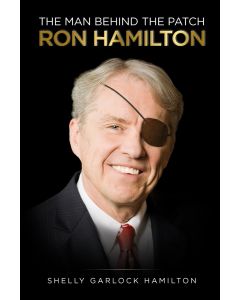
Ron Hamilton and his alter ego, Patch the Pirate, are household names in some places but unknown in others. I wrote something of a tribute to him a couple of years ago after he passed away. His wife wife, Shelly, wrote a biography of him, published last year, titled The Man Behind the Patch: Ron Hamilton.

I first knew of Ron in college. He and Shelly were newly married and GAs (graduate assistants) during my freshman year. They were always active in music both on campus and at the church they attended, which I visited occasionally.

I remember when Rob debuted some new songs he had written at college. “It Is Finished” was inspired by a teacher pointing out that when Christ said “It is finished” from the cross, it was a victory cry. The other two were “Come to the Cross” and “The Blood of Jesus.” I had not known that these songs were part of his requirements to graduate in his major. It’s interesting that these songs continued to be well-known and well-loved all through his career.

I remember when Ron was diagnosed with cancer in his eye. When they did surgery, he wouldn’t know until he woke up whether they had to remove the eye or not. They did. Sometime after his recovery, he gathered together all the notes and verses people had sent him and wrote what became his signature song, “Rejoice in the Lord.”

As Ron wore his eye patch, kids in his church began calling him “Patch the Pirate.” He had written music for adults but then decided to write some for kids as well. He put together a story line with interesting character voices for a children’s recording. Kids loved it, and parents soon begged for more because they were tired of listening to the same album over and over. Thus a children’s ministry was born. A Patch the Pirate adventure has been released every year since then, over forty all together.

He continued to write music for adults and choirs, cantatas, books of music arrangements for his songs. He wrote the words, various people wrote the music, and Shelly arranged them.

One of the trials of their life was when their oldest son developed a mental illness over several years, ending with the taking of his own life. Shelly told his story in Always, Only Good: A Journey of Faith Trough Mental Illness.

Another severe trial came when Ron was diagnosed with early onset dementia. He passed away at his home in 2023.

Shelly tells Ron’s story in three sections, Becoming Patch the Pirate, Life with Patch the Pirate, and Patch’s Long Journey Home. She begins with his early childhood in Indiana, to attending college, meeting and dating Shelly, their marriage and children. Then Ron’s eye surgery and budding career. They took over and managed the music company her dad began, Majesty Music.

Many of the middle chapters are something of a travelogue, along with which recordings came out when, sprinkled with anecdotes. The whole family traveled to churches doing “Patch” concerts until the family grew too big. Ron traveled alone for a while, eventually cutting back to traveling just a bit while becoming the music pastor of a local church.

Shelly was warned that biographies of men by their wives often become hagiography, idealizing the husband. Shelly attempts to show all sides of Ron. He wasn’t perfect–no one is. He was a prankster, and some of his pranks backfired badly.

A couple of other interesting facts I had not known: Ron had a deviated septum, which gave his voice a slight nasal quality. He didn’t know if surgery would change his voice for better or worse, so he decided to leave well enough alone.

Also, he considered doing doctoral work in music at another school and was accepted, but he was told his music would need to be more academic. He considered the offer, but decided to decline. He wanted to “put the cookies on the lowest shelf”–make them accessible to everyone. Shelly wrote later that Ron “chose to compose biblical texts that united with simple, memorable melodies for everyday life and everyday struggles (p. 368).

Ron wrote about 700 songs. Some for children were fun, like “I Love Broccoli” and “The Poochie Lip Disease.” Others focused on character. All of his songs for children and adults were biblically based. I shared some of my favorites in my earlier post about him.

By all accounts, Ron was a humble man. When Shelly once mentioned how many lives he had touched, he said, “I’d like to think God did it.”

This book was nostalgic for me in many ways. I didn’t know Ron and Shelly personally, though I had met them each a couple of times. But since I was in school a few years behind them and lived in the same town for over fourteen years, I was acquainted with their ministry. Then my kids grew up on “Patch the Pirate” tapes, especially in the car and at bedtime. We listened to many of Ron’s albums for adults over the years and sang some of his music in choir. Finally, I followed Shelly’s public Facebook page the last years of Ron’s illness.

I think this book would be especially interesting to anyone familiar with Ron or Patch. But even for those who don’t know him, this is an inspiring account of a humble servant of God using his talents for His glory.

Review: Raising the Perfectly Imperfect Child

Boris Vujicic

Imagine what your reaction would be if you gave birth to a child born without arms or legs. You would likely grieve and then wonder how in the world you would raise him to live any kind of normal life.

Boris and Dushka Vujicic experienced those reactions when their son, Nick, was born. “We were burdened not by Nick but by our doubts and our fear that we were not capable of giving him all he needed to succeed (p. 163).

Nick grew up to become an internally known evangelist and motivational speaker, telling his story in Life Without Limits. But there were many hurdles and trials before that happened.

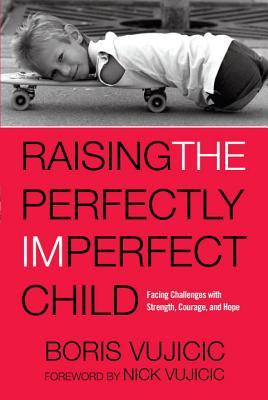
Boris shares their experience in Raising the Perfectly Imperfect Child: Facing Challenges with Strength, Courage, and Hope. The book is part memoir, part encouragement to other parents.

After the Vujicics got over their initial shock at Nick’s condition, they found that, in many ways, he was a baby like any other. He needed love, cuddling, food, and diaper changing. The rest they had to figure out along the way. There weren’t many resources available to help.

Their faith was shaken. As Christians, they wondered why God would allow such a seemingly cruel thing to happen.

With our limited vision, Dushka and I could foresee only struggle and anguish for Nick and for us. We were so wrong, of course. Our son and our experiences with him have enriched our lives beyond measure and taught us many lessons at the heart of this book. Nick gave us a new definition of the ideal child and a deeper appreciation for the complexity of our Father’s divine vision.

Nick taught us to find new meaning in the psalm that says we are “wonderfully made.” We came to see Nick as God’s beautiful creation, lovingly formed in His image. We lacked the wisdom, initially, to understand that. We saw Nick as disabled rather than enabled. We could not grasp that his missing arms and legs were part of God’s unique plan for our son.

Chapters cover accepting and loving your child, giving yourself permission to grieve, allowing friends and family to help, advocating for your child’s medical care, meeting the needs of siblings, education, preparing your child for adulthood, keeping marriage bonds strong, and building a spiritual foundation. Boris encourages taking cues from your unique child as to what he needs and the best way to help him.

It would be easy with a child like Nick to swoop in and do everything for him. But his parents raised him to do as much for himself as possible. 

My favorite aspect of his book is that Boris writes humbly and practically. Nowhere does he hint that readers should do everything just like he and his wife did. He just shares insights gleaned along the way.

Some of the quotes that stood out to me:

Nick is proof that none of us are limited by our circumstances and that all of us can create meaningful, fulfilling, and joyful lives if we choose to focus on our gifts rather than on what we may lack. All of us are imperfect. All of us are perfect (p. 10).

All children have strengths and weaknesses, and they can surprise you in so many ways. Our duty is to nurture, encourage, and motivate them, and help them build upon their strengths (p. 11).

Perhaps the greatest gifts we can give our children toward their success in adulthood are a foundation of unconditional love, a sense that they have a purpose in this world, a value system to guide them, and a spiritual base as a perpetual source of hope (p. 157).

Our imperfections have a purpose. We often can’t discover that purpose without first accepting that it exists and then searching to find it (p. 187).

God makes no promises that our lives will be pain free; He promises only that He will always be with us if we believe. We realized that we had to trust in His wisdom and good purposes, in His Word rather than in our feelings, and in His grace, which is sufficient for any trial (p. 191).

I might not be the target audience for this book since my children are grown now, and none of them had physical disabilities. But I enjoyed reading it and learned from it all the same. 

(I often link up with some of these bloggers.)

Review: Bloom In Your Winter Season

Bloom In Your Winter Season

Bloom In Your Winter Season was written by Deborah Malone “with twenty-three contributing writers” for older women as a reminder that God can both minister to them and use them in their later years.

They don’t really define what constitutes a “winter season.” One of the authors is in her fifties, which I would say is more autumnal than wintry. Still, we’re all facing that time of life and getting closer every day, so we can tuck the lessons away for future reference if we don’t need them immediately.

The book is divided up into six chapters, each featuring a couple, or sometimes three, women in the Bible: Miriam and Anna; Mary and Martha; Mary and Elizabeth; Lois and Eunice; Lydia, Joanna, and Susanna; and Naomi and the widow with two coins. (I’m surprised there wasn’t a chapter on Sarah, maybe couple with Rebekah.) All of the women focused on are not “older,” but there are things about their lives we can learn from whatever season we’re in.

Each chapter is designed to be read over five days. The first four days’ reading contains short essays written by different women, each ending with application questions and a prayer. Day 5 is a Bible study on the focus women written by Deborah with passages to read, questions to answer, and blank lines to jot down notes .

The overall theme of the book is that God can still use you whatever age you are, and that’s brought out in most of the chapters. Some of the writers discuss specific situations like adjusting to the empty nest, widowhood, aging, sharing faith with our grandchildren, and living in a nursing home (one woman wrote over 70 books while in a nursing home!) But other chapters are more general.

One problem with five writers contributing to each chapter is that there’s a bit of overlap. But perhaps repetition reinforces the details. On the other hand, the chapter on Naomi only mentioned her once in passing in the essays.

The chapter that stood out the most to me was the one on Lydia, Joanna, and Susanna–I think partly because we don’t usually hear much about these women, especially the last two. They are mentioned in Luke 8:1-3 with “some women who had been healed of evil spirits and infirmities” who traveled with Jesus and the disciples and “who provided for them out of their means.” Joanna is mentioned again at the cross with other women in Luke 24. Writer Sherye Green points out that these women served Jesus out of “pure, unbridled gratitude” (p. 123).

I only knew of a couple of the authors here before reading this book. There are a few with whom I might not agree in every point, judging from their biography information. But I didn’t find anything objectionable in this volume.

Some of the quotes that stood out to me:

Anna worshiped in the waiting (p. 29).

Is there a mother or grandmother in your life who prays, encourages, and supports the younger generation in the faith? Godly women invest in a heavenly treasury of prayers and a heritage of faith for their loved ones. Praying mamas deposit a foundation of wisdom and understanding into their children’s lives, building up their character and committing their future to God (p. 91).

I used to pray for my daughter’s strength and personality–stating what I wanted God to place in her. I failed to realize that the parenting challenge is knowing God already has a plan and purpose for our little people. Our prayer should ask God to show us their developing talents so that we cultivate His gifts in them (p. 96).

When my focus was on me, I felt my broken heart intensely. I began noticing those around me with their own trials and doing small things I could to help ease their burdens: visiting a young friend dying of breast cancer, training as a hospice volunteer, taking food to new widows, and generally loving on people. It was different from the lay ministry my husband and I shared as a team, but just as important in God’s economy (p. 143).

The essays are designed to read one a day. I usually read two or three, because they were so short. If I ever read this book again, though, I think I’ll stick to one a day and ponder it more before moving on. 

Still, the book did its job in encouraging me that God has something for me to do and has promised to be with me in every season.

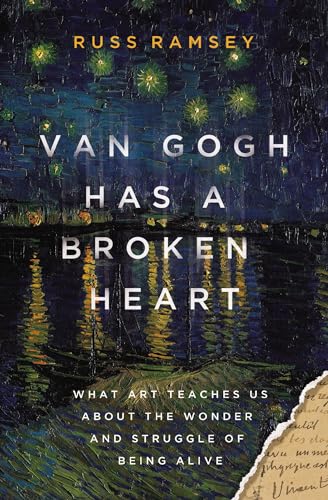
Review: Van Gogh Has a Broken Heart

Van Gogh Has a Broken Heart

Van Gogh Has a Broken Heart: What Art Teaches Us About the Wonder and Struggle of Being Alive by Russ Ramsey is similar to his earlier book, Rembrandt Is In the Wind. Each draws observations from art and artists. This second book explores the theme of suffering and the beauty and grace that comes from it.

Art shows us back to ourselves, and the best art doesn’t flinch or look away. Rather, it acknowledges the complexity of struggles like poverty, weariness, and grief while defiantly holding forth beauty—reminding us that beauty is both scarce and everywhere we look (p. 4).

Beauty pulls us upward toward something that calls for some measure of discretion, something to be treated with dignity and care, something sacred. What does it pull us toward? The truth that we were made to exist in the presence of glory (p. 5).

All art comes from somewhere. It comes from someone who is in the process of living the one life they’ve been given. The more we can understand the specifics of their individual experience, the more we will understand why they created what they did and why the world has responded to it in the way we have (p. 12).

Ramsey says sad stories are universal, and they can provide fellowship in whatever we’re going through as well as empathy for others. They help us wrestle with the evil and brokenness in the world. “They remind us not just that this world can wound us, but that wounds can heal. They remind us to hope” (p. 10). They show us that beauty can come from brokenness.

That’s not to say all art comes through suffering. I think it was in my Music Appreciation class in college I heard a comparison of Beethoven and Haydn and how their lives shaped their music. Beethoven had a difficult father, health issues, and started experiencing hearing loss before he was thirty. Haydn had struggles, but by his thirties he had a steady job as the music director for a prince. A lot of his work is light, clever, even playful, while Beethoven’s is rich in emotional depth. 

There are ten chapters in Ramsey’s book. One tells the story of how the Mona Lisa was stolen and recovered, Pablo Picasso was a suspect, and the painting became a lot more famous after the theft. Another contrasts Rembrandt’s Simeon’s Song of Praise, which is very detailed and elaborate, painted early in his career, with Simeon in the Temple, painted late in his career and found after his death. They cover the same incident in the Bible, but the latter is simple and focuses on Simeon’s emotion. 

When I look at the old painter’s reimagining of the scene, to my eye he doesn’t seem to want to show us the spectacle of the temple when Simeon held Jesus, or what he can do with it as a painter. After a life filled with suffering and sorrow, he just seems to want to hold Jesus (p. 51).

Artemisia Gentileschi was a painter I’d never heard of. Ramsey describes the difficulty of a woman in this field as well as an artist working “for hire”–not painting scenes she loved for the pure pleasure of it, but taking commissions of what others wanted to see painted. He points out that “she’s not a girl-power feminism icon. She’s an icon in the sense that she’s an example of a woman who’s navigating a world that’s not built for her” (p. 66).  “We must be careful not to romanticize her work to make it fit our own cultural moment. It is one thing to draw conclusions about the impact of her art over time, and quite another to assign intent to her body of work that may not represent how she thought about it (p. 66). I wish people who try to bring modern-day sensibilities into other people’s history would realize “If we come to an artist like Artemisia with a narrative already in mind and insert her into it, we dishonor her actual experience” (p. 67).

Joseph Turner was another artist I didn’t know, whose style changed about halfway through his career. Ramsey discusses the possible reasons and implications.

The Hudson River School I had heard of but didn’t realize it was: a group of landscape painters who went into unexplored areas of what would become the United States to show immigrants to the area what beauty and grandeur was there. But the beauty was also untamed and could be dangerous. And the influx of new European plans for colonization would clash with the Native Americans already there whose philosophy about the land was vastly different.

Van Gogh’s infamous cutting off of his ear is told in the context of his trying and failing to establish an artist’s residence with Gauguin. They only lived in the same yellow house for sixty-three days, “two of the most productive month’s of each artist’s career, and two of the most turbulent” (p. 125).

Norman Rockwell’s work was “Dismissed by critics, who considered his paintings to be too idyllic and sentimental to be great art (p. 139). Rockwell agreed his work wasn’t “the highest form of art,” but said “I love to tell stories in pictures–the story is the first thing and the last thing” (p. 139). His work was influenced by the new technology of the four-color press. He became a well-loved fixture of the Saturday Evening Post until he started painting scenes from the Civil Rights movement like The Problem We All Live With and Murder in Mississippi, based on real events.

Edgar Degas is known for detailed paintings of ballerinas, like The Dance Foyer at the Opera in 1872. But macular degeneration slowly changed his work to the much less distinct Two Dancers Resting in 1910. I can’t fathom the difficulty and painfulness of trying to portray one’s vision when one’s vision is deteriorating. After discussing other artists with failing vision, Ramsey notes, “The art changes, but not necessarily in a negative way. Often when affliction and compulsion collide, something deeper, truer, and more lasting is born” (p. 166). He quotes modern artist Jimmy Abegg, who also has macular degeneration, as saying “The bad isn’t so bad when you recognize the goodness that will emerge from it, whatever trail that leads me down” (p. 166). Ramsey comments, “Affliction stirs us awake to things we might not have seen otherwise” (p. 166) and seeing “through new eyes” requires courage and humility.

Ramsey includes appendices on the symbolism often used in art and and famous art heists. One appendix is titled “I Don’t Like Donatello, and You Can Too.” Ramsey says we don’t have to like or “get” every artist, but, with “a posture of openness, willing to learn and grow” (p. 192), we can appreciate even what we don’t like.

A few other quotes that stood out to me:

What comes out of this life is his business, but what I do will never be what makes me who I am. Because this is so, when suffering comes, it doesn’t have the power to unravel God’s design. Instead, the suffering becomes part of the fabric (p. 155).

Our sorrows are ultimately hallowed by the One who enters fully into the painful stories of our own lives in order to show us that our suffering matters, while also becoming the place from which the Spirit enables us to become agents of God’s healing grace to those who find themselves lost and alone in their griefs (p. xi).

The goal of suffering well is to move us not only beyond the stick figures, but also from a place of pride to one of intimacy and familiarity with our Lord. It is to move us not from crude to eloquent, but from unfamiliar to intimate. This is why we practice spiritual disciplines (p. 50).

To truly love someone is to move beyond first impressions into the heart of things; it is to take on the sacred work of stewarding another’s joys and sorrow (p. 132).

Think about the physiology of growing old. If the Lord grants us many years, the way to eternal glory will include the dimming of our vision, the slowing of our bodies, the dulling of our minds, and the diminishing of our appetites. It’s a path that requires us to loosen our grip on this world, preparing us to leave it before we leave it. Is this not mercy? (p. 136).

I had missed the fact that there were discussion guides for each chapter in the back until I finished the book. I wish these had been included at the end of the corresponding chapters.

I don’t know if Ramsey has any future books like these planned. I hope so. There are multitudes more paintings and artists that could be discussed. If he does, I’d love to hear his thoughts on a couple of issues. One, how to think about pictures of deity in art and the second commandment about not making images. I wrestled with my own thoughts on this a few years ago. Two, the depiction of nudity in art. I personally would rather not see nudity in art or anywhere else. (There are a couple of paintings involving female nudity in this book).

As with Ramsey’s first book about art, I appreciated not only the information but the thoughtful and beautiful way the author weaves spiritual truth into the narrative. The result is poignant and meditative.

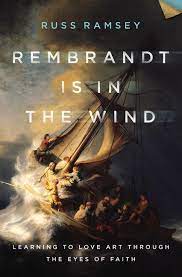
Review: Rembrandt Is in the Wind

Rembrandt Is In the Wind

I don’t remember being exposed to classical art or even going to a museum until I got to college. My alma mater had its own art museum at the time. I remember going on a guided tour and being fascinated as the guide brought out details I would never have noticed myself. I took Art Appreciation my senior year. But that was the limit of my art education.

I’ve visited a few museums with my family since then. But I haven’t gotten much beyond wandering around the gallery and noting what I liked and didn’t.

Russ Ramsey is an excellent guide in Rembrandt Is in the Wind: Learning to Love Art through the Eyes of Faith. Not only does he bring out unnoticed details, but he draws spiritual lessons from the lives of the artists as well.

Ramsey says we learn to understand God through truth, goodness, and beauty.

In my experience, many Christians in the West tend to pursue truth and goodness with the strongest intentionality, while beauty remains a distant third. Yet when we neglect beauty, we neglect one of the primary qualities of God. Why do we do that?

The pursuit of beauty requires the application of goodness and truth for the benefit of others. Beauty is what we make of goodness and truth. Beauty takes the pursuit of goodness past mere personal ethical conduct to the work of intentionally doing good to and for others (p. 8, Kindle version).

This is the gift of beauty from an artist to their community—to awaken our senses to the world as God made it and to awaken our senses to God himself (p. 14).

Ramsey focuses on an artist and/or a specific work of art in his remaining nine chapters, which he describes as “part art history, part biblical study, part philosophy, and part analysis of the human experience. But they are all story” (p. 15).

Ramsey includes a black and white image of the paintings he discusses at the beginning of each chapter, and then a small color print at the end of the book. But I found that if a painting had a Wikipedia entry, I could click once on the painting’s image and make it full-screen, then click on it again to zoom in further. 

One of the chapters features Rembrandt, especially his Christ in the Storm on the Sea of Galilee (pictured on the cover) one of my al-time favorite paintings. I didn’t know before that Rembrandt painted “himself into several biblical scenes. He did this not for vanity but for the sake of the story. He wanted to draw us in, capture our imaginations, instruct us on how we should relate to what was happening on the canvas, and bear witness to what he believed to be true about the world he painted and his place in it” (p. 73). He’s the one looking straight at the viewer, with one hand on the rope, the other on his hat. “By painting himself into the boat in The Storm on the Sea of Galilee, Rembrandt wants us to know that he believes his life will either be lost in a sea of chaos or preserved by the Son of God. Those are his only two options. And by peering through the storm and out of the frame to us, he asks if we are not in the same boat” (p. 75).

This painting was also part of one of the most infamous art heists in history–and it has never been recovered. Ramsey shares the details of the theft.

Some of the artists, like Caravaggio, perceived beauty, and their hearts were touched and drawn to Christ, yet still didn’t submit to Him.

This is the paradox of Caravaggio—he brought so much suffering on himself, with such bravado and acrimony, yet when he picked up his brush, the Christ he rendered was the Redeemer of the vulnerable. . . He knew what it was to have the ability to render beauty that could bring a person to tears and yet remain unable to live free from his own destructive behavior (pp. 60, 64).

The chapter on Vermeer was wonderfully layered with references to light: the light God created which would make visible His creation, art’s use of light, the “borrowed light” from one source to another and from others who “illuminate the places where we’re doing our own work, and then our work lights the way for others” (p. 96).

This chapter also led to quite an interesting lunchtime discussion with my husband. Rembrandt was thought to use some kind of optical lens as he painted, not to “[pull a trick] on his viewers, He was learning to see” (p. 106). “His use of a lens was not a shortcut, but rather an innovation–the kind that gave his work a mysterious quality” (p. 104).

Rembrandt’s neighbor, and the executor of his estate, was Antoni van Leeuwenhoek, the “father of microbiology” and inventor of a “single-lens microscope that intensified light and enhanced magnification through the use of a concave mirror” (p. 100) (another facet of the theme of light). I asked my husband if he knew of van Leeuwenhoek, and of course, he did. Being interested in microscopes himself, he has a replica of one of van Leeuwenhoek’s devices.  

This chapter also discusses the influence of technology on art–not only this lens, but the tin paint tube. Artists usually painted indoors because they often mixed their own paints and had everything at hand in their studios. But with the invention of the paint tube, they could paint anywhere. “Painting is not just an art, but a science. It is an achievement not only in beauty or emotion or color, but in math and geometry and light” (p. 104).

An artist I never heard of before, but enjoyed learning about, was Henry O. Tanner, whose The Banjo Lesson was the “first recognized genre painting of blacks by an African American artist” (p. 152). He often painted an older person teaching a younger person something. But, “Though race would always play an important role in Tanner’s art, in order to expand people’s view of race, he didn’t want to become a niche artist focused only on race. . . As a man of faith, Henry believed persuading one race to regard another with equity and love was a theological endeavor, one which required a biblical view of personhood—that all people are made in the image of God and therefore share an inherent dignity and worth that transcends any human construct” (p. 156).

The last chapter tells of Lilias Trotter, who lived during the time of van Gogh, was pursued by John Ruskin as a pupil, but put aside her artistic career to become a missionary to Algiers. I had read her inspiring story before, but it was good to be reminded of it again.

A few other favorite quotes:

On the other side of the veil is the tangible glory of unfailing perfection, but it is just out of our reach. So we have given ourselves to the pursuit of making copies from the dust of the earth, compressed by time, crafted by pressure, but conceived by something more than mere imagination. Our best attempts at achieving perfection this side of glory come from an innate awareness that it not only exists, but that we were made for it (p. 38).

Ruskin believed “the greatest thing a human soul ever does in this world is to see something and tell what it saw in a plain way . . . To see clearly is poetry, prophecy, and religion—all in one” (p. 197).

A like independence is the characteristic of the new flood of resurrection life that comes to our souls as we learn this fresh lesson of dying . . . the liberty of those who have nothing to lose, because they have nothing to keep. We can do without anything while we have God (Lilias Trotter( (p. 199).

Ramsey includes a few appendices: How to Visit an Art Museum, How to Look at a Work of Art, and an Overview of Western Art: Renaissance to Modern Selected Works.

This book will be one of my top ten of this year. I enjoyed it immensely.  

(Sharing with Bookish Bliss)

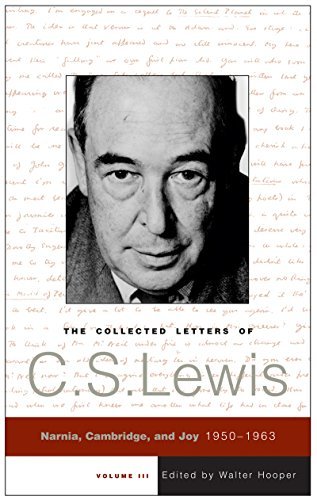
The Collected Letters of C. S. Lewis, Volume 3

Walter Hooper was an American who became something of a secretary to C. S. Lewis, or Jack, as he was known, in the latter’s final years. After Jack’s death, Hooper helped care for Warnie, Jack’s older brother, and tried to preserve some of Jack’s memorabilia. Many of Jack’s letters had been quoted by Warnie in an earlier book titled Letters of C. S. Lewis, but none is quoted in its entirety. Hooper scoured the various libraries where Jack’s papers were kept to present a comprehensive volume of his letters.

That volume ultimately became three. Volume 1 is titled Family Letters and covers 1905-1931. Volume 2 is titled Books, Broadcasts, and the War, from 1931-1949. The final volume is titled Narnia, Cambridge, and Joy, covering 1950-1963.

I chose to read the last volume first. I had read of Jack’s earlier life in Surprised by Joy and other books, but knew the least about his last several years. This book was a whopping 6,328 pages, so it has taken me a while to read it.

Lewis was a prolific letter-writer, corresponding by hand. Warnie helped him when he was home, then Hooper later. It’s obvious Jack enjoyed a great many of the letters he wrote, but answering correspondence also put pressure on him. He even asked some of his friends not to write in December, because he received so much extra mail then.

One question I had was where these letters came from. Lewis says in this volume that he did not keep copies of the letters he answered once he was done with them. He didn’t appear to use carbon copies. It’s understandable the letters to family members were kept by the recipients. But Hooper doesn’t explain how he obtained the letters written to so many people. I don’t know if he, or Warnie, or someone else put out a request to Jack’s correspondents asking for any of his letters, which were then included in various collections.

Some of the letters are lengthy and thoughtful. Some are short notes. I think some of the short notes about where to meet someone for dinner or when they were coming to visit could have been left out. But even some of these have funny or interesting spots. He writes to lifelong friend Arthur Greeves of their travel plans that since Arthur was a light sleeper and Jack “an unreasonably early riser,” they should ask at the places where they were staying to “be put in rooms not adjacent. (This is not meant as a joke!)”

Some letters were news between friends. Others were answers to questions about his writings or philosophical or spiritual queries. Some gave requested writing advice like that “wh. old Macan gave me long ago ‘Don’t put off writing until you know everything or you’ll be too old to write decently.'”

Some of his letters provided critiques requested by his correspondent of their writing. He didn’t pull any punches! But he was not unkind.

By this time, he refused most of the requests for forewords or prefaces to other people’s books. He just didn’t have time. We forget that, with all his writing, he had a full-time job teaching. He writes to one friend, “I am so busy marking examination papers that I can hardly breath! The very good ones and the very bad ones are no trouble, but the in-between ones takes ages.” Plus, he said to most of these authors that his reputation was such that he didn’t think his name in their books would be a help to them.

I thought it a little odd that no letters to Joy were here. Of course, their main correspondence would have occurred before she moved to England. Perhaps she didn’t bring those letters over, or maybe she or Jack destroyed them. They may have been too personal, concerning her own soul-searching plus problems with her first husband.

It was funny to read how he described her when she visited, though. Evidently she liked to talk a lot. He wrote one friend: “I am completely circumvented by a guest, asked for one week but staying three, who talks from morning till night.” To another he said, “Perpetual conversation is a most exhausting thing.” (I agree!)

Jack said he never appreciated parents before–her two boys were good kids, he said, but whirlwinds that left the “two old bachelors” exhausted by the end of the day.

But he tells through various letters of his developing relationship with Joy, their marriage of convenience so she could remain in England, her illness, a “real” marriage ceremony (the first was legal, but when they began to care for each other, they found a minister who would marry them in her hospital room), her miraculous recovery, and a few good years they had until she began to decline again. He writes near the end of her life, “May it please the Lord that, whatever is His will for the body, the minds of both of us may remain unharmed; that faith unimpaired may strengthen us, contrition soften us and peace make us joyful.”

Jack’s letters are filled with literary references. Hooper painstakingly annotated these, sharing the source, the location within the source, and the full quote Lewis cited.

It’s fun to see humor laced through many of the notes. He asked one friend, “What is a ‘rumpus room’? Rumpus with us means a loud noise, or row, or ‘shindy’. Do you have a special room for shouting in? (I’ve known houses where it wd. be convenient!) To another: “There’s no news at all about Cambridge cats. I never see one. No news and no mews.”

One of the great sorrows of his life was his brother Warnie’s alcoholism. Warnie would go off on benders and then go to a place to dry out, then come home, only to repeat the process later. Jack would let close friends know what was going on, but would tell others that Warnie was sick or in the hospital.

It was sad to read of Jack’s final days, knowing when he was going to die. He was to have one last trip with his friend, Arthur. But they had to cancel due to illness on both their parts. Lewis writes that he is comfortable, “But, oh, Arthur, never to see you again! . . .”

As you can imagine, I have multitudes of quotes highlighted. Here are some that stood out to me:

Of course we differ in temperament. Some (like you–and me) find it more natural to approach God in solitude: but we must go to church as well. Others find it easier to approach Him thro’ the services: but they must practice private prayer & reading as well. For the Church is not a human society of people united by their natural affinities but the Body of Christ in which all members however different (and He rejoices in their differences & by no means wishes to iron them out) must share the common life, complementing and helping and receiving one another precisely by their differences.

God loves us: not because we are lovable but because He is love, not because He needs to receive but because He delights to give.

I am going to be (if I live long enough) one of those men who was a famous writer in his forties and dies unknown–

I don’t wonder that you got fogged in Pilgrim’s Regress. It was my first religious book and I didn’t then know how to make things easy.

[On Queen Elisabeth’s coronation] Over here people did not get that fairy-tale feeling about the coronation. What impressed most who saw it was the fact that the Queen herself appeared to be quite overwhelmed by the sacramental side of it. Hence, in the spectators, a feeling of (one hardly knows how to describe it)–awe–pity–pathos–mystery. The pressing of that huge, heavy crown on that small, young head becomes a sort of symbol of the situation of humanity itself: humanity called by God to be His vice-regent and high priest on earth, yet feeling so inadequate. As if He said ‘In my inexorable love I shall lay upon the dust that you are glories and dangers and responsibilities beyond your understanding.’

How little they know of Christianity who think that the story ends with conversion: novelties we never dreamed of may await us at every turn of the road.

As long as we have the itch of self-regard we shall want the pleasure of self-approval: but the happiest moments are those when we forget our precious selves and have neither, but have everything else (God, our fellow-humans, animals, the garden & the sky) instead.

If only people (including myself: I also have fears) were still brought up with the idea that life is a battle where death and wounds await us at every moment, so that courage is the first and most necessary of virtues, things wd. be easier. As it is, fears are all the harder to combat because they disappoint expectations bred on modern poppycock in which unbroken security is regarded as somehow ‘normal’ and the touch of reality as anomalous.

We should mind humiliation less if [we] were humbler.

I’m so pleased about the Abolition of Man, for it is almost my favourite among my books but in general has been almost totally ignored by the public.

At the end of this volume, Hooper included a series of letters between Lewis and his friend, Owen Barfield, called “the Great War” in which Lewis tries to “dissuade Barfield from his belief in anthroposophy,” a “system of theosophy . . . based on the premise that the human soul can, of its own power, contact the spiritual world.” The timing of these belonged to one of the earlier volumes, but Hooper didn’t receive them until he was working on this one. I didn’t read these, because they were quite long and I couldn’t follow the reasoning. I scanned some of them.

Hooper also includes extensive biographies in the back of Jack’s regular correspondents as well as interesting details about them or their interactions with Jack (which, along with the index, makes up some of the lengthy page count). I did not read all of these, either.

I very much enjoyed reading these letters and getting to know Lewis a little better. Someday I’ll get back to the other two volumes.

(Sharing with Bookish Bliss)

Review: An Ocean of Grace

Ocean of Grace

Tim Chester collected collected thoughtful writings about Christ’s death and resurrection and edited them into An Ocean of Grace: A Journey to Easter with Great Voices of the Past.

Some of the selections are from familiar pens: Augustine, Martin Luther, and Charles Spurgeon. Others are more obscure: Cyril of Alexander from the fifth century, Gregory of Myssa from the fourth, Cyprian of the third, and many others. I was delighted to see a piece by Anne Steele, an eighteenth-century female hymn writer. And I was surprised to see a selection from Catherine Parr, Henry VIII’s last wife, leading me to read a little more about her online. I think Spurgeon is the most recent of the authors included.

These selections are divided into daily readings from Ash Wednesday to Easter. They are grouped into themes for each week: The Light of Love, The Welcome of Grace, The Exchange of Places; The Assurance of Faith, The Gift of Christ, and The Victory of God.

In his introduction, Chester says he removed archaic language except for poetry and hymns while trying to retain the “voice” of the original authors. He also says many “descriptions have been turned into a prayer addressed to God or an exhortation addressed to our own souls.” He doesn’t say why, but he also turned what I think were prose selections into a free-verse style of poetry. I wish he had kept the selections closer to the originals–but then maybe I wouldn’t think so if I read the originals.

I began reading this book late in the season due to finishing a previous study. Because of that, and because the selections were fairly short, I read two or three a day. I think that may have lessened the impact of them. If I read this book again, I’ll plan to read one a day as the author intended.

Nevertheless, I did receive much food for thought and warmth for heart by reading this book. I have many places marked, but I will try not to overwhelm you with quotes.

In an excerpt from Catherine Parr’s The Lamentations of a Sinner, she spends several lines listing her sins and Christ’s merits. She concludes:

Shall I fall in desperation?
No, I will call upon Christ,
 the Light of the world,
  the Fountain of life,
   the relief of all careful consciences,
    the Peacemaker between God and man,
     and the only health and comfort of all true repentant sinners.

By his almighty power he can save me
and deliver me out of this miserable state.
For this is the life everlasting, O Lord,
 to believe you to be the true God,
 and him whom you sent, Jesus Christ.
By this faith I am assured,
and by this assurance I feel the forgiveness of my sins:
 this is what gives me confidence,
 this is what comforts me,
 this is what quenches all despair (p. 10).

This line of Puritan Stephen Charnock’s “A Discourse of the Knowledge of Christ Crucified” stood out to me: “May all the charms of sin be overcome by this ravishing love” (p. 27). He goes on to say:

How can we, with thoughts of the cross alive in our hearts, sin against so much tenderness, compassion and grace, and all the other perfections of you, our God, which sound so loud in our ears from the cross of Jesus? Shall we consider him hanging there to deliver us from hell and stain, and retain any desire to walk in the way which led him there? Can we take any pleasure in that which caused so much pain for our best friend? Can we love that which brought a curse better than him who bore the curse for us?” (pp. 26-27. I put this in paragraph form just to save time formatting).

This from Isaac Ambrose also stood out to me: “Surely his death is more satisfactory to God than all your sins can possibly be displeasing to God” (p. 94).

This was from Thomas Watson: “We cannot lift up Christ higher in heaven, but we may lift up him in our hearts. So let us believe him, adore him and love him, and exalt him in our lives, for all the doxologies and prayers in the world do not exalt Christ as much as a holy life” (p. 132).

I loved this closing poem from Henry Vaughan titled “Easter Hymn”:

Death, and darkness get you packing,
Nothing now to man is lacking,
All your triumphs now are ended,
And what Adam marred, is mended;
Graves are beds now for the weary,
Death a nap, to wake more merry;
Youth now, full of pious duty,
Seeks in thee for perfect beauty;
The weak and aged tired, with length
Of days, from thee look for new strength;
And infants with thy pangs contest
As pleasant, as if with the breast.
Then, unto him, who thus hath thrown
Even to contempt thy kingdom down,
And by his blood did us advance
Unto his own inheritance,
To him be glory, power, praise,
From this, unto the last of days! (p. 154).

I had a couple of formatting complaints in the book. Chester writes verse references as, for example, Isaiah 61 v 10 rather than Isaiah 61:10. The latter has been used for centuries. I have never seen the former except in Chester’s books. I wondered if perhaps it’s done that way in the UK, but I have read several books from authors from various countries without having seen this way of writing Bible references. I Googled “how to write Bible verse references” just to see if this is a new style, and I didn’t see it mentioned in any source I looked at. It’s not a big deal in the grand scheme of things. It’s more a commentary on my heart to say it irritated me. But I tried to overlook it

The other complaint is not unique to Mr. Chester, but is to all the books I have from The Good Book Company. They put the table of contents in the back of the book rather than in the front after the title page. That doesn’t make sense to me. I use the Table of Contents to look at where a book is going, not where it has been. When I am considering a new book, I look at the front cover, the back cover, the description, the table of contents, and the first few paragraphs or pages. If I look at a sample on Amazon, they usually only include the first several pages. If the Table of Contents is in the back, I am not able to see it in the sample.

I also wish Chester had listed the titles of all the readings in the Table of Contents rather than just the main section headings.

Again, these are minor issues compared to the content of the book.

There were just two or three places where I put a question mark or didn’t quite agree with how something was worded. But overall, I enjoyed this book and plan to use it again for Lenten reading in the future.

(I often link up with some of these bloggers.)

Hebrews for You

Hebrews for You

Most New Testament epistles begin with who wrote the letter and who the audience is. The author of Hebrews does neither. He appears to be someone familiar with the apostles’ teaching. He might even have been an apostle himself. He references the Old Testament. and seems to assume his audience would be familiar with it. Thus we believe he’s writing primarily to Jewish Christians. Many were undergoing persecution for their belief in Jesus and the prophesied Messiah. Some felt maybe they should go back to the Jewish traditions they had been taught.

The main theme of the book is that Jesus is better: better than angels, better than Moses, better than God’s previous revelations. His priesthood, according to the line of Melchizedek Psalm 110:4), is better because it’s eternal. His sacrifice is better because He only had to offer it once; He didn’t have to offer sacrifices for His own sin because He didn’t have any sin.

There are stern warnings at the end of each section–warnings against apostasy, against failing to enter God’s rest.

Probably most people who know anything about Hebrews are familiar with the “hall of faith” in Hebrews 11: the detailed list of people in the Bible who did follow Jesus in faith. They weren’t perfect; some on the list are a surprise. They are an encouragement to us to keep following.

This chapter also tells us, “And without faith it is impossible to please him, for whoever would draw near to God must believe that he exists and that he rewards those who seek him” (verse 6).

Chapter 12 urges readers to endure God’s discipline as a loving father and reminds us of the coming kingdom that cannot be shaken. Chapter 13 ends with practical instructions and applications.

One of my favorite verses in the book comes near the end in chapter 13, verses 20-21: “Now may the God of peace who brought again from the dead our Lord Jesus, the great shepherd of the sheep, by the blood of the eternal covenant, equip you with everything good that you may do his will, working in us that which is pleasing in his sight, through Jesus Christ, to whom be glory forever and ever. Amen.” What a magnificent prayer that we can pray today.

Even though the first audience was Jewish, we Gentiles benefit from reading the book today. The truth it contains is applicable to all. We’re spiritual children of Abraham by faith (Galatians 3:7-9) and we’ve been grafted in (Romans 11). We don’t replace Israel. But we’re part of God’s family. So all this truth pertains to us, too.

If you’ve read through the first five books of the Bible, especially if you’ve gotten lost in Leviticus, reading Hebrews will really help in understanding.

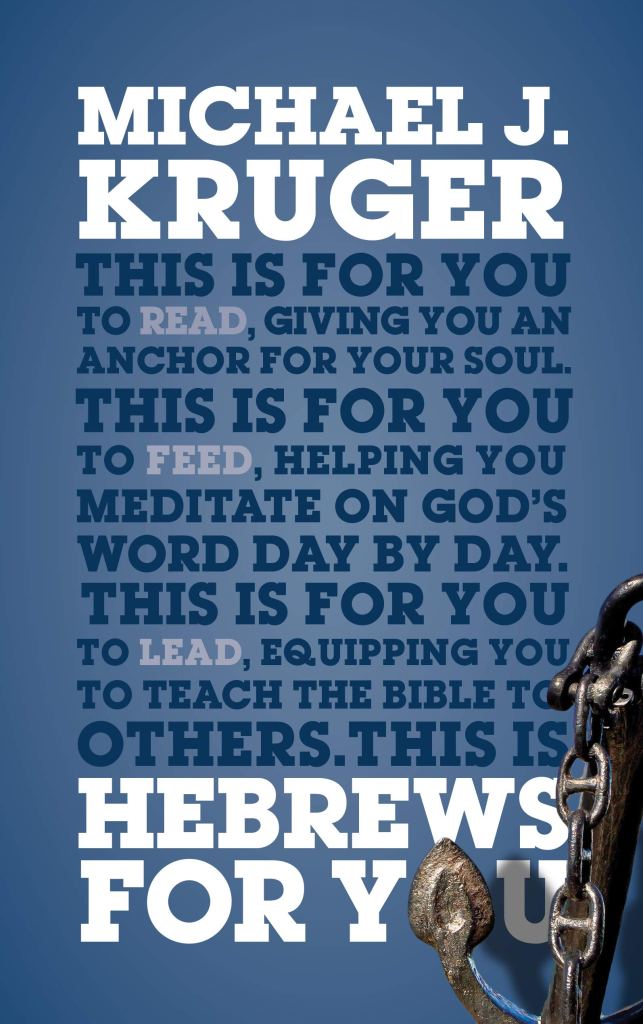
Our ladies’ Bible study has been reading Hebrews this semester using Michael Kruger’s book, Hebrews for You: Giving You an Anchor for Your Soul as an aid. I appreciated the author’s thoughtful insights as he went verse by verse through the book.

Some of the quotes I marked:

The old covenant was not false or wrong. But it was provisional and partial. “The law has but a shadow of the good things to come instead of the true form of these realities [Hebrews 10:1]” (p. 136).

Since God’s word is empowered by the Holy Spirit, when we encounter the word, we encounter God. It is through God’s word that we meet him, learn from him, and have fellowship with him (p. 61).

The word of God is not just a way to get to know God but also a way to get to know yourself. When you read the Bible and let it penetrate your heart, you will see things about yourself that you never saw before. You will see your real intentions, your real motives, and your real character. This is a good thing because there is rot and mildew built up in our hearts which need to be exposed (p. 65).

People in our world today sometimes embrace doubt and uncertainty as things worth striving for in themselves; Christians, by contrast, believe that there are certainties, even though we may find it difficult to hold on to them. So, when we have those struggles with doubt, we fight them. We look for reassurance from God (p. 164).

God does not promise that if we follow him we will have health and wealth—becoming successful or rich. There is a sad trend in evangelicalism today of teachers claiming that if you follow God it will make your life better in earthly ways. Of course, it is better to follow Jesus; but that does not mean bigger bank accounts or more popularity. This is not your best life now (p. 190).

Hebrews has some difficult passages, but Kruger’s commentary helped shed light on them.

I’m happy to recommend this book.

(I often link up with some of these bloggers.)

Review: What’s a (Dis)Organized Person to Do?

What's a Disorganized Person to Do?

Stacey Platt’s What’s a (Dis)Organized Person to Do? is subtitled 317 Ideas, Tips, Projects, and Lists to Unclutter Your Home and Streamline Your Life.

Stacey is a professional organizer and runs a company in New York with a wide variety of clients. One reviewer described this book as an organizer’s Pinterest board.

The book is organized according to different rooms in a house, except that the last chapter deals with trips and moves. Yet within each chapter are tips not just for the physical objects there, but for saving time and energy. Scattered throughout the book are one-hour projects, like organizing under the sink, the junk drawer, the bathroom vanity, or making a master grocery list.

I appreciated that the book was filled with specific tips, though some principles were discussed. Many books on organizing/productivity/time management that I have read are filled with broad principles, or are so rigidly organized as a whole system that they are overwhelming. This books lets you pick and choose what works best for you.

The book is probably meant to be dipped into as a reference resource rather than read straight through as I did. But I didn’t want to miss anything. 🙂

Some of the tips didn’t appeal to me; some I already used; some seemed like overkill. A few were outdated (this book was written in 2010. But I marked many tips to remember.

This appears to be the only book Stacey has written. I didn’t find a website for her. I did find one with her company name, but I am not sure it’s hers.

I can recommend this book as a good resource if you’re looking for organizational tips.

Ezekiel: The God of Glory

Ezekiel: The God of Glory

Ezekiel can seem like an intimating book of the Bible at first, with his many visions, odd heavenly creatures, acted-out sermons, and prophecies.

There’s much going on in Ezekiel’s 48 chapters. The basic idea of the book is that Israel has sinned, worshiping other gods and not living the way God told them to. They thought they were okay because they had the temple. After repeated warnings from various prophets, Israel is conquered and exiled by Babylon. Eventually Babylon destroys the temple in Jerusalem. Ezekiel was taken in the first wave of exiles and given the task of preaching to hard-hearted people who don’t listen to him. Some form of the phrase “You will know that I am the LORD” is used around seventy times in the book.

Eventually, God promises “I will give you a new heart, and a new spirit I will put within you. And I will remove the heart of stone from your flesh and give you a heart of flesh. And I will put my Spirit within you, and cause you to walk in my statutes and be careful to obey my rules. You shall dwell in the land that I gave to your fathers, and you shall be my people, and I will be your God. And I will deliver you from all your uncleannesses (Ezekiel 36:26-29). The famous vision in chapter 37 of the valley of dry bones that comes to life is a dramatic picture of what God is going to do in their hearts.

God also promises a coming shepherd-king, the Messiah, and a new temple (with much debate over the years whether this temple is literal or symbolic).

During my last reading of Ezekiel, I used Warren Wiersbe’s Be Reverent (Ezekiel): Bowing Before Our Awesome God as an aide while reading the book in my ESV Study Bible with its notes. Last year, I finished the last of Warren Wiersbe’s 50 “Be” commentaries on different books of the Bible. So I wanted to use a different source this time.

I had enjoyed our ladies’ Bible study’s use of the Good Book Company’s Isaiah for You by Tim Chester and 2 Corinthians for You by Gary Millar so I checked to see if there was a “For You” book for Ezekiel. There wasn’t, but while looking I found Ezekiel: The God of Glory by Tim Chester. It’s a six-week, 63-page study guide providing what the publisher called a “whistle-stop tour” through Ezekiel’s 48 chapters.

Unfortunately, I don’t think this format worked for Ezekiel. Perhaps it’s just too big a book to be covered in six chapters. I’m sure Chester had good reasons or highlighting the chapters he did, but they seemed random. There were several key passages I was surprised weren’t covered in the study.

In Isaiah for You, even though Chester only spent thirteen chapters on Isaiah’s 66 books, he summarized the chapters that came between the ones he covered. That helped orient the passages we did study into the book as a whole. Of course, in a smaller study like the one on Ezekiel, there was not space to do that, but it would have helped.

Each chapter’s study seemed fragmented to me. In fact, I was not getting much out of the study at all and thought perhaps I should get the leader’s guide it referred to, only to discover the guide was included in the back of the book. That helped some.

There were individual nuggets throughout the study that ministered to me and brought out truths from Ezekiel, but I was disappointed in the study as a whole. I don’t think the problem is with Chester’s writing since he did such a good job with Isaiah. I just don’t think this format worked well for Ezekiel. It might do better for some of the Bible’s smaller books.

On a side note, I’d heard about The Bible Project’s videos giving animated summaries of different books of the Bible, but had not seen one until it was used in our ladies’ Bible study as an introduction to Hebrews. I looked up their videos on Ezekiel and found them both fascinating and helpful. Part 1 is here and part 2 is here.

(Sharing with Bookish Bliss Quarterly Link-Up)