Hebrews for You

Hebrews for You

Most New Testament epistles begin with who wrote the letter and who the audience is. The author of Hebrews does neither. He appears to be someone familiar with the apostles’ teaching. He might even have been an apostle himself. He references the Old Testament. and seems to assume his audience would be familiar with it. Thus we believe he’s writing primarily to Jewish Christians. Many were undergoing persecution for their belief in Jesus and the prophesied Messiah. Some felt maybe they should go back to the Jewish traditions they had been taught.

The main theme of the book is that Jesus is better: better than angels, better than Moses, better than God’s previous revelations. His priesthood, according to the line of Melchizedek Psalm 110:4), is better because it’s eternal. His sacrifice is better because He only had to offer it once; He didn’t have to offer sacrifices for His own sin because He didn’t have any sin.

There are stern warnings at the end of each section–warnings against apostasy, against failing to enter God’s rest.

Probably most people who know anything about Hebrews are familiar with the “hall of faith” in Hebrews 11: the detailed list of people in the Bible who did follow Jesus in faith. They weren’t perfect; some on the list are a surprise. They are an encouragement to us to keep following.

This chapter also tells us, “And without faith it is impossible to please him, for whoever would draw near to God must believe that he exists and that he rewards those who seek him” (verse 6).

Chapter 12 urges readers to endure God’s discipline as a loving father and reminds us of the coming kingdom that cannot be shaken. Chapter 13 ends with practical instructions and applications.

One of my favorite verses in the book comes near the end in chapter 13, verses 20-21: “Now may the God of peace who brought again from the dead our Lord Jesus, the great shepherd of the sheep, by the blood of the eternal covenant, equip you with everything good that you may do his will, working in us that which is pleasing in his sight, through Jesus Christ, to whom be glory forever and ever. Amen.” What a magnificent prayer that we can pray today.

Even though the first audience was Jewish, we Gentiles benefit from reading the book today. The truth it contains is applicable to all. We’re spiritual children of Abraham by faith (Galatians 3:7-9) and we’ve been grafted in (Romans 11). We don’t replace Israel. But we’re part of God’s family. So all this truth pertains to us, too.

If you’ve read through the first five books of the Bible, especially if you’ve gotten lost in Leviticus, reading Hebrews will really help in understanding.

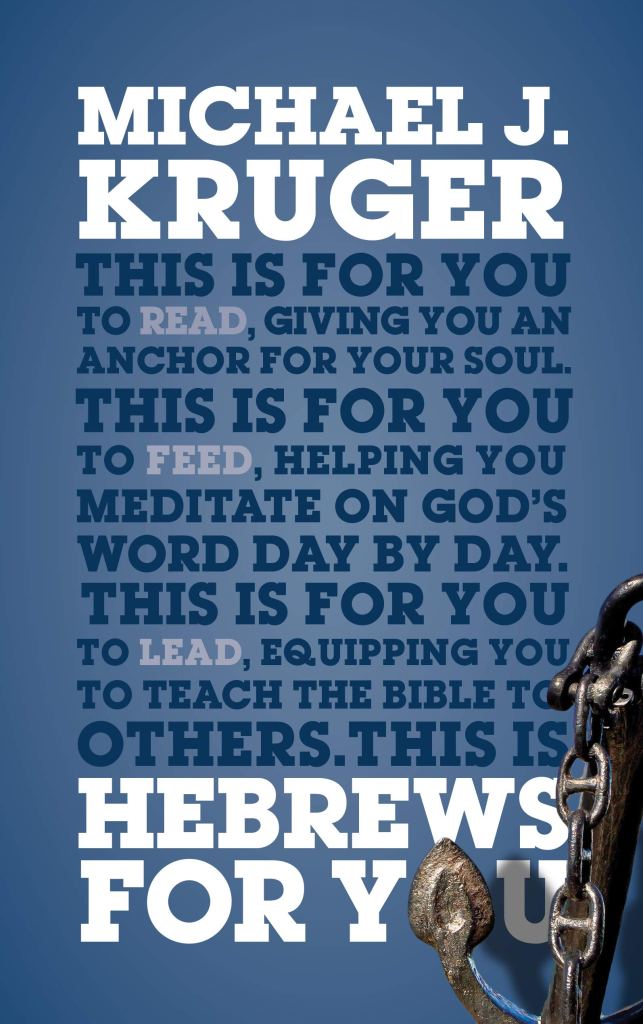
Our ladies’ Bible study has been reading Hebrews this semester using Michael Kruger’s book, Hebrews for You: Giving You an Anchor for Your Soul as an aid. I appreciated the author’s thoughtful insights as he went verse by verse through the book.

Some of the quotes I marked:

The old covenant was not false or wrong. But it was provisional and partial. “The law has but a shadow of the good things to come instead of the true form of these realities [Hebrews 10:1]” (p. 136).

Since God’s word is empowered by the Holy Spirit, when we encounter the word, we encounter God. It is through God’s word that we meet him, learn from him, and have fellowship with him (p. 61).

The word of God is not just a way to get to know God but also a way to get to know yourself. When you read the Bible and let it penetrate your heart, you will see things about yourself that you never saw before. You will see your real intentions, your real motives, and your real character. This is a good thing because there is rot and mildew built up in our hearts which need to be exposed (p. 65).

People in our world today sometimes embrace doubt and uncertainty as things worth striving for in themselves; Christians, by contrast, believe that there are certainties, even though we may find it difficult to hold on to them. So, when we have those struggles with doubt, we fight them. We look for reassurance from God (p. 164).

God does not promise that if we follow him we will have health and wealth—becoming successful or rich. There is a sad trend in evangelicalism today of teachers claiming that if you follow God it will make your life better in earthly ways. Of course, it is better to follow Jesus; but that does not mean bigger bank accounts or more popularity. This is not your best life now (p. 190).

Hebrews has some difficult passages, but Kruger’s commentary helped shed light on them.

I’m happy to recommend this book.

(I often link up with some of these bloggers.)

Review: What’s a (Dis)Organized Person to Do?

What's a Disorganized Person to Do?

Stacey Platt’s What’s a (Dis)Organized Person to Do? is subtitled 317 Ideas, Tips, Projects, and Lists to Unclutter Your Home and Streamline Your Life.

Stacey is a professional organizer and runs a company in New York with a wide variety of clients. One reviewer described this book as an organizer’s Pinterest board.

The book is organized according to different rooms in a house, except that the last chapter deals with trips and moves. Yet within each chapter are tips not just for the physical objects there, but for saving time and energy. Scattered throughout the book are one-hour projects, like organizing under the sink, the junk drawer, the bathroom vanity, or making a master grocery list.

I appreciated that the book was filled with specific tips, though some principles were discussed. Many books on organizing/productivity/time management that I have read are filled with broad principles, or are so rigidly organized as a whole system that they are overwhelming. This books lets you pick and choose what works best for you.

The book is probably meant to be dipped into as a reference resource rather than read straight through as I did. But I didn’t want to miss anything. 🙂

Some of the tips didn’t appeal to me; some I already used; some seemed like overkill. A few were outdated (this book was written in 2010. But I marked many tips to remember.

This appears to be the only book Stacey has written. I didn’t find a website for her. I did find one with her company name, but I am not sure it’s hers.

I can recommend this book as a good resource if you’re looking for organizational tips.

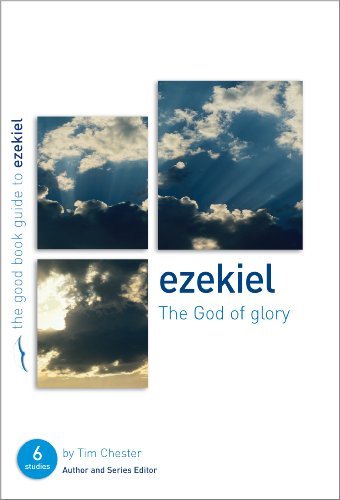
Ezekiel: The God of Glory

Ezekiel: The God of Glory

Ezekiel can seem like an intimating book of the Bible at first, with his many visions, odd heavenly creatures, acted-out sermons, and prophecies.

There’s much going on in Ezekiel’s 48 chapters. The basic idea of the book is that Israel has sinned, worshiping other gods and not living the way God told them to. They thought they were okay because they had the temple. After repeated warnings from various prophets, Israel is conquered and exiled by Babylon. Eventually Babylon destroys the temple in Jerusalem. Ezekiel was taken in the first wave of exiles and given the task of preaching to hard-hearted people who don’t listen to him. Some form of the phrase “You will know that I am the LORD” is used around seventy times in the book.

Eventually, God promises “I will give you a new heart, and a new spirit I will put within you. And I will remove the heart of stone from your flesh and give you a heart of flesh. And I will put my Spirit within you, and cause you to walk in my statutes and be careful to obey my rules. You shall dwell in the land that I gave to your fathers, and you shall be my people, and I will be your God. And I will deliver you from all your uncleannesses (Ezekiel 36:26-29). The famous vision in chapter 37 of the valley of dry bones that comes to life is a dramatic picture of what God is going to do in their hearts.

God also promises a coming shepherd-king, the Messiah, and a new temple (with much debate over the years whether this temple is literal or symbolic).

During my last reading of Ezekiel, I used Warren Wiersbe’s Be Reverent (Ezekiel): Bowing Before Our Awesome God as an aide while reading the book in my ESV Study Bible with its notes. Last year, I finished the last of Warren Wiersbe’s 50 “Be” commentaries on different books of the Bible. So I wanted to use a different source this time.

I had enjoyed our ladies’ Bible study’s use of the Good Book Company’s Isaiah for You by Tim Chester and 2 Corinthians for You by Gary Millar so I checked to see if there was a “For You” book for Ezekiel. There wasn’t, but while looking I found Ezekiel: The God of Glory by Tim Chester. It’s a six-week, 63-page study guide providing what the publisher called a “whistle-stop tour” through Ezekiel’s 48 chapters.

Unfortunately, I don’t think this format worked for Ezekiel. Perhaps it’s just too big a book to be covered in six chapters. I’m sure Chester had good reasons or highlighting the chapters he did, but they seemed random. There were several key passages I was surprised weren’t covered in the study.

In Isaiah for You, even though Chester only spent thirteen chapters on Isaiah’s 66 books, he summarized the chapters that came between the ones he covered. That helped orient the passages we did study into the book as a whole. Of course, in a smaller study like the one on Ezekiel, there was not space to do that, but it would have helped.

Each chapter’s study seemed fragmented to me. In fact, I was not getting much out of the study at all and thought perhaps I should get the leader’s guide it referred to, only to discover the guide was included in the back of the book. That helped some.

There were individual nuggets throughout the study that ministered to me and brought out truths from Ezekiel, but I was disappointed in the study as a whole. I don’t think the problem is with Chester’s writing since he did such a good job with Isaiah. I just don’t think this format worked well for Ezekiel. It might do better for some of the Bible’s smaller books.

On a side note, I’d heard about The Bible Project’s videos giving animated summaries of different books of the Bible, but had not seen one until it was used in our ladies’ Bible study as an introduction to Hebrews. I looked up their videos on Ezekiel and found them both fascinating and helpful. Part 1 is here and part 2 is here.

(Sharing with Bookish Bliss Quarterly Link-Up)

Two Reading Challenge Wrap-Ups

Though I’ll finish a couple more books by the end of the year, I thought this would be a good time to report on a couple of reading challenges I participate in.

Shelly Rae at Book’d Out hosts the Nonfiction Reader Challenge. Shelly has twelve different categories that we can aim for. Or we can be a “Nonfiction Grazer” and make our own goals. I chose the latter course, because I was only interested in a handful of the categories listed.

My own goals for this challenge and the results were (linked to my reviews):

Memoirs/Biographies:

Books About Writing:

Bible Study Books:

Christian Living Books:

Letters/Journals:

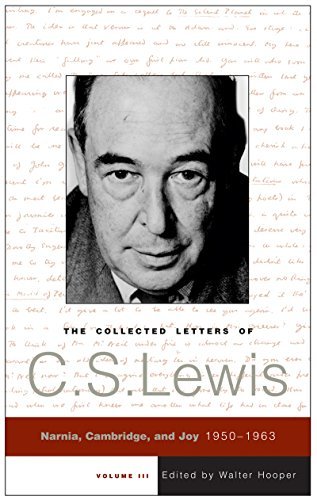
The Collected Letters of C. S. Lewis, Volume III. I’m maybe halway through this one.

A Book by C. S. Lewis I Have Not Read:

Same as above.

Organization/Productivity:

Related to a Holiday:

The only category I missed was aging/midlife.

By my count, that’s 28 nonfiction book (or 29 if I count reading Adorning the Dark twice. I’m satisfied–all these were informative and some were profound.

The Intrepid Reader hosts the Historical Fiction Reading Challenge. I like a variety of fiction categories, but historical fiction is probably what I read most. I aimed to read fifteen for the Medieval category. I completed twenty-four.

Linked to my reviews:

I love that there are classics here as well as some hot off the press, old favorites as well as newly-discovered authors.

Next week I’ll share my completed list of books read this year and my top favorites.

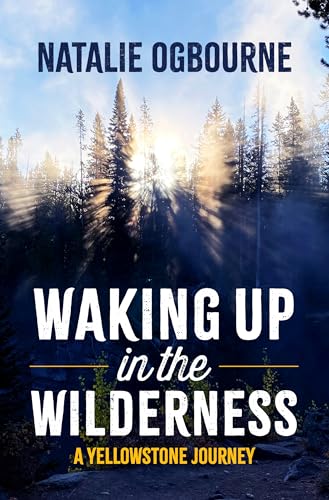
Review: Waking Up in the Wilderness

Waking Up in the Wilderness by Natalie Ogbourne

Natalie Ogbourne has been to Yellowstone National Park over 30 times. And not because she lives close to it: she lives 1,000 miles away in Iowa.

Natalie’s parents first took her and her brother to Yellowstone when she was twelve and he was eight, to show them “there was more to life that malls and movies” (p. 30, Kindle version). Natalie wasn’t impressed at first. But eventually she grew to love the place, working there when she was a little older and taking her own family back several times in all seasons.

Natalie shares her experiences and observations in a memoir titled Waking Up in the Wilderness: A Yellowstone Journey. She writes in her prologue, “Waking Up in the Wilderness is more than a story of me and my family doing what we love, in a place we love, with people we love. It’s a sign saying ‘Look at this!’ so readers can experience the park and see what there is to see for themselves” (p. 10).

When I think of wilderness, I think of a barren place. But Natalie helped me realize wilderness is wildness: it can be teeming with life. Though there are touristy areas of Yellowstone, paved roads, shops, and cabins, there is also an abundance of wild flora, fauna, and geological wonders.

Natalie often says, “What’s true on the trail is true in life.” “Creation speaks–more often in a whisper than a shout” (p. 69). Yellowstone taught her many lessons applicable to all of life, but she shares them naturally, not in a “moral of the story” way. Lessons like trusting that your guide knows more than you do when he’s taking you somewhere you don’t want to go, or the conflict between wanting to “take the road less traveled” while also wanting to “feel comfortable and safe.” She notes,”Rarely is this the same road” (p. 96).

I thought one of the most profound experiences came near the end of the book, when Natalie and her father found new signs in Yellowstone, after a couple of people had died there the previous year. In all caps, the sign read: “THERE IS NO GUARANTEE OF YOUR SAFETY WHILE CAMPING OR HIKING IN BEAR COUNTRY.” Natalie didn’t want a tame Yellowstone, with everything behind barriers. But how can one navigate in areas where a bear might be around the next bend? “If safety isn’t the point, and fear isn’t the answer, I don’t know what is” (p. 192). I don’t want to spoil the book, but the conclusion she came to had me thinking all afternoon after I read it.

There are funny moments in the book, like when a visitor asks where the animals are kept at night. There are tense moments, when surrounded by a herd of bison or coming uncomfortably close to a bear. And there are poignant moments of insight.

Natalie and I are in the same critique group, so I got a sneak peek at a couple of her chapters. It’s been such a joy to see the book come into being and go out into the world.

The only thing that would have made the book even better is photos. But I imagine that adds another whole layer to the publishing process. She has plenty of pictures at her blog, along with other resources. I also looked up YouTube videos for some of the specific places she mentions.

Though Natalie’s book isn’t overtly Christian, her faith in God’s hand and care is evident throughout, especially the last half of the memoir.

I’m not a hiker, a traveler, or an adventurer, and I prefer indoors to out, but I still enjoyed Natalie’s treks into Yellowstone. I am happy to recommend her book to you.*

*There’s one little word I wish wasn’t there, but I suppose it was understandable in the context.

(Sharing with Bookish Bliss Quarterly Link-Up)

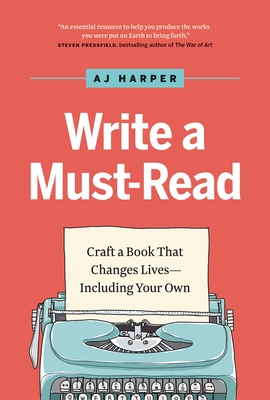
Review: Write a Must-Read

Write a Must-Read by A. J. Harper

A. J. Harper (no relation) has had a varied career as a ghostwriter on multiple books, publisher, editor, coach, co-writer, teacher, and more. Clients urged her to teach other writers how to write transformational nonfiction books. A nudge from a co-writer and an author retreat helping writers caused her to realize maybe she could write such a book. The result is Write a Must-Read: Craft a Book That Changes Lives—Including Your Own.

Harper’s main theme is “Reader first.” Often writers get started because they feel they have something to say. But writing to impact others isn’t just focused on imparting the writer’s story or information. Even a memoir or biography needs to have a take-away for the reader; otherwise, unless the author is famous, a reader won’t be interested in reading it.

First Harper helps writers identify their ideal reader and what their need is. I appreciated the distinction that the ideal reader is not an avatar, with multiple specific characteristics down to the cereal the reader eats (I’ve seen some writing advice that seems to lead this way). Rather, “Ideal Readers may come from different backgrounds and circumstances (demographics), but their problems, desires, and challenges in pursuit of their desire (psychographics) are the common denominator” (p. 46).

Then she helps writers craft their Core Message: what’s the “foundational truth that your entire book is built on” (p. 65). From there, writers craft the promise they make their readers.

Harper talks about teaching points,stories, anecdotes, case studies, outlines, sequencing, and much more, all under the umbrella of what would best serve the reader.

She includes a multitude of helpful questions to ask while editing and ends with a crash course in the process of publishing and need for marketing.

All her points are illustrated with stories and anecdotes from the authors she has worked with.

Many of the chapters end with exercises to work through and links to her web site for more information or to download worksheets or lists.

Some of the quotes that most stood out to me:

Writing a book is not about organizing content. It’s about creating an experience for the reader (p. 119).

The best outline for your book is the one that meets your reader where they are and takes them on a journey that leads to your Promise, delivered (p. 119).

You are not the hero of this book. They are. You are not the focus of this book. They are. And they need you to help them get where they want to go (p. 121).

Your book is not a collection of stories and knowledge. It is a journey—a quest (p. 130).

With nonfiction, specifically personal and professional development books, the aim is transformation. My singular goal is to help the reader change their life (p. 138).

A book is not about something. A book is for someone (p. 200).

I first read this in the evenings, a chapter or less at a time, before closing out the night with fiction before bedtime. That wasn’t the time I wanted to work through exercises and such. So I am going back through the book now at my desk, making notes, printing out worksheets and filling them out.

Some of my readers would want to know that there’s a smattering of profanity through the book, and the author comes from a completely different worldview than mine.

But the writing advice is excellent all throughout.

Review: Stop Asking Jesus Into Your Heart

Stop Asking Jesus Into Your Heart

Perhaps you know someone who can’t seem to come to assurance that they are Christians.They’ve asked Him to save them several times, and feel content each time, but sooner or later, they question whether they really believed or repented, or did so the right way or “enough.”

Perhaps that person is you.

It was me for a couple of decades. I shared my struggle with assurance and how God helped me with it here.

Satan can trip people up over assurance because if we’re insecure about our salvation, we come to a standstill in our Christian growth. We don’t have the confidence to serve the Lord in any way. Instead of going forward in our Christian lives, we’re spinning our wheels over the same issues.

On the other hand, there is such a thing as false assurance. Jesus said there would be people who stand before Him some day, fully assured that they are all right spiritually. They’ll be shocked to hear Him say, “I never knew you; depart from me, you workers of lawlessness.”

So the stakes are high.

In Stop Asking Jesus Into Your Heart: How to Know For Sure You Are Saved, J. D. Greear says he might hold the “Guinness Book of World Records entry for ‘amount of times having prayed the sinner’s prayer.'” He shares his own testimony of struggles with assurance.

Then he explains that God truly wants us to have assurance. He shares what it means that Jesus died in our place and why we can trust Him, along with separate chapters on the nature of true faith and repentance. Another chapter discusses the seeming contradiction between Bible verses that say we will never lose our salvation with other verses that appear to indicate we can. The last two chapters cover evidences of salvation in 1 John and what to do with continued doubts. One appendix deals with whether one needs to be baptized again if they’ve made subsequent professions of faith after baptism. The second deals with the “indispensable link between assurance and the doctrine of justification by faith alone.”

At first glance, I thought this book was about reasons not to use the terminology of “asking Jesus into your heart” as a way of telling people how to be saved. Greear discusses this briefly, saying he thinks it can be used as long as the gospel has been fully understood.

Some of the quotes that stood out to me:

Salvation comes not because you prayed a prayer correctly, but because you have leaned the hopes of your soul on the finished work of Christ (Location 269, Kindle).

I can say with certainty that God wants you to have certainty about your salvation. He changes, encourages, and motivates us not by the uncertainty of fear, but by the security of love. That is one of the things that makes the gospel absolutely distinct from all other religious messages in the world (Location 295).

We don’t hope we are forgiven, we know it, because our standing before God has nothing to do with our worthiness, but the worthiness of the Advocate who now stands in our place (Location 551).

If you base your assurance on what you do or how well you do it, you’ll never find assurance. You’ll always be wondering if you are doing enough. If your assurance is based on what Christ has done, however, you can rest in His performance. Your salvation is as secure as His finished work (Location 654).

When we come to Jesus nothing can be off-limits. We cannot come with preconditions or limitations. To possess eternal life, we must be willing to let everything else go. We don’t approach Jesus to negotiate eternal life; we approach Him in total surrender. As C. S. Lewis famously said, “We don’t come to Him as bad people trying to become good people; we come as rebels to lay down our arms” (Location 887).

You don’t follow Jesus like you follow someone on Twitter, where you are free to take or leave their thoughts at your leisure. Following Jesus is not letting Him come into your life to be an influence, even if it’s a significant influence. Following Jesus means submitting to Him in all areas at all times regardless of whether you agree with what He says or not (Location 979).

If repentance were perfection, none of these people repented. Repentance, however, means recognizing Jesus’ authority and submitting to it, even though you know your heart is weak, divided, and pulled in conflicting directions. Repentance includes a plea for God to change your inconsistent, divided heart (Ps. 86: 11; Mark 9: 24) (Location 1019).

Greear writes pastorally, basing his answers firmly in Scripture but with everyday rather than academic language. I’ve not read him before, and I might disagree with a couple of his minor points. But overall I think this book was tremendously helpful both for those who have made a false profession and those who fear they might have.

Review: Hillbilly Elegy

Hillbilly Elegy

I saw Hillbilly Elegy making the rounds a few years ago and almost read it then, but kept deciding on something else instead. The title stuck with me, the author’s name did not, so it was only recently that I realized the author, J. D. Vance, is the current Republican Vice-Presidential nominee. I decided to finally read this book to learn more about him.

I almost gave up reading it a number of times due to the language. At first, it was easy to compartmentalize that most of vulgarities came from Vance’s grandmother. But later in the book, Vance himself used these same words.

About halfway through, I had just about decided to abandon this book when I read Rebekah Matt’s testimony of how much this book helped her as she grew up in similar circumstances to Vance’s. I decided to keep reading because this story is a real account of what many go through. I’m sure the language goes with the other characteristics Vance described, but I think he could have demonstrated that factor without .giving so many examples.

Vance’s grandparents moved from the Appalachia region of Kentucky to Ohio to try to escape the poverty they grew up with. Vance didn’t think his tumultuous family situations were anything but normal, because everyone he knew had the same kinds of experiences: poverty, drug addiction, violent arguments, an absent father, and a mom cycling through one boyfriend after another.

Vance says in his introduction that he wasn’t extraordinary by escaping his roots, joining the Marines, going to college, then Yale, eventually becoming a Senator (and, after this book was written, the vice-presidential nominee). “I didn’t write this book because I’ve accomplished something extraordinary. I wrote this book because I’ve achieved something quite ordinary, which doesn’t happen to most kids who grew up like me” (p. 1, Kindle version).

I want people to know what it feels like to nearly give up on yourself and why you might do it. I want people to understand what happens in the lives of the poor and the psychological impact that spiritual and material poverty has on their children. I want people to understand the American Dream as my family and I encountered it. I want people to understand how upward mobility really feels. And I want people to understand something I learned only recently: that for those of us lucky enough to live the American Dream, the demons of the life we left behind continue to chase us (pp. 1-2).

Nobel-winning economists worry about the decline of the industrial Midwest and the hollowing out of the economic core of working whites. What they mean is that manufacturing jobs have gone overseas and middle-class jobs are harder to come by for people without college degrees. Fair enough—I worry about those things, too. But this book is about something else: what goes on in the lives of real people when the industrial economy goes south. It’s about reacting to bad circumstances in the worst way possible. It’s about a culture that increasingly encourages social decay instead of counteracting it (pp. 6-7).

One stabilizing influence in Vance’s life was his grandmother. Although she had what he called a quirky faith, she didn’t go to church, had a foul mouth, and was as likely as anyone else to get physically violent in an argument.

Another big factor in Vance’s journey were teachers, one in particular.

Vance doesn’t think the answer to the problems of people in the area he grew up in are political.

Public policy can help, but there is no government that can fix these problems for us. . . .I don’t know what the answer is, precisely, but I know it starts when we stop blaming Obama or Bush or faceless companies and ask ourselves what we can do to make things better (p. 255-256).

Powerful people sometimes do things to help people like me without really understanding people like me (p. 186).

To me, the fundamental question of our domestic politics over the next generation is how to continue to protect our society’s less fortunate while simultaneously enabling advancement and mobility for everyone. We can easily create a welfare state that accepts the fact of a permanent American underclass, one where family dysfunction, childhood trauma, cultural segregation, and hopelessness coexist with some basic measure of subsistence. Or we can do something considerably more difficult: reject the notion of a permanent American underclass. Yet . . . doing better requires that we acknowledged the role of culture (p. 261).

A couple of odd things in the book were his assertions that the nicknames “Mamaw: and “Papaw” were only used for hillbilly grandparents, and the phrase “too big for your britches” was a hillbilly saying. I grew up in southern Texas, and my grandparents on my mother’s side were Mamaw and Papaw. I’ve heard “too big for your britches” all my life.

Another oddity is that many referred to this as the “book that got Trump elected.” But there are only a couple of paragraphs that mention Trump, and Vance disagreed with him at the time.

Vance writes that he told his story the way he did because he thought “if people experienced these problems through the perspectives of real people, they might appreciate their complexity” (p. 269).

I think he succeeded in that goal. Although the family I grew up in was poor and dysfunctional to some degree until my teen years, when my parents divorced, I didn’t face all that Vance did. He helped me understand that poverty and dysfunction become mindsets that are hard to escape from. As he “made it” in terms of upward mobility, he called himself a “cultural emigrant” in trying to understand and adjust to people and institutions who were so fundamentally different from himself. Though he didn’t put it quite this way, he showed that just improving circumstances and economic well-being in themselves were not all that was needed.

Note: This post is about Vance’s book and not Vance as a political candidate. I will not approve comments that are personal or political rants.

Review: Help for the Hungry Soul

Kristen Wetherell’s book, Help for the Hungry Soul: Eight Encouragements to Grow Your Appetite for God’s Word, is not about how to read or study the Bible. She goes further back than that to our appetite for God’s Word. We’re made to hunger for God. Satan tempted Adam and Eve to hunger for the wrong thing for the wrong reasons. Our spiritual appetites have been skewed ever since.

People often sense longing for something real, something beyond this life, but don’t know, or turn away, from where to find it. Even those of who know and love God’s Word can start filling our souls with other things, lessening our appetite for the Bible.

“The stirring up of our souls is something only God can do” (p. 18, Kindle version), but Kristen hopes this book will whet appetites to engage with God’s Word.

Kristen discusses different kinds of spiritual hunger, hindrances to Bible reading, the need to ask God to help us hunger for His Word and then position ourselves for Him to do so. She encourages us to remember to seek Jesus in our reading. She reminds us what a privilege it is to have the Bible: just five hundred years ago, it was not available on a wide scale to everyday people. She also reminds us that the church is vital in our taking in God’s Word. She tells us “There is no one ‘right’ way to meet with the Lord in Scripture” (p. 83), so we can try different methods and plans. But we need to “feed and not just read” what it says, taking time to meditate on it. She inspires us to trust the process when we don’t feel different or see “results” after reading. “When you engage with God’s Word, more is happening than you can see” (p. 87).

There are exercises at the end of most of the chapters to help apply what was said as well as testimonies from others concerning the aspect of the individual chapters.

Overall, I thought this was a very helpful, encouraging book. Probably my favorite chapter was the one about trusting God is nourishing us through His Word even when we don’t feel we’ve “gotten anything” out of it.

There was one place where I disagreed with the author, when she said, “Your main spiritual meal is to be enjoyed at church” (p. 72). She wrote that “quiet time” or “devotions” as we think of them today started with the Pietist Movement in the seventeenth century, when German Protestants encouraged people to read the Bible for themselves after years of being told they shouldn’t by the Catholic church. But there are examples in Scripture of people meditating on God’s Word alone (the psalmist on his bed at night; Daniel studying Jeremiah, and others). I agree that we heap a lot of false guilt on ourselves over devotions. Gathering with others to feast on the Word is as important as feeding on it alone, but I don’t see in Scripture that it is more important.

Here are some of the quotes that especially stood out to me:

Right there is the blessing of true Godward hunger: the more of God we come to know, the more of God we want to know. This doesn’t mean perfection, for all our yearnings in this life will be incomplete until we see Jesus; but it does mean we have endless potential to grow, as we seek more of God and receive the fullness of joy that only he can give (Ps. 16: 11)” (pp. 25-26).

Will we allow these discouragements to drive us to his word or away from it? (p. 28).

Do we recognize our helplessness, that even our very desires need to be changed by the Spirit’s transforming grace? Or do we approach Scripture pridefully, thinking we’ve “got this,” attempting to impress God, others, and even ourselves by our obedience? (p. 39).

For too many years, this was the way I approached Scripture, because I didn’t understand my neediness. I thought that by opening my Bible I was seeking something good and right to do, rather than primarily seeking someone to love (p. 39).

There is no magic bullet here, only a constant dependence on God’s supernatural help as we put ourselves in the position to receive from him (p. 53).

Obedience is evidence of true faith in Jesus. It demonstrates that we trust him enough to do what he says. It demonstrates that we love him and actually want to know him. It demonstrates that we acknowledge that, without him, we would be lost (p. 101).

God’s words are purposeful, nourishing, and invaluable. They are worth trusting, for God’s words come from God’s heart. We cling to them because God is the only trustworthy, unchanging rock upon which we can stand. And so we keep coming to God’s word, and we keep clinging to the promises we find there (p. 101).

The beautiful thing about the story of the Bible is its realism. Scripture does not provide an escape from reality, but enters right into it. If you feel like every day is a struggle, you’re right; it is. If you feel like your desires are messed up (even those related to the Bible) and that you can’t get your act together, you’re right; they are, and you can’t (p. 110).

Every hardship—whether obvious and acute suffering, or the daily, lingering futility we all feel—is readying us for Jesus. Every groan anticipates glory. Every hunger pang points us to heaven (p. 111).

What would you lose by turning away from Scripture? What would you gain by staying in the word? . . . What might others gain by your endurance in the word? (p. 116).

I don’t recommend starting with a BHAG (a “big hairy audacious goal”) but rather with a realistic goal. . . Small adjustments can bring meaningful change (p. 119).

I think this book is an excellent resource both for those just beginning to establish a habit of regularly reading God’s Word as well as those of us who have been reading for a while but need to be reminded of these truths. Thanks to Michele for alerting me to this book.

(I often link up with some of these bloggers.)

Review: A Boy’s War

A Boy's War by David Michell

David Michell was the tender age of six when he was sent to the Chefoo School, a Protestant boarding school for missionary children in what is now known as Yantai. He and his parents had no idea they would not see each other for six years because the Japanese captured the school during WWII.

David tells his story in A Boy’s War. His parents moved from Australia to be missionaries to China with China Inland Mission, originally founded by Hudson Taylor, in 1930. David was born in China and lived with his parents and older sister until they were later joined by a younger sister. When it came time for school:

In the China of those years the only way for most children of missionaries to get a good education in English was to go away to boarding school. Chefoo offered this opportunity. At Chefoo children of missionaries and a few sons and daughters of business people lived and studied together at the preparatory school, the Boys’ School, and the Girls’ School, getting a truly Christian education for body, mind, and spirit. So good was that education, in fact, that others, non-CIMers, wanted to take advantage of it, too (Location 59, Kindle version.

Some of the school’s famous graduates were Henry Luce of Time Magazine and Thornton Wilder.

On a side note, when I first read in missionary biographies of parents sending their children away to school so young, I was horrified. But home schooling materials were not as available then as now. Plus the British boarding school system had been in place for ages. Parents wanted their older children to have the credentials for college. And in some cases, the environment was such that children were more vulnerable to some of the horrific practices of the parents’ mission field, so parents felt they were safer away at school. These days, many mission boards work with parents to teach their children at home, especially in the younger years.

David tells of his trip to school (“two thousand miles and a six-week journey away,” Location 145) and early days of adjustments. Though he missed his parents and younger sister and had some homesickness and struggles, for the most part he settled in fairly easily.

Many of the teachers had been Chefoo students themselves. Outside the classroom, “housekeepers” helped the children write letters home, mended their clothes, and generally helped where needed. I was touched to see that many of these women were widows who now “mothered” these children.

As early as 1940, the school’s headmaster conferred with the British Embassy about what they should do in the face of the conflict between Japan and China. They decided to keep the school open. However, many children could not travel home at Christmas break due to the dangers, so a larger number than usual were at the school over the holidays. The staff provided a memorable Christmas for them.

They were used to seeing Japanese soldiers in the area, but the military didn’t bother anyone at the school. That changed after Japan attacked the US at Pearl Harbor the following year. Now British and Americans were the enemies. Immediately, Japanese soldiers arrested the headmaster for a month and took over the campus.

Classes and activities were allowed to continue under the watchful eye of the Japanese, but supplies ran low and freedoms were curtailed.

In November, 1942, the whole campus was sent on foot to an abandoned Presbyterian mission at Temple Hill, where conditions were even more crowded and supplies were even fewer.

Then in September 1943, the school was sent on a longer journey to the Weihsien interment camp, where they remained until the end of the war. There they joined some 1,500 other people from all walks of life and several nationalities held by the Japanese.

One of the detainees was Olympic medalist Eric Liddell. He had become a missionary to China after his Olympic feats. He had sent his pregnant wife and two children home, planning to join them later. But the Japanese took over before he could. One chapter of the book is a mini-biography of Liddell. He took an active part in teaching the children, who all called him Uncle Eric. He drew pictures of chemistry equipment they didn’t have so older students could be prepared for their Oxford exams. He arranged races and athletic activities and was generally thought of as a man “whose humble life combined with muscular Christianity with radiant godliness” (Location 1516). Sadly, he died of a brain tumor while at Weihsien.

Another detainee was Herbert Taylor, oldest son of Hudson Taylor, in his eighties, having been a missionary in China for over sixty years.

Though their years in camp were fraught with hardships, the children managed to have adventures as well.

David describes the joy of seeing six American soldiers parachute nearby and the Japanese surrendered.

Then came the scramble to get everyone home and taken care of.

Though David exulted in freedom, he found some aspects hard to adjust to.

In the last chapter of the book, David described going back to Weihsien with a few of his friends from there and their sons on the fortieth anniversary of their rescue. 

I had read this book some decades ago but had forgotten much of it. Reading a frictional account of the Chefoo school’s captivity in When We Were Young and Brave by Hazel Gaynor made me want to revisit this book. I am so glad I did. Hazel’s book may have more emotion, but it’s imagined emotion. David’s book is more factual. While he doesn’t downplay the hardships, he doesn’t go into great detail about them, either. I appreciated what he had to say here:

A situation like Weihsien is fertile soil for producing people of exceptional character. In our eyes, for instance, our teachers were heroes in the way they absorbed the hardships and fears themselves and tried to make life as normal as possible for us.

In fact, I think at times all of us in camp considered ourselves as heroes. We were surviving, some would say even thriving, in the midst of war. By dint of hard work, ingenuity, faith, prayer and perseverance we had transformed a compound that was a hopeless mess into a habitable and in some rare corners, almost an attractive living place (Location 1333).

Someone in the camp, Hugh Hubbard, wrote this of Eric Liddell after his death, but I think it was true of them all:

Weihsien—the test—whether a man’s happiness depends on what he has or what he is; on outer circumstances or inner heart; on life’s experiences—good or bad—or on what he makes out of the materials those experiences provide (Location 1504).

You can read a couple of testimonies of David Michell here and here.

I’m thankful to have reread this book, and for God’s sustaining grace of His people through the hardest of times.