Book Review: I Will Repay

I Will RepayWhen I mentioned to someone that I liked The Scarlet Pimpernel, about an Englishman who disguised himself and rescued those slated for the guillotine during the French Revolution, this person (sadly, I’ve forgotten who) told me the author, Baroness Orczy, wrote several books about The Scarlet Pimpernel’s adventures and she really liked I Will Repay. So I put I Will Repay on my TBR list, and recently took advantage of its being free for the Kindle and only $2.99 at Audible.com (at the time of this writing) to get both and use their “Whispersync” connection to go back and forth between text and audio, depending on my circumstances.

The story begins with a heated argument between young Vicomte de Marny and the older Paul Déroulède. Between rage and too much to drink, de Marny insists on a duel. Déroulède easily wins the duel, but de Marny tries to fight further. When Déroulède puts up his sword to disarm him, de Marny charges at that moment right into Déroulède’s sword and dies.

The young man is carried home to his invalid father and 14 year old sister Juliette. They are told by the young man’s friends that he died “in fair fight,” but the father, described as “almost a dotard,” makes Juliette swear that she will somehow avenge her brother’s death. He adds to the oath the torment he says that her brother’s soul will undergo until she exacts her revenge (though, of course, in reality nothing we say or do after a person has died has an effect on the state of their soul). Juliette, grieving, young, and impressionable, agrees to this oath and lives under the weight of it for the next ten years.

By this time the French Revolution is well underway. Juliette’s father has died and Déroulède has become a favorite of the people, probably due to the bourgeois ancestry which had kept him from being fully accepted by the aristocracy despite his wealth. Juliette tricks her way into becoming a guest in his home, but it takes several weeks for a plan to come to mind to deal with him. In the meantime, she finds qualities about him that she likes, and he falls in love with her rather quickly. Thus she is torn between her feelings and her oath to her father on her dead brother’s body. “That awful oath, sworn so solemnly, had been her relentless tyrant; and her religion – a religion of superstition and of false ideals – had blinded her, and dragged her into crime.”

When I first started the book, I was a little dismayed because I’ve always thought the whole tradition of duels was rather silly, and I was afraid the ensuing romance would be fairly silly, too. However, I was greatly surprised by the depth of the novel as well as the unexpected twists and turns the plot took. I had an idea how the story would ultimately end up, but it didn’t go any of the routes I thought it would. This is one audiobook that I looked for ways to listen to beyond the usual, even carrying it around with me while I dusted.

In a conversation with Sir Percy Blakeney, aka the Scarlet Pimpernel, Déroulède describes Juliette as a saint and an angel and says he has fallen “madly, blindly, stupidly, hopelessly” in love. Sir Percy responds,

“And ’twill be when you understand that your idol has feet of clay that you’ll learn the real lesson of love,” said Blakeney earnestly.

“Is it love to worship a saint in heaven, whom you dare not touch, who hovers above you like a cloud, which floats away from you even as you gaze? To love is to feel one being in the world at one with us, our equal in sin as well as in virtue. To love, for us men, is to clasp one woman with our arms, feeling that she lives and breathes just as we do, suffers as we do, thinks with us, loves with us, and, above all, sins with us. Your mock saint who stands in a niche is not a woman if she have not suffered, still less a woman if she have not sinned. Fall
at the feet of your idol an you wish, but drag her down to your level after that – the only level she should ever reach, that of your heart.”

I disagree that you have to sin together to really be in love, but I do agree that a couple needs to understand that they’re both sinners and that they’ll need grace to live with one another, that true love happens when that happens, not when we’re in a state of near worship. And indeed, Déroulède finds later “She had ceased to be a saint or a madonna; she had fallen from her pedestal so low that he could not find the way to descend and grope after the fragments of his ideal.” What happens then I will leave for you to discover.

And even though this is not a religious book per se, it does contain spiritual truth when more than one character has to learn that “‘Vengeance!’ which is not for man…[is] God’s alone.”

All in all I really enjoyed this novel. I don’t know that I’ll seek out any more of the Scarlet Pimpernel’s adventures any time soon. I like a good swashbuckling adventure every now and then, but I don’t like to make a steady diet of them. Still, these books are as good a source as any of this kind of tale, so the next time I am in the mood for one, perhaps I’ll look up another in the series.

Some readers will want to know that the word “demmed” for “damned” occurs a handful of times.

The full text of I Will Repay can be found online through Project Gutenberg.

(This will also be linked to Semicolon‘s Saturday Review of Books.)

This also completes one of my selections for the  Back to the Classics Challenge hosted by Karen at Books and Chocolate.

classics2014

Book Review: The Book of Three

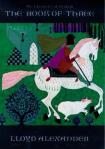
The Book of ThreeThe Prydain Chronicles by Alexander Lloyd are well-known children’s classics, but somehow I had never heard of them until the last few years. I saw them mentioned favorably at various blogs, so when I saw the first three books either on sale or free (I forget which) for the Kindle app, I got them.

The first in the five part series is The Book of Three. Young Taran lives with a retired soldier named Coll and an old “enchanter” named Dallben. He has ambitions to do great, heroic things, but in the meantime he is made Assistant Pig-Keeper. The pig he is charged with keeping is not just any old farm pig, however: this one, called Hen Wen, is a white oracular pig: she can tell prophesies and help information come to light. Taran fails at his first major responsibility when Hen Wen runs away. He sets out to find her even though he has been told not to leave the farm.

While searching for the pig, Taran is startled to see the dreaded Horned King, the champion of Arawn Death-Lord ride by with his soldiers. One throws a sword at him which wounds him, but not fatally. After running for his life and passing out, he awakens to find his wounds being treated by none other than Prince Gwydion in disguise.

Gwydion and Taran face unexpected battle and are captured. Taran escapes but is sure that Gwydion has died when the castle where they were held collapses. He decides he must go to warn the king of the advancing army of the Horned King. Along the way he is joined by a minor king named Fflewddur Fflam who is moonlighting as a bard and whose harp strings break whenever he stretches the truth, Princess Eilonwy, who talks a lot and has been learning magic, and Gurgi, sort of between man and beast who refers to himself in the third person and speaks in rhymes (“crunchings are munchings,” his reference to food,””sneakings and peekings,” “smackings and whackings,” etc.).

In his quest Taran has to come face to face with his own shortcomings and learn that heroism is not only not easy, but it isn’t always displayed in mighty public acts.

The books are somewhat loosely based on Welsh mythology (with which I am not familiar). The author grew to love the land and language of Wales when he was stationed there during WWII while in the army.

A few of the notable quotes from the book:

“Neither refuse to give help when it is needed,… nor refuse to accept it when it is offered.”

“It is not the trappings that make the prince, nor, indeed, the sword that makes the warrior.”

“I have studied the race of men. I have seen that alone you stand as weak reeds by a lake. You must learn to help yourselves, that is true; but you must also learn to help one another.”

I enjoyed some of the humor in the story, such as this exchange:

“By all means,” cried the bard, his eyes lighting up. “A Fflam to the rescue! Storm the castle! Carry it by assault! Batter down the gates!”

“There’s not much of it left to storm,” said Eilonwy.

“Oh?” said Fflewddur, with disappointment. “Very well, we shall do the best we can.”

I have to admit it took me a while to get into the story, and I didn’t like it at first. I didn’t really care for the princess: I hate when girls continually take things said in innocence and twist them around to mean something else and get offended by them, and the princess here did that quite a lot. Then again, she is young as well, so possibly her maturing will come about in one of the next books.  I thought the idea of an oracular pig was silly, and the story seemed to resemble The Lord of the Rings a little too closely in the beginning with the undead Cauldron Born soldiers a little too similar to the Ring Wraiths, and Gurgi sounding very much like Gollum. As the story went on, however, Gurgi developed into quite a different personality than Gollum and the story took on its own direction and feel.

I do like coming of age “quest” stories where the protagonist has to reach beyond his abilities and learn about himself and life in the process, and this story fits that bill nicely.  The author says in his after-word, “Most of us are called on to perform tasks far beyond what we can do. Our capabilities seldom match our aspirations, and we are often woefully unprepared. To this extent, we are all Assistant Pig-Keepers at heart.”

(This will also be linked to Semicolon‘s Saturday Review of Books.)

Book Review: The Sign of Four

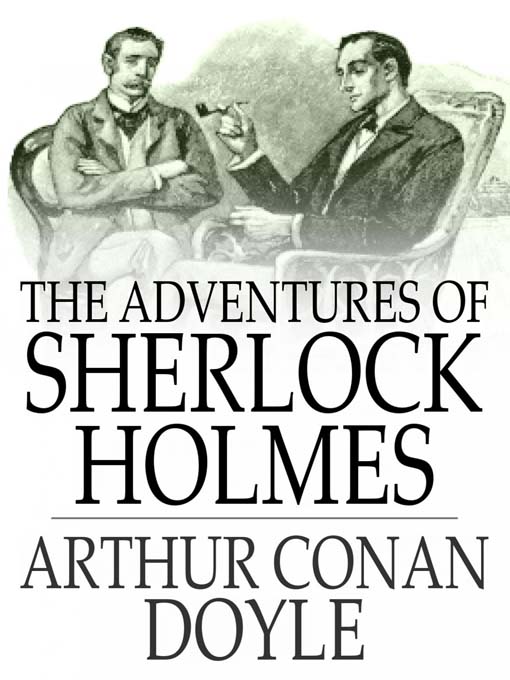
sign of fourThe Sign of Four by Arthur Conan Doyle is the second Sherlock Homes novel. It was originally published in a magazine as The Sign of the Four and later published as a novel. Later publications shortened the name to The Sign of Four.

Sherlock and Watson are visited by a Miss Mary Morstan. Her father had disappeared ten years earlier and she began receiving a valuable pearl from an anonymous source every year for the last six years. She’s just received a note saying she is a wronged woman and requesting a meeting. She can bring two friends as long as they are not police. Sherlock and Watson agree to go. Mary shows them an odd paper found among her father’s things that appears to be a map with four crosses and four names, three of them English and one Indian.

When they arrive at their destination they are greeted by one of two twin brothers who were sons of an associate of Mary’s father. I’ll leave what he told them and what they found there for you to discover if you read the book. 🙂

Hearing that Holmes engaged in drug usage caused me to hold his stories at arm’s length at first, but Wikipedia explains that the drugs he uses are not illegal at the time. He uses them when he is extremely bored or when he feels his brain needs the stimulation. This book introduces the habit and Watson’s disapproval, which he finally works up the nerve to express to Holmes. According to Wikipedia, in later stories Watson is eventually able to “wean” Holmes off of them. The drug use doesn’t play a major role in this book, but it’s there, mainly at the beginning.

This book also delves more into Holmes’s pysche and personality, which I found as interesting as the mysteries. We saw in the first book that Holmes had a brilliant intellect and developed his skills for deductive reasoning and crime solving almost to the exclusion of others, even to the point of not knowing that the earth revolved around the sun or caring since it didn’t affect his work. Some years ago I saw an documentary on Einstein which showed him to have a horrible relationship with his wife. I almost wondered then whether becoming a genius in one area required one to be out of balance in other areas. I don’t know – I’ll have to explore that idea further if I read about any more geniuses. 🙂 But it appears to be true in Holmes’ case: if he is not solving a crime or developing a skill which will help in the future, he’s utterly bored and doesn’t know what to do with himself. This book humanizes him a bit and we see him as more than just a brilliant intellect.

Part of my interest in reading Holmes’ stories is spurred by some modern adaptions of them, mainly the BBC television production of Sherlock starring Benedict Cumberbatch, which depicts Holmes as a modern London city-dweller and adapts the stories in the current culture and technology.  I’ve only seen the first three episodes and have been advised that the fourth (or actually the first episode in the second season, concerning Irene Adler) is best avoided. But I’ve enjoyed the three I’ve seen and thought they were quite well done. They don’t follow the original stories exactly but there are enough similarities to make the modern Sherlock as much like the original as possible within a modern framework.

But even though the TV series touched off my reading of the Holmes books, they are interesting enough that I want to continue to read them for themselves. For this book I listened to the audiobook ably narrated by David Timson. The text of the story can be found online here.

(This will also be linked to Semicolon‘s Saturday Review of Books.)

What’s On Your Nightstand: June 2014

What's On Your NightstandThe folks at 5 Minutes For Books host What’s On Your Nightstand? the fourth Tuesday of each month in which we can share about the books we have been reading and/or plan to read.

Since last time I have completed:

Loving the Church by John Crotts, reviewed here.

The Brothers Karamazov by Fyodor Dostoyevsky via audiobook, reviewed here. This is the August selection for Carrie’s  Reading to Know Classics Book Club list, if you want to try to give it a whirl before then. 🙂

Wow, not very much, considering one was an audiobook! Not sure what happened to my reading time in June.

I’m currently reading:

The Book of Three by Alexander Lloyd, first book in the Prydain Chronicles.

The Knowledge of the Holy by A. W. Tozer

How to Read Slowly: Reading for Comprehension by James W. Sire. Not that I want to actually decrease my reading speed or that I have problems with comprehension, but I’d like to retain more of what I read, so I am hoping this will help.

The Sign of the Four by Sir Arthur Conan Doyle, second of the Sherlock Homes novels, via audiobook.

Next up:

Why We Are Not Emergent: By Two Guys Who Should Be by Kevin DeYoung, Ted Kluck, and David F. Wells

Undetected by Dee Henderson

I will Repay by Baroness Orzcy, part of The Scarlet Pimpernel series

Possibly Girl in the Gatehouse by Julie Klassen and Just Jane: A Novel of Jane Austen’s Life by Nancy Moser, two of my alternates from the TBR Challenge list, rather than the one remaining nonfiction book I have left there. The nonfiction has been beneficial, but I am missing stories. 🙂

Carrie’s  Chronicles of Narnia Reading Challenge. is in July, but I haven’t decided whether I’ll do anything for it yet. I finished the Narnia series last year and am not ready to start it over again. There are several Narnia-related non-fiction books I’d like to read, but I am reading so much other non-fiction this year I am not feeling inspired at the moment to choose another one. I hate to miss out on it, though, as I have participated for the last few years, so I may decide to jump in before it’s over.

What have you been reading?

Book Review: The Brothers Karamazov

KaramazovDostoyevsky is one of those people I’ve thought about reading for a long time, but his works tend to be pretty chunky volumes. However, I did read somewhere not long ago that his books are actually fairly easy to get into, so when I saw his The Brothers Karamazov on Carrie’s  Reading to Know Classics Book Club list, that seemed like the perfect opportunity to give him a try. This book is the selection for August, but I kept thinking it was coming up in July and I wanted to get a head start on it, so I started listening to the audiobook some weeks back and just finished it a few days ago. I wanted to go ahead and write a review wile it was still fresh in my mind.

The first of the title brothers is Dmitri, also called Mitya, the oldest (about 28 when the book begins), passionate, impulsive, tempestuous. He has a running feud with his father over his inheritance and over a woman who is called Grushenka.

The second is Ivan, brilliant, logical, skeptical. He can’t reconcile the idea of God with the suffering he sees in the world, particularly that of children, and feels that if there is a God, He is malevolent. He comes to find out that the logical conclusions of his philosophies have natural but unforeseen consequences.

The youngest is Alexei, also known as Alyosha, about age 20, who lives at the monastery (Russian Orthodox) while training to become a monk. He is kind, reasonable, thoughtful, compassionate, a peacemaker and has a genuine love for people.

It’s widely believed that there is a fourth illegitimate brother called Smerdyakov. His mother was a retarded homeless girl who died in childbirth. He is found and raised by the senior Karamazov’s servant, Grigory, who raises him. He becomes a servant in the Karamazov household as well. He is epileptic and has a mean, warped streak.

The father of this brood is Fyodor (the three sons all have the middle name Fyodorovich, which means “son of Fyodor”). Fydor is wealthy but debauched, wicked, and greedy. He has had little to do with any of his sons’ upbringing, and they all hate him except for Alyosha.

It is not much of a spoiler to say that Fyodor is killed: the author refers to his coming death early on and hints at a terrible event: it’s not much of a stretch to connect the two and realize that Fyodor is going to come to a bad end. And, indeed, he does: he is murdered. One of his sons is arrested for the murder and the evidence seems pretty certain against him (again foreshadowed by the author as he often comments that this or that happened “as so-and-so testified later.”) But the evidence isn’t conclusive, leaving the reader to wonder for a while who actually killed him. Besides being a major factor in the plot, Fyodor’s murder is also a major catalyst in the lives of his sons for different reasons.

Amidst all the action there are several philosophical discussions, notably between Elder Zosima, Alyosha’s mentor, and various people, and later between Ivan and Alyosha, touching on the nature of God, free will and whether it is a burden, moral responsibility, and other subjects.

I am heavily indebted to SparkNotes for getting much more out of this book than I would have from a surface reading/listening. I liked reading the chapter analysis and summaries at intervals (but I have learned from past experience not to  look at the plot overview or character analysis there until finishing a book because they reveal key details of the story). The chapter analyses did help me see the connection between the philosophical discussions and the action: those discussions weren’t isolated rabbit trails: they were integral to the story (possibly the main points of the story), and the action played out the truths discussed. For instance, I hadn’t connected Alyosha’s ministrations to a dying child (Ilyusha) to his earlier discussion with Ivan, but SparkNotes pointed out:

Ivan looks at the abstract idea of suffering children and is unable to reconcile the idea with his rational precepts about how God ought to be. His solution is to reject God. Alyosha, on the other hand, sees an actual suffering child and believes that it is God’s will for him to try to alleviate the child’s suffering to whatever degree he can. His solution is to help Ilyusha. Again, Dostoevsky shows how the psychology of skepticism walls itself off, in elaborate proofs and theorems, from having a positive effect on the world, while the psychology of faith, simplistic though it may be, concerns itself with doing good for others. This very subtle response to the indictment of God presented by Ivan in Book V brings the philosophical debate of the novel onto a plane of real human action, and shows the inadequacy of Ivan’s philosophy—which Ivan himself would readily acknowledge—to do good in the real world.

As with many older classics, this book can seem a little tedious and wordy by today’s standards. Newer stories start off with action that grabs you and makes you want to know what happens next  or causes you to care about a character right away: older books have a lot of explanation and description first. The first style is usually more exciting; the latter takes a little more patience but does usually pay off in the end.

This story that has more layers than one would think at first, and it is causing me to think and make connections long after I’ve finished it – a hallmark of a classic. I didn’t agree with much of the theology, but the overall theme of a quiet faith lived out in everyday life with love and service towards one’s fellow man appealed to me.

I also enjoyed reading more of Dostoyevsky’s background at Wikipedia and SparkNotes.

I usually like audiobooks for classics, for several reasons, but in this case it was probably not the best way to go. For one thing, the multitude of polysyllabic Russian names and nicknames was hard to distinguish at first, but after a while I was able to distinguished who was who (whom?) Secondly, there were a few sections of philosophical discussion that were hard for me to follow just by listening while driving, fixing hair, etc.: those would have benefited from being able to go over them on the printed page a couple of times. Nevertheless I thought the narrator, Constantine Gregory, did a good job telling the story.

(This will also be linked to Semicolon‘s Saturday Review of Books.)
This also completes one of my selections for the  Back to the Classics Challenge hosted by Karen at Books and Chocolate.

classics2014


Booking Through Thursday: Objectionable Elements

btt  button Booking Through Thursday is a weekly meme which poses a question or a thought for participants to discuss centering on the subject of books or reading.

Today’s question is:

How do you feel about explicit detail in your reading? Whether language, sex, violence, situations and so on … does it bother you? Faze you at all? Or do you just read everything without it bothering you?

I do not like explicit detail in my reading and try to avoid it.

Don’t get me wrong, I understand there has to be a “bad guy” or something wrong in order to have a plot. I know there is adultery and violence in the real world. But we don’t need explicit detail.

Any war story is going to have some degree of violence, but I don’t need details about eyes bulging out or blood spattering or whatever that are there just to titillate or disgust or increase the gore factor. Ditto for sexuality. As one friend once said, sex is not a spectator sport.

Since I am a Christian, I take my cues from the Bible. The story of David and Bathsheba tells us all we need to know of their tryst, but there is nothing in the description that would cause arousal in the reader.

Language is a bit harder. For the most part I avoid profanity or taking God’s name in my reading because I don’t want to fill my mind with it and increase the chances that those words are going to filter into my thoughts and possibly come out of my mouth in an unguarded moment. But if I were going to try to eliminate them completely, I’d have to unfriend some of my relatives on Facebook. 🙂 There are a few “damns” even in some of the classics (like The Brothers Karamazov, which I am reading, or rather listening to now). I think sometimes a story can transcend those elements (like Unbroken), but I’d still rather they weren’t there. A character can be shown to be a profane character without giving us the full brunt of his profane mouth.

In fact, I think it takes much more talented writing to show a profane character or a violent or sexual scene without explicit detail. In one of the most violent scenes I have seen on film, nothing was shown but the victim’s feet. A bit of restraint and leaving some details up to the reader’s imagination are far more effective.

To weigh in on this week’s question or read other responses, go here.

See also:

The language of Christians.
YA Censorship.
Decorum.

Laudable Linkage

Here are some thought-provoking reads from the last week or so:

How to Beat That Bad Mood.

Middle-agers Need Older Women Too.

Raise a Man.

Salvation in a Dementia Ward, HT to Challies.

Motherhood or Singleness: Which Is More Sanctifying? Short answer: whichever one you’re called to.

8 Things Not to Say to Your Aging Parents.

How to Write a Book in Your Spare Time.

7 Reasons Why I Stop Reading a Novel by author Jody Hedlund, whom I have not yet read except on this blog.

Getting Upset About the Wrong Things in Disney Movies and The Cold That Bothers Us both give thoughtful insights into Disney’s movie Frozen.

Finally, I couldn’t resist sharing with you something we noticed during Sunday breakfast. Apparently one of the biscuits was grumpy, or woke up on the wrong side of the pan or something. 🙂

Grumpy biscuit

Happy Saturday!

What’s On Your Nightstand: March 2014

What's On Your NightstandThe folks at 5 Minutes For Books host What’s On Your Nightstand? the fourth Tuesday of each month in which we can share about the books we have been reading and/or plan to read.

Feb. seemed long for a short month: March has seemed short for a long month. Of course, there’s about a week of it left, but for WOYN purposes, it’s time to discuss what’s on our reading agendas.

Since last time I have completed:

Made to Crave: Satisfying Your Deepest Desire With God, Not Food by Lisa TerKeurst, reviewed here.

Walking From East to West: God in the Shadows by Ravi Zacharias, reviewed here.

Farmer Boy by Laura Ingalls Wilder for my Laura Ingalls Wilder Reading Challenge and for Carrie’s  Reading to Know Classics Book Club, reviewed here.

The House Is Quiet, Now What? Rediscovering Life and Adventure As a Empty Nester by Janice Hanna and Kathleen Y’Barbo, reviewed here.

I’m currently reading:

Crowded to Christ by L. E. Maxwell

Bleak House by Charles Dickens via audiobook

The Little White Horse by Elizabeth Goudge for Carrie’s  Reading to Know Classics Book Club for March. I need to step on it with this one!

Wednesdays Were Pretty Normal: A Boy, Cancer, and God by Michael Kelley

Made to Crave Action Plan Participant’s Guide by Lysa TerKeurst and Ski Chilton (which is a different thing from the Made to Crave Participant’s Guide, as I discovered after ordering the wrong book…) It is a follow-up to Made to Crave, and the Proverbs 31 Ministries site has been posting the videos in the Action Plan series and going through this book.

Next up:

The Great Divorce by C. S. Lewis

My Man Jeeves by P. D. Wodehouse for Carrie’s April selection.

The Book of Three by Alexander Lloyd (pub. 2006), first book in the Prydain Chronicles

Other bookish posts this month included one on censorship of YA literature and rereading.

As always, happy reading!


Laudable Linkage

I’m here again today with my almost weekly round-up of interesting reads from the last week or so:

Gospel-Centered Reduction: Slighting the Spirit. There has been something bothering me about the term “gospel-centered” being used as an adjective on just about everything in Christianity in recent years, but I couldn’t quite articulate why. This article touches on some of the reasons.

Coffee With Facepalm Jesus Calling, HT to Bobbi. The various problems with portraying Jesus as saying things He wouldn’t say, from memes to cartoons to Jesus Calling.

Fred Phelps and the Anti-Gospel of Hate.

9 Things We Should Get Rid of to Help Our Kids.

31 Days of Purity: The Throne of Grace. I especially appreciated the paragraph by Lambert in the middle about the difference between condemning self-talk and confession.

This Mother Tore Off labels and Nurtured Her Son’s Hidden Genius.

Soldier Finds Lifeline in Letter Exchange With Vermont Author, HT to Sherry. I have never read either of these authors but want to now. I espcially liked this: “I needed that reminder that there was still hope and still beauty in the world. At that time in my life there was none. There was nothing except guns and fear. I was really not at all sure that I was ever going to get out of that place. This book gave me a little bit of beauty at that time, and I needed it. Not the way I need a new app for my iPad. I needed it to keep my soul alive.”

Threads: Loved this: “Every great story tells in some part The Great Story. Each truth revealed helps us make sense of our world. And through each tragedy, comedy, and fairy tale, the Truth is woven through the fabric of our being.” I don’t know that I’d say that about every story – I’ve read some awful ones with little redeeming value – but overall, yes, truth even in fiction points us to the ultimate Author of truth.

Happy Saturday!

Booking Through Thursday: Rereading

btt  button Booking Through Thursday is a weekly meme which poses a question or a thought for participants to discuss centering on the subject of books or reading.

Today’s question has to do with rereading:

I’ve asked before if you re-read your books (feel free to recap), but right now I want to know if that habit has changed? Did you, for example, reread more as a child and your access to new books was limited by how often you could convince your mother to take you to the library? Has the economy affected your access so that you’re forced to reread more often now? Have you grown to look at old books as old friends so that you’re happy to spend time with them rather than rushing the next new thing?

I don’t remember whether I reread much as a child, though I imagine I did with a few favorite books. I don’t think the economy has had much effect on rereading: if I couldn’t afford new books, there are hundreds through the library. But I do reread some books, for several reasons:

1. It is like a visit with an old friend, much like listening to the same music, rewatching a movie, telling the same stories at family gatherings. It’s cozy, comfortable, and familiar.

2. It’s hard to get everything from most books the first time through. To me the best books are those I can revisit many times and still gain something from.

3. It’s hard to remember everything we got from the first read, especially (for me) with nonfiction.

4. It reinforces what I learned from the book before.

5. I identify with different characters or parts of the book differently at different stages. Little Women is a classic example: I identified with different ones of the girls as a child and young teenager; as a young wife I identified with Meg; as an older mom I saw Marmee through new eyes (and the girls, too, for that matter, looking on them from a mother’s point of view rather than as friends.)

6. It can be just plain fun to revisit a story.

The problem is that there are so many enticing new books to choose from that it is hard to make the decision to reread an old one. Sometimes with nonfiction I choose to reread because I need those lessons or that information again. But with fiction, audiobooks are a great way to revisit books. Although I do listen to new books that way, I can tend to miss something from them if I can’t hit the replay button (like when I am driving or cooking). But that’s not so much an issue with a familiar book. Plus by listening I don’t feel like the old book, especially if it is an old, longer classic, is monopolizing so much of my reading time. And hearing it read can bring out facets I may have missed in my own reading.

Here is a list I made a few years ago of books I have reread and would like to reread. I’m happy to say I have reread many from the latter list since then, most via audiobook.