2024 Reading Plans

I like reading challenges that broaden my horizons. But I also like the freedom to pick up a book on a whim or because it’s just out or intrigues me. I’ve participated in a number of different reading challenges over the years, and these work best with my interests and time. They work well with what I already read, but provide some challenges. They combine intentionality and flexibility.

Mount TBR Reading Challenge

Bev at My Reader’s Block hosts the Mount TBR Reading Challenge, which encourages us to get to those books we already own but have not read yet. That’s something I need to do every year, and I have enjoyed participating with Bev the last few years. She has the goals set out as a series of mountains, and we’re supposed to declare which one we’re aiming for. I think I’ll shoot for Mount Blanc (24 books), even though I’ve reached the next level a couple of years. The sign-up and more information for this challenge are here.
TBR 24 in '24 Reading challenge

The TBR 24 in ’24 Challenge hosted by Rose City Reader dovetails nicely with the Mount TBR challenge. It’s the same idea—to read books you own but haven’t read it (though rereads count, too). The difference is, we aim for 24 and list them some time during the challenge. I don’t have my whole list figured out yet, but I know I want to read Adorning the Dark: Thoughts on Community, Calling, and the Mystery of Making by Andrew Peterson, Lenten Lands by Douglas Gresham, Whose Waves These Are by Amanda Dykes, and The Lazy Genius Way by Kendra Adachi.
Nonfiction Reader Challenge

Shelly Rae at Book’d Out hosts the Nonfiction Reader Challenge. This can be done one of two ways. Shelly has twelve books in different categories that we can aim for. Or we can be a “Nonfiction Grazer” and make our own goal. Although I might hit a few of her categories, I’ll go the grazer route.

This year, I’d like to hit these categories:

  • At least one biography, autobiography, or memoir.
  • One writing book
  • One Bible study book
  • One Christian living book
  • One book of letters or journals
  • One book by C. S. Lewis that I have not read yet
  • One book on organization or productivity
  • One book pertaining to a holiday (probably Christmas)
  • One book related to midlife or aging

Finally, The Intrepid Reader. hosts the Historical Fiction Reading Challenge. A good many of my fictional reads fit this category. I’m going to aim for the Medieval level at 15 books.

I used to participate in the Back to the Classics Challenge hosted by Karen at Books and Chocolate, but she hasn’t done it the last couple of years. I miss it and hope it comes back some day. Meanwhile, I do like to read a few classics a year. I’ve made it a mission to since I wasn’t exposed to many growing up. I love the quote that a classic is a book that has never finished saying what it has to say.

I’ve been trying to read through Dickens novels that I haven’t read yet. All I have left are Martin Chuzzlewit, Barnaby Rudge, Dombey and Son, and The Mystery of Edwin Drood, so I’ll try to read at least one of those. I’d love to read more D. E. Stevenson and Anthony Trollope. And I may revisit some old favorites like Jane Eyre.

I think that’s it for this year. Do you participate in reading challenges?
2023 Reading Challenge Wrap-Up

Some of the reading challenges I participate in require an end-of-year wrap up.

Mount TBR Reading Challenge

Bev at My Reader’s Block hosts the Mount TBR Reading Challenge, which encourages us to get to those books we already own but have not read yet. She has the goals set out as a series of mountains, and we’re supposed to declare which one we’re aiming for.

I planned for Mt. Vancouver (36 books). I’ve easily surpassed that in previous years. But this year I only got 30 read. Still, that’s 30 books! I gave myself permission to read more hot-off-the press books or books that caught my eye this year. So though I have a little regret at not meeting a goal I could have if I had been paying attention, I don’t have any regrets about my reading last year.

I usually make a separate list of MTBR books, but this time I just noted them on my list of books read last year.

2023 Nonfiction Reader Challenge

Shelly Rae at Book’d Out hosts the Nonfiction Reader Challenge. This can be done one of two ways. Shelly has twelve books in different categories that we can aim for. Or we can be a “Nonfiction Grazer” and make our own goals.

I chose the “Grazer” route because I knew I wouldn’t read from all of Shelly’s categories. My goals and the books I read for them are (titles link to my reviews):

So, I have mixed results there. I don’t want my challenges to be stressful or controlling, but I do like them to broaden my horizons. I enjoyed the 23 nonfiction books I did read, even though I didn’t hit all my categories.

2023 Historical Fiction Reading Challenge

The Intrepid Reader. hosts the Historical Fiction Reading Challenge. A good many of my fictional reads fit this category. I aimed for the Medieval level at 15 books. I read 38!

And that wraps up 2023 reading. On to 2024!

Favorite Books of 2023

Favorite books of 2023

One of my most enjoyable posts to write is naming my favorite books read each year. It’s like revisiting old friends, almost like enjoying the books all over again.

Most of these weren’t published in 2023, but were read this year.

I published a list of all the books I read in 2023 here.

As usual, the titles link back to my reviews.

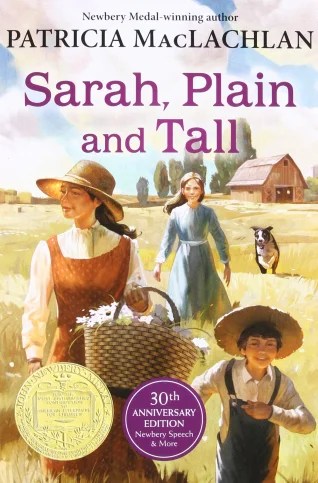
Sarah Plain and Tall

Sarah, Plain and Tall by Patricia MacLachan is a classic, but not one I had ever read. I did see the movie version with Glenn Close years ago and loved it. A widowed farmer with two children on the prairie places an ad for a new wife. He receives a reply from Sarah in Maine, who wants to come out and visit the family. There are some bumps along the way, but the blending of a new family is told with gentleness and tenderness.

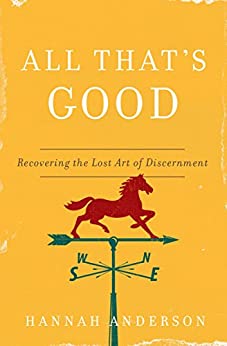
All That's Good: Recovering the Lost Art of Discernment by Hannah Anderson

All That’s Good: Recovering the Lost Art of Discernment by Hannah Anderson. I read Hannah’s Advent devotional, Heaven and Nature Sing, in 2022 and loved it. So I read three more of Hannah’s earlier books this year (as well as reading Heaven and Nature Sing again). I could honestly list each of them among my favorites this year. But I figured I’d just list one, and chose the first one I read. I love that Hannah approaches discernment not from the standpoint of avoiding the bad, though we need to do that. But she proposes discerning bad from good in order to pursue the good. That shift has many ramifications to our thinking.

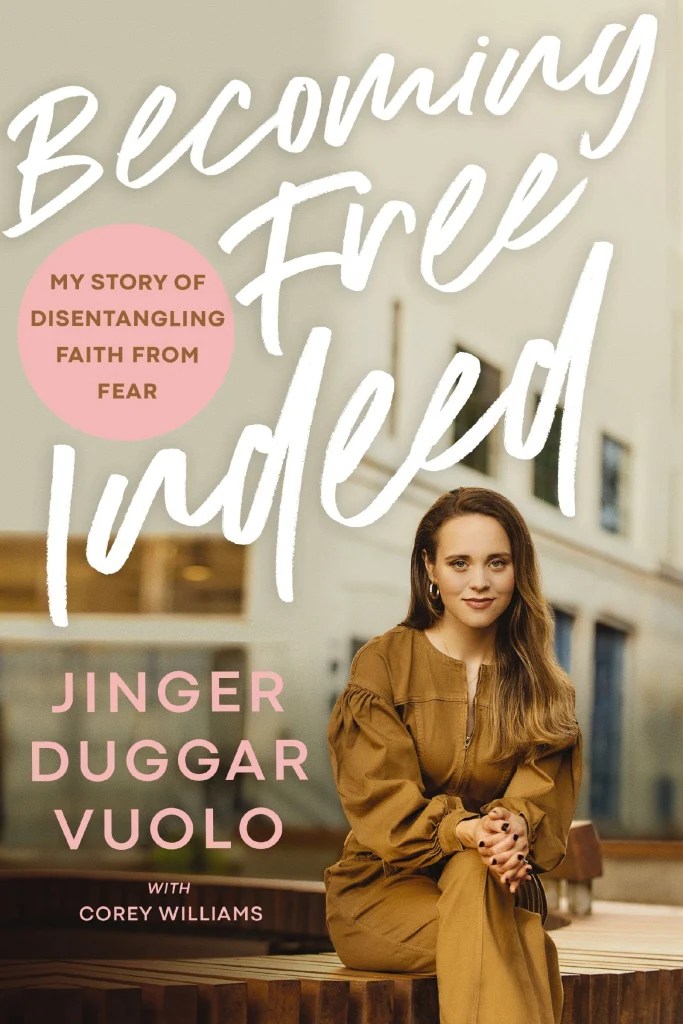
Becoming Free Indeed by Jinger Duggar Vuolo

Becoming Free Indeed: My Story of Disentangling Faith from Fear by Jinger Duggar Vuolo. Jinger was a member of the Duggar family featured on 19 Kids and Counting. As Jinger grew up and talked with other Christian young people, including her fiance and her sister’s husband, she began to realize some of the things she had been taught were wrong. Though writing about difficult subject matter, Jinger displays a gracious spirit. I especially appreciated that she didn’t “deconstruct” her faith and throw everything out. She studied and read and sought counsel to “disentangle” the good from the bad.

Blogging for God's Glory in a Clickbait World

Blogging for God’s Glory in a Clickbait World by Benjamin Vrbicek and John Beeson helps not only with the mechanics of blogging but also with keeping our motives in the right place.

Gay Girl. Good God by Jackie Hill Perry

Gay Girl, Good God: The Story of Who I Was and Who God Has Always Been by Jackie Hill Perry is her testimony first of all of becoming a Christian, then how Christ changed her heart and her sexuality. She’s received a lot of flack, because the world cheers people who go from straight to gay, but not gay to straight. Jackie dispels a lot of glib Christian notions about what it means to become straight. This book opened my eyes to many things. Plus I appreciated Jackie’s poetic way of expressing herself.

I read so many good novels this year, they’re harder to narrow down to a few favorites.

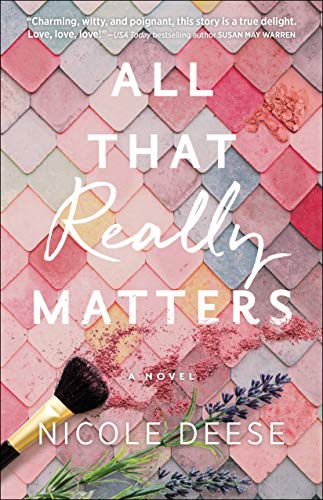
All That Matters by Nicole Deese

All That Really Matters by Nicole Deese is the first of Nicole’s books that I read, and so far it’s my favorite. It’s a novel of a perky social media influencer with half a million followers who needs to show a compassionate, involved side to potentially get a gig as a show host. Her brother recommends a a mentor program for kids transitioning out of the foster care program. The director, Silas, is not impressed and thinks Molly is shallow. But once they start working together, they are both changed. I loved that this book isn’t silly or frothy but goes deep.

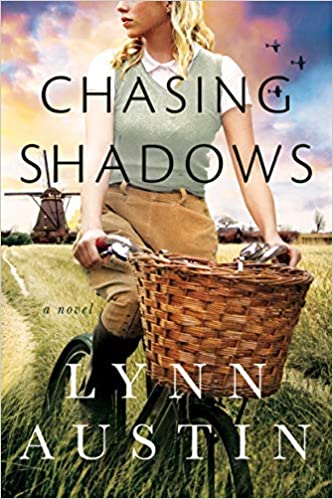
Chasing Shadows by Lynn Austin

Chasing Shadows by Lynn Austin is a novel that follows three women in the Netherlands through WWII. One is a farmer’s wife trying to keep things together at home with food shortages, a husband absent first as a soldier, then as a member of the Resistance, and helping others in desperate need. Another is a Jewish young woman trying to find a safe place for herself and her father. The third is a young woman in her first employment outside her home. She’s dating a policeman when the Nazis take over and commandeer the police force. She’s astonished by the changes she sees in her town and starts helping the Resistance.

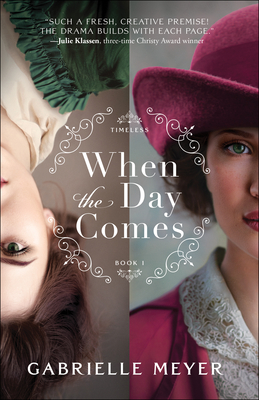
When the Day Comes by Gabrielle Meyer

When the Day Comes by Gabrielle Meyer has a most unusual premise for a novel: Libby Conant is a time crosser, living on alternating days in 1774 Williamsburg and 1914 New York. On her twenty-first birthday, she’ll have to decide which time she wants to stay in the rest of her life. I loved everything about this book: the characters, the history, both timelines, and the ending.

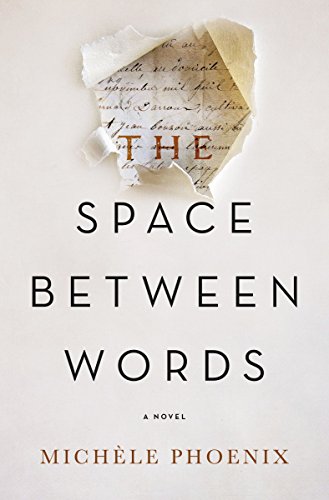
The Space Between Words by Michele Phoenix

In The Space Between Words by Michele Phoenix, a trip with friends to Paris is shattered when bombers attack a nightclub the friends were visiting. Jessica is shot, traumatized, and wants to go home as soon as possible. One friend does go home, but the other urges her to stay and go on to their flea market excursions. Jessica finds an antique sewing box with a secret compartment containing several sheets of handwritten paper and a few pages from an antique French Bible. Jessica feels compelled to learn more about the writer, who was from a family of seventeenth-century Huguenots. This story was captivating and touching and makes me want to find more of Michelle’s books.

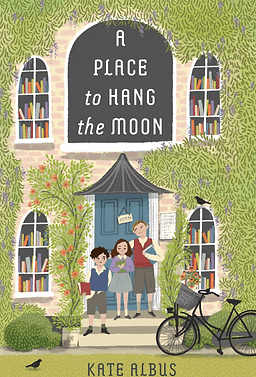
A Place to Hang the Moon by Kate Albus

A Place to Hang the Moon by Kate Albus reads like a classic children’s book, but was just published in 2022. I agree with C. S. Lewis that children’s books can and should be enjoyed by adults, too. Three children in 1940s England were orphaned and taken in by their aloof grandmother. When the grandmother dies, the solicitor suggests the children join the evacuees being sent to the countryside: perhaps they might find a foster family that will take them in permanently. The children are billeted in a couple of problem homes and seek refuge often in the library. The kind librarian is something of an outcast herself, having a German husband who is away. I loved the well-told story, the beautifully drawn characters, the descriptions of both warm and cozy and difficult scenes, references to beloved classic children’s books, and Polly Lee’s British accent narrating the audiobook. I didn’t want the book to end.

Though part of me wants to keep listing good books. I think I’ll stop at an even ten.

Have you read any of these? What were your favorite books read last year?

(I often link up with some of these bloggers.)

Books Read in 2023

Books read in 2023

By my count, I read 83 books last year. I’ve enjoyed a variety of older and newer, fiction and nonfiction. Reading is my favorite hobby, entertaining as well as educational. I’ll post my favorites from this list next.

I didn’t keep close records of which were audiobooks, but about half of them were, mostly in the Classics and Christian fiction categories.

The titles link to my reviews. MTBR stands for Mount TBR, or To-Be-Read, a challenge for reading books we already own.

Classics:

Nonfiction:

Christian Fiction:

Other Fiction:

I’ve already started new books for 2024!

(I often link up with some of these bloggers.)

December Reflections

December Reflections

December has been a busy but delightful month. My oldest son came in from RI last week, and the local kids have been over more often to see him (and us, too, of course. 🙂 ). We enjoyed Christmas together as well as a few outings (more about those on Friday’s Fave Five tomorrow), games, and lots of talking and laughing.

Usually during the last week of December, I post the books I read this year, my top ten or twelve of those books, and wrap-ups to reading challenges. Sometimes I also share the top-viewed posts of the year. This week there just hasn’t been time. I wanted to enjoy time with the family as much as possible. So I’ll at least share the bookish posts next week.

We’ve greatly simplified our Christmas activities, but we got to go to a couple of gatherings, a play, a fun Family Night at church (skits, songs, etc.). It all felt like just enough without being overwhelming.

Jim and I celebrated our 44th anniversary. We normally keep it pretty simple since it’s so close to Christmas and such a busy time. We go out to eat at a nice restaurant and exchange cards. It’s a nice time to pause and reconnect in all the busyness.

Watching

We really enjoyed All the Light We Cannot See. It had a bit of bad language. It was set during WWII, so naturally there was violence–some of it may have gone over the top. But overall it was a great movie. I’ve heard the book is excellent, but so far have not read it yet. I want to even more now.

We also enjoyed watching The Muppet Christmas Carol, most of us for the first time.

Creating

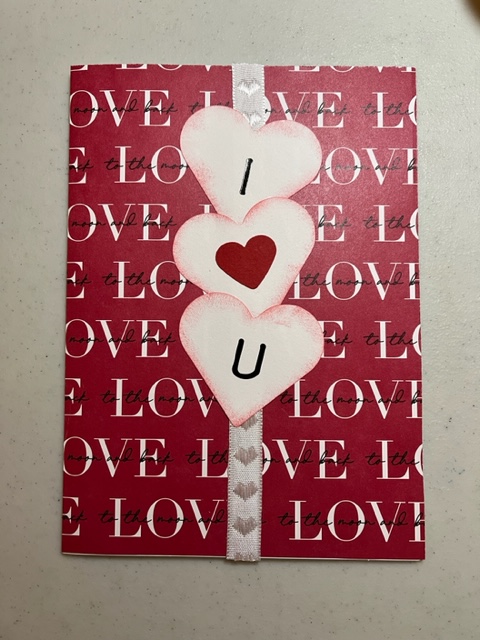
This is the card I made for Jim for our anniversary:

Anniversary card

I used a heart punch and then edged them a bit by tapping a foam brush onto an ink pad and brushing it around the edges. The “I” and “U” were stickers.

This was Jim’s Christmas card:

Christmas card for husband

This was Jeremy’s:

Son Christmas card

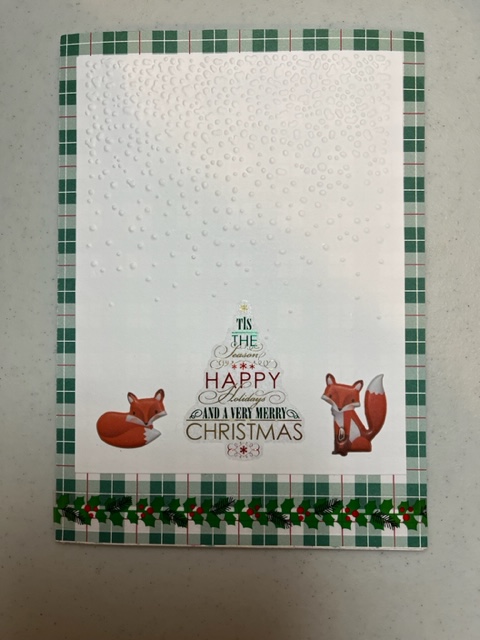
He likes foxes. The wording and holly border were stickers. The “snow” was embossed with the Cuttlebug.

This was Jason’s:

Son Christmas card

This was Mittu’s:

Daughter-in-law Christmas card

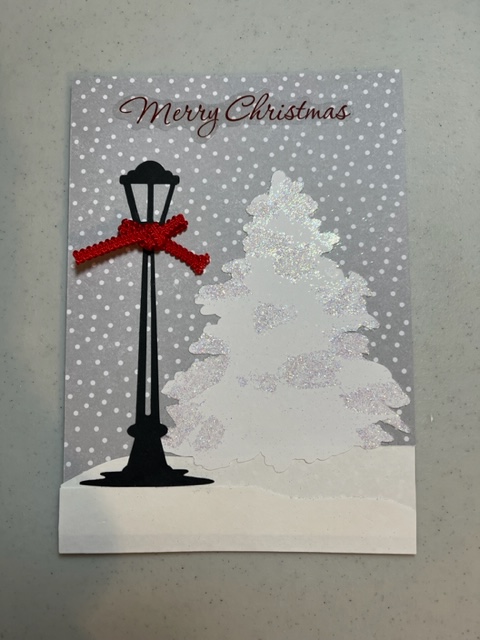
I did the lamppost and tree with the Cricut. The wording was a sticker.

This was Timothy’s:

Grandson Christmas card

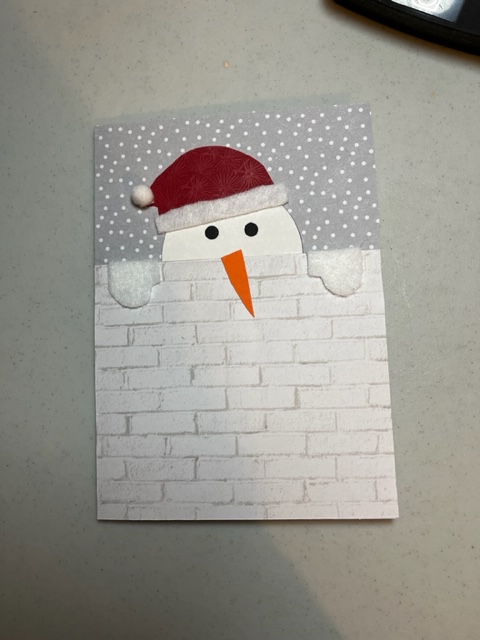
The wording was another sticker. With making so many at once, I relied on shortcuts as much as possible. I got the stuffed snowman and hat at Hobby Lobby–they were both stickers as well, but made of fabric.

This was Jesse’s:

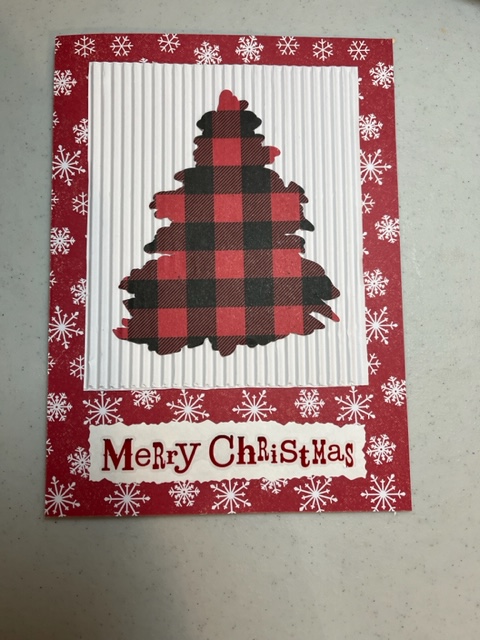
The words were a sticker and the tree was made with the Cricut (same tree shape as on Mittu’s card).

Reading

Since last time, I completed (titles link to my reviews):

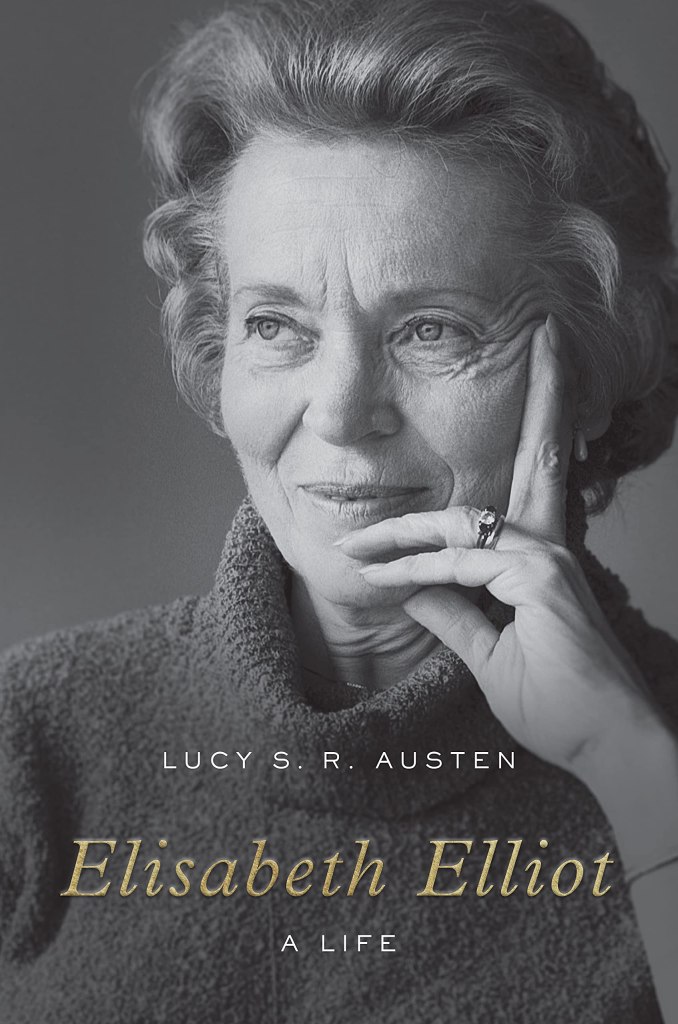
  • Elisabeth Elliot: A Life by Lucy S. R. Austen, nonfiction (actually finished at the end of November but not reviewed til December). I enjoyed learning more about this woman who has shaped so much of my own thinking. The author did well with harmonizing material from several sources, but I felt she was too critical.
  • Abide Bible study course on 1, 2, and 3 John by Jen Wilkin, not reviewed.
  • Heaven and Nature Sing by Hannah Anderson, nonfiction. This was a reread, linked to last year’s review. I am so glad I read it again this year. Though I fondly remembered some parts, I had totally forgotten others. Excellent, very highly recommended.
  • Secrets She Kept by Cathy Gohlke, fiction, audiobook. A woman in the 70s travels to Germany to learn more about the mother with whom she’d had a difficult relationship and finds some surprising information about the family she never knew. Excellent.
  • Crown of Thorns by Sigmund Brouwer, fiction, is set in Charleston , one of my favorite places. It’s a bit of a departure from my usual preferences, but was still good.
  • The Christmas Angel Project by Melody Carlson, fiction, audiobook. Four friends mourn another who has just died and start a project in her memory. Very good.
  • O Little Town, three novellas by Amanda Wen, Janyre Tromp and Deborah Raney, set in a small Michigan town in three different time periods. Very good.
  • A Cliche Christmas by Nicole Deese, fiction, audiobook, not reviewed yet.
  • The 20th Christmas, fiction, not reviewed yet.

That might look like a lot, especially for December, but the Christmas books were short.

I’m currently reading:

  • Be Skillful (Proverbs): God’s Guidebook to Wise Living by Warren Wiersbe, nonfiction
  • Proverbs for Life for Women
  • Adorning the Dark: Thoughts on Community, Calling, and the Mystery of Making by Andrew Peterson
  • Being Elisabeth Elliot by Ellen Vaughn (mentioned this last time but set it aside for Christmas reading)
  • How to Write a Sentence and How to Read One by Stanley Fish (had also set this aside for a time)
  • Shepherds Abiding by Jan Karon, the Mitford book set during Christmas. Another lovely reread, via audiobook this time.
  • The Best of Christmas in My Heart, a collection of short stories written or compiled by Joe Wheeler.

Blogging

Besides the weekly Friday Fave Fives, Saturday Laudable Linkage, and book reviews, I’ve posted these since last time:

Writing

As you can imagine, there’s not been much activity on that front this month. I’m hoping to be more disciplined and regular about it next year. I’m looking forward to our writing Critique group resuming.

We’re soaking up family together time for the next few days. I have not even thought much about next year yet. Time enough for that next month. I don’t choose a word for the year or make resolutions per se, but I like to evaluate different areas and set goals.

Have a wonderful and safe rest of 2023!

Review: Secrets She Kept

Secrets She Kept by Cathy Gohlke

In Secrets She Kept by Cathy Gohlke, Hannah Stirling’s mother has just passed away. More than mourning her mother, she mourns the loss of what could have been. Hannah’s mother had been distant from Hannah and her father for as long as she could remember.

Going through her parents’ home for some clue about her mother’s past turns out to be fruitless. When she sees the lawyer to finalize her mother’s affairs, Hannah is surprised to be given a key to a safe deposit box that Hannah had never known about. But all she finds there is her parents’ wedding certificate, her father’s military discharge papers, and a few empty envelopes with German addresses and stamps on them.

The paperwork, however, lets her know a shocking surprise: the man she called Daddy all her life could not have been her real father.

The point of view switches to thirty years earlier in Germany, when Hannah’s mother, Lieselotte Sommer, was a teenager just before Kristallnacht. Her mother lay dying, her brother was a whole-hearted member of the Hitler Youth, and her father was a rising member of the Nazi party. Lieselotte had loved her brother’s friend, Lukas Kirchmann, for as long as she could remember. She helps him and his family help Jews with food, false papers, and anything else they can. She longs for the day they can marry.

But Lieselotte’s father puts pressure on her to marry a Nazi officer and raise Aryan children for the Fuhrer. Her father has been distracted, but she never guessed the depths he would go to to further his own ends.

Switching back to Hannah again, her lawyer researches the German addresses on the envelopes in her mother’s safe deposit box. He discovers that she has a grandfather she never knew about. Her mother, Lieselotte, had said she was from Austria and her family all died in the war.

Hannah travels to Germany to meet her grandfather, to try to find out more about her mother, and to discover who her father was. At first she enjoys the connection with her grandfather. But her research uncovers horrifying family secrets.

This book was riveting. I listened to the audiobook, free at the time from Audible’s Plus Catalog, and eventually began looking for extra time to listen more. All the characters, including side characters, are well-developed and the plot. There’s so much more I’d love to say, but I don’t want to spoil anything for potential readers. So I’ll just say it’s a really good book and highly recommended.

Review: Elisabeth Elliot, A Life

I’ve mentioned many times that I considered Elisabeth Elliot my “mentor from afar” for most of my adult life. I discovered her books in college, four decades ago, beginning with Through Gates of Splendor, Shadow of the Almighty, and The Journals of Jim Elliot. I’ve read almost all her books ever since, some of them several times, as well as her newsletters.

Most of you know that Elisabeth was the wife of Jim Elliot, one of five missionaries killed when trying to reach a tribe in Ecuador then known as “Aucas” (now known by their name for themselves, Waorani). A few years later, Elisabeth, her young daughter Valerie, and Rachel Saint, sister of one of the other missionaries, were invited to live with the Waorani. After writing Through Gates of Splendor about “Operation Auca” and the five missionaries, then her husband’s biography, and several articles, Elisabeth began to feel God called her into a ministry of writing. She and Valerie came back to the USA, where Elisabeth spent decades writing, speaking, and teaching.

Elisabeth’s public ministry ended in 2004 when her dementia began to make travel and speaking impossible. She passed away in 2015 at the age of 88. She’s regarded as one of the most influential Christian women of the last 100 years.

It was only a matter of time before biographers started telling her story. In Elisabeth Elliot: A Life, Lucy S. R. Austen harmonizes Elisabeth’s public writing with the journals and letters Austen had access to, which I feel is the strength of this book.

Elisabeth never put herself on a pedestal. She was quite honest about her faults and foibles. Austen takes care to present Elisabeth realistically, not idealistically.

However, I felt that Austen often sat in judgment on Elisabeth’s writing, criticizing such things as her approach to discerning God’s will in her early years, Jim’s behavior as they dated, the difference between what Elisabeth wrote in her journals and what she wrote publicly thirty years later, and so on. I have questions marks and notes of “author judgment” in several margins.

I knew much about Elisabeth’s earlier life from her books and writing. I was looking forward to learning more about what happened after she came back to the USA. But Elisabeth’s earlier life takes up two-thirds of the book, with her last fifty-two years filling only a third. That may be due to several factors: people’s interest in her missionary career; a number of questions and issues about that time; the decreasing number of family letters sent. And then, a lot of the narrative about her time in the States reads like lists of where she traveled and spoke, along with whom she visited and who visited her.

I was heartened to see some of her questions and struggles that emphasized that she was in many ways an ordinary Christian woman dealing with some of the same issues we all do. I was sad to hear of serious issues in her second and particularly third marriages.

Elisabeth seemed, by all accounts, to be a classic introvert. I was sad to see that introversion was thought to be unspiritual in her early life and that she fought against it rather than seeing it as the way God made her.

I was surprised to read that she thought speaking was not her main ministry and, in fact, took away from her writing ministry. I’m thankful to have heard her speak in person twice.

Her views on many things changed and solidified over the years, as happens with most of us. Her journals and sometimes her letters were ways of processing her thoughts. I wouldn’t be too alarmed by some of the views she seemed to hold or wrestled with along the way.

As it happened, I was midway through the book when I turned on the replay of Elisabeth’s radio program, Gateway to Joy, on BBN Radio one morning. She was doing a series called “Jungle Diaries,” reading from her journals of her time in Ecuador. She said she had not looked at them in forty years. She commented that people think she “has it all together,” but her diaries assured that she did not then, and she still did not claim to.

She also commented that her “theology has been developed” since those writings, but what she wrote was raw and real and honest. Then she mentioned that she was shocked to read of her desire to go to the Aucas. She “had no recollection of wanting to go to the Aucas, certainly not that soon after Jim died” (“Jungles Diaries #1:Journal Beginnings,” aired October 16, 2023).

I was quite surprised to hear her say that, as her books indicated that she strongly wanted to go. But then I thought about my own life forty years ago. I was four years married and would soon be expecting my first child. I remember where I worked, where we went to church, who our friends were. But there’s more I don’t remember than I do.

So I feel that Austen often made too much of the differences between what Elliot wrote over a span of forty or more years. But I think Austen tried to be faithful with the material she had.

In writing circles, we’re often told that we might have a perfectly fine manuscript that may be rejected because a similar book has just been published. For that reason, I was surprised to see Austen’s biography come out in-between the two parts of Ellen Vaughn’s “authorized” biography. Perhaps the publishers felt there was sufficient interest in Elisabeth to warrant two biographies of her published so close together. If so, I think they were right.

But I hope sometime someone writes a simple biography of Elisabeth, not analyzing or explaining or annotating, but just telling her story.

One of the main take-aways from listening to or reading about Elisabeth is that her supreme desires were to know and obey God. She was no-nonsense, yet she had a sense of humor. She was sentimental, but she wasn’t unfeeling. She wasn’t perfect, and she wouldn’t say this, but I think she went further than many of us in her spiritual journey.

(Updated to add: I thought I’d share a couple of other, more positive reviews from friends I know and trust: Ann’s is here, and Michele’s is here.)

(I often link up with some of these bloggers.)

Review: The Book of Lost Friends

Book of Lost Friends, a novel by Lisa Wingate

The Book of Lost Friends by Lisa Wingate follows two different, but connected timelines in Louisiana.

In 1875, the Civil War has ended, but life is dangerous for Black people. Besides the activities of the Klan, unscrupulous men are willing to steal Black people and ship them off to countries that still buy slaves.

Hannie Gossett is a freed slave, having lived with the Gossetts all her life. She and a few others work as sharecroppers, coming close to the time when the land they’ve been working will be theirs. But Mr. Gossett has been gone for ages. Hannie is afraid his wife, who is most unsympathetic to the freed slaves, will somehow find a way out of keeping her husband’s obligations to them.

Juneau Jane has similar concerns. She’s Gossett’s daughter by his Creole mistress. Her father has told her he has provided for her. But she doesn’t trust that she’ll receive her inheritance unless she can get the legal paperwork to prove she’s entitled to it.

In a set of unexpected circumstances, Hannie, Juneau Jane, and Gossett’s legitimate daughter, Lavinia, find themselves on a journey to Texas to find Mr. Gossett.

Hannie had gone along mainly to help the other two when they were in a bind. But the further west she travels. the more she wonders about her people. When she was young, a man who was supposed to take the Gossett slaves to Texas as refugees during the Civil War sold them along the way instead. Hannie was the only one sent back to Louisiana. But her mother urged her to remember who was sold where. Now Hannie holds out hope that she may yet find some of her family.

At one stop, the girls see notices on a church wall from a newspaper column where Black people sought for information about loved ones they’d been separated from. The girls took the notices and added to them as they traveled.

In 1987, Benedetta (Benny) Silva is a first year teacher in a poor school in Louisiana to help work off her student loans. Her students, for the most part, are uninterested in learning. Most of the other teachers just try to make it through the week without any altercations. Gossett Industries is the major business in town. Members of the Gossett family are in control of much of the area, even the school board, though their own children attend a more prestigious school.

Benny’s landlord is a Gossett, but an illusive one who disassociates himself from the rest of the family. She finally tracks him down to ask about borrowing some books for her class: she’s been told they are sitting in the old Gossett home, unused. He grants permission. What Benny discovers sets of a chain of events that might help her students, but might also cause a rift in town.

In-between chapters, various narrators read examples of the real Lost Friends advertisements (the text of which can be seen here).

Some of the quotes that stood out to me:

I’m trying to impress upon my students that everyone has history. Just because we’re not always happy with what’s true doesn’t mean we shouldn’t know it. It’s how we learn. It’s how we do better in the future. Hopefully, anyway.

Books made me believe that smart girls who didn’t necessarily fit in with the popular crowd could be the ones to solve mysteries, rescue people in distress, ferret out international criminals, fly spaceships to distant planets, take up arms and fight battles. Books showed me that not all fathers understand their daughters or even seek to, but that people can turn out okay despite that. Books made me feel beautiful when I wasn’t. Capable when I couldn’t be.

Stories change people. History, real history, helps people understand each other, see each other from the inside out.

I ponder how we can put a man on the moon, fly shuttles back and forth to outer space, send probes to Mars, and yet we can’t traverse the boundaries in the human heart, fix what’s wrong. How can things still be this way?

The past travels with you. It’s whether you run from it or learn from it that makes the difference.

I loved the historical aspect of this book. It’s important to remember that, as wonderful as the Emancipation Proclamation was, it didn’t solve all the problems Black people had. Though they weren’t enslaved in the 1980s, they were still hindered by the policies and attitudes of the times. I love how the book made connections between the two eras.

I thought the characters were well-developed. I especially loved Hannie, Juneau Jane, Granny T, and “Aunt Sarge.”

I thought the ending overall was rather abrupt. It seemed like the author just wanted to wrap everything up by telling us what happened rather than showing us. But I loved how Hannie’s story ended.

The author dropped a lot of new information about Benny’s background right in the last few minutes of the book. I wondered if I had missed something, if there was a previous book or a sequel. But there doesn’t appear to be at this point.

Though there was much I enjoyed about the book, that plot seemed to drag. I finally realized that was because the author had a penchant for interrupting conversations and scenes with backstory, explanations, and descriptions. I don’t know how many times individual lines of conversation, or one person waiting for a response, would be sandwiched in-between several paragraphs of all this other information.

I listened to the audiobook, wonderfully read by several narrators. The author herself came on at the end to tell a bit about how the story came to be.

I would call this historical fiction rather than Christian fiction. Though others of the author’s books are Christian, there’s not much of a Christian nature here. Hannie mentions prayer, but her faith is mixed in with superstition (which is probably historically accurate for her circumstances).

Though I was frustrated with the writing in places, the overall story is good and worth reading.

Review: Be Exultant

Be Exultant: Wiersbe commentary on Psalms

In my current trek through the Bible, I’ve just finished the book of Psalms. I had not planned to end the book right before Thanksgiving, but I was glad it worked out that way.

Once again, I used Warren Wiersbe’s short “Be” commentary as a companion, along with the ESV Study Bible notes.

Since Psalms is the longest book of the Bible at 150 chapters, Wiersbe divided his commentary on the book into two parts. I reviewed the first one here: Be Worshipful (Psalms 1-89): Glorifying God for Who He Is. The second is Be Exultant (Psalms 90-150): Praising God for His Mighty Works.

As I said in the earlier review, the book of Psalms is Israel’s songbook. The passages cover Israel’s history from creation to the latest happenings of the day, their return after being exiled in Babylon for seventy years.

Though David wrote a majority of the psalms, various other authors contributed as well.

The writers composed in caves, in hiding, in their rooms, under persecution, in celebration.

Many of the psalms are deeply personal, yet benefit the whole congregation.

The psalms are deeply doctrinal, some prophesying of the Messiah to come, many quoted in the New Testament.

But many people value the psalms most for their wide range of emotion, from the highest praise and exaltation to the lowest depths of misery. The psalms give us many examples of someone pouring out their heart to God in confusion, sorrow, pain, or guilt, then reminding themselves of what they know to be true about God.

Here are some of the quotes from Wiersbe’s book that most stood out to me:

Life is brief, so Moses prayed, “Teach us.” Life is difficult, and he prayed, “Satisfy us.” His work at times seemed futile, so he prayed, “Establish the work of our hands.” God answered those prayers for Moses, and He will answer them for us. The future is your friend when Jesus is your Savior and Lord (p. 25, Kindle version).

It is better to suffer in the will of God than to invite trouble by disobeying God’s will (1 Peter 2: 18–25) (p. 26).

This hidden life of worship and communion makes possible the public life of obedience and service (p. 26).

To rely on our faith is to put faith in faith, but to rely on God’s faithfulness is to put faith in the Lord. Our assurance is in the Word of God and the God of the Word (p. 102).

The Word of God performs many wonderful ministries in the life of the devoted believer. It keeps us clean (v. 9), gives us joy (vv. 14, 111, 162), guides us (vv. 24, 33–35, 105), and establishes our values (vv. 11, 37, 72, 103, 127, 148, 162). The Word helps us to pray effectively (v. 58) and gives us hope (v. 49) and peace (v. 165) and freedom (vv. 45, 133) (p. 110).

What a precious treasure is the Word of God (vv. 14, 72, 127, 162; 61: 5)! It is like a deep mine filled with gold, silver, and precious gems, and we must take time to “dig” for these treasures (Prov. 2: 1–9; 3: 13–15; 8: 10–11; 1 Cor. 3: 9–23). A mere surface reading of Scripture will not put spiritual treasure into our hearts. Mining treasure is hard work, but it is joyful work when we “mine” the Bible, as the Spirit guides us into truth. Then, the Spirit helps us to “mint” the treasure so we can invest it in our lives (obedience) and in the lives of others (witness) (p. 131).

Wrong ideas about God will ultimately lead to wrong ideas about who we are and what we should do, and this leads to a wrong life on the wrong path toward the wrong destiny
(p. 193).

I’m thankful once again for Dr. Wiersbe’s insights.

Review: The Wings of Poppy Pendleton

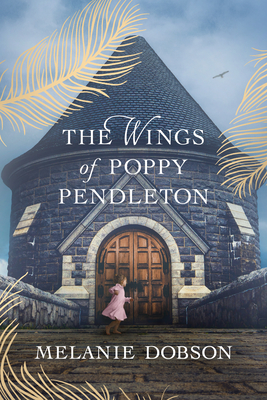
In The Wings of Poppy Pendleton, a novel by Melanie Dobson, the newly rich Pendleton family is trying to find a place among the top Gilded Age society families. Mr. Pendleton had built a stunning castle on Koster Island among New York’s Thousand Islands, and the family is hosting a fete for elite guests. Their almost five-year-old daughter, Poppy, is sleeping in the castle’s tower, supposedly under the care of one of the maids, while the guests party.

But in the morning, Poppy is missing and Mr. Pendleton is dead.

Police, detectives, and curious seekers investigate for years, trying to determine what happened. But Poppy’s disappearance remains a mystery.

In 1992, Chloe Ridell is the only resident on Koster Island. Her grandfather, Cade, had been the caretaker of the castle and island in the Pendleton’s time and decades afterward. Mrs. Pendleton willed the property to Cade, who then passed it along to Chloe.

Chloe is uninterested in the castle and has never been in it. She runs a candy store started by her grandparents, and she just wants to maintain their legacy. But her funds are running low.

Then one stormy night, a young girl shows up on Chloe’s porch. Her name is Emma, but she refuses to say much else about who she is or why she is there. She’s frightened, though, especially of a man named Mitch. Chloe feels led to let Emma stay while her situation is investigated by the police. Eventually, Emma lets Chloe see her scrapbook, which is filled with drawings, magazine cutouts, and descriptions of birds. On the last page is a picture from a news article about the magnificent aviary Mrs. Pendelton’s husband had constructed at her request and filled with dozens of birds and their native trees. The aviary burned down decades ago. But Chloe wonders at the oddity of Emma’s connection to the Pendletons.

Then another visitor shows up out of the blue. A reporter, Logan, arrives in Chloe’s candy shop. Poppy Pendleton’s ninetieth birthday is coming soon. Logan thought it would be a good time to look into her case again. Chloe has no interest. But Logan convinces her that solving the mystery will not only bring justice for Poppy, but it will stop the curious from tramping around her island and asking her questions.

The point of view switches between characters and timelines to uncover what happened to Poppy, her mother, and Emma.

So far I have loved all of Melanie’s novels, and this is no exception. She explores some darker themes than usual. But, sadly, the issues in the story are all too real.

I felt the faith element was woven in naturally and not at all preachy or stilted.

I listened to the audiobook nicely read by Nancy Peterson. Many audiobooks don’t include the author’s afterword or notes, but this one did. Plus Melanie tells a little bit about her research for the novel, with pictures from a trip to the Thousand Islands and its castles, here.