Eternal Glories Gleam

Our church was stunned and heartbroken yesterday to learn that our dear pastor has cancer of the liver and pancreas and is only expected to live 6 months to a year.

He had been losing weight over the past few months, had been really sick the past few weeks, went to the doctor – thankfully a member of our church and long time friend – last week for tests, where it discovered both his liver and pancreas are full of cancer. The pancreatic cancer is incurable and inoperable. He is having biopsies this week to confirm it, and there is a small chance that what they saw on the scans is not cancer, but everything else points to it. They are planning to start chemotherapy in hopes of slowing it down to some degree, but of course that carries its own set of problems.

He is in his early 50s with a wife and three daughters, two of whom are getting married this summer, and the youngest is schedule to go to college in the fall.

He has been preaching through the book of Romans, and providentially we were in the latter half of chapter 8 yesterday, which was so applicable to his situation. As he spoke to us yesterday, one of his concerns was that we think in a right way about his situation, that we not think God is mean or unfair or unkind. He had different men from the church read passages like Psalm 23 and II Corinthians 4:7-11:

.But we have this treasure in jars of clay, to show that the surpassing power belongs to God and not to us. We are afflicted in every way, but not crushed; perplexed, but not driven to despair; persecuted, but not forsaken; struck down, but not destroyed; always carrying in the body the death of Jesus, so that the life of Jesus may also be manifested in our bodies. For we who live are always being given over to death for Jesus’ sake, so that the life of Jesus also may be manifested in our mortal flesh.

And II Corinthians 4:16-18:

So we do not lose heart. Though our outer self is wasting away, our inner self is being renewed day by day. For this light momentary affliction is preparing for us an eternal weight of glory beyond all comparison, as we look not to the things that are seen but to the things that are unseen. For the things that are seen are transient, but the things that are unseen are eternal.

And II Corinthians 12:9-10:

But he said to me, “My grace is sufficient for you, for my power is made perfect in weakness.” Therefore I will boast all the more gladly of my weaknesses, so that the power of Christ may rest upon me. For the sake of Christ, then, I am content with weaknesses, insults, hardships, persecutions, and calamities. For when I am weak, then I am strong.

We know and love and take comfort in those truths but sometimes we tuck them away for “some day…”

Ecclesiastes 7:2 says, “It is better to go to the house of mourning than to go to the house of feasting, for this is the end of all mankind, and the living will lay it to heart.” Not that there is anything inherently wrong with feasting or celebrations: God created some for the Israelites to enjoy, and Jesus attended a wedding. But when someone faces death, certain truths crystallize into sharp focus. All of a sudden the petty irritation that was bothering me that morning wasn’t important. I was reminded that death comes to us all, sooner to some than expected, but God’s grace so wonderfully provided that we can be forgiven; that heaven is real; that this life really is but a vapor; that however good it is, heaven is better. I was reminded that we weren’t promised a life free from suffering on this earth; in fact, the Bible gives us plenty of warning about it and promises God’s help for it and assures us that He really, truly is our refuge and strength, a very present help in trouble (Psalm 46:1).

Last night a line from a hymn kept coming to mind, “Eternal glories gleam afar.” I couldn’t remember what hymn it was from, so I looked it up this morning and was surprised to find it was from “I’ve Found a Friend,” a song I haven’t heard in ages. The stanza containing that phrase says:

I’ve found a Friend, O such a friend! All pow’r to Him is given,
To guard me on my onward course, and bring me safe to heaven.
The eternal glories gleam afar, to nerve my faint endeavor;
So now to watch, to work, to war, and then to rest forever.

In situations like this, those eternal glories aren’t quite so far off: they are up close and personal.

This is going to be a heart-wrenching journey, especially for this man and his family, but also for our church as a whole. I know you all have your own churches and issues and prayer lists, but if you feel led, I’m sure all involved would appreciate your prayers.


Book Review: Wednesdays Were Pretty Normal

Wednesdays-Were-Pretty-NormalWhen Wednesdays Were Pretty Normal by Michael Kelley showed up on a list of Kindle books on sale at the time, the sub-title caught my eye: A Boy, Cancer, and God. Although I’ve wrestled with the truth of God’s allowing suffering many times and come to some kind of peace with it, I still have to go through those truths some times, especially concerning the suffering of a child. Even though I knew this book would be heart-rending and gut-wrenching, I wanted to hear the story and hear how the author dealt with it. I think I am so often drawn to books like this because I know the truths the author has learned are not going to be just armchair theology: they’ve been tested in the extremities of real life, life that isn’t going the way one would have expected or hoped.

The story begins with a visit to the doctor to treat a rash on two and a half year old Joshua, the author’s son. A blood test showed that Joshua had leukemia, with 82% of his blood cells affected. Immediately questions flooded Michael’s stunned mind: the physical (Are you sure? He looks fine! How do we treat this? Is Joshua going to die?) as well as the spiritual (Why, God? Did we do something wrong?).

Michael then tells about Joshua’s three year chemotherapy regimen, the effects of not only the chemotherapy but also the massive amounts of steroids, time in the hospital, the strain of not being able to play with other kids or even go on a fast food playground due his immune system, hair loss, etc. The title comes from the fact that Wednesdays were the day before Joshua’s regular cancer treatments, so he was feeling his best and those days were more normal than the rest.

But most of the book is spent on how the author dealt with his son’s illness and its effects spiritually. Having grown up with his basic needs being met and without any really major problems, he “realized faith had never been hard. It had never been work. But it surely was now.”

“This was a moment when we couldn’t just have faith; we had to choose faith. It had to be as conscious as any other decision….If my family was really going to choose faith, then we would have to come to grips with the fact that there are parts of God and His plan that at best we don’t understand; at worst we don’t even like. We could no longer pick and choose certain parts of our belief system; we had to embrace it all.”

“There is nothing quite like pain to force long-held ideals and beliefs from the comfort of intellectualism into the discomfort of reality and trying to square with them there.”

“Coming to the knowledge that you thought you knew something inside and out and then figuring out you really don’t know it at all is a strange feeling.”

There are some ramifications of cancer in the family that you would expect: pain, financial considerations, hospital time, weariness of working long days and spending long nights with a child who is not feeling well, etc. But the author deals with some that I probably would not have thought of otherwise. One was his own loss of identity. He’d left his job as a pastor to fulfill a dream of writing and speaking while his wife worked full time, but when this happened, she needed to stay with Joshua, so Michael has to find a regular 9-5 office job that he disliked. “I missed my old life. Everything that had made me feel important and significant was gone, and I was facing a crisis of self-identification. I felt poor, not just in the wallet but in my sense of self. Poor is more than a description of a financial state. It’s a state of being. And according to Jesus, being poor is being blessed.” He found comfort in the story of the rich young ruler. “People defined him the same way we define him today – as rich, as young, and as a ruler. Jesus wanted more for him. He wanted to get to this man’s core, to his real self. Selling his possessions would strip this man of his marks of identity. Only by stripping those things away, in that moment of crisis, could he define himself the way Jesus wanted – by his faith.”

One of the concepts that spoke the most to me was the idea of being “between.” When Joshua went into remission, the chemotherapy and everything involved still had to continue, and his father felt like his life was paused, stuck between “the good old days” when everything was normal and the future when everything would hopefully be normal again. A couple of instances in the Bible of God’s ministering to people similarly “stuck” in a “between” time helped, like Paul’s thorn in the flesh and God’s promised grace in II Corinthians 12:9-10 and Jeremiah’s prophesy to Israelites who were going to have to remain in captivity for a number of years (Jeremiah 29, especially verse 11).

“The good parts of living “in between” are many. Such a life makes you realize more and more that this earth is not your home, and you consequently begin to long for heaven. A life between develops perseverance and character that wouldn’t have been there otherwise. And a life between forces you to a dependence on Jesus that you might not have chosen except for the pain.”

“This was going to be a long journey. A journey of years. There was to be no immediate relief for the pain, but as Paul discovered, that didn’t mean the Lord was absent.”

“The days when we were at the end of our rope were also the days when the sustaining grace and strength of God were to be most visible. He did not promise us that the pain would go away; but he did promise that in the midst of it, His grace would be all that we needed. We were left with the hard choice of believing that to be true. We had to choose to trust not in our own ability to be patient with a child on steroids, or even to get out of bed in the morning, but in the One who promised He would be strong in our stead. But the great news of the gospel is that the power to sustain us comes from Jesus, who knows even better than we do what it is like to have one foot in heaven and one foot on earth. Sustaining grace for life between comes from One who knows both the glory and the pain.”

“[Jesus] was more than capable of eradicating cancer from my little boy’s body. But He didn’t. And maybe that’s because, in His wisdom, He knew that doing so immediately and publicly would be, in some way, short-changing the ultimate healing He wanted to accomplish. Living in the meantime has brought to light diseases I didn’t know I had. It’s brought to light my shallowness…my idealistic view of faith…my dependence on circumstances [and more]. Had Jesus chosen to heal Joshua immediately and pluck us from the grip of the meantime, these diseases would have remained firmly implanted in my heart and soul…From that perspective, Jesus’ refusal to heal immediately is really His commitment to longer, better, more complete healing.”

“Hope is the confidence that even during the meantime God is still busy.”

“It’s not that I thought God was using my son as some sort of object lesson to me: that wasn’t it at all. It was more the sense that, whether we knew it or not, the Lord was using cancer to break up unplowed ground in my heart.”

“I didn’t have the luxury of a passive faith any more…Real faith is active. And it’s hard. Faith is something you have to fight for. It’s something you have to choose. And you have to fight and choose in the face of evidence rather than with the evidence on your side.”

I have a multitude more quotes marked, but I probably should not reprint that much of the book. 🙂

There were a couple of places I didn’t quite agree with the author’s interpretation of a passage, but I don’t feel the need to delineate those here.

I didn’t realize, when I chose this as one of my books for the TBR challenge, or when I started reading it some time back, that I’d be smack in the middle of it when my son and daughter-in-law’s child arrived 11 weeks early. Though the health situations for a preemie and a cancer patient are very different, parts of the book especially ministered to me at this time, especially the sections about life being “on hold” in a “between” phase of a long medical situation.

Overall I would highly recommend this book not only to those with children who are ill in some way, but to anyone who wrestles with why God allows suffering.

(This will also be linked to Semicolon‘s Saturday Review of Books.)

Laudable Linkage

Here are a few interesting reads discovered in the last couple of weeks:

The Cheerleader. If something can be heartbreaking and heartwarming at the same time, it is this testimony of a mom injured in the tornadoes that took her home and children.

“God’s Not Dead” and the Angry Atheist Professor: That Was Not My Experience, HT to Challies. I’ve not seen the movie, but Ann has a review of it here. She says as well that the atheists in the movie tended to be typecast as stereotypical meanies, and the film has some issues, but overall it has a good message.

Before We Die and After, Too. Things we want to accomplish before we go may not be the typical “bucket list” experiences.

How Can Moms Deal With the Distractions of Social Media?

What to Do in Those “I Can’t Handle It” Moments.

The Church and the LGBT Community: Is There a Way Forward?

Happy Saturday!

Book Review: Crowded to Christ

Crowded to ChristThe first I remembering hearing of Crowded to Christ was in an online sermon from a former pastor that I think I listened to while home sick one Sunday. He must have mentioned it before, but this time he recommended finding a copy and reading it. It was first published in 1950 and is apparently out of print now, but I found an inexpensive used copy online.

Its author, L. E. Maxwell, was a co-founder, principal, and eventually president of Prairie Bible Institute in Alberta, Canada, which I don’t know much about except that Elisabeth Elliot attended there for a time and Don Richardson (author of Peace Child and other books) graduated from there.

Maxwell’s main theme is that God uses a variety of measures – the law of God as well as pain, pressure, and other means – to draw or to “crowd” people to Christ in the sense of realizing He is the only answer.

For instance, “In his determination to be humble, to love His enemies,… to be more than conqueror – in other words, to be like Christ –  the Christian may come sooner or later to a sense of crushing failure and defeat.” He realizes he can’t possibly do this on his own. Some go on half-heartedly, thinking full victory will just never be possible, while others, “not having made Paul’s deep discovery, ‘I know in me (that is, in my flesh), dwelleth no good thing,’ they redouble their efforts…They think that if they are only more watchful, more prayerful, more diligent, they will yet be able to attain. They strive and struggle; they fight and fast; they yearn and pray.” He quotes Hudson Taylor as saying, “I felt I was a child of God: His Spirit in my heart would cry: ‘Abba, Father’; but to rise to my privileges as a child I was utterly powerless.” Maxwell continues, “Not until they had come to an end of all self-righteousness and satisfaction in themselves, not until all their peace and joy and strength of will and resolution and purpose had been ‘slain by the law,’ could faith stretch forth her hands for victory. Only when they sensed the tragedy, the futility, the folly and failure of every human attempt to overcome the law of sin and death, were they shut up to Him who not only ‘justifies the ungodly’ but also ‘quickens the dead'” (pp 17-18).

He describes how God sometimes puts us in extenuating circumstances that result in a crisis of faith that drive us to Him as our only way through, like Jacob on his way home finding out Esau was coming to meet him, or Israel’s being caught between Pharaoh’s army and the Red Sea, or Israel when called to enter into Canaan but looked at the obstacles instead of God and failed.

I have far too many quotes marked to share, but here are a few that stood out to me:

“Have you ever had God lay hold of you in the wee hours and reduce you until you had ‘Nothing left to do but fling/Care aside and simply cling?'” (p. 29).

“God must secure our confidence, and…He tries us in order to make us trust where we cannot trace. Without faith it is impossible to please Him. ‘Thy way is in the sea.’ While, therefore, He has no pleasure in our agony and perplexity, He knows that it is in the trackless and traceless sea of trouble that we come to trust” (p. 38).

“To be self-centered is to be self-destroyed…The preservation of self is the surest path to self-destruction” (p. 128).

“When the Lord Jesus dealt with souls, His method was adapted to the need of the individual. However, it is remarkable that almost invariably He brought souls face to face with some one thing which in their own strength they could not do, and there demanded an act of obedience…In order to create a sense of sin and a need of divine strength Jesus gave command just where men were inclined to wander or argue or excuse themselves” (p. 150).

“If only the Saviour had asked me to do something else! But that something else would not have reached your heart. You could have done that other thing without faith and without grace; yes, without even being right with God. So, in asking you to do the one impossible thing, Christ crosses your will through your withered limb” (p. 178).

“Grace is no mere favour conferred upon the ungodly, but it is to be experienced as a ruling force and sufficiency, reigning in our hearts as the new, living ‘law of the Spirit of life in Christ Jesus,’ and enabling us to prove the no-more dominion of sin. Grace abounding is to lead at once to grace reigning” (p. 219).

In ways simple and inscrutable and fiery God must drain away the dregs of self-confidence. He must let the flesh fail…when all those remaining are convinced that God alone is their rescue and remedy…” (p. 256).

The New Testament is enfolded in the Old, and the Old Testament is unfolded in the New” (p. 272).

“Love and righteousness are not contrary principles” (p. 299).

He spends a good deal of space in the book talking about the law of God. Though Christ has fulfilled the law and we never could, and in this day of grace are not required to, still, God has uses for the law, which the Bible describes as “good” and “spiritual.” “By the law is the knowledge of sin.” His appendices on “The Old and New Testaments Compared” and “The Purpose of the Law” are some of the best parts of the book, especially on this point.

Overall I enjoyed, benefited from, and saw myself in the pages of this book. I wasn’t quite so interested in arguments about dispensationalism and ultra-dispensationalism or Calvinism vs. Armenianism: those seemed to make the book drag a bit, but I understand their necessity, especially with Maxwell coming from an academic background where students have debated these things back and forth for ages.

I think the only places where I disagreed with him were some such as when he described a man who did not want to go into a grove and pray as the folks in that place and time did when they wanted to meet with God after a service. He acknowledged that there is nothing in the Bible about doing such a thing and that one can get right with God without that action, but this man had no peace until he finally did so. I guess perhaps I could see that if it was just a matter of pride or something, but I’d still have trouble saying he should have done that when it is not a Biblical issue.

This book often brought to mind a quote from Hudson Taylor, though the quote itself is not in the book: “It doesn’t really matter how great the pressure is. What matters is where the pressure lies, whether it comes between me and God or whether it presses me nearer His heart.” As Maxwell says in the second quote listed above, God takes “no pleasure in our agony and perplexity.” He is not dreaming up ways to torture us, but He knows best what we most need in our inmost hearts to grow in our faith and relationship with Him.

(This will also be linked to Semicolon‘s Saturday Review of Books.)

Laudable Linkage

Here are some noteworthy reads from the last week:

How Not to View Your Devotions, HT to Kim. Excellent.

The Value of a Long-Term Struggle.

A Slave in My Own Kingdom, something learned from a C. S. Lewis’s The Silver Chair.

5 Things to Do Before Leaving Your Church.

Gospel-Centered Sex?

Half a Century Since C. S. Lewis. I mentioned this yesterday but wanted to note it here as well.

Narnia Through the Ages, a photo essay of covers of C. S. Lewis’s The Lion, the Witch, and the Wardrobe over the years, HT to Janet.

Blessing Mix, a neat idea to give out at Thanksgiving along with a little printable tag, HT to Julia.

Hope you have a great weekend!

Tense anticipation

When my mother-in-law first started losing muscle strength and tone, going from a walker to a wheelchair to not being able to feed herself to “total assist,” in the physical therapist’s parlance, it seemed as if her muscles were getting limper and weaker. Now some of them are getting strong in the wrong way. When muscles are disused, they can get contracted. She received physical therapy for a few weeks in the nursing home until she “plateaued,” got to a place where they felt they were not going to see any more improvement. The aides were supposed to continue range-of-motion exercises, but being overworked and understaffed, this was neglected, especially during time she developed a pressure sore and had to remain in bed for weeks. We didn’t realize the extent of the need nor the neglect until she already started contracting. We didn’t know to keep on top of it because we thought they were doing everything they were supposed to do. When she was released from the nursing home, her legs would no longer straighten out completely and both arms tended to be drawn up to her chest.

Grandma's hands

She received physical therapy at home for four weeks, which helped, but the PT told us it was unlikely that her limbs would get completely uncontracted. They did improve, but she still keeps her left arm pulled up tightly to her chest most of the time. That makes changing clothes and cleaning hard for both her and her caregiver.

A new problem developed in the last few weeks: two fingers on her right hand began contracting, called Dupuytren’s contracture. It is extremely painful to even have the fingers moved. We have a home health nurse who comes out once a week, and she arranged for an occupational therapist to work with her fingers and arm. Of course, he has to gently but persistently open her fingers, try to stretch them out, and massage the offending tendon in her palm, and of course this about sends her through the roof in pain. She was cooperative the first time he came and even laughed and joked a little, but each visit seems to get a little harder. When she sees him she knows it is going to hurt, so she tenses up in anticipation, which makes it worse. The OT and the aide spend most of the therapy session encouraging her to relax. She can relax her arm and fingers, and when she just relaxes and lets him work and works with him, the whole session goes much better and isn’t nearly as painful. But it is hard for her to understand that or to remember it in the midst of discomfort and pain. The last time the OT was here, her muscles were tensing before he even got started.

I have to admit it’s very hard to watch her in pain, especially when she looks at me like, “WHY don’t you do something?! Why are you letting him do this to me?” I’ve even wondered, “Is this worth it? Should we just let her be?” But without some intervention she would get more contracted and in more pain. Plus the crease in her elbow and her closed hands are more prone to skin breakdown and infection if they are not opened up. Even now the aide has to be careful to wash her hands often because she gets a sour smell in them from their being closed up.

A brace is supposed to be on order (sometimes it takes a while to get things through the doctor, insurance company, and Medicare) which will help keep her hand open naturally and hopefully help over the long haul.

I’d appreciate your prayers for her about this, especially for her OT sessions.

There were some lessons for me, though, in my mother-in-law’s latest therapy session. My mind often goes into, “What’s the worst that can happen?” scenarios. If I am catching a cold, it’s probably going to turn into strep throat and lay me out for a week: if someone is late coming home, maybe they were in an accident, etc. I’m much better about that kind of thing than I used to be, but my mind still runs in those tracks sometimes, scaring myself to death with “What ifs?” I wrote an earlier post titled “When Afraid to Surrender” about the fear we sometimes have that if we truly surrender everything to the Lord, He might ask us to undergo some great trial. He does do that to people sometimes. Just ask Job, or Joni Eareckson Tada, or any number of other people. Even knowing that God has many purposes for allowing suffering doesn’t make us look forward to the prospect.

But He doesn’t want us to live in rigid anticipation, waiting for the other shoe to drop. Whatever He allows – and I am convinced every Christian undergoes trials of some kind, whether physical ailments, relationship or family issues, financial struggles, or something else – we know He has a purpose in allowing it and has promised to be with us and to give us His grace as we need it (not before it is needed).

Perhaps you’ve heard of someone who fell or was in an accident that was made worse because they threw their arms straight out ahead of them to brace themselves, and their arms or wrists were broken. I had a tumbling class in college P.E., and our teacher said if you are about to fall, the best thing you can do is roll with it. That tense rigidity only causes harm. It lessens the joy in life we should be experiencing now. It hinders whatever God is trying to do. Like the occupational therapist, He has to gently, patiently, and persistently work with the very areas that are the most painful in order to accomplish the needed good. Tension against His working only makes it harder and more painful: relaxing into His care allows Him to accomplish His purposes with much less pain and fear. He is not just a therapist: He is a loving Father who wants our good.

“Knowing this, that the trying of your faith worketh patience. But let patience have her perfect work, that ye may be perfect and entire, wanting nothing.” James 1:3-4

(Sharing with Tell His Story)

31 Days of Missionary Stories: With All Our Feebleness

Hebrews 11 is sometimes called the hall of fame of faith or the Christian Hall of Fame, telling of the victories and triumphs of various people in the Bible. But verse 36 has a rather startling turn: “and others…” were tortured, tried, stoned, made to wander in deserts. That doesn’t sound very victorious. But they all “obtained a good report through faith,” though they  had “received not the promise” yet (verse 39).

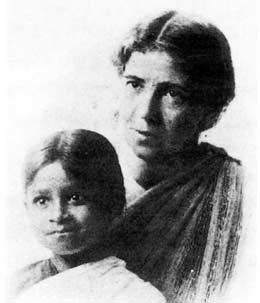
amy-carmichael-2Probably many Christians are more familiar with the name of Amy Carmichael than of some of the other missionaries I’ve mentioned in this series. Most know that she was missionary to India. She began a rather robust itinerant evangelistic ministry with a group of other women, but when God began bringing children her way whose families were going to sell them to temples for illicit purposes, she gradually became convinced that He would have her care for these children, though it meant a drastic change in her ministry and lifestyle. Over time a whole compound known as Dohnavur was developed.

What some may not know is that she was an invalid for the last 20 years or so of her life. She remained in India, still in charge of Dohnavur, still encouraging, advising, praying, and writing, but she was in much pain and had limited mobility those years. In Amy Carmichael of Dohnavur by Frank Houghton, he includes this poem before telling of this part of her life:

Two glad services are ours,
Both the Master loves to bless.
First we serve with all our powers–
Then with all our feebleness.

Nothing else the soul uplifts,
Save to serve Him night and day,
Serve Him when He gives His gifts–
Serve Him when He takes away.

~ C. A. Fox

Elisabeth Elliot said of limitations, “For it is with the equipment that I have been given that I am to glorify God. It is this job, not that one, that He gave me.” The limitations that we think are hindering our ministry are often the very thing God uses to shape our ministry for Him.

One day Amy received a shipment of tracts for the ill. As she read them, they just did not do anything for her. As she pondered that, she realized it was because they were written from well people telling sick people how they ought to feel. Over many years she had written notes of encouragement to various ones in the Dohnavur Hospital (named, in the descriptive Indian way, Place of Heavenly Healing), and some of these were compiled in a book titled Rose From Brier. They are rich in their spiritual encouragement and insight, partly precisely because they were written by one who had shared in the fellowship of sufferings.

In another of Amy’s books, she wrote the following:

This prayer was written for the ill and for the very tired. It is so easy to fail when not feeling fit. As I thought of them, I also remembered those who, thank God, are not ill and yet can be hard-pressed. Sometimes in the midst of the rush of things it seems impossible always to be peaceful, always to be inwardly sweet. Is that not so? Yet that and nothing less is our high calling. So the prayer is really for us all.

Before the winds that blow do cease,
Teach me to dwell within Thy calm;
Before the pain has passed in peace,
Give me, my God, to sing a psalm,
Let me not lose the chance to prove
The fulness of enabling love,
O Love of God, do this for me;
Maintain a constant victory.

Before I leave the desert land
For meadows of immortal flowers,
Lead me where streams at Thy command
Flow by the borders of the hours,
That when the thirsty come, I may
Show them the fountains in the way.
O Love of God, do this for me;
Maintain a constant victory.

Blessed be God, even the Father of our Lord Jesus Christ, the Father of mercies, and the God of all comfort;Who comforteth us in all our tribulation, that we may be able to comfort them which are in any trouble, by the comfort wherewith we ourselves are comforted of God.
For as the sufferings of Christ abound in us, so our consolation also aboundeth by Christ.
II Corinthian 1:3-5

God hath caused me to be fruitful in the land of my affliction.
Genesis 41:52b

(You can see a list of other posts in the 31 Days of Missionary Stories here.)

31 Days of Missionary Stories: Gracia Burham and God’s Grace in Captivity

Several years ago I had heard of Gracia Burnham’s In the Presence of My Enemies and somewhere read an excerpt from it, but I avoided reading it. I couldn’t face it. I’m not sure why: maybe because it was too fresh, maybe because the people responsible for the Burnham’s captivity were still alive (maybe not the specific people, but the extremist Islamic groups are still active), maybe because in the portion that I read, Gracia was having to deal with something that I struggle with. But the youth pastor at the church we were attending saw a DVD presentation of Gracia sharing her testimony at another church where he was ministering and recommended it to me. I ordered it, watched it, and was so touched on so many levels. I then felt that I had to read the book. (Sadly, the DVD does not seem to be available any more – I couldn’t find it after searching the Web for a while.)

For those who might not be aware, Martin and Gracia Burnham were missionaries with New Tribes Mission in the Philippines: he was a missionary pilot who reminded me a lot of one of my former church’s missionaries who also pilots a small plane. They had gone for a quick weekend get-away to celebrate their anniversary at a resort. They didn’t usually go to the “touristy” areas, but decided to go this once. During their stay, an Islamic extremist group stormed the resort and took guests and a few staff members hostage. Several of the hostages were able to arrange for ransom and were released after a few months. Some were killed along the way. The Burnhams were held for over a year. Martin was killed in a rescue attempt by the Philippine military and Gracia was wounded.

I don’t want to take away from what she shares in the book, so I won’t go into the details of the story here. I do want to mention just a couple of impressions, though.

As the Burnhams struggled with negative thoughts and attitudes toward their captors, I kept finding myself thinking at first, “But they had a right to feel that way!” I knew better, but that was the thought that kept coming. They had to put into practice the Bible’s teaching about loving their enemies, praying for those who were despitefully using them, in a very real way and only by God’s grace.

I also was grieved that I did not pray for them more. Often when I hear reports of stories like theirs on the news, I try at least to pray right then in the midst of whatever I am doing. I may have prayed for them in that way, but I don’t remember. The scripture came to mind to remember those in bonds as if bound with them, and I failed to do that for the Burnhams, but this caused me to determine not to neglect that ministry again.

I was also struck by the Muslim group’s twisted sense of logic. They wanted Islam to rule the world so it would be ruled by “righteousness.” They advocated the cutting off of someone’s hand for stealing — but excused their own stealing because they “needed” the stolen items for their cause. When people died in the course of what they did, it was “their destiny.” They had a strong sense of “justice” but saw mercy as a weakness. When discussing that last point with one of their captors, Martin said, “You know, I hope my children don’t take up the attitude you have. I hope they don’t ever shoot some Muslims because of what you have done to us.” The man to whom they were speaking looked shocked. “Done to you? What is my sin against you? I have never done anything to you.” Martin and Gracia could only look at each other incredulously.

Gracia tells of her very human struggles, like depression, anger, and resentment over their situation and the realization that not only was her attitude not helping, but it was hurting. She writes, “I knew that I had a choice. I could give in to my resentment and allow it to dig me into a deeper and deeper hole both psychologically and emotionally, or I could choose to believe what God’s Word says to be true whether I felt it was or not.” That was a turning point for her as she chose to believe God and handed over her pain and anger to Him. I thought how often we get tripped up over pain, resentment, and anger over much lesser things.

She shares also how the Lord provided for them in unexpected ways, how she and Martin encouraged each other, how they had to battle a captive’s mindset, how they were able to talk about the Lord with their captors and other hostages, as well as the details of how she and Martin originally came together as a couple and what happened in the aftermath of her captivity.

A few years later Gracia wrote To Fly Again: Surviving the Tailspins of Life (linked to my review), which includes an update of how she and her children were doing after all that had happened to them, her recovery from the trauma, and encouragement to others who have gone through any kind of traumatic event.

I found this video on YouTube, and I think some of the footage is from the original DVD:

I also found this report of Gracia’s going back to testify against her captors.

God’s Word is true no matter what, and thankfully He doesn’t see fit to put all of us through that kind of experience, but when someone who has been through what she has speaks of God’s goodness and faithfulness, the truth of God’s Word and the reality of His Presence….it rings true. There is an authenticity about that person’s testimony. Their faith, their beliefs have been tried in the fires of testing. Gracia’s testimony touched me deeply. I don’t know if I could have gone through what she did – in fact, I’m pretty sure I couldn’t. But God gives His grace for various trials when we need it. Though I hope I never have to face that particular kind of trial, we will all face trials of some kind, and we can trust He will see us through them as he promised.

I Peter 1:6-8:

Wherein ye greatly rejoice, though now for a season, if need be, ye are in heaviness through manifold temptations:
That the trial of your faith, being much more precious than of gold that perisheth, though it be tried with fire, might be found unto praise and honour and glory at the appearing of Jesus Christ: Whom having not seen, ye love; in whom, though now ye see him not, yet believing, ye rejoice with joy unspeakable and full of glory…

(You can see other posts in the 31 Days of Missionary Stories here.)

(This will also be linked to Semicolon‘s Saturday Review of Books.)

31 Days of Missionary Stories: Darlene Deibler Rose, Missionary POW

Evidence Not SeenEvidence Not Seen: A Woman’s Miraculous Faith in the Jungles of World War II tells the story of a few eventful years in the life of Darlene Deibler Rose, who became a POW during WWII while she ministered in New Guinea. She and her new husband, Russell Deibler, left to minister in the field of New Guinea in 1938. They were pioneer missionaries in a quite rugged area.

On one of Russell’s survey visits, the chieftain he was talking with said he believed Russell and the others with him were spirits because they were all men. “Who gave birth to you?” he asked. Russell explained that he did have a wife, but his “chieftain” said she could not come because the trail was so dangerous that many men had died. The chieftain replied, “Your wife would have made it. Wherever we go, the women follow and carry the loads.” He said if she were so weak she could not make it, he would send men to help her. Meanwhile, others of the tribe decided to test whether some of the men were spirits or human by shooting arrows at them to see whether the arrows passed through or killed them, and, unfortunately, some of the tribe members were killed when the government officials who were along shot them in self-defense. On reading this in a letter from Russell, Darlene prayed, “Lord, if those people are ever to believe and understand about you, women are going to have to go there.” Immediately she felt an assurance that she was supposed to go. She dashed out to find their mission leader, who said he had a letter from Russell giving his consent for her to go.

At her first meeting with the people, they shoved her sleeve up to see if her arms were white “all the way up” and wanted to pinch her flesh to see if it was real. The chieftain did not believe she was a woman until she took off her hat and took the pins out of her heir, letting her hair fall over her shoulders. From the first moment she felt that these were her people, and she approached them and the living conditions with grace, courage, and humor.

By May of 1940, they heard that Nazis had invaded Holland; it fell within five days. Soon word came from government officials that their post must be evacuated, though they begged to stay.

They moved to another area, and within five months learned that their post was to be reopened. But then Russell was appointed assistant field chairman by a unanimous vote of the other missionaries. Russell and Darlene were both grief-stricken, but felt it was the Lord’s will, and reminding themselves that they had been willing to go anywhere, remained in Macassar.

Meanwhile, they heard news of war increasing until finally Pearl Harbor was attacked. They sought the Lord’s counsel as they continued to work and hear news reports of the Japanese taking islands near to them. One day a Dutch policeman came and told the missionaries that they had a ship on the coast and wanted to evacuate all foreigners as well as Dutch women and children. Their field chairman, Dr. Jaffray, encouraged them all to take time to pray about whether the Lord would have them stay or go so that they would have His assurance, whatever happened, that they were right where He wanted them to be. None felt led to leave. Three days later they learned that the ship had been torpedoed and sunk with no survivors.

By March 8, 1942, their island had been taken by the Japanese. They let them stay together for a while, until one day they suddenly came to take the men. Russell’s last words to Darlene were, “Remember one thing, dear: God said that he would never leave us nor forsake us.” She never saw him again.

The women were eventually taken to a prison camp, where the bulk of the book takes place. There is not space here to tell of many of the experiences, but God proved Himself faithful many times over, protecting, assuring of His Presence, answering prayer.

The camp commander, Mr. Yamaji, was notoriously cruel. Yet God gave Darlene some measure of favor in his eyes. When news came that Russell had died, Mr. Yamaji called Darlene to his office to try to encourage her somewhat. God gave her grace to tell him she did not hate him, that she was there because God loved her…and God loved him, and perhaps He allowed her to be there to tell him. She shared with him the plan of salvation, and Mr. Yamaji broke into tears and left the room. Yet from then on she felt he trusted her, and years later she heard a report of him that seemed to indicate he had trusted the Lord.

Some time later, Darlene was arrested by the secret police and taken to another prison for “questioning.” The conditions were horrible, to say the least, and Darlene also suffered from dysentery, cerebral malaria, and beriberi. She asked the Lord to heal her of dysentery — and He healed her of all three ailments. One day she saw out of her window someone secretly passing along some bananas to one of the other women. She was in solitary confinement and knew she would never receive one, but she began to crave bananas: though she had been healed, she was still starving. Then, Mr. Yamaji came to the prison to see how she was doing and to tell the secret police that she was not a spy, and after he left he had ninety-two bananas delivered to her! Days later, when she ate the last banana, she was returned to the prison camp.

The book goes on to tell of the end of the war, an opportunity to visit Russell’s grave and speak to some of the men who knew him, the process of getting back to America, rediscovering such “luxuries” as showers, fear upon arriving back in America and not knowing what to do or how to contact her family, the Lord’s provision for that as well. She recuperated at home for a long while, and eventually remarried and went back to New Guinea as a missionary.

Darlene’s story is a marvelous one of the grace of God and her courage, faith, and endurance in the midst of the most trying of circumstances.

(You can see other posts in the 31 Days of Missionary Stories here.)

(This will also be linked to Semicolon‘s Saturday Review of Books.)

Laudable Linkage

Here are some great reads discovered in the last week or so:

Advice For Those Burned By the Church.

When Christians Mock Christians. Respectfully discussing issues where we differ is one thing, but unfortunately people on both sides of an issue can degenerate into mocking each other.

Putting an End to Spiritual Envy. I like this post not just for what it says, but how it is done: a wonderful example of Biblical exposition.

An Open Letter to an Older Woman. Sometimes it is hard to know how to be a Titus 2 older woman when younger women don’t seem to want our company and everyone wants things new and young and fresh. This is an encouragement to older women from a younger one along with some subtle, gentle suggestions as to the best ways to be a help.

Impatient With Grief.

A few posts on unanswered prayer for healing: Together Is A Beautiful Word, We Didn’t Get Healed…or Did We? and What If Your Healing Doesn’t Come? The last two are from a paralyzed wife and her husband.

10 Questions for Better Bible Study. Love this: simple and direct and unfluffy.

The Introverted Mother. Someone who recharges by time alone has a hard time when she’s never alone. Here is some encouragement.

The Science of What Makes an Introvert and an Extrovert.

The Holy Longings of Happily Ever After. Is a fairy-tale ending unrealistic or a beacon towards the ultimate best ending?

This Three Minute Commercial Puts Full Length Hollywood Films to Shame. I don’t know what country has three minute commercials – but this is a sweet short story in film. You could say it is about grace.

Hope you have a great weekend!