31 Days of Missionary Stories: Gracia Burham and God’s Grace in Captivity

Several years ago I had heard of Gracia Burnham’s In the Presence of My Enemies and somewhere read an excerpt from it, but I avoided reading it. I couldn’t face it. I’m not sure why: maybe because it was too fresh, maybe because the people responsible for the Burnham’s captivity were still alive (maybe not the specific people, but the extremist Islamic groups are still active), maybe because in the portion that I read, Gracia was having to deal with something that I struggle with. But the youth pastor at the church we were attending saw a DVD presentation of Gracia sharing her testimony at another church where he was ministering and recommended it to me. I ordered it, watched it, and was so touched on so many levels. I then felt that I had to read the book. (Sadly, the DVD does not seem to be available any more – I couldn’t find it after searching the Web for a while.)

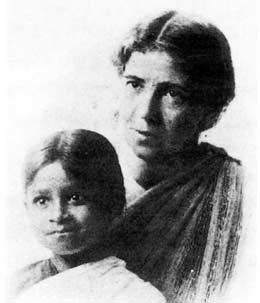
For those who might not be aware, Martin and Gracia Burnham were missionaries with New Tribes Mission in the Philippines: he was a missionary pilot who reminded me a lot of one of my former church’s missionaries who also pilots a small plane. They had gone for a quick weekend get-away to celebrate their anniversary at a resort. They didn’t usually go to the “touristy” areas, but decided to go this once. During their stay, an Islamic extremist group stormed the resort and took guests and a few staff members hostage. Several of the hostages were able to arrange for ransom and were released after a few months. Some were killed along the way. The Burnhams were held for over a year. Martin was killed in a rescue attempt by the Philippine military and Gracia was wounded.

I don’t want to take away from what she shares in the book, so I won’t go into the details of the story here. I do want to mention just a couple of impressions, though.

As the Burnhams struggled with negative thoughts and attitudes toward their captors, I kept finding myself thinking at first, “But they had a right to feel that way!” I knew better, but that was the thought that kept coming. They had to put into practice the Bible’s teaching about loving their enemies, praying for those who were despitefully using them, in a very real way and only by God’s grace.

I also was grieved that I did not pray for them more. Often when I hear reports of stories like theirs on the news, I try at least to pray right then in the midst of whatever I am doing. I may have prayed for them in that way, but I don’t remember. The scripture came to mind to remember those in bonds as if bound with them, and I failed to do that for the Burnhams, but this caused me to determine not to neglect that ministry again.

I was also struck by the Muslim group’s twisted sense of logic. They wanted Islam to rule the world so it would be ruled by “righteousness.” They advocated the cutting off of someone’s hand for stealing — but excused their own stealing because they “needed” the stolen items for their cause. When people died in the course of what they did, it was “their destiny.” They had a strong sense of “justice” but saw mercy as a weakness. When discussing that last point with one of their captors, Martin said, “You know, I hope my children don’t take up the attitude you have. I hope they don’t ever shoot some Muslims because of what you have done to us.” The man to whom they were speaking looked shocked. “Done to you? What is my sin against you? I have never done anything to you.” Martin and Gracia could only look at each other incredulously.

Gracia tells of her very human struggles, like depression, anger, and resentment over their situation and the realization that not only was her attitude not helping, but it was hurting. She writes, “I knew that I had a choice. I could give in to my resentment and allow it to dig me into a deeper and deeper hole both psychologically and emotionally, or I could choose to believe what God’s Word says to be true whether I felt it was or not.” That was a turning point for her as she chose to believe God and handed over her pain and anger to Him. I thought how often we get tripped up over pain, resentment, and anger over much lesser things.

She shares also how the Lord provided for them in unexpected ways, how she and Martin encouraged each other, how they had to battle a captive’s mindset, how they were able to talk about the Lord with their captors and other hostages, as well as the details of how she and Martin originally came together as a couple and what happened in the aftermath of her captivity.

A few years later Gracia wrote To Fly Again: Surviving the Tailspins of Life (linked to my review), which includes an update of how she and her children were doing after all that had happened to them, her recovery from the trauma, and encouragement to others who have gone through any kind of traumatic event.

I found this video on YouTube, and I think some of the footage is from the original DVD:

I also found this report of Gracia’s going back to testify against her captors.

God’s Word is true no matter what, and thankfully He doesn’t see fit to put all of us through that kind of experience, but when someone who has been through what she has speaks of God’s goodness and faithfulness, the truth of God’s Word and the reality of His Presence….it rings true. There is an authenticity about that person’s testimony. Their faith, their beliefs have been tried in the fires of testing. Gracia’s testimony touched me deeply. I don’t know if I could have gone through what she did – in fact, I’m pretty sure I couldn’t. But God gives His grace for various trials when we need it. Though I hope I never have to face that particular kind of trial, we will all face trials of some kind, and we can trust He will see us through them as he promised.

I Peter 1:6-8:

Wherein ye greatly rejoice, though now for a season, if need be, ye are in heaviness through manifold temptations:
That the trial of your faith, being much more precious than of gold that perisheth, though it be tried with fire, might be found unto praise and honour and glory at the appearing of Jesus Christ: Whom having not seen, ye love; in whom, though now ye see him not, yet believing, ye rejoice with joy unspeakable and full of glory…

(You can see other posts in the 31 Days of Missionary Stories here.)

(This will also be linked to Semicolon‘s Saturday Review of Books.)

31 Days of Missionary Stories: Darlene Deibler Rose, Missionary POW

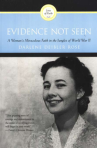
Evidence Not SeenEvidence Not Seen: A Woman’s Miraculous Faith in the Jungles of World War II tells the story of a few eventful years in the life of Darlene Deibler Rose, who became a POW during WWII while she ministered in New Guinea. She and her new husband, Russell Deibler, left to minister in the field of New Guinea in 1938. They were pioneer missionaries in a quite rugged area.

On one of Russell’s survey visits, the chieftain he was talking with said he believed Russell and the others with him were spirits because they were all men. “Who gave birth to you?” he asked. Russell explained that he did have a wife, but his “chieftain” said she could not come because the trail was so dangerous that many men had died. The chieftain replied, “Your wife would have made it. Wherever we go, the women follow and carry the loads.” He said if she were so weak she could not make it, he would send men to help her. Meanwhile, others of the tribe decided to test whether some of the men were spirits or human by shooting arrows at them to see whether the arrows passed through or killed them, and, unfortunately, some of the tribe members were killed when the government officials who were along shot them in self-defense. On reading this in a letter from Russell, Darlene prayed, “Lord, if those people are ever to believe and understand about you, women are going to have to go there.” Immediately she felt an assurance that she was supposed to go. She dashed out to find their mission leader, who said he had a letter from Russell giving his consent for her to go.

At her first meeting with the people, they shoved her sleeve up to see if her arms were white “all the way up” and wanted to pinch her flesh to see if it was real. The chieftain did not believe she was a woman until she took off her hat and took the pins out of her heir, letting her hair fall over her shoulders. From the first moment she felt that these were her people, and she approached them and the living conditions with grace, courage, and humor.

By May of 1940, they heard that Nazis had invaded Holland; it fell within five days. Soon word came from government officials that their post must be evacuated, though they begged to stay.

They moved to another area, and within five months learned that their post was to be reopened. But then Russell was appointed assistant field chairman by a unanimous vote of the other missionaries. Russell and Darlene were both grief-stricken, but felt it was the Lord’s will, and reminding themselves that they had been willing to go anywhere, remained in Macassar.

Meanwhile, they heard news of war increasing until finally Pearl Harbor was attacked. They sought the Lord’s counsel as they continued to work and hear news reports of the Japanese taking islands near to them. One day a Dutch policeman came and told the missionaries that they had a ship on the coast and wanted to evacuate all foreigners as well as Dutch women and children. Their field chairman, Dr. Jaffray, encouraged them all to take time to pray about whether the Lord would have them stay or go so that they would have His assurance, whatever happened, that they were right where He wanted them to be. None felt led to leave. Three days later they learned that the ship had been torpedoed and sunk with no survivors.

By March 8, 1942, their island had been taken by the Japanese. They let them stay together for a while, until one day they suddenly came to take the men. Russell’s last words to Darlene were, “Remember one thing, dear: God said that he would never leave us nor forsake us.” She never saw him again.

The women were eventually taken to a prison camp, where the bulk of the book takes place. There is not space here to tell of many of the experiences, but God proved Himself faithful many times over, protecting, assuring of His Presence, answering prayer.

The camp commander, Mr. Yamaji, was notoriously cruel. Yet God gave Darlene some measure of favor in his eyes. When news came that Russell had died, Mr. Yamaji called Darlene to his office to try to encourage her somewhat. God gave her grace to tell him she did not hate him, that she was there because God loved her…and God loved him, and perhaps He allowed her to be there to tell him. She shared with him the plan of salvation, and Mr. Yamaji broke into tears and left the room. Yet from then on she felt he trusted her, and years later she heard a report of him that seemed to indicate he had trusted the Lord.

Some time later, Darlene was arrested by the secret police and taken to another prison for “questioning.” The conditions were horrible, to say the least, and Darlene also suffered from dysentery, cerebral malaria, and beriberi. She asked the Lord to heal her of dysentery — and He healed her of all three ailments. One day she saw out of her window someone secretly passing along some bananas to one of the other women. She was in solitary confinement and knew she would never receive one, but she began to crave bananas: though she had been healed, she was still starving. Then, Mr. Yamaji came to the prison to see how she was doing and to tell the secret police that she was not a spy, and after he left he had ninety-two bananas delivered to her! Days later, when she ate the last banana, she was returned to the prison camp.

The book goes on to tell of the end of the war, an opportunity to visit Russell’s grave and speak to some of the men who knew him, the process of getting back to America, rediscovering such “luxuries” as showers, fear upon arriving back in America and not knowing what to do or how to contact her family, the Lord’s provision for that as well. She recuperated at home for a long while, and eventually remarried and went back to New Guinea as a missionary.

Darlene’s story is a marvelous one of the grace of God and her courage, faith, and endurance in the midst of the most trying of circumstances.

(You can see other posts in the 31 Days of Missionary Stories here.)

(This will also be linked to Semicolon‘s Saturday Review of Books.)

Laudable Linkage

Here are some great reads discovered in the last week or so:

Advice For Those Burned By the Church.

When Christians Mock Christians. Respectfully discussing issues where we differ is one thing, but unfortunately people on both sides of an issue can degenerate into mocking each other.

Putting an End to Spiritual Envy. I like this post not just for what it says, but how it is done: a wonderful example of Biblical exposition.

An Open Letter to an Older Woman. Sometimes it is hard to know how to be a Titus 2 older woman when younger women don’t seem to want our company and everyone wants things new and young and fresh. This is an encouragement to older women from a younger one along with some subtle, gentle suggestions as to the best ways to be a help.

Impatient With Grief.

A few posts on unanswered prayer for healing: Together Is A Beautiful Word, We Didn’t Get Healed…or Did We? and What If Your Healing Doesn’t Come? The last two are from a paralyzed wife and her husband.

10 Questions for Better Bible Study. Love this: simple and direct and unfluffy.

The Introverted Mother. Someone who recharges by time alone has a hard time when she’s never alone. Here is some encouragement.

The Science of What Makes an Introvert and an Extrovert.

The Holy Longings of Happily Ever After. Is a fairy-tale ending unrealistic or a beacon towards the ultimate best ending?

This Three Minute Commercial Puts Full Length Hollywood Films to Shame. I don’t know what country has three minute commercials – but this is a sweet short story in film. You could say it is about grace.

Hope you have a great weekend!


“God permits what He hates to accomplish what He loves”

One thing I love about listening to Joni Eareckson Tada is that she’s genuine. She’s no armchair theologian philosophizing about pain and suffering: she has lived it, having broken her neck as a teenager and living in a wheelchair for 45 years. And through it all she acknowledges God’s purposes and perfect plan for her life. “I’d rather be in a wheelchair and know Him that be walking without Him.”

But in this video she pulls back the curtain a little bit to reveal the “low middle years” with her husband, his depression and feeling trapped, her own dissolving in tears over learning she had breast cancer and feeling, “I can’t do this.” I can remember hearing about her breast cancer diagnosis and thinking that that was too much on top of a broken neck and chronic pain (either of which would be “too much” for many people.) Sometimes when we have a major life crisis, we might think, “OK, I’ve had my trial and tribulation, so I’m done: the rest of life will be smooth sailing.” Probably not.

She shares ways God has used her disabilities and suffering, one of which was revealing her sin to her. When I am provoked, I tend to think, “I reacted wrongly because of the provocation,” and then I pray for its removal and think everything will be all right then, But she offers the thought that God allows provocation in order to reveal our sinful reactions to our own hearts, so that we can seek Him for forgiveness and grace to overcome. We can’t say, “That’s not me”…because it is. And we need to learn how to react as Christ did, which we can do only by His grace.

She calls suffering “a splash of hell” but maintains that a “splash of heaven” can be found through intimacy with Christ in the midst of it. And she can say so because she has found it to be true.

This is well worth 42 minutes of your time: